[🇵🇰] Pakistan & Mid-East War

[🇵🇰] Pakistan & Mid-East War
3
38
More threads by Saif

G Pakistan Defense

Saif

Senior Member
Joined
Jan 24, 2024
Messages
18,045
Likes
8,549
Nation

Residence

Axis Group

Date of Event: Mar 29, 2026
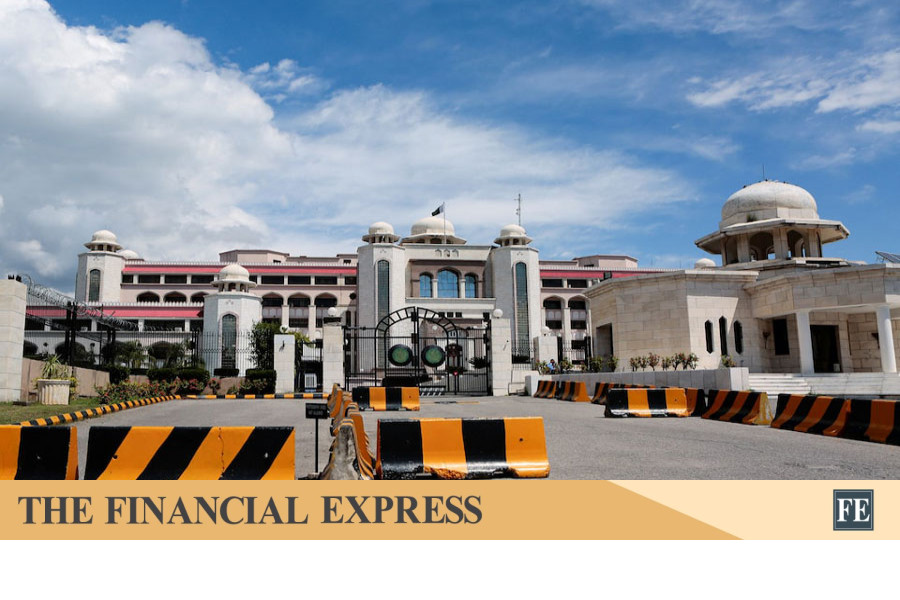
Pakistan to host Saudi, Turkey, Egypt for talks on Mideast war

AFP
Islamabad, Pakistan
Published: 28 Mar 2026, 21: 10

1774743282839.webp


Pakistan's prime minister said he had a "detailed" call with Iran''s president on Saturday, as foreign ministers from Saudi Arabia, Egypt and Turkey prepared to meet in Islamabad for talks on the war in the Middle East.

Shehbaz Sharif's government has emerged as a key facilitator between Iran and the United States as their war drags on, serving as an intermediary for messages between the two sides.

Top diplomats from Riyadh, Cairo and Ankara are due in the Pakistani capital Sunday and Monday for "in-depth discussions on a range of issues, including efforts to de-escalate tensions in the region", the Pakistan foreign ministry said.

They will be hosted by their Pakistani counterpart, Ishaq Dar, and a meeting with Sharif is also planned, a statement read.

Egypt also confirmed the talks.

As part of preparations, Sharif said he had a "detailed telephone conversation with my brother President Masoud Pezeshkian of Iran earlier today (Saturday), lasting over one hour".

"I reiterated Pakistan''s strong condemnation of the continued Israeli attacks on Iran, including recent strikes on civilian infrastructure, and conveyed Pakistan''s solidarity with the brave people of Iran," he wrote on X.

Sharif said he also expressed his condolences "on the tragic loss of precious lives and prayed for the swift recovery of the injured and displaced".

"I apprised him of Pakistan''s ongoing diplomatic outreach -- engaging the United States and brotherly Gulf and Islamic countries -- to facilitate dialogue and de-escalation."

Sharif''s office said separately that Pezeshkian "stressed upon the need to build trust in order to facilitate talks and mediation".

The pair have spoken previously in recent weeks about the conflict and Pakistan's commitment to bringing it to an end.

Islamabad has longstanding links with Tehran and close contacts in the Gulf, while Sharif and army chief Field Marshal Asim Munir have struck up a personal rapport with US President Donald Trump.

Late on Friday, Ankara''s Foreign Minister Hakan Fidan told the private A Haber broadcaster that the meeting was initially planned to be held in Turkey.

Germany's Foreign Minister Johann Wadephul said earlier on Friday he expected a direct US-Iran meeting in Pakistan "very soon", without revealing his source.

While Tehran has refused to admit to holding official talks with Washington, Iran has passed a response to Trump's 15-point plan to end the war via Islamabad, according to an anonymous source cited by the Iranian Tasnim news agency.​
 

Pakistan hosts regional powers for Iran talks with focus on Hormuz proposals

REUTERS
Published :
Mar 29, 2026 20:36
Updated :
Mar 29, 2026 20:36

1774831984042.webp

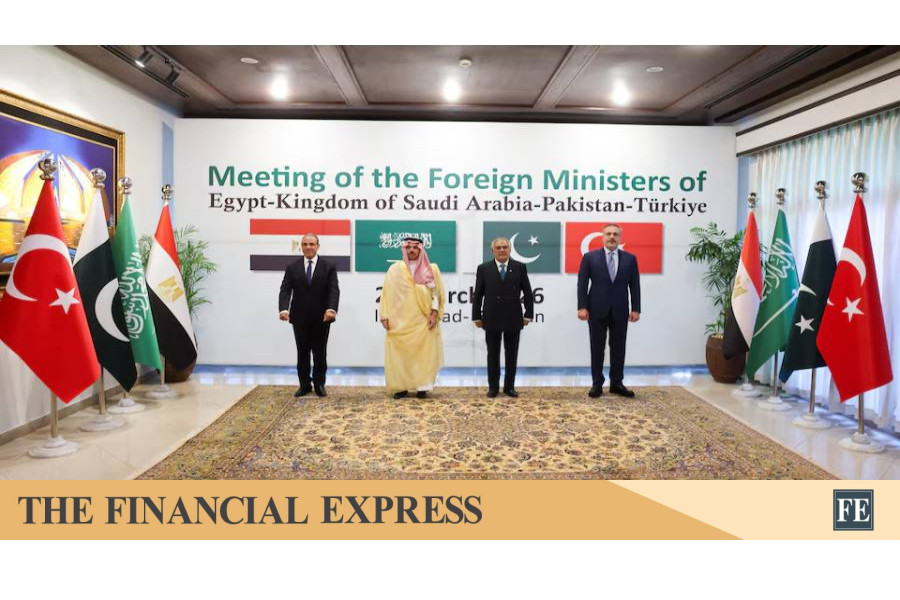
Foreign Ministers Badr Abdelatty of Egypt, Prince Faisal bin Farhan Al Saud of Saudi Arabia, Ishaq Dar of Pakistan and Hakan Fidan of Turkey pose for a group photo during their meeting to discuss regional de-escalation, amid the U.S.-Israel conflict with Iran, in Islamabad, Pakistan, March 29, 2026. Photo : Muammer Tan/Turkish Foreign MinistryHandout via REUTERS

Pakistan hosted talks with Turkey, Egypt and Saudi ‌Arabia on Sunday as part of its efforts to broker an end to the Iran war, with initial discussions focused on proposals to reopen the Strait of Hormuz to shipping, sources familiar with the matter said.

Foreign ministers from the three regional powers landed in Islamabad for the talks as Iran warned the U.S. against launching a ground attack and global oil prices surged amid continued fighting between Iran, the U.S. and Israel.

The countries meeting in Pakistan have floated proposals to ⁠Washington tied to maritime traffic and reopening the Strait of Hormuz, five sources familiar with the matter told Reuters, as part of wider efforts to stabilise shipping flows.

The Strait of Hormuz was previously a conduit for about a fifth of global oil and liquefied natural gas supplies, but Iran has effectively halted shipping flows through it in response to the U.S. and Israeli air strikes that began a month ago.

PROPOSALS ON REOPENING HORMUZ

Pakistan, which like Turkey borders Iran, has leveraged its close ties to both Tehran and Washington to emerge as a key diplomatic channel in the conflict, while Ankara and Cairo have also played a role.

A source from Pakistan said proposals, including from Egypt, had been forwarded to the White House by the countries before ‌Sunday’s meeting ⁠and that they included Suez Canal-style fee structures.

Two other Pakistani sources said Turkey, Egypt and Saudi Arabia could form a consortium to manage oil flows through the waterway, and had asked Pakistan to participate.

The proposal for a management consortium had been discussed with the U.S. and Iran, the sources said. The first Pakistani source said the country’s army chief Asim Munir had been in regular contact with U.S. ⁠Vice President JD Vance.

Egypt’s and Pakistan’s foreign ministries did not respond to a request for comment. The Saudi government media office and the White House did not immediately reply to a comment request.

A Turkish diplomatic source said Ankara’s priority was securing a ceasefire.

“Ensuring the safe passage ⁠of ships could serve as an important confidence-building measure in this regard,” the person said, requesting anonymity.

Earlier on Sunday, Pakistan’s Foreign Minister Ishaq Dar held separate one-on-one meetings with his Turkish and Egyptian counterparts, stressing dialogue and sustained diplomatic engagement, the ⁠foreign office said.

Separately, Dar said in a post on X that Iran had agreed to allow 20 more Pakistani-flagged ships through the Strait of Hormuz.​
 

Iran responds to Trump’s 15-point plan via Islamabad

War escalates as Iran, Israel exchange fresh strikes

Agence France-Presse . Islamabad, Pakistan 30 March, 2026, 00:09

1774835867735.webp

People retrieve computer servers and equipment from an office building that housed the offices of the Doha-headquartered news network Al Araby TV following a missile strike earlier in the day in Tehran on Sunday. | AFP photo

Iran on Sunday conveyed its response to a 15-point US proposal to end the ongoing Middle East war through Islamabad, as Pakistan, Saudi Arabia, Egypt and Turkey held talks about trying to end the Gulf war.

Pakistan has emerged as a key facilitator between Iran and the United States as their war drags on, relaying messages between the two sides.

It is seeking to capitalise on its longstanding links with Tehran and close contacts in the Gulf, and the personal rapport that prime minister Shehbaz Sharif and army chief Asim Munir have struck up with US president Donald Trump.

Foreign minister Ishaq Dar said the talks, held under tight security at his ministry but without any US, Israeli or Iranian representation, came a ‘critical moment’.

‘Our candid and constructive discussions focus on the evolving regional situation and advancing peace and stability, while strengthening our partnership and deepening cooperation,’ he wrote on X.

Dar, who is also Pakistan’s deputy prime minister, held separate bilateral talks with his counterparts—Badr Abdelatty from Egypt, Hakan Fidan from Turkey, and Saudi Arabia’s Faisal bin Farhan. All three visitors also met Munir.

Tehran has refused to admit to holding official talks with Washington but has passed a response to Trump’s 15-point plan to end the war via Islamabad, according to an anonymous source cited by the Iranian Tasnim news agency.
The speaker of Iran’s parliament accused the United States on Sunday of plotting a ground attack despite publicly pushing for a negotiated deal, after a US warship with around 3,500 military personnel arrived in the Middle East.

Mohammad Bagher Ghalibaf’s comments come after more than a month of aerial bombardments by Iran by US and Israeli forces, and as key regional players met to hold talks in Pakistan.

The war has escalated into a regional conflagration as Iran has retaliated with attacks on Gulf states, sending energy markets into a tailspin and threatening the world economy.

‘The enemy publicly sends messages of negotiation and dialogue while secretly planning a ground attack,’ Ghalibaf said in a statement carried by the official IRNA news agency.

‘Our men are waiting for the arrival of the American soldiers on the ground to set them on fire and punish their regional allies once and for all,’ he added.

The Washington Post reported the Pentagon was preparing plans for weeks of ground operations—potentially including raids on sites near the Strait of Hormuz—though US president Donald Trump has yet to approve any deployment.

In Tehran, two blasts shook the city early Sunday, an AFP journalist said, although it was not clear what was targeted.

The Qatari news channel Al Araby said an Israeli missile hit the building housing its office in the city.

Iranian forces said they had fired a volley of missiles and drones at plants belonging to two of the world’s largest aluminium producers in Bahrain and the United Arab Emirates, targeting what they described as industries linked to the US military.

Emirates Global Aluminium said an Iranian attack wounded six and caused significant damage to its plant, while Bahraini state media said two Aluminium Bahrain employees were injured in a second attack.

As the spectre of a widening conflict grew, Yemen’s Houthis on Saturday claimed their first attack of the war, firing what they described as ‘a barrage of cruise missiles and drones’ at strategic sites in Israel.

The attacks raised concern about the war spreading to the Red Sea, with Saudi Arabia rerouting much of its oil exports there to avoid Hormuz.

On another front, Israeli attacks have continued in Lebanon, which was drawn into the war when Tehran-backed Hezbollah fired rockets at Israel on March 2.

On Saturday, the Israeli military killed three journalists in the south.

Hundreds of people gathered in the rain for the funeral of the three journalists near Beirut on Sunday.

Hundreds gathered in Tel Aviv and some other Israeli cities on Saturday to protest the Middle East war, in unauthorised demonstrations that security forces sought to disperse.

Numbers attending weekly protests against the war appear to be rising, though they are far from the tens of thousands who filled the streets last year to protest the conflict against Hamas in Gaza.

The American University of Beirut on Sunday said it would operate remotely over the next two days, following the Iranian Revolutionary Guards’ threat to target US universities in the region.

‘Like many of you, we learned early this morning of threats issued against American universities in the region,’ AUB president Fadlo Khouri said in a statement.

Iran’s Revolutionary Guard on Sunday threatened to target US universities in the Middle East after saying US-Israeli strikes had destroyed two Iranian universities.

Iran’s nationwide internet blackout was on its 30th consecutive day Sunday, leaving millions cut off from information and communication since the war with the United States and Israel erupted.

‘Iran’s internet blackout has now entered day 30 as the nationwide censorship measure continues into its fifth week after 696 hours,’ internet monitoring group NetBlocks said on X on Sunday.​
 

China and Pakistan outline five-point plan to end Mideast war

AFP
Beijing, China
Published: 31 Mar 2026, 20: 28

1775003294812.webp

This handout photograph taken on March 31, 2026 and released by Pakistan's Ministry of Foreign Affairs shows China's Foreign Minister Wang Yi (R) speaking with his Pakistani counterpart Ishaq Dar in Beijing. China and Pakistan will "strengthen" their cooperation on Iran, Beijing's foreign ministry said on March 31, as senior Islamabad officials visited the Chinese capital. (Photo by Pakistan's Ministry of Foreign Affairs / AFP) / RESTRICTED TO EDITORIAL USE - MANDATORY CREDIT "AFP PHOTO/Pakistan's Ministry of Foreign Affairs/-" - HANDOUT - NO MARKETING NO ADVERTISING CAMPAIGNS - DISTRIBUTED AS A SERVICE TO CLIENTSAFP

China and Pakistan called on Tuesday for an immediate end to the war in the Middle East, and for peace talks as soon as possible, as they agreed to boost their cooperation on Iran.

The two countries outlined a joint initiative "for restoring peace and stability in the Gulf and Middle East region", after a visit from senior Pakistani officials to Beijing.

Both countries have sought to mediate in the Middle East to prevent the conflict from escalating, with Islamabad saying it is ready to host "meaningful talks" between the United States and Iran.

Pakistani Foreign Minister Ishaq Dar met his Chinese counterpart Wang Yi and agreed to "strengthen strategic communication and coordination on the Iran situation and ... make new efforts towards advocating for peace", Beijing said.

Dar's ministry later said the two sides had agreed on a five-point plan, starting with the "immediate cessation of hostilities" and the "start of peace talks as soon as possible".

On talks, which the United States claims are ongoing but Iran denies, the governments said dialogue and diplomacy were "the only viable option to resolve conflicts".

"China and Pakistan support the relevant parties in initiating talks, with all parties committing to peaceful resolution of disputes, and refraining from the use or the threat of use of force during peace talks," it added.

The plan also calls for an end to attacks on civilians and non-military targets, such as energy infrastructure and desalination plants.

Shipping lanes should be secured, allowing "the early and safe passage of civilian and commercial ships" through the strategic Strait of Hormuz, it added.

Both countries said a lasting peace should be based on the UN charter and international law.

Dar's visit comes after he hosted his counterparts from Saudi Arabia, Egypt and Turkey on Sunday for weekend talks about trying to end the war, which was triggered by US-Israeli strikes on Iran on 28 February.

Concerns are running high about the impact of the fighting, including the choking of maritime traffic through the Strait.

China is a key partner of Iran but has not announced military assistance to Tehran, instead repeatedly calling for a ceasefire.

Tehran has refused to admit to holding official talks with Washington but has passed a response to President Donald Trump's 15-point plan to end the war via Islamabad, according to an anonymous source cited by the Iranian Tasnim news agency.

Pakistan is one of China's closest partners in the region, but Beijing has called for "calm and restraint" in Islamabad''s own conflict with Afghanistan.

A Chinese special envoy spent a week mediating between the two countries, Beijing''s foreign ministry said this month.​
 

Latest Posts

Back