Wars 2026 02/28 Israel-Iran War 3.0

Wars 2026 02/28 Israel-Iran War 3.0
133
1K
More threads by RayKalm

G War Archive

Iran war leaves crisis-scarred countries counting the cost

REUTERS

Published :
Apr 10, 2026 22:42
Updated :
Apr 10, 2026 22:42

1775868386699.webp


Sanoj Weeratunge thought this would finally be the year his tour firm put Sri Lanka's spate of crises behind it. Then the Iran war erupted 2,700 miles away, the government hiked fuel prices by 35percent and business slumped almost a third.

"We have had a very difficult road over the past six years to recover and were very hopeful that this would finally be the year where we reach pre-COVID levels," Weeratunge said from his office in Colombo. "But now this economic shock will affect us."

Sri Lanka, like Egypt and Pakistan, belongs to a group of crisis-scarred, lower-income countries that analysts fear have been thrust back towards trouble as the energy imports on which they rely become more expensive due to the war.

Despite this week's fragile ceasefire in the Gulf, Colombo has reintroduced fuel subsidies and negotiated a temporary easing of the terms of its International Monetary Fund bailout to give itself some breathing space. There are likely to be other countries trying to do the same next week in Washington, at the IMF and World Bank spring meetings.

The IMF is ready to listen and expects to have to provide between $20 billion to $50 billion of emergency support due to the crisis, chief Kristalina Georgieva said on Thursday.

Help Wanted

Former Pakistan central bank governor Reza Baqir, who now advises governments in debt distress, says the conflict has hit vulnerable countries from almost every angle.

The 40 percent surge in oil prices means import bills are soaring just as remittances from expats in the Gulf look likely to fall and economies in general get squeezed.

As current account deficits widen and currencies come under strain - Egypt's pound has plunged over 10percent since the war - dollar-denominated oil, food, fertiliser and debt payments become even more costly.

That then has to be covered with foreign currency reserves, more borrowing or by slashing other imports.

What is needed, Baqir said, is "a credible statement from institutions like the IMF and others that they are ready to backstop these countries. And I think the sooner, the better".

Pakistan's reserves stood at $16.4 billion on a gross basis at the end of March. That is not enough to cover three months of basic imports, but JPMorgan says the amount is actually negative if the central bank's foreign currency liabilities are factored in.

Petrol prices there were just hiked for the second time and schools closed for half of March. Meanwhile, government departments were on a four-day week — and now banned from buying new furniture or air conditioners.

Islamabad's latest worry, though, is that it will have to repay a $3.5 billion loan from the United Arab Emirates. If it cannot roll it over, its finances will be under even more strain, given its $7 billion IMF programme, former fund official Jeff Franks said.

"I'm sure for Pakistan and Egypt, if they get to meet with the managing director or other top IMF officials next week, they will be stressing just how bad this shock is for stability," Franks said.

‘Difficult To Manage’

As in Sri Lanka, the rising prices have made locals in traditionally volatile Pakistan and elsewhere unhappy.

"Everything has become expensive," Maviq Hussain, a food delivery driver in Karachi, said. "It's difficult to manage daily expenses."

For Egypt, there's also the hit to tourism, which brought in $19 billion last year. Not to mention the potential impact on the Suez Canal and an enormous debt burden — which had already been expected to absorb 60 percent of revenues this year.

The near-$30 billion of payments due add up to more than half of Egypt's foreign-exchange reserves. Around $8 billion of foreign investor money has already fled since the war started, Moody's noted last week.

The IMF has praised Cairo's decision to allow the currency to act as a "shock absorber". But the doubling of Egypt's energy import bill means crisis veterans expect it might be one of the busier countries in Washington next week.

"It is in no one's interest to be rigid in the conditionality and allow these countries to fail," Franks said.

On the streets, crisis-weary locals just hope the pressure eases.

Kelum Dissanayaka, a 37-year-old Sri Lankan father of three, begins work as a ride-hailing and delivery app driver at 4 a.m., but spiralling costs and fuel rationing mean he has had to skip his tuk-tuk's leasing payment two months running.

"It's very difficult to live," he said.​
 

Trump warns Iran against tolls for Hormuz shipping

AFP
Washington, United States
Published: 10 Apr 2026, 19: 01

1775870610739.webp

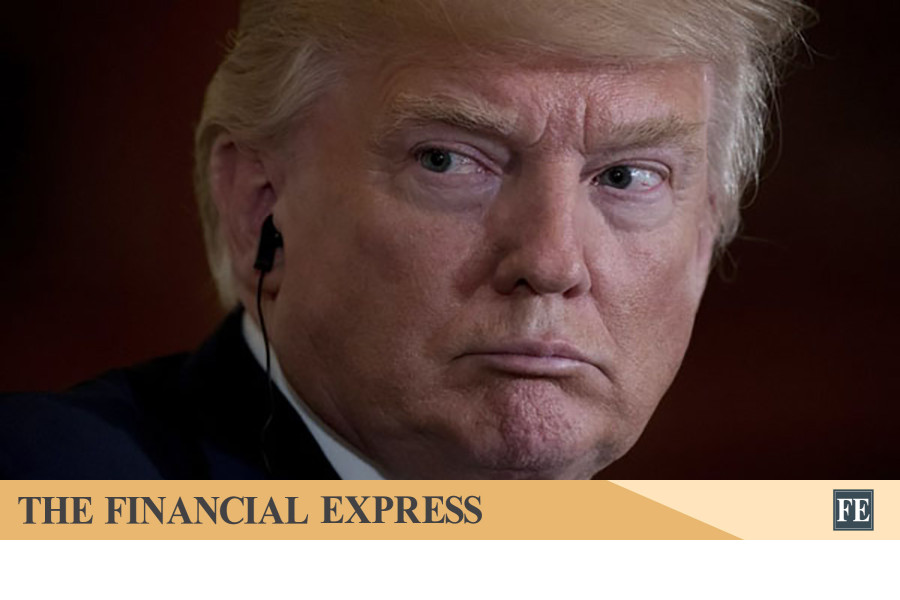
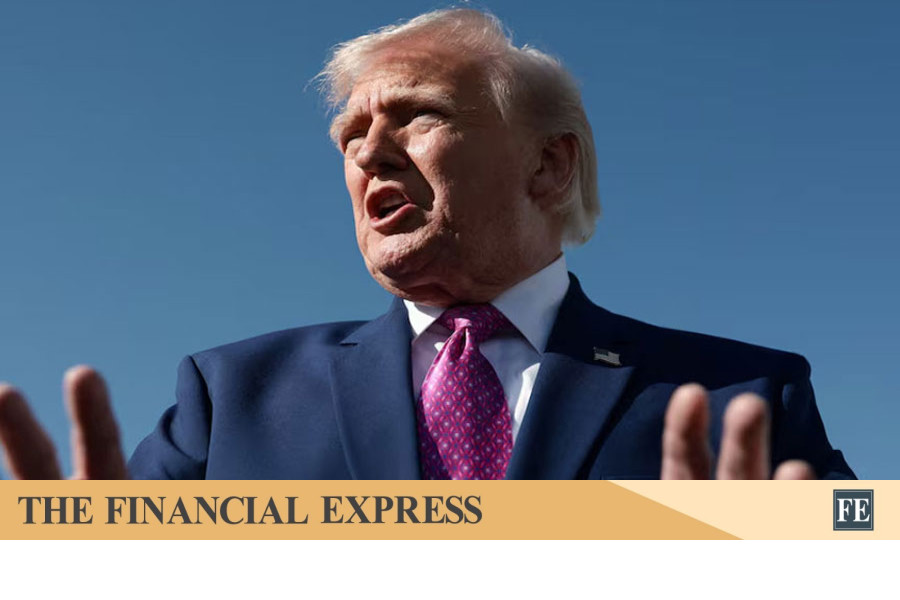
US President Donald Trump AFP file photo

US President Donald Trump on Thursday warned Iran against imposing a toll for ships passing through the Strait of Hormuz, after Tehran agreed to reopen the crucial route as part of a two-week ceasefire.

"There are reports that Iran is charging fees to tankers going through the Hormuz Strait -- They better not be and, if they are, they better stop now!" Trump said on his Truth Social platform.

In a second message just a few minutes later, Trump added that "very quickly, you'll see Oil start flowing, with or without the help of Iran."

The US leader kept up his barrages of social media posts with another that accused Tehran of "doing a very poor job, dishonorable some would say, of allowing Oil to go through the Strait of Hormuz."

"That is not the agreement we have!" Trump added.

Just 10 vessels have passed through Strait of Hormuz since the Middle East war ceasefire took effect, according to maritime tracking data consulted Thursday.​
 

US-Iran ceasefire deal shows strain ahead of talks with oil flows squeezed

Iran says ceasefire must include Lebanon; Israel says it is not covered.

Reuters
Jerusalem, Beirut, Islamabad
Published: 10 Apr 2026, 10: 06

1775871604452.webp

Heavy machinery operates at the site of an Israeli strike carried out on Wednesday, in Ain Al Mraiseh in Beirut, Lebanon, 9 April, 2026. Reuters

A fragile two-week ceasefire between the US and Iran showed further strain on Friday, a day before they are to negotiate in Pakistan, as Washington accused Tehran of breaching promises on the Strait of Hormuz and Israel struck Lebanon with attacks that Iran has ‌claimed violate the truce.

There was no sign Iran was lifting its near-total blockade of the strait, which has caused the worst-ever disruption to global energy supplies. Tehran cited Israel's ongoing attacks on Lebanon, which included the heaviest strikes of the war on Wednesday, as a key sticking point.

US President Donald Trump said in a social media post late Thursday that Iran was doing a "very poor job" of allowing oil to go through the strait. "That is not the agreement we have!"

In a separate post, he said oil would start flowing again, without saying what actions the US might take.

In the first 24 hours of the ceasefire, which Trump announced on Tuesday, just a single oil products tanker and five dry bulk carriers sailed ⁠through the strait, which typically carries a fifth of the world's oil and liquefied natural gas flows and 140 ships a day before the war.

Fresh Attacks

Israel's military said early on Friday it had struck 10 launchers in Lebanon that fired rockets toward northern Israel on Thursday evening, and that Iran-allied armed group Hezbollah launched a missile at Israel, triggering air sirens.

The missile was intercepted, according to the Times of Israel. Hezbollah said it had targeted Israeli military infrastructure in the northern city of Haifa.

The US and Israel have said the latest ceasefire does not include Lebanon, which Israel invaded last month - in parallel with the war on Iran - to root out Hezbollah.

But Iran and Pakistan, which acted as mediator, say Lebanon was explicitly part of the deal. Iran's Parliament Speaker Mohammad Baqer Qalibaf, expected to head the Iranian delegation opposite US Vice President JD Vance, said on social media that Lebanon and the rest of Iran's "axis" of regional allies were inseparable parts of any ceasefire.

In a defiant statement, Iran's Supreme Leader Ayatollah Mojtaba Khamenei said on Thursday that Iran would exact retribution for the war.

"We will certainly not leave unpunished the criminal aggressors who attacked our ‌country. We ⁠will undoubtedly demand compensation for every single damage inflicted," he said in the statement.

The agreement for a two-week truce, mediated by Pakistan, came just hours before a deadline that Trump said would trigger US attacks on Iran's power plants and bridges and the destruction of "a whole civilization."

US-Iran talks scheduled for Saturday

In Pakistan, authorities were preparing for the first round of US-Iran talks on Saturday aimed at settling the conflict that began with US and Israeli attacks on Iran on 28 February.

Iran released on Wednesday a 10-point proposal for a settlement to the war that included maintaining control of the Strait of Hormuz, acceptance of Iran's right to ⁠nuclear enrichment, lifting of sanctions and ending the war, including against Hezbollah in Lebanon.

While he said Israel would continue attacks on Hezbollah, Israeli Prime Minister Benjamin Netanyahu, whose government rebuffed an offer for direct talks with Lebanon last month, said on Thursday he had given instructions to start peace talks as soon as possible, which would include disarming Hezbollah.

"The negotiations will focus on disarming Hezbollah and establishing peaceful relations between Israel and ⁠Lebanon," he said.

A senior Lebanese official told Reuters Lebanon had spent the last day pushing for a temporary ceasefire to allow for broader talks with Israel, describing the effort as a "separate track but the same model" as the US-Iran truce.

Israel was preparing to scale down its attacks in Lebanon, a senior Israeli official said on Thursday. US media outlets reported that Trump said he asked ⁠Netanyahu to be more "low-key" in Lebanon.

Another Israeli official said talks with Lebanon were expected to begin in Washington next week. A US State Department official confirmed the US would host next week's meeting to "discuss ongoing ceasefire negotiations."

Hezbollah lawmaker Ali Fayyad said in a statement on Thursday that the group rejected direct negotiations with Israel and the Lebanese government should demand a ceasefire as a precondition to further steps.​
 

Trump says US forces are ‘clearing’ Strait of Hormuz

REUTERS
Published :
Apr 11, 2026 20:03
Updated :
Apr 11, 2026 20:03

1775952660968.webp


US President Donald Trump on Saturday posted on social media that the United States military has started to clear the Strait of Hormuz, and that all of Iran's minelaying ships have been sunk.

"We're now starting the process of clearing out the Strait of Hormuz," Trump wrote in a social media post, adding that "all 28" of Iran's "mine dropper boats are also lying at the bottom of the sea".

Trump has repeatedly said that American forces have destroyed Iran's navy and air force while crippling its ballistic missile and nuclear programmes.

But fear of Iranian attacks on shipping over the past several weeks has effectively closed the Strait of Hormuz, a critical conduit for global oil supplies. Throttling the strait has disrupted global energy markets.

US gasoline prices have spiked even though most of the oil that flows through the waterway does not go to the United States.

Representatives from the US and Iran began talks hosted by Pakistan in Islamabad on Saturday amid a fragile ceasefire in the conflict.​
 

US-Iran peace talks end without a deal as delegations leave Pakistan

REUTERS
Published :
Apr 12, 2026 18:22
Updated :
Apr 12, 2026 18:30

1776038929805.webp


US Vice President JD Vance waves as he boards Air Force Two, after peace talks with Iran in Islamabad, Pakistan, Sunday, Apr 12, 2026. Photo : Jacquelyn Martin/Pool via REUTERS

The US and Iran failed to reach an agreement to end their war despite marathon talks that concluded on Sunday in the Pakistani capital Islamabad, jeopardising a fragile ceasefire.

Each side blamed the other for the failure of the 21-hour negotiations to end fighting that has killed thousands, roiled the global economy and sent oil prices soaring since it began more than six weeks ago.

"The bad news is that we have not reached an agreement, and I think that's bad news for Iran much more than it's bad news for the United States of America," said Vice President JD Vance, the head of the US delegation.

"So we go back to the United States having not come to an agreement. We've made it very clear what our red lines are."

Iran Cites Lack Of Trust In The Talks

Iran's Parliamentary Speaker Mohammad Baqer Qalibaf, who led his country's delegation along with Foreign Minister Abbas Araqchi, blamed the US for not winning Iran's trust despite his team offering "forward-looking initiatives".

"The US has understood Iran's logic and principles and it's time for them to decide whether they can earn our trust or not," Qalibaf said on X.

Both the US and Iranian delegations have now left Islamabad to return home, Pakistani sources told Reuters.

The talks, after a ceasefire earlier in the week, were the first direct US-Iranian meeting in more than a decade and the highest-level discussions since the 1979 Islamic Revolution.

Vance said Iran had chosen not to accept American terms, including not to build nuclear weapons.

"We need to see an affirmative commitment that they will not seek a nuclear weapon and they will not seek the tools that would enable them to quickly achieve a nuclear weapon," he said.

"That is the core goal of the president of the United States, and that's what we've tried to achieve through these negotiations."

Iran's semi-official Tasnim news agency said "excessive" US demands had hindered reaching an agreement. Other Iranian media said there was agreement on a number of issues but that the Strait of Hormuz and Iran's nuclear programme were the main points of difference.

‘Imperative’ To Maintain Ceasefire

Pakistan's Foreign Minister Ishaq Dar said it was "imperative" to preserve the two-week ceasefire that was agreed last Tuesday as the sides attempt to wind down a war that began on Feb 28 with air strikes by the US and Israel on Iran.

Israeli security cabinet minister Zeev Elkin told Army Radio that more talks were still an option, but added: "The Iranians are playing with fire."

In his brief press conference, Vance did not mention reopening the Strait of Hormuz, a choke point for about 20 percent of global energy supplies that Iran has blocked since the war began.

Vance said he had spoken with President Donald Trump as many as a dozen times during the talks. But even as the negotiations continued, Trump said on Saturday that a deal was not entirely necessary.

"We're negotiating. Whether we make a deal or not makes no difference to me, because we've won," he told reporters.

Even as the talks were taking place, US ally Israel continued bombing Tehran-backed Hezbollah militants in Lebanon, insisting that that conflict was not part of the Iran-US ceasefire. Iran says the fighting in Lebanon must stop.

The Israeli military said it struck Hezbollah rocket launchers overnight into Sunday and black smoke could be seen rising in the southern suburbs of the Lebanese capital Beirut on Sunday. In Israeli villages near the border, air raid sirens sounded, warning of incoming rocket fire from Lebanon.

Iranian Demands

Tehran is demanding control of the Strait of Hormuz, payment of war reparations and a ceasefire across the region, including in Lebanon, according to Iranian state TV and officials, as well as the release of its frozen assets abroad.

Tehran also wants to collect transit fees in the Strait of Hormuz.

Despite the differences in Islamabad, three supertankers fully laden with oil passed through the Strait of Hormuz on Saturday, shipping data showed, in what appeared to be the first vessels to exit the Gulf since the ceasefire deal.

Hundreds of tankers are still stuck in the Gulf, waiting to exit during the two-week ceasefire period.

Trump's stated goals have shifted, but as a minimum he wants free passage for global shipping through the strait and the crippling of Iran's nuclear enrichment programme to ensure it cannot produce an atomic bomb.

Tehran has long denied seeking to build a nuclear weapon.​
 

Trump vows to blockade Strait of Hormuz after Iran peace talks stumble

REUTERS
Published :
Apr 12, 2026 22:24
Updated :
Apr 12, 2026 22:24

1776039553322.webp

A vessel at the Strait of Hormuz, off the coast of Oman’s Musandam province, Apr 12, 2026. REUTERS

President Donald Trump said on Sunday the US Navy would start blockading the Strait of Hormuz, raising the stakes after marathon talks with Iran failed to reach a deal to end the war, jeopardising a fragile two-week ceasefire.

Trump also said in a post on Truth Social that the US would take action against every vessel in international waters that had paid a toll to Iran, and begin destroying mines that he said the Iranians had dropped in the strait, a choke point for about 20 per cent of global energy supplies that Iran has blocked.

"Effective immediately, the United States Navy, the Finest in the World, will begin the process of BLOCKADING any and all Ships trying to enter, or leave, the Strait of Hormuz," he said.

"I have also instructed our Navy to seek and interdict every vessel in International Waters that has paid a toll to Iran. No one who pays an illegal toll will have safe passage on the high seas," Trump added.

"Any Iranian who fires at us, or at peaceful vessels, will be BLOWN TO HELL!" he added.

Trump later told Fox News that NATO allies, whom he has criticised for failing to back the war he launched along with Israel on Feb 28, wanted to help with the operation in the strait. There was no immediate comment from Washington's allies.

Trading Blame

Trump also said he expected that the Iranians would return to the bargaining table and "give us everything we want" following the weekend talks in Islamabad, adding that a comment he made last week about wiping out Iranian civilisation had helped to get them to negotiate in the first place.

Earlier, each side blamed the other for the failure of the talks to end six weeks of fighting that has killed thousands, roiled the global economy and sent oil prices soaring.

"The bad news is that we have not reached an agreement, and I think that's bad news for Iran much more than it's bad news for the United States of America," said Vice-President JD Vance, who headed the US delegation to the Islamabad talks.

Iran's Parliamentary Speaker Mohammad Baqer Qalibaf, who led his country's delegation along with Foreign Minister Abbas Araqchi, blamed the US for not winning Tehran's trust despite his team offering "forward-looking initiatives".

"The US has understood Iran's logic and principles and it's time for them to decide whether they can earn our trust or not," Qalibaf said on X.

The talks, which followed the announcement of a ceasefire last Tuesday, were the first direct US-Iranian meeting in more than a decade and the highest-level discussions since the 1979 Islamic Revolution.

Vance said Iran had chosen not to accept American terms, including not to build nuclear weapons.

"I could go into great detail, and talk about much that has been gotten but, there is only one thing that matters — IRAN IS UNWILLING TO GIVE UP ITS NUCLEAR AMBITIONS!" Trump said later.

Iran's semi-official Tasnim news agency said "excessive" US demands had hindered reaching a deal. Other Iranian media said there was agreement on a number of issues, but the Strait of Hormuz and Iran's nuclear programme were the main points of difference.

Pakistan's Foreign Minister Ishaq Dar said it was "imperative" to preserve the ceasefire. Speaking in Rome, Pope Leo also called on Sunday for a lasting ceasefire and said how close he felt to the "beloved Lebanese people".

Israel Continues Bombing Lebanon

Israeli security cabinet minister Zeev Elkin told Army Radio that more talks were still an option, but added: "The Iranians are playing with fire."

Even as the talks took place, Israel continued bombing Tehran-backed Hezbollah militants in Lebanon, insisting - along with Washington - that that conflict was not part of the Iran-US ceasefire. Iran says the fighting in Lebanon must stop.

The Israeli military said it struck Hezbollah rocket launchers overnight into Sunday and black smoke could be seen rising in the southern suburbs of the Lebanese capital Beirut on Sunday. In Israeli villages near the border, air raid sirens sounded, warning of incoming rocket fire from Lebanon.

Tehran is demanding control of the Strait of Hormuz, payment of war reparations and a ceasefire across the region, according to Iranian state TV and officials, as well as the release of its frozen assets abroad.

Tehran also wants to collect transit fees in the Strait of Hormuz.

Despite the differences in Islamabad, three supertankers fully laden with oil passed through the Strait of Hormuz on Saturday, shipping data showed, in what appeared to be the first vessels to exit the Gulf since the ceasefire deal.​
 

Latest Posts

Back