Five farmers have reportedly been beaten and injured by members of India’s Border Security Force, or BSF, after they entered Bangladesh through the border in Kurigram’s Phulbari Upazila. Upon hearing of the altercation, residents of the border region armed themselves with sticks and ga
thefinancialexpress.com.bd
BSF ‘crosses into’ Kurigram border, beats 5 farmers
bdnews24.com
Published :
Feb 14, 2025 22:04
Updated :
Feb 14, 2025 22:04
Five farmers have reportedly been beaten and injured by members of India’s Border Security Force, or BSF, after they entered Bangladesh through the border in Kurigram’s Phulbari Upazila.
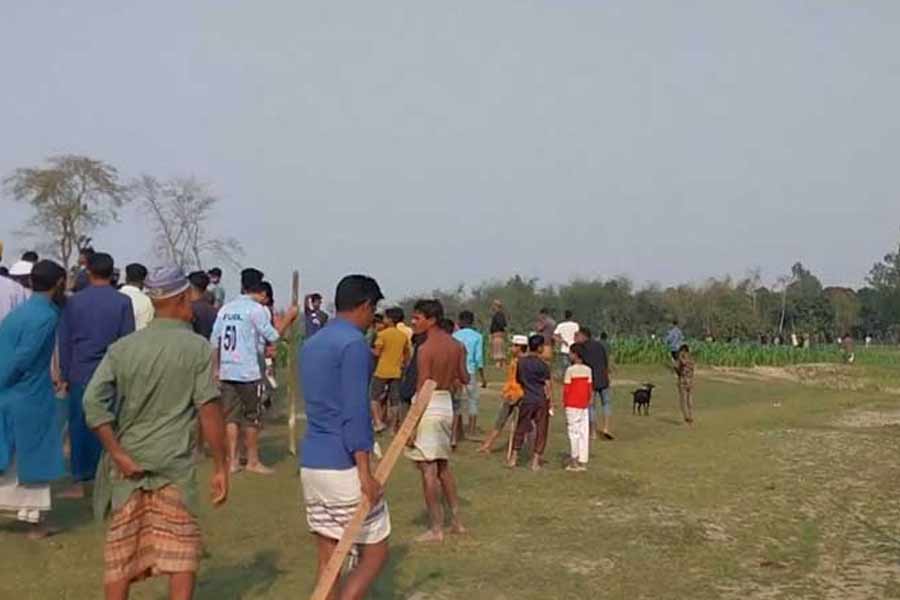
Upon hearing of the altercation, residents of the border region armed themselves with sticks and gathered at the zero line.
The situation was eventually diffused defused when the Border Guard Bangladesh, or BGB, personnel intervened, calming the crowd and restoring order.
The incident occurred near Balatari International Border Pillar No 930 (HS) in Nawdanga Union of the Upazila on Friday afternoon, according to Havildar Delbar Hossain of the BGB’s Gorakhmandal Border Outpost, or BOP.
The five individuals who sustained injuries have been identified as Shamsul Haque, 60, Jabed Ali, 55, Tajul Islam, 40, Kashem Ali, 50, and Ripon, 35, identified by a single name. All of them are residents of Krishnananda Bakshi village.
Witnesses said members of India's Narayanganj-138 Battalion of the BSF crossed the barbed-wire fence and entered approximately 500 yards into Bangladesh's zero line.
The confrontation began when Bangladeshi farmers working along the border protested the incursion, leading to a heated argument between the two sides.
The situation escalated when BSF personnel reportedly began striking the farmers with sticks, leaving five injured.
Upon learning of the incident, local villagers pursued the BSF members, who subsequently retreated across the border.
The clash has heightened tensions in the area.
Local resident Rubel Islam recounted the incident, saying: "When BSF members entered Bangladesh in the afternoon, they were confronted. They became angry and beat us up."
Delbar confirmed that the situation along the border has since stabilised. He added that the incident has been reported to higher authorities for further review.
Lt Col Shakil Alam, commander of the BGB's Lalmonirhat-15 Battalion, asserted: "It is not a simple matter for the BSF to cross into Bangladesh and assault individuals. However, thorough inquiries are being conducted regarding the incident."
The Indian Border Security Force (BSF) expressed regret at a flag meeting today over attacking Bangladeshi farmers after entering Bangladeshi territory at the Phulbari border in Kurigram yesterday.
www.thedailystar.net
BSF expresses regret for assaulting Bangladeshi farmers
Says will take action against guilty members
Photo: Star
The Indian Border Security Force (BSF) expressed regret at a flag meeting today over attacking Bangladeshi farmers after entering Bangladeshi territory at the Phulbari border in Kurigram yesterday.
Lt Col Shakil Alam, commanding officer of Border Guard Bangladesh (BGB) Battalion-15 in Lalmonirhat, confirmed the information today.
He said that during the meeting, the BSF also assured the BGB that action would be taken against the guilty BSF members.
The battalion commander-level flag meeting was held around noon.
Lt Col Shakil Alam led the 15-member BGB team, while Acting Commander of the 3 BSF Battalion Amit Kumar led the 10-member BSF team.
At the meeting, the BGB strongly protested the assault on Bangladeshi nationals.
Earlier, on Friday at noon, five BSF members entered Bangladeshi territory near sub-pillar 8 of border main pillar 930 at the Paschim Balatari border of Naodanga Union in Phulbari Upazila.
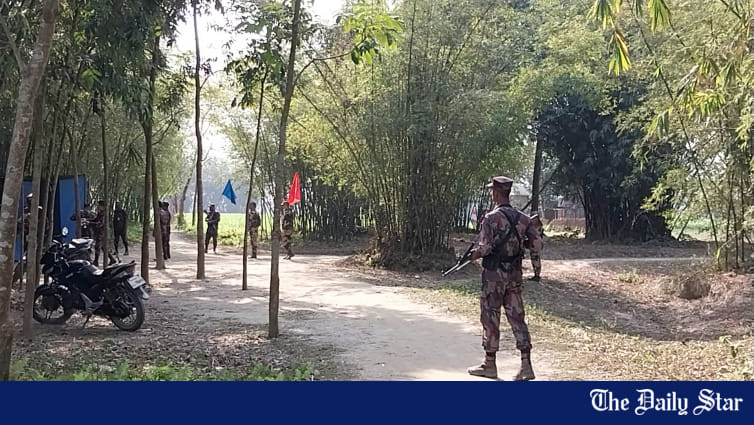
At that time, they beat up five Bangladeshi farmers. When locals protested, the BSF personnel retreated to India, causing tension at the border. Later, BGB members arrived at the scene and calmed the agitated locals.
The commanding officer stated that the overall situation at the border is now normal. Farmers can work on the croplands in no-man's land without fear.
The 55th border conference at the director general level between the Border Guard Bangladesh (BGB) and the Indian Border Security Force (BSF) will commence today in New Delhi.
www.thedailystar.net
Border killing, fencing high on agenda
BGB-BSF annual meet starts in New Delhi today
Photo: Collected
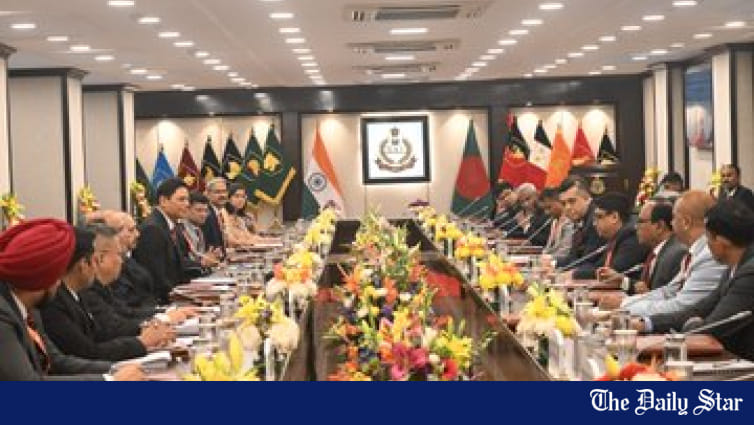
The 55th border conference at the director general level between the Border Guard Bangladesh (BGB) and the Indian Border Security Force (BSF) will commence today in New Delhi.
This year's conference will focus on various issues, including killings, detentions and abductions of Bangladeshis by BSF, BGB said in a release yesterday.
The four-day conference will also discuss measures to prevent smuggling of various types of drugs, weapons, ammunition, and other prohibited items from India into Bangladesh.
Additionally, the conference will address the prevention of illegal border crossings, particularly efforts to stop forcibly displaced Myanmar nationals from entering Bangladesh through the Indian border, in violation of international boundary laws, the press release added.
Other key topics of discussion include halting the construction of unauthorised structures, including barbed-wire fences within 150 yards of the border; establishing a proper water treatment facility to remove waste from four canals flowing from Agartala towards Akhaura; opening the mouth of Rahimpur Canal to connect with the Kushiyara River in Zakiganj; exchanging information on the possible locations and activities of regional armed separatist groups; and ensuring the effective implementation of the Coordinated Border Management Plan (CBMP) for improved border management and conflict resolution.
The conference will also focus on enhancing bilateral relations and fostering mutual trust and goodwill, the release said.
The DG level talks is taking place amid tensions between the BGB and BSF, over the constructions of barbed wire fences within 150 yards of the border.
On January 12, Home Affairs Adviser Lt Gen (retd) Jahangir Alam Chowdhury said that due to BSF's recent fencing activities, tensions arose in five border areas, including Chapainawabganj, Naogaon, Lalmonirhat, and the Tin Bigha Corridor.
The adviser said India has already fenced 3,271 kilometres of the 4,156-kilometer-long border with Bangladesh, leaving approximately 885 kilometres unfenced.
On January 29, the home adviser said that Bangladesh will speak in a "different tone" during the border conference between the BGB-BSF DG-level talks.
A 14-member Bangladeshi delegation, led by the BGB Director Major General Mohammad Ashrafuzzaman Siddiqui,will participate in the conference.
The Bangladeshi delegation will include senior BGB officials as well as representatives from the Chief Adviser's Office, the Ministry of Home Affairs, the Ministry of Foreign Affairs, the Ministry of Shipping, the Land Record and Survey Department, and the Joint Rivers Commission.
On the other hand, a 13-member Indian delegation, led by the BSF Director General Daljit Singh Chaudhary, will take part in the conference.
The Indian delegation will include senior BSF officials along with representatives from India's Ministry of Home Affairs and Ministry of External Affairs.
BSF is likely to raise the issue of attacks on its personnel by "armed miscreants" from Bangladesh, reports our Delhi correspondent.
The talks, which were originally scheduled to be held in November last year, would focus on resolving the impasse over proposed construction of single-row fence by India to close gaps along Indo-Bangladesh border.
BSF recently had to suspend erection of the single-row fence within 150 yards of the border at two points - in Malda and Dakshin Dinajpur district of West Bengal - after BGB raised objections.
The border conference will formally conclude on February 20. The Bangladeshi delegation will return home on the same day following the conclusion of the conference.
On the second day of the biannual BGB-BSF talks yesterday, Bangladesh reiterated the urgent need to ensure that no border killings take place.
www.thedailystar.net
BGB-BSF talks: Killings at border can’t be justified
Bangladesh tells India, discusses fencing
Photo: Collected
On the second day of the biannual BGB-BSF talks yesterday, Bangladesh reiterated the urgent need to ensure that no border killings take place.
The 55th meeting between the director generals of India's Border Security Force and the Border Guard Bangladesh in Delhi was the first since the fall of the Hasina-led regime.
According to meeting sources, Bangladesh argued that while Dhaka has no objection to trying border transgressors under existing laws, the killings cannot be justified.
"This is a sensitive issue for Bangladesh," the visiting delegation said at the meeting.
Meanwhile, the Indian delegation stated that implementing the coordinated border management plan is necessary to stop organised crime at the border, according to sources on both sides.
The BGB delegation is headed by Director General Maj General Mohammad Ashrafuzzaman Siddiqui, while the BSF is led by DG Daljit Singh Chawdhary.
The meeting also discussed the BSF's border fencing.
The Indian force claimed that the already-built single-row fences were "as per the past agreements between the sovereign governments of the two countries, which the BGB should abide by".
In a counter statement, the BGB said that as per the understanding between the two sides, fencing should be preceded by a "joint survey by border guards of both countries to decide where and how to set up the fences".
The ongoing meeting focused on measures to check cross-border crimes, including the smuggling of Phensedyl, yaba, other narcotics, and arms.
Sources said the overall atmosphere in the meeting was "friendly" and that sensitive bilateral issues were discussed "in a candid manner", even though strong arguments were presented.
The BSF yesterday hosted a dinner for the 14-member BGB delegation.
The summit in New Delhi was shortened to three days from five, and the talks have been "business-like", said sources.
Bangladesh and India on Thursday agreed to work together with utmost synergy by enhancing joint patrolling, vigilance, and intensifying public awareness programmes
en.prothomalo.com
Bangladesh, India want effective border management without any killing
UNB
Published: 20 Feb 2025, 21: 42
Major General Mohammad Ashrafuzzaman Siddiqui, Director General of BGB and Daljit Singh Chawdhary, DG BSF, at the DG-level coordination conference in New Delhi Collected
Reaffirming the need for synergistic efforts to uphold human rights and curb violence on the border, Bangladesh and India on Thursday agreed to work together with utmost synergy by enhancing joint patrolling, vigilance, and intensifying public awareness programmes.
The two countries also laid emphasis on undertaking appropriate socio-economic development programmes and sharing of real-time information in order to ensure effective border management without any killing of either side.
Border forces of Bangladesh and India held the Director General-level coordination conference on 17 to 20 February in New Delhi and discussed the relevant issues.
The Bangladesh delegation was headed by Major General Mohammad Ashrafuzzaman Siddiqui, Director General, Border Guard Bangladesh (BGB) while the Indian delegation was headed by Daljit Singh Chawdhary, DG BSF.
This highest level talk between Border Security Force (BSF) India and Border Guard Bangladesh (BGB) are held twice every year - once each in India and Bangladesh, which facilitates both the border guarding forces to establish robust systems through which cooperation in border guarding and border management is ensured.
The BSF is already following the non-lethal policy on the Indo- Bangladesh border, according to a press statement after the meeting.
Highlighting the importance of Coordinated Border Management Plan (CBMP) in curbing trans-border crimes, human trafficking and illegal crossing, both sides agreed to pursue and share real-time information and investigation reports of traffickers, if any.
Both sides also assured to remain extra vigilant to curb such crimes and to put all out efforts to make the Indo-Bangladesh border crime free. The two border forces agreed to help victims of human trafficking and to facilitate their rescue and fastest rehabilitation as per law of the land.
Both sides appreciated the efforts taken for strengthening mutual cooperation through various agreed-upon events under CBMP.
The two sides appreciated each other's concerns and committed to settle these issues amicably through continued, constructive and positive engagements at all levels, and they agreed to implement the decisions of the conference at the ground level in true spirit.
Bangladesh and India share a civilisational and cultural heritage and host of factors that span virtually the entire spectrum of interaction that is possible for neighbors to have.
Last coordination conference between both the forces was held at Dhaka from 5 to 9 March in 2024.
The BGB's agendas included preventing border crimes, illegal crossings, and intrusions into Bangladesh territory by BSF, Indian police, smugglers and other miscreants.
Discussions also covered border killings, infrastructure developments within 150 yards of the international boundary, the establishment of an effluent treatment plant (ETP) for four canals carrying wastewater from Agartala to Akhaura, border demarcation, pillar survey and construction, riverbank protection works, water sharing, the location of camps, and the movement of armed miscreants inside India.
Besides, both sides addressed the effective implementation of the Coordinated Border Management Plan (CBMP), confidence-building measures, and other relevant activities.
The BSF's major agenda points included preventing "attacks, assaults, or abuse" on its personnel and Indian civilians by "Bangladesh-based criminals and miscreants," joint efforts to curb trans-border crimes, action against Indian Insurgent Groups (IIGs) in Bangladesh, and issues related to border infrastructure and the construction of SRF.
Both sides also emphasised the need for coordinated efforts in implementing CBMP, confidence-building measures (CBMs), and other related matters.
With the goal of maintaining the highest level of cordial relations, as envisioned by the leadership of both nations, the Directors General reached decisions following detailed discussions on their respective agenda points.
Regarding incidents of "assaults or attacks" on BSF personnel by "trans-border criminals or miscreants" from Bangladesh, both sides agreed to intensify coordinated efforts to minimise such occurrences. This includes increasing joint patrols, particularly during late-night to early-morning hours in vulnerable areas, and raising awareness among border communities about the sanctity of the international boundary.
Both sides agreed to continue with all the bilateral engagements like coordinated joint patrolling, games and sports, joint retreat ceremonies, band display and goodwill visits.
Both sides expressed their satisfaction over the outcome of the conference and reiterated their commitments to work jointly for maintaining peace and tranquillity at the border.
They provisionally agreed to hold the next DG level conference in Dhaka, Bangladesh at a suitable time in the month of July 2025.
Reaffirming the need for synergistic efforts to uphold human rights and curb violence on the border, Bangladesh and India on Thursday agreed to work together with utmost synergy by enhancing joint patrolling, vigilance, and intensifying public awareness programmes...
www.newagebd.net
Dhaka, Delhi agree border management without killing
United News of Bangladesh . Dhaka 21 February, 2025, 00:42
Reaffirming the need for synergistic efforts to uphold human rights and curb violence on the border, Bangladesh and India on Thursday agreed to work together with utmost synergy by enhancing joint patrolling, vigilance, and intensifying public awareness programmes.
The two countries also laid emphasis on undertaking appropriate socio-economic development programmes and sharing of real-time information in order to ensure effective border management without any killing of either side.
Border forces of Bangladesh and India held the director general-level coordination conference in February 17–20 in New Delhi in India and discussed the relevant issues.
The Bangladesh delegation was headed by Major General Mohammad Ashrafuzzaman Siddiqui, director general of Border Guard Bangladesh, while the Indian delegation was headed by Daljit Singh Chawdhary, DG BSF.
This highest level talk between the BGB and the BSF are held twice every year – once each in India and Bangladesh, which facilitates both the border guarding forces to establish robust systems through which cooperation in border guarding and border management is ensured.
The BSF is already following the non-lethal policy on the India and Bangladesh border, according to a press statement after the meeting.
Highlighting the importance of coordinated border management plan in curbing trans-border crimes, human trafficking and illegal crossing, both sides agreed to pursue and share real-time information and investigation reports of traffickers, if any.
Both sides also assured to remain extra vigilant to curb such crimes and to put all out efforts to make the border crime-free. The two border forces agreed to help victims of human trafficking and to facilitate their rescue and fastest rehabilitation as per law of the land.
Both sides appreciated the efforts taken for strengthening mutual cooperation through various agreed-upon events under the CBMP.
The two sides appreciated each other’s concerns and committed to settle these issues amicably through continued, constructive and positive engagements at all levels, and they agreed to implement the decisions of the conference at the ground level in true spirit.
Last coordination conference between both the forces was held in Dhaka from March 5 to 9 in the past year.
The BGB’s agendas included preventing border crimes, illegal crossings, and intrusions into Bangladesh territory by the BSF, Indian police, smugglers and other miscreants.
Discussions also covered border killings, infrastructure developments within 150 yards of the international boundary, the establishment of an effluent treatment plant for four canals carrying wastewater from Agartala to Akhaura, border demarcation, pillar survey and construction, riverbank protection works, water sharing, the location of camps, and the movement of armed miscreants inside India.
Besides, both sides addressed the effective implementation of the confidence-building measures, and other relevant activities.
The BSF’s major agenda points included preventing ‘attacks, assaults, or abuse’ on its personnel and Indian civilians by ‘Bangladesh-based criminals and miscreants’, joint efforts to curb trans-border crimes, among others.
Both sides also emphasised the need for coordinated efforts in implementing CBMP, confidence-building measures and other related matters.
Both sides also agreed to intensify coordinated efforts, including increasing joint patrols, particularly during late-night to early-morning hours in vulnerable areas, and raising awareness among border communities about the sanctity of the international boundary.
Both sides agreed to continue with all the bilateral engagements like coordinated joint patrolling, games and sports, joint retreat ceremonies, band display and goodwill visits.
They expressed their satisfaction over the outcome of the conference and reiterated their commitments to work jointly for maintaining peace and tranquillity on the border.
They provisionally agreed to hold the next DG level conference in Dhaka, Bangladesh at a suitable time in July, 2025.
The Border Guard Bangladesh has pressed for joint inspection and joint record of discussion engaging representatives of both sides for the construction of any permanent structure or barbed wire fence in the 150 yards of...
www.newagebd.net
BGB-BSF DG-LEVEL CONFERENCE: Dhaka for joint inspection for any construction in 150 yards of border
Staff Correspondent 22 February, 2025, 15:20
Bangladesh and India have agreed to take concrete measures to eliminate border killings, strengthen security and enhance cooperation on cross-border issues, following the 55th Border Conference between Border Guard Bangladesh and India’s Border Security Force. | UNB photo
The Border Guard Bangladesh has pressed for joint inspection and joint record of discussion engaging representatives of both sides for the construction of any permanent structure or barbed wire fence in the 150 yards of No-Man’s-Land along borders by the Indian Border Security Force.
Expressing concern over killing of Bangladeshis along Indian border in a four-day director general-level conference of the two border forces in February 17–20 in New Delhi, BGB director general Mohammad Ashrafuzzaman Siddiqui urged his counterpart Daljit Singh Chawdhary to bring the border killing to zero, said a BGB press release issued from Dhaka, referring to the BGB-BSF joint press statement, on Saturday.
The 55th DG-level border conference was held at a time when relations between the two neighbours remain strained over different factors one of which is the BSF’s constructing fencing structures at several points along the border.
Underlining the construction of the barbed wire fence on the zero line of the Angarpota-Dahgram border, the BGB chief called on the BSF director general to stop recurrence of such incidents on the border in the coming days, said the BGB press release quoting the joint statement.
A 13-member delegation from Bangladesh led by BGB director general Mohammad Ashrafuzzaman and 13-member delegation led by BSF director general Shri Daljit Singh Chawdhary participated in the conference.
The BGB also requested its counterpart not to construct any embankments on the transboundary rivers and release water from the upstream without informing Bangladesh that might cause floods in the downstream region.
The statement further said that both sides agreed to suppress cross-border crimes, especially preventing the smuggling of livestock and drugs, including phensedyl, yaba and marijuana, alongside preventing illegal infiltration, human trafficking, smuggling of gold, weapons and counterfeit currency as well as exchange immediate information about the individuals involved in these crimes.
The statement also said that the two forces aspired to increase mutual trust through the implementation of various initiatives under the Coordinated Border Management Plan.
In mid-January, the interim government urged India to refrain from any provocative actions amid growing tensions along the border over the BSF constructing barbed wire fences, violating the international law at five points in the bordering districts of Chapainawabganj, Lalmonirhat and Naogaon, prompting both the sides to deploy additional forces on the respective sides.
On January 12, the Bangladesh foreign ministry summoned Indian high commissioner Pranay Verma to its office in Dhaka city to express its concern over India’s construction of barbed wire fences along the border and to protest at the recent killing of a Bangladesh national by the BSF in the border area.
On January 18, Indian villagers clashed with Bangladeshis over harvesting crops on the no-man’s-land along the Chowka border in Chapainawabganj, leaving three people injured.
Video footage of the clash showed the firing of teargas shells and sound grenades at the spot.
Following the incident, home affairs adviser retired lieutenant general Jahangir Alam Chowdhury on January 20 declared that they had allowed the Border Guard Bangladesh to procure non-lethal weapons like sound grenades and teargas shells.
India has already constructed barbed wire fences along 3,271 kilometres of the 4,156km border between the two neighbours, according to the Bangladesh authorities.
Border killings go unabated as at least 30 Bangladesh nationals were killed in BSF firing in 2024, according to rights organisation Ain O Salish Kendra.
The ASK data also showed that 31 Bangladeshis were killed in BSF firing in 2023.
From January 2009 to November 2024, the BSF reportedly killed 588 Bangladesh nationals and injured 773 other Bangladeshis, according to rights body Odhikar.

 Bangladesh Defense