New Tweets

[🇧🇩] Bangladesh Tourism

G Bangladesh Defense
[🇧🇩] Bangladesh Tourism
72
4K
More threads by Saif


Tourism picks up as hotels, resorts report 60% occupancy

1765761928795.webp

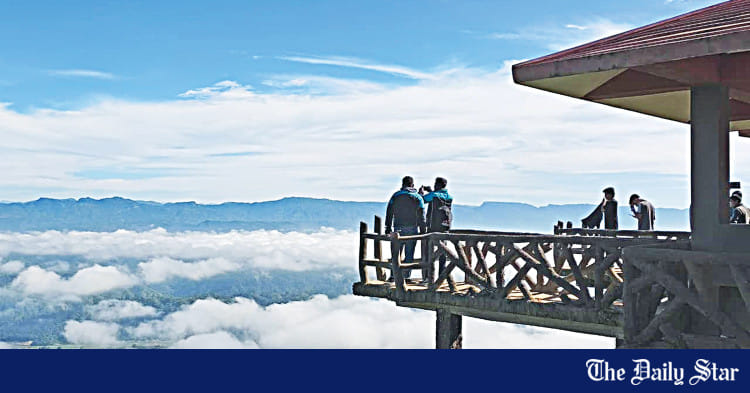
Tourists capture photos and enjoy the views at Double Hands View Point on Bandarban-Thanchi road, as the tourism sector bounces back after last year’s dip. The photo was taken recently. Photo: Mong Sing Hai Marma

Hotels and resorts in major tourist destinations across Bangladesh are reporting 60 percent to 80 percent occupancy this December, showing strong demand and a busy holiday season.

Business owners said that political instability last December had caused a drop in tourism, but this year, visitor numbers have returned to normal levels.

The peak tourism season in the country runs from November to April. According to the Bangladesh Bureau of Statistics, tourism accounted for 3 percent of the country's GDP and 8 percent of total employment in the fiscal year 2018-19.

Abdul Awal, group director of sales and marketing at Sea Pearl Beach Resort in Cox's Bazar, said the resort is seeing a seasonal increase in business, with occupancy around 60 percent, similar to 2023.

"2024 was an exception due to political uncertainty, but the current performance reflects a return to normal patterns," he said.

Awal added that most visitors stay for two days, as Cox's Bazar has limited attractions beyond the beach. "Group bookings, conventions, and incentive travel continue to be our strongest business segments," he said.

Rana Karmakar, operations manager of Mermaid Beach Resort in Cox's Bazar, said that despite the upcoming election, business is doing well this December.

"Reservations are better than in 2024, which was an unpredictable year due to significant political uncertainty. Compared to 2023, reservations are also strong and broadly similar," he said.

Karmakar added that occupancy in December is currently around 80 percent, similar to December 2023, which is generally satisfactory.

However, he noted a decline in out-of-house restaurant guests, particularly foreign tourists. "Earlier, many tourists who could not stay at the resort would eat at the restaurant at least once during their visit, but that is no longer the case," he said.

He attributed this to reduced tourist movement caused by security concerns and poor road conditions.

Md Bahar Khan, senior supervisor of The Palace Luxury Resort in Bahubal, Habiganj, said that average occupancy this December is around 60 percent, slightly lower than December 2023.

"We are seeing a lower response this year due to political uncertainty and ongoing road construction on the Dhaka–Sylhet route, which has increased travel time," he said. Despite this, he described business as moderately stable during the peak season.

Imranul Alam, managing director of Tour Group Bangladesh, which runs resorts and other tourism businesses across the country, said business is performing reasonably well, but profits have dropped to about one-third of the level recorded in 2023.

"Although there is a demand for travel to Saint Martin's Island, the shortage of ship tickets and long, uncomfortable journeys have significantly discouraged tourists," he said.

Alam added that many regular visitors who previously travelled every year are no longer coming and have discouraged their friends and family based on recent experiences.

He further said, "The journey to Saint Martin's now takes more than six hours by sea, in addition to long boarding and disembarkation times and severe congestion at the jetty. These issues have reduced tourist mobility and shortened travel plans."

"Visitors are becoming more selective, opting for higher-end resorts to justify the increased travel expenses," he added.

"Overall occupancy for Sajek resorts in December is around 70 percent," said Suparna Deb Barman, president of the Cottage Malik Samity of Sajek, a forum of resort owners.

"Sajek is no longer empty at any time, with visitors coming even on weekdays. Fridays and Saturdays are the busiest, but tourist activity continues throughout the week. On dates like December 26 and 27, accommodations are fully booked," Barman said.

She added, "The season here gradually starts in August and lasts through February, with activity peaking during this period."

Md Rafeuzzaman, president of the Tour Operators Association of Bangladesh, said, "This December is performing better than December 2024, with bookings close to a normal season."

He added, "Although political tensions ahead of the upcoming election have slowed tourism, the sector is expected to improve further in 2026 once a new government is in place."​
 
Analyze

Analyze Post

Add your ideas here:
Highlight Cite Respond
Beautiful Rangamati

Rangamati is a district of exceptional beauty, where lush green hills blend harmoniously with blue lakes. Every year, a large number of tourists flock to the area. In the current season as well, Rangamati’s natural landscape has taken on a renewed charm. In particular, the surroundings of Kaptai Lake are radiating an abundance of natural beauty, accompanied by an increasing influx of visitors. The photographs were taken recently.​
 
Analyze

Analyze Post

Add your ideas here:
Highlight Cite Respond
Crew member dies as St Martins-bound vessel catches fire
Our Correspondent . Cox’s Bazar 27 December, 2025, 10:43

1766884841835.webp

A fire breaks out on a St Martins-bound vessel, Atlantic Cruise, docked on the Bakkhali River at Nuniachara in Cox’s Bazar on Saturday. | Focus Bangla photo

A crew member died on Saturday morning as a fire broke out on a St Martins-bound vessel Atlantic Cruise in Cox’s Bazar.

The incident occurred at around 6:45am at the Bangladesh Inland Water Transport Authority jetty in Nuniachhara of Cox’s Bazar Sadar where the vessel was docked on the Bakkhali River, according to the police and district administration officials.

The victim was identified as Nur Kamal, 25, son of Mohammad Ilias from Teknaf Damdamiya Border Guard Bangladesh Camp area, said Fire Service and Civil Defence deputy director Morshed Hossain.

‘The deceased crew member was taking rest alone in the engine room when the fire broke out,’ he said.

He also said that although the fire was brought under control at about 8:00am but it took three more hours to douse it completely after which the victim’s body was recovered from inside the burnt vessel.

Several police officials said that the fire originated from the engine room.

Cox’s Bazar deputy commissioner Md Abdul Mannan said that the vessel had been anchored at the BIWTA jetty since early morning for passengers to board for its next scheduled trip to the island.

‘Fortunately, there was no passenger in the ship when the fire broke out,’ he added.

He also said that they had already formed a seven-member probe committee headed by an additional deputy commissioner to investigate the fire.

Representatives from the Fire Service, Department of Shipping, Coast Guard and BIWTA were included in the committee, he added, saying that the committee was asked to submit its report within seven working days.

General secretary of the Sea Cruise Operators Owners Association of Bangladesh Hossain Islam Bahadur said that Atlantic Cruise reached the jetty in the morning to pick up tourists when suddenly smoke was noticed being spewed out from inside the vessel.

‘The fire spread quickly. Fire Service and other agencies immediately rushed to the spot and douse the fire,’ he said.

Hossain Islam also said that 194 tourists waiting at the jetty to board the vessel escaped the flame.​
 
Analyze

Analyze Post

Add your ideas here:
Highlight Cite Respond
Dream Holiday Park - Narsingdi, Bangladesh (older video)
 
Analyze

Analyze Post

Add your ideas here:
Highlight Cite Respond
  • Erdogan (+4)
Reactions: Afhan
Discovering the wonders of Bangladesh

SYED MUHAMMED SHOWAIB
Published :
Jan 10, 2026 00:56
Updated :
Jan 10, 2026 00:56

1768005775123.webp

Vacationing is no longer a luxury enjoyed by a select few but an increasingly routine part of contemporary life. That tourism has expanded so rapidly, aided by rising incomes and widespread digital connectivity, indicates required means and mindset of a growing number of people for travel. This transformation becomes most visible during the peak tourist season from November to March when mild weather, school breaks and clustered public holidays align perfectly to create an optimal window for movement and leisure. During this period, popular destinations regularly record full hotel occupancy while in some regions demand becomes so intense that prospective visitors struggle to secure accommodation. More than a simple pursuit of pleasure, it is a sign of a burgeoning middle class with disposable income and their insatiable desire to explore and appreciate the rich history, diverse cultures and breathtaking landscapes that the country has to offer.

The enthusiasm driving domestic travel is now spilling over to visitors from abroad. In recent years, Bangladesh has attracted a growing number of foreign social media creators and influencers, many of whom command audiences ranging from thousands to millions. Their content offers first-hand impressions of hospitality, accommodation and the warmth of local communities---perspectives often absent from conventional narratives. Understandably, this exposure matters far beyond mere entertainment. It projects a more relatable and credible international image of Bangladesh and introduces the country to global audiences in ways conventional advertising campaigns have never achieved.

The attention that Bangladesh is beginning to attract is rooted in an exceptional natural and cultural diversity uncommon for a country of its size. Within a relatively small area, rivers, wetlands, hills, forests, tea gardens, beaches, islands and archaeological sites exist side by side. This makes it possible to experience a wide variety of sceneries and activities within short distances. With such diversity on offer, it is hardly an exaggeration to say that Bangladesh has everything a traveller could ask for with the exception of snowfall.

This richness has certainly not escaped the attention of Bangladeshis themselves. The enthusiasm across Bangladesh was impossible to miss during the New 7 Wonders of Nature poll held between 2007 and 2011 when Cox's Bazar and the Sundarbans emerged as formidable contenders. The Sundarbans remained a leading candidate until the final vote. Although neither ultimately made it into the top seven, their strong showing demonstrated both the deep national enthusiasm for these natural treasures and the significant interest they generated on the global stage.

Further international validation comes from the Sundarbans' prestigious status as a UNESCO World Heritage Site, home to the planet's largest mangrove forest, a vital habitat for the iconic Royal Bengal Tiger and a remarkably complex ecosystem of diverse flora and fauna. Cox's Bazar, meanwhile, holds the distinction of possessing the world's longest uninterrupted natural sandy sea beach, while nearby Saint Martin's Island offers rare coral life and blue waters.

Interestingly, Bangladesh is not only endowed with scenic beauty but also rich in historical and archaeological heritage. Sites such as the Sixty Dome Mosque, Mahasthangarh, Sompur Mahavihara, the Natore Rajbari and Uttara Ganabhaban embody critical chapters of the nation's past, yet they attract relatively few visitors despite featuring prominently in educational curricula. A pronounced bias among younger travellers towards beach and hill destinations has left these sites outside the mainstream tourism circuit. Sadly, this underappreciation of heritage sites is taking its toll. Many historic structures have steadily deteriorated from years of inadequate maintenance and neglect while some others are close to irreversible damage.

A separate but equally pressing challenge stems from the dangers of unmanaged viral popularity. Destinations that suddenly go viral on social media often draw crowds far beyond the capacity of existing infrastructure, leading both to environmental strain and the overuse of facilities, as well as to inflated prices and a decline in visitor comfort. Sajek Valley and Tanguar Haor provide clear examples of how unchecked tourist surges can harm both the place and the experience. Managing tourist flows is therefore as critical as attracting visitors in the first place.

Another critical challenge for tourism is ensuring the safety of visitors, which remains fragile in some areas. Many routes just are not safe enough, especially for women travellers, and stories of harassment or lack of proper protection often stop people from even packing their bags. Even in the star attraction of the Sundarbans, the recent comeback of forest piracy has reignited serious safety concerns. Tourism simply cannot flourish when fear is stronger than the excitement of discovering something new. On top of that, not everyone in the tourism chain behaves the way visitors hope. While most people are hospitable and welcoming, a small segment of those involved in the industry take advantage with overcharging or outright scams. Complaints against transport operators and vendors become especially frequent during peak seasons when demand is sky-high. Those experiences stick and they really hurt trust. Foreign visitors, in particular, sometimes take one bad encounter and paint the whole country with the same brush.

Marketing is still a weak spot for the tourism sector as Bangladesh hasn't really put much effort into consistent international branding. The memorable Beautiful Bangladesh videos during the 2011 Cricket World Cup showed just how powerful quality promotion can be, yet nothing similar has appeared on an international scale since. Consequently, many of the country's unique spots and experiences stay off the radar for local and international travellers.

Tourism reveals how a country views its own identity and how confidently it chooses to share that identity globally. It falls upon the government and private sector to decide just how big they want to aim, and once that ambition is clear, the necessary policies and infrastructure start to fall into place. Clearly, Bangladesh has everything it takes to shine on the global tourism stage. The only question left is whether the country will step up and claim that spotlight.​
 
Analyze

Analyze Post

Add your ideas here:
Highlight Cite Respond

Can you hear 'cry of distress' of St. Martin?

Tayub Ullah
Published: 20 Jan 2026, 07: 59

1769044184795.webp


Saint Martin Island Courtesy: The author

A month and a half have passed since Saint Martin was opened to tourists this season. Let's discuss who benefited and who lost from this.

Saint Martin is Bangladesh’s only coral-rich island, known for its natural beauty. It is a favourite destination for tourists. While there was once uncontrolled tourism, since 2024, the government has regulated and limited tourism here. The government has imposed restrictions primarily to preserve the environment and biodiversity of Saint Martin Island and to prevent pollution, identifying it as an environmentally critical area.

The number of tourists is limited to two thousand per day, and overnight stays are only permitted for two months (December and January). Although visits are allowed in November, no tourists traveled to Saint Martin during that month due to the ban on overnight stays. Because it's not sensible to undertake such an expensive trip just for a day visit.

Due to strict government restrictions and conservation policies, there's a need to discuss the island’s environment, biodiversity, and the real situation of the local people. This article aims to highlight the reality by speaking with Saint Martin’s local residents.

Despite imposing strict restrictions, environmental pollution on the island has not been controlled. Unregulated construction of cottages and the cutting down of keya trees continue. Effective waste management has not been established. Instead, the area around the beach and roads has turned into a dump of plastic and polythene. There aren’t enough dustbins on the beach, no cleanliness activities, and no campaigns to raise awareness among tourists.

Tourists' suffering and inhumane conditions
Ships operate from Nunia Chhara Ghat in Cox’s Bazar. Their schedules depend on the tides of the Bankkhali River. It is commonly observed that ships arrive at St. Martin’s around 12:00 p.m. but depart at 5:00 or 6:00 p.m. Tourists are required to check out at noon to make room for new arrivals from Cox’s Bazar. As a result, returning tourists must wait for long hours at the jetty, yet the government has made no special arrangements for them. There are no passenger sheds or resting areas, no public toilets or changing rooms, and no facilities for feeding children.

In the intense cold, young children, the elderly, and women have to spend hours waiting for the ship, sitting or walking on the street or beach! This inhumane condition sometimes creates extreme chaos.

1769044251159.webp


A brightly lit ship can be seen in the distance. Passengers are returning from Saint Martin in the evening. The ship's destination is Cox’s Bazar. Courtesy: The author

Why do non-tourists need a travel pass?
Due to distance and limited seating, ship fares have increased. But tickets are not readily available. A middleman or ticket syndicate has formed.

This time, the worst system implemented is the mandatory travel pass for tour operators, journalists, investors, and Cox’s Bazar locals. This is unreasonable because the arrangement is meant for tourists.

Tour guides or hosts or tour operators do not travel as tourists, so providing them with a special registration and pass would have been sufficient. Moreover, those investing in the island need to enter regularly for various reasons. But the requirement for them to procure a travel pass to board the ship and considering journalists and other individuals who travel for reporting or research as tourists is not justified.

Many people from Cox’s Bazar have relatives on Saint Martin or maintain business or personal relationships with various individuals. If they wish to visit Saint Martin as needed, they fall under the travel pass requirement, thus categorised as tourists. This amounts to denying locals their rights, leading to resentment among them. Despite not being tourists, people from Cox’s Bazar are forced to travel to Saint Martin as tourists due to administrative stubbornness.

1769044303773.webp

Litter scattered across Chera Dwip. Courtesy: The author

How Island residents survive

The economic condition of the local people is deteriorating from miserable to extremely dire. One of the primary income sources for the 12,500 residents is tourism. However, as it has become limited and regulated, the islanders have lost their source of income and become jobless. Local homes that were rented out during the tourist season to make a living now have no income. With tourists limited to two thousand, there isn’t much pressure; hence local homes don''t get rented.

Resorts around the beach can accommodate over four thousand people. Due to limitations, beachside resorts offer special offers or discounts, so tourists prefer staying there. Moreover, major resorts and well-established ones are managed by many businessmen from Dhaka. Due to their good reputation and publicity, beachside resorts get booked in advance.

Consequently, disorganised, lower-quality resorts and unpublicised establishments owned by locals do not get any tourists.

I have observed that half of the rentable local homes haven’t had any rooms rented out this season. They couldn’t rent them out. As a result, the financial pressure on local people has reached indescribably unprecedented levels.

Operating a household in the current rising market is impossible by working for 2 months and remaining income-less for 10.

Apart from placing unbearable financial pressure on local people, this regulation and controlled tourism haven’t been beneficial. Locals have been forced to sell properties or jewelry to survive. Due to the lack of advanced technology and spaces, Saint Martin’s island lags in fisheries and agriculture. With small boats, it's impossible to venture into the deep sea for fishing.

And the limited size of the island restricts farming opportunities. Additionally, due to salinity, farming is not feasible.

No examination centre, no college

The economic stalemate is also negatively impacting the island’s education system. Many families are finding it difficult to bear their children’s educational expenses. School education on the island is already weak due to a lack of teachers or skilled teachers. Now, due to financial hardship, the opportunity for children to study outside the island is also gone.

Moreover, there’s no public examination centre on the island. Students have to rent rooms and purchase food in Teknaf for exams, incurring significant expenses throughout the examination period. But with the current economic conditions, many families couldn’t afford their children’s examination costs. There is no college on the island; students have to study outside. With limited income, sending children to study outside is impossible for many.

Dilapidated Healthcare System

Most residents of Saint Martin Island live below the poverty line, suffering from various ailments constantly. However, there is no proper medical facility on the island. Though there is a nominal 20-bed hospital, it has never been fully functional. There is a shortage of doctors throughout the year. Consequently, many people used to go to Teknaf or Cox’s Bazar for treatment. But with the decrease in income this time, it seems impossible for anyone to seek advanced treatment outside the island.

Talking to local people reveals their cries and demands. The people of Saint Martin want the tourism limitation (daily two thousand) abolished or alternative employment. They want assurance of basic rights, particularly education and healthcare. Island residents want eco-friendly tourism and expect civic amenities. They desire electricity, sea ambulances, sea trucks, food warehouses, sufficient schools, teachers, colleges, and cyclone shelters. It’s necessary to ensure employment by transforming unemployed youth into skilled manpower through training.

#Tayub Ullah is an activist and resident of Saint Martin​
 
Analyze

Analyze Post

Add your ideas here:
Highlight Cite Respond

How it feels to visit Saint Martin after restriction

ZAHID HASAN
Published :
Jan 21, 2026 12:58
Updated :
Jan 21, 2026 12:58

1769215710893.webp


For the first time in recent memory, Saint Martin's Island has gone quiet long before the season's end. The last tourist vessel left the Teknaf jetty on a warm Friday afternoon, and by the next morning, the island's waters carried only the sound of waves. The Ministry of Environment, Forests, and Climate Change imposed a strict nine-month suspension of vessel services to the island, effectively cutting it off from tourism until November.

Saint Martin's tourist season stretches from October to March, a window long celebrated by travellers eager to escape the city's dust and the winter's dullness.

This time, the government shut the door two months earlier. The decision came with a notification outlining twelve specific rules meant to protect the island's ecosystem, coral beds, and long-strained biodiversity.

For years, the island has been overwhelmed by thousands of daily visitors, unregulated boat traffic, and the persistent shadow of plastic waste. Now the government is trying to slow the damage by controlling access more tightly than ever.

Those rules, enforceable under the Bangladesh Environment Conservation Act, mandate that no vessel may head to Saint Martin's without prior approval from the ministry. Even when the island reopens, tourists will have to book their tickets through the Bangladesh Tourism Board's official portal, each carrying a QR-coded pass.

The daily number of permitted visitors will be capped at two thousand-a far cry from the overwhelming crowds that often trooped in during peak seasons.

While the changes feel radical, the island's decline has been gradual and painful, and officials argue that such restrictions are the only way to prevent irreversible harm.

Yet beyond the policy discussions and legal directives lie the people whose lives and memories are tied to the island's shores. Travellers returning from Saint Martin's in recent months carry mixed emotions-some disappointed, others hopeful.

JH Raju, who visited just weeks before the ban, sounded frustrated as he recalled how costly and limited the trip felt. "Previously, you could manage the whole trip within four to five thousand taka," he said. "But now, per person will cost around ten to twelve thousand, and the island has nothing to offer. You cannot go to Chera Dwip." For many like him, the new regulations, increased travel expenses, and restricted movement have stripped the island of its charm, making the journey feel heavier than the joy it once promised.

But not everyone shares the same disappointment. Another traveller, Fayaz Ahmed, described a very different experience, one shaped by an understanding of ecological necessity.

"My experience was good. From an environmental point of view, these restrictions are necessary," he said. "It seemed to me that restricting tourists made the beach and overall environment better than before." His observations touch on something that many regular visitors have felt in recent years: the more crowded the island grew, the less beauty it seemed to hold.

Cleaner beaches, quieter nights, and more transparent waters are becoming rarities, and the brief enforcement of stricter rules gave him a glimpse of what Saint Martin's could look like if treated gently.

Fayaz also reflected on the people who rely entirely on tourism for survival.

The island's population-small, resilient, and heavily dependent on visitors- now faces a long period of uncertainty. Hotels, tea stalls, boat operators, souvenir sellers, coconut vendors, and young workers who earn seasonally will all feel the impact of the prolonged ban.

"The people who fully depend on tourism have it the hardest," Fayaz said. "The government can place some extra charges on tourists to improve the lives of the islanders. This will create a sense of responsibility among visitors as well."

His comments did not stop there. Despite the new rules, some issues remain unresolved. "Single-use plastic still hasn't been fully controlled," he pointed out, adding that Bangladesh could learn from models used in Thailand, where refillable glass bottles replace disposable water bottles. "Saint Martin's is our national asset. It is our collective responsibility to protect it," he said in Bengali-a sentiment born out of both affection and urgency.

These sharply contrasting views from travellers mirror a larger tension surrounding the island itself. Saint Martin's is a place where beauty coexists with fragility.

Coral colonies-once vibrant and abundant-now struggle to recover. Turtles that come ashore to nest often encounter artificial lights or human disturbance. Waste clogs shallow waters, fishing nets tangle unseen life, and every season of excessive tourism pushes the ecosystem a little closer to collapse.

Environmentalists have been warning for years that unless the island is given time to heal, it may one day lose the very characteristics that make it special.

Yet memories of the island run deep. For generations, Saint Martin's has been the symbolic escape, the place of first solo trips, group adventures, family stories, honeymoon photographs, and early morning walks to Chera Dwip.

The idea that such a beloved destination could slip away feels almost personal to many Bangladeshis. The sudden quietness, then, is haunting not because it signals closure, but because it forces reflection. What does it mean to love a place? Does love mean visiting it endlessly, or stepping away long enough to let it breathe?

The islanders themselves now wait in suspended time. In the coming months, their fishing activities will continue, but the absence of tourists will be deeply felt.

Their rhythm of life, once tied to the movement of boats and the demand for hospitality, must adjust. Some hope the government will offer support; others fear being overlooked in the broader conservation push.

If the restrictions succeed in restoring ecological balance, many believe the island's long-term economic potential will be more substantial. But the pathway there is uncertain and filled with sacrifices they must shoulder today.

Meanwhile, the travellers who once flocked to Saint Martin's now watch from afar, carrying their divided impressions. Some will miss the island's easy access and affordable trips. Some will applaud the authorities for taking long-overdue action. Some will wonder if they will ever experience the island as they once did, spontaneous, carefree, full of movement. And others, like Fayaz, will hope that these hardships will eventually protect a place they consider part of their identity.

This pause-unexpected and uneasy-may offer the clearest opportunity yet to rethink how the island should welcome people going forward. Perhaps it will return in November cleaner, calmer, and more resilient. Possibly, travellers will approach it with greater respect.

Businesses may learn to balance profit with ecological sensitivity.

What is certain is that the island stands at a crossroads, shaped by the choices of those who visit, those who govern, and those who call it home. It remains a jewel of Bangladesh, but one whose shine dims with every careless footprint.

As the waves continue to break gently on an unusually empty beach, one truth rings louder than ever: saving Saint Martin's will require patience, cooperation, and a willingness to change not just how we travel, but how we value the natural world.​
 
Analyze

Analyze Post

Add your ideas here:
Highlight Cite Respond

St Martin’s closes for tourists from today

To reopen for tourism once again on November 1 this year


By UNB, Cox's Bazar

1769908950292.webp

Star file photo

St Martin’s Island, the country’s only coral island located in the north-eastern part of the Bay of Bengal, will remain closed to travellers for nine months from February 1 as part of a conservation measure.


As a result, tourists staying on the island are returning to their respective destinations on January 31 and February 1.

Although Saint Martin’s was opened to tourists for three months from December to January, overnight stays were permitted for only two months. In addition, the daily number of tourists was capped at 2,000, and entry without prior registration was not allowed.

Due to these restrictions, the local tourism business has suffered significantly.

Delwar Hossain, a local tourism entrepreneur, said business owners incurred losses during the shortened season.

Earlier, the government announced a nine-month suspension of tourism activities on St Martin’s Island in the interest of environmental protection.

According to a decision by the Ministry of Environment, Forest and Climate Change, tourism activities for the current season will officially end on Saturday. Consequently, no tourist vessels will operate to the island from Sunday.

Although tourists are usually allowed to visit Saint Martin’s from October 1 to March 31 each year, the travel period was reduced this year up to January 31 due to environmental risks.

Cox’s Bazar Additional District Magistrate Imran Hossain Sajib said the last tourist vessels would sail to Saint Martin’s today. “No tourist ships will be allowed to operate from Sunday. However, if the government revises its decision later, necessary measures will be taken accordingly,” he added.

Under government directives, lighting on the beach at night, playing loud music and organising barbecue parties were prohibited. Entry into the protected forest area, as well as the collection and sale of key fruits, were also completely banned.

Strict instructions were issued to prevent harm to biodiversity, including sea turtles, birds, corals, king crabs, snails and oysters. All types of motorised vehicles, including motorcycles, were prohibited on the beach.

Carrying single-use plastics, including polythene, was strictly restricted, while tourists were advised to bring reusable water flasks.

According to the administration, the prolonged absence of tourists will help corals, sea turtles, birds and other marine species recover their natural habitats. The long-term decision aims to restore biodiversity damaged by excessive tourist pressure and unregulated activities.

Authorities expressed hope that the initiative to protect the environment and biodiversity would play a positive role in maintaining the ecological balance of Saint Martin’s Island.

Meanwhile, local business owners said they had invested heavily in the tourism sector with expectations of a longer season.

However, tourism activities came to a halt after just three months.

Businessmen and residents have demanded that Saint Martin’s be opened for at least five months annually with a controlled number of tourists.​
 
Analyze

Analyze Post

Add your ideas here:
Highlight Cite Respond

Posts you haven't read yet..

Members Online

Latest Posts

Back
PKDefense - Recommended Toggle