Bangladesh Defense
Saif
Senior Member
- Jan 24, 2024
- 20,857
- 9,685
- Nation

- Residence
- Axis Group

Bangladesh must look east for trade expansion
Bangladesh should consider shifting its focus from the United States to regional markets to offset the risks of export loss due to tariff hikes by the Trump administration, economists said yesterday.
Bangladesh must look east for trade expansion
Say economists at PRI dialogue as country’s $6bn trade surplus with US at risk

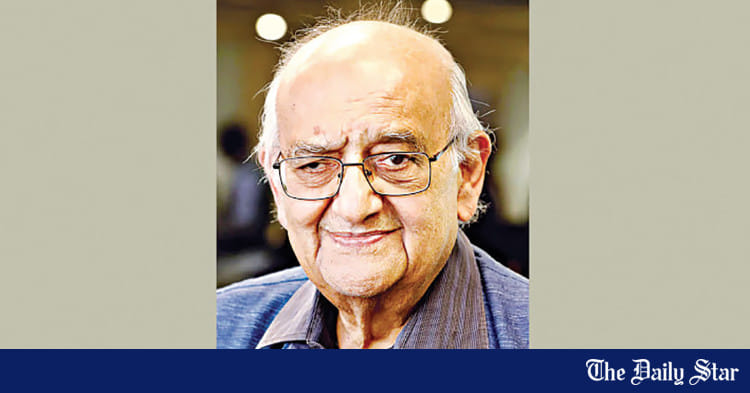
China is the biggest source of capital surpluses in the world today — Prof Rehman Sobhan Chairman of the Centre for Policy Dialogue (CPD).
Bangladesh should consider shifting its focus from the United States to regional markets to offset the risks of export loss due to tariff hikes by the Trump administration, economists said yesterday.
The country enjoys more than $6 billion of trade surplus with the US; however, as a significant portion of the exports could now be affected due to higher tariffs, Asian markets, namely India and China, could serve as alternative export destinations, said analysts at a roundtable titled "Trade Policy in the Era of Tariff Shenanigans – Global and Bangladesh Perspectives."
The Policy Research Institute (PRI) organised the discussion at its office in the capital which was attended by economists, exporters and experts.
Speaking at the programme, Prof Rehman Sobhan, chairman of the Centre for Policy Dialogue (CPD), said Asia deserves all of Bangladesh's time and energy because this is where its future lies.
"Our goal should be to look east and within our neighbourhood. We have duty-free access to the Chinese market. We have duty-free access to the Indian market."
Prof Sobhan said the tariff situation might serve as a wake-up call, allowing Bangladesh to focus on future opportunities rather than dwelling on the past. Bangladesh should then explore how much of the potential $6 billion loss could be recovered by shifting to the Chinese and Indian markets.
He believes that the responsibility lies with Bangladesh to attract foreign investment and re-establish presence in the Asian markets. This process, he added, could ultimately lead to attracting American investors as well.
Prof Sobhan stated that his last calculations indicated approximately 70 percent of global capital surpluses, measured through foreign exchange reserves and sovereign wealth funds, were located in Asia.
"China is the biggest source of capital surpluses in the world today."
PRI Chairman Zaidi Sattar said the current tariff policy of Bangladesh is a major barrier to the diversification of exports because of the high tariffs in place. As a result, many manufacturers prefer to do business locally rather than export their goods to other countries where there is foreign competition.
He also believes Bangladesh's market needs to be orientated towards Asia as the 21st century is predicted to be an "Asian century," but these markets are not yet as readily accessible to Bangladeshi products as the US.
"Now we are talking about a $100 trillion global economy, with the United States accounting for one-quarter of that. Okay, but the rest of the world makes up 75 percent," PRI chairman added.
Anwar-Ul-Alam Chowdhury (Parvez), former president of the Bangladesh Garment Manufacturers and Exporters Association (BGMEA) said Bangladesh responded too soon to the Trump tariff and should have taken more time.
Shams Mahmud, managing director of Shasha Denims Ltd, said it's unlikely that increasing cotton imports from the US will significantly reduce the trade deficit and at the same time, the potential for further growth in exports to the European Union is limited
He went on to say that exporting man-made fibre garments to the US will face difficulties due to the new tariff measures implemented by the Trump administration.
A Gafur, director of Abdul Monem Economic Zone Ltd, stressed the importance of political stability and building capacity.
"The Japanese Honda company has been producing 8,000 to 10,000 units of motorcycles in the factory, housed inside of their economic zone," he mentioned.
Mustafizur Rahman, a distinguished fellow at the CPD, said more than $1 billion in tariffs will be imposed on Bangladesh under the new measure by the Trump administration.
Bangladesh may not be much benefited if it goes to the World Trade Organisation (WTO) for a settlement, as the trade dispute settlement mechanism in the WTO has been made dysfunctional over the last many years.
However, Bangladesh should hold bilateral discussions with the US on which items they prefer to enjoy the duty benefit on shipment to Bangladesh, he added.
Trade facilitation and logistics policy should be implemented for the greater interest of Bangladesh, and the revival of SAARC is also important, he also added.
Selim Raihan, executive director at the South Asian Network on Economic Modeling (SANEM), said Bangladesh needs to look into its own preparedness, like tariff policy, trade policy, foreign trade policy and investment policy for a better deal with the US.
The government should continue the reforms in different areas so that the trade environment is created, he added.
Say economists at PRI dialogue as country’s $6bn trade surplus with US at risk
China is the biggest source of capital surpluses in the world today — Prof Rehman Sobhan Chairman of the Centre for Policy Dialogue (CPD).
Bangladesh should consider shifting its focus from the United States to regional markets to offset the risks of export loss due to tariff hikes by the Trump administration, economists said yesterday.
The country enjoys more than $6 billion of trade surplus with the US; however, as a significant portion of the exports could now be affected due to higher tariffs, Asian markets, namely India and China, could serve as alternative export destinations, said analysts at a roundtable titled "Trade Policy in the Era of Tariff Shenanigans – Global and Bangladesh Perspectives."
The Policy Research Institute (PRI) organised the discussion at its office in the capital which was attended by economists, exporters and experts.
Speaking at the programme, Prof Rehman Sobhan, chairman of the Centre for Policy Dialogue (CPD), said Asia deserves all of Bangladesh's time and energy because this is where its future lies.
"Our goal should be to look east and within our neighbourhood. We have duty-free access to the Chinese market. We have duty-free access to the Indian market."
Prof Sobhan said the tariff situation might serve as a wake-up call, allowing Bangladesh to focus on future opportunities rather than dwelling on the past. Bangladesh should then explore how much of the potential $6 billion loss could be recovered by shifting to the Chinese and Indian markets.
He believes that the responsibility lies with Bangladesh to attract foreign investment and re-establish presence in the Asian markets. This process, he added, could ultimately lead to attracting American investors as well.
Prof Sobhan stated that his last calculations indicated approximately 70 percent of global capital surpluses, measured through foreign exchange reserves and sovereign wealth funds, were located in Asia.
"China is the biggest source of capital surpluses in the world today."
PRI Chairman Zaidi Sattar said the current tariff policy of Bangladesh is a major barrier to the diversification of exports because of the high tariffs in place. As a result, many manufacturers prefer to do business locally rather than export their goods to other countries where there is foreign competition.
He also believes Bangladesh's market needs to be orientated towards Asia as the 21st century is predicted to be an "Asian century," but these markets are not yet as readily accessible to Bangladeshi products as the US.
"Now we are talking about a $100 trillion global economy, with the United States accounting for one-quarter of that. Okay, but the rest of the world makes up 75 percent," PRI chairman added.
Anwar-Ul-Alam Chowdhury (Parvez), former president of the Bangladesh Garment Manufacturers and Exporters Association (BGMEA) said Bangladesh responded too soon to the Trump tariff and should have taken more time.
Shams Mahmud, managing director of Shasha Denims Ltd, said it's unlikely that increasing cotton imports from the US will significantly reduce the trade deficit and at the same time, the potential for further growth in exports to the European Union is limited
He went on to say that exporting man-made fibre garments to the US will face difficulties due to the new tariff measures implemented by the Trump administration.
A Gafur, director of Abdul Monem Economic Zone Ltd, stressed the importance of political stability and building capacity.
"The Japanese Honda company has been producing 8,000 to 10,000 units of motorcycles in the factory, housed inside of their economic zone," he mentioned.
Mustafizur Rahman, a distinguished fellow at the CPD, said more than $1 billion in tariffs will be imposed on Bangladesh under the new measure by the Trump administration.
Bangladesh may not be much benefited if it goes to the World Trade Organisation (WTO) for a settlement, as the trade dispute settlement mechanism in the WTO has been made dysfunctional over the last many years.
However, Bangladesh should hold bilateral discussions with the US on which items they prefer to enjoy the duty benefit on shipment to Bangladesh, he added.
Trade facilitation and logistics policy should be implemented for the greater interest of Bangladesh, and the revival of SAARC is also important, he also added.
Selim Raihan, executive director at the South Asian Network on Economic Modeling (SANEM), said Bangladesh needs to look into its own preparedness, like tariff policy, trade policy, foreign trade policy and investment policy for a better deal with the US.
The government should continue the reforms in different areas so that the trade environment is created, he added.