Home Watch Videos Wars Movies Login

[🇧🇩] Banking System in Bangladesh

Latest Posts Countries Wars Q&A

[🇧🇩] Banking System in Bangladesh
285
9K
More threads by Saif

G Bangladesh Defense

Bangladesh’s banking sector pulled back from the brink: BB governor

UNB
Published :
Aug 10, 2025 12:51
Updated :
Aug 10, 2025 12:51

1754872714697.webp


Bangladesh’s banking sector has managed to pull back from the brink over the past year, Bangladesh Bank Governor Ahsan H Mansur said on Sunday, crediting a series of measures taken since he assumed office.

Speaking at a seminar titled 'Interim Government’s 365 Days' organised by Centre for Policy Dialogue (CPD), the governor said the sector was “right at the edge of the cliff” when the interim government took office in August last year.

“Our two main challenges were to stabilise the macroeconomy and reform the financial sector. Reforms cannot be done in a year, but we have started them in every area,” Mansur said.

Upon taking charge, he held meetings with international financial institutions to maintain lines of credit.

“We assured them that we would repay every penny we owed, and we did. Our situation did not turn like Sri Lanka or Pakistan,” he said.

According to him, the biggest support in debt repayment came from remittance inflows alongside export earnings over the past year.

On inflation, the governor said controlling it was a major challenge.

Since August 14 last year, Bangladesh Bank has not sold a single dollar from reserves, instead buying dollars at Tk 122 despite pressures to adjust the rate.

Inflation has since fallen below 10%, and Mansur expects it to drop below 5% in the future.

While the balance of payments is now in surplus, the economy is still lagging in attracting investments, he noted.

“Before elections, big investors will not come, but we have already prepared the ground to encourage investment after the polls,” he added.

On why no banking commission was formed, Mansur said it would have delayed urgent decisions, taking six to nine months to produce a report. Instead, three separate taskforces have been formed to reform the banking sector, central bank operations, and recover laundered money.

Recovering funds siphoned abroad is proving the most challenging, he said, as it requires coordination with 8–10 ministries.

Major legal reforms are also underway, including extensive amendments to the Bank Companies Act, fundamental changes to the Money Laundering Act — adding asset recovery provisions — and broad revisions to the Bangladesh Bank Order to enhance the central bank’s accountability and autonomy.

Amendments will also be made to the Deposit Insurance Act and the Money Loan Court Act to resolve long-pending loan default cases.

The central bank also plans to amend the Bangladesh Bank Resolution Ordinance to allow it to acquire any bank facing liquidity crises due to irregularities. “No more leniency. If a bank cannot operate properly, Bangladesh Bank will take it over,” Mansur warned.

He added that a single body will be created for “360-degree monitoring” of all banks to tackle irregularities in a coordinated manner.

The governor further stressed initiatives to make Bangladesh a cashless economy, including the promotion of QR codes, wider credit card usage, expansion of nano-loans, banking education for school students, Tk 200 student bank accounts, housing reforms, revenue department restructuring, and lowering smartphone prices to expand digital banking coverage.​
 
Analyze

Analyze Post

Add your ideas here:
Highlight Cite Respond

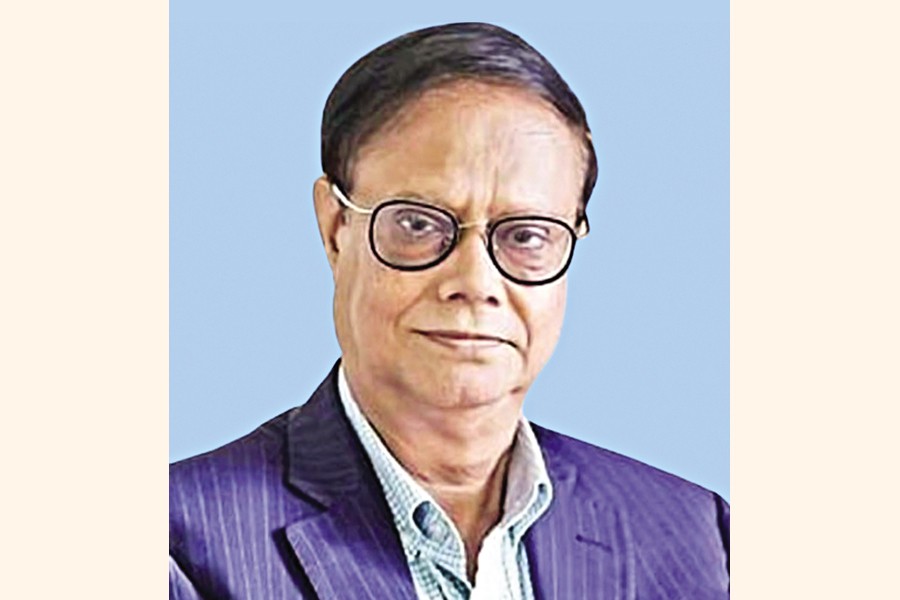
Discriminatory bank financing in Bangladesh

Haradhan Sarker
Published :
Aug 12, 2025 22:56
Updated :
Aug 12, 2025 22:56

1755044175658.webp


Who does not aspire after a discrimination-free economy or society? Restoring rights inevitably requires a movement. Since inception of collective right-consciousness , the victims have fought against rights violation. From time to time, agitations spring up spontaneously as we observed an anti-discrimination student movement as one of the most powerful catalysts of July Uprising 2024 led by students and masses in Bangladesh. Discrimination has numerous types and forms -- political, economic, religious, racial, ethnic, gender, administrative, and so on. Many discriminations remain disguised and generally subtle. New and unimaginable forms of discrimination also emerge. However, we should unveil every possible type of discrimination lying in every stage of society and economy. Present discussion would be concerned with a type of economic discriminations particularly in loans and advances disbursed by the banks in Bangladesh.

Discrimination in the field of economic management leads to a rise in economic inequalities. Banks have a critical role in facilitating economic growth in terms of income and wealth of their borrowers. In the context of increasing emphasis upon corporate social responsibility (CSR) , banks as lenders should prioritise the interest of the majority of borrowing people belonging to cottage, micro, small and medium categories rather than large ones. This approach to lending is ethical and beneficial not only for the economy but also for the lending banks.

Disbursement and recovery of loans and advances constitute one of the most important functions of a bank. The cruel fact is that large firms or borrowers managed to reap most of the facilities offered under government stimulus packages during COVID period whereas the people and firms under CMSME categories were deprived of their due and justified benefits. An unholy nexus of bank owners-directors, government policy-makers and the then ruling politicians forced discriminatory banking .

Discrimination is a man-made injustice. It may be created intentionally, unintentionally and also unconsciously. Whatever be the manner of creating or continuing discrimination, it is always unacceptable and subject to elimination. It is also true that eliminating discrimination hardly occurs without a strong movement. Longstanding discrimination often becomes a custom that is silently accepted as a fate . Resistance to change such fate comes from the beneficiary group. Thus it is an ethical as well a great challenge as to whether and how to end discrimination.

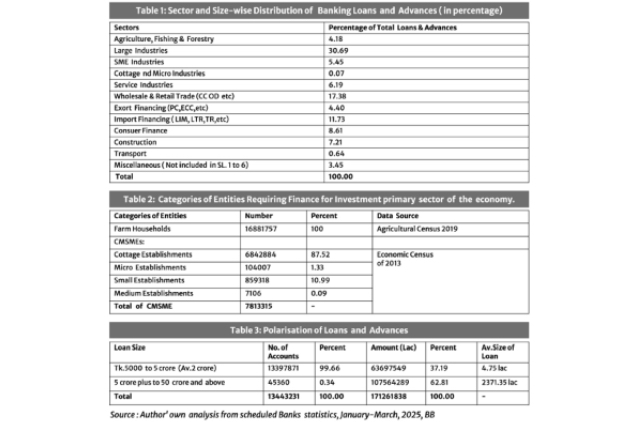
According to information obtained from BB's Scheduled Banks Statistics (January-March 2025), Table 1 reveals that as the primary sector contributing 10.94 per cent of gross domestic product (GDP), agriculture, fishing & forestry receives only 4.18 per cent of total bank loans and advances .This is quite inadequate against the sector's actual requirements. Besides, the share of finance held by farm borrowers of more than Tk 1 crore to 50 crore and above is 1.16 per cent. As a result, the actual percentage for farmers below the loan size of Tk. 5000 to 1 crore reduces to 3.02 (i.e. 4.18 per cent minus 1.16 per cent). Most of the farm households have to depend on informal fund to the extent of more than 90 per cent of their needs at a much higher cost . Borrowers under cottage and SME categories receive only 5.52 per cent of total loans and advances. Available data on banking finance are not well designed. So, the real position of CMSME financing cannot be analysed and justified in specific terms. We are totally unaware of any updated and inclusive statistics on financing CMSMEs along with the number of entrepreneurs/borrowers based on their nature and size. Consequently, categorical financing needs and priorities cannot be ascertained. An attempt has been made to present some past statistics about size-based economic establishments, and farm households which are to be assessed as preferential entities.

This Table furnishes data from which we can guess a rough scenario regarding the number of probable finance-seeking people and organizations that largely belong to CMSME categories. It is seen from the table that more than 78 lac CMSME establishments are recorded. Their actual number might have rather escalated over the time span of 12 years from 2013. Regrettably, we fail to collect the current number of borrowing accounts and other relevant data under CMSME .The number of accounts under agriculture, fishing and forestry are 63.35 lac against 1.69 crore of farm households. Only 37.49 per cent of farm households have been financed with very insignificant amounts.

Table 3 shows that the banking industry has more than 13 million accounts for loans and advances. We cannot directly conclude that the number of borrowers would be exactly equal to the number of accounts. Due to having more than one accounts maintained by many borrowers, the actual number of borrowers may be around 10 million. Whatever be the real number, 99.66 per cent account holders have access to only 37.19 per cent of total loans and advances while only 0.34 per cent account holders share 62.81 per cent of total loans and advances. Economic activities create income and wealth usually to the extent of investment outlay made by the investors. Household Income and Expenditure Surveys 2016 and 2022 reveal that investible surplus of the majority of households is insignificant. That is why, they need debt financing. CMSMEs' inaccessibility to and inadequacy of debt fund is triggered by discriminatory allocation of banks' loans and advances. Awfully it is observed that average size of loans and advances taken by few account holders ( only 45,360) is 499.23 times the average size of borrowing by more than 13.39 million account holders. Are the lending banks liable for such a discrimination ? It is primarily the lack of clear philosophy and principle of good governance at the national level and secondarily the lack of good corporate governance at the level of lending banks.

Hard truth is that we are yet to develop the appropriate framework of good governance to be implemented by the government . Most important at this critical juncture of time is that there must be a broad-based political consensus particularly on the fundamental philosophy and principles that would underpin the foundation of good governance system for our country. As a sub-system, the model of corporate governance in banking will have to be developed. Corporate stakeholder responsibility should be preferred over corporate social responsibility in order to meet expectations of all organic stakeholders of the banking industry. Then, discriminatory banking will end as an in-built component of stakeholders-based banking governance.

Haradhan Sarker, PhD, is ex-Financial Analyst, Sonali Bank & retired Professor of Management.​
 
Analyze

Analyze Post

Add your ideas here:
Highlight Cite Respond

BB INTERVENTIONS WORK BOTH WAYS
Forex robust, bank liquidity eases


JUBAIR HASAN
Published :
Aug 12, 2025 10:25
Updated :
Aug 12, 2025 10:25

1755044459504.webp


Bangladesh Bank intervention to bring stability in foreign-exchange market proves a boon for both -- the central bank builds up forex stock and commercial banks quench their liquidity thirst in trying times.

In a latest intervention made Sunday, the BB purchased $83 million from eleven commercial banks at rates ranging from Tk 121.47 and Tk 121.50 a dollar to stabilise the country's forex market and injected around Tk 10 billion.

The central bank has so far been bought $622 million from the commercial banks since July 13 under the prevailing free-floating exchange regime.

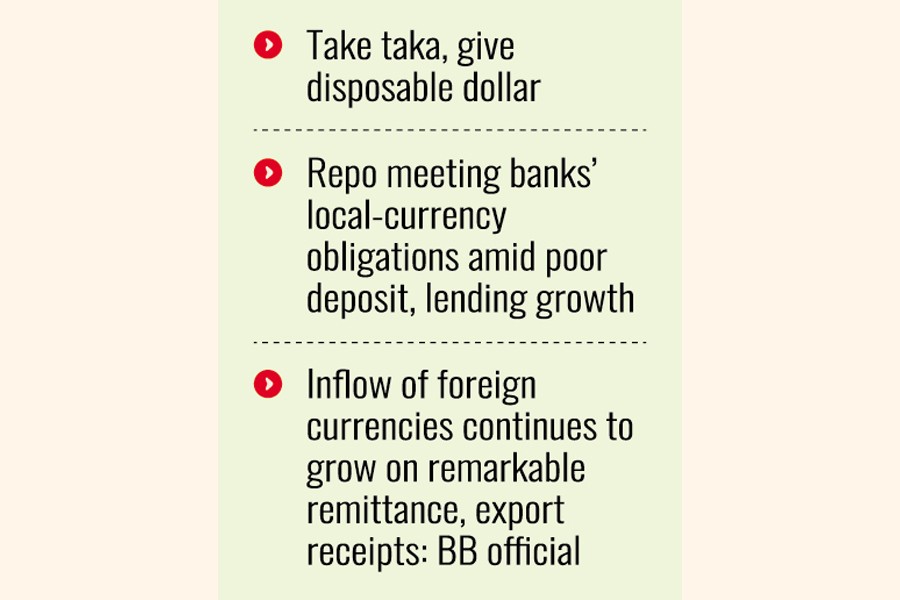
For the dollar buys, the banking regulator paid over Tk 75.57 billion to the banks at a time when commercial lenders largely depend on central bank's lending facility against repo to meet their local-currency obligations amid poor deposit and lending growth.

Apart from forex-market stabilisation, such regular intervention by the banking regulator to keep the exchange rate within the undisclosed band of the crawling-peg system also helps in bolstering the country's foreign-currency reserves.

Seeking anonymity, a BB official said the inflow of foreign currencies continues to grow on back of remarkable growth of remittance and export receipts in recent months while the pressure of import has yet to get momentum, which leaves a good portion of unused foreign currencies in the banks.

As a matter of fact, the official notes, the exchange rate on the interbank spot market falls and moving around the floor rate of the undisclosed band under the existing crawling-peg system.

"That's why the BB continues to intervene and purchase the US dollar from the market," the official said, adding that the BB in the last five biddings bought a total of $622 million from the market.

The central banker mentions that the intervention normally comes to prevent the downfall of taka-dollar exchange rate and to bolster the foreign-currency reserves in line with the prescription of the IMF (International Monetary Fund) under its $5.50-billion lending package to stabilise the country's macroeconomic situation.

According to BB statistics, the gross foreign-exchange reserves rose to $30.25 billion and $25.23 billion in accordance with BB and IMF's BPM6 calculations as on August 10, 2025. The figures were $29.80 billion and $24.78 billion respectively by the end of July last.

Managing Director and Chief Executive Officer of Mutual Trust Bank PLC (MTB) Syed Mahbubur Rahman says the banks managed to get the liquidity through selling the US dollars amid liquidity tightness because of low deposit growth and investment opportunities under the persisting economic sluggishness.

"And the liquidity that comes from the sale of the American greenback also makes contribution to reducing the government borrowing costs from the banks through the continuous fall in the yield on government securities market," the experienced banker explains.

According to the auction of treasury bills, the cut-off yield in 91 days, 182 days and 364 days dropped to 10.19 per cent, 10.39 per cent and 10.49 per cent respectively on Sunday from 10.45 per cent, 10.81 per cent and 10.57 per cent recorded on July 20 last.​
 
Analyze

Analyze Post

Add your ideas here:
Highlight Cite Respond

BFIU seeks bank records of ex-Bangladesh Bank governors, deputies

UNB
Published: 13 Aug 2025, 22: 45

1755137126364.webp

Atiur Rahman, Fazle Kabir and Abdur Rouf Talukder

The Bangladesh Financial Intelligence Unit (BFIU) has sought bank account details of three former governors and six former deputy governors of the Bangladesh Bank.

The move comes following a request from the Anti-Corruption Commission (ACC) as part of an investigation into allegations of corruption and mismanagement in the banking sector.

The three former governors are Atiur Rahman, Fazle Kabir and Abdur Rouf Talukder, all of whom served during the 15-and-a-half-year rule of the Awami League government.

The allegations suggest that the country's banking sector was systematically weakened during their tenure.

The six deputy governors whose bank accounts have been subpoenaed are Sitangshu Kumar Sur Chowdhury (SK Sur), Masud Biswas, SM Moniruzzaman, Abu Hena Mohammad Razee Hasan, Kazi Saidur Rahman and Abu Farah Mohammad Naser.

Allegations against former governors

Atiur Rahman's tenure was allegedly marked by a weak regulatory oversight, which is said to have enabled financial scandals such as the Hall-Mark and Basic Bank loan scams.

He is also accused of being a 'mastermind' behind the cover-up of the 2016 Bangladesh Bank reserve heist, an event that ultimately led to his resignation.

During his time as governor, Fazle Kabir allegedly approved the controversial takeover of Islami Bank Bangladesh and Social Islami Bank by the S Alam Group.

According to the information, he allegedly approved these takeovers in the dead of night, paving the way for large-scale looting at the banks.

He is also accused of relaxing loan policies to conceal default loans, keeping interest rates artificially low at 9 per cent and introducing methods for loan defaulters to get off with minimal payments.

Serving as governor for two years, Abdur Rouf Talukder is said to have made numerous controversial decisions. He resigned from a secret location after the fall of the Awami League government.

The report claims that his tenure saw the continuation of fraudulent loan distribution and that he failed to address irregularities, with allegations that he became an accomplice to the businesspeople involved.

He reportedly issued a new policy offering significant concessions to loan defaulters and allegedly had new money printed to provide funds to S Alam Group banks.

According to sources, the three former governors have largely remained out of the public eye since the change in government.

Atiur is believed to have left the country following the fall of the Hasina government, although his passport has been 'blocked' over his alleged link to the reserve heist.

Fazle Kabir is believed to still be in Bangladesh but has not appeared in public, while Abdur Rouf Talukder reportedly went into hiding after 5 August, though he is also thought to remain in the country.

Deputy governors also under scrutiny

Among the former deputy governors, SK Sur Chowdhury and Masud Biswas, the latter a former chief of the BFIU, are now behind bars on charges of amassing wealth beyond their known sources of income.

The report also makes serious allegations against the others, accusing SM Moniruzzaman of halting bank inspections during his tenure; former BFIU chief Razee Hasan of failing to act against money laundering under his watch; Kazi Saidur Rahman of triggering turmoil in the foreign currency market; and Abu Farah Mohammad Naser of crippling the banking sector by excessively relaxing loan policies.​
 
Analyze

Analyze Post

Add your ideas here:
Highlight Cite Respond

BB autonomy
Without political will, reforms may stay on paper

Say economists as changes to central bank law deferred for further discussion

1755224188735.webp


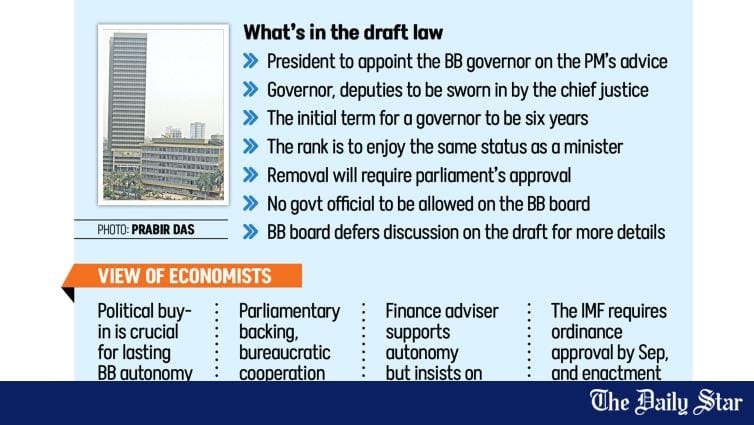
Economists have welcomed the interim government's initiative to grant full autonomy to the Bangladesh Bank (BB) but say the reforms will remain on paper unless political parties commit to endorsing and continuing them once in power.

The call comes as the central bank board, at a meeting on Wednesday, cleared amendments to the Bank Company Act but deferred the draft Bangladesh Bank Ordinance (Amendment) 2025 for further discussion.

Bank Company Act is the main law governing how banks operate in the country, while the Bangladesh Bank Order is the founding law that created the BB.

The board instructed officials concerned to submit a detailed breakdown of the proposed changes, their rationale, and the sections to be amended, for consideration in a separate meeting.

THE PROPOSED AMENDMENTS

The draft ordinance, prepared in line with the recommendations of the International Monetary Fund (IMF), proposes sweeping governance reforms aligned with global best practices.

It would elevate the governor's post to ministerial rank, require an oath before the chief justice, and introduce a double-layer appointment process.

According to draft, a six-member search committee would propose candidates, from which the president would make the final choice on the prime minister's recommendation, subject to parliamentary approval and "fit and proper" criteria.

BB board of directors would comprise the governor, two deputy governors nominated by the governor, and eight other directors appointed by the government from a list submitted by the governor.

No serving government officials could sit on the board, and no appointments could be made outside the nominated list.

NEED FOR POLITICAL WILL

Speaking on the proposed amendments, Prof Mustafizur Rahman, distinguished fellow at the Centre for Policy Dialogue (CPD), said the government is taking steps to "somewhat restrict the hands and feet of politicians," but political actors could still undermine the reforms if they want.

"That's why this must be viewed by politicians from a perspective of enlightened self-interest," he said, noting that reforms cannot always be implemented without political will.

"They should recognise that if the Bangladesh Bank remains independent and can make decisions independently, it will be good for the country's economy and for politics as well. Because if the economy fares well, politicians can also remain at ease," the economist added.

He stressed that the appointment process must ensure professionalism and parliamentary scrutiny, making the governorship "like a constitutional post, providing both security and accountability."

"In a democratic system, parliament is the highest body. If democracy is well-established, then they will have both the opportunity to work independently and the accountability," he added.

INDEPENDENCE ON PAPER VS PRACTICE

Prof Selim Raihan, executive director of the South Asian Network on Economic Modeling (Sanem), said independence of the BB has long been demanded, but rules alone cannot guarantee it.

He argued that there must be political commitment to ensure the BB's autonomy, and the ordinance must be endorsed by future parliaments.

"Many of our commissions are, on paper, already given independence, or in many cases, their appointments are bound by constitutional procedures. But these often did not work in practice, as they were altered under political influence," he said.

Raihan noted that other laws in the banking sector hinder central bank independence and governance. "Those will also have to be amended. Ensuring coordination across the entire inter-agency and departmental network will also be necessary."

He also cautioned against entirely removing bureaucratic involvement, saying civil service support is necessary for execution.

"Many tasks cannot be executed entirely without them. There needs to be a proper balance in this regard. Otherwise, the central bank may not get proper support from the finance ministry or other ministries.

"However, bureaucrats should never head these institutions," he said.

Raihan said currently, no such process exists to create pressure on the next government to continue the reforms that have begun and to secure commitments from them.

Calling for discussion on these matters, he said, "Or else, many things will happen on paper now, but later we will see they are not being implemented in reality."

CAPACITY AND ACCOUNTABILITY

Meanwhile, Finance Adviser Salehuddin Ahmed told reporters on Tuesday that he supports BB's autonomy in principle but it "must be earned" through capacity, integrity and efficiency.

"The Bangladesh Bank must have capacity, integrity, and efficiency. If you judge, do all the officials of the central bank have that? There is also such a thing as checks and balances," he said.

"If you are not capable but remain in the chair, what good is autonomy? I am not opposing autonomy. But autonomy does not mean handing over everything. In no country in the world is there full autonomy," he added.

On political engagement, Ahmed said the interim government has spoken with political parties about reforms in the banking and financial sectors, and the parties have broadly agreed to support and carry them forward.

The government aims to complete short-term reforms by February, leaving medium and long-term reforms to the next elected administration.

Under the conditions of the IMF $5.5 billion loan programme, the draft related to the BB autonomy should be approved by the advisory committee by September. And the ordinance should be issued within next December.​
 
Analyze

Analyze Post

Add your ideas here:
Highlight Cite Respond

Nationals from 5 countries involved in BB heist, CID probe finds

UNB
Published :
Aug 17, 2025 17:01
Updated :
Aug 17, 2025 17:22

1755471710847.webp


Nationals from five countries were involved in the Bangladesh Bank reserve heist that occurred in February of 2016, according to a senior official at the Criminal Investigation Department, the investigating agency of the cyber heist.

The foreign nationals involved in the crime are from Sri Lanka, the Philippines, China and the USA, said the official with in-depth knowledge of the investigation, seeking anonymity.

The investigation that has been going on for almost a decade now also found the involvement of several Bangladesh Bank officials and employees, particularly from the central bank’s Information and Communication Technology Department.

Some top officials of the central bank were also involved in the heist, the CID official said, adding that the investigation was at the final stage.

A sophisticated malware was used to hack into the BB system, the CID official said.

The malware-linked file was knowingly opened from the ICT department, enabling the illegal transfer of US $101 million from the central bank’s account with the Federal Reserve Bank of New York.

The ongoing investigation will soon end with the submission of a chargesheet before the court, said the CID official.

The chargesheet will include the detailed report from the US Federal Bureau of Investigation (FBI) into the heist, which conclusively proves the involvement of foreign nationals, the official said.

The investigating agency has requested the FBI to send a copy of this report formally, he added.

The central bank’s reserve heist was one of the largest cyber robberies in history.

It occurred in the early hours of February 5. Hackers attempted to transfer about US $1 billion from the BB’s account at the New York Fed, of which US $101 million was successfully moved.

The majority of the funds were laundered using the Philippines’ casino industry’s secrecy law and limited oversight. Of the stolen foreign currency, US $81 million went to the Philippines and about US $20 million to Sri Lanka.

The Sri Lankan funds were recovered in time, but retrieving the amount sent to the Philippines proved more complicated. So far, the Bangladesh government has recovered about USD 18 million from the Philippines.

The investigation was jointly conducted by the CID, the FBI, the Philippines’ National Bureau of Investigation (NBI), and the Central Bank of Sri Lanka.

Zubair Bin Huda, the then deputy director of Bangladesh Bank’s accounts and budgeting department, filed a case with Motijheel Police Station under the Money Laundering Prevention Act on March 15 in 2016 against unidentified individuals.

The case was later handed over to the CID.

In nearly nine years of the investigation, over a hundred witnesses and extensive technical evidence, including IP addresses, network logs, banking transaction trails and Dridex malware code, have been examined.

The investigation exposes how such an international financial crime was committed, how Bangladeshis collaborated in the crime, and the vulnerabilities of our cyber system, another senior CID official told UNB.

We want the chargesheet to be prepared in a way that ensures the perpetrators face justice at the international level as well, the official said on condition of anonymity.​
 
Analyze

Analyze Post

Add your ideas here:
Highlight Cite Respond

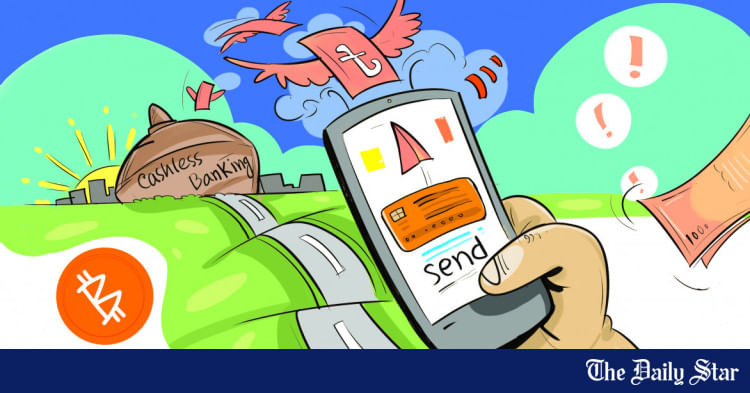
The case for an Islamic digital bank in Bangladesh

1763690005044.webp

FILE ILLUSTRATION: BIPLOB CHAKROBORTY

According to a recent report by The Daily Star, Bangladesh Bank has received 13 new applications for digital bank licences, including one from a local conglomerate seeking to establish an Islamic digital bank. These applications followed the central bank's renewed call under its revised Guidelines to Establish Digital Bank, issued in August 2025. By contrast, the original guidelines released in June 2023 attracted 52 applications, of which only two—Nagad and Kori Digital Bank—were granted provisional approval, and the progress of both has since stalled.

A digital bank is a fully branchless, end-to-end virtual entity designed to provide inclusive financial services through entirely online platforms. This model of banking differs fundamentally from the digitalisation of traditional banks, which involves upgrading parts of existing operations with digital tools while continuing to rely on physical branches, in-person services, and legacy systems.

Although a digital bank maintains a registered head office to house management and support staff and serves as a central hub for addressing customer complaints both physically and digitally, it does not operate physical branches, sub-branches, or over-the-counter facilities. To offer efficient, competitive, and innovative financial products, its ecosystem typically integrates artificial intelligence (AI), machine learning, blockchain, and other advanced technologies. It may issue its own virtual cards, QR-based instruments, and other advanced digital tools to facilitate customer transactions, and can utilise the existing infrastructure of traditional banks, mobile financial service providers, and other licensed payment channels.

Bangladesh Bank has set the minimum paid-up capital for digital banks at Tk 300 crore under the revised guidelines, up from Tk 125 crore in the original guidelines. In comparison, traditional banks are required to maintain a minimum paid-up capital of Tk 500 crore. Additionally, the prudential regulations of Bangladesh Bank, including the Cash Reserve Ratio (CRR), Statutory Liquidity Ratio (SLR), Advance-to-Deposit Ratio (ADR), Capital-to-Risk-Weighted Assets Ratio (CRAR), Liquidity Coverage Ratio (LCR), and Net Stable Funding Ratio (NSFR), will apply to digital banks, alongside other laws and regulatory provisions relevant to the banking business.

Although Bangladesh Bank's digital banking guidelines provide a broad operational framework, they do not include provisions specifically tailored to Islamic digital banks. Nevertheless, it is reasonable to expect that an Islamic digital bank, in addition to meeting all requirements applicable to digital banks, would need to establish a robust Shariah governance framework ensuring that every aspect of its activities adheres to Islamic principles. Its distinction from traditional Islamic banks may not primarily lie in the structuring of the underlying agreements but in their execution.

Traditional Islamic banks in Bangladesh have long faced criticism for weak asset linkage, reliance on paperwork-based processes rather than real trade, limited transparency in fund utilisation and profit distribution, and governance shortcomings. These weaknesses have contributed to the recent crises in several banks. A thoughtfully designed Islamic digital bank can help reverse this trend by embedding Shariah compliance within its technological architecture.

For instance, when a client applies for a sales-based financing facility through a mobile app, the system can automatically verify the supplier's credentials, confirm the existence of the underlying asset, generate an electronic sales contract, and record both ownership transfer and delivery. This digital workflow would prevent fictitious trading and ensure full traceability of every transaction. The resulting immutable audit trail would enhance transaction authenticity, a critical need in Bangladesh's Islamic banking landscape.

An Islamic digital bank also has the potential to fundamentally reshape savings, deposits, and investments. Customers can open accounts digitally, track the utilisation of their funds in real time, and monitor profit distributions down to the transaction level. Smart-saving and micro-investment tools can be added to allow users to automate small savings and invest digitally in capital market instruments, such as sukuk and other Shariah-compliant assets. AI-driven micro or nano Mudarabah and Qard Hasan products can extend small-scale financing to microentrepreneurs based on AI scoring models, thereby reducing their dependence on collateral and manual verification.

The possibilities extend to social finance as well. Digital zakat, sadaqah, and waqf tools can allow donors to track contributions instantly. Islamic robo-advisors can guide customers on ethical wealth management. Linkage to crowdfunding platforms based on Musharakah or Mudarabah structures can connect investors with halal ventures, supported by automated Shariah screening and transparent fund flows.

Clearly, the potential is significant. However, implementing a fully automated workflow and introducing various service options may pose challenges as Bangladesh's supporting digital ecosystem is still developing. Additionally, technologies such as smart contracts, blockchain, and advanced verification systems are expensive and resource-intensive.

One of the major challenges for an Islamic digital bank will be ensuring robust Shariah governance. Traditionally, Shariah committees in Bangladesh have largely confined their role to reviewing documents submitted to them, with little to no involvement in auditing information systems. In a digital banking environment, this approach must fundamentally change. Shariah committees will need to engage directly with the underlying digital architecture. They must be able to assess digital contract structures, evaluate data integrity and governance, address issues of cyber ethics, and scrutinise the fairness of algorithms. A similar shift is needed in internal Shariah audits, which traditionally overlook information systems or examine them only superficially.

This evolution demands a new generation of professionals who combine Islamic jurisprudence with technological competence. It may be difficult to find individuals with all these competencies, but at the very least, Shariah committees and internal Shariah audit teams must collectively represent this multidisciplinary balance.

Cybersecurity is another critical area that must be recognised as a fundamental Shariah concern, as it directly upholds the Islamic core principles of trust and the protection of wealth. Strong encryption, secure cloud infrastructure, and real-time fraud monitoring should be seen not only as technical requirements but also as essential for upholding Shariah objectives.

Regulators will need to guide this transformation. Bangladesh Bank should consider developing a dedicated regulatory framework for Islamic digital banking. This framework should cover digital architecture certification, algorithmic transparency, data governance, cybersecurity standards, and the enforceability of electronic contracts. The requirements should be set from both technical and Shariah perspectives for Islamic digital banks, while ensuring that regulation facilitates innovation without compromising integrity. Capacity building for regulators, Shariah experts, fintech professionals, and system auditors is equally essential, ensuring that technological sophistication and Shariah compliance are integrated seamlessly and advance simultaneously.

It is particularly timely for Bangladesh to introduce Islamic digital banks, given recent experiences among traditional ones. However, an Islamic digital bank should represent more than a digital version of existing entities. It must articulate a clear value proposition that truly distinguishes it from others while demonstrating the ability to restore public trust in the Islamic banking sector. In a country where smartphone penetration stands at 72.8 percent yet financial inclusion lags, a well-designed Islamic digital bank could help bridge this divide. However, realising this potential will depend heavily on enhancing digital financial literacy across the population.

Mezbah Uddin Ahmed is a research fellow at the ISRA Institute of INCEIF University, Malaysia.

ATM Anisur Rabbani is an executive director at Millennium Information Solution Ltd.​
 
Analyze

Analyze Post

Add your ideas here:
Highlight Cite Respond

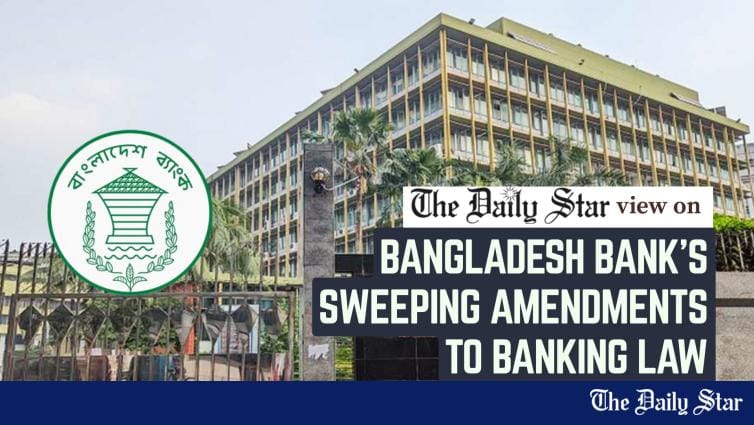
Banking clean-up is long overdue
Authorities must press ahead with the proposed changes to banking law

1763690273490.webp

VISUAL: STAR

For years, our banking sector has been a case study in the perils of politically connected finance. Its image has been tainted by mounting bad loans, a culture of impunity for powerful defaulters, and the anomalous status of ailing state-owned banks. Against this backdrop, the 45 proposed amendments to the Bank Company Act represent the most significant attempt at financial reform in decades. The planned changes aim to establish unified oversight by the central bank for all lenders.

Among the proposals, abolishing the "specialised bank" status for state banks is long overdue. This classification has effectively placed some banks in a regulatory no-man's-land, allowing them to operate with capital adequacy exemptions and make senior appointments without central bank approval. The result has been a disaster as state banks emerged as the primary repositories of non-performing loans, with their balance sheets crippled by politically connected borrowers. Meanwhile, the proposed ban on sitting MPs, cabinet members, and local government representatives serving as bank directors is a direct assault on the nexus of political and financial power that has dictated credit flows for decades. Similarly, the tightening of rules on family directors by narrowing the cap, broadening the definition of family, and imposing a "cooling-off" period for board members is a major step forward.

These reforms, if implemented, will dismantle the opaque corporate structures that have enabled rampant related-party lending. Reducing board sizes and mandating at least half of all directors to be independent professionals could also transform bank oversight. In a sector where boards have often been packed with relatives and political allies, this move towards professionalisation is vital. As Nazrul Huda, a former deputy governor of the central bank, rightly points out, smaller but expert boards are far more effective in governance.

Some of the more nuanced changes also reveal a pragmatic approach. Removing the controversial "wilful defaulter" category, while seemingly a step back, is a sensible streamlining. The label, introduced in 2023, created a subjective and corruptible distinction, adding bureaucratic hassle without improving recovery rates. Maintaining a single, clear defaulter list is a more straightforward and enforceable system.

Of course, a draft law is only the beginning. The true test lies in its adoption and implementation. We must be aware that the clause barring politicians from boards, in particular, will be a lightning rod for opposition. The government must hold its nerve. To graduate from least developed country status and attract the investment needed for its next phase of growth, Bangladesh requires a stable financial system, but banking malpractices have long concentrated risk, eroded depositor trust, and ultimately necessitated costly capital injections. The proposed amendments promise to align our banking sector more closely with global standards. Thus, the interim government, and the next elected one, must see them through without wavering going forward.​
 
Analyze

Analyze Post

Add your ideas here:
Highlight Cite Respond

Members Online

Latest Posts

Back
 
G
O
 
H
O
M
E