[🇧🇩] Banking System in Bangladesh

[🇧🇩] Banking System in Bangladesh
339
11K
More threads by Saif

G Bangladesh Defense

Ex-SIBL board seeks to reclaim ownership, promises to run bank independently

bdnews24.com

Published :
Apr 27, 2026 23:30
Updated :
Apr 27, 2026 23:30
1777333250353.webp


Five former directors of Social Islami Bank Limited (SIBL) have formally applied to the central bank to reclaim their ownership and separate the entity from the recently formed state-owned Sammilito Islami Bank.

The move comes less than three weeks after the parliament passed the “Bank Resolution” Bill on Apr 11, which included a controversial Section 18(A) allowing former shareholders to regain ownership under specific conditions.

Rezaul Haque, who served as SIBL chairman from 2013 to 2017, led the application filed with Bangladesh Bank (BB) on Monday.

"We can manage the capital required to fix the bank. We have shared our plan and are ready to provide further details if the central bank engages with us," Haque told bdnews24.com.

Other signatories include Jabedul Alam Chowdhury, Hakim Md Yousuf Harun Bhuiyan, Sultan Mahmood Chowdhury, and Afia Begum.

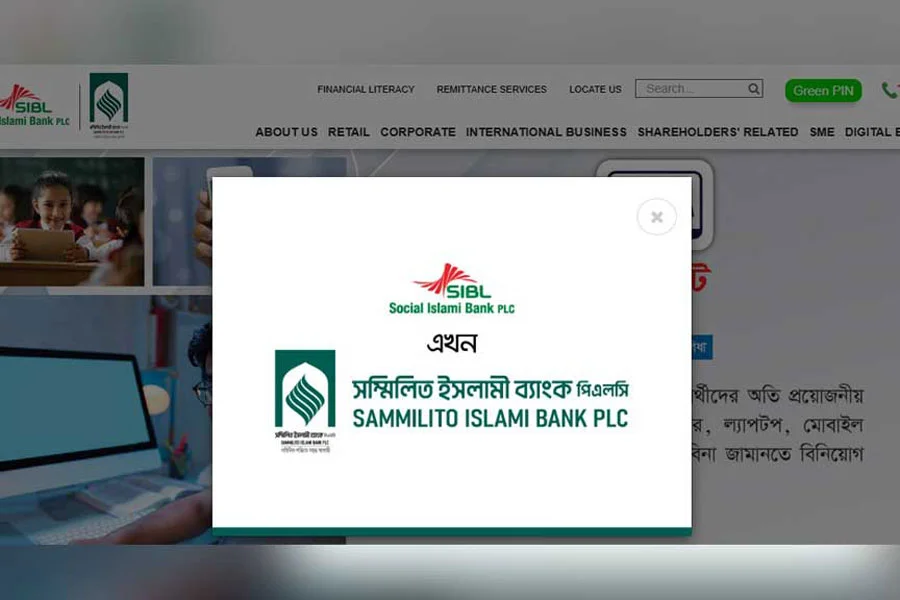
Sammilito Islami Bank was established by the previous interim government on Dec 21, 2024, by merging five struggling private Shariah-based banks -- EXIM Bank, First Security Islami Bank, Global Islami Bank, Union Bank, and SIBL.

Under the original ordinance, the shares of existing owners were declared void, and the government injected Tk 200 billion in capital to nationalise the mega-entity.

After the BNP-led government took office, the ordinance was turned into an act with the addition of Section 18(A).

The clause created an opening for former directors -- many of whom presided over the banks during periods of massive loan defaults and money laundering -- to seek a return to the board.

BB spokesperson and Executive Director Arief Hossain Khan did not confirm the status of the specific application.

"Once the application reaches the relevant department, it will be reviewed according to the law. It is too early to comment on the matter," he said.

In their proposal, the former directors outlined a strategy to restore SIBL’s financial health if it is allowed to operate independently again.

The plan highlights several key measures.

It includes a request for Tk 110 billion in liquidity support from the central bank for 10 years at the prevailing bank rate.

It also promises fresh capital infusion to stabilise operations and improve governance.

The plan commits to reducing the non-performing loan ratio to 25 per cent by December 2026.

Finally, it aims to reactivate 22 dormant government accounts to recover around Tk 5 billion in funds.

The five banks were declared "dysfunctional" by the central bank on Nov 5, 2025, leading to the suspension of their shares on the stock exchange.

Sammilito Islami Bank is currently being managed by a government-appointed administrator as the merger transition continues.​
 

Removing trust-deficit in banking sector

SYED FATTAHUL ALIM

Published :
Apr 28, 2026 01:02
Updated :
Apr 28, 2026 01:02

1777333621500.webp


The Bank Resolution Ordinance, 2025 was issued on May 9 last year (2025) by the Dr Yunus-led interim government with the objective of restoring stability in banking sector that was teetering on the brink of collapse. The ordinance granted the central bank, Bangladesh Bank (BB), under a new governor, the powers to manage the failing banks. The aim was to reorganise, merge or restructure weak banks, especially those with significant capital shortfall.

Notably, FSIBL, along with several other Shariah-based banks, was under the control of the infamous S Alam Group through pseudo shareholders and was subjected to serious irregularities including massive undocumented loans and money laundering leading to its as well as other distressed banks' ultimate collapse. Under the ordinance in question, the Bank Resolution Department (BRD) could take over the distressed or failing banks. Similarly, directors responsible for financial irregularities of the failing banks or their owners could be removed. But the Bank Resolution Act, 2026 that was passed by the Jatiya Sangsad (JS) on April 10, 2026, by amending the relevant ordinance would allow former owners and directors of the distressed/merged banks to reclaim control by paying only 7.5 per cent upfront of the government-injected funds!

In fact, the Section 18 (a) of the Act allows shareholders of the merged weak banks to regain ownership without accountability. This Act, especially its Section 18 (a), might allow those who previously looted the (banking) sector in a planned manner to regain ownership, speakers expressed their fear at a roundtable organised on Saturday (April 25) by a citizens' platform styled, 'Voice for Reform' at Karwan Bazar in the city. Experts and others concerned told the discussion event that by, what they said, intentionally adding a new clause, which was not in the original draft of the Act in question, the very purpose of the law that was originally framed has been altered. As a consequence, it has again put the country's entire banking sector at risk, economists, academics and political activists at the roundtable, added.

The Transparency International Bangladesh (TIB), through its press release on April 13, was also equally critical of the Bank Resolution Act, 2026, particularly, of its inclusion of a provision.

It opined that instead of addressing long-standing mismanagement, irregularities and governance deficits in the baking sector, with the inclusion of the Section 18 (a) in the Bank Resolution Act, 2026, the government guarantees impunity instead of ensuring justice for those concerned.

In fact, it is a normal practice under a democracy that the merit of the amended Bank Resolution Act, 2026 would come under the scrutiny of experts and other stakeholders as well. So, the incumbent government, that has been elected through a massive popular verdict, should not only appreciate criticism, but also amend or alter its decisions and actions by accepting the constructive aspects of such criticisms, if any, even if those are harsh. The denial mode, as was the characteristic of the past political government, should be avoided at all costs. There is no question that the banking sector needs a radical reform. Especially, the common depositors of the banks want to see that those who, under bank owners'/directors' garb, made off with their life savings, are punished and their stolen money returned with compensation. Banks over the centuries have been built on the depositors' trust. So, those responsible for the breach of the public trust must be brought to justice. It is believed that the incumbent government has the necessary political will to hold those responsible for the banking sector's present predicament to account. If any existing law or new law come in its way need to be brought under scrutiny and, if necessary, changed.​
 

Cashless Bangladesh initiative program held in Narayanganj

FE ONLINE DESK

Published :
Apr 28, 2026 20:54
Updated :
Apr 28, 2026 20:54

1777420516392.webp


To promote digital payment channels nationwide under the Bangladesh Bank-led “Cashless Bangladesh Initiative,” with Eastern Bank PLC (EBL) as the lead bank, a colourful public awareness rally was held in Narayanganj on April 27, 2026

As part of Bangladesh Bank’s “Cashless Bangladesh Initiative” to promote digital payment channels nationwide, a day-long program was held on April 27 in Narayanganj. Eastern Bank PLC (EBL) participated in the event as the lead bank.

The program began in the morning with a colourful public awareness rally, which started from the Central Shaheed Minar and concluded at Narayanganj Club. This was followed by a seminar held at Narayanganj Club.

The chief guest at the seminar was Arif Hossain Khan, Executive Director of Bangladesh Bank’s head office. Special guests included Md. Sakhawat Hossain, Additional Deputy Commissioner (Development and HR Management), and Md. Hashinuzzaman, Additional Superintendent of Police of Narayanganj.

The seminar was chaired by A.N.M. Moinul Kabir, Director of Payment Systems Department-1 of Bangladesh Bank. Representing EBL, M. Khorshed Anwar, Deputy Managing Director and Head of Retail and SME Banking, was present.

The seminar featured in-depth discussions on expanding digital transaction systems and highlighted the importance of transitioning towards a cashless economy. Bangladesh Bank presented the objectives, progress, and future roadmap of the Cashless Bangladesh Initiative. Speakers emphasized the benefits, security, and critical role of digital payments in advancing financial inclusion.

During the open discussion session, participants shared real-life experiences with digital payment systems, while relevant officials addressed queries and concerns.

Following the seminar, participants visited local markets to observe the practical implementation of digital transactions at the grassroots level.

Among others present from EBL were Ahsan Ullah Chowdhury, Head of Digital Financial Services, and Faisal M. Fateh-ul Islam, Head of Digital Payments.​
 

Bid to reclaim defunct SIBL rings alarm bells

1777422193345.webp


VISUAL: STAR

The reported attempt by five sponsor shareholders and former directors of the now defunct Social Islami Bank PLC (SIBL) to revive and regain control of the erstwhile Shariah-based lender is deeply intriguing. SIBL has already been diluted and merged with four other troubled institutions into a single state-owned entity under the Bank Resolution Ordinance, 2025 during the interim government’s tenure. All five banks were on the brink of collapse following their asset stripping by the controversial S Alam Group, which has been implicated in multiple financial crime cases, including large-scale money laundering and loan defaulting.

The reported application, submitted to the Bangladesh Bank on Monday, cites Section 18(ka) of the Bank Resolution Act, 2026, which allows former owners to reclaim merged banks. Notably, this provision was inserted at the 11th hour as an amendment to the 2025 ordinance and has since drawn widespread criticism. Critics argue that it could pave the way for the rehabilitation of those who systematically exploited these banks through scams and reckless lending.

Under the amended provision, former owners can regain control by paying 7.5 percent upfront of the funds injected by the government or BB, with the remaining 92.5 percent repayable within two years at 10 percent simple interest. This raises an obvious question: what motivates these former shareholders to seek the return of a bank that no longer exists as an independent entity? Fulfilling such a request would effectively require dismantling Sammilito Islamic Bank PLC—the newly formed institution created through the merger—which began operations on December 2, 2025, backed by Tk 35,000 crore in fresh government capital.

This move also prompts broader concerns. Have the applicants considered the implications for the other four banks in the merger? Or is this merely a test case, perhaps a precursor to similar claims from stakeholders of the remaining institutions? The four banks—First Security Islami Bank, Union Bank, Global Islami Bank, and EXIM Bank—were all part of the same troubled ecosystem. Collectively, the five banks amassed a staggering Tk 1.47 lakh crore in bad loans before the merger. According to a former BB governor, the net worth per share of these institutions ranged from Tk 350 to Tk 420 in the negative. An even more troubling question is: does the controversial amendment signal an eventual pathway for the proxies of S Alam Group to regain influence, if not direct control? It is well-documented that several of these banks were taken over through opaque arrangements and proxy ownership structures linked to the group.

The public has already paid a heavy price for allowing these banks to be captured and misused by politically connected interests during the Awami League era. Depositors endured severe hardship, often unable to access their own funds and still facing withdrawal restrictions. At the same time, recapitalising these institutions has placed a significant burden on the public exchequer. Given this context, any attempt to reverse the resolution process or restore control to former stakeholders must be firmly rejected. The government’s priority should be to stabilise and strengthen the newly formed entity, ensure sound governance, and eventually list it on the stock market to recover public funds and restore confidence in the banking sector.​
 

Latest Posts

Back