[🇧🇩] Family, Farmer & e-Health Cards

[🇧🇩] Family, Farmer & e-Health Cards
27
560
More threads by Saif

G Bangladesh Defense

PM to inaugurate pre-piloting ‘Farmer Card' distribution on Tuesday

BSS

Published :
Apr 13, 2026 21:53
Updated :
Apr 13, 2026 21:53
1776126176912.webp


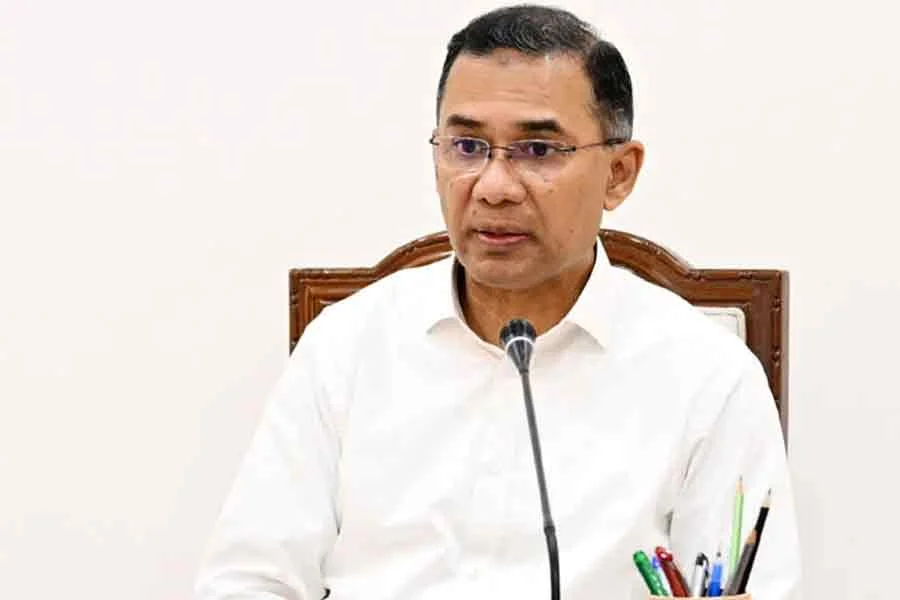
Prime Minister Tarique Rahman will inaugurate the 'Farmer Card' distribution in 11 upazilas of 10 districts across the country under the pre-piloting phase on Tuesday as part of the implementation of ruling BNP's election pledges.

According to the Prime Minister's Office (PMO) sources, the premier will officially launch the programme at 10:30 am at Shaheed Maruf Stadium in Tangail upazila, on the occasion of the Pahela Baishakh-1433.

After inaugurating the programme, Tarique Rahman, also ruling party Chairman of BNP, will address a farmers' rally there. Later, he will inaugurate an agricultural fair at the Poura Udyan in Tangail town at 12:15pm.

Besides, after reaching Tangail, the premier will offer Ziarat at the mazar of Maulana Abdul Hamid Khan Bhashani in Santosh there at 10:00am.

The 'Farmer Card' programme, announced by the Prime Minister Tarique Rahman, aims to directly empower farmers, who are considered the backbone of Bangladesh's economy. The initiative also seeks to integrate the agriculture sector with modern technology.

After exchanging views with investors in agriculture and agro-based industries, PMO Spokesperson Mahdi Amin at a press conference at the Bangladesh Secretariat here this afternoon said that within just two months of assuming office, the Prime Minister has already implemented many electoral pledges one after another.

He said the aim of the 'Farmer Card' is to protect farmers' rights and improve their living standards.

In the first phase, Mahdi Amin said the programme will be launched in 11 upazilas across 10 districts while 30 lakhs farmers will be brought under the special card gradually.

On the inauguration day, the Prime Minister will open the pre-piloting programme by handing over 'Farmer Card' to 1,500 farmers in Tangail.

Under the pre-piloting phase, a total of 22,065 farmers will get the card under 11 blocks in 11 upazilas of the 10 districts across the country’s eight divisions.

The blocks are: Kamlapur block under Panchagarh Sadar upazila, Panchpir block under Boda upazila of Panchagarh district, Uthli block under Shibganj upazila of Bogura district, Kripalpur block under Shailokupa upazila of Jhenaidah district, Rajabari block under Nesarabad upazila of Pirojpur district, Rajarchara block under Teknaf upazila of Cox's Bazar district, Aryannapur block under Cumilla Adarsha Sadar upazila, Suruj block under Tangail Sadar upazila, Tenapocha block under Goalanda upazila of Rajbari district, Fultala block under Juri upazila of Moulvibazar district and Gaibandha block under Islampur upazila of Jamalpur district.

The ‘Farmer Card’ will be given to all farmers across the country under three phases- pre-pilot, pilot, and nationwide rollout while the farmers will be selected under five categories- landless, marginal, smallholder, medium-sized and large-scale farmers.

In the pre-piloting phase, along with crop farmers, fish farmers or fishermen, livestock farmers and dairy farmers have been included while salt farmers have also been included where applicable.

The cardholders will receive 10 types of services, including agricultural inputs in fair prices, irrigation support, easy loans, subsidies, training, weather updates, crop protection advice, insurance, and fair market access.

According to Fisheries, Livestock and Agriculture Minister Mohammed Aminur Rashid, the pre-piloting phase will cost around Taka 8.34 crore. After this phase, a pilot programme will be launched in 15 upazilas by August this year.

Utilizing experiences of the pre-pilot and pilot schemes, the government will gradually distribute the card among the farmers and create a database across the country over the next four years.

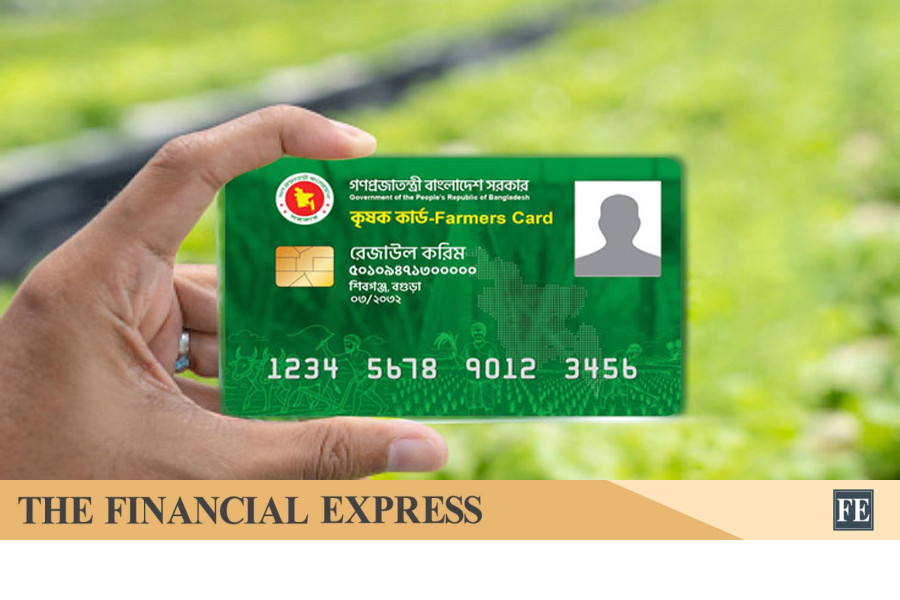
The Farmer Card will function as a banking debit card linked to accounts opened at Sonali Bank. As of April 11, data of 22,065 farmers have been collected, including 2,246 landless, 9,458 marginal, 8,967 smallholders, 1,303 medium-sized and 91 large-scale farmers.

Among them, landless, marginal and smallholder farmers — totaling 20,671— will receive Taka 2,500 annually through the card.

The cardholders will be able to purchase agricultural inputs such as fertilizer, seeds, fish feed, and livestock feed through Point of Sell (POS) machines provided to concerned dealers.​
 

Will Farmer Card end farmers' woes?

Atiqul Kabir Tuhin
Published :
Apr 16, 2026 00:16
Updated :
Apr 16, 2026 00:16

1776297729291.webp


The transformation of Bangladesh from a food-deficient nation into a near self-sufficient one in food production is an achievement built on the sweat and toil of smallholder farmers. But the list of farmers' woes are longer. Instances of farmers being deprived of agricultural subsidies, denied easy access to loans, or being shortchanged when purchasing essential agricultural inputs such as seeds and fertilisers are all too common. Against this backdrop, the government's initiative to introduce 'Farmers Card' could be a powerful tool to reach farmers directly, if it is implemented at scale and genuine farmers are the ones who receive it.

The programme was formally inaugurated by Prime Minister Tarique Rahman on Pahela Baishakh in Tangail. On the first day, 22,065 marginal farmers across 11 upazilas received their cards, adding to the joy of their New Year celebration. The government aims to extend this initiative to 16.5 million farming families nationwide over the next four years. Notably, apart from farmers, fishermen, livestock raisers, and salt cultivators are also included under its coverage. The government has reportedly earmarked an allocation of Tk 6.81 billion to implement the programme, aiming to modernise agricultural support system, as part of its broader national development priorities.

Primarily, the Farmers Card will function as an identity credential designed to ensure authenticated access to subsidies and services. Cardholding farmers will receive a range of benefits, including access to agricultural inputs and irrigation at fair prices, easier access to credit, and the use of machinery at subsidised rates. In addition, they will benefit from government incentives, weather updates and market information via mobile services, training opportunities, and expert advice on crop diseases and pest control. Provisions for agricultural insurance and fair pricing mechanisms for selling produce further enhance the scheme's potential to address long-standing structural challenges in the sector.

A key feature of the initiative is the provision for each cardholding farmer to open a dedicated account with Sonali Bank, into which government subsidies will be deposited directly. Furthermore, the card's integration with secure digital payment technology of VISA is expected to facilitate a cashless ecosystem for disbursing support. This direct transfer mechanism could significantly reduce the long-standing influence of intermediaries who have often diverted benefits meant for farmers.

Under the scheme, farmers have been classified into five categories based on land size, such as landless (less than 5 decimals), marginal (5-49 decimals), small (50-249 decimals), medium (250-749 decimals), and large (above 750 decimals). Initially, landless, marginal and small farmers will be brought under the incentive scheme. They will receive around Tk 2,500 annually as direct financial assistance to meet essential input needs.

However, the success of this ambitious project hinges on overcoming several critical challenges. Foremost among them is the accurate identification of genuine farmers. In many areas, official database of farmers remain outdated, which is likely to create a scope for undeserving individuals or middlemen to infiltrate the scheme if proper verification mechanisms are not enforced.

If past experience is anything to go by, a significant share of government incentives and subsidies intended for farmers is often marred by corruption and irregularities. As a result, farmers are often forced to purchase fertiliser and pesticides at prices higher than those fixed by the government. Likewise, it is alleged that government subsidy for procuring agricultural farm machinery failed to reach intended beneficiaries. In many cases it was found that intermediaries procuring farm machineries at subsidized rate, and then renting out the equipment to farmers at higher costs. Unless these systemic loopholes are addressed through proper monitoring, transparent beneficiary selection and strict accountability measures, the promise of the farmers' card risks being undermined as well.

Only time can tell to what extent the introduction of Farmer Card will be able to end the deprivation of farmers. The card, after all, is only a medium; its real value will depend on sound policy design, a corruption-free implementation process and the effective use of technology. If implemented properly, it could streamline the delivery of subsidies and incentives, making them more accessible and hassle-free, while also bringing much-needed discipline to agricultural credit distribution. However, a crucial question remains: how will the scheme ensure that farmers are getting a fair price for their produce?

If the government is serious about addressing the long-standing issue of farmers being deprived of fair prices by curbing the influence of middlemen, it would do well to introduce a Minimum Support Price (MSP) for major crop varieties each season. MSP is the minimum price paid by the government when it procures any crop from the farmers to protect them from price fluctuations. MSP is set considering production costs, market demand, and other economic factors. Successful implementation of an MSP can ensure financial security for farmers and shield them from losses during market downturns.

To effectively implement the MSP mechanism, agricultural collection centres, along with specialised cold storage facilities, should be established at the upazila level or near major production hubs. These centres will collect surplus crops from farmers based on the MSP or prevailing market rates. Collected produce can then be supplied to other areas, stored in cold storage facilities, or exported.

Ultimately, the farmer card should be viewed not merely as an identity document, but as a commitment of the state to those who sustain the nation's food security. Its success will hinge on the integrity and transparency with which it is implemented. If backed by robust monitoring, zero tolerance for corruption and necessary reforms such as fair pricing mechanisms and improved market infrastructure, the initiative could mark a decisive shift in addressing farmers' long-standing grievances. Otherwise, it risks becoming yet another well-intentioned scheme that falls short in practice. The choice, therefore, lies in execution and in whether policymakers are willing to match ambition with commitment and accountability.​
 

Digital cards and the reality of poverty in Bangladesh

26 April 2026, 13:00 PM

Md Rakibul Hasan

1777249890868.webp

FILE VISUAL: ANWAR SOHEL

According to the World Bank’s April 2026 Bangladesh Development Update, the country’s poverty rate increased to 21.4 percent in 2025 from 18.7 percent in 2022, adding 14 lakh more poor people in 2025. At present, the government’s increasing number of digital welfare programmes—Family Card and Farmers’ Card—appear to be well-justified. But the question remains whether technology can meaningfully benefit those in the greatest need.

From an administrative perspective, the family card initiative is indeed a landmark project. It was launched on a trial basis last month in 14 upazilas, offering Tk 2,500 per month to over 40,000 women-headed households over four months. Simultaneously, the government is implementing 95 programmes under its social protection budget of Tk 1.26 lakh crore for the current fiscal year, accounting for 1.87 percent of the GDP.

Nonetheless, a fundamental problem within the economy has yet to be addressed. According to the Bangladesh Bureau of Statistics (BBS), inflation has been higher than wage growth for 50 consecutive months till March 2026, despite a gradual rise in pay since February 2022. The BBS also reported a reduction in real wages by 1.9 percent in FY 2024. Given this state of the economy, improving food distribution via digital cards may not be of much use unless the actual volume of assistance keeps pace with rising market prices

A substantial portion of the 21.4 percent poverty rate comprises the new poor—once self-sufficient middle- and lower-middle-class families whose modest savings have been wiped out by successive shocks. The World Bank says that almost one-third of the population is still at risk of becoming poor because of a simple shock such as a natural calamity or illness.

The government’s own family card implementation guidelines acknowledge a structural failure in the existing system: an estimated 22-25 percent of the actual poor are currently excluded from existing social programmes, while fragmentation and weak inter-ministerial coordination cause persistent duplication among the 95 social protection schemes. A complete digital platform will be helpful for avoiding repetition, but it can result in exclusion in rural areas due to a lack of digital skills within the community, poor internet connectivity, and reliance on OTPs.

For digital welfare reform to make a lasting difference, upgraded systems must be paired with meaningful policy changes in three areas: adequate benefit levels, responsive targeting, and proper funding.

First, benefit amounts must be automatically adjusted in line with inflation, ideally using the Consumer Price Index or a food-specific basket relevant to low-income households. Countries such as Brazil—through its Bolsa Família programme—and Argentina—through its Universal Child Allowance—have successfully applied such indexing.

Second, Bangladesh must move beyond static beneficiary lists. The family card’s pilot design, using a dynamic Proxy Means Test and field surveys of 320,000 families across 14 wards, is a step in the right direction. The World Bank has repeatedly noted that dynamic registries linked to national identification systems significantly improve accuracy and the capacity to respond to economic shocks.

Third, present expenditure on core social safety net programmes is still small. Even with the government’s figure of 1.87 percent of GDP overestimates welfare expenditure because it includes public sector pension schemes and savings certificates. The actual rate is closer to 1.32 percent of GDP. In its family card programme guidelines, the government aims to increase social security spending to three percent of GDP by 2028. Meeting this goal requires more efficient revenue generation and resource allocation through targeted interventions rather than misdirected subsidies. It should be noted that, in 2022, the World Bank found that 35 percent of the wealthiest households received social protection benefits in Bangladesh, while half of the poorest families did not.

Technology can facilitate policymaking, but it cannot replace it. Although the family card system can be applied to improve the efficiency and effectiveness of service delivery, it is not sufficient to fully address increasing poverty. Unless policymakers take decisive steps towards fiscal reforms, lower inflation rates, increase in real wages, and job creation, technology alone won’t do much for the poor in Bangladesh. Policymakers should refrain from falling into the trap of looking for technological fixes for socioeconomic woes. Any improvement in technology will not sustain itself for long due to rising inflation and falling wages, unless there are also good economic growth and strong political will.

Md Rakibul Hasan works with Bangladesh Small and Cottage Industries Corporation (BSCIC).​
 

Projected cost over 5 yrs: Tk 1.34 trillion to be spent on family card scheme
Beneficiaries will be selected through a survey covering 41 million households.

Fakhrul Islam
Dhaka
Updated: 28 Apr 2026, 13: 54

1777421476583.webp


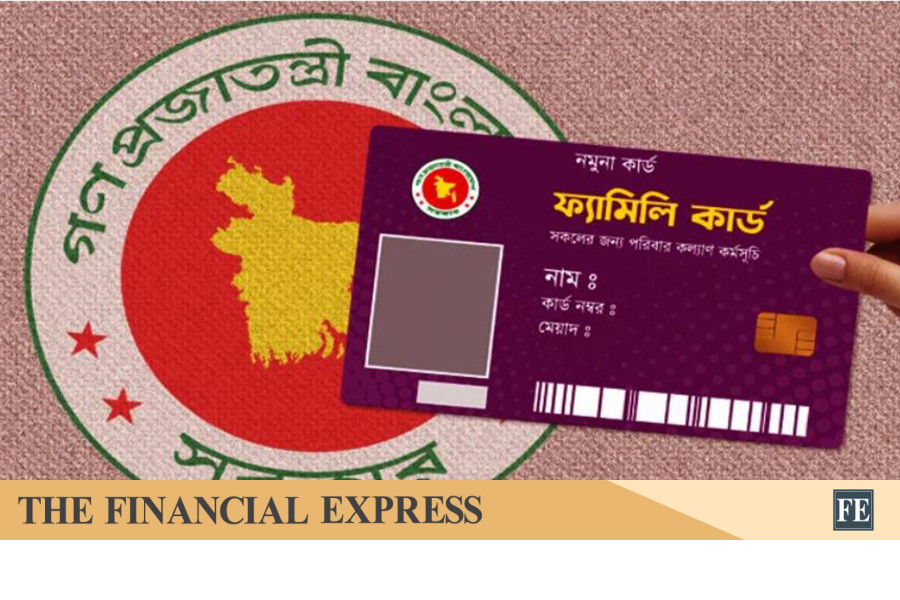
In line with a pledge made in its election manifesto, the government of Bangladesh Nationalist Party (BNP) is expected to spend Tk 134,000 crore (1.34 trillion) over five years on the Family Card scheme.

Under the programme, each woman-headed household will receive Tk 2,500 per month. The government plans to increase the number of beneficiaries each year, with corresponding rises in budget allocations. These details have emerged from sources at the Finance Division of the Ministry of Finance and the Ministry of Social Welfare.

Implementation of the Family Card scheme has already begun on a pilot basis in the current 2025–26 fiscal year. Prime Minister Tarique Rahman inaugurated the programme for woman-headed households on 10 March.

A meeting to review progress in implementing the Family Card scheme was held at the Secretariat yesterday, Monday, chaired by Finance and Planning Minister Amir Khasru Mahmud Chowdhury.

Among those present were Social Welfare Minister AZM Zahid Hossain, the Prime Minister’s Adviser on Finance and Planning Rashed Al Mahmud Titumir, State Minister for Social Welfare Farzana Sharmin, Finance Secretary Khairuzzaman Majumdar, and Social Welfare Secretary Mohammad Abu Yusuf.

Following the meeting, the finance minister told journalists, “The Family Card is not merely a social protection programme of the present government; it is also a humane and exemplary initiative. Necessary funding will be allocated in the budget for its implementation. More than 37,000 cards have already been distributed under the pilot phase. We are examining whether anyone has been excluded from the process or whether anyone has been wrongly included. We want the programme to be managed even more accurately in the future.”

The Ministry of Social Welfare has informed the Finance Division that Tk 86 crore (860 million) will be required to provide Family Cards to 86,000 people by next June, within the current fiscal year.

Of this amount, it said, 66 per cent will be spent on direct cash assistance, while the remaining 34 per cent will cover data collection, online systems, card issuance and related activities. Some 37,000 people have already received cards, while preparations are under way to distribute cards to the remaining 48,000 beneficiaries.

Speaking to Prothom Alo after the meeting, the Prime Minister’s Adviser on Finance and Planning, Rashed Al Mahmud Titumir, said, “The government is committed to implementing the Family Card scheme. There will be no shortage of funds for this purpose. However, the programme is still in its early stages and much work remains to be done. There are also some ongoing programmes that may need to be coordinated with it.”

During the meeting, Social Welfare Secretary Mohammad Abu Yusuf presented, through a PowerPoint presentation, projections for beneficiaries and expenditure under the Family Card scheme for the four fiscal years from 2026–27 to 2029–30.

He also outlined estimates of year-by-year increases in beneficiaries and corresponding rises in expenditure.

It was stated at the meeting that budget allocations would be required as follows: Tk 13,740 crore in fiscal year 2026–27 for 4.1 million beneficiaries; Tk 26,730 crore in FY2027–28 for 8.1 million beneficiaries; Tk 39,930 crore in FY2028–29 for 12.1 million beneficiaries; and Tk 53,130 crore in FY2029–30 for 16.1 million beneficiaries.

This would bring total expenditure over five years, including the current fiscal year, to Tk 133,616 crore. Of this, Tk 12,330 crore would be spent on surveys and related activities, while Tk 121,286 crore would go towards direct cash support.

The meeting was also told that the government’s expenditure per family would amount to Tk 30,000 annually, based on monthly payments of Tk 2,500. Beneficiaries will be selected through surveys of 41 million households, with data to be collected from at least 10 million families each year.

Sources said the Cabinet Division will be tasked with identifying errors and irregularities in the beneficiary selection process. The Ministry of Social Welfare has already proposed forming a monitoring committee for this purpose. In addition, committees have been formed at the grassroots level headed by Upazila Nirbahi Officers (UNOs).

To ensure proper implementation, the ministry and its subordinate offices have also highlighted the need for increased staffing, staff training, and new office facilities.

Selim Raihan, Executive Director of the South Asian Network on Economic Modeling (SANEM), told Prothom Alo that the Family Card was one of many commendable initiatives undertaken by the current government.

“The question is where the money for implementation will come from. Social safety programmes cannot be financed through borrowing indefinitely. What is needed is higher revenue collection. At the same time, funds can be saved by addressing wastage in existing programmes,” he said.

He added, “The government must also be careful in selecting the genuine beneficiaries of the Family Card. I hope the government will not face a shortage of funds in implementing this programme.”​
 

Latest Posts

Back