โ˜• Support Us โ˜•
[๐Ÿ‡ง๐Ÿ‡ฉ] - BDR Mutiny---An Irreparable Damage to Bangladesh's First Line of Defense | Page 11 | PKDefense

[๐Ÿ‡ง๐Ÿ‡ฉ] BDR Mutiny---An Irreparable Damage to Bangladesh's First Line of Defense

Reply (Scroll)
Press space to scroll through posts
G Bangladesh Defense
[๐Ÿ‡ง๐Ÿ‡ฉ] BDR Mutiny---An Irreparable Damage to Bangladesh's First Line of Defense
113
4K
More threads by Saif


Govt should deliver justice for BDR carnage
26 February, 2025, 00:00

WHILE the 2009 carnage in the Bangladesh Rifles, later renamed as Border Guard Bangladesh, remains a shocking incident, leaving an indelible scar, the failure to establish the motive and the plotters of the incident and to bring them to justice is unsettling. The rebellion, which began in the border guard headquarters on February 25 and spilled over to some other sector headquarters that day and the day after, left 74 people, including 57 officers deputed to the force from the army, dead. After the incident, which happened less than two months after the Awami League government had assumed office, two investigation committees were formed, one by the government, headed by a former secretary, and the other by the army, but none of them could establish the motive of the rebellion and identify the plotters. Both the reports, yet to be made fully public, which failed to get to the reasons and the plotters, however, suggested further investigation to establish who, if any, hatched the plot and why. Further and thorough investigation, the demand for which has only become louder after the fall of the Awami League government on August 5, 2024, is important for strategic planning and stopping such events.

In the aftermath of the rebellion, which exposed weaknesses in Bangladeshโ€™s security framework, various theories emerged to explain the underlying causes of the incident. While the official explanation attributed the incident to dissatisfaction about salaries, benefits and working conditions among the soldiers, many security experts found this explanation inadequate and misleading as it is highly unlikely that such an extreme level of violence could erupt solely because of grievances. Survivors, sacked border force personnel and families of the slain officers also allege that the official explanation coming from unpublished investigation reports โ€” a few of the findings and recommendations of the government committee were made public in May 2009 though โ€” is an attempt to hide the motives and plotters of the massacre. A number of survivors and security experts have, meanwhile, also alleged that there is an external, specifically Indian, involvement in the massacre and that the external forces, aided by the political leadership of the day, exploited the existing grievances among the soldiers. This allegation of the involvement of external forces is a serious one and needs to be investigated properly. If such an involvement is there, the implication of the massacre is far-reaching and severely impacts national security, bilateral relations and regional stability.

This is heartening that the government has declared February 25 National Martyred Army Day, assured its commitment to ensuring justice and formed the national independent investigation commission to investigate the rebellion. The government should now deliver on its assurances.​
 

BDR carnage entirely done by BDR men, no ifs or buts: Army chief
Staff Correspondent
Dhaka
Published: 25 Feb 2025, 16: 39


1740532093603.png


The chief of army staff, General Waker-Uz-Zaman, has urged all to refrain from disrupting the trial of the Pilkhana killings, emphasising that the incident was committed entirely by members of the then Bangladesh Rifles (BDR).

The army chief made the statement while addressing a commemoration ceremony at Helmet Hall of the RAOWA Club in Dhaka on Tuesday. He paid tribute to the 57 army officers killed in the 2009 carnage, along with several of their family members.

โ€œToday is a painful day. On 25 February, 2009, we lost 57 brave army officers and some of their family members. I was looking at these pictures while travelling here. You have watched these in pictures, but I have witnessed all these in person. I am a witness of all these brutality,โ€ he said.

He clarified that no army personnel were involved in the killings. โ€œAlways, we have to keep in mind that no army personnel carried out this brutality. It was entirely carried out by the then BDR members. Full stop. There are no โ€˜ifsโ€™ or โ€˜butsโ€™ here.โ€

The army chief warned that questioning the established trial process, which has been ongoing for 16-17 years, could undermine justice. โ€œIf you drag in ifs and buts, the trial process that continues for 16 years and the convicted who have been in jail for 17 years will be disrupted. We have to keep it in mind very clearly. Do not spoil the trial. Those who have been sentenced are bound to face it.โ€

Regarding suspected external involvement, General Waker-Uz-Zaman noted that the authorities have formed a commission to find out if any political leadership or foreign forces were involved in the carnage. โ€œThe commission chairman is present here. He will find out and inform you.โ€

He also warned against misinterpretations and attempts to deviate the narrative. โ€œThe bottom line is that our fallen soldiers lost their lives in the firing of the BDR men. Some of us have different views and are trying to channel it towards a different direction. It will not be beneficial for us.โ€​
 

BDR carnage probe commission asks Hasina, 14 others to appear, testify
BSS
Published: 08 Mar 2025, 21: 37

1741485934263.png

Sheikh HasinaFile Photo

The National Independent Investigation Commission on the 2009 BDR carnage has issued a public notice urging 15 individuals, including former prime minister Sheikh Hasina, to testify as part of its ongoing inquiry.

It made the call in a special notice issued today, saying that due to time constraint, the commission hopes to complete the process of taking the testimony of the 15 individuals by 31 March of this year.

Apart from Sheikh Hasina, the other individuals are former army chiefs General Moeen U Ahmed and Aziz Ahmed, Maj Gen (Retd) Tarique Ahmed Siddique, former prime minister's security adviser, Fazle Noor Taposh, former mayor of Dhaka South City Corporation, Sheikh Fazlul Karim Selim, former member of parliament from Gopalganj-2, Jahangir Kabir Nanak, former member of parliament from Dhaka-13, Mirza Azam, former member of parliament from Jamalpur-3 and AFM Bahauddin Nasim, former member of parliament from Dhaka-8, Brig Gen (Retd) Muhammad Shamsul Alam, former commander, 44th Rifle Battalion, Lt Gen (Retd) Molla Fazle Akbar, former directorate general of Forces Intelligence, Hasan Mahmud Khandaker, former directorate general, RAB, Abdul Kahar Akond, former police officer, Nur Mohammad, former inspector general of police and Monirul Islam, former additional IGP.

The witnesses are requested to inform the commission in writing of their proposed schedule within 7 days of the publication of the notice, either by phone or e-mail or by letter, as per their convenience.

Online testimony can also be arranged through video conference, the notice said.​
 

BRD carnage mystery must be revealed, CA tells probe commission
BSS
Published :
Apr 16, 2025 19:57
Updated :
Apr 16, 2025 19:57

1744850936476.png


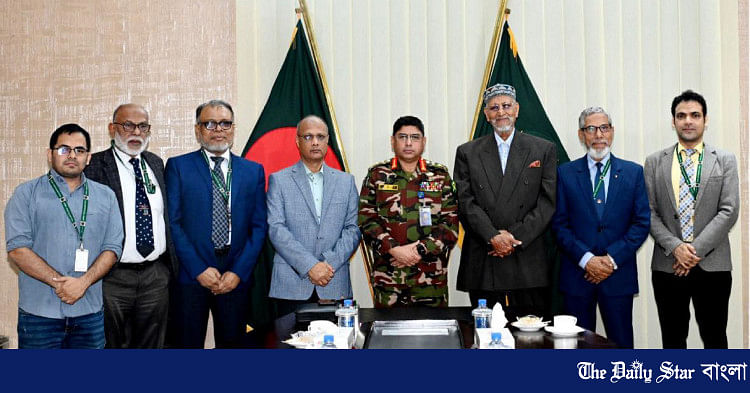
Chief Adviser Professor Muhammad Yunus on Wednesday said the mystery behind the 2009 BRD carnage must be revealed.

โ€œWe all are looking for the answers. The commission must be successful in probing this incident. This mystery should be unveiled,โ€ he said when the members of the National Independent Investigation Commission on BDR carnage called on him at the State Guest House Jamuna.

The Commission members met the Chief Adviser to inform him about the progress of its investigation into the barbaric incident, Chief Adviserโ€™s Deputy Press Secretary Abul Kalam Azad Majumder told BSS.

Speaking on the occasion, Prof Yunus said the interim government will provide all-out cooperation to the probe commission, saying, โ€œThey brutally killed their own officers. This carnage was carried out smoothly.โ€

He noted that the entire nation is looking at the investigation commission and that is why it must reveal the mystery behind this incident.

During the meeting, the commission expressed the hope that its probe report would be finalised by June as its investigation is progressing at full speed.

Commission chief Major General (Retd) ALM Fazlur Rahman said the Commission is contacting various parties.

As the BRD carnage took place 16 years ago, it is being delayed a little bit to contact many of those who had connections with the incident, he said.

Rahman informed the Chief Adviser that many of the accused are staying abroad. โ€œWe continue to inquire about their information in coordination with the Ministry of Foreign Affairs,โ€ he added.

He said the Commission has already interviewed some people who are in jail now. โ€œThere are 23 people abroad who need to be contacted for the investigation. Of them, eight have contacted for their interviews,โ€ he said.

The commission chief further said: โ€œWe are investigating the pattern of killings and torture. After the killing of the DG, the rest (of the officers) were killed. This was a planned carnage. Such a carnage cannot happen without a planโ€.

Mentioning that it was like the recurrence of Plassey tragedy, he said the Commission has to find out its roots.

Commission member Major General (Retd) Jahangir Kabir Talukder said: โ€œNot a single officer/official was removed in the incident of such a heinous carnage. None has been held accountable. This was a failure of the intelligence agencies, the military and politics.โ€

Other members of the Commission Brigadier General Md Saidur Rahman, Munshi Alauddin Al Azad, Dr M Akbar Ali, Md Shariful Islam, Shahnewaz Khan Chandan and ATKM Iqbal were present at the meeting.

On December 24, 2024, the government formed the seven-member commission to reinvestigate the tragic 2009 BDR massacre and it was asked to complete its probe by 90 working days.​
 

BDR Mutiny: Tania Amirโ€™s statements โ€œmisleading, reflect her own political agendaโ€
Published :
Apr 30, 2025 20:42
Updated :
Apr 30, 2025 20:42

1746056851261.png


Chief Adviserโ€™s press wing on Wednesday said statements by Barrister Tania Amir about the 2009 Bangladesh Rifles mutiny are โ€œmisleadingโ€ and reflect her own political agenda as a supporter of the deposed Awami League regime rather than the reality of actions by the interim government, which is moving with energy unseen 16 years since the tragedy occurred to ensure justice is done.

โ€œThe reality is that the interim government will continue to move on several fronts to ensure justice is finally done in this murky case that horrified Bangladeshis when it occurred and has divided public opinion ever since,โ€ said the CA press wing facts referring to Tania Amirโ€™s statements which are circulating on social media, UNB reports.

Although she has taken legal cases independently, the press wing said she is widely seen as aligned with the partyโ€™s political and ideological positions.

Given this affiliation, press wing said recent remarks at the Geneva Press Club criticizing the interim government and insinuating that it represents terrorists and mutineers involved in the 2009 BDR mutiny can be understood as politically motivated.

Notably, Amir and other speakers at the Geneva conference did not cite any new evidence; rather, they replayed claims (e.g. death tolls, indemnity laws, prisoner releases) that have circulated among opposition groups for years.

The Geneva press event is part of a diaspora-driven campaign to keep the spotlight on alleged abuses by Bangladeshโ€™s authorities and appears timed to capitalize on this attention and to project a narrative of government impunity to Western audiences, said the press wing.

The timing coincided with the governmentโ€™s own steps (March 2025) to honour the mutinyโ€™s victims and call for justice, it said.

Tania Amir and allies seized this moment to pitch a negative storyline that might resonate with international fears of militant Islam, said the press wing.

Investigation Commission

On December 22, 2024, the government formed a seven-member National Independent Investigation Commission to re-examine the Pilkhana massacre.

Chaired by retired Maj. Gen. ALM Fazlur Rahman, the commission has collected testimony from dozens of witnesses (about 37 so far, including officers, BDR personnel and victimsโ€™ families).

It has vowed to โ€œuncover the true nature of the incident,โ€ identify all culprits, and even probe any domestic or foreign conspiracies.

On Apr 18, 2025 the commission issued a public notice asking anyone with reliable information or testimony about the 2009 carnage to submit it via its website or email, promising confidentiality.

Pledge to Uncover Truth

Home Affairs Adviser Jahangir Alam Chowdhury reaffirmed the governmentโ€™s commitment to a full reinvestigation of the Pilkhana events.

In late February 2025, Commission Chairman Fazlur Rahman told reporters that the inquiry commission had already recorded evidence from dozens of witnesses and that it would call even top figures (e.g. then-Prime Minister Sheikh Hasina and former Army Chief Moeen U Ahmed) as needed.

He stressed that the investigation would โ€œuncover the true natureโ€ of the incident, include the real perpetrators in the cases, and examine all possible foreign or domestic plots.

Public Appeal for Information

On 18 April 2025 the Commission publicly invited any citizens or organizations with relevant information to come forward via its website or email. It highlighted the complexity of investigating a 16-year-old crime and assured confidentiality for informants.

This suggests an official effort to be transparent and thorough, contrasting with claims that the government is covering things up.

Court Cases and Releases

In January 2025, hundreds of former BDR personnel were granted bail in mutiny-related cases. Contrary to Amirโ€™s allegation that they were set free with no legal procedures, the prisoners were released on bail.

Families of the slain officers immediately protested that those who massacred army officers should not be freed wholesale.

Meanwhile, survivorsโ€™ families have filed new complaints (e.g. with the International Crimes Tribunal) and threatened fresh protests if justice is not secured.

Victimsโ€™ Memorialization

The government has simultaneously taken steps to honour the victims. In March 2025, the Cabinet Division officially declared Feb 25 as โ€œNational Martyred Army Day,โ€ and accorded โ€œmartyrโ€ status to the 57 army officers slain at Pilkhana.

Amirโ€™s affiliation with the Awami League is well known. In November 2023, she and her father, Barrister M Amir-ul Islam, collected nomination papers from the ruling Awami League for parliamentary constituencies Kushtia-3 and Kushtia-4, indicating active political engagement with the party.

Her family background is closely tied to the Awami Leagueโ€™s legacy: her father was instrumental in drafting Bangladeshโ€™s declaration of independence and constitution, and the family has historically supported the Awami League.​
 
Major General (rtd) Fazlur Rahman is briefing the journalists about the progress of investigation into BDR killings in Pilkhana. The video is in Bengali.


BDR carnage a result of longstanding conspiracy: Commission

Staff Correspondent Dhaka
Updated: 25 Jun 2025, 17: 30

1750895386796.png

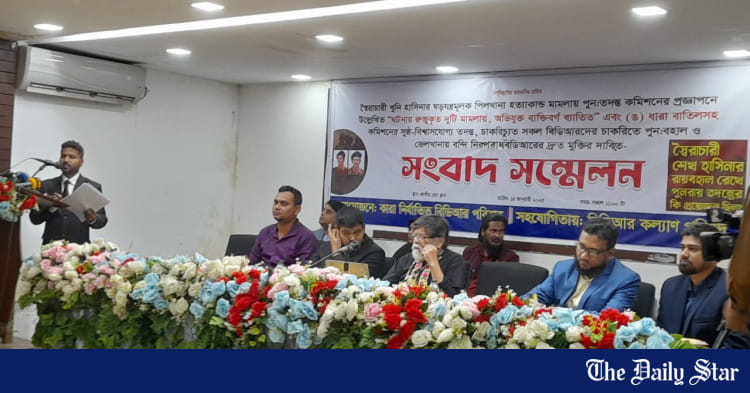
Major General (retd) ALM Fazlur Rahman, the Chairperson of National Independent Investigation Commission on BDR Carnage, speaks at a press conference on 25 June. Prothom Alo

The National Independent Investigation Commission has marked Pilkhana Massacre in BDR Headquarters as the result of longstanding conspiracy.

The commission also finds various level of involvement of political leaders with the carnage that took place on on 25 and 26 February in 2009.

The investigation commission formed by the interim government revealed several findings at a press conference held on the 7th floor of the newly constructed BRICM building in Dhaka's Science Laboratory area on Wednesday morning.

The commission also finds various level of involvement of political leaders with the carnage that took place on on 25 and 26 February in 2009.

The written statement was delivered by the commission's chairperson, Major General (retd) ALM Fazlur Rahman.

According to the statement, testimonies suggest that unnecessary delays under the pretext of political resolution and the inaction of the armed forces and other law enforcement agencies enabled the rebels to commit murders and other crimes without resistance.

Despite repeated pleas and appeals from trapped officers and their family members inside Pilkhana from the morning of 25 February, no action was taken.

Fazlur Rahman said that based on the analysis of the information gathered so far, it can be concluded that the then-command of the armed forces and law enforcement agencies failed to make timely decisions.

Their inaction at that time meant they did not take effective measures to prevent the mutiny and killings, he added.

1750895461101.png

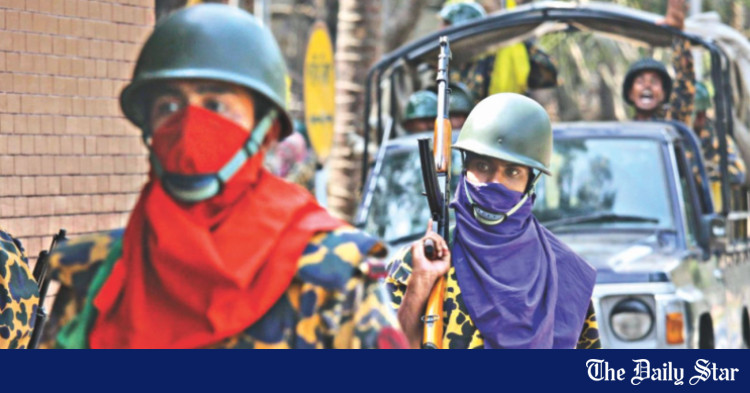
Rebel soldiers with heavy arms were in guard at gate No. 2 in Pilkhana File photo

The investigation commission further stated that available evidence indicates severe negligence and failure on the part of the then-intelligence agencies in fulfilling their duties.

An analysis is underway to identify the nature and causes of this intelligence failure. Attempts to divert the course of events and destroy evidence have also been detected. The individuals and institutions responsible are being identified.

Additionally, efforts were made to tarnish the image of military officers deliberately, Fazlur Rahman said adding testimonies and evidence from victims and eyewitnesses point to possible foreign involvement, which is currently under review and analysis.
The commissionโ€™s chairperson noted that during the massacre at Pilkhana, certain media outlets broadcast biased reports that appeared to incite the mutiny.

Additionally, efforts were made to tarnish the image of military officers deliberately, Fazlur Rahman said adding testimonies and evidence from victims and eyewitnesses point to possible foreign involvement, which is currently under review and analysis.

Based on available information, the commissionโ€™s chairperson said the commission believes that timely military intervention could have prevented the horrific killings and associated crimes.

Additional findings

The press conference also outlined the nature of crimes committed inside Pilkhana. Testimonies from surviving officers and their families paint a harrowing picture of the events. In addition to the targeted killing of officers, their family members were subjected to inhumane abuse.

Crimes included physical assault of women and children, armed threats, destruction of homes, confinement in the Quarter Guard without food or water under inhumane conditions, destruction of state and personal property, tampering with evidence, arson, and more. The commission continues to analyse the information received.

1750895577761.png

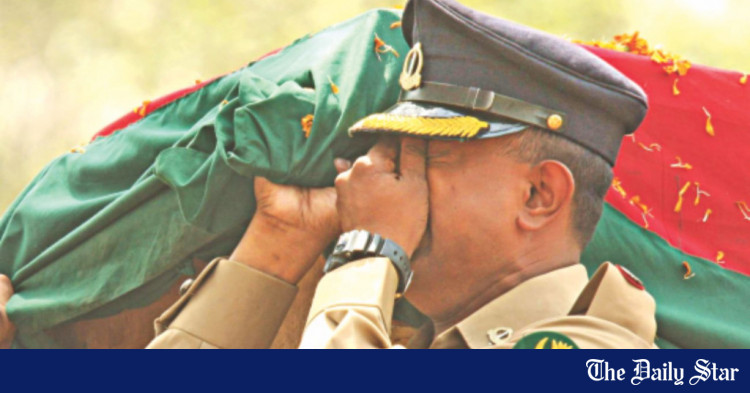
Army officials break down in tears while carrying a coffin of slain BDR official File photo

158 Individuals interviewed

At a press conference, it was announced that a total of 158 individuals have been interviewed so far. Testimonies from approximately 50 more people are yet to be collected. Statements have been taken from eight political figures, three of whom were interviewed in prison, while three appeared in person. Two fugitive Awami League leadersโ€”Jahangir Kabir Nanak and Mirza Azamโ€”submitted their statements via email.

The investigation commission reported that detailed statements from six members of the families of the martyrs have been recorded. Two conferences were held with members of the martyr families, during which they shared their experiences and opinions.

Statements have been taken from eight political figures, three of whom were interviewed in prison, while three appeared in person. Two fugitive Awami League leadersโ€”Jahangir Kabir Nanak and Mirza Azamโ€”submitted their statements via email.

All willing family members were requested to submit written or in-person testimonies to the commission, and many have already done so. Fifteen surviving officers have been interviewed.

Additionally, 50 surviving officers were sent individual letters via Army Headquarters requesting them to submit written statements. The commission held two consultation sessions with them to discuss various issues.

The commission also reported that statements from 55 military officersโ€”who were either directly involved in or held significant roles during the Pilkhana tragedyโ€”have been taken.

Among them are former chiefs of the Army, Navy, and Air Force, as well as heads of various intelligence agencies and other high-ranking officials.

Statements have also been collected from 20 civilian individuals, including journalists, bureaucrats, members of previous investigation committees, the then IGP, DMP commissioner, and other police officials.

Interviews have also been conducted with nine civilians, including businessmen, telecommunications experts, and other professionals who possessed relevant information.

Testimonies were recorded from 25 convicted BDR members currently in prison, who provided accounts of the incident and details about those involved, which are now being analysed.

Interviews are ongoing, and an additional 29 BDR members who have been released from prison have also been interviewed.

Travel bans on 33 individuals

The commission stated that travel bans have been imposed on 33 individuals based on collected information and for further testimony collection. The commission has issued three special notices urging absconding individuals to provide their testimony.

Information gathering in progress

The commission also reported initiating steps to gather information from the embassies of six countries and the office of the UN Resident Coordinator in Dhaka.

Individuals, institutions, and media outlets possessing information on the Pilkhana tragedy have been requested to submit their materials to the commission.

According to the commission, a preliminary draft of the investigation report has been prepared based on the testimonies received and is currently under review by the commission members. Testimony from several key witnesses is still pending, and some important individuals may need to be re-interviewed for further analysis.

1750895948533.png


The press conference noted several challenges, including difficulties in locating some crucial witnesses. Multiple public notices have been published in newspapers to draw their attention. Some important documents requested from domestic and foreign organisations are yet to be received, and efforts to obtain these are ongoing.

Commission seeks extension of deadline

The commission noted that testimonies from over 50 individuals are still pending, and re-interviews with a few others will be necessary. The process of compiling, signing, and analysing the full written statements is ongoing and time-consuming.

As contact is still being made with some foreign embassies and organisations for additional information, the commission has requested an extension of the submission deadline for the final investigation report until 30 September.​
 

BDR Mutiny: Probe body says Hasina had โ€˜green signalโ€™ for entire incident

UNB
Published :
Nov 30, 2025 21:03
Updated :
Nov 30, 2025 21:37

1764552212596.webp


The Commission, formed to reinvestigate the 2009 BDR massacre, the brutal massacre committed in the name of BDR mutiny submitted its report to Chief Adviser Prof Muhammad Yunus on Sunday, noting that then PM Sheikh Hasina had a โ€˜green signalโ€™ for the entire incident to take place while then MP Sheikh Fazle Noor Taposh played the role of the main coordinator behind.

Chief of the National Independent Investigation Commission Maj Gen (retd) ALM Fazlur Rahman, who was also former director general of BGB, and other members submitted the report to the Chief Adviser at the State Guest House Jamuna.

Major General Md Jahangir Kabir Talukder (retd), Brigadier General Md Saidur Rahman Bir Pratik (retd), Munshi Alauddin Al Azad, Dr M Akbar Ali, Associate Professor of the Department of Political Science, Dhaka University Md Shariful Islam, Assistant Professor of the Institute of Education and Research, Jagannath University Md. Shahnewaz Khan Chandan are the members of the commission.

โ€œThe nation was in the dark about the BDR massacre for a long time. The nation will remember the role you played in uncovering the truth. On behalf of the nation, I thank you,โ€ Prof Yunus said.

He said the nation had many questions about this most horrific incident in history and these questions will be answered through this work.

Prof Yunus said there are many lessons to be learned from this report. โ€œIt will be a valuable asset for the nation.โ€

Commission chief Fazlur Rahman said the highest professionalism has been maintained in the interest of making the investigation fair, impartial and error-free.

He said when they started the work, many signs of this incident 16 years ago had been destroyed and many people involved in this incident have gone abroad.

โ€œWe went through two processes. We called witnesses; we listened to some of them for up to 8 hours - as long as the individual wanted to say. We talked to those who were involved in the investigation. We collected their investigation reports and other elements,โ€ Fazlur Rahman said.

He said through this investigation, answers have been sought for every question in the public mind about the BDR killings, an attempt has been made to uncover who had what role and why the army did not take action.

Fazlur Rahman said the investigation has found strong evidence of the direct involvement of external forces in the BDR killings and the direct involvement of the then ruling party Awami League.

Jahangir Kabir Talukder said about the commissionโ€™s findings that the commission has found some external and real reasons for this incident.

He said the killings were planned and the role of the main coordinator behind it was played by the then MP Sheikh Fazle Noor Taposh, according to the Chief Adviserโ€™s press wing.

Jahangir said the local Awami League played a direct role in protecting those involved in the murder. They entered Peelkhana with a procession of 20-25 people and when they came out, there were more than two hundred people in that procession.

Jahangir said that Hasina had a โ€˜green signalโ€™ for the entire incident to take place, according to the press wing.

Regarding the assessment of responsibility for the incident, Jahangir said that the responsibility for the incident lies with the then head of government and the army chief.

A decision has been made to resolve this incident politically. The police, RAB and intelligence agencies have also failed miserably.

Jahangir said that the role of some print and electronic media and some journalists during the incident was unprofessional.

He said that the exact names and information of the BDR members with whom Sheikh Hasina met at the State Guest House Jamuna (the then Prime Ministerโ€™s residence) during the murder were not preserved.

The commission made several recommendations in its report so that such incidents can be avoided in the future and the victims of this incident get justice.

The meeting was attended by National Security Advisor Dr Khalilur Rahman, Special Assistant to the Chief Adviser on Defense and National Integration Development Lieutenant General (retd) Abdul Hafiz, and Home Secretary Nasimul Gani.​
 

BDR mutiny to weaken army and consolidate power: Inquiry Commission

Staff Correspondent Dhaka
Published: 30 Nov 2025, 22: 47

1764553368435.webp


National Independent Inquiry Commission shares with newspersons its findings on BDR mutiny in a media conference on the 7th floor of the new BRiCM (Bangladesh Reference Institute for Chemical Measurements) building at the Science Laboratory in Dhaka on 30 November 2025. Prothom Alo

The BDR (Bangladesh Rifles) mutiny was orchestrated to weaken the Bangladesh Army and ensure the continuity of political power, the National Independent Inquiry Commission, formed by the interim government, said on Sunday.

The commission also said it found involvement of several leaders of the ousted Bangladesh Awami League government, including Sheikh Hasina, as well as indications of Indiaโ€™s connection to the incident.

The findings were presented at a press conference on the 7th floor of the new BRiCM (Bangladesh Reference Institute for Chemical Measurements) building at the Science Laboratory in the capital on Sunday evening.

Commission chair Major General (retd.) ALM Fazlur Rahman briefed the media.

Earlier in the day, the Commission submitted its report to chief adviser professor Muhammad Yunus at the state guesthouse Jamuna.

During the press conference, the commission chair named several Awami League leaders alleged to have been linked to the incident.

They include the ousted prime minister Sheikh Hasina, former Dhaka South City Corporation mayor and fugitive Sheikh Fazle Noor Taposh, Awami League leaders Sheikh Fazlul Karim Selim, Mirza Azam, Jahangir Kabir Nanak and Sahara Khatun.

The commission head also mentioned the names of several former military officers who were allegedly involved. They include Sheikh Hasinaโ€™s former security adviser Major General (retd.) Tarique Ahmed Siddique, former army chief General Moeen U Ahmed, and former DGFI director general General Akbar (Molla Fazle Akbar).

On 25 and 26 February 2009, as many as 57 army officers were killed in an attack by mutinous soldiers of the then Bangladesh Rifles (BDR) at its headquarters in Pilkhana, Dhaka.

The country witnessed one of the deadliest massacres in its history just two months after the Bangladesh Awami League took office in early 2009.​
 

BDR CARNAGE: AL, foreign power directly involved: probe
Staff Correspondent 30 November, 2025, 21:58

1764554392349.webp


National Independent Inquiry Commission head ALM Fazlur Rahman hands over the report of the BDR rebellion to chief adviser Muhammad Yunus at the state guest house Jamuna in Dhaka on Sunday. | PID photo

An investigation commission has revealed that the then ruling Awami League, activities of which are now banned for atrocities during the July uprising, and foreign power were directly involved in the 2009 carnage at Pilkhana, the headquarters of the erstwhile Bangladesh Rifles, in Dhaka.

  • Taposh acted as chief coordinator
  • Hasina had green signal behind entire incident
  • Many evidence destroyed before formation of commission after 16 years
  • Local AL played role in protecting killers

It has also found that the then prime minister Sheikh Hasina, now hiding in India, had a green signal behind the whole incident that saw at least 74 people, including 57 army officers, killed and the then Member of Parliament Sheikh Fazle Noor Taposh acted as the chief coordinator in the massacre.

โ€˜We have got strong proof of the direct involvement of a foreign power and the then ruling Awami League in the BDR carnage,โ€™ said head of the investigation commission retired Major General ALM Fazlur Rahman while submitting its report to chief adviser Professor Muhammad Yunus at his residence-cum office, state guest house Jamuna on Sunday.

He said that they tried to find an answer to the military troopsโ€™ inaction during the BDR rebellion, according to a release shared by the chief adviserโ€™s press wing.

The National Independent Investigation Commission was formed on December 24, 2024 by the interim government to reinvestigate the BDR carnage after the ouster of the authoritarian Sheikh Hasina regime in a student-led mass uprising on August 5 in the past year.

Retired Major General Md Jahangir Kabir Talukder, another member of the commission, said that the killing at the BDR headquarters had been planned and the then AL MP Sheikh Fazle Noor Tapos was behind the carnage as the chief coordinator.

โ€˜There was a green signal from the then prime minister Sheikh Hasina for the entire incident,โ€™ he added.

Commission head Fazlur Rahman and other members handed over the report to chief adviser Professor Muhammad Yunus.

Other members of the commission present there were retired Brigadier General Md Saidur Rahman Bir Protik, former joint secretary Munshi Alauddin Al Azad, former DIG M Akbar Ali, Associate Professor of Dhaka University Political Science Department Md Shariful Islam, and Assistant Professor of Jagannath University Institute of Education and Research Md Shahnewaz Khan Chandon.

Fazlur Rahman said that the commission had maintained maximum professionalism to ensure fairness, accuracy, and impartiality during the investigation.

โ€˜When we began working, much of the evidence of this 16-year-old incident had already been destroyed. Many individuals involved in the incident had left the country,โ€™ he said.

The commission head added that they had gone through two processes. โ€˜We called witnesses and listened to some of them, for up to eight hours, as long as they wanted to talk, he said.

Jahangir said that the local AL leaders played a direct role in protecting those involved in the killings, citing that a group of 20โ€“25 people entered Pilkhana in a procession but came out with more than 200 people.

Regarding the responsibility for the incident, Jahangir said that the responsibility lied with the then head of government and the army chief as well.

The commission member said that during the massacre, some print and electronic media outlets and a few journalists played an โ€˜unprofessional roleโ€™.

Jahangir said that no proper records were kept of the identities of the BDR personnel who met Sheikh Hasina at the state guest house Jamuna (then the prime ministerโ€™s residence) during the incident.

In its report, the commission made several recommendations aimed at preventing such incidents within forces in the future and ensuring justice for the victims.

In his reaction, chief adviser Professor Yunus said, โ€˜For long, the nation remained in the dark about the BDR killings. The nation will remember you for the role you have played in unearthing the truth. I thank you on behalf of the nation.โ€™

โ€˜This report contains many lessons. It will remain as a valuable national asset,โ€™ he added.

National Security Adviser Khalilur Rahman, special assistant to the chief adviser on Defence and National Solidarity Development retired Lieutenant General Abdul Hafiz and home secretary Nasimul Ghani were present at the event.

The commission also found the negligence and failures of intelligence agencies, a biased role played by some media outlets and attempts to destroy evidence of the carnage, the commission said earlier.

โ€˜At the time of the carnage, unnecessary delays in the name of political negotiation and inaction of the armed forces and law enforcement agencies allowed the mutineers to carry out killings and other crimes without resistance,โ€™ the commissionโ€™s president, retired Major General ALM Fazlur Rahman, said at a press conference in June.

He said that despite repeated appeals for help from army officers and their family members trapped inside Pilkhana on February 25 and 26, 2009, no timely action was taken to rescue them.

The commission found evidence suggesting that some political leaders were involved at various levels and the verification of information was under way, he said.

Statements from eight related political figures have been received, some of whom are currently in jail or hiding, the commission chief earlier said.

On December 22, 2024, families of 22 victims of the BDR carnage filed a complaint with the International Crimes Tribunal chief prosecutor, accusing deposed prime minister Sheikh Hasina, her defence adviser Tarique Ahmed Siddique, former army chief Moyeen U Ahmed and 55 others of crimes against humanity and genocide.

AL leaders Mirza Azam and Jahangir Kabir Nanak were also named in the ICT complaint.

The commission was initially given three months to reinvestigate the BDR carnage. The timeframe later was extended several times to complete the task.

So far, travel bans have been imposed on 33 individuals in connection with the investigation.

The commission had also called 14 individuals, including the deposed prime minister Sheikh Hasina and former Dhaka South City Corporation mayor Sheikh Fazle Noor Taposh, to give their testimonies.Dhaka city guide

The commission reviewed the main report of the court of inquiry formed by the Bangladesh Army on June 11, 2009, and the investigation report of the committee formed by the home ministry on May 11, 2009, in this connection.​
 

Members Online

Latest Posts

Latest Posts