Donate ☕
201 Military Defense Forums
[🇧🇩] - BDR Mutiny---An Irreparable Damage to Bangladesh's First Line of Defense | Page 22 | PKDefense
Home Login Forums Wars Movies Watch Videos
Serious discussion on defense, geopolitics, and global security.

[🇧🇩] BDR Mutiny---An Irreparable Damage to Bangladesh's First Line of Defense

Reply (Scroll)
Press space to scroll through posts
G Bangladesh Defense
[🇧🇩] BDR Mutiny---An Irreparable Damage to Bangladesh's First Line of Defense
115
5K
More threads by Saif

15 YEARS OF BDR MUTINY​

No end to wait for justice​

Judge shortage holds back hearing of appeals against conviction, 283 in jail after acquittal of murder charges​

Muktadir Rashid and M Moneruzzaman | Published: 00:34, Feb 25,2024


facebook sharing button
226321_173.jpg

twitter sharing button

Families of the victims as well as the accused soldiers still cry for justice as appeals against convictions in the murder case for the February 25–26, 2009 mutiny in the border force are still pending with the Appellate Division, while a case under the explosives act is pending with the trial court.

Justice into the killings of 75 people, mostly army officers deputed in the erstwhile Bangladesh Rifles, has not been delivered even after 15 years of the mutiny in the border force, while many former soldiers and civilians have been languishing in jail for years and dozens have died pending trials.

Those who were acquitted by a trial court in November 2013 of the murder charge have been in jail as another case related to explosive substances is still pending with the trial court.

The families of the accused and convicts said at least 48 people have died in jail custody since the trial started, while the plot and plotters are yet to be identified.
‘Many questions about the incident are yet to be answered,’ said retired Lieutenant Colonel Mustafizur Rahman, who investigated the incident during his posting in army intelligence and later left the job and the country.

He said that their investigation could not identify many perpetrators.

Family members of the accused and convicts said that they were devastated by the event and its aftermath, and they wanted immediate disposal of the trials pending both in the Supreme Court and trial court.

The shortage of Appellate Division judges caused the delay in holding hearings on 71 appeals filed by the government and the convicts, according to attorney general AM Amin Uddin.

‘A special bench with at least four judges will be needed to hear and dispose of the large volume of appeals,’ Amin told reporters at his office on Thursday.

On February 25, 2009, several hundred BDR soldiers took arms against their officers deputed from the army at Durbar Hall during their annual gathering at the paramilitary headquarters in Dhaka, leaving 75 people—57 army officers, two wives of army officers, nine BDR soldiers, five civilians, an army soldier, and a police constable—killed.
Border guard special courts sentenced 5,926 soldiers to varying terms on mutiny charges in 57 cases, including 11 in Dhaka, while two criminal cases—one filed for the murders and the other filed under the Explosive Substances Act—are still pending with the court.

A case filed under the Explosive Substances Act against 833 BDR personnel and a civilian is pending with the Dhaka Metropolitan Sessions Judge Court, and 273 of the 1,344 prosecution witnesses have so far been examined, said deputy chief prosecutor Sheikh Baharul Islam.

Only 18 prosecution witnesses were examined between February 2023 and February 2024, according to a court document.

The appeals filed by death-row convicts against their sentences and another by the government against the acquittal of some soldiers by the High Court in the murder case await an Appellate Division hearing.

Attorney general Amin said that the special bench required for the pending hearings could not be constituted unless new judges were appointed to the Appellate Division.
Two major cases were investigated jointly by the Criminal Investigation Department, and the trial started in 2011 against 850 riflemen and civilians.

Amid the simultaneous trial, the trial court continued the trial of the case filed for murder and other offences, slowing down proceedings in the explosives case.

On November 5, 2013, additional sessions judge Akhtaruzzaman, who was later elevated to the High Court as judge, pronounced the verdict in the murder case, sentencing 151 soldiers and civilian Zakir Hossain to death.

The court also jailed 160 soldiers, including late Bangladesh Nationalist Party leader Nasiruddin Pintu, local Awami League leader and retired BDR subedar Md Torab Ali, for life terms, and 256 others for varying terms.

It acquitted 278 people. Four others died before the verdict.

In November 2017, the special High Court bench of Justice Md Shawkat Hossain, Justice Md Abu Zafor Siddique, and Justice Md Nazrul Islam Talukder upheld the death sentences of 139 soldiers. It commuted the death sentences of seven soldiers and Md Zakir Hossain, then a local Awami League leader, to life in jail.

The court acquitted four soldiers of the charges, and BDR deputy assistant director Habibur Rahman died in jail custody in February 2014 while his appeal against the death sentence was pending with the High Court.

The High Court upheld the life terms of 146 BDR personnel and acquitted 12 others of their life terms. Two others died during the pendency of their appeals.

Defence lawyers and family members said that a total of 283 acquitted people and 190 others, who completed their short jail terms in other cases, were still languishing in jail due to the delayed trial of the explosives case.

‘My brother sepoy Darul Islam was in Peelkhana during the mutiny. He was arrested later. He was jailed for seven years on the charge of murder but acquitted of the charges of murder, arson, and other heinous crimes. It’s been 10 years, he was not released,’ Sabuj Miah told New Age over phone.

He said that they had been trying to draw the attention of the government and judiciary to how the former troopers were facing injustice.

The attorney general said that the government filed 20 appeals in December 2020.

Death-row convicts filed 35 appeals in January and February 2021 against their sentences, a court official said. The attorney general said all appeals would be heard together.

Both the government inquiry committee, headed by former secretary Anis-uz-Zaman Khan, and an investigation conducted by the army failed to identify the plot and the plotters.

The report by Anis-uz-Zaman recommended an investigation into the failure to gather intelligence about the planned mutiny. The army did not make the results of its investigation public.

New York-based rights group Human Rights Watch said that it had obtained the report and stated that the report faulted the government for not having taken a stronger line against BDR before the rebellion.

The successive Awami League government has so far initiated no further investigation recommended by the two probe bodies, while the main opposition Bangladesh Nationalist Party has been saying that they will identify the perpetrators if voted to power.

HRW also urged the government to establish an independent investigative and prosecutorial task force with sufficient expertise, authority, and resources to rigorously investigate and, where appropriate, prosecute all allegations of unlawful deaths, torture, and mistreatment of suspects in the BDR mutiny, regardless of the perpetrator’s rank or institutional affiliation.

Families of slain officers and convicted soldiers said that the nation should know the reason for the rebellion, as well as the plot and plotters because neither an investigation nor a trial revealed them.

Slain Colonel Quadrat Elahi Rahman Shafique’s son, Saquib Rahman, repeatedly said that the pawns were tried but the plotters were not identified.

As of February 24, a total of 761 BDR jawans have been detained in Dhaka Central Jail, Kashimpur High Central Jail-1, Kashimpur Central Jail-2, and Kashimpur High Security Central Jail, according to the directorate of the prisons.

Senior military and civilian officials will pay tribute to the graves of killed soldiers at their military graveyard in the capital’s Banani today.​
 
Analyze

Analyze Post

Add your ideas here:
Highlight Cite Fact Check Respond
Major General (rtd) Fazlur Rahman is briefing the journalists about the progress of investigation into BDR killings in Pilkhana. The video is in Bengali.

 
Analyze

Analyze Post

Add your ideas here:
Highlight Cite Fact Check Respond
  • Sad (0)
Reactions: Bilal9

BDR carnage a result of longstanding conspiracy: Commission

Staff Correspondent Dhaka
Updated: 25 Jun 2025, 17: 30

1750895386796.png

Major General (retd) ALM Fazlur Rahman, the Chairperson of National Independent Investigation Commission on BDR Carnage, speaks at a press conference on 25 June. Prothom Alo

The National Independent Investigation Commission has marked Pilkhana Massacre in BDR Headquarters as the result of longstanding conspiracy.

The commission also finds various level of involvement of political leaders with the carnage that took place on on 25 and 26 February in 2009.

The investigation commission formed by the interim government revealed several findings at a press conference held on the 7th floor of the newly constructed BRICM building in Dhaka's Science Laboratory area on Wednesday morning.

The commission also finds various level of involvement of political leaders with the carnage that took place on on 25 and 26 February in 2009.

The written statement was delivered by the commission's chairperson, Major General (retd) ALM Fazlur Rahman.

According to the statement, testimonies suggest that unnecessary delays under the pretext of political resolution and the inaction of the armed forces and other law enforcement agencies enabled the rebels to commit murders and other crimes without resistance.

Despite repeated pleas and appeals from trapped officers and their family members inside Pilkhana from the morning of 25 February, no action was taken.

Fazlur Rahman said that based on the analysis of the information gathered so far, it can be concluded that the then-command of the armed forces and law enforcement agencies failed to make timely decisions.

Their inaction at that time meant they did not take effective measures to prevent the mutiny and killings, he added.

1750895461101.png

Rebel soldiers with heavy arms were in guard at gate No. 2 in Pilkhana File photo

The investigation commission further stated that available evidence indicates severe negligence and failure on the part of the then-intelligence agencies in fulfilling their duties.

An analysis is underway to identify the nature and causes of this intelligence failure. Attempts to divert the course of events and destroy evidence have also been detected. The individuals and institutions responsible are being identified.

Additionally, efforts were made to tarnish the image of military officers deliberately, Fazlur Rahman said adding testimonies and evidence from victims and eyewitnesses point to possible foreign involvement, which is currently under review and analysis.
The commission’s chairperson noted that during the massacre at Pilkhana, certain media outlets broadcast biased reports that appeared to incite the mutiny.

Additionally, efforts were made to tarnish the image of military officers deliberately, Fazlur Rahman said adding testimonies and evidence from victims and eyewitnesses point to possible foreign involvement, which is currently under review and analysis.

Based on available information, the commission’s chairperson said the commission believes that timely military intervention could have prevented the horrific killings and associated crimes.

Additional findings

The press conference also outlined the nature of crimes committed inside Pilkhana. Testimonies from surviving officers and their families paint a harrowing picture of the events. In addition to the targeted killing of officers, their family members were subjected to inhumane abuse.

Crimes included physical assault of women and children, armed threats, destruction of homes, confinement in the Quarter Guard without food or water under inhumane conditions, destruction of state and personal property, tampering with evidence, arson, and more. The commission continues to analyse the information received.

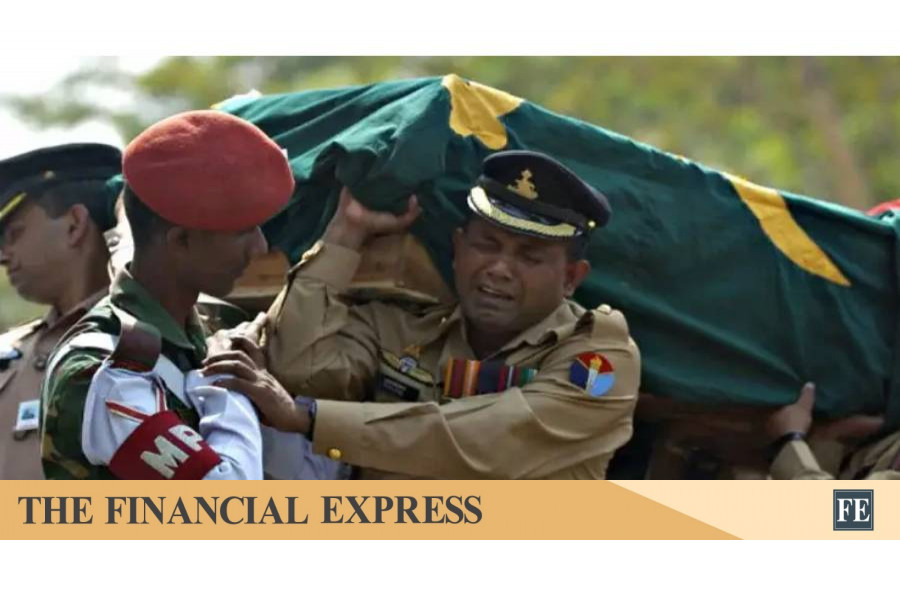
1750895577761.png

Army officials break down in tears while carrying a coffin of slain BDR official File photo

158 Individuals interviewed

At a press conference, it was announced that a total of 158 individuals have been interviewed so far. Testimonies from approximately 50 more people are yet to be collected. Statements have been taken from eight political figures, three of whom were interviewed in prison, while three appeared in person. Two fugitive Awami League leaders—Jahangir Kabir Nanak and Mirza Azam—submitted their statements via email.

The investigation commission reported that detailed statements from six members of the families of the martyrs have been recorded. Two conferences were held with members of the martyr families, during which they shared their experiences and opinions.

Statements have been taken from eight political figures, three of whom were interviewed in prison, while three appeared in person. Two fugitive Awami League leaders—Jahangir Kabir Nanak and Mirza Azam—submitted their statements via email.

All willing family members were requested to submit written or in-person testimonies to the commission, and many have already done so. Fifteen surviving officers have been interviewed.

Additionally, 50 surviving officers were sent individual letters via Army Headquarters requesting them to submit written statements. The commission held two consultation sessions with them to discuss various issues.

The commission also reported that statements from 55 military officers—who were either directly involved in or held significant roles during the Pilkhana tragedy—have been taken.

Among them are former chiefs of the Army, Navy, and Air Force, as well as heads of various intelligence agencies and other high-ranking officials.

Statements have also been collected from 20 civilian individuals, including journalists, bureaucrats, members of previous investigation committees, the then IGP, DMP commissioner, and other police officials.

Interviews have also been conducted with nine civilians, including businessmen, telecommunications experts, and other professionals who possessed relevant information.

Testimonies were recorded from 25 convicted BDR members currently in prison, who provided accounts of the incident and details about those involved, which are now being analysed.

Interviews are ongoing, and an additional 29 BDR members who have been released from prison have also been interviewed.

Travel bans on 33 individuals

The commission stated that travel bans have been imposed on 33 individuals based on collected information and for further testimony collection. The commission has issued three special notices urging absconding individuals to provide their testimony.

Information gathering in progress

The commission also reported initiating steps to gather information from the embassies of six countries and the office of the UN Resident Coordinator in Dhaka.

Individuals, institutions, and media outlets possessing information on the Pilkhana tragedy have been requested to submit their materials to the commission.

According to the commission, a preliminary draft of the investigation report has been prepared based on the testimonies received and is currently under review by the commission members. Testimony from several key witnesses is still pending, and some important individuals may need to be re-interviewed for further analysis.

1750895948533.png


The press conference noted several challenges, including difficulties in locating some crucial witnesses. Multiple public notices have been published in newspapers to draw their attention. Some important documents requested from domestic and foreign organisations are yet to be received, and efforts to obtain these are ongoing.

Commission seeks extension of deadline

The commission noted that testimonies from over 50 individuals are still pending, and re-interviews with a few others will be necessary. The process of compiling, signing, and analysing the full written statements is ongoing and time-consuming.

As contact is still being made with some foreign embassies and organisations for additional information, the commission has requested an extension of the submission deadline for the final investigation report until 30 September.​
 
Analyze

Analyze Post

Add your ideas here:
Highlight Cite Fact Check Respond

BDR Mutiny: Probe body says Hasina had ‘green signal’ for entire incident

UNB
Published :
Nov 30, 2025 21:03
Updated :
Nov 30, 2025 21:37

1764552212596.webp


The Commission, formed to reinvestigate the 2009 BDR massacre, the brutal massacre committed in the name of BDR mutiny submitted its report to Chief Adviser Prof Muhammad Yunus on Sunday, noting that then PM Sheikh Hasina had a ‘green signal’ for the entire incident to take place while then MP Sheikh Fazle Noor Taposh played the role of the main coordinator behind.

Chief of the National Independent Investigation Commission Maj Gen (retd) ALM Fazlur Rahman, who was also former director general of BGB, and other members submitted the report to the Chief Adviser at the State Guest House Jamuna.

Major General Md Jahangir Kabir Talukder (retd), Brigadier General Md Saidur Rahman Bir Pratik (retd), Munshi Alauddin Al Azad, Dr M Akbar Ali, Associate Professor of the Department of Political Science, Dhaka University Md Shariful Islam, Assistant Professor of the Institute of Education and Research, Jagannath University Md. Shahnewaz Khan Chandan are the members of the commission.

“The nation was in the dark about the BDR massacre for a long time. The nation will remember the role you played in uncovering the truth. On behalf of the nation, I thank you,” Prof Yunus said.

He said the nation had many questions about this most horrific incident in history and these questions will be answered through this work.

Prof Yunus said there are many lessons to be learned from this report. “It will be a valuable asset for the nation.”

Commission chief Fazlur Rahman said the highest professionalism has been maintained in the interest of making the investigation fair, impartial and error-free.

He said when they started the work, many signs of this incident 16 years ago had been destroyed and many people involved in this incident have gone abroad.

“We went through two processes. We called witnesses; we listened to some of them for up to 8 hours - as long as the individual wanted to say. We talked to those who were involved in the investigation. We collected their investigation reports and other elements,” Fazlur Rahman said.

He said through this investigation, answers have been sought for every question in the public mind about the BDR killings, an attempt has been made to uncover who had what role and why the army did not take action.

Fazlur Rahman said the investigation has found strong evidence of the direct involvement of external forces in the BDR killings and the direct involvement of the then ruling party Awami League.

Jahangir Kabir Talukder said about the commission’s findings that the commission has found some external and real reasons for this incident.

He said the killings were planned and the role of the main coordinator behind it was played by the then MP Sheikh Fazle Noor Taposh, according to the Chief Adviser’s press wing.

Jahangir said the local Awami League played a direct role in protecting those involved in the murder. They entered Peelkhana with a procession of 20-25 people and when they came out, there were more than two hundred people in that procession.

Jahangir said that Hasina had a ‘green signal’ for the entire incident to take place, according to the press wing.

Regarding the assessment of responsibility for the incident, Jahangir said that the responsibility for the incident lies with the then head of government and the army chief.

A decision has been made to resolve this incident politically. The police, RAB and intelligence agencies have also failed miserably.

Jahangir said that the role of some print and electronic media and some journalists during the incident was unprofessional.

He said that the exact names and information of the BDR members with whom Sheikh Hasina met at the State Guest House Jamuna (the then Prime Minister’s residence) during the murder were not preserved.

The commission made several recommendations in its report so that such incidents can be avoided in the future and the victims of this incident get justice.

The meeting was attended by National Security Advisor Dr Khalilur Rahman, Special Assistant to the Chief Adviser on Defense and National Integration Development Lieutenant General (retd) Abdul Hafiz, and Home Secretary Nasimul Gani.​
 
Analyze

Analyze Post

Add your ideas here:
Highlight Cite Fact Check Respond

BDR mutiny to weaken army and consolidate power: Inquiry Commission

Staff Correspondent Dhaka
Published: 30 Nov 2025, 22: 47

1764553368435.webp


National Independent Inquiry Commission shares with newspersons its findings on BDR mutiny in a media conference on the 7th floor of the new BRiCM (Bangladesh Reference Institute for Chemical Measurements) building at the Science Laboratory in Dhaka on 30 November 2025. Prothom Alo

The BDR (Bangladesh Rifles) mutiny was orchestrated to weaken the Bangladesh Army and ensure the continuity of political power, the National Independent Inquiry Commission, formed by the interim government, said on Sunday.

The commission also said it found involvement of several leaders of the ousted Bangladesh Awami League government, including Sheikh Hasina, as well as indications of India’s connection to the incident.

The findings were presented at a press conference on the 7th floor of the new BRiCM (Bangladesh Reference Institute for Chemical Measurements) building at the Science Laboratory in the capital on Sunday evening.

Commission chair Major General (retd.) ALM Fazlur Rahman briefed the media.

Earlier in the day, the Commission submitted its report to chief adviser professor Muhammad Yunus at the state guesthouse Jamuna.

During the press conference, the commission chair named several Awami League leaders alleged to have been linked to the incident.

They include the ousted prime minister Sheikh Hasina, former Dhaka South City Corporation mayor and fugitive Sheikh Fazle Noor Taposh, Awami League leaders Sheikh Fazlul Karim Selim, Mirza Azam, Jahangir Kabir Nanak and Sahara Khatun.

The commission head also mentioned the names of several former military officers who were allegedly involved. They include Sheikh Hasina’s former security adviser Major General (retd.) Tarique Ahmed Siddique, former army chief General Moeen U Ahmed, and former DGFI director general General Akbar (Molla Fazle Akbar).

On 25 and 26 February 2009, as many as 57 army officers were killed in an attack by mutinous soldiers of the then Bangladesh Rifles (BDR) at its headquarters in Pilkhana, Dhaka.

The country witnessed one of the deadliest massacres in its history just two months after the Bangladesh Awami League took office in early 2009.​
 
Analyze

Analyze Post

Add your ideas here:
Highlight Cite Fact Check Respond

BDR CARNAGE: AL, foreign power directly involved: probe
Staff Correspondent 30 November, 2025, 21:58

1764554392349.webp


National Independent Inquiry Commission head ALM Fazlur Rahman hands over the report of the BDR rebellion to chief adviser Muhammad Yunus at the state guest house Jamuna in Dhaka on Sunday. | PID photo

An investigation commission has revealed that the then ruling Awami League, activities of which are now banned for atrocities during the July uprising, and foreign power were directly involved in the 2009 carnage at Pilkhana, the headquarters of the erstwhile Bangladesh Rifles, in Dhaka.

  • Taposh acted as chief coordinator
  • Hasina had green signal behind entire incident
  • Many evidence destroyed before formation of commission after 16 years
  • Local AL played role in protecting killers

It has also found that the then prime minister Sheikh Hasina, now hiding in India, had a green signal behind the whole incident that saw at least 74 people, including 57 army officers, killed and the then Member of Parliament Sheikh Fazle Noor Taposh acted as the chief coordinator in the massacre.

‘We have got strong proof of the direct involvement of a foreign power and the then ruling Awami League in the BDR carnage,’ said head of the investigation commission retired Major General ALM Fazlur Rahman while submitting its report to chief adviser Professor Muhammad Yunus at his residence-cum office, state guest house Jamuna on Sunday.

He said that they tried to find an answer to the military troops’ inaction during the BDR rebellion, according to a release shared by the chief adviser’s press wing.

The National Independent Investigation Commission was formed on December 24, 2024 by the interim government to reinvestigate the BDR carnage after the ouster of the authoritarian Sheikh Hasina regime in a student-led mass uprising on August 5 in the past year.

Retired Major General Md Jahangir Kabir Talukder, another member of the commission, said that the killing at the BDR headquarters had been planned and the then AL MP Sheikh Fazle Noor Tapos was behind the carnage as the chief coordinator.

‘There was a green signal from the then prime minister Sheikh Hasina for the entire incident,’ he added.

Commission head Fazlur Rahman and other members handed over the report to chief adviser Professor Muhammad Yunus.

Other members of the commission present there were retired Brigadier General Md Saidur Rahman Bir Protik, former joint secretary Munshi Alauddin Al Azad, former DIG M Akbar Ali, Associate Professor of Dhaka University Political Science Department Md Shariful Islam, and Assistant Professor of Jagannath University Institute of Education and Research Md Shahnewaz Khan Chandon.

Fazlur Rahman said that the commission had maintained maximum professionalism to ensure fairness, accuracy, and impartiality during the investigation.

‘When we began working, much of the evidence of this 16-year-old incident had already been destroyed. Many individuals involved in the incident had left the country,’ he said.

The commission head added that they had gone through two processes. ‘We called witnesses and listened to some of them, for up to eight hours, as long as they wanted to talk, he said.

Jahangir said that the local AL leaders played a direct role in protecting those involved in the killings, citing that a group of 20–25 people entered Pilkhana in a procession but came out with more than 200 people.

Regarding the responsibility for the incident, Jahangir said that the responsibility lied with the then head of government and the army chief as well.

The commission member said that during the massacre, some print and electronic media outlets and a few journalists played an ‘unprofessional role’.

Jahangir said that no proper records were kept of the identities of the BDR personnel who met Sheikh Hasina at the state guest house Jamuna (then the prime minister’s residence) during the incident.

In its report, the commission made several recommendations aimed at preventing such incidents within forces in the future and ensuring justice for the victims.

In his reaction, chief adviser Professor Yunus said, ‘For long, the nation remained in the dark about the BDR killings. The nation will remember you for the role you have played in unearthing the truth. I thank you on behalf of the nation.’

‘This report contains many lessons. It will remain as a valuable national asset,’ he added.

National Security Adviser Khalilur Rahman, special assistant to the chief adviser on Defence and National Solidarity Development retired Lieutenant General Abdul Hafiz and home secretary Nasimul Ghani were present at the event.

The commission also found the negligence and failures of intelligence agencies, a biased role played by some media outlets and attempts to destroy evidence of the carnage, the commission said earlier.

‘At the time of the carnage, unnecessary delays in the name of political negotiation and inaction of the armed forces and law enforcement agencies allowed the mutineers to carry out killings and other crimes without resistance,’ the commission’s president, retired Major General ALM Fazlur Rahman, said at a press conference in June.

He said that despite repeated appeals for help from army officers and their family members trapped inside Pilkhana on February 25 and 26, 2009, no timely action was taken to rescue them.

The commission found evidence suggesting that some political leaders were involved at various levels and the verification of information was under way, he said.

Statements from eight related political figures have been received, some of whom are currently in jail or hiding, the commission chief earlier said.

On December 22, 2024, families of 22 victims of the BDR carnage filed a complaint with the International Crimes Tribunal chief prosecutor, accusing deposed prime minister Sheikh Hasina, her defence adviser Tarique Ahmed Siddique, former army chief Moyeen U Ahmed and 55 others of crimes against humanity and genocide.

AL leaders Mirza Azam and Jahangir Kabir Nanak were also named in the ICT complaint.

The commission was initially given three months to reinvestigate the BDR carnage. The timeframe later was extended several times to complete the task.

So far, travel bans have been imposed on 33 individuals in connection with the investigation.

The commission had also called 14 individuals, including the deposed prime minister Sheikh Hasina and former Dhaka South City Corporation mayor Sheikh Fazle Noor Taposh, to give their testimonies.Dhaka city guide

The commission reviewed the main report of the court of inquiry formed by the Bangladesh Army on June 11, 2009, and the investigation report of the committee formed by the home ministry on May 11, 2009, in this connection.​
 
Analyze

Analyze Post

Add your ideas here:
Highlight Cite Fact Check Respond

Members Online

⤵︎

Latest Posts