[🇧🇩] BNP Jamaat On A Collision Course

[🇧🇩] BNP Jamaat On A Collision Course
47
2K
More threads by Saif

G Bangladesh Defense

Govt pushing country towards political, constitutional crisis: Jamaat SG

Published :
May 02, 2026 20:48
Updated :
May 02, 2026 20:48
1777853250247.webp


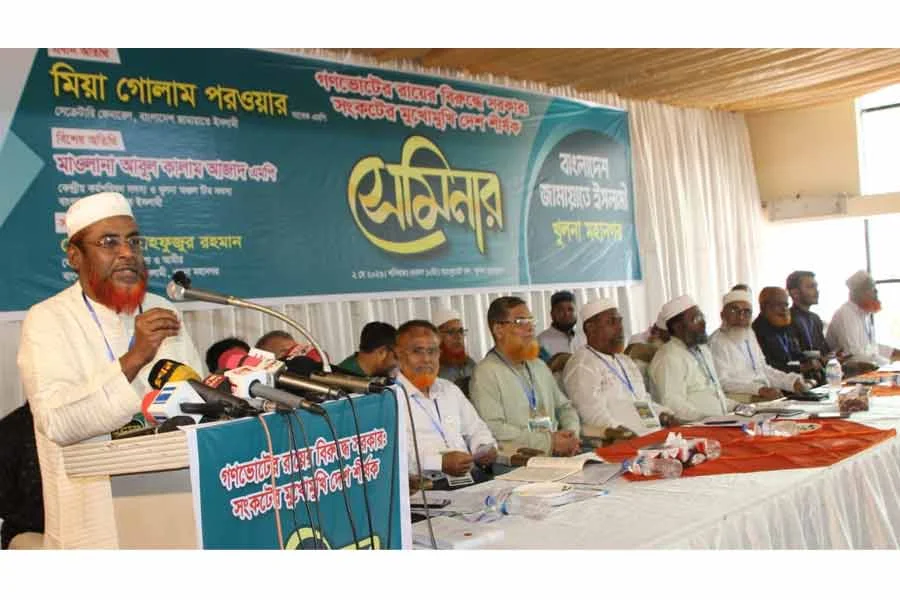
Secretary General of Bangladesh Jamaat-e-Islami, Mia Golam Porwar, has alleged that the government is deliberately steering the country towards a deep political and constitutional crisis by ignoring what he described as the people’s verdict in a referendum.

He said the referendum verdict is being denied under the cover of the July Charter. “This is not just a political strategy, but a stance directly against the people's mandate,” he said, UNB reports.

He made the remarks while speaking at a seminar titled “Government against Referendum Verdict: A Country Facing Crisis,” organized by Khulna Metropolitan Jamaat-e-Islami at the Banquet Hall of Khulna Press Club on Saturday.

Golam Porwar further alleged that the government is deliberately creating confusion in the public mind by separating the July Charter from the referendum verdict.

He claimed that the government and its ministers have repeatedly promised to implement the July Charter in Parliament, but are maintaining silence on the direct verdict given by the people in the referendum.

Mentioning that 47 out of the 84 proposals for constitutional reform involve legal and constitutional changes, Porwar said that although there is consensus on these issues, BNP has given a note of dissent on 10 important points, which, in reality, weakens the overall structure of the reform.

He consistently stated that the issues on which BNP has raised objections include: the Prime Minister not being allowed to serve as party leader simultaneously; refusal to accept the proportional representation (PR) system in the upper house; non-compliance with the obligation to present and ratify international treaties in Parliament; opposition to an independent commission for the appointment of judges; and rejection of proposals to reduce the influence of the Prime Minister in the Public Service Commission and the Anti-Corruption Commission.

He said, “If these 10 points are left out, the entire reform becomes meaningless. The government actually wants to maintain its control in these areas.”

He stressed that the verdict reached through the direct participation of about 5 crore people in the referendum is stronger than the delegated power of Parliament. “Members of Parliament are representatives of the people; they exercise delegated power. But in a referendum, the people make decisions directly. Denying that decision means denying the sovereignty of the people.”

Referring to Article 7 of the Constitution, he said that the will of the people is the supreme law. “Parliament never has absolute power.”

He described the current position of the government as authoritarian and fascistic. He said, “The verdict of the people is being denied by the power of the majority. This is not democracy, but a sign of fascism.”

He warned that if this trend continues, a situation of conflict, instability, and bloodshed may arise again in the country.

The Jamaat Secretary General clearly stated that if the referendum verdict is not implemented in Parliament, those concerned will be forced to take to the streets. “If the verdict given by 5 crore people is not implemented in Parliament, we will go back to the people. A movement is the only way,” he said.

He called on the government to return to implement the referendum verdict.

However, he warned that time is running out. “There is still a chance. If we want to avoid a crisis, we have to respect the mandate of the people. Otherwise, the government will have to take responsibility,” he said.​
 

Chhatra Dal calls for investigating 'campus violence and infiltration’ by Chhatra Shibir

bdnews24.com

Published :
May 05, 2026 21:40
Updated :
May 05, 2026 21:40

1778023785474.webp


The Jatiotabadi Chhatra Dal (JCD)'s Dhaka University unit has demanded punishment for Islami Chhatra Shibir (ICS) members accused of infiltrating the Bangladesh Chhatra League (BCL) and carrying out violence against general students during the previous Awami League regime.

It submitted a memorandum to the Vice-Chancellor (VC) Professor ABM Obaidul Islam on Tuesday afternoon.

A delegation led by the university's JCD unit President Ganesh Chandra Roy Sahos and General Secretary Nahiduzzaman Shipon met the VC at his office to formally lodge the complaint.

The JCD is the student wing of the ruling Bangladesh Nationalist Party (BNP), which is currently part of the ruling coalition.

The BCL is the student wing of the Awami League, which was banned by the interim government following the Aug 5, 2024 Uprising due to its involvement in alleged terrorist activities.

Shibir, the student front of Jamaat-e-Islami, has only recently begun operating publicly on university campuses after remaining underground for over a decade.

In the memorandum, the JCD claimed that many students have recently taken to social media and other platforms to describe harrowing incidents of torture in residential halls.

According to these accounts, individuals who are now identifying as ICS activists were previously prominent members of the Chhatra League who operated the infamous “Guestroom” and “Gonoroom” (mass room) culture.

“Innocent students were subjected to a 'steamroller of torture' by the now-banned BCL. We have received significant allegations that various levels of Chhatra Shibir activists were involved in these acts of repression,” the memorandum stated.

The JCD alleged that these individuals changed their "shells" after the fall of Sheikh Hasina’s government to join Shibir, and are now using their new identities to establish a new form of "occupancy politics" on campus.

The JCD further accused Shibir of engaging in "secret politics" and spreading rumours against it.

They claimed that those who were once part of the BCL’s violent machinery are now trying to shift the blame for past atrocities onto the JCD.

“If those involved in student oppression are not brought to justice, they will continue to pollute the political environment of the campus,” the JCD warned.

Tensions between the two student groups have already led to physical clashes in Chattogram.​
 

People will never bring Jamaat to power: Fakhrul

Published :
May 20, 2026 20:45
Updated :
May 20, 2026 20:45

1779328164173.webp


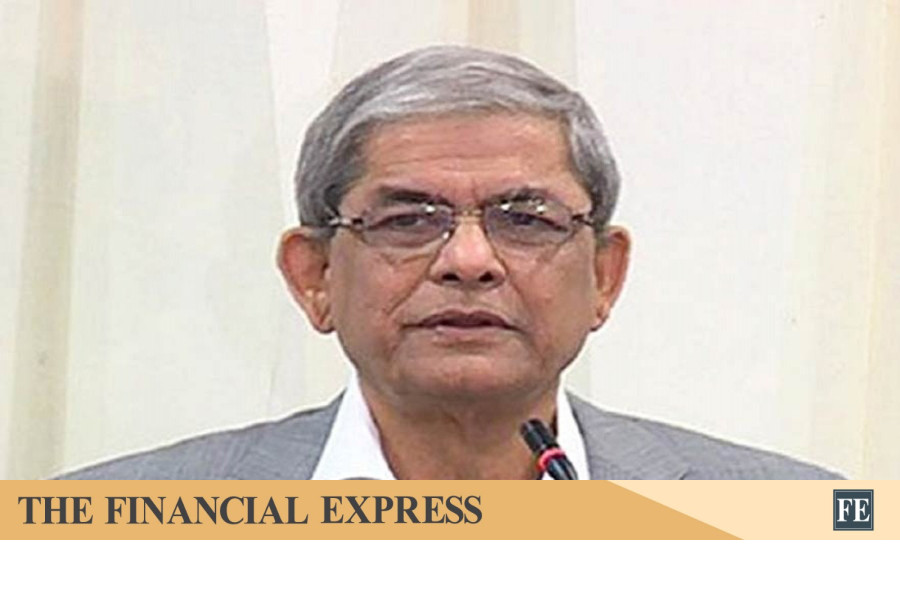
Local Government, Rural Development, and Co-operatives Minister Mirza Fakhrul Islam Alamgir on Wednesday said the people of Bangladesh do not want to see Bangladesh Jamaat-e-Islami in power, claiming that public sentiment remains firmly against the party.

“Jamaat-e-Islami opposed the independence, killed freedom fighters, and dishonoured mothers and sisters. That is why people of this country do not want them in power and will never bring them to power,” he said, UNB reports.

Fakhrul, also BNP Secretary General, made the remarks while addressing a reception after inspecting the progress of work to reopen the abandoned Thakurgaon Airport.

He said the BNP is not against reforms and has played an important role in the implementation of the “July Charter.”

The BNP leader also alleged that some political groups are spreading lies and confusion in the name of religion for political gain, adding that politics should be based on truth and honesty.

He further said under the leadership of Prime Minister Tarique Rahman, the country is moving towards a new political direction, and the government is working to fulfil its pre-election commitments.

Referring to the Thakurgaon Airport project, Fakhrul said preparations are underway to make it operational within the next two years, adding that it will be a matter of pride for the region.

He also said approval for Thakurgaon University has already been granted and a vice-chancellor appointed. “The medical college has also received approval and student admission will begin from next year,” he added.

Urging local investors to expand investments, the minister said employment opportunities must be created as academic degrees alone are no longer enough to secure jobs. “Become entrepreneurs and create employment,” he said.

Civil Aviation and Tourism Minister Afroza Khanam and State Minister M Rashiduzzaman Millat also spoke at the programme, saying all necessary measures will be taken to reopen the Thakurgaon Airport within two years.

Among others, Thakurgaon-2 MP Abdus Salam, Thakurgaon-3 MP Zahidul Islam, district BNP President Mirza Faisal Amin, General Secretary Paigam Ali and Thakurgaon University Vice Chancellor Dr Md Israfil were present.​
 

Fakhrul slates Jamaat over 1971 role, Jamaat denies allegations
Staff Correspondent 21 May, 2026, 00:08

1779333617010.webp


Mirza Fakhrul Islam Alamgir. | New Age file photo

Bangladesh Nationalist Party secretary general Mirza Fakhrul Islam Alamgir on Wednesday said that the people of Bangladesh would never bring the Bangladesh Jamaat-e-Islami to power for opposing the War of Independence in 1971 and weaponising of religion in politics.

The Jamaat, however, denied allegations against the party over its role during the War of Independence. He also declined allegations linking Jamaat to crimes during the War of Independence, saying such narratives were old and false.

At a reception programme in Thakurgaon, Fakhrul alleged that certain groups and political parties kept trying to mislead people through propaganda and misinformation.Expat Community Forum

‘Some individuals, groups and parties are trying to confuse people by spreading falsehoods and propaganda, claiming that BNP do not want to implement the July charter, whereas it was we who formulated the July charter and initiated the reforms,’ he said.

‘I want to make it clear that the people of this country will never bring Jamaat to power because they opposed our independence in 1971, killed freedom fighters and violated our mothers and sisters,’ he said.

In a statement, Jamaat secretary general Mia Golam Parwar condemned Fakhrul’s comments.

Rejecting Fakhrul’s claim that Jamaat would never come to power, Parwar said the party had secured a place in the hearts of millions of people and had previously been elected to parliament through public support.

‘Jamaat has always played the role of a vigilant guardian of the country’s sovereignty and independence and will continue to do so in the future,’ he said.

Responding to the allegation that Jamaat weaponises religion in politics, Parwar said that the party was a constitutional, ideological and religion-based political organisation.​
 

Govt moving towards fascism: Jamaat ameer

UNB

Published :
Jun 02, 2026 22:10
Updated :
Jun 02, 2026 22:10

1780443724648.webp


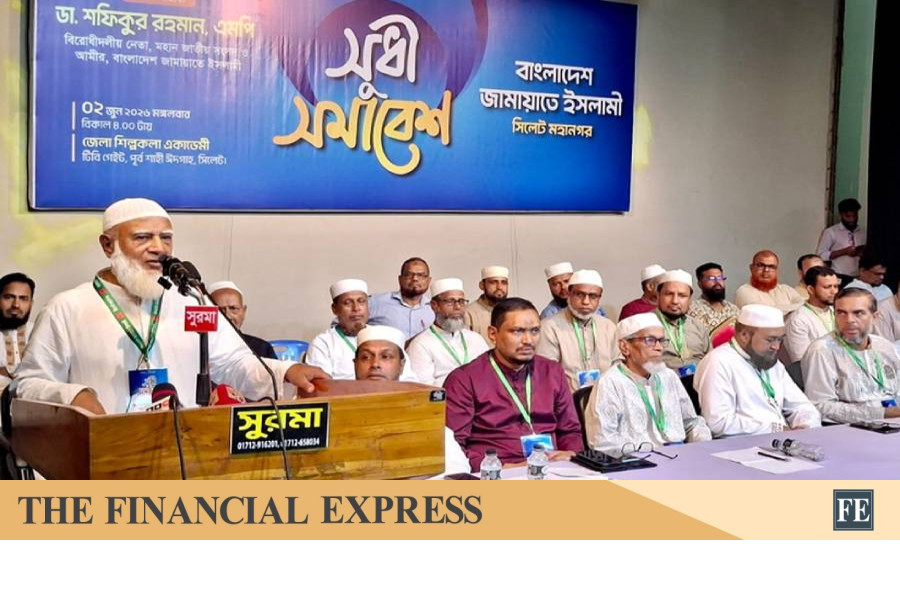
Leader of the Opposition in Parliament and Ameer of Bangladesh Jamaat-e-Islami Dr Shafiqur Rahman on Tuesday claimed that the country is not in a “good condition” and accused the government of moving towards fascism.

Speaking as the chief guest at a civic gathering held at the District Shilpakala Academy auditorium in Sylhet, he said “1947 is our foundation, 1971 is our pride, and 2024 is our direction for change.”

Shafiqur Rahman claimed that though Bangladesh has entered a post-July uprising democratic phase, the country and its people are not in a good condition.

He alleged that incidents such as child rape and murder, killings, theft, mugging, extortion, and terrorist activities have increased alarmingly.

The Jamaat chief further accused the government of focusing on appointing partisan individuals at various levels of the state machinery, saying it “betrayed the nation regarding the July Charter and referendum.”

According to him, the government is moving towards “fascist rule” after insulting 70 percent voters who supported the “Yes” vote in the referendum.

Shafiqur Rahman warned that public anger is increasing and said those in power will have to face consequences.

He also cautioned that attempts to govern in an “authoritarian manner” will lead to consequences, adding that “July will return again and again.”

The opposition leader raised concerns over the banking sector, alleging that money is not available in several banks.

He claimed that customers of five merged banks are struggling to withdraw their funds.

The Jamat chief further alleged that efforts are underway to “take over” Islami Bank Bangladesh PLC through “night-time online meetings.”

He criticised the recent increase in fuel prices, calling it an example of decisions being made “in darkness”, questioning whether this was a “night-time government.”

Shafiqur Rahman said the consequences of appointing a former deputy governor of Bangladesh Bank as chairman of Islami Bank will be good.

He stated that even small shareholders are rightful owners of banks and threatened that depositors themselves might be forced to take to the streets in protest. “As a client, I may also have to take to the streets.”

The Jamaat ameer said while they had accepted election results even with pain in the national interest, they will not tolerate injustice any longer.

He said Jamaat will continue its struggle both inside and outside Parliament to establish people’s rights.​
 

Fakhrul advises Jamaat to issue apology over its role in 1971

UNB

Published :
Jun 28, 2026 23:30
Updated :
Jun 28, 2026 23:30

1782692119668.webp


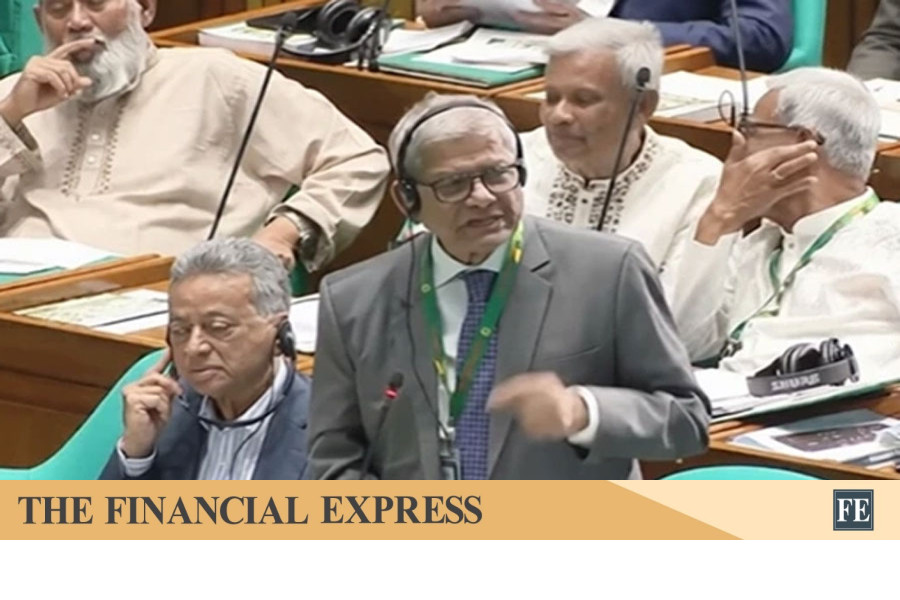
Local Government, Rural Development and Cooperatives Minister Mirza Fakhrul Islam Alamgir on Sunday asked Jamaat-e-Islami to apologise to the nation for its role during the 1971 Liberation War, saying such a step would have helped remove longstanding political divisions.

Speaking in Parliament during the budget discussion, the minister said some of the government's "friends" were trying to ignore and provoke them at a time when such an approach was not appropriate.

"Our friends are trying to ignore us in different ways. They are also trying to provoke us in various ways. I don't think this is the right time. You should also look back at yourselves," he said.

Referring to Jamaat's role during the Liberation War, Fakhrul said the party had never sought forgiveness for its actions in 1971.

"You never apologised for your role in 1971. You should have apologised before the nation. Had you done so, many of today's problems would not have existed," he said.

The minister also recalled that former Jamaat chief Ghulam Azam had once maintained that the party had made no mistake during the Liberation War.

"Even now there is time for you to reconsider. You should clearly state your position on Bangladesh and let us and the people of Bangladesh know. I do not want to go any further. You never speak clearly about 1971," he added.

When opposition lawmakers interrupted him, Fakhrul reiterated that Jamaat had never clearly acknowledged its role in the Liberation War.

"I have never heard it. No one has heard it. If you acknowledge it, it will become much easier for you to conduct politics," he said.

Commenting on the National Citizen Party (NCP), the minister criticised its alliance with a party that, he claimed, did not believe in Bangladesh's independence.

"They have formed an alliance with a party that did not believe in Bangladesh's independence. I hope they will clarify their political position and move forward," he said.

Describing NCP leaders as young politicians with considerable potential, Fakhrul said he wanted them to succeed in politics.

"We want them to do well. They should not carry the stigma of being associated with those who continue to deny Bangladesh's very existence," he added.​
 

PM being misled, BNP getting pushed toward fascism: Porwar

Jamaat secretary general accuses BNP of abandoning July Charter at Dhaka North rally

Star Online Report

1785630746738.webp

Photo: Courtesy

Jamaat-e-Islami Secretary General Mia Golam Porwar today alleged that a section of people was misleading the prime minister and pushing the BNP toward fascism.

Speaking at a protest rally organised by the Dhaka North city unit of Jamaat in front of the Mohakhali Cholera Hospital (icddr,b), Porwar said implementation of the July Charter had become essential to safeguarding democracy.

The rally demanded the execution of the public mandate of the July uprising and the speedy trial of those responsible for killings during that period.

According to a press release, Porwar said the BNP, despite being one of the main beneficiaries of the uprising, had drifted away from its spirit. He alleged that although the party had pledged before the election to implement the charter, it was now distancing itself from that commitment.

He claimed the BNP and several other parties had signed the charter’s 84 reform proposals but were no longer committed to implementing them. Porwar argued that piecemeal amendments to laws would not suffice, calling instead for reforms to the constitution’s fundamental structure in line with the referendum mandate to prevent concentration of state power.

Criticising the BNP, Porwar alleged that efforts were underway to rehabilitate fascism under the banner of a “reformed Awami League” through legal amendments. He accused ruling authorities of abandoning the spirit of the July uprising by appointing party loyalists to the administration.

Referring to remarks by BNP Secretary General Mirza Fakhrul Islam Alamgir, Porwar said, “I thank him for speaking the truth. Even after five months, no desired change has taken place.”

Responding to criticism of Jamaat, he said the party had never operated secretly and that the public would judge allegations regarding Jamaat and Shibir.

Presiding over the rally, Jamaat central executive council member and Dhaka North chief Mohammad Selim Uddin claimed that ousted prime minister Sheikh Hasina had banned Jamaat out of political vengeance, but that the move had marked the beginning of the Awami League’s downfall.

Selim, also a candidate for Dhaka North City Corporation mayor, said Jamaat leaders and activists had remained politically active despite adversity over the past 17 years.

He urged members to prepare to protect the vote in upcoming local government elections “even at the cost of their lives.”​
 

Ruling party-opposition relations are key to institutionalising democracy

Are we open to learning from our past mistakes?

Mahfuz Anam

1791504743014.webp

VISUAL: BIPLOB CHAKROBORTY

The result of the election held in February 1991 surprised both BNP—for winning—and Awami League—for losing—because the latter thought they were all set to come to power. The joke was that AL leaders were ironing their clothes for the oath-taking ceremony.

Bangladesh started with the parliamentary system in 1972, which was changed to a presidential one as part of the BAKSAL model in 1975, and reverted to the former in September 1991, thanks to Khaleda Zia, the first prime minister in the post-autocracy period. She accepted what was the demand of AL and other opposition parties, even though BNP’s party manifesto still adhered to the presidential system.

This, in my view, was a singular opportunity to begin a collaborative working relationship between the ruling party and the opposition. It should have come naturally because the ruling party accepted the opposition’s view and changed the form of government. Khaleda Zia, as the leader of the House, could have opted to be president following her illustrious husband—the father of the current prime minister—but chose a new direction. This should have set us on a constructive journey with collaboration between the ruling party and the opposition at its heart.

Unfortunately, it did not. Like in some other South Asian countries, the opposition here has never received its due recognition, space and rights. We never tried to understand why the opposition is called “the government in waiting” or expected to form what is called a “shadow cabinet” in the Westminster system. All this means that in the parliamentary system, the ruling party and the opposition together form the overall governance process, in which the opposition plays a crucial part through a structured, principled and accountable functioning of parliament.

In 1991, we got off to a wrong (better still, opposite) start as Sheikh Hasina called the election an instance of “shukkho karchupi” (subtle rigging). Since the election was not seen as a “people’s verdict”, the opposition’s moral obligation to accept it was ignored. AL as the opposition did not see BNP’s acceptance of the parliamentary system as a “compromise” or “a gesture of cooperation” but as a defeat. Thus, instead of a constructive attitude from the opposition, we saw a far more aggressive and obstructionist attitude, leading to an approach of “disabling the government” and making it look not only unsuccessful but also incompetent and undeserving to rule, thus implying that forcing it to relinquish power was justified.

In those early days of The Daily Star, I used to literally go everywhere—press conferences, seminars, discussions and parliamentary sessions (for my column “From the Gallery”). On one such occasion, probably in ’92 or ’93, I ventured into the room of the leader of the opposition, Sheikh Hasina, during a recess. As we talked about the issues at hand, the bell rang, signalling the resumption of the session. Suddenly, she shouted, “Walk out, walk out,” asking some in the room to tell the others. A little later, two MPs, Matia Chowdhury and Tofail Ahmed, walked in and asked why, since nothing had happened to justify such an action. After a little while, she retorted, “Ja khushi koren” (“Do as you feel”), clearly indicating that she was not happy.

This was my first direct exposure to how trivial the opposition leader’s attitude was towards the functioning of the “people’s house”. Later, we saw the start of the demand for a caretaker government to conduct the next election due in 1996, which was years away. This demand led to frequent walkouts, later to boycotts, and finally to resignations, totally making parliament one-sided and, as such, dysfunctional. While this was the scene within, outside the House there were street violence, relentless clashes with police, and chaos on the roads. There were frequent calls for hartals that started with one, two or three days and then went so far as the whole week. To ordinary citizens, this brought in an attitude of disrespect for parliament. Because of such long breaks, we unknowingly became casual about tasks at hand, work schedules and timelines—all of which had an impact on our work ethic, something from which we have yet to recover.

Ironically, however destructive the opposition’s practices were, they won the subsequent elections—AL in 1996, BNP in 2001, and AL again in 2008. Under the caretaker government system, the pattern appeared to be that the ruling party always loses. Thus, a negative message became entrenched in the opposition’s mind that regardless of how destructive their politics was, it worked to dislodge the sitting government. The opposition had no responsibility to work for stability and societal peace.

AL predicted that, if that pattern continued, it would lose the next election, so after assuming power in 2009, it abolished the caretaker government system in 2011. It legalised elections under the ruling party, which led to what we saw in 2014, 2018 and 2024—all totally manipulated elections.

The process of election manipulation triggered the politicisation of almost all our institutions—the police, bureaucracy, intelligence agencies, lower judiciary, public universities, etc. There was also tremendous pressure on the private sector to fall in line.

Coming to the present, for any success in strengthening our democratic institution-building, we have to learn from our past failures and start with making parliament truly functional. The July uprising has given us a clean slate; we have to make the most of this opportunity to restart our democratic journey.

However, our start in the new parliament has not been the best, to put it mildly. The divide between BNP and Jamaat-e-Islami has begun with the former’s refusal to take a separate oath to form a constitutional reform council as stipulated by the referendum held on February 12. The order by the interim government envisaged lawmakers serving simultaneously as MPs and members of the reform council.

The second issue was when BNP allowed 16 important ordinances out of 133 to lapse without taking the opposition’s views into consideration, especially when these ordinances dealt with crucial issues like the independence of judiciary, enforced disappearances, strengthening the Anti-Corruption Commission and National Human Rights Commission, etc.

The gap between the ruling party and the opposition further widened during the third parliamentary session, which passed six bills that the opposition party objected to, especially criticising those dealing with the very issues covered by the ordinances allowed to lapse: enforced disappearances, the NHRC, etc.

Then came the shocker: out of the chairmanships of 50 parliamentary standing committees, only one was given to the opposition—the Public Accounts Committee—whereas the demand was for 26 percent of the posts.

BNP’s initiative to form a 17-member parliamentary committee on constitutional amendments, proposing five seats for the opposition, was not accepted by the latter, as it claimed that this was a deviation from the July charter. So far, the committee has invited all parties that signed the July charter to present their views, but the opposition-led alliance has abstained.

It is clear that the ruling BNP could have been more circumspect in handling some of the issues raised by the opposition. I think there are reasonable grounds to see the opposition’s logic, and some of the early signs have been concerning. It is also natural that differences will exist between the two sides. It is also entirely justified that critical anti-government views will be expressed by the opposition.

But, as we said before, the opposition’s threats to take to the streets are highly premature. The government’s inadequacies should be pointed out, its partisan appointments revealed, and any instance of corruption exposed. But any threats to destabilise the government or create an atmosphere of uncertainty—and any fear in the public mind that we are going to face political uncertainty even after a globally accepted election—is neither justified nor acceptable.

We request the ruling party to be more receptive to the opposition’s demands, and the opposition to be more restrained and mature in its actions and declarations, if we really want Bangladesh to move forward. This is also essential for our parliamentary democracy to serve its intended purpose.

Mahfuz Anam is the editor and publisher of The Daily Star.​
 

Latest Posts

Back