Bangladesh Defense
Saif
Senior Member
- Jan 24, 2024
- 21,560
- 9,760
- Nation

- Residence
- Axis Group

Stabilising domestic oil prices
Faizul Latif Chowdhury 08 October, 2026, 00:00
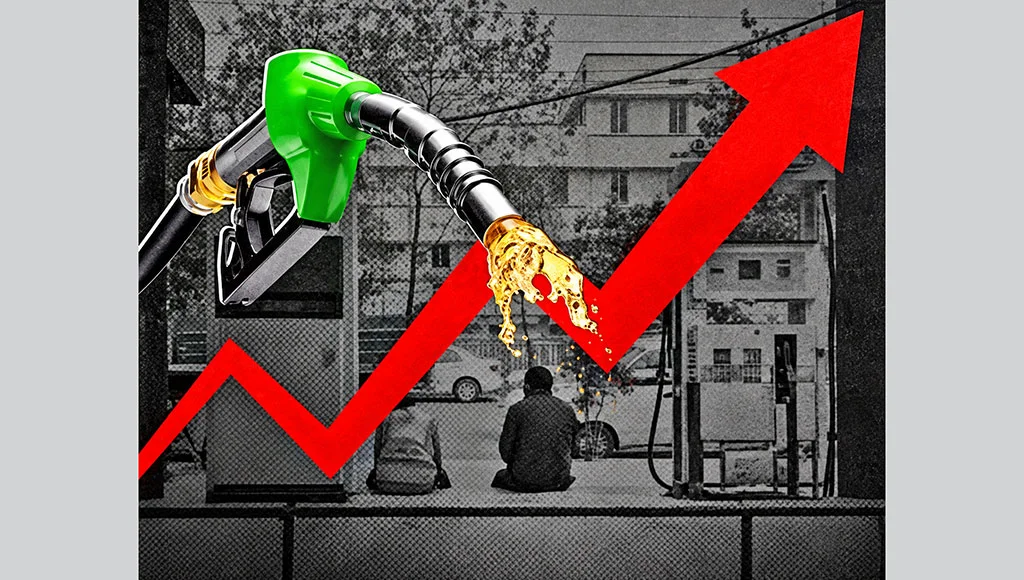
THERE is no arguing that the government is currently caught in a severe macroeconomic impasse. The escalation of regional geopolitical conflicts has driven international petroleum, oil and lubricants prices upward, exhausting foreign currency reserves and exacerbating domestic inflation. Concurrently, critically low domestic revenue collection limits the government’s capacity to offer any further fiscal relief.
The current 25.9 per cent cumulative ad valorem (percentage-based) tax structure on fuel imports compounds this crisis by creating a ‘passive windfall’ for the National Board of Revenue at the direct expense of the consumer. As global import prices spike, the absolute tax collected per litre automatically balloons, feeding a destructive domestic inflation loop. Tis may be discontinued right away.
A structurally neutral, counter-cyclical alternative is abolishing the ad valorem architecture at the port, and replacing it with a specific duty, meaning flat-rate tariff per litre in the taka. This transition untethers the state budget from international volatility, provides predictable revenue for sovereign debt service, protects the productive economy (agriculture and mass transit) from hyper-inflation and simplifies customs administration at the Chittagong port.
Bangladesh’s fiscal policy space is heavily constrained by structural vulnerabilities. It is difficult to hold NBR responsible for the widening revenue deficit. The country possesses one of the lowest tax-to-GDP ratios in South Asia, leaving no room to simply cut taxes without violating fiscal sustainability and international financing safeguards.
The current 25.9 per cent import tax structure is calculated sequentially, meaning taxes multiply upon other taxes rather than applying as flat fees. First, customs duty is collected at the rate of 6.0 per cent on the ‘assessable value’ at port of entry. Then import VAT is calculated at the rate of 15 per cent, based on the duty-paid value (assessable value plus customs duty).
Thirdly, advance tax is realised at the rate of 2.0 per cent. This causes upfront liquidity pull. No one clearly understands the logic behind introducing advance tax, over and above advance income tax.
Finally, advance income tax is collected at the rate of 2.0 per cent, to be adjusted later.
Altogether, the incidence turns out to be 25.9 per cent. When the international cost of refined diesel stands at an assessable value of Tk 70.00 per litre, the NBR bags Tk 37.00 per litre in cumulative duties. If global disruptions drive the assessable value up to Tk 90.00 per litre, the 25.9 per cent progressive structure automatically forces the tax collection to surge to Tk 47.00 per litre. No customs officer can claim credit for this additional collection.
This passive state profit acts as an aggressive, regressive consumption tax. To mitigate the shock, the Bangladesh Petroleum Corporation (BPC) is forced to run steep commercial deficits or pass the costs onto the refuel stations, stunting sluggish investments and raising transport and irrigation costs.
In this context, we propose replacing the multi-tiered percentage calculation with a single, statutory flat BDT rate assessed purely against the physical volume of fuel unloaded at the port. The ministry of finance should abolish the percentage-based customs duty, VAT, advance tax, and advance income tax system on fuel imports, replacing it with a singular, uniform specific duty denominated in fixed taka per physical litre at port of entry. Based on average historical revenue generation, the optimal baseline is proposed as follows:
(a) High-speed diesel and furnace oil: A flat, immutable Tk 35.00 per imported litre.
(b) Octane and petrol: A flat, immutable Tk 45.00 per imported litre.
Under this scheme, customs officers will calculate state revenue based entirely on physical volume unloaded from vessels rather than volatile international monetary valuation invoices.
The first layer of the proposed reform would be to eliminate the 6 per cent customs duty, 15 per cent VAT on duty-paid value, 2 per cent advance tax, and 2 per cent advance income tax on energy imports.
The second step should be to put in place and institutionalise a flat tariff of Tk 35.00 per litre for diesel (the primary driver of the productive economy) and Tk 45.00 per litre for octane/petrol at the import stage.
As the third step, the Bangladesh Petroleum Corporation should be declared fully exempt from upfront advance tax and advance income tax liquidity obligations, instantly freeing up state-level foreign exchange capacity.
Transitioning to a volumetric specific duty structure provides the National Board of Revenue with critical leverage to stabilise the broader macroeconomy without compromising structural fiscal discipline. Needless to emphasise that it will enhance sovereign fiscal credibility of the business scenario. On the other hand, by establishing a guaranteed, floor revenue of Tk 35.00 per imported litre, the NBR guarantees a reliable stream of non-devaluing domestic cash. This ensures the treasury can comfortably meet high domestic debt service liabilities without relying on inflationary central bank money printing.
This will reign in the inflationary feedback loop due to uncontrollable rise of petroleum in the international market. Because diesel drives mass passenger transit, commercial logistics and agricultural irrigation (powering water pumps across rural grids), any increase in its cost has an immediate multiplier effect on the consumer price index and food security. A flat BDT tax stops the tax architecture from artificially inflating these essential sectors during global energy shocks.
Exempting the BPC from upfront advance collections removes unnecessary internal administrative bottlenecks. It prevents the state from efficiently choking its own energy supply chain’s liquidity, helping preserve scarce foreign currency reserves for international settlement rather than tying it up in internal tax escrow accounts.
Will this be a freeze on the collection of customs duty from imported petroleum, oil and lubricants? This is certainly a relevant question for the government exchequer. The answer is yes. The amount collected at the port of entry will not change unless there is an increase in import volume. Historically the import of petroleum, oil and lubricants has increased every year since the birth of Bangladesh.
Let us not forget that instituting a flat-rate specific duty, replacing the ad valorem one, will eliminate passive windfalls, allowing the retail pump price to remain significantly closer to the actual cost of fuel. Budgetary revenue becomes a direct function of physical consumption volume, ensuring steady funds for the government exchequer. At the port, the customs officials will simply verify the physical volume unloaded from the tanker and apply the flat multiplier, and the clearance procedure will be truly simplified. The Bangladesh Petroleum Corporation will know in advance how much will be the duty liability at the port. The government will not be forced to deploy massive universal subsidies to shield consumers against international price hike. The new system will put in place a clean domestic retail pricing while ring-fencing treasury baseline in a transparent way. Good governance does not need windfall gain in revenue owing to international price hike.
Faizul Latif Chowdhury teaches economics and business at the Independent University Bangladesh.
Faizul Latif Chowdhury 08 October, 2026, 00:00
THERE is no arguing that the government is currently caught in a severe macroeconomic impasse. The escalation of regional geopolitical conflicts has driven international petroleum, oil and lubricants prices upward, exhausting foreign currency reserves and exacerbating domestic inflation. Concurrently, critically low domestic revenue collection limits the government’s capacity to offer any further fiscal relief.
The current 25.9 per cent cumulative ad valorem (percentage-based) tax structure on fuel imports compounds this crisis by creating a ‘passive windfall’ for the National Board of Revenue at the direct expense of the consumer. As global import prices spike, the absolute tax collected per litre automatically balloons, feeding a destructive domestic inflation loop. Tis may be discontinued right away.
A structurally neutral, counter-cyclical alternative is abolishing the ad valorem architecture at the port, and replacing it with a specific duty, meaning flat-rate tariff per litre in the taka. This transition untethers the state budget from international volatility, provides predictable revenue for sovereign debt service, protects the productive economy (agriculture and mass transit) from hyper-inflation and simplifies customs administration at the Chittagong port.
Bangladesh’s fiscal policy space is heavily constrained by structural vulnerabilities. It is difficult to hold NBR responsible for the widening revenue deficit. The country possesses one of the lowest tax-to-GDP ratios in South Asia, leaving no room to simply cut taxes without violating fiscal sustainability and international financing safeguards.
The current 25.9 per cent import tax structure is calculated sequentially, meaning taxes multiply upon other taxes rather than applying as flat fees. First, customs duty is collected at the rate of 6.0 per cent on the ‘assessable value’ at port of entry. Then import VAT is calculated at the rate of 15 per cent, based on the duty-paid value (assessable value plus customs duty).
Thirdly, advance tax is realised at the rate of 2.0 per cent. This causes upfront liquidity pull. No one clearly understands the logic behind introducing advance tax, over and above advance income tax.
Finally, advance income tax is collected at the rate of 2.0 per cent, to be adjusted later.
Altogether, the incidence turns out to be 25.9 per cent. When the international cost of refined diesel stands at an assessable value of Tk 70.00 per litre, the NBR bags Tk 37.00 per litre in cumulative duties. If global disruptions drive the assessable value up to Tk 90.00 per litre, the 25.9 per cent progressive structure automatically forces the tax collection to surge to Tk 47.00 per litre. No customs officer can claim credit for this additional collection.
This passive state profit acts as an aggressive, regressive consumption tax. To mitigate the shock, the Bangladesh Petroleum Corporation (BPC) is forced to run steep commercial deficits or pass the costs onto the refuel stations, stunting sluggish investments and raising transport and irrigation costs.
In this context, we propose replacing the multi-tiered percentage calculation with a single, statutory flat BDT rate assessed purely against the physical volume of fuel unloaded at the port. The ministry of finance should abolish the percentage-based customs duty, VAT, advance tax, and advance income tax system on fuel imports, replacing it with a singular, uniform specific duty denominated in fixed taka per physical litre at port of entry. Based on average historical revenue generation, the optimal baseline is proposed as follows:
(a) High-speed diesel and furnace oil: A flat, immutable Tk 35.00 per imported litre.
(b) Octane and petrol: A flat, immutable Tk 45.00 per imported litre.
Under this scheme, customs officers will calculate state revenue based entirely on physical volume unloaded from vessels rather than volatile international monetary valuation invoices.
The first layer of the proposed reform would be to eliminate the 6 per cent customs duty, 15 per cent VAT on duty-paid value, 2 per cent advance tax, and 2 per cent advance income tax on energy imports.
The second step should be to put in place and institutionalise a flat tariff of Tk 35.00 per litre for diesel (the primary driver of the productive economy) and Tk 45.00 per litre for octane/petrol at the import stage.
As the third step, the Bangladesh Petroleum Corporation should be declared fully exempt from upfront advance tax and advance income tax liquidity obligations, instantly freeing up state-level foreign exchange capacity.
Transitioning to a volumetric specific duty structure provides the National Board of Revenue with critical leverage to stabilise the broader macroeconomy without compromising structural fiscal discipline. Needless to emphasise that it will enhance sovereign fiscal credibility of the business scenario. On the other hand, by establishing a guaranteed, floor revenue of Tk 35.00 per imported litre, the NBR guarantees a reliable stream of non-devaluing domestic cash. This ensures the treasury can comfortably meet high domestic debt service liabilities without relying on inflationary central bank money printing.
This will reign in the inflationary feedback loop due to uncontrollable rise of petroleum in the international market. Because diesel drives mass passenger transit, commercial logistics and agricultural irrigation (powering water pumps across rural grids), any increase in its cost has an immediate multiplier effect on the consumer price index and food security. A flat BDT tax stops the tax architecture from artificially inflating these essential sectors during global energy shocks.
Exempting the BPC from upfront advance collections removes unnecessary internal administrative bottlenecks. It prevents the state from efficiently choking its own energy supply chain’s liquidity, helping preserve scarce foreign currency reserves for international settlement rather than tying it up in internal tax escrow accounts.
Will this be a freeze on the collection of customs duty from imported petroleum, oil and lubricants? This is certainly a relevant question for the government exchequer. The answer is yes. The amount collected at the port of entry will not change unless there is an increase in import volume. Historically the import of petroleum, oil and lubricants has increased every year since the birth of Bangladesh.
Let us not forget that instituting a flat-rate specific duty, replacing the ad valorem one, will eliminate passive windfalls, allowing the retail pump price to remain significantly closer to the actual cost of fuel. Budgetary revenue becomes a direct function of physical consumption volume, ensuring steady funds for the government exchequer. At the port, the customs officials will simply verify the physical volume unloaded from the tanker and apply the flat multiplier, and the clearance procedure will be truly simplified. The Bangladesh Petroleum Corporation will know in advance how much will be the duty liability at the port. The government will not be forced to deploy massive universal subsidies to shield consumers against international price hike. The new system will put in place a clean domestic retail pricing while ring-fencing treasury baseline in a transparent way. Good governance does not need windfall gain in revenue owing to international price hike.
Faizul Latif Chowdhury teaches economics and business at the Independent University Bangladesh.