[🇧🇩] Sea Ports/Air Ports/River Ports/Bridges/Mega Projects

[🇧🇩] Sea Ports/Air Ports/River Ports/Bridges/Mega Projects
231
12K
More threads by Saif

G Bangladesh Defense

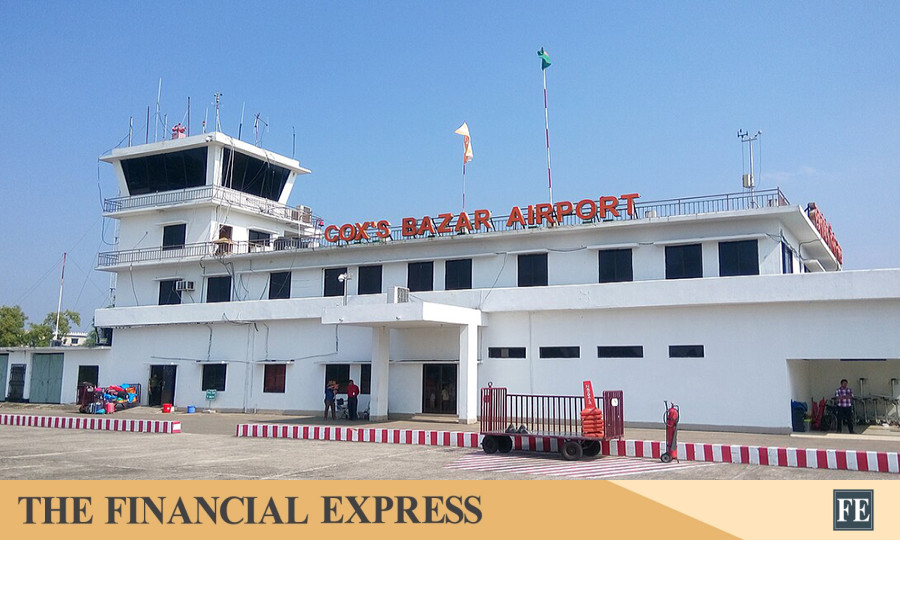
Cox's Bazar Airport almost ready to handle large aircraft

1790055738156.webp

Photo courtesy: Mamunur Rashid Kazi via Wikipedia

Development works on Cox's Bazar Airport are nearing completion, with the authorities expecting to inaugurate the upgraded airport in late October.

The Civil Aviation Authority of Bangladesh (CAAB) authorities have reported almost 99 per cent progress on the physical works of the airport's passenger terminal building while its runway expansion project also advanced 91.65 per cent as of August-end.

"If everything goes accordingly, the airport is expected to handle international flights and larger aircraft more efficiently by the end of next month (October)," said an official.

The international passenger terminal building, being developed at a cost of approximately Tk 3.62 billion, has already seen most of its major construction and installation works completed.

Facilities of the 17,956-square-metre terminal include an international departure lounge with a capacity of 450 passengers, boarding bridge, lifts, escalators, conveyor belts, check-in counters and immigration facilities, according to the CAAB.

The project also includes an arrival lounge, security and communication systems, internal roads, a pump house, deep tube-well, and other supporting infrastructure. Works on 35 VIP and 90 general car parking spaces were also under way.

The terminal project is scheduled for completion by December 2026, with cumulative physical and financial progress reaching 98.97 per cent and 93.78 per cent respectively.

Meanwhile, the runway expansion project is being implemented to make the airport suitable for wide-body aircraft operations. Under the project, the existing 9,000-foot runway has been extended to 10,700 feet by reclaiming 43 hectares of land from the sea, sources said.

The runway expansion has already achieved 91.65 per cent physical and 83.77 per cent financial progress, they mentioned.

Once completed, the extended runway is expected to facilitate safer take-off and landing of wide-body aircraft, including Boeing 777-300ER and Boeing 747-400 aircraft. It will also support increased international and domestic passenger and cargo operations.

A separate project is also under way to prepare the design and feasibility studies for transforming Cox's Bazar Airport into a full-fledged international airport and an aviation hub.

The proposed second-phase development envisages international-standard passenger terminal facilities, a control tower, administrative building, car parking, approach roads, STP, jetty, cargo complex, convention and business centre, general aviation facilities, aviation training centre, airport quarantine hospital, parallel taxiway, apron and refuelling system on 682 acres of coastal land.

The overall development is aimed at improving direct air connectivity between Cox's Bazar and Dhaka as well as other major domestic and international destinations, supporting the growth of tourism and increasing passenger and cargo movement through the airport.

At present, 28 to 30 domestic passenger aircrafts take off from or land at the Cox's Bazar airport daily.

Contacted, CAAB Member (Air Traffic Management) Air Commodore Noor-e-Alam said the facility will be fully ready to operate international flights.

"We have informed all the stakeholders and airlines about the Cox's," he mentioned.

Earlier in October last year, the airport's international status was annulled just 11 days after its official announcement, as there was insufficient airline interest in operating international flights and the facility lacked commercial viability at the time.​
 

Dhaka airport’s 3rd terminal cost rises to Tk 222.13b


1790723300132.webp


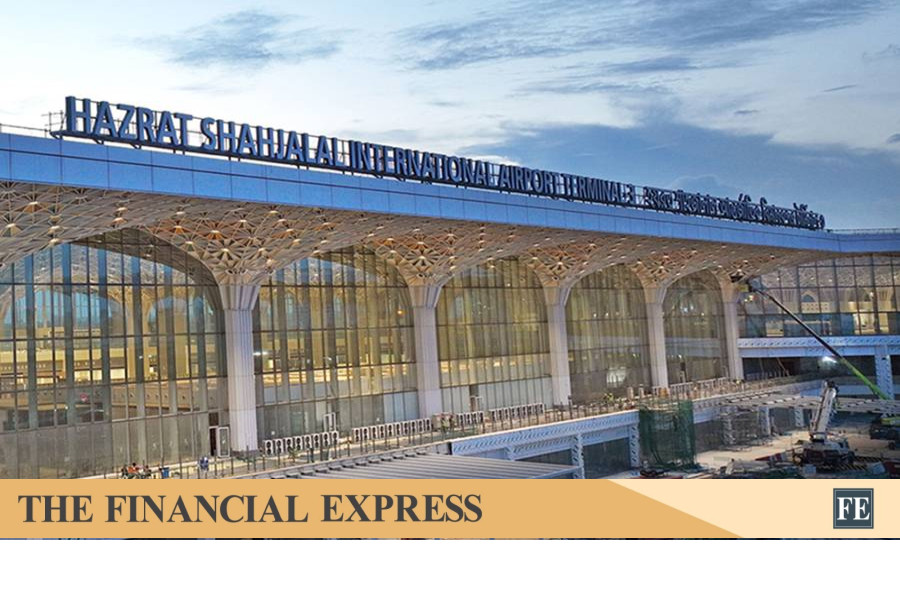
The cost of the Hazrat Shahjalal International Airport’s third terminal project has increased further, with Tk 6.67 billion required for 30 months of maintenance between January 2025 and June 2027, even though the terminal has yet to begin full-scale operation.

State Minister for Planning Zonayed Abdur Rahim Saki said the additional expenditure also includes costs for settling contractual disputes, completing outstanding works and installing facilities that were not included in the original project scope.

Briefing reporters after Tuesday’s ECNEC meeting, Saki said the government has set December 16 as the target for opening the third terminal, but some essential works will continue until June 2027.

The meeting approved an enhancement of Tk 8.47 billion; in total costs Tk 222.13 billion in the third price amendment, whereas it was Tk 213.65 billion in the second price amendment.

“The terminal will be inaugurated partially on December 16, but some works that are essential for operation will be completed by June 2027,” Saki said.

Saki said the latest revision includes Tk 6.67 billion for 30 months of maintenance from January 2025 to June 2027 following the expiry of the defects notification period.

He said another Tk 2.94 billion has been added following recommendations of an amicable settlement committee to resolve disputes arising from variations in the construction contract.

The revised project also covers several outstanding components, including VIP and VVIP facilities, performance testing of the cargo handling system, the baggage handling system, water and sewage treatment plants, the explosive detection system (EDS) and UPS supply for EDS.

Additional expenditure has also been incurred for equipment maintenance and consultancy supervision, he said.

The state minister said 228 consultants, including 16 foreign and 212 local consultants, are involved in the relevant works, with the additional consultancy cost estimated at Tk 196.7 million.

The project’s tax component has meanwhile been reduced by Tk 1.34 billion, he said.

Saki said some facilities essential for operating a modern international airport were absent from the original project scope.

“For example, high-speed internet connectivity across the terminal area is essential. Immigration facilities also require equipment and systems, not simply personnel standing at counters,” he said.

He said such omissions could occur even after feasibility studies, as the detailed design stage can reveal requirements that were not adequately reflected in the initial project documents.

The state minister said the government was therefore working to reform the feasibility study process so that project estimates and designs are more accurate from the beginning.

He said the government has already initiated steps to make agencies conducting feasibility studies more accountable and prevent feasibility studies from becoming a routine exercise carried out merely to fulfil procedural requirements.

Saki said proposals for these reforms had been prepared based on the experience of the Planning Ministry and line ministries and would be placed before the National Economic Council for approval.

He also said the government had issued clear instructions that project deadlines should not be extended without valid reasons.

“Whenever a project is extended without a logical reason, those responsible will be brought under accountability,” he said.

The Implementation Monitoring and Evaluation Division has already submitted investigation reports on eight projects, while reports on another three to four projects are expected shortly, he said.

The reports are being sent to the Prime Minister and concerned ministries for necessary action, he added.

Regarding major cost increases in other large projects, including MRT Line-1 and MRT Line-5 North, Saki said changes between preliminary feasibility studies and detailed designs can significantly affect project costs.

He cited underground construction as one factor behind the increased cost of metro rail projects, saying the geological characteristics of Dhaka have required some stations to be constructed at substantially greater depths than initially envisaged.

For the third terminal, however, he stressed that the latest increase had been broken down into specific components, including maintenance costs, additional facilities and settlement of contractual disputes.​
 

Govt seeks private investment to expand Pangaon terminal

Dwaipayan Barua

1790811830138.webp


Amid increasing container flow at the Pangaon Inland Container Terminal (PICT) in Dhaka, the Chittagong Port Authority (CPA) has taken the initiative to expand facilities at the terminal, which has failed to attract exporters and importers for years.

Average monthly container handling at the terminal, which stood at 242 twenty-foot equivalent units (TEUs) in 2024 and 366 TEUs in 2025, rose to around 900 TEUs in the seven months to August this year after the government handed over the terminal to a foreign operator, Switzerland-based logistics firm Medlog.

Against this backdrop, the CPA has invited private firms to develop and operate cargo and container handling facilities on 22 acres of land that remains vacant.

The port authority seeks private investment to manage, develop, supply, maintain and operate the facilities on the vacant land for 22 years, according to a tender published on September 22.

“We have taken the step for proper utilisation of the vacant land,” said CPA Secretary Syed Refayet Hamim.

The Pangaon ICT was built on the bank of the Buriganga River in Keraniganj in 2013 jointly by the CPA and the Bangladesh Inland Water Transport Authority (BIWTA) at a cost of Tk 154 crore. It was intended to ease pressure on the Dhaka-Chattogram highway and railway corridors caused by cargo movement.

The CPA took a lease of 48.24 acres of land from the BIWTA to develop the terminal.

The current facility, under the management of Switzerland-based logistics firm Medlog SA, covers 26 acres. There are 22 acres of vacant land beyond the current facility, according to CPA Secretary Refayet.

The terminal had struggled to attract businesses transporting containerised cargo to and from Chattogram Port because of high inland water transport costs, lengthy customs clearance and other obstacles.

The situation has improved since Medlog Bangladesh Private Ltd, a concern of Medlog SA, started operating the terminal on January 17 this year.

As per the tender, interested firms, including their parent or holding companies, must have at least five years of experience in loading and discharging containers to or from vessels, according to the tender document.

They must also have experience in handling, storing and delivering containers and containerised cargo using their own equipment and manpower, with an annual handling capacity of at least 70,000 twenty-foot equivalent units (TEUs) at any inland river terminal or river port at home or abroad.

ATM Anisul Millat, managing director of Medlog Bangladesh, said container transport through the terminal had already exceeded the total annual throughput of 4,400 TEUs by June this year. He said his firm was interested in participating in the bidding to manage and develop the 22 acres of vacant land at the terminal.​
 

Govt approves 15-year deal to hand over Chattogram Port’s NCT to foreign operator

Economic affairs committee's approval didn't disclose the name of the foreign operator

Star Business Report

1790897500620.webp

File Photo

The government on Thursday decided to hand over the New Mooring Container Terminal (NCT) of Chattogram Port to an international terminal operator as it approved the draft concession agreement for the operation and maintenance of the much-talked-about terminal.

The Cabinet Committee on Economic Affairs on Thursday gave approval to the draft concession agreement for 15 years, placed by the Shipping Ministry. The concession agreement will also include the Overflow Container Yard (OCY) of NCT.

The development comes amid protests by different sections, including the Chattogram Bandar Rokkha Songram Parishad, a pro-ruling party workers' platform, opposing the handover of the terminal to a foreign operator.

The economic affairs committee's approval did not mention the name of any foreign operator, and neither Chattogram Port Authority nor Invest Bangladesh Authority commented on when the agreement is expected to be signed.

However, in a statement signed by Mohammad Humayun Kabir and Mohammad Ibrahim Khokon, joint coordinators of the platform, they mentioned the name of the multinational operator DP World and alleged that claims about NCT's equipment being obsolete and equipment availability falling below international standards were misleading and aimed at facilitating the handover.

It said giving DP World operational control could create long-term economic and security risks, including the outflow of revenue and foreign currency and possible job losses for port workers.

The Bandar Rokkha Songram Parishad said NCT generated around Tk 4,500 crore in revenue and Tk 2,500 crore in net income in fiscal 2025-26, and warned that a concession could reduce the government’s earnings and affect jobs at the port.

The platform urged the government to reconsider the draft agreement, which it said had recently been approved by the Cabinet Committee on Economic Affairs.

The Daily Star tried to reach Shipping Secretary Zakaria by phone but could not reach him.

The proposal to hire a foreign operator for the NCT, the largest container-handling facility at the country’s main seaport, Chattogram Port, has been under consideration for several years. The process began in 2019, while the Cabinet Committee on Economic Affairs gave in-principle approval to appoint an international private operator under the PPP model in March 2023.

The interim government was close to finalising a deal with DP World to operate NCT. But in the wake of a wildcat strike enforced by port employees and workers, it suspended the move just before the parliamentary election held in February this year. The new government has continued the talks, according to the fourth joint public-private partnership platform meeting of Bangladesh and Dubai held in Dubai in April this year.

In June, Chattogram Port Authority formed a 12-member support team to assist the negotiation committee on the NCT.

The terminal, currently operated by Chittagong Dry Dock Ltd, a Bangladesh Navy-controlled company, handles over 40 percent of the port's total container throughput, recorded at 3.5 million TEUs in fiscal year 2025-26.

The NCT, built at a cost of about Tk 2,000 crore in 2007, contains five jetties and 14 of Chattogram Port's 18 quayside gantry cranes.

The NCT will get the fourth foreign operator at Chattogram Port after the appointment of three other foreign firms. In June 2024, operator RSGT International (RSGTI) started handling the Red-Sea Gateway Terminal (RSGT), formerly known as Patenga Container Terminal. By the end of August this year, APM Terminals, a subsidiary of Danish shipping group AP Møller-Maersk, began construction of Laldia Container Terminal in Chattogram. At the beginning of this year, Switzerland-based logistics giant Medlog started handling Pangaon Inland Container Terminal (PICT) in Dhaka’s Keraniganj.​
 

DP World set to get Ctg port terminal operation amid protests
Deal signing today

Staff Correspondent . Dhaka 08 October, 2026, 00:00

1791417473018.webp

Representational image. | New Age file photo.

Bangladesh is set to sign a 15-year concession agreement with United Arab Emirates-based DP World today to operate and maintain Chattogram Port’s New Mooring Container Terminal amid protests from various quarters including workers’ threat to shut the port if the deal is signed.

According to Invest Bangladesh, the signing ceremony will be held at 3:00pm at its auditorium in the capital. Its chairman Chowdhury Ashik Mahmud Bin Harun and DP World Group chairman Essa Kazim are expected to attend the event.

‘This milestone marks a bold step toward realising Bangladesh’s economic growth ambitions, unlocking new frontiers of investment, efficiency and skills development,’ Invest Bangladesh, the apex government agency responsible for promoting investment, said in an invitation letter issued on the occasion.

Meanwhile, Bangladesh Labour Welfare Federation Chattogram, Sramik Karmachari Oikya Parishad and Bandar Rokkha Committee in separate statements on Wednesday strongly protested at the government’s decision to sign the deal with the foreign company for operating the largest container-handling facility at the country’s busiest port.

They called for consultations with workers, port users, experts and other stakeholders before signing any agreement with any foreign company.

They also demanded disclosure of the proposed deal’s terms, operational rights, financial liabilities and provisions concerning workers’ rights.

The labour leaders warned that ignoring concerns raised by around 20,000 port workers and employees could trigger unrest, stressing national interests, workers’ rights and effective state control over the port.

NCT is the largest container-handling facility at Chattogram Port, handling 44 per cent of all containers loaded and unloaded there last year.

It currently handles around 1.3 million TEUs annually and is operated by the Bangladesh Navy-run Chattogram Dry Dock Limited.

Saudi-based Red Sea Gateway Terminal operates Patenga

Laldia goes to Denmark-based APM


On October 1, the government approved in principle a draft concession agreement to award the terminal’s operation and maintenance to an international operator for 15 years.

The approval came at the 31st meeting of the Cabinet Committee on Economic Affairs, chaired by Finance Minister Amir Khosru Mahmud Chowdhury.

The agreement is part of a public-private partnership project titled ‘Operation and Maintenance of CPA’s New Mooring Container Terminal including Overflow Yard.’

According to the PPP Authority’s project profile, the Chattogram Port Authority planned to award the concession to DP World on a government-to-government basis.

Following the decision, port workers and other stakeholders voiced strong opposition, threatening to halt port operations and vessel movements if the agreement is inked.

On Saturday, the Bandar Rokkha Committee member secretary Fazlul Kabir Mintu called for a transparent comparative assessment before the handover.

On Monday, Ibrahim Khokon, coordinator of the Chattogram Bandar Rokkha Sangram Parishad, issued a shutdown warning at a sit-in in front of the Chattogram Port Authority building. The organisation has demanded direct talks with the government before any agreement is signed.

The decision is against national interests — Anu Muhammad, Economist

Anu Muhammad, former professor of Jahangirnagar University, said the decision was against national interests.

He said it was disappointing that a democratic government was carrying forward a decision taken by the authoritarian Sheikh Hasina regime and allegedly nurtured by the unelected interim government later on.

An elected government must disclose the terms before signing any agreement, he said, adding that it was not doing so.

He also said that the government was probably collaborating with a ‘global mafia’, which could harm the economy and national interests.

Negotiations between the government and DP World over the NCT have been under way for several years. The process accelerated under the interim government, but stalled after DP World sought more time to review the draft. The incumbent Bangladesh Nationalist Party government revived it in February.

The proposed concession would mark another major expansion of foreign participation in operating the country’s largest port.

Saudi Arabia-based Red Sea Gateway Terminal already operates the Patenga Container Terminal under a 22-year concession, while Denmark-based APM Terminals has been given the Laldia Container Terminal under a long-term PPP concession.​
 

DP World to handle bulk of Ctg port containers
Bangladesh govt signs 15yr deal with foreign firm for NCT operation amid high hopes


1791502362757.webp

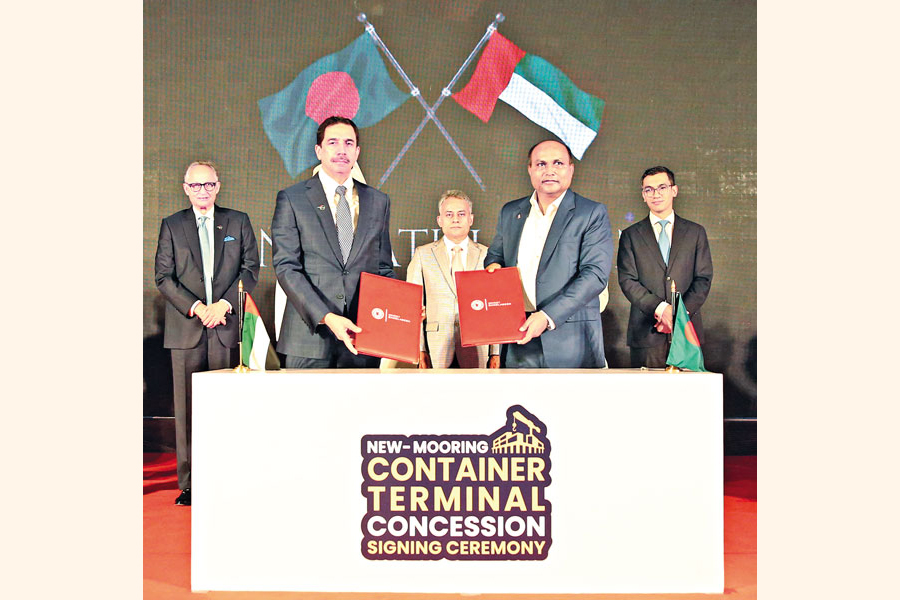
Chittagong Port Authority (CPA) Chairman Rear Admiral SM Moniruzzaman and Chairman and Chief Executive of DP World Sultan Ahmed bin Sulayem sign an agreement at the Invest Bangladesh office in Dhaka on Thursday. Shipping Minister Sheikh Rabiul Alam was present at the signing ceremony. — FE photo by K Asad-Uz-Zaman

Dubai-based multinational DP World will handle nearly half of Chittagong seaport's seaborne trade containers under a deal signed with Bangladesh on Thursday to operate the New-mooring Container Terminal.

Government authorities have said this option is an imperative for improving the country's trade logistics and reducing chronic delays at its main gateway, as protests in the port city and the capital city marked the NCT deal-making.

Under the 15-year concession agreement, DP World will operate and maintain the country's biggest terminal -- NCT -- and its overflow container yard at the Chittagong Port.

The agreement was signed at Invest Bangladesh office in Agargaon, Dhaka, by Rear Admiral SM Moniruzzaman, chairman of the Chittagong Port Authority (CPA), and Sultan Ahmed bin Sulayem, chairman and chief executive of DP World, on respective side.

Shipping Minister Sheikh Rabiul Alam and State Minister for Shipping Md Rajib Ahsan attended the signing ceremony.

Essa Kazim, chairman of DP World's board, UAE Ambassador in Bangladesh Abdulla Ali Al Hamoudi and Ashik Chowdhury, chairman of Invest Bangladesh, were also present.

The International Finance Corporation (IFC), part of the World Bank Group, acted as transaction adviser for the deal.

Under the agreement, the CPA will retain ownership of the NCT while DP World will receive operating rights for an initial period of 15 years.

The operator will pay an upfront fee of about Tk 6.0 billion and invest more than Tk 10 billion during the first 10 years in modern equipment, technology and infrastructure.

The CPA will also receive a share of revenue and a fixed annual fee.

The government expects the arrangement to substantially increase the terminal's capacity and productivity in trade handling.

Also, the government expects that the container-handling capacity at the NCT might go up from existing 1.2 million twenty-foot equivalent units (TEUs) to around 1.8 million TEUs as operational efficiency improves within next few years.

DP World operates more than 80 marine and inland terminals in more than 40 countries and handles about 10 per cent of global container traffic.

"The government's aim is to rapidly increase the capacity of existing strategic assets," Mr Rabiul Alam said.

"Modern equipment, digital systems, international operating standards and global logistics connections will make NCT more competitive."

The government's wider policy is to bring multiple international operators into Bangladesh's port sector to improve service quality, reliability and supply-chain resilience, he told the function.

Mr. Kazim said DP World was committed to supporting Bangladesh's development as an increasingly important trading and manufacturing economy.

"Through this partnership, DP World will connect the New Mooring Container Terminal to our global network of ports, logistics infrastructure and supply-chain services," he said.

The move would create more seamless links between Bangladesh and international markets, he added.

Mr. Moniruzzaman said the agreement reflected CPA's commitment to strengthening maritime and trade infrastructure through public-private partnerships.

"The New Mooring Container Terminal plays a critical role in supporting the country's trade and logistics ecosystem," he said. The partnership would improve operational performance, ease logistics constraints and strengthen connectivity with international markets.

Mr Chowdhury of Invest Bangladesh struck an upbeat note: the objective is to "move trade at global speed".

"Bringing DP World into New Mooring Container Terminal is an important step in that direction," he told the audience.

At a press briefing after the signing, the shipping minister sought to address concerns over what Bangladesh was giving up under the concession.

Asked about the "give-and-take" involved, Rabiul Alam said Bangladesh was handing over management responsibility for one terminal but gaining an internationally operated, modern container facility.

The government expected truck waiting times, currently about 24 hours, to fall to two hours in the first year, 1.5 hours in the second and one hour in the third year.

A vessel currently spends about 2.5 to three days at the port to unload containers, but that could fall to between one and 1.5 days under the new operating model, according to the minister.

Container dwell time is another major concern. Containers bound for the Chittagong Container Terminal can currently remain there for about 9.4 days. The government expects the period to fall sharply as operations become more efficient.

The minister compared the target with international benchmarks, saying that dwell times at India's Jawaharlal Nehru Port are below two days, while Vietnam averages about two to three days and Singapore less than one day.

"Everything will be visible, leaving no room for manual intervention, personal grudges or discretion," he said, arguing that greater transparency would reduce the scope for harassment and delays.

Customs-related tax collection would also be integrated into the digital system, reducing paperwork and the need for importers and exporters to make repeated visits to officials, he added.

The minister said the government would also receive 67 per cent of the applicable container-handling revenue, while annual payments would provide an additional income stream.

He said the NCT had originally cost about Tk 5.72 billion to build, with China Harbour completing the construction in 2007.

Current port-handling efficiency was around 70 per cent, compared with about 93 per cent at leading international container terminals, Mr Rabiul Alam said.

The port handles roughly 92 per cent of Bangladesh's foreign trade, making its performance critical to the country's exporters and importers.

The 2025 Container Port Performance Index ranked Chittagong Port 364th out of 400 container ports globally.

According to World Bank estimates cited by officials, reducing container-dwell time by one day could increase Bangladesh's exports by about 7.4 per cent.

Responding a question relating Bangladesh's sovereignty following the foreign-operator engagement, the minister said the foreign operators handle around 80 per cent global container terminals and asked: "Are they losing their sovereignty? Are they becoming subservient?"

"No," he said in reply to the rhetorical question. "Competition remains."

Following its completion, local operator Saif Powertec became involved in Chittagong Port's container-handling operations.

The company initially operated the Chittagong Container Terminal (CCT), the country's first dedicated container terminal, and later expanded its operatio0n into the NCT in the disguise of facilitating the port operations.

Its involvement in port operations was subsequently continued without a conventional competitive tender, while, during the interim period, operational responsibility was transferred to state-owned Chittagong Dry Dock.

The latest agreement marks a significant shift towards international private-sector participation in the operation of Bangladesh's principal container gateway.

For the government, the calculation is that the concession will exchange direct operational control for higher productivity, technology, investment and international connectivity -- while retaining ownership of the strategic asset and securing a substantial share of future revenues.

For DP World, the deal provides access to one of South Asia's important emerging manufacturing and trading markets and an opportunity to connect Chattogram more closely with its global port and logistics network.

According to economists and manufacturers, the government's decision to bring global port operator DP World into the operation and maintenance of the NCT at Chittagong Port could mark a significant shift in the country's efforts to modernise its trade infrastructure.

The agreement is expected to improve port efficiency, expand container-handling capacity and introduce international operating standards at a time when Bangladesh's external trade is growing faster than the capacity of parts of its port infrastructure.

Economists and business leaders think the move could have a broader economic impact by reducing delays in the movement of goods and making Bangladesh's export-and import-supply chains more competitive.

Dr M Masrur Reaz, chairman of Policy Exchange Bangladesh, told The Financial Express that the agreement would help ensure global-standard port operations and improve efficiency.

"This signing is an important step towards ensuring global-standard port operations and the highest possible efficiency," he said.

Bangladesh's trade volumes have increased significantly over the years, but port capacity and operational efficiency remained poor, he added.

DP World, a globally recognised port operator, brings extensive experience in managing large container terminals and a network connected to international maritime trade, Mr. Masrur further said about the merit of the move.

Port efficiency is closely linked to the competitiveness of the country's export-oriented manufacturing sector, particularly garments, as well as the cost and reliability of imported raw materials, machinery and intermediate goods.

Md. Fazlul Hoque, administrator of the Federation of Bangladesh Chambers of Commerce and Industry (FBCCI), the country's apex trade organisation representing chambers and business associations, told the FE that the agreement was also a positive signal for foreign direct investment.

"DP World is a global giant in the shipping and port sector. Its investment in Bangladesh is a good indicator that foreign investment could increase," he said.

Mr. Hoque said the presence of a major international operator could improve the country's image among global investors.

"Efficiency will rise, and the image of the country will also improve. Many investors will take DP World's investment as a signal that Bangladesh is becoming a more attractive destination," he said.

But he aired concern that the benefits could be undermined if the new arrangement resulted in substantially higher charges for port users.

The concern is particularly relevant for Bangladesh's export industries, which operate in highly competitive international markets where logistics costs can directly affect profit margins and the ability of companies to compete on price and delivery time

MA Hatem, president of Bangladesh Knitwear Manufacturers and Exporters Association (BKMEA), sees the agreement as a milestone for the country. He has said the new operator could improve efficiency in both export and import handling and make better use of capacity that is currently underutilised.

"Trade is rising, but the port has remained relatively static. This operator will be able to raise capacity by utilising the unused capacity," Mr. Hatem told The FE.

Bangladesh's external trade is expected to expand further in the coming years, making improvements in port infrastructure increasingly urgent, he said.

"The decision is very much time-befitting."

For exporters, faster vessel turnaround and more efficient container handling could reduce lead times and improve the reliability of shipment.

Importers, meanwhile, could benefit from smoother movement of machinery, industrial inputs and consumer goods through the port.​
 

PM urges DP World to invest in Bangladesh's free trade zones, rail-based ICDs

Tarique Rahman meets DP World delegation following the signing of the 15-year Chattogram port NCT deal

Star Online Report


1791504539289.webp

Photo: PMO

Prime Minister Tarique Rahman today urged global logistics giant DP World to invest in Bangladesh in various sectors, particularly in free trade zones and rail-based inland container depots (ICDs), to help expand the country’s trade and logistics infrastructure.

The PM made the call when a delegation led by DP World Board Chairman Essa Kazim met him at the Secretariat this evening, said PM's Assistant Press Secretary KM Nazmul Haque.

During the meeting, they discussed ways to expand trade and investment between Bangladesh and the United Arab Emirates, develop port management and logistics sectors, and advance various issues of mutual interest.

They also discussed the 15-year concession agreement signed between Bangladesh and DP World for the operation and modernisation of the New Mooring Container Terminal (NCT) at Chattogram port.

Under the agreement, DP World will operate and maintain the container terminal and its overflow container yard, said the assistant press secretary.

The partnership is expected to help modernise the terminal, enhance operational efficiency and further strengthen Bangladesh’s port and logistics infrastructure, he added.

During the meeting, the prime minister also sought to know about DP World’s interest in making new investments in Bangladesh, including establishing free trade zones and rail-based inland container depots.

In response, the delegation expressed its interest in cooperation and investment in these areas.

The prime minister also urged DP World and other international investors to explore investment opportunities in Bangladesh.

The meeting also explored various possibilities for developing Bangladesh’s port infrastructure, expanding regional trade and making the country’s logistics system more modern, efficient and effective, added Nazmul.​
 

Latest Posts

Back