I believe the Russian war strategy in Ukraine is one of 'submission via attrition', not conquest. The Iranians are successfully using the same strategy against their rivals from Herat to Haifa. It paid off handsomely in Yemen and Afghanistan. It also paid off dividends in da SyRaaq, where Iran's got a quarter million militia members doing its bidding. You wear down your opponents with constant attacks, harassment and putting dem under siege surrounding them with heavily armed well trained and motivated dug in guerilla forces. The Russians too have adopted this cunning tactic when they've made a deep incursion into eastern Ukraine and created fortifications and kill zones which have killed and injured 500k Urainian troops along with thousands of NATO volunteers/ mercs. The area just beyond the Donbas is a gigantic meat grinder where precision artillery/ ATGMs and land attack ballistic/ ALCM's/ ALBM's smash down on the repeated but failed Ukrainian military offensives. This is also been the Iranian tactic in the SyRaaq, successfully used against Daesh/ ISIS and other regional western backed forces. Conquest automatically comes, when your opponent loses his will to fight. And evidently is a very sudden event. So I believe Russia and Iran have the upper hand in all these theaters of operations. War is never fun bro.......but it is what it is. Russia and Iran are motivated and have an imperial agenda (as a culture/ legacy). We in the subcontinent can't relate to this, cuz we've never done any of this nor do we ever plan on doing it. The west is hard pressed to counter Russia and Iran.
I am not questioning the strategic thought process and success of Iran's long game that directly (and indirectly) forms the only threat axis against Israel and also (in Yemen) pretty much put the Saudis in their place.
That is to be admired (militarily). But that won't extend to Iran can win a conventional war in direct confrontation with Israel or it showed superiority over Israel. It did what it had to do. In fact it did the same thing in Baluchistan a few months back to make a point only to be retaliated by Pakistan. It did the same exact thing in ISrael.
Tactical engagement on one side, but I do feel that Iran got played, despite its better acumen. Prior to Iran's attack, Israel was under pressure everywhere for its conduct in Gaza. More than it has ever experienced historically. Gaza was the news, west was reaching its limits and Biden was criticizing Israel publicly almost every week.
Israel knew that by attacking the embassy in Damascus, Iran will follow through and if it does, nobody will remember Israel's atrocities and narrative will shift. Thats exactly what happened and Iran walked into a strategic trap. All western nations lined up (including Arab ones) to support Israel militarily and here again Israel was a victim. Just look at this forum, nobody has posted on Gaza invasion thread for the last 5 days as if it never happened.
To summarize , Iran walked into a trap set by Israel where Israel played the victim in the world and the world (and us) forgot about Gaza and got intertwined on Iran's success or not or Israel's success or not against Iran.
As for Ukraine/Russia, lets see if this tactic works. It was a stronger Russia with USSR (with Ukraine in it) that eventually gave up on Afghanistan. With $61BN more in funding coming, there may be a reprieve, at least for the rest of this year. One thing that will Ukrainians in is if Trump wins that Russia prevailed. Otherwise its a war of attrition and missiles and industrial capacity.
But that opinion is better to discuss in Ukraine thread, not here
I am not questioning the strategic thought process and success of Iran's long game that directly (and indirectly) forms the only threat axis against Israel and also (in Yemen) pretty much put the Saudis in their place.
That is to be admired (militarily). But that won't extend to Iran can win a conventional war in direct confrontation with Israel or it showed superiority over Israel. It did what it had to do. In fact it did the same thing in Baluchistan a few months back to make a point only to be retaliated by Pakistan. It did the same exact thing in ISrael.
Tactical engagement on one side, but I do feel that Iran got played, despite its better acumen. Prior to Iran's attack, Israel was under pressure everywhere for its conduct in Gaza. More than it has ever experienced historically. Gaza was the news, west was reaching its limits and Biden was criticizing Israel publicly almost every week.
Israel knew that by attacking the embassy in Damascus, Iran will follow through and if it does, nobody will remember Israel's atrocities and narrative will shift. Thats exactly what happened and Iran walked into a strategic trap. All western nations lined up (including Arab ones) to support Israel militarily and here again Israel was a victim. Just look at this forum, nobody has posted on Gaza invasion thread for the last 5 days as if it never happened.
To summarize , Iran walked into a trap set by Israel where Israel played the victim in the world and the world (and us) forgot about Gaza and got intertwined on Iran's success or not or Israel's success or not against Iran.
As for Ukraine/Russia, lets see if this tactic works. It was a stronger Russia with USSR (with Ukraine in it) that eventually gave up on Afghanistan. With $61BN more in funding coming, there may be a reprieve, at least for the rest of this year. One thing that will Ukrainians in is if Trump wins that Russia prevailed. Otherwise its a war of attrition and missiles and industrial capacity.
But that opinion is better to discuss in Ukraine thread, not here
This Israel type drama was exactly the same thing going on throughout the post WW2 era until the 80's with South Africa. Same same! A hated euro colony practicing apartheid and brutally suppressing black people. This shiit went on forever until da Zulu's and the ANC got organized and joined Angola with Cuban mercenaries in a direct military/ guerilla confrontation against Pretoria. The south African whites realized their times up!......The west withdrew support, carted the nukes out da back door and almost all the South African whites quietly left for Canada, UK, Australia and Holland. I believe if Iran pressurizes Isra-heel long enough, it will crack. Like I said, it will be a very sudden event too when it happens. Just like Afghanistan with Biden saying we have a robust military, the ANA is well trained and adequately manned, and then a few weeks later the unthinkable happened. What I wrote here, is exactly what a former South African ex military commander told me when I worked in Perth Australia with him on a resource project.
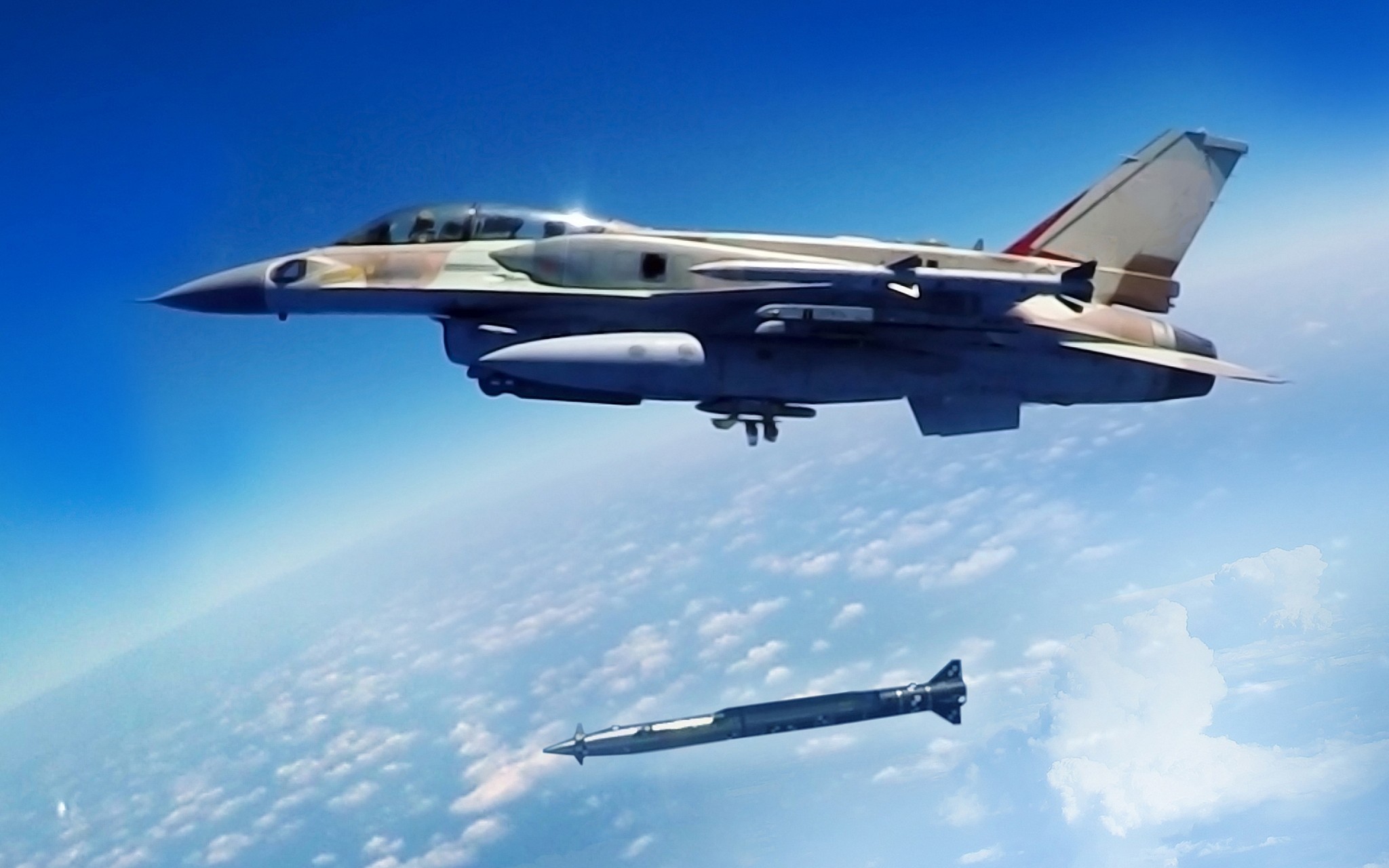
It wasn't Black Sparrow but ‘Rampage system’. ISRAEL has successfully hit an Iranian S-300 site in that day near Natanz with the “Rampage’ supersonic air launched missile without being detected.
Much like Iran demonstrated that it can launch mass attack , Israel demonstrated that it can get within 200 miles standoff and strike a pin-point target. The unwritten threat was that if they put a nuke warhead both sides would succeed with their doctrine.
One thing I will say that is that its not that often that two countries make a point but never want to cross the brink. Pakistan and India have done this.
Imagine if Iraq/Iran did this in 1980, and never crossed the brink to all out war, Israel would be in a more precarious situation now
UukMuch like Iran demonstrated that it can launch mass attack , Israel demonstrated that it can get within 200 miles standoff and strike a pin-point target. The unwritten threat was that if they put a nuke warhead both sides would succeed with their doctrine.
One thing I will say that is that its not that often that two countries make a point but never want to cross the brink. Pakistan and India have done this.
Imagine if Iraq/Iran did this in 1980, and never crossed the brink to all out war, Israel would be in a more precarious situation now
1980 was at the height of the cold war with Saddam Hossain playing both the US and USSR while being a USSR client. Ayatollah was in Iran and Soviets in Afghanistan. Old KGB archives showed that USSR was to keen to have both Iran and Pakistan to be at war with their neighbors and preoccupied. Pakistan and India were wiser. However, Pakistan is still paying for its greatest strategic mistake of taking part in Afghan mujahedin project. It will haunt Pakistan in the coming days too.
ON THE night of April 13, Iran attacked Israel for the first time in history with drones and missiles. Israel claimed that Iran had launched 170 drones, more than 309 cruise missiles and 120 ballistic missiles. Iran did not specify the...
www.newagebd.net
Iran retaliation
Mohammad Abdur Razzak 26 April, 2024, 00:00
ON THE night of April 13, Iran attacked Israel for the first time in history with drones and missiles. Israel claimed that Iran had launched 170 drones, more than 309 cruise missiles and 120 ballistic missiles. Iran did not specify the number of drones and missiles fired into Israel. Iranian attacks came as a retaliation to Israel's strike on Iran's consulate in Damascus, Syria on April 1, which killed 13 people, including seven members of Iran Revolutionary Guard Corp and two of them were majors general. After the attack, the Iranian armed forces chief of staff said, 'The operation had achieved all of its objectives and was over.' What were Iran's objectives?
Iran's chief of staff did not explain the objectives of Iran's operation, code-named True Promise. Understandably, the fundamental objective was to launch an attack to avenge Israeli attack on Iranian consulate, which is Iran's sovereign territory under the Vienna Convention. The Associated objectives are (1) to assure the domestic audience that Iran is not weak, (2) demonstrate Iran's long-distance attack capability, (3) test own tactics and weapons in long-distance air warfare, and (4) challenge Israeli military's invincibility.
Iran's attack had two principal dimensions — political and military. On the political front, it was a telegraphic attack of drones and missiles telling all players about the impending attack. Iran did not want to catch Israel off-guards to avoid a full-scale war. According to Iran's foreign minister, Tehran informed the United States that its attack on Israel would be 'limited' and also told regional neighbours of its planned strikes 72 hours in advance. Iran wanted the United States and its allies to know of the plan and, perhaps, also the timing of the attack allowing Israel and its allies to have adequate air defences in place. Drones were in the air for nine hours, allowing sufficient time to the United States, Israel and its Arab allies to intercept projectiles in the air.
The principal purpose of the telegraphic attack was to avoid a full-scale war but to resolutely demonstrate Iran's military resolve. A full-scale war would mean Israel's proxies, the United States and the United Kingdom, fighting Iran. Iran could not afford to take that risk. However, Iran claims to have an Israeli intelligence centre close to the Syrian border and an airbase had been destroyed 'to a significant extent and put out of operation'.
Iran also claims to have damaged Israeli strategic Nevatim airbase in the Negev desert which was used to attack Iranian consulate. Mohsen Abdollahi, a Tehran-based professor, said that Iran's defensive attacks against a decade of Israeli cyber and military attacks on civilian targets and individuals in Iran were limited and had the lowest human casualties. Why? Because Iran did not want to expand the war in the region. The message of Iran's attack is: 'Stop the attack on Iran or you will face a real attack.'
The military dimension of the attack was Iran testing its tactics and its reach. Iran orchestrated a three-stage or three waves of attack in succession. First, the low-cost drones, Shahed 136, were fired followed by cruise missiles with bomblets as warheads and, third, ballistic missiles with reduced payload. Drones triggered Iran's iron dome missiles, cruise missiles with flare like bomblets activated patriots and ballistic missiles entered Israeli air space while air defences were engaged with cheap drones and flare like bomblets. The warhead detached from ballistic missile with acceleration to hit the target quickly. Apart from assessing political and military impact on the ground, the balance of the attack and defence is also weighed in terms costs. The attack cost Iran around $60–68 million and the defence cost Israel between $1.1 billion and $1.3 billion.
Another political frontier of the confrontation was Arab nations taking side with Israel. Jordan, 'a country with a queen of Palestine heritage' shot down a number of Iranian drones and missiles to defend Israel. Jordanian prime minister ridiculously claimed to have done so in 'self defence' although the Iranian attack was directed against Israel. Saudi Arabia and the UAE shared intelligence with the US and opened their air space to help intercept Iranian drones and missiles. Some commentators do not view Saudi and UAE role in this case 'as betrayal of the Iranians or greater Muslim cause.'
Iran reportedly wanted Arab countries also to pass intelligence to the US. This tactic has similarity with Iran's attack on Al Asad air base in Iraq in 2021 after the US drone strike killed General Qassem Soleimani. The telegraphic attack saved everyone's face. Iran's government can say its people at home that it attacked Israel, Israel can claim to have shot down 99 per cent of the incoming projectiles and protected its citizens, the US can claim to have defended Israel and Arab countries except Jordan can pretend they were not involved. The whole transactions look win-win for all parties. But it will not stop Israel there.
Israel announced a hit back at Iran. Israel did not give any indication when it will strike back. But there are indications where it will hit. Israel will target Iran's nuclear facilities. Iran warned of retaliation with greater force never used before. Israel and the US will be happy to drag Iran into a wider war.
Mohammad Abdur Razzak (safera690@yahoo.com), a retired commodore of the Bangladesh navy, is a security analyst.
ON THE night of April 13, Iran attacked Israel for the first time in history with drones and missiles. Israel claimed that Iran had launched 170 drones, more than 309 cruise missiles and 120 ballistic missiles. Iran did not specify the...
www.newagebd.net
Iran retaliation
Mohammad Abdur Razzak 26 April, 2024, 00:00
ON THE night of April 13, Iran attacked Israel for the first time in history with drones and missiles. Israel claimed that Iran had launched 170 drones, more than 309 cruise missiles and 120 ballistic missiles. Iran did not specify the number of drones and missiles fired into Israel. Iranian attacks came as a retaliation to Israel's strike on Iran's consulate in Damascus, Syria on April 1, which killed 13 people, including seven members of Iran Revolutionary Guard Corp and two of them were majors general. After the attack, the Iranian armed forces chief of staff said, 'The operation had achieved all of its objectives and was over.' What were Iran's objectives?
Iran's chief of staff did not explain the objectives of Iran's operation, code-named True Promise. Understandably, the fundamental objective was to launch an attack to avenge Israeli attack on Iranian consulate, which is Iran's sovereign territory under the Vienna Convention. The Associated objectives are (1) to assure the domestic audience that Iran is not weak, (2) demonstrate Iran's long-distance attack capability, (3) test own tactics and weapons in long-distance air warfare, and (4) challenge Israeli military's invincibility.
Iran's attack had two principal dimensions — political and military. On the political front, it was a telegraphic attack of drones and missiles telling all players about the impending attack. Iran did not want to catch Israel off-guards to avoid a full-scale war. According to Iran's foreign minister, Tehran informed the United States that its attack on Israel would be 'limited' and also told regional neighbours of its planned strikes 72 hours in advance. Iran wanted the United States and its allies to know of the plan and, perhaps, also the timing of the attack allowing Israel and its allies to have adequate air defences in place. Drones were in the air for nine hours, allowing sufficient time to the United States, Israel and its Arab allies to intercept projectiles in the air.
The principal purpose of the telegraphic attack was to avoid a full-scale war but to resolutely demonstrate Iran's military resolve. A full-scale war would mean Israel's proxies, the United States and the United Kingdom, fighting Iran. Iran could not afford to take that risk. However, Iran claims to have an Israeli intelligence centre close to the Syrian border and an airbase had been destroyed 'to a significant extent and put out of operation'.
Iran also claims to have damaged Israeli strategic Nevatim airbase in the Negev desert which was used to attack Iranian consulate. Mohsen Abdollahi, a Tehran-based professor, said that Iran's defensive attacks against a decade of Israeli cyber and military attacks on civilian targets and individuals in Iran were limited and had the lowest human casualties. Why? Because Iran did not want to expand the war in the region. The message of Iran's attack is: 'Stop the attack on Iran or you will face a real attack.'
The military dimension of the attack was Iran testing its tactics and its reach. Iran orchestrated a three-stage or three waves of attack in succession. First, the low-cost drones, Shahed 136, were fired followed by cruise missiles with bomblets as warheads and, third, ballistic missiles with reduced payload. Drones triggered Iran's iron dome missiles, cruise missiles with flare like bomblets activated patriots and ballistic missiles entered Israeli air space while air defences were engaged with cheap drones and flare like bomblets. The warhead detached from ballistic missile with acceleration to hit the target quickly. Apart from assessing political and military impact on the ground, the balance of the attack and defence is also weighed in terms costs. The attack cost Iran around $60–68 million and the defence cost Israel between $1.1 billion and $1.3 billion.
Another political frontier of the confrontation was Arab nations taking side with Israel. Jordan, 'a country with a queen of Palestine heritage' shot down a number of Iranian drones and missiles to defend Israel. Jordanian prime minister ridiculously claimed to have done so in 'self defence' although the Iranian attack was directed against Israel. Saudi Arabia and the UAE shared intelligence with the US and opened their air space to help intercept Iranian drones and missiles. Some commentators do not view Saudi and UAE role in this case 'as betrayal of the Iranians or greater Muslim cause.'
Iran reportedly wanted Arab countries also to pass intelligence to the US. This tactic has similarity with Iran's attack on Al Asad air base in Iraq in 2021 after the US drone strike killed General Qassem Soleimani. The telegraphic attack saved everyone's face. Iran's government can say its people at home that it attacked Israel, Israel can claim to have shot down 99 per cent of the incoming projectiles and protected its citizens, the US can claim to have defended Israel and Arab countries except Jordan can pretend they were not involved. The whole transactions look win-win for all parties. But it will not stop Israel there.
Israel announced a hit back at Iran. Israel did not give any indication when it will strike back. But there are indications where it will hit. Israel will target Iran's nuclear facilities. Iran warned of retaliation with greater force never used before. Israel and the US will be happy to drag Iran into a wider war.
Mohammad Abdur Razzak (safera690@yahoo.com), a retired commodore of the Bangladesh navy, is a security analyst.
UP UNTIL April 1, Israel was increasingly being viewed by western leaders as a near-rogue state. Though US president Joe Biden was still not calling for a...
www.newagebd.net
Israel-Iran war threat fades, but danger unchanged for Gazans
by Paul Rogers 28 April, 2024, 00:02
Palestinian children stand amid the debris of a house destroyed by overnight Israeli bombardment in Rafah in the southern Gaza Strip on April 27 as the conflict between Israel and Hamas continues. | Agence France-Presse
Attention has returned to atrocities Israel is inflicting on Palestinians, but Biden still will not call for ceasefire, writes Paul Rogers
UP UNTIL April 1, Israel was increasingly being viewed by western leaders as a near-rogue state. Though US president Joe Biden was still not calling for a ceasefire — despite being the only world leader who can do so — he was reportedly ramping up pressure on the Israeli prime minister, Binyamin Netanyahu, to end the siege on Gaza, allow far more aid into the enclave, and work towards an end to the fighting.
But the entire situation changed after Israel launched an air attack on the Iranian consulate in Damascus, Syria. Amid fears of a probable military response from Iran, Israel became a western ally once more. When Iran's counterattack did indeed come, on April 13, it was met by not only the IDF, but also by US, British and French militaries, with additional support from Arab nations allied to the West, such as Jordan.
After weeks of escalating tensions between the two countries, Israel had been expected to deliver a major attack on Iran in the days before it bombed Damascus. Its eventual strike killed 16 people, but having followed warnings that Israel might target Iran's civil and presumed military nuclear programme, it was considered a small-scale affair by many Western analysts – so much so that hard-line members of Netanyahu's coalition were deeply critical of it.
Whatever Netanyahu's motives in the Damascus attack, one result was briefly minimising the media coverage of Israel's ongoing war on Gaza. The number of Palestinians killed is nearing 35,000, including at least 12,000 children, according to the Palestinian Health Ministry, with double that number having been injured and many more missing.
For reasons not entirely understood, both Israel and Iran have chosen to avoid an escalating war, with Iran's foreign ministry making clear that its strike was a direct response to Israel's, and that it would take no further action unless the IDF did so. This decision has eased some of the tensions in the region, at least among leaders, and has returned the spotlight to the atrocities in Gaza.
This week, it was reported that Palestinian civil defence crews had uncovered a mass grave in the grounds of the Nasser Medical Complex following the withdrawal of IDF troops from Khan Younis, a city in south Gaza. The bodies of 180 Palestinians, mostly children and women, have so far been recovered. The news follows the discovery of another mass grave, where the bodies of 30 Palestinians were found, at al-Shifa Hospital last week.
Netanyahu's determination to destroy Hamas in Gaza appears as strong as ever. The IDF's attacks are intensifying and it still plans to launch a full-scale assault on Rafah, in the far south-west of Gaza, in the coming weeks. Around 1.4 million Palestinians are sheltering in Rafah, whose pre-war population was 280,000, with many having fled to the supposedly 'safe' city after Israel ordered the evacuation of northern Gaza last year.
While the Israeli prime minister would no doubt like to clear Hamas out of Rafah, that may not be essential if he still plans, as he suggested at the offset of the war, to contain Gaza's entire population — 2.2 million people in late 2023 — to the west of the city, in the southwest of the Gazan strip, with deep buffer zones separating it from Israel. There, Netanyahu's government says Gazans would be in some way supported by the 'international community' — the implication being that they will not be Israel's problem. Their lives would be hugely constricted even compared to the pre-war situation, when the entire Gaza Strip was already a huge, densely populated open prison with border guards instead of jailers. It would become an even more wretched place — far more overcrowded and closely garrisoned.
In this scenario, some in Netanhayu's government have suggested the whole of the north of Gaza would be settled by Israeli Jews, with the coast particularly attractive for new seaside residences. In time, and perhaps over some years, some Palestinians would find the means to pay illegal smugglers to get them out of their crowded confinement and to elsewhere in the Middle East and beyond.
If the hard-right in Netanyah's Likud Party becomes a more powerful part of his coalition, a similar process could be expanded across the West Bank, a steady movement towards fulfilling the party's policy of Israeli sovereignty from the river to the sea.
In the meantime, negotiations between Israel and Hamas are on hold, with mediator Qatar increasingly dubious about prospects for progress as both sides refuse to move on conditions the other deems to be red lines. The IDF is stepping up its offensive operations across the West Bank — having killed ten Palestinians in an attack on the Nur Shams refugee camp on Saturday and launching further lethal attacks on Palestinian towns and villages in the area, according to a local source in the area who wishes to remain anonymous.
In one of the few visible signs of Washington's pressure on Israel, the US is likely to sanction the IDF's Netzah Yehuda battalion — a unit of ultra-orthodox Israeli Jews — for human rights abuses, including the death of an 80-year-old Palestinian-American man in 2022. The sanctions will reportedly mean US military equipment sold to Israel cannot be used by the battalion, which will also no longer be able to take part in training with the US army.
While this may suggest a hardening of a US stance, it comes alongside the congressional decision to agree a $26b support package to Israel, mostly for weapons. In short, the burst of tension over Israeli-Iranian relations and the risk of war has eased and the emphasis returns to the ongoing war, mainly on Gaza but increasingly in the West Bank as well. As the death toll rises, Netanyahu and his team remain determined to continue the war and there is little sign that Biden will force an early end.
Qantara.de, April 24. Paul Rogers is emeritus professor of peace studies in the peace studies and international relations department at Bradford University and an honorary fellow at the Joint Service Command and Staff College.

 Iranian Defense