[🇧🇩] Energy Security of Bangladesh

[🇧🇩] Energy Security of Bangladesh
629
22K
More threads by Saif

G Bangladesh Defense

Support for victims of energy price surge

FE
Published :
Apr 21, 2026 23:27
Updated :
Apr 21, 2026 23:27
1776815416203.webp


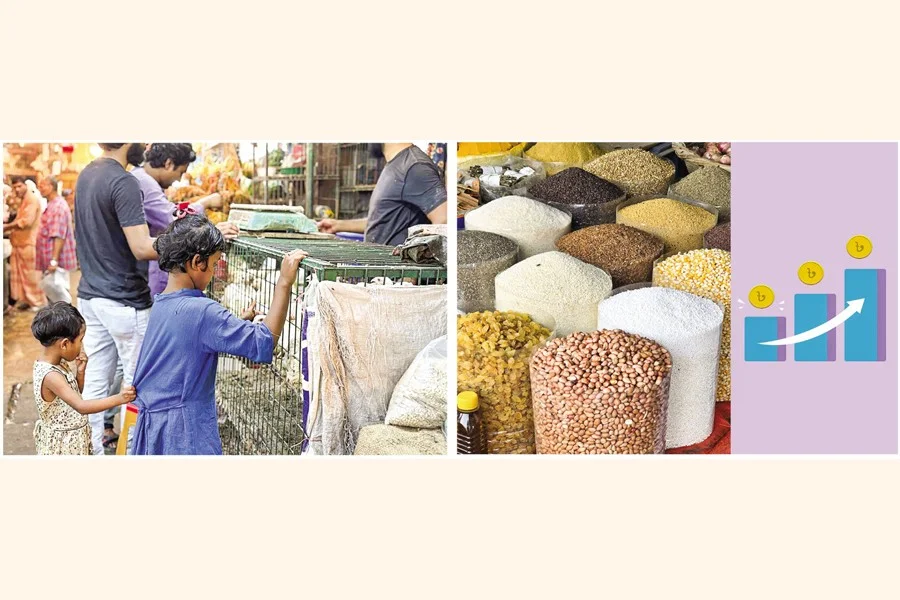
The low- and fixed-income people of the country have been struggling to make ends meet in the face of ever-rising cost of living since many years. Late last February, they woke up to a fresh shock of global energy price hike as the fallout from Middle East war. Being citizens of a country that meets 95 per cent of its annual demand of petroleum products through import, the impact of the war has been immediate on account of supply crunch of fuel oils and the attendant surge in transport fares and prices of essentials. But for that suffering they could at least blame the market and its manipulators. But now, with the government raising the prices of the most used fuel oil, diesel, by 15 per cent as well as octane, petrol and kerosene by over 16 per cent, the impact of the decision on the market has been instant through increase in transport costs and agricultural inputs for farmers. Before the working people could absorb the impact of it all, came the fresh jolt from price escalation of the widely used cooking gas LPG (liquid petroleum gas). Henceforth, the poor households will have to pay through the nose to buy LPG since for each 12-kg cylinder of the cooking fuel will now cost nearly Tk 2,000. This will leave the households without alternative sources of cooking fuel utterly helpless.

The only solution before them is to cut back on the basic needs. The argument of the incumbent government for taking such unpopular decisions might be that it (government) has to reduce budgetary subsidies to save some fiscal space to do some basic development work as well as make donors including the multilateral lenders like the IMF happy. That's understandable so far as the endorsement by the development partners of the measures taken by the government is concerned. But what has then the elected government to say to the members of the general public whose income has stagnated, but expenses have been rising constantly without any end in sight? The government has to strike a balance somewhere so the less privileged section of the population may have some breathing space under the suffocating price spiral of daily necessities.

In this connection, the primary social safety net scheme initiated by the incumbent government in the form of family card might to some extent cushion the eligible beneficiary families against shock from energy price hike. But what about the larger section of the population not yet covered by such safety net schemes? The long queues at the points where TCB trucks supply some essential commodities at subsidized rates under the OMS scheme is the telltale sign of how the number of people affected by income stagnation and erosion is increasing by the day. As it came to the fore during Covid time, there is a substantial segment of the population who would rather suffer the pangs of penury in silence than stand in a queue to accept any handout or dole from the government. To help the segments of the population who cannot keep pace with the skyrocketing cost of living, the government should think of introducing a rationing system to distribute foodgrains, fuels and other necessities at subsidised rates.

However, in the past, corrupt government officials in charge of distribution in cahoots with appointed unscrupulous dealers of essential goods gave rationing system a bad name. At this point, the government might draw on the experience of neighbouringIndia where a nationwide rationing system called the Public Distribution System (PDS) is in place. The government will do well to consider the matter with due urgency.​
 

Women entrepreneurs could power Bangladesh’s renewable energy transition

Anwarul Alam Chandan

1776818708062.webp

Illustration: Zarif Faiaz

Women in Bangladesh’s climate-vulnerable districts are showing growing interest in renewable energy-based livelihoods. From solar-powered irrigation and small energy enterprises to clean cooking technologies, many see renewable energy not only as a source of income, but also as a pathway to climate resilience.

Yet this promise remains constrained by three persistent barriers: financial exclusion, institutional inertia and deeply rooted social norms. For many women entrepreneurs, the choice between inaccessible low-interest bank loans and accessible but expensive microfinance is no choice at all. It is a structural trap.

Unlocking women’s potential in this sector will require more than isolated projects. Bangladesh needs a coordinated approach that improves access to finance, strengthens technical, and business skills, reinforces supportive policies, and addresses the climate risks shaping daily life in vulnerable regions. A mix of financial innovation, targeted outreach, community engagement, and risk-sharing will be essential if more women are to participate in renewable energy enterprises.

A supportive policy framework, but limited access

Bangladesh has made progress in building policy frameworks for sustainable and gender-responsive finance. Bangladesh Bank has introduced several initiatives to encourage green finance and lending for renewable energy and climate-resilient livelihoods. These measures reflect the country’s wider commitment to sustainable development and financial inclusion.

But an enabling policy environment has not translated into broad access on the ground. Many women, especially in rural and climate-vulnerable areas, remain excluded from formal finance. Structural barriers, institutional practices, and social norms continue to limit their ability to secure affordable loans and take part in emerging green economic opportunities.

Bridging this gap will require simpler lending procedures, targeted financial intermediation, and stronger partnerships with trusted local organisations that can reach women at the grassroots. Aligning Bangladesh Bank’s strategic goals with the realities facing rural women, particularly through women-focused CMSME financing models, could unlock transformative opportunities for women entrepreneurs in vulnerable districts. This is not only a question of gender equality. It is also an investment in climate resilience, inclusive growth, and Bangladesh’s transition to more sustainable energy systems.

Bangladesh’s renewable energy potential remains underused. Despite strong solar resources and ambitious climate commitments, renewable energy still accounts for only a small share of the national energy mix. Expanding the sector will require greater investment, stronger implementation, and broader participation from local entrepreneurs, including women. Women in climate-vulnerable districts could play a significant role in this transition if they are given the right support, training, and access to finance.

The access-affordability paradox

In December 2025, a study by the Centre for Entrepreneurship Development at BRAC University collected qualitative and quantitative data from more than 300 respondents, including women entrepreneurs, government officials, representatives of public and private banks, and NGO practitioners. The findings revealed a complex mix of financial, institutional, social, and informational barriers preventing women from entering renewable energy-based livelihoods at scale.

One of the clearest findings was what may be called an access-affordability paradox. NGOs and microfinance institutions such as BRAC, Grameen Bank, and ASA offer relatively accessible credit. Their local presence, simpler procedures and lack of collateral requirements make them attractive to rural women. But these loans often carry higher interest rates and require frequent repayments, putting pressure on small businesses.

By contrast, government and private banks offer loans at lower interest rates, but these are often beyond the reach of women entrepreneurs because of complex documentation, collateral demands, and perceptions of slow or unresponsive institutions. For many rural women, the choice is between easy access at high cost and low cost with no access at all.

Structural and social barriers

Lack of collateral remains one of the biggest obstacles. Across much of Bangladesh, land titles and productive assets are still typically registered in the names of male family members. This excludes many women from meeting formal banking requirements.

Loan procedures create further barriers. Lengthy applications, guarantor conditions, and multiple documentation requirements make formal banking difficult to navigate, especially for women with limited education or institutional exposure. Widowed and divorced women often face added challenges where male guarantors are informally expected.

These financial barriers are reinforced by social norms. In many households, men remain the main decision-makers on loans and investments. Even when loans are taken in women’s names, the money is often controlled by husbands or other male relatives.

Mobility restrictions also matter. In remote or conservative areas, women may find it difficult to travel alone to banks or government offices. As a result, many capable entrepreneurs give up before even applying for formal finance.

Another major challenge is lack of awareness. Many women entrepreneurs have limited knowledge of loan eligibility, application procedures or green finance schemes. Financial institutions and development practitioners also note that many women lack experience in business planning, proposal writing, and financial management.

These gaps are especially important in renewable energy enterprises, where women may need both technical knowledge, and market skills to run businesses involving solar irrigation, energy services or clean cooking products.

Climate vulnerability adds another layer of difficulty. Women operating in flood- and cyclone-prone areas face constant risk that extreme weather will damage equipment or disrupt operations. Solar panels, clean cooking devices, and other energy assets can be damaged or destroyed, undermining income, and loan repayment capacity. Even so, many women still see renewable energy as a practical route to climate adaptation and economic opportunity, if the right support is available.

What needs to change

A stronger response will require action from financial institutions, government agencies, development organisations, and communities.

First, lenders need products that reflect the realities of women-led renewable energy businesses. Banks and microfinance institutions should introduce women-focused green loans with little or no collateral, using group guarantees or energy equipment as partial security where possible. Lower interest rates, flexible loan sizes, longer grace periods, and repayment schedules linked to cash flow would also make a significant difference.

Second, banking procedures must be simplified. Streamlined KYC requirements for small renewable energy loans, along with digital or mobile-based applications, could reduce paperwork, travel costs, and dependence on intermediaries. Financial institutions should also invest in gender-sensitive service delivery, including trained frontline staff and dedicated service desks for women entrepreneurs.

Third, the government can play a catalytic role. A national green credit guarantee mechanism could help share lending risks and encourage banks to lend to women without demanding traditional collateral. Financing information and government programmes should also be communicated more effectively through local administrative channels such as Union Digital Centers and upazila offices.

Fourth, development organisations and research institutions should strengthen women’s capabilities through practical training in business planning, financial management, marketing, and renewable energy technology. Women’s cooperatives and self-help groups may also offer a useful way to pool resources, negotiate better terms, and reduce individual risk.

Finally, social barriers must be addressed directly. Outreach involving partners, family members, community leaders, and religious figures can help shift attitudes towards women’s entrepreneurship. Trusted grassroots organisations can also play a vital role in spreading information, organising mobile banking services, and demonstrating renewable energy technologies within communities.

A strategic opportunity

Expanding women’s participation in renewable energy entrepreneurship is not simply a matter of social inclusion. It is a strategic opportunity for Bangladesh to strengthen climate resilience, accelerate clean energy adoption, and support inclusive economic growth.

If financial systems become more responsive to the realities facing rural women entrepreneurs, Bangladesh could unlock a new generation of women-led enterprises that support both sustainable energy and rural development. Empowering women in climate-vulnerable districts is therefore not only the right thing to do. It is also a practical investment in Bangladesh’s future.

Anwarul Alam Chandan is a development practitioner and researcher working on climate resilience, livelihoods, and inclusive market systems.​
 

Govt to hold talks with opposition on energy crisis, open to pragmatic proposals: PM

UNB
Published :
Apr 22, 2026 23:02
Updated :
Apr 22, 2026 23:02

1776902158021.webp


Prime Minister Tarique Rahman on Wednesday said the government will invite the opposition for talks on the country’s ongoing energy crisis, stressing that any practical and implementable proposals will be accepted in the interest of the people.

“As the Leader of the House, I would like to inform Parliament that we will certainly invite the opposition. From our side, we are ready to sit together, hold discussions and review their proposals. If any of their suggestions are realistic and can be implemented, we will certainly act on them,” he said.

The Leader of the House said regardless of whether the MPs sit on the treasury or opposition benches, they have all been sent by the people of Bangladesh to serve public interests.

“So, whatever discussions or actions best protect the interests of the people of Bangladesh, Inshallah, we will certainly do that,” he added.

The Prime Minister made the remarks while taking part in a discussion on a motion moved by Leader of the Opposition Shafiqur Rahman under Rule 68, seeking immediate, effective and visible steps to resolve the energy crisis and reduce public suffering.

Placing the motion, Shafiqur Rahman emphasised the urgency of easing public suffering, saying the opposition was ready to extend all possible cooperation to the government in this regard.

At the outset of his speech, the Prime Minister thanked the opposition leader and members of the opposition for raising what he described as a “highly important issue” for the country.

He said the current parliament stands on the sacrifices of many martyrs and reflects the hopes and aspirations of the people of Bangladesh for a better future.

Tarique Rahman noted that while there may be differences of opinion among political parties, there is no disagreement when it comes to protecting national interests and public welfare.

He observed that the energy crisis is not unique to Bangladesh, but part of a broader global challenge, affecting countries and people around the world amid prevailing international realities.

“As political leaders, we may differ on many issues, but we are united when it comes to safeguarding the interests of the country and its people,” the Prime Minister said.

He also reiterated that his party remains open to discussions, proposals and constructive suggestions from any quarter if they serve the national interest.​
 

Govt-opposition joint body to address energy challenges
PM in parliament proposes 10-member panel

FE Report
Published :
Apr 24, 2026 00:07
Updated :
Apr 24, 2026 00:07

1776988673138.webp


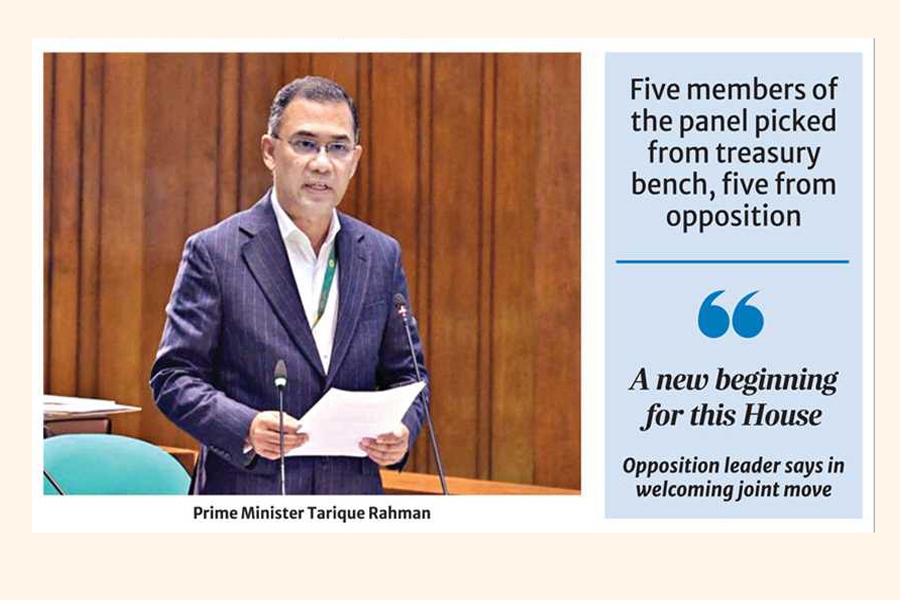
A 10-member government-opposition joint committee is being formed to work together to find 'rational solutions' to an abject energy crisis Bangladesh faces amid a global crunch created by the Mideast mayhem.

Prime Minister Tarique Rahman Thursday proposed in Parliament the formation of the body and sought five names from the opposition, in maiden such move in the country's parliamentary history.

The panel will be headed by Power and Energy Minister Iqbal Hassan Mahmood Tuku and include five members each from the treasury and opposition benches, as proposed.

"We have decided to form a five-member committee from our side. I request the Leader of the Opposition to provide five names so that the 10-member committee can sit together and discuss the issues," the Prime Minister told the House.

He says the government will seriously consider any recommendation made by the committee and take effective steps to implement them "if found to be feasible".

Referring to a proposal raised by the Opposition Leader a day before, the Prime Minister says both sides have agreed to work together to deal with the country's ongoing situation.

Describing the energy crunch as a global problem, he says the problem is affecting many countries.

The Leader of the House notes that the Opposition Leader had expressed his concern about this in his speech (Wednesday) and proposed on his behalf that he has some suggestions and the government and opposition parties can work together on those issues.

The Prime Minister says there was consensus during the previous day's discussion that the energy crisis is a global issue. The opposition had some recommendations and that both sides could work together on the matter.

"I said in my speech that the Bangladesh Nationalist Party is always ready to hold any discussion with anyone in the interest of the country and the people of the country," he told the lawmakers.

From the government side, the proposed members are Power, Energy and Mineral Resources Minister Iqbal Hassan Mahmood Tuku and State Minister Anindya Islam Amit and MPs ABM Ashraf Uddin Nizan (Laxmipur-4), Moinul Islam Khan (Manikganj-2 and Miah Nuruddin Ahmad Apu (Shariatpur-3).

Leader of the Opposition Shafiqur Rahman welcomes the initiative, thanking the Prime Minister for taking the matter positively.

From the opposition side, he announced names of five members: Saiful Alam Khan (Dhaka-12), Nurul Islam (Chapainawabganj-3), Abdul Baten(Dhaka-16), Mohammad Abul Hasanat (Cumilla-4), and Mufti Maulana Abul Hasan (Sylhet-5).​
 

Bangladesh floats tender for third LNG terminal as gas import disruption fuels power cuts

bdnews24.com
Published :
Apr 24, 2026 22:05
Updated :
Apr 24, 2026 22:05

1777074512068.webp


Bangladesh has invited bids for a third liquefied natural gas (LNG) import terminal as the country faces recurring electricity shortages, a minister has said.

Commerce Minister Khandakar Abdul Muktadir announced the plan on Friday while visiting a river dredging project in Sylhet.

He said technical problems had disrupted gas imports, contributing to increased “load shedding” or blackouts.

“Despite sufficient funds, load shedding has increased as gas imports have been disrupted because of some technical problems,” he told reporters.

“The government is working to resolve the problem. Tenders are being invited for the construction of a new terminal to increase LNG import capacity.”

Bangladesh currently operates two floating LNG terminals off Moheshkhali in the Bay of Bengal.

A proposal for a third floating terminal in Cox’s Bazar was approved in 2023 for Summit Oil and Shipping Ltd. The interim government cancelled the approval in October 2024.

Bangladesh has faced periodic power cuts in recent months, alongside complaints of low gas pressure and shortages of bottled gas supplies.

“The government will build new storage facilities on a priority basis so the country does not become hostage to the global situation in the future,” he said.

On the fuel price front, he said: “Even if fuel is imported at a higher price in the international market, its impact will not be felt by the people, the government will manage it properly.”

He also defended recent fuel price rises, saying the impact on inflation would be limited.

He said despite a 15 percent increase in its rate, diesel is still “cheaper” in Bangladesh compared with neighbouring countries.

“This slight increase may have an impact of only 30 paisa per kg on the price of the product, which will not have a major negative impact on inflation,” he argued.

Muktadir, the Sylhet-1 MP, said the government was also seeking to expand fuel storage capacity to improve energy security.

“The government will build new storage facilities on a priority basis so the country does not become hostage to the global situation in the future,” he said, hinting at the Middle East crisis.​
 

Why our energy future keeps slipping away

25 April 2026, 14:54 PM

Moshahida Sultana Ritu

Imagine there were no Sundarbans movement. Two coal-fired units of the Rampal power plant would already be towering over 1,834 acres of land in Bagerhat's Rampal upazila. In reality, there is now one unit. As the Sundarbans movement against the Rampal coal power plant grew stronger, the government retreated from one unit, reserving the land earmarked for the second for a solar power plant instead. Fourteen years on, that land—and that much-advertised shift to clean energy—still lies unused and idle.

Now, after the war in the Middle East triggered a global fuel crisis and at a time when the new government is finally considering reducing dependence on foreign fuel, a proposal to build a 442‑megawatt solar power plant by 2030 is on the Planning Commission's agenda. The proposed production cost is 6.18 taka per unit, and it requires the Power Development Board's (PDB) investment. This proposal has come at a time when the PDB is already burdened with debt. Its unpaid bills are reportedly around 50,000 crore taka.

1777162564124.webp

Built to rely on imported coal, these massive plants frequently sit idle due to supply shortages. A frustrating symbol of costly, unused capacity in a loan-burdened country. Photo: Star.

In such a situation, a deep sigh naturally arises. If the solar project had already been built on this land, could we not use the solar electricity now?

For years, plans to build a second unit at Eastern Refinery to expand capacity were only discussed; the initiative has been taken only now, after a long delay. In the current oil crisis, if ERL's second unit were operating, Bangladesh could save about 2.64 thousand crore taka a year by locally refining imported crude at current exchange rates—though the exact amount would depend on international prices. If the project had raised annual refining capacity from 1.5 to 4.5 million tons, and if there were technical capacity to refine Russian crude, the extra cost of importing refined products would not be necessary, and Bangladesh could now refine and use Russian oil itself.

Here too, a deep sigh arises: although an initiative was taken to implement this project, it has not received formal approval in the past fifteen years. Instead of expanding our own refinery capacity, a pipeline was built from Numaligarh, India, to import refined oil. Now, in this crisis, some diesel is arriving from India, but it is far below our needs, and India—facing its own crisis—no longer sees Bangladesh as a priority.

Meanwhile, since 1995, BAPEX has discovered three gas fields in Bhola, with recoverable reserves of about 1,432 BCF, but there is still no pipeline to carry gas beyond the district, and even within Bhola, it is not fully used. Shahbazpur alone can produce 150 million cubic feet per day, yet at most 75 million is used, and production has not started at the other two fields. Because there is no pipeline, Bhola's large reserves lie effectively unused while we spend vast amounts of foreign currency importing LNG. If we had this pipeline, we could save a huge sum now.

At present, the country imports about 1 billion cubic feet of LNG per day; if Bhola's gas were fully utilised, it would be equivalent to roughly 1,432 days—or about four years—of such imports. Over the last seven years, around 200 thousand crore taka has been spent on LNG imports, an average of 28 thousand crore taka per year; in this year alone, around 50 thousand crore taka will be spent. Yet even now, we are told that there is intense reflection underway on whether building a pipeline at this stage would make the project profitable.

Another grief is our failure to develop the untapped offshore gas. Some international companies signed production sharing contracts and then left when their interests clashed with Bangladesh's. Instead of waiting for foreign investors, the government could have used BAPEX for offshore exploration, built its capacity with foreign technology, and hired companies and consultants—while keeping resources under full national ownership and control. Whenever this was proposed, the standard counterargument was that BAPEX lacked capacity and that the country lacked funds to invest.

Now, we see the fund is in place to ensure LNG imports. The government now pays about 6 thousand crore takas in subsidies every year. From 2018 to now, the total amount paid in such subsidies exceeds what would have been needed for offshore gas exploration. Certainly, there would have been risk; perhaps after investing, it would have taken time to see the benefits. But the money that is now being poured into urgent imports was no less risky in economic terms.

In a poor, loan-burdened country, unused capacities roam among us like a permanent, collective sigh.

On top of all this, we often hear that coal power plants remain idle due to a lack of coal supply. Two coal-fired power plants were built right beside the Payra port so that imported coal could be supplied through it. One is the Patuakhali Thermal Power Plant, a joint venture with the Chinese company NORINCO, and the other is the Payra power plant, a joint venture with China National Machinery Import & Export Corporation. Because of the navigability crisis at Payra Port, coal transportation has become uncertain. It was known in advance that, due to its location, Payra Port would require a large sum of money every year for dredging just to remain operational. Due to persistent difficulties in importing coal, these power plants are often forced to shut down. When, after such large public and private investment, these plants cannot be used as planned, it breeds unavoidable frustration. In a poor, loan-burdened country, unused capacities roam among us like a permanent, collective sigh.

Another deep sigh in power and energy is the ballooning capacity charge. Most power subsidies now go to paying for electricity that is never produced: 42 thousand crore taka last year, 32 thousand crore the year before. The JICA‑backed Power Master Plan overestimated demand, so plants built in the 2010s now sit at over 40 per cent idle. Even allowing 10 per cent for standby and 10 per cent for maintenance, unused capacity is still 6,770 megawatts—23.7 per cent of total installed capacity. Citizens' money is paid to cover this cost.

Another deep sigh arises over the country's first coal mine. Many experts now see Barapukuria as a mistake: the underground method has caused land subsidence, damaged homes, and ruined fertile fields, while black waste dumped into water bodies poisons land and aquatic life. The mine has lowered the groundwater table, creating severe water shortages; production is often halted, electricity for locals is unreliable, and promised jobs have scarcely materialised.

Across Bangladesh, many projects are mired in frustration from start to finish. Why does our energy future keep slipping away, and why can't we stop it? The answers lie in which projects we chose to prioritise—and which we chose to neglect, and why. When there is no will to implement, officials cite a lack of funds, doubts about profitability, and fear of risk. Yet favoured projects are approved without proper scrutiny or feasibility studies. When implemented, the projects are often overridden by foreign lobbies, real risks are ignored, and the public is told we lack capacity or that foreigners are more efficient. Financial analyses are sometimes skewed or manipulated to justify decisions that have already been made. The strategic importance was largely neglected. Instead of prioritising long‑term benefits, short‑term fixes for immediate crises were given priority.

1777162618691.webp

Most power subsidies now go toward paying for electricity that is never produced. Visual: Biplob Chakroborty

Whenever the issue of building national capacity is raised, economic nationalism is swiftly painted in a negative light. It is labelled anti‑foreign investment, anti‑modernity, and dismissed as an outdated doctrine clung to by "backward" populations; in this way, alternative ideas and dissenting voices are effectively confiscated and silenced. Yet those who advance such criticisms seem blind to the fact that the developed world itself clings tightly to economic nationalism and keeps wars simmering from country to country in the name of protecting its interests. Even when powerful actors help push Bangladesh into crisis, some of our own opinion‑makers still miss what is needed. They lean on narrow, financial cost‑benefit analyses to justify unnecessary projects or reject necessary ones.

In the end, electricity and energy knowledge—and the policies built on it—cannot be treated as a narrow technical or financial matter. They are inseparably tied to economics, politics, the environment, and society. Solving an energy crisis is not something engineers can do alone, nor can we simply let economists dictate prices and call it a day. Sound policy demands that we read our own culture, the habits and behaviours that have grown in our society, the lessons of our history, the risks of geopolitics, the political economy of energy, its impact on the environment—and, above all, that we hold to a clear guiding principle: energy is for people, people are not for energy. Unless we begin to weave all of these strands together, the deep sigh of Bangladesh's energy sector will only grow deeper; if we do, it could yet become the starting point of a very different story.

Dr Moshahida Sultana is an Associate Professor, Department of Accounting, University of Dhaka.​
 

Latest Posts

Back