Bangladesh Defense
Saif
Senior Member
- Joined
- Jan 24, 2024
- Messages
- 21,909
- Likes
- 9,837
- Nation

- Residence
- Axis Group


Big in numbers, tight in choices
Nineteen years ago, BNP finance minister M Saifur Rahman placed a national budget of Tk 69,740 crore for fiscal year 2006-07. Three governments have since come and gone, and BNP has now returned to power through a national election.
Big in numbers, tight in choices
Rejaul Karim Byron and Ahsan Habib

Nineteen years ago, BNP finance minister M Saifur Rahman placed a national budget of Tk 69,740 crore for fiscal year 2006-07. Three governments have since come and gone, and BNP has now returned to power through a national election.
This time, Finance Minister Amir Khosru Mahmud Chowdhury is preparing to unveil the country’s 54th budget, which may exceed Tk 9.30 lakh crore for FY2026-27.
Despite the increase in size, the budget-to-GDP ratio has not changed much over the years. In 2006-07, the budget stood at around 12.68 percent of GDP, and is set to be 13.6 percent in FY27.
This suggests that while the economy has grown significantly in size, the government’s fiscal capacity has not strengthened at a comparable pace.
Bangladesh is therefore entering a phase where the scale of public spending is no longer the central issue. The more pressing question is whether the economy can sustain a larger budget amid rising debt, weak revenue mobilisation and institutional constraints.
Over the past two decades, the country’s socio-economic condition has changed noticeably. Electricity access has expanded, rural road connectivity has improved, mobile phone use has surged and internet-based communication has reshaped daily life. Large infrastructure projects such as the Padma Bridge and Dhaka Metro Rail have altered transport patterns and boosted economic activity.
These changes have also raised expectations.
Citizens now expect uninterrupted power supply, better transport systems, modern healthcare, quality education and improved urban services.
Dhaka dwellers want more metro rail lines, while people across the country want improved highways, second bridges across Padma and Jamuna and more industrial investment. As a result, public spending commitments have increased structurally. But, at the same time, fiscal space has tightened.
A growing share of the budget is now being absorbed by just operational expenditure. Interest payments on domestic and external borrowing have risen due to higher debt levels and elevated interest rates. Subsidies in energy, power and food are also high, while the proposed implementation of a new pay commission for public employees is expected to add further recurring pressure.
These factors leave less room for development spending, even as the overall budget size expands.
Weak revenue mobilisation remains a central challenge. Bangladesh continues to have one of the lowest tax-to-GDP ratios in South Asia, which limits the government’s ability to finance development without heavy borrowing.
The financial sector adds another layer of pressure. Non-performing loans have risen due to weak governance, political interference, lending irregularities and poor recovery. A fragile banking system reduces its capacity to support private investment and economic expansion.
Government borrowing from banks has also increased, crowding out credit available to the private sector and pushing up borrowing costs for businesses. The capital market has remained shallow and volatile, offering limited support for long-term financing needs. As a result, the economy remains heavily dependent on the banking sector.
Governance concerns and corruption further complicate fiscal management.
Delays in project implementation, cost overruns and allegations of irregularities in public procurement have reduced the efficiency of public spending.
A White Paper on the State of the Bangladesh Economy under the previous interim government estimated that around $234 billion may have been laundered during the previous Awami League period.
External shocks have also shaped recent economic pressures. The pandemic disrupted trade, employment and production. The Russia-Ukraine war pushed up global food and fuel prices, feeding inflationary pressure in import-dependent Bangladesh.
Inflation has remained above 8 percent since March 2023, eroding real incomes and weakening purchasing power. At the same time, war in the Middle East has added further volatility to global energy markets, increasing risks for inflation and foreign exchange stability.
Against this backdrop, Bangladesh faces a difficult policy balance.
Growth has slowed in recent years while inflation remains elevated. Expansionary fiscal measures could support growth, but they also risk worsening debt and price pressures.
Another important dimension is the role of the International Monetary Fund (IMF) under its ongoing programme. Reform commitments are expected to focus on raising tax revenue, improving banking, reducing subsidies, strengthening fiscal discipline and increasing exchange rate flexibility. While these measures may improve long-term stability, they carry short-term political and social costs.
For the finance minister, the job is not just to present a bigger budget. It is to rebuild trust in how public money is managed while dealing with limited resources and political promises.
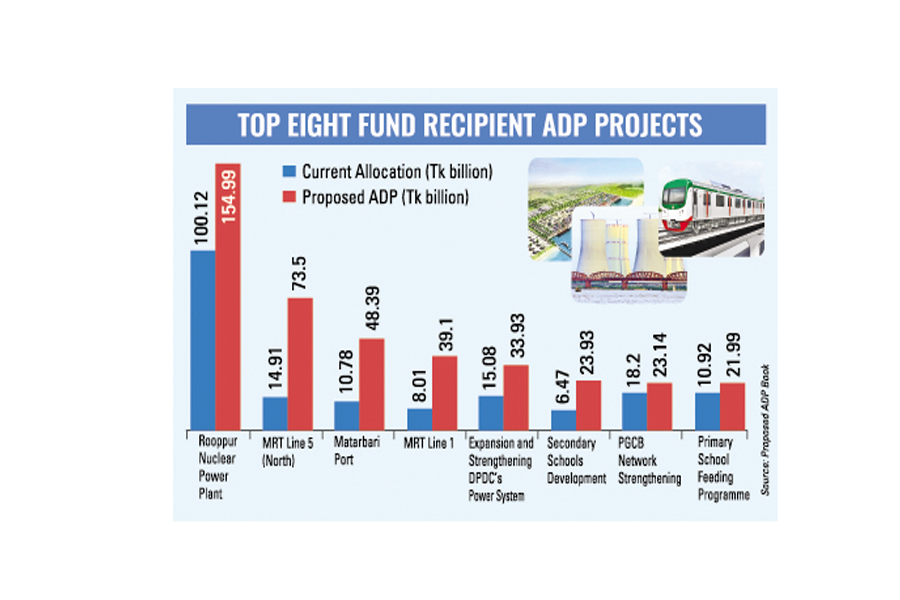
He will have to make difficult choices. Money will need to go either to big infrastructure projects or to areas like health, education and skills.
In the end, the budget is not only about numbers. It will show how the government plans to manage a time of high expectations, tight finances, global uncertainty and weak institutions.
Rejaul Karim Byron and Ahsan Habib
Nineteen years ago, BNP finance minister M Saifur Rahman placed a national budget of Tk 69,740 crore for fiscal year 2006-07. Three governments have since come and gone, and BNP has now returned to power through a national election.
This time, Finance Minister Amir Khosru Mahmud Chowdhury is preparing to unveil the country’s 54th budget, which may exceed Tk 9.30 lakh crore for FY2026-27.
Despite the increase in size, the budget-to-GDP ratio has not changed much over the years. In 2006-07, the budget stood at around 12.68 percent of GDP, and is set to be 13.6 percent in FY27.
This suggests that while the economy has grown significantly in size, the government’s fiscal capacity has not strengthened at a comparable pace.
Bangladesh is therefore entering a phase where the scale of public spending is no longer the central issue. The more pressing question is whether the economy can sustain a larger budget amid rising debt, weak revenue mobilisation and institutional constraints.
Over the past two decades, the country’s socio-economic condition has changed noticeably. Electricity access has expanded, rural road connectivity has improved, mobile phone use has surged and internet-based communication has reshaped daily life. Large infrastructure projects such as the Padma Bridge and Dhaka Metro Rail have altered transport patterns and boosted economic activity.
These changes have also raised expectations.
Citizens now expect uninterrupted power supply, better transport systems, modern healthcare, quality education and improved urban services.
Dhaka dwellers want more metro rail lines, while people across the country want improved highways, second bridges across Padma and Jamuna and more industrial investment. As a result, public spending commitments have increased structurally. But, at the same time, fiscal space has tightened.
A growing share of the budget is now being absorbed by just operational expenditure. Interest payments on domestic and external borrowing have risen due to higher debt levels and elevated interest rates. Subsidies in energy, power and food are also high, while the proposed implementation of a new pay commission for public employees is expected to add further recurring pressure.
These factors leave less room for development spending, even as the overall budget size expands.
Weak revenue mobilisation remains a central challenge. Bangladesh continues to have one of the lowest tax-to-GDP ratios in South Asia, which limits the government’s ability to finance development without heavy borrowing.
The financial sector adds another layer of pressure. Non-performing loans have risen due to weak governance, political interference, lending irregularities and poor recovery. A fragile banking system reduces its capacity to support private investment and economic expansion.
Government borrowing from banks has also increased, crowding out credit available to the private sector and pushing up borrowing costs for businesses. The capital market has remained shallow and volatile, offering limited support for long-term financing needs. As a result, the economy remains heavily dependent on the banking sector.
Governance concerns and corruption further complicate fiscal management.
Delays in project implementation, cost overruns and allegations of irregularities in public procurement have reduced the efficiency of public spending.
A White Paper on the State of the Bangladesh Economy under the previous interim government estimated that around $234 billion may have been laundered during the previous Awami League period.
External shocks have also shaped recent economic pressures. The pandemic disrupted trade, employment and production. The Russia-Ukraine war pushed up global food and fuel prices, feeding inflationary pressure in import-dependent Bangladesh.
Inflation has remained above 8 percent since March 2023, eroding real incomes and weakening purchasing power. At the same time, war in the Middle East has added further volatility to global energy markets, increasing risks for inflation and foreign exchange stability.
Against this backdrop, Bangladesh faces a difficult policy balance.
Growth has slowed in recent years while inflation remains elevated. Expansionary fiscal measures could support growth, but they also risk worsening debt and price pressures.
Another important dimension is the role of the International Monetary Fund (IMF) under its ongoing programme. Reform commitments are expected to focus on raising tax revenue, improving banking, reducing subsidies, strengthening fiscal discipline and increasing exchange rate flexibility. While these measures may improve long-term stability, they carry short-term political and social costs.
For the finance minister, the job is not just to present a bigger budget. It is to rebuild trust in how public money is managed while dealing with limited resources and political promises.
He will have to make difficult choices. Money will need to go either to big infrastructure projects or to areas like health, education and skills.
In the end, the budget is not only about numbers. It will show how the government plans to manage a time of high expectations, tight finances, global uncertainty and weak institutions.