[🇧🇩] Budget For 2026-2027

[🇧🇩] Budget For 2026-2027
52
641
More threads by Saif

G Bangladesh Defense

Budget to be placed considering every citizen of Bangladesh: Khasru

BSS
Dhaka
Published: 03 Jun 2026, 16: 02

1780533556222.webp

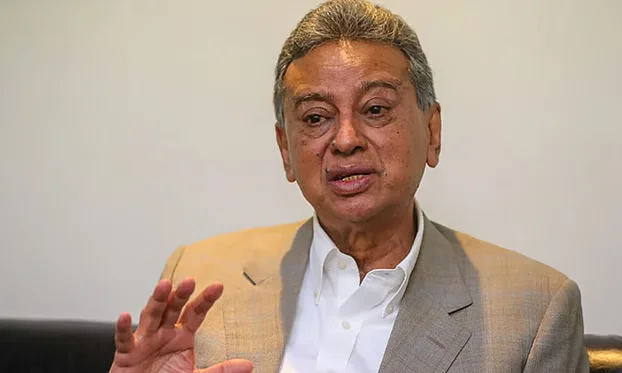
Finance and Planning Minister Amir Khasru Mahmud Chowdhury. BSS

Finance and Planning Minister Amir Khasru Mahmud Chowdhury today, Wednesday said that the incumbent government would place the national budget for FY27 in Jatiya Sangsad on 11 June considering each and every citizen of Bangladesh.

“Insha Allah, this budget will be good to be placed on 11 June. This budget is being prepared and will be placed considering every citizen of Bangladesh…we’re passing through a bad time, inherited a fragile economy, despite this, we’re trying our best. This budget will be given keeping in mind the every citizen of the country,” he said.

The Finance Minister was talking to reporters at the Bangladesh Secretariat today, Wednesday.

He noted that the country’s economic condition is very fragile coupled with huge inherited debt burden, rising poverty rate, declining investment.

“Despite this, we’ve assumed responsibility and we’re trying to deliver a budget considering each and every citizen of the country,”

Khasru said they are trying to ensure the participation of all citizens in the economy so that the desired benefits reach to all concerned.

“Hopefully, this will be a good beginning from inheriting a fragile economy…although it will take some time, but the beginning will be good as we will be gradually moving towards betterment,” he said.

The finance minister asserted that the country’s economy will be investment-based coming out of the previous trend of printing money, taking hefty loans from banks and thus leaving the country into a negative condition.

He said that the government has been working on restoring a sound public financial management to prevent the country from falling into debt trap in the coming days as a huge amount is now being spent to repay the interests of loans in the national budget.

“We’re trying our best to reduce our dependency on loans and thus enhance our reliance on investment. We’ll have to reduce gradually our operating cost and thus raise investments,” he said.

Khasru said that the current government after assuming responsibility has been working tirelessly to correct the distortions that prevailed in the economy and thus restoring proper macroeconomic stability in order to ensure discipline in the financial sector.

“These efforts in true sense will protect the interests of the people of Bangladesh and thus we’ll be able to materialise our dream of becoming a trillion dollar economy,” he added.​
 

Government to allocate 2pc of GDP for 2026-27 education budget, says education minister

bdnews24.com

Published :
Jun 04, 2026 22:04
Updated :
Jun 04, 2026 22:04

1780625957257.webp


Education spending in the 2026-27 fiscal year will be set at 2 percent of gross domestic product (GDP), Education Minister ANM Ehsanul Hoque Milon has said.

Speaking to reporters at the Secretariat on Thursday after a meeting with Prime Minister Tarique Rahman, the minister said the allocation had been finalised for the budget.

The meeting was held as the minister invited the premier to the final match and closing ceremony of the Primary School Gold Cup Football Tournament, scheduled to be held at the Army Stadium on Jun 20.

The minister said the education sector had initially sought 3.5 percent of GDP in allocations for the next fiscal year.

“Instead, we have received up to 2 percent this year,” he said.

He added that the prime minister had given an assurance that education funding would be gradually increased to 5 percent of GDP in the future.

The allocation will cover expenditure from primary to higher education, the minister said.

Referring to previous budget structures, the minister said education and technology were presented together in last year’s budget.

“There was no Shubhonkor’s trap (Shubhonkorer Fanki, a popular Bengali idiom used to describe a deceitful trick or deception hidden within complex mathematical calculations) this time.

“Last year ICT, the Rooppur Nuclear Power Plant and other elements were included together in the education and technology allocation,” he said.

International benchmarks suggest education spending of 6 percent of GDP or 20 percent of the national budget is considered ideal.

However, Bangladesh’s allocation remains below this level.

In the 2025-26 fiscal year, education received 1.53 percent of GDP.

It was 1.69 percent in 2024-25 and 1.76 percent in 2023-24.

The minister also addressed the longstanding financial grievances of retired non-government teachers under the Monthly Pay Order (MPO) system.

He reminded reporters that former prime minister Khaleda Zia had introduced the retirement benefit and welfare trust allowances for the teachers back in 1991.

However, disbursements of these funds have remained suspended for retired teachers since 2022.

He alleged that thousands of millions of taka had been embezzled from the MPO-based retirement benefit board and welfare trust in previous years.

He expressed hope that pension and welfare payments for retired teachers would partially resume within the next month.

The education ministry has received a Tk 20 billion bond allocation to support payments for teachers’ retirement and welfare benefits, he added.​
 

BD borrowing higher-rated Japanese funds to finance budget deficit

JICA about to confirm $300m budget support at elevated 3.05pc interest

FHM Humayan Kabir

Published :
Jun 06, 2026 08:11
Updated :
Jun 06, 2026 08:11

1780712209756.webp


Bangladesh is going to borrow a costly US$300-million budgetary support from Japan as the new BNP administration aggressively searches funds for minimising hefty deficit in budget financing, officials say.

The government had decided not to go for taking fresh loan with Japan's newly imposed higher interest rate. But it eventually goes for borrowing the budget support at the elevated fresh rate amid massive budget deficit this fiscal year (FY) 2025-26.

Japanese development agency JICA is likely to confirm $300 million worth of budget support to Bangladesh at a higher 3.05-per cent interest rate this week.

Before the proposed credit, the Japan International Cooperation Agency (JICA) would charge 2.35 per cent on its loans against different development projects in Bangladesh.

Few months back, JICA had informed Bangladesh that its lending rate would go up to 3.05 per cent for project financing.

"We have no option but to borrow the budget-support credit with higher rate due to necessity of the government. The government needs the funds within this fiscal year ending on June 30 for financing the hefty deficit in the national budget," says a senior Ministry of Finance (MoF) official.

"However, we have informed Japan that this will be the single loan with the newly imposed rate and, at the same time, we have requested the lender to reduce its newly imposed interest rate for Bangladesh."

He adds: "If we borrow at a 3.05 per cent rate, the Japanese loan will no more be concessional.

"Actually, we are discussing with Japan so that it does reduce the lending rate from the recently imposed higher 3.05 per cent."

Once-most-concessional loan is going to be costlier as Japan has recently proposed to increase its interest rate by 30-percentage points to 3.05 per cent for Bangladesh.

Up till now, the Japanese lender, JICA, has charged 2.35 per cent on its loans against different development projects in Bangladesh.

Even three years ago, the interest rate for the Japanese loan was less than 1.0 per cent, officials note.

Not only the rate for the infrastructure-related project loans is being proposed to be increased, the rate for the consultancy credits will also be increased to 1.0 per cent from the current rate of nearly 0.85 per cent.

The lending rate will be effective for six months up to September 2026, as the JICA changes its lending terms and conditions for Bangladesh half-yearly, he says.

Although the loan-maturity period and grace period would be same like the current ones in the next 6-month cycle, the interest rate would be charged at higher rate, he adds.

The JICA also charges a 0.02 per cent front-end fee for almost all the loans to Bangladesh, officials have said.

Bangladesh needs to repay the Japanese loans in 30 years where it will get 10 years as the grace period for the repayment.

As a least-developed country (LDC) with low income, Bangladesh had enjoyed Japanese loans with only 0.1 per cent interest until 2015.

Another official at the MoF told The Financial Express that Bangladesh government is working with Japan to get the newly imposed 3.05-per cent interest rate reduced.

"If the JICA does not lower the lending rate, it will be very difficult to engage our largest bilateral development partners with Bangladesh's next development works," he says.

"Since we have a very good relation and Bangladesh is one of the biggest trading partners of Japan, we want to continue relations with Tokyo even in our infrastructure development," the MoF official adds.​
 

Even finance officials sceptical about financing big budget

Syful Islam

Published :
Jun 06, 2026 08:19
Updated :
Jun 06, 2026 08:19

1780714346271.webp


As a big new budget worth Tk 9.38 trillion comes within days now, finance officials themselves appear sceptical whether the government can finance it with limited sources of earning as of now.

Officials say the government is setting a target of collecting Tk 6.95 trillion as revenue in the fiscal year 2026-27, up from current year's target of Tk 5.4 trillion, to finance the large budget.

In the recent past, the government's total revenue collection in FY 2024-25 was Tk 4.09 trillion, and in FY 2023-24, the receipt was Tk 3.66 trillion.

For the upcoming new fiscal year, the National Board of Revenue (NBR) alone is going to be given a target to collect Tk 6.04 trillion, some Tk 2.43-trillion higher than its previous records in revenue mobilisation.

In FY 2024-25, the NBR's actual revenue collection was Tk 3.61 trillion while in FY 2023-24 the collection was Tk 2.19 trillion.

Officials say the budget has become bigger as the new political government has tried to accommodate its major election pledges, with huge financial involvement, at a time.

They say the finance division officials had proposed to the finance minister to incorporate the election pledge-related programmes in phases to avoid huge financial pressures at a time. However, the political government wanted to implement election pledges in a bigger number in the coming budget, raising the need for huge money.

The officials say the government has already started the piloting of Family Card programme which is an election pledge of the Bangladesh Nationalist Party (BNP). In the next fiscal year, the number of beneficiaries under the programme will be 4.1 million, requiring an amount of Tk 127 billion.

"The government could expand the programme in phases instead of incorporating such a big number of beneficiaries in a year," says a senior finance official.

He says that, until now, there is no step to lessen the number of beneficiaries under the existing social-safety-net programmes, which means the requirement of Tk 127 billion is being added afresh to the budget.

Also, he adds, the government has already launched pre-piloting of "Farmer card". Some 20,000 farmers will get Tk 2,500 each under this programme in the first phase, which will also create additional pressure on the public exchequer.

According to budget officials, the government in next budget is keeping some Tk 1.36 trillion for education sector, up from current fiscal's Tk 978 billion. The additional allocation is given to meet the need for implementing election pledges.

In health sector, the government is allocating Tk 693 billion in the next fiscal year, up from Tk 347 billion in current fiscal year, to implement the election pledges, they say.

A senior official at the Economic Relations Division says this year the government is taking budget support worth $800 million from development partners in advance or future pipeline citing the financial need due to higher subsidy spending caused by conflicts in the Middle East.

The official is skeptical as to how much money from the development partners will be available in the next fiscal year to support the budget.

Dr Zahid Hussain, a former lead economist at the World Bank's Dhaka office, quips the government will need an 'Aladin'scherag (lamp)' to finance such a big budget in the next fiscal year.

"Two targets (of the coming budget) you can safely say are beyond any boundary to achieve," he told The Financial Express on Friday.

One is the revenue target given to the NBR, which, whatever transformative programme is taken, is beyond achievement and the other one is foreign financing target.

"The revenue target would not be achieved and you are going to fall well short," he predicts.

Dr Hussain raises question over the necessity of taking a big annual development programme when foreign financing has slowed down and revenue earning is not promising.​
 

Budget of FY2026-27
Emphasis on creative economy as Tk 3b to be earmarked

Fakhrul Islam
Dhaka
Updated: 06 Jun 2026, 08: 27

1780715293617.webp


The government has put an emphasis on creative economic activities to keep the country’s youth away from drugs, terrorism, and extremism. As part of this, an allocation of Tk 3 billion will be set aside in the upcoming national budget for the fiscal year 2026–27.

Finance Minister Amir Khasru Mahmud Chowdhury will also outline the potential and framework of the creative economy in his budget speech.

In general, the creative economy refers to film, dance, music, theatre, publishing, advertising, architecture, fine arts, handicrafts, design, software, video games, and so on.

According to a report titled Creative Economy Outlook 2024 by the United Nations Conference on Trade and Development (UNCTAD), the creative economy encompasses creating, producing, and distributing goods and services that use creativity and intellectual capital as primary inputs. It includes diverse activities such as advertising, architecture, arts, design, music and movie production, publishing, and video games.

The government is planning various forms of support to advance the creative economy. Officials of the finance ministry and stakeholders concerned said that, along with the development of local culture, the government aims to generate high value through creativity and increase export earnings. Integrating promising sectors of the creative economy into the mainstream economy and branding the country are also among the objectives.

The creative economy is contributing significantly to employment generation and GDP in both developed and developing countries. However, Bangladesh is lagging behind in this regard.

Finance Minister Amir Khasru Mahmud Chowdhury spoke about the creative economy at a roundtable organised by Prothom Alo on 21 May. He said, “We do not have soft power. Yet the film, music, etc. of neighbouring countries are going to other parts of the world.”

When asked why the creative economy has become a government priority, Zahed Ur Rahman, Adviser on Policy and Strategy to the Prime Minister, Ministry of Information and Broadcasting, and Ministry of Cultural Affairs, told Prothom Alo that Prime Minister Tarique Rahman wants the country’s youth to be engaged in various creative activities. There are two aspects to this.

At the first meeting chaired by the finance minister, Bengal Foundation Chairman Abul Khayer Litu proposed a 100-acre creative entertainment center in Purbachal, Dhaka, along with 550 creative centres at the upazila level featuring cultural stages, bookstores, cineplexes, and small cafeterias.

The first is to keep young people away from drugs and militancy alongside their physical and mental development. For this, involving them in literature, culture, sports, and all forms of creative activities is the best way. The second is that creative work can also be chosen as a profession. However, until now there has been no state patronage in this regard.

Zahed Ur Rahman said that the Prime Minister, the Finance Minister, and others plan to promote the creative economy in the country. Necessary support will be provided for this, and Bangladesh will benefit in multiple ways.

Creative economy in the manifesto

BNP had promised in its election manifesto to implement a work plan on the “creative economy.” It stated that the sector’s contribution to GDP would be at least 1.5 per cent and employment would be created for 500,000 people.

It also included forming a “Bangladesh Creative Development Authority” to provide strategic leadership in the sector, and launching a national brand called “Created in Bangladesh” to showcase creative potential in international festivals and markets.

To fulfil these commitments, Finance and Planning Minister Amir Khasru Mahmud Chowdhury held two meetings with stakeholders at the Secretariat. The first meeting was held on 11 May, where a concept paper titled “Creative Economy and Bangladesh Context” was presented by Additional Secretary Hasan Khaled Faisal. He said there is no national data on the sector’s contribution to GDP and employment, and coordinated public-private initiatives are needed to mainstream it.

The second meeting was held on 23 May, where responsibilities of different ministries and departments for implementing creative economy development were defined. It was also decided to form a national committee headed by the finance minister to provide policy guidance. A separate committee under the Finance Division will coordinate all related activities.

At the first meeting chaired by the finance minister, Bengal Foundation Chairman Abul Khayer Litu proposed a 100-acre creative entertainment center in Purbachal, Dhaka, along with 550 creative centres at the upazila level featuring cultural stages, bookstores, cineplexes, and small cafeterias.

BRAC Executive Director Asif Saleh suggested boosting the film industry, handicrafts, and cultural tourism, along with subsidies and easy loans for the film sector.

Cultural Affairs Secretary Kaniz Mawla called for initiatives to revive fading traditional forms such as jatra and circus. Joya Foundation Managing Director Nahida Manjura Afroze called for easy loans for women entrepreneurs and seasonal fairs.

What the government plans to do

After two rounds of meetings, the government has taken several decisions, dividing responsibilities among ministries, departments, and the private sector.

One decision is to establish a 100-acre Creative Hub in Purbachal, Dhaka. Bengal Foundation has been assigned to submit a proposal.

Another decision is to establish creative centres at divisional and district-level Shilpakala Academy premises, with a joint plan to be developed by the Ministry of Cultural Affairs and BRAC.

Innovation centres will also be set up in public universities and government colleges at the undergraduate level, with ICT Division preparing the plan.

The Bangladesh Small and Cottage Industries Corporation (BSCIC) will prepare a plan to identify vacant and unused plots and develop them into creative training and activity centres, including handicrafts.

Under the “Ekti Gram, Ekti Ponno (One Village, One Product)” initiative, creative economy-based products such as pottery, weaving, shitalpati, wooden toys, handmade jewellery, terracotta, and so on will be identified. A national pool of local designers will be formed to improve competitiveness in international markets, to be proposed by the Joyeeta Foundation. Creative centres will also be established in multi-storey buildings in Dhaka and in six divisional cities owned by the Joyeeta Foundation.

The government will prepare a tourism master plan covering the overall potential, diversity, and concept of the tourism sector, to be finalided by the Tourism Board. An international-standard specialised training centre will be established in Cox’s Bazar for tourism professionals, to be implemented by the Tourism Corporation.

Efforts will also be made to restore heritage sites to develop cultural tourism, and a “National Festival Calendar” will be prepared by the Ministry of Cultural Affairs.

Potential sectors

The Finance Division has identified several sectors, including folk culture and heritage. Folk culture includes folk songs, folk dances, ballads, and Jari songs. Handicrafts include shitalpati, clay work, bamboo and cane crafts. Traditional festivals include Bengali New Year and rural fairs.

Other sectors include performing arts such as theatre, cultural performances, music, drama, dance, painting, and sculpture. Media and entertainment include film, television and radio broadcasting, content creation, OTT platforms, and so on.

Publishing and literature include books, magazines, journals, online blogs and digital publishing, translation, and literary works. Design and creative services include graphic design and interior design. Information technology and digital creativity include software and app development, web design, and so on.

Tourism and cultural industries include eco-tourism, cultural tourism, heritage-based tourism products and services, festival tourism, archaeological and heritage tourism.

Fashion and lifestyle industries include design and boutiques, jewellery, fashion design, lifestyle brands and handmade products, makeup, etc. Corporate and branding sectors include creative media service providers, software companies, influencing, advertising and branding, digital marketing, etc.

Creative economy around the world

The concept paper prepared by the Finance Division presents the global scenario of the creative economy. Citing UNCTAD reports, it said the sector generates over $2 trillion annually worldwide and employs around 50 million people.

In 2022, $1.4 trillion worth of creative services were exported globally, 27 per cent higher than five years earlier. Software services accounted for 41 per cent of service exports. In the same year, $713 billion worth of creative goods were exported.

According to UNCTAD, Indonesia has the highest contribution of creative economy to GDP at 7.28 per cent. It is 7.3 per cent in the Philippines, 4.2 per cent in the United States, and 2.5 per cent in India. Bangladesh is not listed, but the government aims to raise its contribution to 1.5 per cent of GDP.

Challenges and actions needed

The Finance Division said there are practical weaknesses in intellectual property protection in this sector. There is a lack of statistics, policies, and institutional coordination. Funding and investment are limited, and small entrepreneurs struggle to access loans. Venture capital and creative funds are also very limited.

There is also a shortage of skilled human resources, lack of quality studios and labs, weak monetisation structures on digital platforms, and insufficient establishment of Bangladeshi brands. Marketing, copyright trade, and supply chains are also weak.

According to the Finance Division, the World Bank is willing to finance this sector. A special startup fund could be created by the government. Private banks and financial institutions can also play a role in financing. The government should act as a facilitator. A 10-year investment plan, along with a national strategy and policy framework, could be developed.

BRAC Executive Director Asif Saleh told Prothom Alo by phone yesterday, “We welcome the government’s positive initiative on the creative economy. There are various social challenges, including extremist tendencies. Government support for creativity is essential to remove their influence.”

He added that the film industry, handicrafts, and cultural tourism should be the three main focus areas for the development of the creative economy.​
 

Latest Posts

Back