New Tweets

Southeast Asia Chinese warships return closer to Australian waters

G  Southeast Asia & Oceania
Southeast Asia Chinese warships return closer to Australian waters
39
1K
More threads by Jiangnan

ohhh, you are talking about Nathula and Rezang la in which you lost 10 times the soldiers to India and lost even after that.

Nobody believed we had killed so many Chinese at Rezang La. Our commander called me crazy and warned that I could be court-martialled


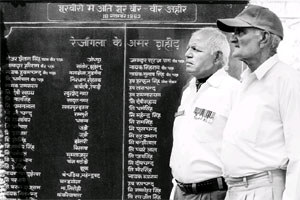
The battle of Rezang La was the only bright spot for India in the 1962 war with China. In this Walk the Talk with The Indian Express Editor-in-Chief Shekhar Gupta on NDTV 24x7,Ramchander Yadav and Nihal Singh,two of the six soldiers who survived that battle,look back at the events of that icy November morning 50 years ago​

Written by Shekhar Gupta
October 30, 2012 01:07 IST
Newsguard

clock_logo
17 min read
  • facebook
  • twitter
  • whatsapp
  • Reddit
Newsguard

The battle of Rezang La was the only bright spot for India in the 1962 war with China. In this Walk the Talk with The Indian Express Editor-in-Chief Shekhar Gupta on NDTV 24×7,Ramchander Yadav and Nihal Singh,two of the six soldiers who survived that battle,look back at the events of that icy November morning 50 years ago

Its sad that any time we talk about the India-China war of 1962,horrible words like debacle,disgrace,disaster come to our minds. This is the 50th anniversary of that war. Its a war that this country ideally would love to forget but cannot because its etched in our memories as one of the saddest chapters of our independent history. And its sadder still that because of that overwhelming sense of failure in that war,we tend to sometimes almost deliberately ignore the one chapter that I think is without parallel in modern post Second World War military history,the battle of Rezang La on November 18,1962. I will give you a brief history. Charlie Company of a battalion called 13 Kumaon was divided in several platoons on one ridge of two kilometres,protecting the airfield of Chushul which was vital if India was to hold Ladakh. It was attacked on the morning of November 18 by maybe 5,000-6,000 Chinese with heavy artillery support. A crest behind this ridge prevented Indian artillery from being able to support these jawans. And what did these jawans do? They fought to last man,last round. Thats an expression you hear in movies and read in war comics,but that is something that actually happened in the battle of Rezang La. Of the 120 men and officers of this Company,114 died,five were taken prisoners as woundedthey all escapedand one was sent back to tell the story of the battle to the rest of the world. And who sent him back? This Companys most remarkable commander,Major Shaitan Singh,who got a Param Vir Chakra for leading this battle. I am today in Rewari,the area from where these jawans came… It was a Kumaon battalion but this was an Ahir Company from Rewari in Haryana. With me are two of those six survivorsin fact,only four remain with us nowHonorary captain Ramchander Yadav and Havaldar Nihal Singh. So both of you were with Major Shaitan Singh?

The Indian Express

You need a subscription to read this archive arti

India is learning how Israel genocide Muslims!

Screenshot_20250228_152212_com_microsoft_emmx_ChromeTabbedActivity.webp
Screenshot_20250228_152246_com_microsoft_emmx_ChromeTabbedActivity.webp


Analyze

Analyze Post

Add your ideas here:
Highlight Cite Respond
Analyze

Analyze Post

Add your ideas here:
Highlight Cite Respond
Even Iran cannot tolerate India's genocide/massacre of Muslims.

View attachment 14960


Which Mascre of Muslims? He is the one who hangs Sunni Cleric by crane to teach them a lesson. Some time ago, he hanged 13 Sunni cleric by crane. He is learning from Xi. In 7 decades, we have not hanged that many Muslims to date inspite of being worst victim of Islamic Terrorism.

Chinese Mass execution and use of their Organ for selling.

SupplementVolume 364, Special Issue30-31December 2004
Download Full Issue

Use of organs from executed Chinese prisoners​

Dr Thomas Diflo thomas.diflo@med.nyu.edu
Affiliations & NotesArticle Info

Cover Image - The Lancet, Volume 364, Issue undefined

Show Outline


Figure f10
Figure viewer

Figure viewer
Chinese execution fields
Copyright © 2004 Laogai Research Foundation
Q: “Who did you get your kidney from?”
A: “An executed prisoner.”
Over the past several years, I have had several patients answer this question in the same way. They all were young Chinese-Americans recently returned from China with excellent function of their newly transplanted kidneys. Most were vague as to the origin of their newly transplanted organs; some cited “distant relatives” whereas others claimed not to know the source. Recently, however, several patients have given me the above response. I suppose that I should not have been so surprised to get that answer, but I was nonetheless. As I psychologically recoiled, I thought to myself, “What am I going to do here?”
In order to obtain a kidney transplant in the USA, patients with renal failure register at transplant centres and are placed on a waiting list. The more fortunate of these patients have relatives, spouses, or friends who are willing to donate a kidney to enable timelier transplantation. Without such a living donor, the waiting time can be quite long until an appropriate organ becomes available—up to 5–8 years in some parts of the USA and considerably longer in several other parts of the world. Not surprisingly, this can lead to anguish and acts of desperation for those who wait.
Several reports have recently surfaced about several problems with organ transplantation, such as organ trafficking, the sale and brokering of such organs, and the topic of this essay: the transplantation of organs from executed prisoners in China. Unfortunately, these transplantations have become more common because of an unfortunate application to healthcare of one of the laws of economics—supply and demand.
The establishment in 1984 of the United Network for Organ Sharing (UNOS) in the USA, although it helped to organise and centralise a previously haphazard system of organ distribution, has unfortunately failed to change one fundamental problem with transplantation: there are not enough organs to go around. From May 31, 2004, 85 609 people were registered with UNOS as awaiting an organ transplantation. Of these, 58 201 were waiting for kidney transplantation. In the 10 years from 1990 to 1999, the total number of people registered with UNOS increased from 21 914 to 72 110, an increase of 230%. During the same period, the number of cadaveric donors increased from 4509 to 5822, an increase of only 29%.
In 2003, only 15 129 of 53 000 people on the waiting list received a kidney transplantation (8665 cadaver and 6464 living donor), meaning that only 29% of patients on the list were transplanted that year, and only 16% were transplanted with cadaver organs. During the same year, 3342 patients awaiting kidney transplantation died while on the waiting list (6%), and 880 (2%) were deemed too sick to undergo transplantation. Unfortunately, the proportion of patients transplanted continues to decline and the number of patients who die while on the list continues to increase.
There have been several proposals to stem the tide. Most US transplantation programmes have aggressively pursued alternatives—they have widened the criteria under which they will consider cadaver donors in an attempt to increase the potential cadaver pool. Even so, only trivial increases in the number of cadaveric donors have been recorded over the past decade. We have been more aggressive in pursuing living donation, not only of kidneys, but of other organs as well.
The problem is even more acute in many other areas of the world where the number of cadaver donors is vanishingly small, especially in countries where cultural or religious rules do not allow for the recognition of brain death such as in many countries in the Far East. Partly in response to cultural factors as well as in response to economic factors, China has adopted the policy of the use of the organs of executed prisoners for transplantation.
The debate concerning the use of an executed prisoner's organs for transplantation proceeds on several levels, the first being the entire notion of capital punishment, which is considered acceptable by some governments although its appropriateness in and of itself is not for discussion here. However, most people and governments who support capital punishment do so for only the worst crimes, such as murder or treason. It is used sparingly and on few occasions. China, however, classifies more than 68 offences as capital, including under some circumstances car theft, embezzlement, and discharging of a firearm. Each year, the number of executions in China exceeds by at least two fold the total number of executions in the rest of the world combined. Official government figures put the number of executions at around 5000 annually, but independent groups and Chen Zhonglin, a National People's Congress delegate quoted in the China Youth Daily estimate the actual number to be twice that. Of this figure, it is estimated that 1600 executed prisoners will donate some 3200 organs annually.
The Chinese government has denied this activity, but in 1984, the government issued a policy paper entitled Provisional Regulations […] on the Use of Dead Bodies or Organs from Condemned Criminals, which stipulated that prisoners were to be executed by means of shooting. Furthermore, “The dead bodies or organs of the following categories of the condemned criminals can be made use of—if family members refuse to collect the body, if the prisoners volunteer their bodies before execution, or if the families consent”.
These regulations are a disingenuous technique by the government to assure “consent” from the prisoners, no matter what the actual desire of the individual or his family. Prisoners are commonly abandoned by family members because of shame or fear of repercussions, assuring that a substantial number of prisoners fall under the first category above. It is conceivable that some prisoners, from a sense of altruism, would consent of their own accord but it is highly unlikely, given the widespread knowledge of the government's duplicity in this area.
Consent is only one of the issues raised by these circumstances. The concept of brain death is not well defined or fully accepted in China. As there is no requirement for certification of brain death before organ procurement, this situation can lead to the potential for the procurement of organs from prisoners who are not brain dead. There are eyewitness accounts of continued movement and spontaneous respirations in some prisoner-donors, indicating that these people have been subject to the removal of their organs while they are, strictly speaking, still alive.
Finally, there is the issue of the intimate involvement of the doctors and surgeons who do transplantations regarding executions and procurements, which would not happen without the agreement and full participation of the doctors involved. This situation represents a substantial breach of medical ethics for these doctors in that the primary tenet of our profession, to do no harm, is violated on a continuous basis.
We all witness first hand the anguish of our patients as they wait, seemingly endlessly, for organs to become available; desperation leads to desperate acts. Nevertheless, this desperation does not justify illegal or unethical actions. When the issues of economic gain and government complicity are intertwined into the equation, it is evident how problematic this situation has become. What are some of the possible solutions?
First and foremost, members of the international transplantation community can individually and collectively speak out. We can shun the Chinese transplantation professionals, but I believe that this is shortsighted. Although it is clear that the complicity of the surgeon who will do the transplantation is needed, it is important to consider that the orders come from above—the hospitals' administration, the military, and ultimately the government. We must let the Chinese government and military know that they are not deceiving us. We know what they are doing, and we condemn it.
The international human rights community, in conjunction with the transplant community, has initiated contact with multinational pharmaceutical companies in order to put economic and scientific pressures on China. They have begun to put together educational seminars for the Chinese transplantation community directed at addressing these issues and other ethical issues.
Moreover, the international transplantation community must address the issue of those practitioners outside of China who refer their patients to China for transplantation—the participants and purveyors of so-called transplant tourism. Without these international travellers, the Chinese transplantation community would fold from lack of business.
It is our duty to speak out against this gross violation of human rights and medical ethics. We must be strong and unequivocal in our condemnation of the use of executed prisoners' organs for transplantation.

 
Analyze

Analyze Post

Add your ideas here:
Highlight Cite Respond
I'm too lazy to read this nonsense and edit. India must stop the genocide of Sikhs and Muslims. And stop supporting Israel's genocide against Palestine.

Genocide of Muslims in India!

View attachment 14956

View attachment 14957

View attachment 14958


If China were to burn, execute, and exterminate Muslims like India. Then let's talk about why Uyghurs support Israel's genocide against Palestine! 🤣🤣🤣

Inspite of talking big mouth on Muslim Genocide, what you could find is 42 Muslim died. It happened in one of the worst riots of India. In which 42 Muslims died in police firing in addition to those who died in violence. In Gujarat riots also, 90 people died in police firing. Majority of them were Hindus. While at the time of arrest of Ram Rahim, violence broke out. Police fired to take situation in control. 40 people died. None of them was Muslim. So your pathetic attempt to equate it with systematic genocide of millions of Uyghurs in China is as laughable as you are a laughingstock of PDF.
 
Analyze

Analyze Post

Add your ideas here:
Highlight Cite Respond
Inspite of talking big mouth on Muslim Genocide, what you could find is 42 Muslim died. It happened in one of the worst riots of India. In which 42 Muslims died in police firing in addition to those who died in violence. In Gujarat riots also, 90 people died in police firing. Majority of them were Hindus. While at the time of arrest of Ram Rahim, violence broke out. Police fired to take situation in control. 40 people died. None of them was Muslim. So your pathetic attempt to equate it with systematic genocide of millions of Uyghurs in China is as laughable as you are a laughingstock of PDF.
Stop talking. Go kill Muslims. Then follow Jewish propaganda.

Screenshot_20250228_150703_com_microsoft_emmx_ChromeTabbedActivity.webp
Screenshot_20250228_150836_com_microsoft_emmx_ChromeTabbedActivity.webp
Screenshot_20250228_150857_com_microsoft_emmx_ChromeTabbedActivity.webp


It's interesting that India and Jews say that Uyghurs are being persecuted. Just like they massacred millions of Muslims. 🤣🤣🤣🤣🤣
 
Analyze

Analyze Post

Add your ideas here:
Highlight Cite Respond
Stop talking. Go kill Muslims. Then follow Jewish propaganda.

View attachment 14963View attachment 14964View attachment 14965

It's interesting that India and Jews say that Uyghurs are being persecuted. Just like they massacred millions of Muslims. 🤣🤣🤣🤣🤣

In India, nobody has the right to kill anybody. A Lady doctor was raped and killed by 4 goons (like the goon Army of Xi). Police killed them. Inquiry was floated and all policemen were sentenced to 10 years of prision. On the other hand, Xi's goon army has the right to abduct any person and shoot him in public.
 
Analyze

Analyze Post

Add your ideas here:
Highlight Cite Respond
Which Mascre of Muslims? He is the one who hangs Sunni Cleric by crane to teach them a lesson. Some time ago, he hanged 13 Sunni cleric by crane. He is learning from Xi. In 7 decades, we have not hanged that many Muslims to date inspite of being worst victim of Islamic Terrorism.

Chinese Mass execution and use of their Organ for selling.

SupplementVolume 364, Special Issue30-31December 2004
Download Full Issue

Use of organs from executed Chinese prisoners​

Dr Thomas Diflo thomas.diflo@med.nyu.edu
Affiliations & NotesArticle Info

Cover Image - The Lancet, Volume 364, Issue undefined

Show Outline


Figure f10
Figure viewer

Figure viewer
Chinese execution fields
Copyright © 2004 Laogai Research Foundation
Q: “Who did you get your kidney from?”
A: “An executed prisoner.”
Over the past several years, I have had several patients answer this question in the same way. They all were young Chinese-Americans recently returned from China with excellent function of their newly transplanted kidneys. Most were vague as to the origin of their newly transplanted organs; some cited “distant relatives” whereas others claimed not to know the source. Recently, however, several patients have given me the above response. I suppose that I should not have been so surprised to get that answer, but I was nonetheless. As I psychologically recoiled, I thought to myself, “What am I going to do here?”
In order to obtain a kidney transplant in the USA, patients with renal failure register at transplant centres and are placed on a waiting list. The more fortunate of these patients have relatives, spouses, or friends who are willing to donate a kidney to enable timelier transplantation. Without such a living donor, the waiting time can be quite long until an appropriate organ becomes available—up to 5–8 years in some parts of the USA and considerably longer in several other parts of the world. Not surprisingly, this can lead to anguish and acts of desperation for those who wait.
Several reports have recently surfaced about several problems with organ transplantation, such as organ trafficking, the sale and brokering of such organs, and the topic of this essay: the transplantation of organs from executed prisoners in China. Unfortunately, these transplantations have become more common because of an unfortunate application to healthcare of one of the laws of economics—supply and demand.
The establishment in 1984 of the United Network for Organ Sharing (UNOS) in the USA, although it helped to organise and centralise a previously haphazard system of organ distribution, has unfortunately failed to change one fundamental problem with transplantation: there are not enough organs to go around. From May 31, 2004, 85 609 people were registered with UNOS as awaiting an organ transplantation. Of these, 58 201 were waiting for kidney transplantation. In the 10 years from 1990 to 1999, the total number of people registered with UNOS increased from 21 914 to 72 110, an increase of 230%. During the same period, the number of cadaveric donors increased from 4509 to 5822, an increase of only 29%.
In 2003, only 15 129 of 53 000 people on the waiting list received a kidney transplantation (8665 cadaver and 6464 living donor), meaning that only 29% of patients on the list were transplanted that year, and only 16% were transplanted with cadaver organs. During the same year, 3342 patients awaiting kidney transplantation died while on the waiting list (6%), and 880 (2%) were deemed too sick to undergo transplantation. Unfortunately, the proportion of patients transplanted continues to decline and the number of patients who die while on the list continues to increase.
There have been several proposals to stem the tide. Most US transplantation programmes have aggressively pursued alternatives—they have widened the criteria under which they will consider cadaver donors in an attempt to increase the potential cadaver pool. Even so, only trivial increases in the number of cadaveric donors have been recorded over the past decade. We have been more aggressive in pursuing living donation, not only of kidneys, but of other organs as well.
The problem is even more acute in many other areas of the world where the number of cadaver donors is vanishingly small, especially in countries where cultural or religious rules do not allow for the recognition of brain death such as in many countries in the Far East. Partly in response to cultural factors as well as in response to economic factors, China has adopted the policy of the use of the organs of executed prisoners for transplantation.
The debate concerning the use of an executed prisoner's organs for transplantation proceeds on several levels, the first being the entire notion of capital punishment, which is considered acceptable by some governments although its appropriateness in and of itself is not for discussion here. However, most people and governments who support capital punishment do so for only the worst crimes, such as murder or treason. It is used sparingly and on few occasions. China, however, classifies more than 68 offences as capital, including under some circumstances car theft, embezzlement, and discharging of a firearm. Each year, the number of executions in China exceeds by at least two fold the total number of executions in the rest of the world combined. Official government figures put the number of executions at around 5000 annually, but independent groups and Chen Zhonglin, a National People's Congress delegate quoted in the China Youth Daily estimate the actual number to be twice that. Of this figure, it is estimated that 1600 executed prisoners will donate some 3200 organs annually.
The Chinese government has denied this activity, but in 1984, the government issued a policy paper entitled Provisional Regulations […] on the Use of Dead Bodies or Organs from Condemned Criminals, which stipulated that prisoners were to be executed by means of shooting. Furthermore, “The dead bodies or organs of the following categories of the condemned criminals can be made use of—if family members refuse to collect the body, if the prisoners volunteer their bodies before execution, or if the families consent”.
These regulations are a disingenuous technique by the government to assure “consent” from the prisoners, no matter what the actual desire of the individual or his family. Prisoners are commonly abandoned by family members because of shame or fear of repercussions, assuring that a substantial number of prisoners fall under the first category above. It is conceivable that some prisoners, from a sense of altruism, would consent of their own accord but it is highly unlikely, given the widespread knowledge of the government's duplicity in this area.
Consent is only one of the issues raised by these circumstances. The concept of brain death is not well defined or fully accepted in China. As there is no requirement for certification of brain death before organ procurement, this situation can lead to the potential for the procurement of organs from prisoners who are not brain dead. There are eyewitness accounts of continued movement and spontaneous respirations in some prisoner-donors, indicating that these people have been subject to the removal of their organs while they are, strictly speaking, still alive.
Finally, there is the issue of the intimate involvement of the doctors and surgeons who do transplantations regarding executions and procurements, which would not happen without the agreement and full participation of the doctors involved. This situation represents a substantial breach of medical ethics for these doctors in that the primary tenet of our profession, to do no harm, is violated on a continuous basis.
We all witness first hand the anguish of our patients as they wait, seemingly endlessly, for organs to become available; desperation leads to desperate acts. Nevertheless, this desperation does not justify illegal or unethical actions. When the issues of economic gain and government complicity are intertwined into the equation, it is evident how problematic this situation has become. What are some of the possible solutions?
First and foremost, members of the international transplantation community can individually and collectively speak out. We can shun the Chinese transplantation professionals, but I believe that this is shortsighted. Although it is clear that the complicity of the surgeon who will do the transplantation is needed, it is important to consider that the orders come from above—the hospitals' administration, the military, and ultimately the government. We must let the Chinese government and military know that they are not deceiving us. We know what they are doing, and we condemn it.
The international human rights community, in conjunction with the transplant community, has initiated contact with multinational pharmaceutical companies in order to put economic and scientific pressures on China. They have begun to put together educational seminars for the Chinese transplantation community directed at addressing these issues and other ethical issues.
Moreover, the international transplantation community must address the issue of those practitioners outside of China who refer their patients to China for transplantation—the participants and purveyors of so-called transplant tourism. Without these international travellers, the Chinese transplantation community would fold from lack of business.
It is our duty to speak out against this gross violation of human rights and medical ethics. We must be strong and unequivocal in our condemnation of the use of executed prisoners' organs for transplantation.

Oh Shiva. Indians say others sell organs.

Do Indians know what shame is?

Screenshot_20250228_170612_com_microsoft_emmx_ChromeTabbedActivity.webp


India has the world's largest organ trafficking market!

Screenshot_20250228_170955_com_microsoft_emmx_ChromeTabbedActivity.webp


Indians always change their ways to provide jokes for us humans! 🤣🤣🤣🤣🤣
 
Analyze

Analyze Post

Add your ideas here:
Highlight Cite Respond
Oh Shiva. Indians say others sell organs.

Do Indians know what shame is?

View attachment 14966

India has the world's largest organ trafficking market!

View attachment 14967


Indians always change their ways to provide jokes for us humans! 🤣🤣🤣🤣🤣

Organs are donated not like China where the kidneys and liver from people in Jail are removed to sell it in black market. If you are in jail, you are a potential customer for Kideny removal. That is what exactly stated in article.
 
Analyze

Analyze Post

Add your ideas here:
Highlight Cite Respond

Latest Posts

Back
PKDefense - Recommended Toggle