[🇧🇩] City Buses, Metro Rail, Urban Transport & City Road Infra

[🇧🇩] City Buses, Metro Rail, Urban Transport & City Road Infra
190
13K
More threads by Bilal9

G Bangladesh Defense

Dhaka needs a consolidated transport system

1792105399849.webp


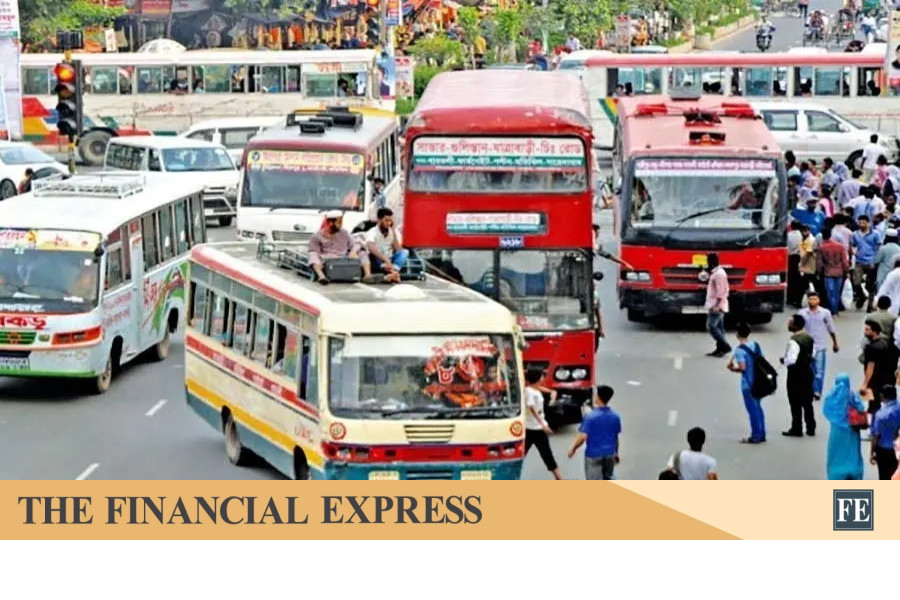
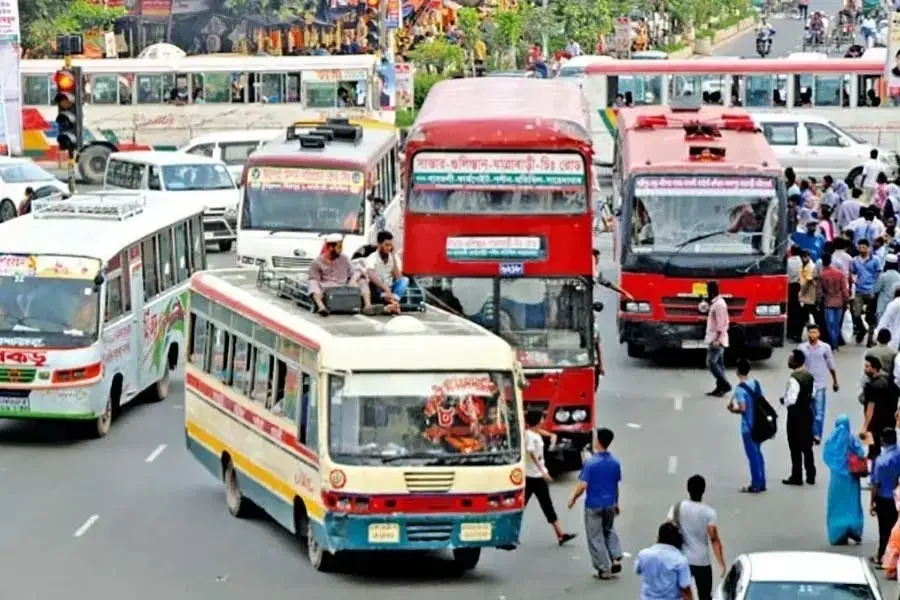
For millions who depend on public transport every day, travelling through Dhaka can feel like an exercise in uncertainty. Which bus should I take? Where will it stop? How much will I pay? When will it arrive? What happens if it takes another route? Late at night, safety concerns add another layer of anxiety to an already unpredictable commute.

The problem isn't that Dhaka has too many buses; it's that the city's public transport system is fragmented.

Numerous operators, inconsistent bus standards, overlapping routes, varying fares and inadequate passenger information make commuting complicated. Dhaka doesn't necessarily need fewer private operators; it needs a consolidated system where passengers experience public transport as a single, coordinated network.

Singapore offers an instructive example, and I experienced its integrated transport system myself last year. The country, one-third the size of Dhaka, retains multiple bus operators, but passengers do not need to understand their ownership structures to use the network. Under its Bus Contracting Model, the Land Transport Authority (LTA) plans bus services, owns the buses and supporting infrastructure, and sets service standards. The LTA selects operators through competitive tendering and pays them to deliver specified services. Singapore's four public bus operators manage 14 bus packages.

The lesson is straightforward: operators can compete while passengers experience one transport system. Dhaka could adopt the same principle, adapted to its own circumstances.

Imagine an official Dhaka Transport app. A commuter enters a destination and sees the available options: which bus to take, where to board, where to transfer, the expected journey time and the total fare. If the journey includes Metro Rail, the app incorporates it into the itinerary. Passengers would no longer need to navigate a maze of company names and disconnected routes to reach their destinations.

The same platform could integrate ticketing, payments and journey records. Passengers could pay through Rapid Pass, bank cards, mobile financial services or other approved digital channels. A journey involving two buses and Metro Rail could be treated as one connected trip, with coordinated fares and transfers under clearly defined rules.

Bangladesh has already established part of the foundation. Rapid Pass is the Dhaka Transport Coordination Authority's integrated e-ticketing initiative, designed around the principle of one card for multiple transport modes. It currently works on Metro Rail and selected bus services, with wider integration planned. The priority should now be to connect existing investments rather than create another disconnected digital system.

A consolidated Dhaka Transport platform could combine route information, real-time bus locations, Metro Rail schedules, fares, ticketing, digital payments, service alerts, accessibility information, lost-and-found services and complaints. Its value, however, would extend well beyond convenience.

Consider passenger grievances. When a bus ignores a designated stop, deviates from its route, demands an arbitrary fare or puts passengers at risk, people often have little practical recourse. Under an integrated system, every bus would have a unique digital identity. Passengers could report incidents against a specific vehicle, route, time and location, then track complaints until they are resolved. Authorities could identify repeat violations and hold operators accountable.

The same data could improve network planning. Actual operating records, rather than occasional surveys alone, could identify persistent overcrowding, excessive waiting times, underused routes, and repeated deviations.

The need is evident in Dhaka's ongoing route-rationalisation efforts. In July 2026, Dhaka Transport Coordination Authority (DTCA) reported that its survey identified 418 approved bus routes, of which only 98 were operating. The authority said around 60 routes could meet commuter demand and discussed assigning designated companies a fixed number of buses for individual routes. Previous initiatives, including Nagar Paribahan and the pink-bus project, have also faced implementation difficulties, highlighting the gap between policy ambitions and operational realities.

This is why an app alone cannot solve Dhaka's transport problem. Digital integration must go hand in hand with regulatory and operational reform.

Private bus companies can continue to own or lease vehicles, employ drivers and manage fleets. But they should operate within clearly defined routes, schedules, safety requirements, vehicle standards and service-quality targets. Authorities could gradually introduce performance-based contracts that reward punctuality, route adherence, safe driving and passenger satisfaction.

Such a model could also change the economics of driving. When earnings depend heavily on the number of passengers collected, competition can encourage buses to race, stop indiscriminately and fight for passengers. Contracts based on delivering scheduled services could reduce these incentives while making operators more accountable for service quality.

The city already has several pieces of the puzzle-Metro Rail, Rapid Pass, transport authorities, digital payment services and route-rationalisation initiatives. What is missing is a unified architecture connecting them, backed by an authority capable of enforcing common standards.

Dhaka doesn't need another standalone app that shows where buses are. It needs a Dhaka Transport system with one trusted digital interface through which people can plan, pay, travel, receive updates and seek redress.

If the city can make public transport predictable, safe and understandable, it will achieve something far more consequential than digitising commuting. It will take a meaningful step towards building a transport system worthy of a modern megacity.​
 

Bridge Authority flags 14 factors behind Karnaphuli Tunnel’s losses

Special Correspondent

1792367248804.webp

Karnaphuli Tunnel. Prothom Alo

A feasibility study for the Karnaphuli Tunnel project in Chattogram projected that an average of 28,305 vehicles would use the tunnel every day in 2025. However, only 4.172 million vehicles have used it in total since it opened. This translates to an average of just 3,865 vehicles crossing the tunnel each day.

The figures are presented in a report by the Bangladesh Bridge Authority. At the current level of traffic, toll revenue is insufficient even to cover the tunnel’s daily operating expenses. Operations and maintenance now cost an average of Tk 2.3 million a day, while daily revenue averages Tk 1.1 million.

The report identifies 14 reasons for the tunnel’s financial losses and outlines several measures to increase toll revenue.

Titled ‘Feasibility Study, Implementation and Current Financial Status of the Karnaphuli Tunnel,’ the report was submitted to the parliamentary standing committee on the Ministry of Planning on Saturday. The committee has decided to examine the implementation of projects related to the tunnel and investigate the causes of its financial losses.

The Karnaphuli Tunnel was built at a cost of Tk 100 billion during the Awami League government. Vehicle movement through the tunnel began on 29 October 2023.

According to sources concerned, the report submitted to the parliamentary committee identifies the main reasons for the losses. These include inadequate road connectivity, limited capacity and insufficient development of connecting roads, failure to build the proposed deep-sea port at Sonadia in Cox’s Bazar, lack of a connection through the Marine Drive, failure to achieve planned urban development on the southern bank of the Karnaphuli River, industrialisation in Anwara falling short of expectations, and delays in implementing investments.

As a result, the expected volume of traffic has not materialised.

The report also cites several other factors: tourism facilities in Anwara have not developed as expected; the service area is not being used to its anticipated capacity; connections with the port and industrial zones remain inadequate; restrictions have been imposed on the movement of heavy-load vehicles; and drivers are apprehensive about the scanning process.
The report says several measures are being taken to increase the tunnel’s revenue. These include leasing out the service area, reducing operating costs and directing long-distance vehicles to use the Karnaphuli Tunnel instead of entering Chattogram city.

Construction is underway on seven jetties by Karnaphuli Dry Dock Limited as part of efforts to expand the operations of Chattogram Port. Three of the jetties are already operational. Once all seven are in service, they are expected to handle 10–12 million tonnes of cargo annually. This could increase the tunnel’s annual toll revenue by Tk 2–2.4 billion.

Construction of the China Economic and Industrial Zone was inaugurated on 27 July. Its first factory is expected to begin production within 18 months. This, too, is expected to increase vehicle traffic through the tunnel.

The committee meeting discussed the Karnaphuli Tunnel’s feasibility study, implementation and the reasons behind its current financial losses. The matter will be discussed in greater detail at the committee’s next meeting. It was decided that the parliamentary standing committee on the Ministry of Planning would work towards a proper investigation into the implementation of tunnel-related projects and the causes of the current financial losses.

ADP implementation: 26 ministries and divs lag behind

At the meeting, a report by the Implementation Monitoring and Evaluation Division (IMED) of the Ministry of Planning showed that the national average rate of implementation of the Annual Development Programme (ADP) in the last fiscal year was 67.52 per cent.

Of the 56 ministries and divisions, 26 recorded implementation rates below the national average, while the remaining 30 performed above it.
The ministries and divisions that fell behind were Public Administration; Liberation War Affairs; Land; Cultural Affairs; Information; Primary and Mass Education; Youth and Sports; Environment; Religious Affairs; and Women and Children Affairs.

The list also included the Information and Communication Technology Division, Election Commission Secretariat, Economic Relations Division, Parliament Secretariat, Anti-Corruption Commission, Internal Resources Division, Health Services Division, Health Education and Family Welfare Division, Secondary and Higher Education Division, Technical and Madrasah Education Division, Prime Minister’s Office, IMED and Planning Division.

A list of projects whose completion deadlines were extended in the last fiscal year was also presented at the meeting. Members were informed that, at the previous meeting on 8 September, the committee had been told that extensions had been recommended for 256 projects in fiscal year 2025–26. The number subsequently rose to 288.

According to a press release from the Parliament Secretariat, the meeting discussed the reasons for extending the deadlines of 256 projects in fiscal year 2025–26. These included complications in land acquisition, dependence on imports, difficulties in appointing project directors, inadequate feasibility studies in many cases, delays in releasing funds for some projects, and conflicts between ministries.

The committee recommended that the relevant authorities take effective steps to address delays in implementing these projects.

Sources concerned said the Ministry of Planning informed the committee that a draft of a new policy on appointing project directors for government projects had been prepared. Once the policy takes effect, former officials and experts with relevant experience could be appointed as project directors.

The Parliament Secretariat’s press release said the ministry had informed the committee that work on the new policy was underway. It expressed hope that finalising the policy would help resolve persistent difficulties in appointing project directors.

Committee chairman Zahir Uddin Swapan chaired the meeting. Committee members, including State Minister for Planning Zonayed Saki, Kazi Rafiqul Islam, Moinul Islam Khan, Md Saiful Alam and Rashedul Islam, attended.​
 

Govt to scrap Gazipur-Dhaka airport BRT project

Shahin Akhter . Dhaka

1792541506503.webp


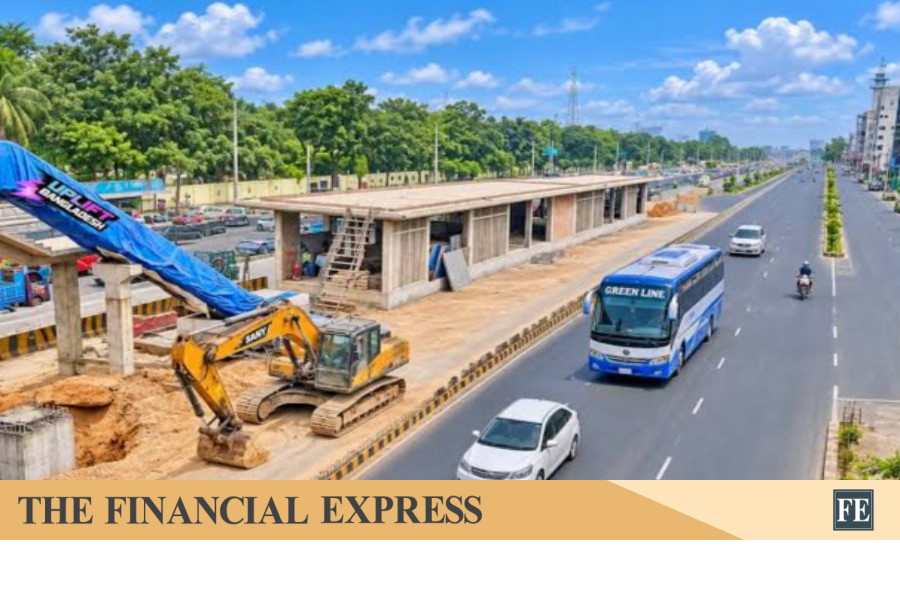
The government has decided to scrap the country’s first bus rapid transit project on the Gazipur–airport corridor, demolishing all its infrastructure except two overpasses and converting the corridor into a general highway.

It has also decided to dissolve Dhaka Bus Rapid Transit PLC – a state-owned company responsible for implementing and managing the BRT project – and bring its responsibilities under the Road Transport and Highways Division of the Ministry of Road Transport and Bridges.

The cabinet took the decisions at its meeting on Sunday, but they were not disclosed at the subsequent press briefing.

The cabinet also directed the authorities concerned to take necessary action in this regard on an urgent basis. They are to send a progress report on the implementation to the Road Transport and Highways Division within 15 days and by the third of every month thereafter until the work is completed.

The Road Transport and Highways Division issued an official letter, signed by division Deputy Secretary Taslima Ahmed Poly, on Monday outlining the future course of action for the project. A copy of the letter was obtained by New Age.

Both Taslima Ahmed Poly and the Dhaka BRT PLC Managing Director Muhammad Nurul Amin Khan confirmed the decisions to New Age on Monday night.

Launched 14 years ago, the Tk 4,268.32 crore project had completed 97 per cent of its infrastructure work, spending Tk 2,810 crore, by its December 2024 deadline. Overall physical progress stood at 77.48 per cent. The deadline has not been extended since.

The dedicated BRT lanes on the busy Dhaka-Mymensingh Highway are now open to all vehicles. The BRT service itself, the main feature of the corridor, has yet to be launched after two failed attempts to procure buses.

Four options proposed by experts had recently been under consideration: completing the BRT, franchising routes, turning the corridor into an expressway, or demolishing the BRT infrastructure and converting it into a highway, which would effectively mean scrapping the project.

According to the letter, the division’s summary proposal on the future of the project was reviewed at the cabinet meeting.

It said that, following an overall review, it was appropriate to convert the corridor into a general highway with three lanes in each direction by removing the BRT stations, lane dividers and other structures. It added that the two two-lane overpasses could be widened to four lanes.

The letter also said the project would have to be closed after the existing legal complications were resolved through discussions with the development partners concerned.

‘In addition, it is appropriate to close Dhaka BRT PLC and bring the related activities under the purview of the Road Transport and Highways Division,’ it said.

The cabinet also decided that the division would take further action in line with its discussions.​
 

BRT project scrapped to avoid additional Tk 6,000cr cost: govt

Shahin Akhter . Dhaka

1792630895950.webp

Habibur Rashid. | BSS file photo.

State Minister for Road Transport and Highways Division Habibur Rashid said the government had decided to scrap the country’s first bus rapid transit project on the Gazipur-Airport corridor, as completing it would require an additional Tk 6,000 crore.

He told New Age that the government was not removing the entire project.

‘What is actually being done is stepping back from the dedicated BRT bus lane concept because multiple operational issues and risks were identified at this location,’ he said, adding that the corridor would be converted into a six-lane highway with a central divider.

Chief engineer of Roads and Highways Department under the road transport and bridges ministry Md Moniruzzaman said it was unfortunate that public money was spent because of faulty initial planning.

‘But we are removing them to lay new pavement and central dividers so traffic can flow smoothly without bottlenecks,’ he added.

Launched 14 years ago, the Tk 4,268.32 crore project had completed 97 per cent of its infrastructure work, with Tk 2,810 crore spent.

The cabinet decided at its meeting on Sunday to scrap the project, demolish some major parts of its infrastructure and turn the corridor into a general highway.

It also decided to dissolve Dhaka Bus Rapid Transit PLC, the state-owned company responsible for implementing and managing the project, and bring its responsibilities under the RHD.

The cabinet, however, did not disclose the decisions at the subsequent press briefing.

The RTHD issued an official letter on Monday outlining the RHD’s course of action.

Habibur Rashid said the project’s eight flyovers, two overpasses, drainage systems and footbridges would remain in use, while the central counters and bus stops in the middle of the road would be removed.

‘The government is simply moving away from operating dedicated lanes because it is unwilling to invest thousands of crores of taka anew,’ he.

He said removing the bus stops and installing central dividers would cost at most Tk 80 crore to Tk 85 crore, while completing the original project would require thousands of crores of taka in new investment.

RHD Chief Engineer Md Moniruzzaman, however, put the cost of demolition at an estimated Tk 25 crore to Tk 30 crore and new pavement works at Tk 20 crore to Tk 25 crore.

He said the scrap materials could be sold for around Tk 7 crore, and all work would be done through tendering where cost would vary.

Moniruzzaman said building the 20 bus stations under the project, which remained incomplete, had cost around Tk 80 crore to Tk 100 crore.

Professional and civil society organisations on Tuesday protested the decision to scrap the project, urging the government to reverse it and complete the project.​
 

Lesson from Dhaka-Gazipur BRT fiasco


1792797130071.webp


The decision to abandon the Dhaka Airport-Gazipur Bus Rapid Transit (BRT) project, 14 years after it was undertaken, is an example of how public money can be wasted through flawed development planning. The cabinet at its meeting on October 18, with Prime Minister Tarique Rahman in the chair, reportedly decided to convert the 20-kilometre corridor into an ordinary six-lane highway. The decision followed a technical review by experts from Bangladesh University of Engineering and Technology (BUET), who identified critical faults in the BRT's design and questioned its operational viability. Notably, the project originally approved in 2012 at an estimated cost of Tk20.38 billion, saw its cost more than doubled to Tk42.86 billion following repeated revisions. And, after spending over Tk28 billion, those in charge could complete 97 per cent of the civil works without a single BRT bus beginning operation. One wonders what purpose such massive spending has served other than making life miserable for the thousands of daily commuters.

The project's fate, however, cannot be explained away merely as an engineering blunder. As reports go, inadequate feasibility studies, faulty design, poor coordination among implementing agencies and questionable procurement decisions continued to plague the work from the beginning. Worse yet, construction proceeded without even ensuring the minimum safety of people travelling along this important national highway. In one horrific accident at Uttara, a girder falling from a crane crushed a car, killing five people. But those behind such tragedies were never made accountable. The project's repeated delays and cost escalations under the previous Sheikh Hasina-led Awami League regime speak volumes about the culture of impunity and corruption of that period. The extent of plundering project resources by implementing officials, contractors and their political patrons during that period would require an independent investigation rather than being left to speculation.

Against this backdrop, the BUET team's recommendation to stop spending more money on a defective BRT system makes economic sense. For demolishing all the structures and building a new highway would require yet more billions of taka from an already hard-pressed exchequer. In that case, retaining the usable parts of the existing infrastructure, removing BRT stations and lane dividers and upgrading the two-lane overpasses to four lanes may be the more pragmatic option. Accordingly, Dhaka Bus Rapid Transit PLC is to be closed and the corridor handed to the Roads and Highways Division. However, one cannot claim that the decision has satisfied every concerned quarter. Some professional and academic bodies, however, have protested against scrapping the BRT project arguing that it could still be made operational with a relatively modest additional investment. Their concern is that opening dedicated lanes to ordinary traffic might eventually worsen congestion and pollution.

The disagreement, seemingly, is not just about saving a failed project or building a wider road. It rather concerns the future of public transport for the industrial city of Gazipur and the many low- and fixed-income commuters who cannot afford private cars. So, before proceeding with the conversion, the government might well make public the BUET review and a comparative assessment of the alternatives. In a similar vein, the question of developing a commuter rail service between Gazipur and central Dhaka deserves serious consideration. However, no technical solution can compensate for absence of accountability in handling public resources. The departments responsible for approving, designing and executing the BRT owe the nation an explanation why such serious flaws were allowed to dog the project for more than a decade. Any corruption, including political patronage, should invite legal action and recovery of misappropriated funds. The government must ensure that the new highway does not become another monument to the country's notoriously wasteful project implementation culture.​
 

Cancellation of BRT project needs scrutiny

The government must weigh all options and ensure accountability


1792800788641.webp

VISUAL: STAR

After 14 years of construction and spending Tk 2,810 crore, the government has decided to scrap the country’s first Bus Rapid Transit (BRT) project. It has planned to convert the Gazipur-Airport corridor into a conventional six-lane road instead, which appears to offer a way out of this prolonged failure. While an expert team of Bangladesh University of Engineering and Technology (Buet) suggested abandoning the BRT project, many believe that dismantling infrastructure that is largely complete could bring further costs and disruption. Before proceeding, the government must carefully assess whether cancellation is truly in the public interest.

Approved in November 2012, the 20.5 km project was initially scheduled for completion by December 2016 at a cost of Tk 2,038 crore. Repeated delays and three revisions increased the estimated cost to Tk 4,268 crore, while a proposed fourth revision would have raised it to Tk 6,598 crore and extended the deadline to 2029. The proposal was rejected by the Executive Committee of the National Economic Council in July 2025, which instead ordered an investigation into the project’s design and feasibility study. By December 2024, around 97 percent of the infrastructure work had been completed, although overall physical progress stood at 77.48 percent. But the dedicated buses were never procured despite two attempts, and the service never began.

In meantime, commuters suffered for more than a decade as construction along the busy Dhaka-Mymensingh Highway aggravated traffic congestion and disrupted journeys between Dhaka, Gazipur and other parts of the country. At least six people have died in accidents at the construction site during this time, while structures intended to facilitate the BRT service have remained incomplete or unusable. The project meant to improve mobility instead caused years of hardship without delivering its promised benefits.

The Buet team has identified design flaws, inadequate technical assessments, poor coordination among implementing agencies, and a lack of accountability. It recommended abandoning the BRT service and adapting the existing infrastructure for general traffic. Experts have also suggested commuter rail services between Gazipur and Dhaka. However, the Bangladesh Institute of Planners (BIP), the Institute for Planning and Development (IPD) and Gazipur residents oppose the cancellation. BIP argues that congestion, pedestrian safety and bus operations could be addressed through better traffic management and appropriate infrastructure, while demolition, road reconstruction and traffic management could add substantially to public expenditure and prolong commuters’ suffering. It has cited an estimate of Tk 45 crore for demolition, cautioning that the final cost could be considerably higher. Gazipur residents have also argued that the service could be launched within three to four months with additional investment, including the procurement of 187 buses. These concerns and arguments deserve serious consideration.

Under the circumstances, the government should conduct a transparent, independent cost-benefit assessment comparing the available options: completing the BRT system, modifying it to address operational and safety concerns, or converting the corridor into a conventional highway. Any decision must be consistent with long-term transport planning and prioritise affordable, reliable mass transit for the public. At the same time, the government must hold those responsible for the failure of such an important and expensive project accountable.​
 

Contracts for four MRT Line-1, Line-5 packages signed


1793143409948.webp


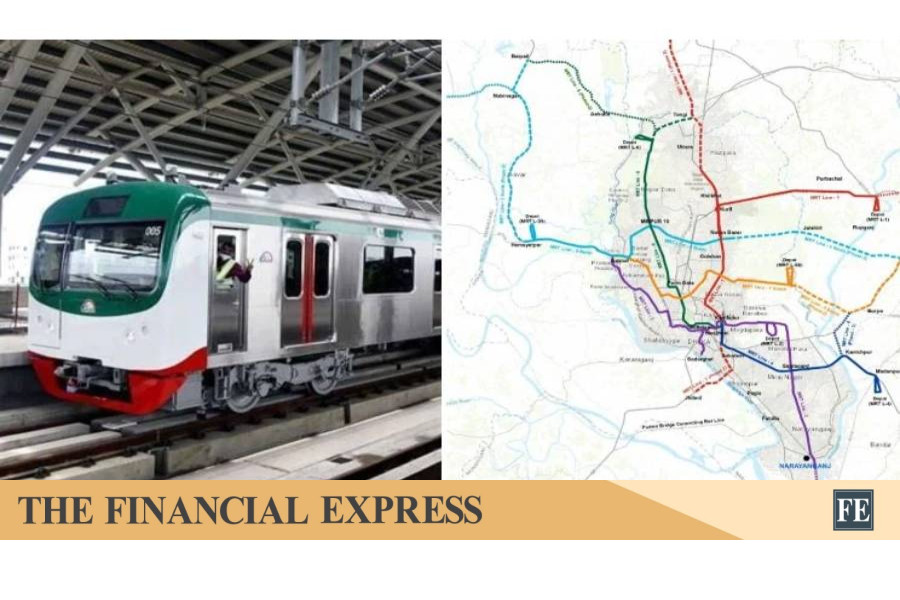
Construction contracts for four packages under the MRT Line-1 and MRT Line-5 (Northern Route) projects were signed on Tuesday to accelerate the expansion of Dhaka's metro rail network.

The Dhaka Mass Transit Company Limited (DMTCL) signed the agreements with the selected contractors at a ceremony held in the conference room of the MRT Line-6 depot in Diabari, Uttara.

The projects are being implemented with joint financing from the Government of Bangladesh and the Japan International Cooperation Agency (JICA).

Secretary of the Road Transport and Highways Division Dr Mohammad Ziaul Haque attended the ceremony as the chief guest.

Speaking on the occasion, Dr Ziaul Haque said easing traffic congestion and reducing travel time in the capital were among the government's major priorities.

He said the expansion of the metro rail network was aimed at developing a modern, safe and environment-friendly public transport system.

One of the contracts covers depot civil and building works under MRT Line-1, involving the construction of 49 modern facilities, including a workshop, shed and Operations Management Centre. The contract was awarded to SINOHYDRO-SEBCL JV.

Another agreement, signed with CREC-MIL-MBEC JV, covers the construction of a 5.007-kilometre viaduct and three elevated stations at Joar Sahara, Boalia and Mastul under Package 7. The work also includes a transition point between the underground and elevated sections near the Balu River.

The third contract, awarded to CPC-HANIL JV, covers civil and building works at the MRT Line-5 (Northern Route) depot. The facilities will include administrative buildings housing the Operations Control Centre (OCC) and Depot Control Centre (DCC), a stabling yard, warehouse and workshop shed.

The fourth agreement, signed with CREC-MIL-MBEC JV, involves the construction of 6.50 kilometres of elevated railway along the Hemayetpur-Amin Bazar and Notun Bazar-Bhatara sections. The package also includes five elevated stations at Hemayetpur, Baliarpur, Bilamalia, Amin Bazar and Bhatara.

The implementation of the four packages is expected to advance the development of Dhaka's mass transit infrastructure and improve public transport connectivity in the capital.

DMTCL Managing Director Md Shauogatul Alam delivered the welcome address, while Planning Commission Member Kabir Ahmed attended the ceremony as a special guest.

Representatives of the Japanese Embassy, JICA, project officials, consultants and contracting companies were also present at the event.​
 
Back
Top