☕ Support Us
[🇧🇩] - Civilian/Military Nuclear Program in Bangladesh | Page 12 | PKDefense

[🇧🇩] Civilian/Military Nuclear Program in Bangladesh

Reply (Scroll)
Press space to scroll through posts
G Bangladesh Defense
[🇧🇩] Civilian/Military Nuclear Program in Bangladesh
83
4K
More threads by Saif


Ruppur-Gopalganj 400kV line fully operational

FE ONLINE DESK
Published :
Jun 02, 2025 22:37
Updated :
Jun 02, 2025 22:37

1748905667269.webp


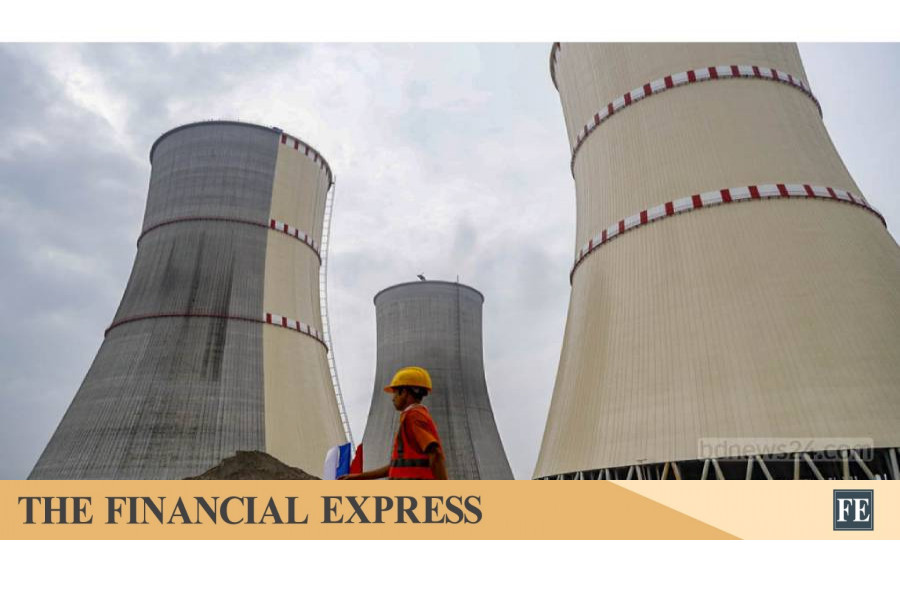
The 400kV transmission line from Ruppur to Gopalganj has been successfully launched, marking a major milestone in integrating electricity from the Ruppur Nuclear Power Plant into Bangladesh's national grid.

The 158-kilometre-long line, with 414 towers, was fully operational from 3:30 PM today. This line is the third and final major transmission route, each capable of handling 2,000 megawatts.

Earlier, the Ruppur-Baghabari 230kV line and Ruppur-Bogura 400kV line were activated in June 2022 and April 2024, respectively.

PGCB Executive Engineer Enayet Karim confirmed that the project was completed on 29 May, successfully achieving the goal of nuclear power transmission into the national grid.​
 
Cite Fact Check Highlight Respond

Russian funding of nuclear power plant
Moscow mum on extending $11.38b utilisation timeline


FHM Humayan Kabir
Published :
Jun 19, 2025 00:29
Updated :
Jun 19, 2025 00:29

1750288226628.webp


Russia has yet to extend the timeline for its $11.38-billion loan utilisation for Bangladesh although the credit tenure already expired in December last, officials said Wednesday about a looming uncertainty surrounding the funding.

About a year back, Dhaka had requested the Russian lender to extend the loan-utilisation deadline by two more years as works for building the Rooppur nuclear power plant have yet to see the finishing line, they said.

The Economic Relations Division (ERD) had written to the Russian lender for time extension for the loan being utilised to construct the $12.65-billion-cost Roopur nuclear power plant in Pabna.

"We have already requested Russia for extending the deadline by at least two more years up to December 2026. We are hopeful of getting extension formally within a shorter possible time," said ERD Secretary Shahriar Kader Siddiki.

"Since we have completed all discussions with the development partner, we are expecting the loan extension shortly," he told the FE.

Bangladesh signed $11.38-billion-loan agreement with Russia in July 2016 for setting up the maiden nuclear power plant in the country to meet perennial electricity shortages.

Another $500 million worth of loan deal with Russia was signed in November 2013 for the feasibility study of the plant.

The 2400-megawatt nuclear power plant is being built with collaboration of the Russian state-owned atomic company Rosatom.

Some 90 per cent of the project is financed through the Russian loan, repayable within 30 years with a 10-year grace period up to June 2026.

Another ERD official says: "We've good negotiations with Russia regarding the loan-period extension. So, we are hopeful of getting the extension within his month for at least two years."

Asked about the unexplained delay, he said: "There were some reasons behind the delay. We had to go for negotiation with Russia over some extra charges, proposed by Moscow for Dhaka's loan-utilisation delays. Dhaka declined to pay that extra charges. Finally, the lender agreed to scrap their extra charges."

He added: "Since all the settlements have been done in the negotiation meeting, we are expecting the loan-utilisation deadline extended for at least two more years up to December 2026."

According to the draft protocol sent by Russia, the loan tenure, originally set from 2017 to Dec 2024, will be extended by two years as Bangladesh could not complete the project on time.

During a meeting with Chief Adviser of the current interim government Prof Muhammad Yunus on February 26 this year, Rosatom Director-General Alexey Likhachev agreed to amend the Intergovernmental Credit Agreement.

The 10-year grace period would expire in June 2027 and then the Bangladesh government will have to pay back the principal and also pay the interest.

During this grace period between FY2017 and FY2027, Bangladesh needs to pay the interest on the loan only.

Meanwhile, the government has also requested the repayment of the principal and interest to be started from March 2029.

The first installment of the principal amount of the country's largest-ever foreign loan is slated for payment on 15 March 2027. But the government now seeks this cut-off time to be extended up to March 15, 2029.

According to the $11.38-billion-loan deal, Bangladesh will have to repay the loan at LIBOR-plus 1.0 to 3.0 per cent rate. But the interest rate will not exceed 4.0 per cent.

Besides, a commitment fee of 0.5 per cent on the unutilised loan amount, capped at $0.25 million annually, with payments required in the first quarter of the subsequent year.

Officials from both the ERD and the Ministry of Science and Technology have said some factors, including the Covid-19 pandemic, prevailing global conditions, international sanctions impacting the transportation of equipment and goods for Russian organisations, and the sluggish pace of the power-transmission lines' construction, have led to the delays in completing the project.​
 
Cite Fact Check Highlight Respond

Rooppur Nuclear Power Plant: Further delay in supply
First unit may begin supplying power next year as contractor given two year extension.

MohiuddinDhaka
Published: 04 Jul 2025, 19: 44

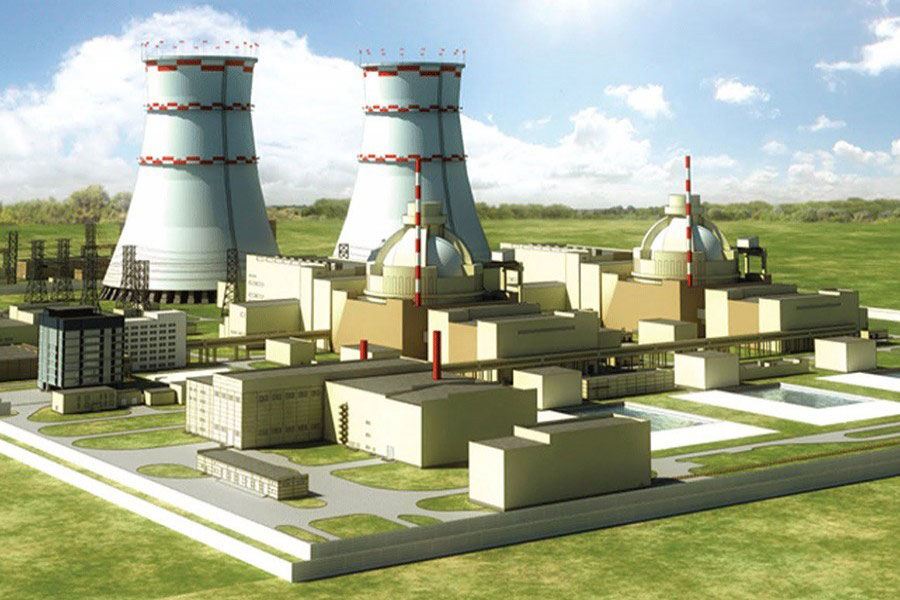
1751676272566.webp

Rooppur Nuclear Power PlantFile Photo

The wait for the Rooppur Nuclear Power Plant (RNPP) to begin supply gets extended even further. Although the transmission lines have been completed, the Rooppur Nuclear Power Plant will not be connected to the national grid just yet. The Russian contractor has been given an extension of two years as the work did not finish according to the plan.

Officials concerned say that the deadline had to be extended as the work could not be completed within the initially agreed period. A decision to extend the deadline was made in February last year.

Under the original agreement, the deadline for the first unit was set for October 2023, and for the second unit it was set for October 2024.

Under the new agreement, the deadline for the completion of the construction of the first unit has been set for December 2026 and deadline for the second one is set for December 2027. The Bangladesh Atomic Energy Commission signed the revised contract with the Russian contractor on 20 June.

Officials involved in the project say that the delay was caused by several factors, including the Covid-19 pandemic, the ongoing Russia-Ukraine war, foreign experts’ travel complications, and delays in equipment delivery.

The Bangladesh government is required to pay 10 per cent of the money allocated for project expense annually, but that too could not be paid regularly due to a crisis of foreign currency.

The Rooppur Nuclear Power Plant is the largest single infrastructure project in the country’s history. It is being implemented by the Bangladesh Atomic Energy Commission under the authority of the Ministry of Science and Technology.

Built with Russian financial and technical assistance, this power plant being constructed at Ishwardi upazila of Pabna is consisted of two units, each with a power generation capacity of 1,200 megawatts.

The estimated project cost is around Tk 1.14 trillion (Tk 114,000 crore). Atomstroyexport, a subsidiary of Russia’s state-owned nuclear agency Rosatom is the main contractor on this project.

There has been no recent delay. The project is now progressing as usual. The delays occurred in the past due to the pandemic and the war. So, the contractor has had an extension. Hopefully, power generation will begin in phases from next year-----Md Kabir Hossain, project director.

There’s a joint coordination committee formed by Russia and Bangladesh to determine policy decisions in the project. During a meeting of that committee held in Dhaka last year, a decision was made to extend the project deadline by two years. However, it took time to finalise the agreement.

According to sources at the Bangladesh Atomic Energy Commission, the Ministry of Science and Technology initially approved a one-and-a-half-year extension. But the contractor did not agree to this. Later, the ministry extended it by six more months, setting the new deadline for June 2027.

The contractor, however, stated, from a technical standpoint it is not possible in any way to complete the project by June next year.

Although the contract allows for an extension of time, the contractor is not permitted to increase the overall project cost. People involved in the project say that the plant is not yet generating any revenue as it did not go into production in time. As a result, the government is forced to bear the operational expenses, which will eventually increase the overall cost of electricity production.

A source involved in the project mentioned that the pace of work at Rooppur slowed down a bit following the political shift in the country last August. They have to wait until December to load nuclear fuel into the reactor vessel. The trial production will begin only after that.

Project director Md Kabir Hossain told Prothom Alo, “There has been no recent delay. The project is now progressing as usual. The delays occurred in the past due to the pandemic and the war. So, the contractor has had an extension. Hopefully, power generation will begin in phases from next year.”

The initial plan was to begin production from the first unit of the nuclear power plant in December 2023. Later it was pushed back to December 2024. The work of the transmission line not being complete was presented as the excuse for that.

However, the state-owned Power Grid Bangladesh opened the transmission line for connecting the RNPP to the national grid on this 2 June. After that, it was announced that trial production would begin within two to three months. Lastly, it was stated that power generation could start in October this year.

A source involved in the project mentioned that the pace of work at Rooppur slowed down a bit following the political shift in the country last August. They have to wait until December to load nuclear fuel into the reactor vessel. The trial production will begin only after that.

According to experts, once the nuclear fuel is loaded into the reactor vessel, the trial production will continue for at least six months. All the tests have to be conducted and international approvals have to be collected in phases during this time. So, there is not much possibility of starting commercial production before June next year.

Professor Shafiqul Islam of the Department of Nuclear Engineering at the University of Dhaka told Prothom Alo that mentioning the grid issues was merely an excuse. An alternative grid setup for trial production had already been prepared. In reality, the Rooppur power plant was not ready.

Stating that if the plant had gone into production on time, pressure on fuel imports for oil-based power plants would have been reduced, he further said that with the delay in the project, the cost of maintaining manpower is going up.

If it takes more than 10 years to implement this project, the cost of electricity generation will rise significantly, Shafiqul Islam added.​
 
Cite Fact Check Highlight Respond

Rooppur NPP nears grid connection with transformer commissioning

FE REPORT
Published :
Jun 29, 2025 10:19
Updated :
Jun 29, 2025 10:19

1751759697558.webp


Bangladesh's journey toward nuclear energy took a major step forward as the main and auxiliary transformers at the first power unit of the Rooppur Nuclear Power Plant (NPP) were successfully commissioned.

This milestone signals the plant's readiness for integration with the national power grid, bringing the country closer to realising its first-ever nuclear power generation, according to a statement released Saturday by Russia's state-run Rosatom.

The announcement underscores the significance of the development.

The main step-up transformers will convert the 24-kilovolt (kV) electricity generated by the turbine into 400 kV, enabling long-distance transmission through the national grid and supporting a reliable supply system.

Each transformer is engineered to handle up to 1,599 MW, well beyond the plant's 1,200 MW output, offering not just operational stability but also built-in redundancy.

With over 150 kilometres of cabling and components weighing around 400 tonnes per phase, the commissioning highlights a highly technical and coordinated feat achieved under challenging logistical and climatic conditions.

In addition to the main transformers, auxiliary transformers-which are responsible for powering all internal systems of the power unit-have also been commissioned.

These auxiliary units are designed to operate in two modes: receiving electricity either from the external grid or directly from the generator once the power unit is fully operational.

Until now, internal systems relied on standby transformers. The commissioning of the main supply circuit marks a critical shift toward sustained operation.

"This achievement reflects the well-coordinated efforts of all involved teams," said Alexey Deriy, Vice President for Projects in Bangladesh at Atomstroyexport, the engineering subsidiary of Rosatom.

"Despite logistical and climatic challenges, the team delivered excellent results. This is a vital step toward the safe and reliable commissioning of the power unit," he added.

In the coming days, a series of hot functional tests will be carried out at the Rooppur NPP.

These include validation of various safety systems and operational protocols-such as the controlled discharge of steam into the atmosphere, which may produce temporary noise but is entirely safe for nearby residents, according to Rosatom.

Rosatom reaffirmed its unwavering commitment to international safety standards, noting that all construction and commissioning activities are being conducted in compliance with global best practices and regulatory guidelines.

The Rooppur Nuclear Power Plant is Bangladesh's first nuclear energy project and is being implemented with financial and technical assistance from the Russian Federation.

The plant features two Generation III+ VVER-1200 reactors, each with a capacity of 1,200 MW, contributing to a total planned output of 2,400 MW. The Engineering Division of Rosatom is serving as the general contractor for the project.​
 
Cite Fact Check Highlight Respond

RNPP likely to produce power from October
Moscow to revise loan agreement, Washington expected to allow transaction with Russian cos
Shakhawat Hossain 20 July, 2025, 00:44

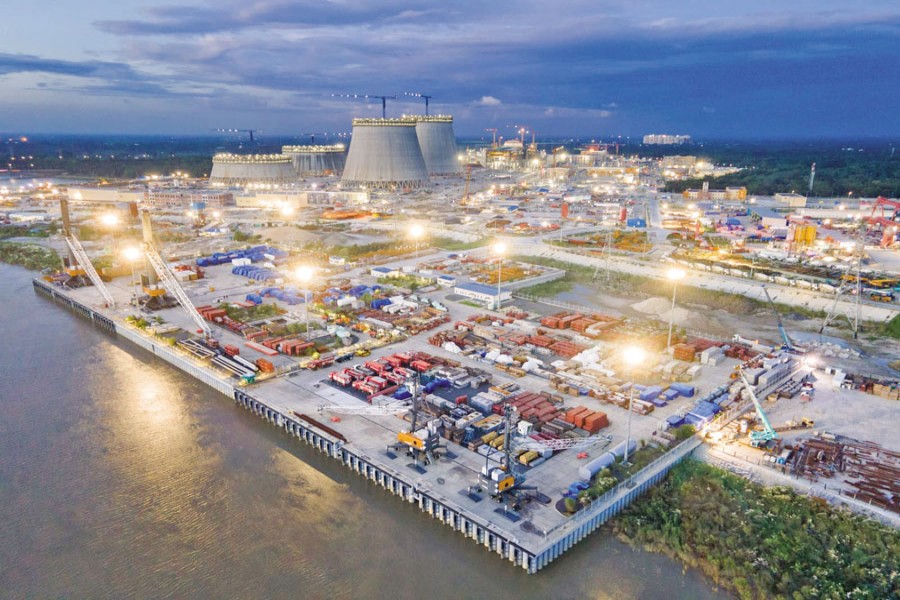
1752973928253.webp

Rooppur Nuclear Power Plant. | File photo

Bangladesh is expected to join over 50 countries using nuclear power peacefully as one of the two under-construction reactors of the Rooppur Nuclear Power Plant in Iswardi will go on production in October.

Officials of the Ministry of Science and Technology have told New Age that around 52 days will take the reactor to deliver potential 1,200 megawatts of electricity to the national grid.New age services

The nuclear power production will start in the power-starved country relying on power plants in neighbouring India, including the controversial Adani power company in Jharkhand, for meeting around 16 per cent its 14,000MW daily consumption in the current summer.

Besides, the power production from the country’s single biggest project under the Russian credit worth around $11.38 billion, almost two years later from the orginal deadline of2024, is expected to check the growing imports of liquefied natural gas that began in 2019 for power production, said energy experts.

Conceived before the country’s independence from Pakistan in 1971 Liberation War, the construction of the country’s first nuclear power plant at Iswardi, some 150 kilometres west of Dhaka, was started during the Awami League regime that was ousted in the past year amid a mass uprising.

The regime change had dealt a new blow to the power plant since most of the engineers and experts from Russia left the country, said finance adviser Salehuddin Ahmed, also in charge of the Ministry of Science and Technology.

MST officials said that problems had been plaguing the complicated and highly technical power plant since its construction began in 2017.

From the pillow scam to the Covid pandemic that has not only delayed the progress of the power plant but sanctions on Russian companies by the United Nation in 2022 also complicated the repayment of loan to Moscow by Dhaka.

The Russian experts have returned to Iswardi while a revision of the overall loan pact with Russia has been completed, said finance adviser Salehuddin Ahmed.

Dhaka has convinced Moscow to extend the loan disbursement period for the nuclear power plant until 2027 from the previous 2024 and also to defer the principal repayment by 18 months from March 2027.

Under the new arrangement, repayments will now commence in September 2028.

So far, $7.7 billion has been disbursed by Russia.

The deadlock in repayment of the loan is expected to be settled soon, said the finance adviser.

A recent appeal by Dhaka to the Federal Reserve, state bank of the US, to allow transection with Russian companies on the ground of peaceful use of nuclear power is under active consideration of the US, said the finance adviser.

Close to $1 billion has been kept in a Bangladesh Bank escrow account to repay loans and interest for the Russia-funded Rooppur Nuclear Power Plant following sanctions were imposed on Russia by the US and its allies after the invasion of Ukraine.

The commission of the first reactor will be done under the supervision of International Atomic Energy Agency, the global promoter of safe, secure, and peaceful use of nuclear technology

An IAEA team will arrive in Bangladesh on a fortnight visit in the next month, MST secretary Mokabbir Hossain said on Saturday.

The MST secretary said that they were expecting to settle the power purchase agreement between the Nuclear Power Plant Company Bangladesh Limited and the Bangladesh Power Development Board by an inter-ministerial committee before fuel loading into the reactor.

MST officials said that they were expecting to have a power generation cost of average Tk 6 to Tk 7 per unit by its overall capacity of 2,400MW by the two same-capacity reactors.

The second reactor will be commissioned in 2027, said the officials.

Energy adviser M Shamsul Alam of the Consumers Association of Bangladesh said that they had calculated that the production cost of Rooppur Nuclear power might hit Tk 12 per unit.

He said that the augmentation of nuclear power would not only increase the electricity generation but also the overcapacity that would eventually push up the capacity charge.

Former World Bank Dhaka office chief economist Zahid Hussain noted that the power subsidy due to the overcapacity had eaten almost one-third of the overall subsidy bill under the national budget in recent years.

Capacity payment for idle power plants had drawn huge criticisms for the ousted AL regime while the high production cost of the under-construction nuclear power plant and its loan deal with Russia have been the much-talked about issues at home and abroad.

The cost of per kilowatt power production in Rooppur Nuclear Power Plant will be 9.36 cents compared to 5.34 cents from a similar plant in Tamil Nadu’s Kudankulam, India. The high construction cost has been attributed to high production cost by a research released by Springer-Verlag GmbH, Germany in 2022.

On December 23, 2024, the France-based Agence France-Presse reported that the Anti-Corruption Commission launched a probe into the alleged $5 billion embezzlement connected to the nuclear power plant by ousted leader Sheikh Hasina who fled to India on August 5 amid the mass uprising.​
 
Cite Fact Check Highlight Respond

Rooppur Unit 1 completes key stage of functional tests

FE Online Report
Published :
Aug 06, 2025 23:33
Updated :
Aug 06, 2025 23:33

1754525671009.webp


One of the key stages of the cold and hot functional tests has been completed during a set of commissioning activities, such as the blowdown of the fresh steam pipelines in the turbine compartment at Unit 1 of the Rooppur NPP, said a company statement on Wednesday.

The results have proven that the unit's steam pipelines are available for supplying steam to the turbine.

Such tests are mandatory before conducting further operations and are required to ensure the reliable and safe operation of the turbine equipment during NPP operation.

The blowdown was carried out using fresh steam at a pressure of 2.0 MPa and a temperature of 200 °C. These parameters were selected to take into account the design requirements and to ensure the reliable cleaning of the pipelines from possible residual moisture, process contaminants, and mechanical particles.

The tests were conducted with steam discharged into the atmosphere and accompanied by noise, which was anticipated and deemed safe for the public.

This will be followed by a repeated blowdown of the steam pipelines with an increased volume of fresh steam, which will allow for the final cleaning of the main lines and the specification of the equipment operating parameters under a near-operational load.

“With the completion of this stage of commissioning works, the Rooppur NPP takes another step towards the pivotal event, such as the launching of power unit No. 1 and its subsequent connection to the power grid. The Rooppur NPP, built according to the latest Russian VVER-1200 design, is expected to supply Bangladesh with clean energy for decades to come. Unit 1 will meet up to 10 per cent of the present energy demand of the country,” said Alexey Deiry, Atomstroyexport Vice-President for Projects in Bangladesh.​
 
Cite Fact Check Highlight Respond

Economic and security risks of the Rooppur project are increasing
Dr Md Shafiqul Islam

1763343621963.webp


Dr Md Shafiqul Islam is a senior professor in the Department of Nuclear Engineering at the University of Dhaka. He has worked as a visiting professor in the Department of Nuclear Science and Technology at the Massachusetts Institute of Technology (MIT), USA. He has been engaged in education and research on nuclear technology for nearly 30 years. He has received advanced training on nuclear safety in the United States, Japan, Austria, Italy, Russia, and China. He spoke to Prothom Alo about the economic and security risks of the Rooppur Nuclear Power Project, geopolitical challenges, project weaknesses, shortcomings, and other issues. Kazi Alim-uz-Zaman and Monoj Dey took the interview.

Prothom Alo: The Rooppur Nuclear Power Plant is the most expensive project in Bangladesh’s history. Although it was supposed to go into production in December 2022, it has been pushed back several times. Now there is hope of starting experimental electricity generation from the first unit this December. Recently, some equipment brought for Rooppur was burned in a fire at the cargo village of the airport. Considering everything, is it realistic to remain hopeful about the project starting this December?

Md Shafiqul Islam: The government is saying that experimental electricity generation will begin from the first unit of the Rooppur Nuclear Power Plant in December. But in reality, this is not the start of electricity generation—it is only the process of loading fuel into the reactor. This is just an important step in generating electricity. After that, a long period of testing will begin—such as checking the reactor’s criticality, system integration, and safety verification. Without completing these tests, electricity cannot be supplied from the reactor. Usually, it takes at least a year after fuel loading to begin stable electricity production.
Considering the current state and level of preparation, completing all installations, tests, and commissioning and supplying electricity to the national grid from Rooppur’s first unit at full capacity may take more than another year.

Recently, a fire at the cargo village of Shahjalal International Airport damaged some equipment brought for Rooppur, leading the Russian contractor to declare force majeure. This clearly indicates that if alternative supplies are not arranged quickly, the project’s progress will be affected.

Considering all aspects, the idea of “launching in December” should not be viewed as a political or promotional promise but rather as a statement grounded in the technical realities of the project’s current progress.

Prothom Alo: When the project was undertaken in 2013, the geopolitical context was very different. Competition and conflict among global and regional powers like the United States, Russia, China, and India are more intense now than ever. In this context, how much security risk do you think Bangladesh faces with a strategic installation like a nuclear power plant?

Md Shafiqul Islam: If the project is operated in compliance with international safety guidelines and all safety protocols are strictly implemented, then even if geopolitical tensions rise, the direct security risks do not necessarily increase significantly. However, caution is essential. Regional instability, third-party threats, internal or cyberattacks—all these risks must be considered.

Due to Western sanctions on Russia, certain sophisticated and tried-and-tested equipment cannot be procured directly. I have learned that alternative sourcing is under way. If the performance and reliability of such equipment are not adequate, that too could create safety risks.

Prothom Alo: Due to the Ukraine war, the West has imposed various sanctions on Russia. After Donald Trump returned to power in the United States for a second term, new sanctions have been imposed on Russia. Bringing in parts and equipment and conducting financial transactions with Russia have become challenging. In this context, what does the future look like for the second unit?

Md Shafiqul Islam: The challenge applies equally to both units, not just the second one. The impact of the Russia-Ukraine war on the Rooppur project began on the very day the war started on 24 February 2022. Some essential equipment used in the project’s safety systems—such as certain pumps and motors—were manufactured directly in Ukraine. Once the war began, these could no longer be procured. Additionally, some components were being manufactured in European countries, particularly Germany. Even though these items were ready for dispatch, they could not be shipped to Rooppur due to sanctions by the US and the EU. As a result, critical supplies are being obstructed, and finding alternative sources is taking considerable time. There is another reality: during the construction of the first unit, many parts were damaged and had to be replaced by removing parts from the second unit. From a project management standpoint, this practice is highly inappropriate and is delaying the progress of the second unit. Moreover, since the war began, sanctions on Russia have severely affected technology transfer, banking, and international financial flows. Because of this, procuring equipment and technical services for Rooppur has become much more complicated than before. Unless an effective supply chain is arranged immediately for the second unit, we may have to wait a long time to bring it online.

Prothom Alo: Extending the project timeline means increasing costs. The delays have also caused major financial losses. In that case, the narrative of producing cheap electricity also becomes weaker…!

Md Shafiqul Islam: This is partially true. According to the project agreement, the construction cost of the Rooppur plant is USD 12.65 billion. But due to the devaluation of the taka against the dollar and other realities, the projected cost of electricity per unit from Rooppur has increased by nearly 50 per cent compared to the feasibility study. The project has already been delayed by about three years. Due to this delay, additional loan repayments are required, the lifespan of installed equipment is being reduced, and extra salaries and allowances for staff must be paid. If the project had started on time, our reliance on fossil fuel imports would also have decreased. Overall, Rooppur’s economic risks are increasing day by day. However, opportunities still exist. With proper and healthy management, the project can still be made profitable in the long term.

Prothom Alo: For such a large strategic project, we are almost entirely dependent on Russian parts and technology. After the plant starts operating, if any part or technical support is urgently needed, will it be available on time? This is a major concern. What should be done?

Md Shafiqul Islam: This is indeed a real challenge. Many critical components and technical services for the Rooppur project come from Russia. After the plant becomes operational, if any part or technical support is urgently needed, there is uncertainty about timely availability—especially because of geopolitical competition and the difficulty in procuring certain equipment through alternative channels. We need special planning for this: ensuring alternative sources, maintaining adequate stock, enhancing local capabilities, and implementing risk management within the supply chain. Direct agreements with designers and manufacturers are also a useful option. Additionally, a technical support agency should be established in the country. This agency would work in coordination with Russian institutions and relevant international bodies, adhering to their rules, regulations, and standards.

Prothom Alo: After the Fukushima disaster, the public holds deep concerns about nuclear safety. Some believe that if a nuclear accident can occur in a country like Japan, how safe can Bangladesh be? You have worked on nuclear safety in the US, Russia, China, and Japan. How risky is Rooppur? What would happen if a major earthquake struck?

Md Shafiqul Islam: Bangladesh’s situation cannot be compared to Japan’s. Rooppur’s reactor uses third-plus-generation technology, while Fukushima used second-generation reactors. Rooppur is built with multiple layers of modern safety barriers. It has been designed to withstand earthquakes, floods, and even terrorist attacks. If a major earthquake occurs, the reactor will automatically shut down, prevent radiation release, and activate emergency response systems. From a technological and structural standpoint, Rooppur is highly safe.

However, public concerns must be addressed through educational outreach, transparent information, and regular safety reviews. With proper management, construction quality, testing, training, and long-term planning, risks can be reduced to near zero.

Prothom Alo: The technology may be advanced, but what about the people responsible for operating such a sensitive installation? How skilled, competent, and dependable are they? In many cases, lack of skill creates more risk. What do you think?

Md Shafiqul Islam: Nuclear safety depends heavily on the skills and experience of operators and maintenance staff. Long-term training and international-standard competency assessments must be ensured for Rooppur’s operators and maintenance crews. Unskilled operation and maintenance can create major risks, so technology and training must go hand in hand. Everyone must adhere to a strong safety culture.

Prothom Alo: We have seen discontent and even protests regarding recruitment at the Rooppur plant. There are allegations that during the previous government, political favoritism was prioritised over skill and merit. What kind of challenges and risks does this pose?

Md Shafiqul Islam: If there are flaws in management and recruitment, dissatisfaction will naturally arise. If hiring is influenced by politics, nepotism, corruption, or a “yes sir” culture instead of merit, it will be impossible to operate a nuclear power plant smoothly. Unless this is addressed with utmost seriousness right now, the plant may become a major liability instead of a national asset.

Prothom Alo: If such problems persist in management and operations, what risks might arise?

Md Shafiqul Islam: If the Bangladesh Atomic Energy Regulatory Authority has internal weaknesses, it could create serious safety risks. Russian contractors might take advantage of this and compromise on technical standards. This could affect safety, radiation control, and emergency responses at Rooppur. We see that the regulatory board has still not developed the necessary rules, regulations, or standards for operating a nuclear plant. They do not have their own experienced technical team. For all inspection-related tasks, they rely on Russia’s regulatory body. We must understand that a country’s nuclear safety culture is fundamentally built on its regulatory framework. This appears to be missing in Rooppur. The government should not keep this institution under the Ministry of Science and Technology but rather place it under the Prime Minister’s Office. This would free it from conflicts of interest and enable it to work independently.

Prothom Alo: What steps do you think are necessary to overcome the weaknesses and deficiencies of the Rooppur project?

Md Shafiqul Islam: The first step to solving any problem is to acknowledge that the problem exists. Firstly: Move beyond the “sensitive project” excuse and form an independent expert technical panel to assess progress and weaknesses, then prepare urgent recommendations and a realistic action plan. Secondly: Build a competent, experienced, and effective project management team. Thirdly: In coordination with Russia, ensure the rapid completion and supply of sensitive equipment that is still unfinished. Fourthly: Strengthen the regulatory authority’s capacity. Also ensure transparent hiring, regular audits, proper management, continuous training and competency checks, and adherence to safety culture.

Prothom Alo: Thank you.

Md Shafiqul Islam: Thank you as well.​
 
Cite Fact Check Highlight Respond

Members Online

Latest Posts

Latest Posts