Home Watch Videos Wars Movies Login

[🇧🇩] Civilian/Military Nuclear Program in Bangladesh

Latest Posts Countries Wars Q&A

[🇧🇩] Civilian/Military Nuclear Program in Bangladesh
86
4K
More threads by Saif

G Bangladesh Defense

Rooppur NPP nears grid connection with transformer commissioning

FE REPORT
Published :
Jun 29, 2025 10:19
Updated :
Jun 29, 2025 10:19

1751759697558.webp


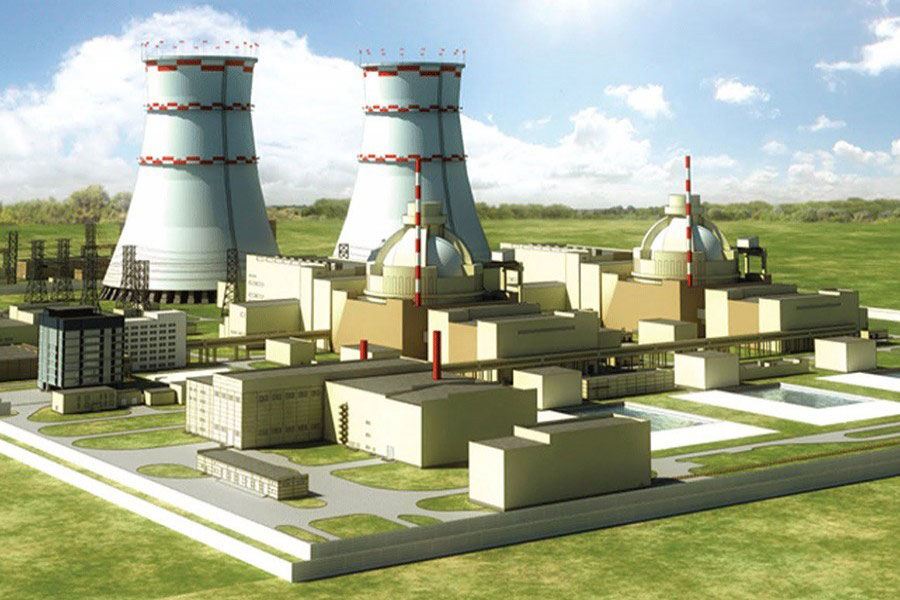
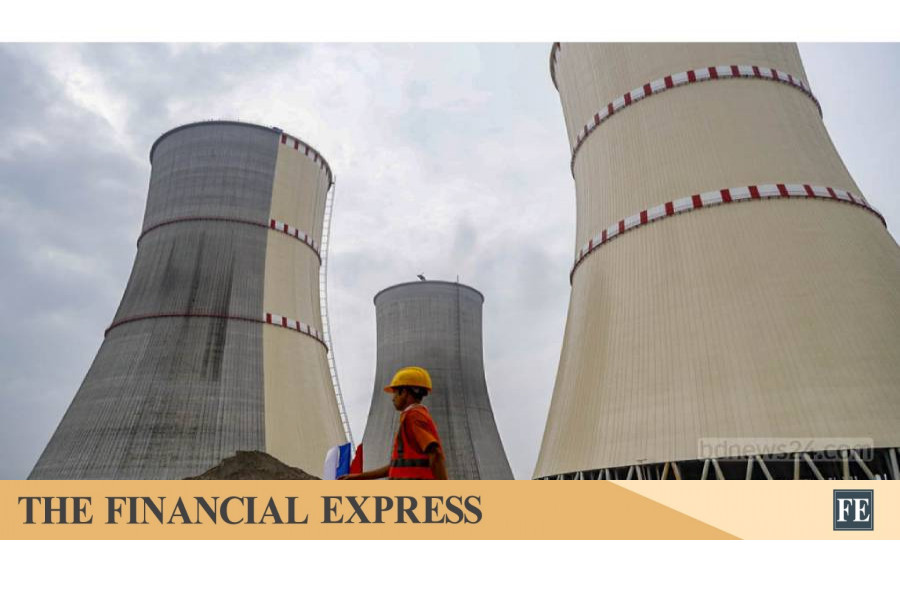
Bangladesh's journey toward nuclear energy took a major step forward as the main and auxiliary transformers at the first power unit of the Rooppur Nuclear Power Plant (NPP) were successfully commissioned.

This milestone signals the plant's readiness for integration with the national power grid, bringing the country closer to realising its first-ever nuclear power generation, according to a statement released Saturday by Russia's state-run Rosatom.

The announcement underscores the significance of the development.

The main step-up transformers will convert the 24-kilovolt (kV) electricity generated by the turbine into 400 kV, enabling long-distance transmission through the national grid and supporting a reliable supply system.

Each transformer is engineered to handle up to 1,599 MW, well beyond the plant's 1,200 MW output, offering not just operational stability but also built-in redundancy.

With over 150 kilometres of cabling and components weighing around 400 tonnes per phase, the commissioning highlights a highly technical and coordinated feat achieved under challenging logistical and climatic conditions.

In addition to the main transformers, auxiliary transformers-which are responsible for powering all internal systems of the power unit-have also been commissioned.

These auxiliary units are designed to operate in two modes: receiving electricity either from the external grid or directly from the generator once the power unit is fully operational.

Until now, internal systems relied on standby transformers. The commissioning of the main supply circuit marks a critical shift toward sustained operation.

"This achievement reflects the well-coordinated efforts of all involved teams," said Alexey Deriy, Vice President for Projects in Bangladesh at Atomstroyexport, the engineering subsidiary of Rosatom.

"Despite logistical and climatic challenges, the team delivered excellent results. This is a vital step toward the safe and reliable commissioning of the power unit," he added.

In the coming days, a series of hot functional tests will be carried out at the Rooppur NPP.

These include validation of various safety systems and operational protocols-such as the controlled discharge of steam into the atmosphere, which may produce temporary noise but is entirely safe for nearby residents, according to Rosatom.

Rosatom reaffirmed its unwavering commitment to international safety standards, noting that all construction and commissioning activities are being conducted in compliance with global best practices and regulatory guidelines.

The Rooppur Nuclear Power Plant is Bangladesh's first nuclear energy project and is being implemented with financial and technical assistance from the Russian Federation.

The plant features two Generation III+ VVER-1200 reactors, each with a capacity of 1,200 MW, contributing to a total planned output of 2,400 MW. The Engineering Division of Rosatom is serving as the general contractor for the project.​
 
Analyze

Analyze Post

Add your ideas here:
Highlight Cite Respond
  • Love (+3)
Reactions: Bilal9

RNPP likely to produce power from October
Moscow to revise loan agreement, Washington expected to allow transaction with Russian cos
Shakhawat Hossain 20 July, 2025, 00:44

1752973928253.webp

Rooppur Nuclear Power Plant. | File photo

Bangladesh is expected to join over 50 countries using nuclear power peacefully as one of the two under-construction reactors of the Rooppur Nuclear Power Plant in Iswardi will go on production in October.

Officials of the Ministry of Science and Technology have told New Age that around 52 days will take the reactor to deliver potential 1,200 megawatts of electricity to the national grid.New age services

The nuclear power production will start in the power-starved country relying on power plants in neighbouring India, including the controversial Adani power company in Jharkhand, for meeting around 16 per cent its 14,000MW daily consumption in the current summer.

Besides, the power production from the country’s single biggest project under the Russian credit worth around $11.38 billion, almost two years later from the orginal deadline of2024, is expected to check the growing imports of liquefied natural gas that began in 2019 for power production, said energy experts.

Conceived before the country’s independence from Pakistan in 1971 Liberation War, the construction of the country’s first nuclear power plant at Iswardi, some 150 kilometres west of Dhaka, was started during the Awami League regime that was ousted in the past year amid a mass uprising.

The regime change had dealt a new blow to the power plant since most of the engineers and experts from Russia left the country, said finance adviser Salehuddin Ahmed, also in charge of the Ministry of Science and Technology.

MST officials said that problems had been plaguing the complicated and highly technical power plant since its construction began in 2017.

From the pillow scam to the Covid pandemic that has not only delayed the progress of the power plant but sanctions on Russian companies by the United Nation in 2022 also complicated the repayment of loan to Moscow by Dhaka.

The Russian experts have returned to Iswardi while a revision of the overall loan pact with Russia has been completed, said finance adviser Salehuddin Ahmed.

Dhaka has convinced Moscow to extend the loan disbursement period for the nuclear power plant until 2027 from the previous 2024 and also to defer the principal repayment by 18 months from March 2027.

Under the new arrangement, repayments will now commence in September 2028.

So far, $7.7 billion has been disbursed by Russia.

The deadlock in repayment of the loan is expected to be settled soon, said the finance adviser.

A recent appeal by Dhaka to the Federal Reserve, state bank of the US, to allow transection with Russian companies on the ground of peaceful use of nuclear power is under active consideration of the US, said the finance adviser.

Close to $1 billion has been kept in a Bangladesh Bank escrow account to repay loans and interest for the Russia-funded Rooppur Nuclear Power Plant following sanctions were imposed on Russia by the US and its allies after the invasion of Ukraine.

The commission of the first reactor will be done under the supervision of International Atomic Energy Agency, the global promoter of safe, secure, and peaceful use of nuclear technology

An IAEA team will arrive in Bangladesh on a fortnight visit in the next month, MST secretary Mokabbir Hossain said on Saturday.

The MST secretary said that they were expecting to settle the power purchase agreement between the Nuclear Power Plant Company Bangladesh Limited and the Bangladesh Power Development Board by an inter-ministerial committee before fuel loading into the reactor.

MST officials said that they were expecting to have a power generation cost of average Tk 6 to Tk 7 per unit by its overall capacity of 2,400MW by the two same-capacity reactors.

The second reactor will be commissioned in 2027, said the officials.

Energy adviser M Shamsul Alam of the Consumers Association of Bangladesh said that they had calculated that the production cost of Rooppur Nuclear power might hit Tk 12 per unit.

He said that the augmentation of nuclear power would not only increase the electricity generation but also the overcapacity that would eventually push up the capacity charge.

Former World Bank Dhaka office chief economist Zahid Hussain noted that the power subsidy due to the overcapacity had eaten almost one-third of the overall subsidy bill under the national budget in recent years.

Capacity payment for idle power plants had drawn huge criticisms for the ousted AL regime while the high production cost of the under-construction nuclear power plant and its loan deal with Russia have been the much-talked about issues at home and abroad.

The cost of per kilowatt power production in Rooppur Nuclear Power Plant will be 9.36 cents compared to 5.34 cents from a similar plant in Tamil Nadu’s Kudankulam, India. The high construction cost has been attributed to high production cost by a research released by Springer-Verlag GmbH, Germany in 2022.

On December 23, 2024, the France-based Agence France-Presse reported that the Anti-Corruption Commission launched a probe into the alleged $5 billion embezzlement connected to the nuclear power plant by ousted leader Sheikh Hasina who fled to India on August 5 amid the mass uprising.​
 
Analyze

Analyze Post

Add your ideas here:
Highlight Cite Respond

Rooppur Unit 1 completes key stage of functional tests

FE Online Report
Published :
Aug 06, 2025 23:33
Updated :
Aug 06, 2025 23:33

1754525671009.webp


One of the key stages of the cold and hot functional tests has been completed during a set of commissioning activities, such as the blowdown of the fresh steam pipelines in the turbine compartment at Unit 1 of the Rooppur NPP, said a company statement on Wednesday.

The results have proven that the unit's steam pipelines are available for supplying steam to the turbine.

Such tests are mandatory before conducting further operations and are required to ensure the reliable and safe operation of the turbine equipment during NPP operation.

The blowdown was carried out using fresh steam at a pressure of 2.0 MPa and a temperature of 200 °C. These parameters were selected to take into account the design requirements and to ensure the reliable cleaning of the pipelines from possible residual moisture, process contaminants, and mechanical particles.

The tests were conducted with steam discharged into the atmosphere and accompanied by noise, which was anticipated and deemed safe for the public.

This will be followed by a repeated blowdown of the steam pipelines with an increased volume of fresh steam, which will allow for the final cleaning of the main lines and the specification of the equipment operating parameters under a near-operational load.

“With the completion of this stage of commissioning works, the Rooppur NPP takes another step towards the pivotal event, such as the launching of power unit No. 1 and its subsequent connection to the power grid. The Rooppur NPP, built according to the latest Russian VVER-1200 design, is expected to supply Bangladesh with clean energy for decades to come. Unit 1 will meet up to 10 per cent of the present energy demand of the country,” said Alexey Deiry, Atomstroyexport Vice-President for Projects in Bangladesh.​
 
Analyze

Analyze Post

Add your ideas here:
Highlight Cite Respond
  • Love (+3)
Reactions: Bilal9

Economic and security risks of the Rooppur project are increasing
Dr Md Shafiqul Islam

1763343621963.webp


Dr Md Shafiqul Islam is a senior professor in the Department of Nuclear Engineering at the University of Dhaka. He has worked as a visiting professor in the Department of Nuclear Science and Technology at the Massachusetts Institute of Technology (MIT), USA. He has been engaged in education and research on nuclear technology for nearly 30 years. He has received advanced training on nuclear safety in the United States, Japan, Austria, Italy, Russia, and China. He spoke to Prothom Alo about the economic and security risks of the Rooppur Nuclear Power Project, geopolitical challenges, project weaknesses, shortcomings, and other issues. Kazi Alim-uz-Zaman and Monoj Dey took the interview.

Prothom Alo: The Rooppur Nuclear Power Plant is the most expensive project in Bangladesh’s history. Although it was supposed to go into production in December 2022, it has been pushed back several times. Now there is hope of starting experimental electricity generation from the first unit this December. Recently, some equipment brought for Rooppur was burned in a fire at the cargo village of the airport. Considering everything, is it realistic to remain hopeful about the project starting this December?

Md Shafiqul Islam: The government is saying that experimental electricity generation will begin from the first unit of the Rooppur Nuclear Power Plant in December. But in reality, this is not the start of electricity generation—it is only the process of loading fuel into the reactor. This is just an important step in generating electricity. After that, a long period of testing will begin—such as checking the reactor’s criticality, system integration, and safety verification. Without completing these tests, electricity cannot be supplied from the reactor. Usually, it takes at least a year after fuel loading to begin stable electricity production.
Considering the current state and level of preparation, completing all installations, tests, and commissioning and supplying electricity to the national grid from Rooppur’s first unit at full capacity may take more than another year.

Recently, a fire at the cargo village of Shahjalal International Airport damaged some equipment brought for Rooppur, leading the Russian contractor to declare force majeure. This clearly indicates that if alternative supplies are not arranged quickly, the project’s progress will be affected.

Considering all aspects, the idea of “launching in December” should not be viewed as a political or promotional promise but rather as a statement grounded in the technical realities of the project’s current progress.

Prothom Alo: When the project was undertaken in 2013, the geopolitical context was very different. Competition and conflict among global and regional powers like the United States, Russia, China, and India are more intense now than ever. In this context, how much security risk do you think Bangladesh faces with a strategic installation like a nuclear power plant?

Md Shafiqul Islam: If the project is operated in compliance with international safety guidelines and all safety protocols are strictly implemented, then even if geopolitical tensions rise, the direct security risks do not necessarily increase significantly. However, caution is essential. Regional instability, third-party threats, internal or cyberattacks—all these risks must be considered.

Due to Western sanctions on Russia, certain sophisticated and tried-and-tested equipment cannot be procured directly. I have learned that alternative sourcing is under way. If the performance and reliability of such equipment are not adequate, that too could create safety risks.

Prothom Alo: Due to the Ukraine war, the West has imposed various sanctions on Russia. After Donald Trump returned to power in the United States for a second term, new sanctions have been imposed on Russia. Bringing in parts and equipment and conducting financial transactions with Russia have become challenging. In this context, what does the future look like for the second unit?

Md Shafiqul Islam: The challenge applies equally to both units, not just the second one. The impact of the Russia-Ukraine war on the Rooppur project began on the very day the war started on 24 February 2022. Some essential equipment used in the project’s safety systems—such as certain pumps and motors—were manufactured directly in Ukraine. Once the war began, these could no longer be procured. Additionally, some components were being manufactured in European countries, particularly Germany. Even though these items were ready for dispatch, they could not be shipped to Rooppur due to sanctions by the US and the EU. As a result, critical supplies are being obstructed, and finding alternative sources is taking considerable time. There is another reality: during the construction of the first unit, many parts were damaged and had to be replaced by removing parts from the second unit. From a project management standpoint, this practice is highly inappropriate and is delaying the progress of the second unit. Moreover, since the war began, sanctions on Russia have severely affected technology transfer, banking, and international financial flows. Because of this, procuring equipment and technical services for Rooppur has become much more complicated than before. Unless an effective supply chain is arranged immediately for the second unit, we may have to wait a long time to bring it online.

Prothom Alo: Extending the project timeline means increasing costs. The delays have also caused major financial losses. In that case, the narrative of producing cheap electricity also becomes weaker…!

Md Shafiqul Islam: This is partially true. According to the project agreement, the construction cost of the Rooppur plant is USD 12.65 billion. But due to the devaluation of the taka against the dollar and other realities, the projected cost of electricity per unit from Rooppur has increased by nearly 50 per cent compared to the feasibility study. The project has already been delayed by about three years. Due to this delay, additional loan repayments are required, the lifespan of installed equipment is being reduced, and extra salaries and allowances for staff must be paid. If the project had started on time, our reliance on fossil fuel imports would also have decreased. Overall, Rooppur’s economic risks are increasing day by day. However, opportunities still exist. With proper and healthy management, the project can still be made profitable in the long term.

Prothom Alo: For such a large strategic project, we are almost entirely dependent on Russian parts and technology. After the plant starts operating, if any part or technical support is urgently needed, will it be available on time? This is a major concern. What should be done?

Md Shafiqul Islam: This is indeed a real challenge. Many critical components and technical services for the Rooppur project come from Russia. After the plant becomes operational, if any part or technical support is urgently needed, there is uncertainty about timely availability—especially because of geopolitical competition and the difficulty in procuring certain equipment through alternative channels. We need special planning for this: ensuring alternative sources, maintaining adequate stock, enhancing local capabilities, and implementing risk management within the supply chain. Direct agreements with designers and manufacturers are also a useful option. Additionally, a technical support agency should be established in the country. This agency would work in coordination with Russian institutions and relevant international bodies, adhering to their rules, regulations, and standards.

Prothom Alo: After the Fukushima disaster, the public holds deep concerns about nuclear safety. Some believe that if a nuclear accident can occur in a country like Japan, how safe can Bangladesh be? You have worked on nuclear safety in the US, Russia, China, and Japan. How risky is Rooppur? What would happen if a major earthquake struck?

Md Shafiqul Islam: Bangladesh’s situation cannot be compared to Japan’s. Rooppur’s reactor uses third-plus-generation technology, while Fukushima used second-generation reactors. Rooppur is built with multiple layers of modern safety barriers. It has been designed to withstand earthquakes, floods, and even terrorist attacks. If a major earthquake occurs, the reactor will automatically shut down, prevent radiation release, and activate emergency response systems. From a technological and structural standpoint, Rooppur is highly safe.

However, public concerns must be addressed through educational outreach, transparent information, and regular safety reviews. With proper management, construction quality, testing, training, and long-term planning, risks can be reduced to near zero.

Prothom Alo: The technology may be advanced, but what about the people responsible for operating such a sensitive installation? How skilled, competent, and dependable are they? In many cases, lack of skill creates more risk. What do you think?

Md Shafiqul Islam: Nuclear safety depends heavily on the skills and experience of operators and maintenance staff. Long-term training and international-standard competency assessments must be ensured for Rooppur’s operators and maintenance crews. Unskilled operation and maintenance can create major risks, so technology and training must go hand in hand. Everyone must adhere to a strong safety culture.

Prothom Alo: We have seen discontent and even protests regarding recruitment at the Rooppur plant. There are allegations that during the previous government, political favoritism was prioritised over skill and merit. What kind of challenges and risks does this pose?

Md Shafiqul Islam: If there are flaws in management and recruitment, dissatisfaction will naturally arise. If hiring is influenced by politics, nepotism, corruption, or a “yes sir” culture instead of merit, it will be impossible to operate a nuclear power plant smoothly. Unless this is addressed with utmost seriousness right now, the plant may become a major liability instead of a national asset.

Prothom Alo: If such problems persist in management and operations, what risks might arise?

Md Shafiqul Islam: If the Bangladesh Atomic Energy Regulatory Authority has internal weaknesses, it could create serious safety risks. Russian contractors might take advantage of this and compromise on technical standards. This could affect safety, radiation control, and emergency responses at Rooppur. We see that the regulatory board has still not developed the necessary rules, regulations, or standards for operating a nuclear plant. They do not have their own experienced technical team. For all inspection-related tasks, they rely on Russia’s regulatory body. We must understand that a country’s nuclear safety culture is fundamentally built on its regulatory framework. This appears to be missing in Rooppur. The government should not keep this institution under the Ministry of Science and Technology but rather place it under the Prime Minister’s Office. This would free it from conflicts of interest and enable it to work independently.

Prothom Alo: What steps do you think are necessary to overcome the weaknesses and deficiencies of the Rooppur project?

Md Shafiqul Islam: The first step to solving any problem is to acknowledge that the problem exists. Firstly: Move beyond the “sensitive project” excuse and form an independent expert technical panel to assess progress and weaknesses, then prepare urgent recommendations and a realistic action plan. Secondly: Build a competent, experienced, and effective project management team. Thirdly: In coordination with Russia, ensure the rapid completion and supply of sensitive equipment that is still unfinished. Fourthly: Strengthen the regulatory authority’s capacity. Also ensure transparent hiring, regular audits, proper management, continuous training and competency checks, and adherence to safety culture.

Prothom Alo: Thank you.

Md Shafiqul Islam: Thank you as well.​
 
Analyze

Analyze Post

Add your ideas here:
Highlight Cite Respond
  • Like (+1)
Reactions: Bilal9

Rooppur nuclear plant aims to complete fuel loading by February-end

bdnews24.com
Published :
Jan 18, 2026 22:04
Updated :
Jan 18, 2026 22:04

1768782364214.webp


The first unit of Rooppur Nuclear Power Plant in Pabna’s Ishwardi is targeting completion of fuel loading by the end of February.

Project officers told Salehuddin Ahmed, science and technology and finance advisor, of the timeline, according to a media statement from the Chief Advisor’s Office.

Salehuddin visited the Rooppur site recently, inspecting overall progress and consulting with project officials, engineers, and workers.

He said the nuclear power plant will play a “transformative role” in the national electricity sector as the country’s first nuclear facility.

Officials said the project, adhering to all international regulations, is now in its final stages of construction.

Engineers from Russia’s state-owned nuclear firm Rosatom report that fuel loading for Unit-1 is feasible by February-end.

Project representatives anticipate that Unit-1 could initially supply about 350MW to the national grid by the end of March, gradually scaling up to nearly 1,150MW from its 1,200MW capacity.

The project is expected to strengthen energy security, meet growing electricity demand, and contribute significantly to Bangladesh’s sustainable development goals.

The $12.65 billion project is being constructed with Russian collaboration.

Bangladesh finances 10 percent, with Russia providing the remaining 90 percent as a loan.

Two units, each producing 1,200 MW, will generate a total of 2,400 MW. The plant’s operational life is 60 years, extendable by 20 more years.

The foundation was laid in October 2013 by former prime minister Sheikh Hasina.

In November 2017, she inaugurated the concrete pouring for the first unit’s reactor and cooling dome.

Production, initially scheduled for early 2021, was delayed due to the pandemic and later complicated by the Ukraine war and other logistical challenges.​
 
Analyze

Analyze Post

Add your ideas here:
Highlight Cite Respond
  • Like (+1)
Reactions: Bilal9

RNPP cost hiked by Tk 25,592cr

Padma Barrage project under scrutiny, says planning adviser


Staff Correspondent 26 January, 2026, 00:13

1769392951595.webp


The executive committee of the National Economic Council at a meeting on Sunday approved 25 projects, including an increase of cost of the Rooppur Nuclear Power Plant by Tk 25,592 crore and the deadline by two years to 2028.

The ECNEC meeting presided over by interim government chief adviser Professor Muhammad Yunus gave the approval.

The proposed Padma Barrage project to be built at Pangsha in Rajbari to counter the Farakka Barrage impacts by reducing salinity and recovering rivers did not come up at the meeting.

In 1975, India commissioned the controversial Farakka Barrage on the transboundary river Padma in West Bengal, disrupting the flow of water.

Planning adviser Wahiduddin Mahmud told reporters after the meeting that the project was still under scrutiny.

The project proposal was scheduled to be placed before Sunday’s ECNEC meeting from outside the agenda.

The proposed project at Tk 50,443.64 crore, with the first part at Tk 34,608 crore with its own fund, has already been cleared by the project steering committee.

‘There is no hurry to start such a big-budget project,’ said Wahiduddin.

Noting that the proposed project was a good project for the people of that region, the planning adviser said that cost benefit assessment should be reviewed for the funding.

Besides, an authority should be established to start barrage project, he added.

Answering to a question, the planning adviser said that a project on cross boundary river had always economic and geopolitical implications.

Regarding the cost hikes of the country’s first nuclear power plant by the financial and technical assistance from Russia at Ishwardi in Pabna, the planning adviser blamed the devaluation of the local currency taka against the US dollar for the hikes.

The exchange rate between the local currency and the US dollar increased from Tk 80 in the initial period of the project to Tk 120 now.

In terms of dollars, the project cost remained the same, said the planning adviser.

In 2015, Bangladesh signed a $11.38 billion deal to build two reactors with capacity of generating 2,400 megawatts of power.Bangladesh travel guides

The fund involving the approved 25 projects is Tk 45,191.27 crore. Of the fund, Tk 10,881.40 crore will come from the government, Tk 32,018.09 crore from foreign sources and Tk 2,291.78 crore from the implementing agencies’ own resources.

Among the approved projects, 14 are new, six are revised and five involve the extension of project duration.

One of the revised projects is a Bangladesh Railway single-line dual-gauge railway track from Dohazari via Ramu to Cox›s Bazar and from Ramu to Gundum near the Myanmar border.

The youth and sports ministry received approval for the revised project aimed at generating employment through freelancing training for educated job-seeking youths in all 64 districts.

The Health and Nutrition Services Improvement and System Strengthening Project involving Tk 8,735.41 crore under the Health Services Division was approved at the meeting along with the widening and upgrading the Rangamati (Manikchhari)-Mahalchhari-Khagrachhari regional highway (R-162) and the upgrading three regional highways and one district road under the Munshiganj Road Division.​
 
Analyze

Analyze Post

Add your ideas here:
Highlight Cite Respond

How a single project can reshape a region

Neshat Sultana Akhi
Published :
Feb 08, 2026 13:03
Updated :
Feb 08, 2026 13:03

1770597562653.webp


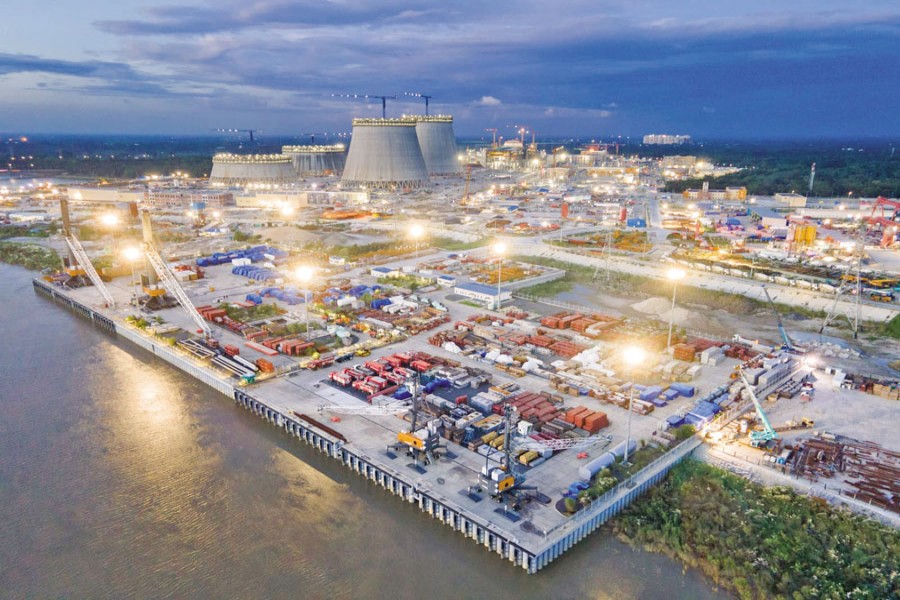
As a development analyst, I have spent much of my career studying how large infrastructure projects alter regional economies. Too often, such projects promise transformation but leave behind only partial gains. Rooppur, however, tells a different story. What is unfolding in this quiet corner of Pabna district suggests that the Rooppur Nuclear Power Plant (RNPP) may become one of the most consequential regional development interventions in Bangladesh's recent history.

When I first visited the Rooppur area years ago, the landscape reflected a familiar rural pattern. Agriculture dominated livelihoods. Young people spoke of Dhaka or overseas work as their primary routes to advancement. Local markets were active but modest, and public infrastructure showed the constraints of limited long-term investment. Rooppur was not struggling, but it was clearly operating within narrow economic boundaries.

Today, the atmosphere feels different. There is movement, expectation, and a growing sense that the region's future is no longer confined to subsistence agriculture or outward migration. Much of this change can be traced back to the nuclear power plant rising on the banks of the Padma.

Development begins with economic anchors

From a development perspective, regions rarely transform without a stable economic anchor. The Rooppur Nuclear Power Plant provides precisely that. Unlike short-term construction projects, nuclear facilities are designed to operate for 60 years or more. This long lifecycle fundamentally changes how development unfolds around them.

During construction, thousands of workers were employed, many drawn from nearby communities. This alone injected significant income into the local economy. But what matters more is the structure of that employment. Nuclear projects require a wide range of skills, from highly specialised engineering roles to logistics, maintenance, and support services. As a result, income gains were distributed across multiple layers of the local workforce.

The effects quickly spilled beyond the plant site. Transport operators found steady demand. Small restaurants expanded. Rental housing multiplied. In Ishwardi and surrounding areas, markets grew more active, and household spending patterns began to change. Economists often refer to this as the local multiplier effect. In Rooppur, it is visible in everyday life.

Infrastructure as a public good

One of the less discussed but most enduring contributions of RNPP is infrastructure development. Nuclear facilities operate under stringent safety and logistical requirements. Roads must be reliable. Utilities must be resilient. Communication systems must be robust. To meet these standards, the surrounding region has seen significant upgrades.

These improvements are not exclusive to the power plant. Better roads reduce transport costs for farmers and traders. Strengthened utility services improve reliability for households and small businesses. Improved connectivity shortens distances between Rooppur and regional commercial centers.

From a policy standpoint, this matters enormously. Infrastructure created for a strategic project becomes a shared public good. Over time, it lowers barriers to entry for new economic activities, making the region more attractive to private investment and service expansion.

Human capital: The quiet transformation

If infrastructure is the visible legacy of the Rooppur Nuclear Power Plant, human capital may prove to be its most valuable contribution. Nuclear energy is unforgiving of error. It demands discipline, precision, and a culture of safety. These requirements have driven extensive training and capacity-building initiatives for Bangladeshi professionals.

Engineers, technicians, and operators associated with RNPP have undergone rigorous preparation, including advanced training abroad. This exposure to global standards and cutting-edge technology represents a qualitative shift in Bangladesh's technical workforce.

For young people in Rooppur and Pabna, this has changed the horizon of possibility. Careers in engineering, plant operations, safety management, and technical services now appear accessible without abandoning the region. Educational institutions are beginning to respond, aligning programs with technical and vocational skills relevant to large-scale industrial operations.

International experience supports the importance of this shift. In Russia, towns hosting nuclear power plants evolved into centers of technical expertise over time. Places like Novovoronezh did not merely generate electricity. They generated skilled communities, research capacity, and industrial confidence. These regions consistently outperformed comparable areas in income, education, and service quality.

Long-term engagement matters

Another lesson from international nuclear programs is the importance of long-term institutional engagement. In projects implemented by Russia, Rosatom remains involved throughout the plant's lifecycle. This includes ongoing technical support, periodic safety upgrades, workforce development, and cooperation with local institutions.

This approach recognises a simple truth. Development does not end when construction finishes. It unfolds over decades. By maintaining long-term involvement, project partners help ensure that host regions continue to benefit economically and socially while maintaining high operational standards.

The Rooppur project reflects this lifecycle-based philosophy. Continuous training, knowledge transfer, and safety culture are not add-ons. They are central to how the plant is designed to operate. From a development standpoint, this significantly improves the likelihood that early gains will be sustained rather than dissipated.

Social change and regional confidence

Economic development reshapes societies in subtle ways. In Rooppur, improved employment prospects have begun to influence migration patterns. Some skilled workers who might have left are choosing to stay. Others are returning, drawn by stable jobs and improved living conditions.

Access to better healthcare facilities, safer housing, and modern services contributes to tangible improvements in quality of life. Equally important is the growth of regional confidence. Hosting a nationally significant, technologically advanced facility alters how a region sees itself. Rooppur is no longer peripheral to the national story. It is part of the country's strategic future.

This psychological dimension of development is often underestimated, but it matters. Regions that feel included in national progress tend to invest more in education, skills, and community wellbeing. Over time, this reinforces positive development cycles.

Energy security and regional opportunity

While my focus here is regional development, it is impossible to ignore the broader context. Reliable electricity underpins modern economies. By strengthening Bangladesh's energy base, the Rooppur Nuclear Power Plant enhances the country's overall development prospects.

For the host region, this creates opportunity. Areas linked to strategic energy infrastructure often attract ancillary industries, service providers, and research initiatives. With the right planning, Rooppur can evolve into more than a power-generating site. It can become a node in a wider energy-linked economic corridor.

Looking ahead

From a development analyst's perspective, the Rooppur Nuclear Power Plant represents a rare convergence of long-term planning, infrastructure investment, and human capital development. Its impact cannot be measured solely in electricity output. It must be assessed through changes in livelihoods, skills, services, and regional confidence.

Nuclear power plants are built to serve generations. Their true value emerges slowly, through sustained employment, continuous learning, and stable institutions. International experience shows that when managed responsibly, they can lift entire regions onto new development trajectories.

Rooppur appears to be at the beginning of such a journey. If current trends continue, the region's future will be shaped not by its historical limitations but by its role in powering Bangladesh's sustainable development. Seen through this lens, the Rooppur Nuclear Power Plant is not merely an energy project. It is a long-term blessing for the region and a case study in how infrastructure, when done right, can transform lives.

Neshat Sultana Akhi is a trainer of UCEP Bangladesh​
 
Analyze

Analyze Post

Add your ideas here:
Highlight Cite Respond
  • Love (+3)
Reactions: Bilal9

Members Online

No members online now.

Latest Posts

Back
 
G
O
 
H
O
M
E