[🇧🇩] Cottage Industry/SME in Bangladesh

[🇧🇩] Cottage Industry/SME in Bangladesh
58
4K
More threads by Saif

G Bangladesh Defense

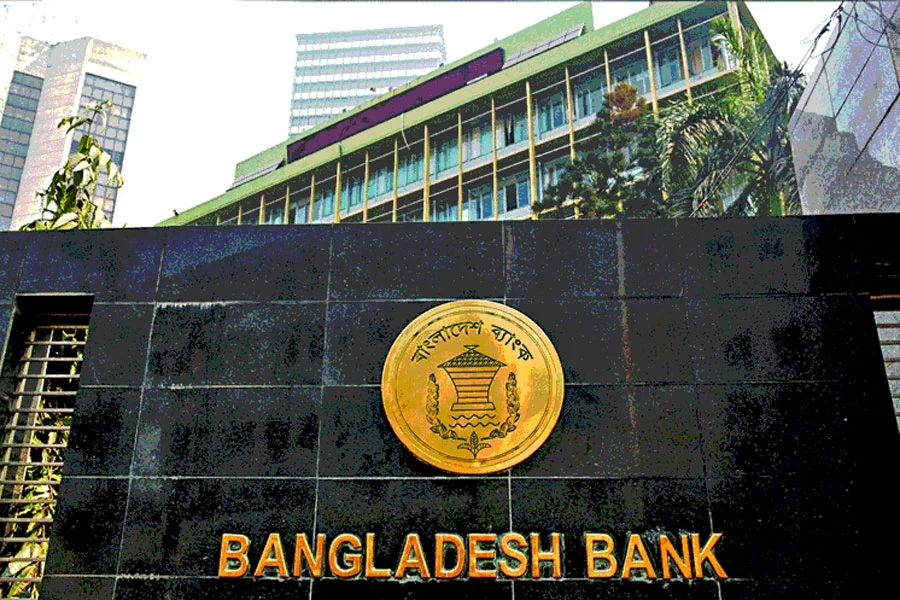
Bangladesh Bank eases refinancing terms for state-owned, specialised banks to boost CMSME loans

bdnews24.com

Published :
May 25, 2026 00:23
Updated :
May 25, 2026 00:23
1779680498712.webp


Bangladesh Bank (BB) has relaxed the participation criteria for state-owned commercial and specialised banks under its refinancing facilities, a move aimed at accelerating the flow of credit to the Cottage, Micro, Small, and Medium Enterprise (CMSME) sector.

The SME and Special Programmes Department of the central bank issued a circular to this effect today (Sunday).

According to the circular, the decision was taken to enhance the contribution of the CMSME sector to national economic growth and to expand employment opportunities at the grassroots level.

Under the new directive, state-owned commercial and specialized banks
can now enlist as participating financial institutions to access the
central bank's CMSME refinancing funds.

To facilitate this, the central bank has exempted these state banks from two mandatory conditions that previously restricted their eligibility.

The relaxed conditions include the obligation to maintain the non-performing loan (NPL) or classified investment ratio within a maximum cap of 20 per cent, mandatory adherence to Bangladesh Bank’s prescribed Capital Adequacy Ratio (CAR), Cash Reserve Ratio (CRR), and Statutory Liquidity Ratio (SLR).

By waiving these stringent capital and asset-quality thresholds, the central bank aims to utilise the vast rural and semi-urban network of state-run banks to channel low-cost funds directly to small and marginalised entrepreneurs across the country, BB officials said.​
 

BRAC Bank signs two deals with Bangladesh Bank to expand MSME financing

FE ONLINE DESK

Published :
Jun 01, 2026 21:02
Updated :
Jun 01, 2026 21:02

1780359244112.webp


BRAC Bank has signed two agreements with Bangladesh Bank to enhance access to affordable financing for cottage, micro, small, and medium enterprises (CMSMEs), reinforcing its commitment to entrepreneurship development and financial inclusion, according to a press release.

The agreements will enable BRAC Bank to extend financing to entrepreneurs in various clusters nationwide and to provide low cost financing support to MSMEs under Bangladesh Bank’s Financial Sector Fund for the Development of MSMEs (FSFDMSME).

Under the Cluster Finance Refinance Scheme, which has a fund size of BDT 3,000 crore, BRAC Bank will provide easy term loans and working capital support to entrepreneurs engaged in various industrial clusters across the country. Eligible businesses will be able to access financing at concessional interest rates starting from 7%, supporting business expansion, productivity enhancement, and employment generation.

The second agreement allows BRAC Bank to participate in the BDT 1,500 crore Financial Sector Fund for the Development of MSMEs (FSFDMSME). Through this scheme, MSMEs in the manufacturing and service sectors will be able to obtain financing at a 7% interest rate. The facility offers loans of up to BDT 1 crore for micro enterprises and up to BDT 5 crore for small and medium enterprises.

Tareq Refat Ullah Khan exchanged the agreement documents with Nawshad Mustafa, Director, SME & Special Programmes Department, Bangladesh Bank, at a ceremony at Bangladesh Bank on May 18, 2026 in presence of Nurun Nahar, Deputy Governor, Bangladesh Bank.

Husne Ara Shikha, Executive Director, Bangladesh Bank; and Mahbubur Rahman, Head of Cottage, Micro & Small Business (Unit 2), Head of Liability and Cash Management, SME Banking, BRAC Bank; were present.

As the country’s leading SME-focused bank, BRAC Bank with refinancing support from Bangladesh Bank continues to play a pioneering role in widening access to finance for grassroots entrepreneurs, supporting business growth, employment creation, and sustainable economic development across Bangladesh.​
 

NCC Bank eyes digital push, higher SME growth

Says Managing Director and CEO M Shamsul Arefin

Ahsan Habib

1780795206691.webp


NCC Bank PLC is targeting diversification, digital transformation and stronger risk management to drive its next phase of growth, said Managing Director and CEO M Shamsul Arefin.

In an interview with The Daily Star on the bank’s 33rd anniversary, he outlined a roadmap centred on expanding SME and retail lending, accelerating digital banking services, strengthening asset quality, embracing artificial intelligence and increasing support for sustainable financing.

The bank began its journey as an investment company in 1985 and operated through 16 branches until 1992. It became a full-fledged private commercial bank in 1993 with a paid-up capital of Tk 39 crore. Today, that figure stands at Tk 1,154 crore. Arefin said the lender’s transformation from a merchant bank into a commercial bank, coupled with its strategic move into larger corporate clients and trade finance, has been instrumental in shaping its growth trajectory.

GROWTH PRIORITIES

“In its early years, the bank focused primarily on SME financing and mid-sized corporate clients, which helped build a loyal customer base and establish a strong customer-centric culture. However, over the last seven to eight years, NCC Bank has strategically repositioned itself by venturing into large-scale corporate clients, export-oriented industries, trade finance, and a broader range of business segments,” he said.

While maintaining its presence in corporate and export-oriented sectors, NCC Bank plans to place greater emphasis on SMEs, retail banking and agriculture to achieve more balanced growth and deepen financial inclusion, he said.

The lender also plans to expand its Islamic banking footprint as demand for shariah-compliant financial services continues to rise.

“The long-term goal is a modern, resilient, customer-focused bank built on strong governance, financial discipline, and sustainable growth,” he said.

DIGITAL TRANSFORMATION

Digitalisation remains central to the bank’s strategy.

“Going forward, NCC Bank will keep investing in digital infrastructure, cybersecurity, data analytics, automation, and customer-facing tech -- enhancing mobile banking, QR payments, virtual services, digital lending, and fintech integrations,” he said.

Artificial intelligence is expected to play a growing role in the bank’s operations.

“As part of its digital roadmap, the bank is exploring gradual integration of AI into areas like customer behaviour analysis, fraud detection, chatbots, predictive analytics, and credit risk monitoring,” he said.

“AI will also strengthen early warning systems and portfolio analysis.”

Meanwhile, the bank is also increasing its focus on green financing, with greater attention to renewable energy projects, energy-efficient industries and environmentally sustainable investments, he said.

STRENGTHENING ASSET QUALITY

Reflecting on the previous year, Arefin said broader economic pressures had affected asset quality across the banking industry.

“In 2024, NCC Bank faced asset quality pressure like the broader industry, with its NPL ratio rising to 7.32 per cent. This was driven mainly by external factors like inflation, energy crisis, forex volatility, liquidity stress, and slower business cash flows,” he said.

“By 2025, however, the bank significantly reduced its NPL to 4.12 percent through stronger recovery drives, improved monitoring, tighter credit underwriting, and better portfolio supervision.”

“The goal is not just to lower the NPL ratio but to build a healthier, more sustainable, and diversified loan portfolio over the medium to long term,” he said.

The lender’s performance remained resilient despite a challenging banking environment. Deposits rose by nearly 17 percent, advances increased by around 10 percent and operating profit grew by almost 18 percent in 2025. Net profit climbed to Tk 476 crore from Tk 437 crore a year earlier.

“Overall, NCC Bank’s 2024-2025 performance underscores strong governance, a customer-centric model, portfolio diversification, and disciplined risk management,” he said.

To keep bad loans under control, the lender is pursuing stricter credit appraisal, enhanced early warning systems, expanded recovery teams and greater use of technology and analytics.

NAVIGATING ECONOMIC HEADWINDS

He noted that many businesses remain cautious amid high inflation, rising interest rates, foreign-exchange volatility, elevated import costs and liquidity pressures.

“Many businesses remain cautious due to some ongoing pressures: high inflation, energy crisis, rising interest rates, forex volatility, import costs, liquidity stress, slower demand, and lower cash flow,” he said. “As a result, business houses are prioritising liquidity and balance sheet stability over expansion.”

Demand has shifted from long-term investment loans towards working-capital and trade-finance facilities, although export-oriented sectors continue to show relatively stable borrowing demand.

On governance, Arefin said the board maintains strategic oversight while management independently handles day-to-day operations.

“The board provides strategic oversight, while management independently handles day-to-day operations within approved risk and compliance frameworks. No undue pressure is exerted on lending or operational decisions -- all credit proposals undergo a rigorous evaluation and multi-level approval process,” he said.

Asked what differentiates NCC Bank from its peers, Arefin highlighted its governance standards, risk management and customer-focused culture.

“NCC Bank stands out for its stability, disciplined banking, customer-centric culture, and over three decades of credibility,” he said.

“It maintains strong governance, compliance, and prudent risk management -- even during sector challenges -- prioritising transparency and accountability over short-term gains.”​
 

Latest Posts

Back