[🇧🇩] Cottage Industry/SME in Bangladesh

[🇧🇩] Cottage Industry/SME in Bangladesh
70
6K
More threads by Saif

G Bangladesh Defense

SME Foundation to provide loans worth Tk 125cr
Staff Correspondent 01 April, 2026, 02:29

1775006865606.webp


SME Foundation, with the support from the Japan International Cooperation Agency, will provide loans worth Tk 125 crore at an interest rate of 9 per cent to cottage, micro, small and medium entrepreneurs in Bangladesh’s agro-based industries and food processing sector through banks and financial institutions.Human rights reports

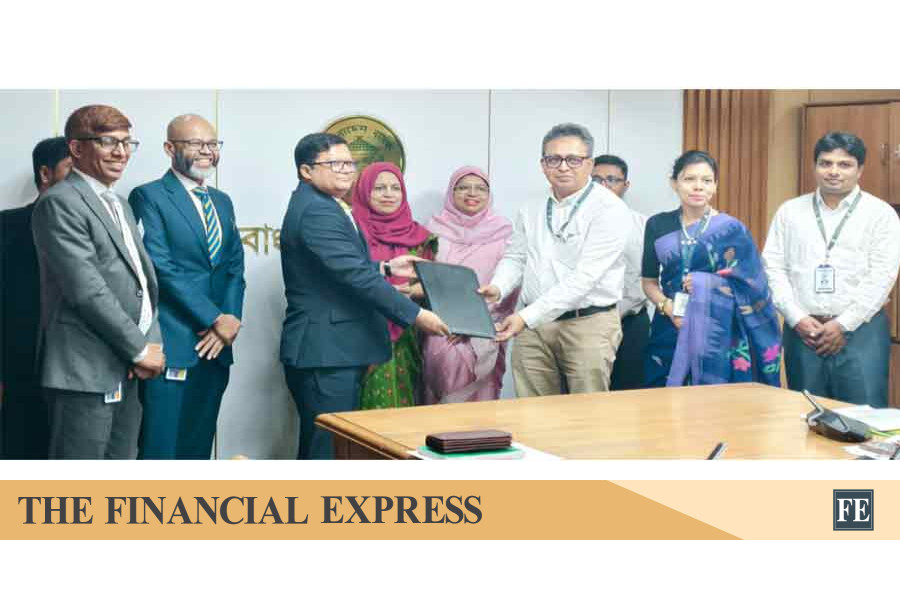
To expand its credit wholesaling activities, the foundation signed an agreement with Bangladesh Infrastructure Finance Fund Limited at BIFFL head office in the capital on Tuesday, said a press release.

SME Foundation managing director Anwar Hossain Chowdhury and BIFFL chief executive officer SM Anisuzzaman signed the agreement.

Anwar said that through the agreement, financing would be ensured on easy terms for small and medium entrepreneurs in agro-based industries and food processing through funds from BIFFL’s Food Value Chain Improvement Project.

The project, implemented with financial and technical assistance from JICA, primarily aims to improve food value chain, enhance food security and build capacity of entrepreneurs.

Through this initiative, CMSMEs will be brought under financing coverage, with special priority given to women entrepreneurs.

The financing will cover a wide range of sub-sectors, including processing of fruits, vegetables and spices, rice and pulses processing, edible oil production, seed processing, as well as organic fertiliser and bio-pesticide production.

It will also include wholesale, logistics and retail segments.

In addition, the project will support capital investments, including machinery and equipment, factory infrastructure development, warehouse construction and other necessary supporting infrastructure.

The initiative will also provide technical knowledge, advisory services, and training programmes — particularly to improve food safety standards, such as ISO, HACCP and halal certification.

SME Foundation deputy managing director Md Nazim Hasan Sattar, general managers Mohammad Jahangir Hossain and Md Abdur Salam Sardar, among others, attended the event.

Officials hoped that the initiative would strengthen the country’s food value chain, reduce import dependency, increase export potential and generate employment in rural areas.​
 

Tk 3.0 billion credit wholesaling scheme launched to boost SME sector, says Commerce Minister

UNB
Published :
Apr 12, 2026 22:02
Updated :
Apr 12, 2026 22:02

1776039124834.webp


Commerce and Industry Minister Khandakar Abdul Muktadir on Sunday said the government has taken a Tk 300 crore (Tk 3 billion) credit wholesaling programme to support the SME sector, which is being channelled to entrepreneurs through around 15 banks and four financial institutions.

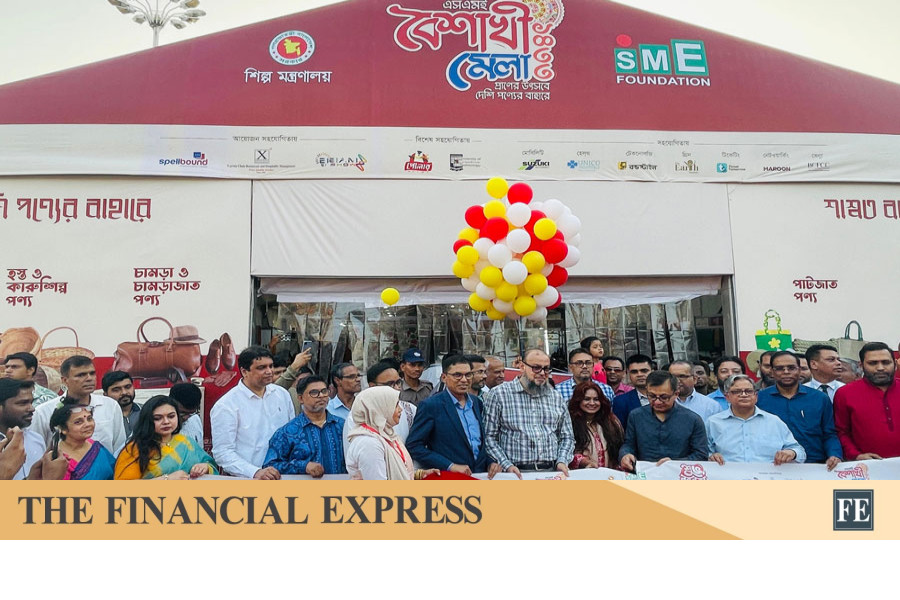
“SMEs and MSMEs are the lifeblood of the country’s economy. A large part of Bangladesh’s economy remains informal, where the SME sector plays a crucial role,” he said while inaugurating the seven-day SME Baishakhi Fair 1433 at the Bangladesh-China Friendship Conference Centre in Agargaon.

The minister said the allocation under the credit wholesaling programme will be gradually increased to Tk 2,000 crore in the future.

He noted that strengthening the SME sector would help generate employment, diversify production and bring more people into economic activities, adding that the government will continue to play a supportive role for entrepreneurs.

Muktadir also thanked the SME Foundation and other stakeholders for organising the fair and extended greetings on the occasion of the Bangla New Year.

The SME Foundation has organised the fair on the premises of the Bangladesh-China Friendship Conference Centre, featuring more than 150 stalls showcasing products from entrepreneurs across the country.

Chairperson of the SME Foundation and Industries Secretary Md Obaidur Rahman presided over the inaugural programme, while Board Member Shamim Ahmed attended as special guest. Managing Director Anwar Hossain Chowdhury delivered the welcome address.

Organisers said the fair aims to celebrate Bangla heritage and culture while offering a vibrant and safe environment for people to enjoy the New Year festivities with family and friends.

Entrepreneurs are displaying and selling a wide range of products, including handicrafts, jute goods, apparel and fashion items, agro-processed products, heritage items, homemade foods and street foods, artificial jewellery, leather goods, and lifestyle products.

The fair will remain open to visitors every day from morning till night until April 18.​
 

Govt to develop digital platform to support SMEs: NBR chairman

FE ONLINE REPORT

Published :
Apr 28, 2026 19:29
Updated :
Apr 28, 2026 19:29

1777419565346.webp


The National Board of Revenue (NBR) is working to develop a digital platform to help small and medium enterprises (SMEs) maintain online balance sheets instead of relying on traditional talikhata, said NBR Chairman Abdur Rahman Khan.

Under the proposed system, businesses will input their data and the platform will automatically generate balance sheets, he said while addressing a pre-budget discussion at the NBR headquarters in the capital on Tuesday.

He also urged the SME Foundation to share its database of SMEs, noting that such information is crucial as the sector is eligible for tax waivers of up to Tk 5 million. In the absence of such a database, the foundation may take the initiative to develop one, he added.

In a written proposal, SME Foundation General Manager Mohammad Jahangir Hossain recommended introducing a unified Preferential Tax Regime (PTR) for micro, small and medium enterprises (MSMEs) in the upcoming fiscal year 2026–27 to boost growth and simplify compliance.

Highlighting the sector’s importance, the foundation said Bangladesh has around 1.17 crore economic units employing about 3.06 crore people, according to the Economic Census 2024. Of these, 99.92 percent belong to the CMSME sector, which accounts for 77.87 percent of total employment and contributes roughly 30.4 percent to GDP.

Despite this, the sector faces compliance challenges due to the absence of a unified tax framework, with incentives scattered across various laws and statutory regulatory orders (SROs).

To address this, the foundation proposed enacting a separate law or issuing an SRO to establish a dedicated PTR. The framework includes a 10-year tax holiday for new SMEs and a simplified VAT system replacing monthly returns with annual filings based on turnover.

It also suggested green tax incentives for environmentally friendly practices and a five-year bonded warehouse facility to support export-oriented enterprises in importing raw materials.

The foundation placed 113 recommendations covering VAT, income tax, customs and excise duties. These include allowing SMEs with annual turnover up to Tk 5 crore to file VAT returns semi-annually, and introducing a specific tax model for firms with turnover between Tk 1 crore and Tk 5 crore.

On income tax, it proposed raising the tax-exempt turnover limit to Tk 1.5 crore for general MSMEs and Tk 1 crore for women entrepreneurs, alongside reducing advance income tax on raw material imports from 5 percent to 1 percent.

It also called for higher tariffs on imported finished goods such as plastic toys, furniture and light engineering products to protect local industries, along with VAT exemptions for plastic waste recycling and higher duties on imported frozen pangas fillets.

Meanwhile, the Bangladesh Economic Association (BEA) submitted a set of proposals urging a shift in budget strategy to address emerging stagflationary pressures.

BEA representatives warned that the economy is showing signs of stagflation, with GDP growth projected at around 3.5 percent and inflation hovering between 9 and 10 percent.

Led by Mahbub Ullah, convener of its interim committee, the association stressed the need to prioritise inflation control, revenue mobilisation and debt sustainability to stabilise the economy.

The BEA also expressed concern over the stagnant tax-to-GDP ratio, currently around 8 percent, and proposed a National Financial Identity System integrating national ID, TIN, banking and mobile financial services data to improve compliance.

Other recommendations include expanding taxation to the digital economy, introducing a cross-border digital services tax, and establishing a digitised land registry linked to national identification systems.

To ease compliance, it suggested a unified tax documentation framework with pre-filled returns generated through automated data integration.

On fiscal management, the BEA called for reforms in the Annual Development Programme to prioritise high-impact projects and reduce reliance on debt, noting that interest payments account for 14–16 percent of the national budget.

It also recommended an inflation-linked expenditure ceiling and cuts in non-essential spending to ease fiscal pressure and improve efficiency.

Among other organisations, Economic Research Group (ERC), Business Initiative Leading Development (BUILD), Anti-Tobacco Media Alliance (ATMA), Center for Policy Dialogue (CPD), Policy Research Institute (PRI), Bangladesh Society for the Change and Advocacy Nexus (B-SCAN) and Bureau of Economic Research (BER) representatives also took part in that discussion.​
 

Tapping into vast potential of handicraft export

Atiqul Kabir Tuhin

Published :
May 07, 2026 00:54
Updated :
May 07, 2026 00:54

1778111077642.webp


Underprivileged rural women of Jhenaidah have set an admirable example of self-reliance. Instead of taking micro-credit at the risk of defaulting, they are making impressively designed handicrafts with an eye to foreign market. According to a recent report by a vernacular daily, a total of 800 women of three upazilas of the district are crafting baskets, trays, mats and showpieces with water hyacinth, rice straw and date leaf. As far as can be ascertained from the photograph in the report, the products are not only useful but also ornate and visually appealing.

Working from home, they can earn around Taka 3,000 per month. And their products are finding market in as many as 82 countries including the US and Canada. The initiative, led by BD Creation in Jhenaidah, demonstrates how proper training, design innovation and market linkage can transform trashes into treasure.

If handicrafts made of such waste materials gain popularity in the markets abroad, it is a boon not only for the 800 poor women but for the whole country. Handicraft represents a country as much as its art and literature. Bangladesh, in this regard, possesses a rich and diverse tradition. The sustained interest of foreign buyers, evident in international exhibitions and export fairs, attests to the global appeal of rural artisans' craftsmanship.

Among the most iconic of these is Nakshi Kantha, the intricately embroidered quilt that has long been woven into the cultural fabric of Bangladesh. Characterised by elaborate motifs, vibrant colours and meticulous needlework, each piece is both a utilitarian object and a work of art. Traditionally crafted by rural women, kantha embroidery has served as a means of self-expression as well as self-reliance. Through patience and skill, ordinary pieces of cloth are transformed into extraordinary works of art. The sheer sight of Nakshi Kantha is a kaleidoscopic feast for the eyes, for which it has been winning the hearts and minds of the people at home and abroad generation after generation.

Equally noteworthy is Shital Pati, a finely woven mat made from natural fibres, widely used as a seating mat, bedspread or prayer mat. Recognised by UNESCO as an element of the Intangible Cultural Heritage of Humanity, the craft of Shital Pati weaving embodies both aesthetic appeal and ecological sensibility.

Bangladesh also boasts a wide range of handloom textile products including Jamdani, Tangail, Rajshahi Silk, Monipuri and so on. The handloom products including saris, shawls, bedcovers, scarves, bags etc are acclaimed and coveted for their quality and aesthetic beauty. Jute products also deserve special mention. As an eco-friendly and versatile material, jute enjoys a vibrant market in both raw and finished forms. Then there are eye-catching earthenware, stoneware and porcelain which potters skillfully produce. The products range from an assortment of pots, cups, flower vases and decorative objects. They come in all sizes and an assortment of variations, in exquisite styles, offering an artistic and brilliant way to furnish the home and office and bring what nature has to offer inside.

For decades, cheap environment-threatening polythene and plastic products usurped the space of many traditional handicrafts. However, with growing global awareness about environmental sustainability, there is now a renewed demand for eco-friendly products, particularly in Europe and North America. This shift presents a significant opportunity for Bangladesh to diversify its export basket by tapping into the untapped potentials of this sector.

According to estimates, the global handicrafts market is currently valued at US$ 1,107 billion and is projected to reach US$ 2.3 trillion, growing 10.15 per cent annually. Despite its long-standing tradition of craftsmanship and a rich heritage of handmade products, Bangladesh's share in this vast global market is negligible. This limited presence reflects persistent challenges such as inadequate product diversification, lack of branding and marketing, limited access to international markets, and insufficient policy support - factors that continue to constrain the sector from realising its full export potential.

It is therefore imperative to scale up such initiatives by bringing a larger number of public and private actors into the fold, while simultaneously exploring new and emerging markets for Bangladeshi handicrafts. As the government is keen to reopen state-owned factories in the textile and jute sectors through public-private partnerships, some of these facilities could be repurposed or adapted for the large-scale production and processing of traditional handicrafts. The establishment of dedicated design centres and training facilities is also important to enhance product innovation, quality control and skill development. Such measures would not only generate employment but also help standardise quality and ensure a consistent supply for export markets. Ultimately, the sector's full potential can be realised through coordinated efforts between the government and the private sector, supported by research, design development and favourable policies.

At the same time, just as certain organisations are supporting the entrepreneurial efforts of underprivileged women at the grassroots level, Bangladesh's missions abroad must assume a more proactive role in promoting these products. This can be achieved through greater participation in international trade fairs, exhibitions and cultural expos, as well as by facilitating access to global e-commerce platforms. Strategic branding, market intelligence and diplomatic support can significantly enhance the visibility and competitiveness of Bangladeshi handicrafts in the global marketplace.

The handicraft sector thus offers Bangladesh a strategic opportunity to promote export diversification, generate rural employment and advance sustainable development. As demonstrated by the women of Jhenaidah, craftsmanship is more than a symbol of self-help. It opens pathways for rural women to be part not only of national but global economy.​
 

ERF president stresses different policy for SMEs to widen tax net

FE ONLINE DESK

Published :
May 07, 2026 20:30
Updated :
May 07, 2026 20:30

1778196483161.webp


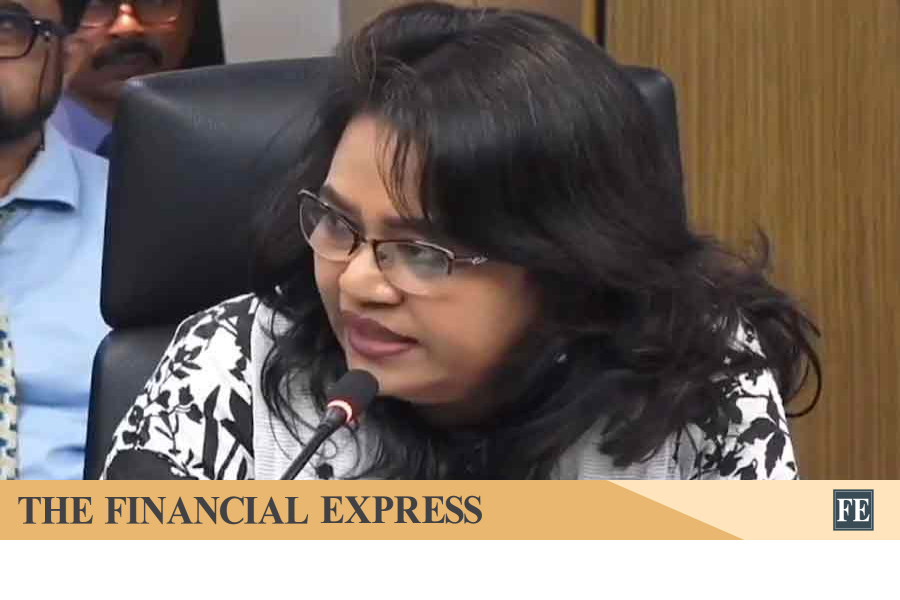
Economic Reporters’ Forum (ERF) President Doulot Akter Mala has said the government should think about a different fiscal policy for small and medium industries (SMEs) so that they can come under the tax net with a tolerable tax rate.

“If we impose an unaffordable tax rate for any section, they would look for ways to evade tax, or they would go against it,” the ERF president said at a pre-budget roundtable titled ‘Transparency and Reform: Redefining the National Tax Architecture’, held at the CA Bhaban in the city on Thursday.

The event was jointly organised by the Institute of Chartered Accountants of Bangladesh (ICAB) and The Financial Express. Dr. Rashed Al Mahmud Titumir, Prime Minister's Adviser on the Ministries of Finance and Planning, was present at the event as the chief guest.

Highlighting the necessity of motivating people to pay taxes, Doulot Akter Mala, also the special correspondent of The Financial Express, said tax collection would not be possible through imposing punitive measures.

The policymakers should think about an appropriate mechanism to collect taxes smoothly, she said.

“Regarding the role of media, the ERF president said economic reporters convey the pain of taxpayers to policymakers as well as inform the people about the issue of national interests. Media personnel will continue its role in this regard,” she added.

She urged the policymakers to find out the reasons behind the lack of inspiring or encouraging outcomes from digitisation and the unification of the tax system.

“The government should think about why a holistic approach wasn’t taken instead of partial digitisation. Is there any loopholes in policymaking or insiders’ influence?” the journalist asked.

She also pointed out that economic journalists face absence of availability and authenticity of data.

“Lack of authentic data provokes misinformation and people’s trust in it,” she said.

Talking about tax culture, she said, “We don’t hesitate to pay thousands of Taka as restaurant bills. But if the government imposes Tk 1,000 tax, we don’t want to pay it. Rather, we try to justify what I get from the government in exchange of the tax. The culture to consider tax laws as like all other laws has not developed so far.”

Explaining the reason behind the existing tax culture, she said people may have questions about the proper utilisation of their hard-earned money. They may remain worried about whether my money is going abroad or not. “As journalists, we work to develop the tax culture,” she added.​
 

Empowering CMSMEs can strengthen our economic foundation

Md Rakibul Hasan

1779160359094.webp

FILE ILLUSTRATION: SOJIB ROY

The World Bank’s Bangladesh Development Update, released last month, rings out a warning bell for us. The country has been weathering severe difficulties because of an economic slowdown and rise in poverty for three consecutive years, further worsened by external shocks. As per the report, our GDP growth is expected to decline to 3.9 percent by the end of FY2026. The inflation rate has remained above eight percent throughout the fiscal year. In December 2025, the non-performing loan (NPL) ratio reached 30.6 percent. The national poverty rate grew to 21.4 percent in 2025 from 18.7 percent in 2022. Large exporters continue to face disruption in the global supply chain, currency instability, and externalities stemming from conflicts in the Middle East that have spiked the costs of energy, contributed to inflation, and therefore constrained poverty alleviation efforts.

In this situation, the cottage, micro, small, and medium enterprises (CMSME) sector is a major buffer for the country’s economy. But within the current set-up, founding a small business requires various permits and certifications. For CMSMEs, complications in administrative procedures, VAT issues, and high regulatory costs are significant obstacles. It’s high time Bangladesh transitioned from its current subsidy-centric system to deregulation and reforms focused on fostering entrepreneurship and innovation in the sector.

The county has already made some inroads in this regard. The Bangladesh Investment Development Authority (BIDA), together with the Japan International Cooperation Agency (Jica), recently launched BanglaBiz Phase 2, a digital platform streamlining the process of establishing a business in the country. The business starter package under BanglaBiz Phase 2 offers services to acquire five major permits: name clearance, temporary bank account opening, company incorporation, e-TIN, and trade licence. This allows entrepreneurs to establish a business in three days.

A similar system was launched by the National Board of Revenue (NBR) in January 2025, called the Bangladesh Single Window (BSW) system. The NBR made the BSW system mandatory for the submission of certificates, licences, and permits for imports and exports starting on July 1, 2025, by bringing 19 government agencies under it. It is necessary to integrate the system in the backend and apply risk-based methods if there are to be major reductions in clearance times. For CMSMEs, instituting a “compliance holiday” of two to three years may encourage innovative enterprises.

The SME Houses of Azerbaijan is a prime example of such an integrated system. The SME Houses offer centralised services including business registration, licensing, financial consulting, and access to export markets. They have been recognised as efficient in simplifying business processes. Bangladesh can adapt this proven model and implement it in local industrial clusters or district levels, building on the foundations laid by the Bangladesh Small and Cottage Industries Corporation (BSCIC).

Modernising the country’s industrial clusters and strengthening local supply chains can meaningfully reduce import dependency and enhance competitiveness. A circular economy, whereby waste generated from big factories is used as raw materials in small factories, should be encouraged as it helps to lower production costs, minimise imports, and save foreign currency. Traditional collateral-based lending must give way to digital credit scoring and cash-flow-based approaches. In December 2025, Bangladesh Bank reduced the mandatory provisioning requirement for short-term agricultural and CMSME loans to 0.50 percent, allowing scheduled banks to maintain this lower provision until December 31, 2026. The relaxation was introduced to support banks in financing cottage, micro, and small enterprises which are considered vital for employment generation and inclusive growth. The experiences of South Korea and Singapore show how shifting to cash-flow- and alternative-data-based approaches can transform small industry financing. Bangladesh’s expanding digital payment and credit bureau infrastructure provide a solid base to build upon.

Due to unstable energy supply, decentralised renewable energy sources have become more popular. The government approved new net metering guidelines for 2025, allowing 100 percent of the sanctioned load for net-metered rooftop solar—up from 70 percent previously—and extending net metering eligibility to single-phase consumers for the first time. In December, the Power Division issued a revised circular making rooftop solar installation mandatory for buildings with at least 1,000 square feet of usable roof space seeking new electricity connections. Clusters that utilise independent renewable sources tend to have more reliable operations and reduced costs.

It is clear that the CMSME sector can no longer be viewed through the lens of aid or welfare. It is a highly potential and productive ecosystem, capable of driving inclusive growth, job creation, and economic diversification beyond the RMG products. The recent developments—the Bangladesh Bank’s relaxed provisioning rules, rollout of BanglaBiz and BSW platforms, and the new rooftop solar policy—show that elements of smart deregulation are already underway. Nevertheless, rapid execution, complete digitalisation, and stabilisation of the banking system can take this progress all the way.

The World Bank’s 2026 assessment highlights the need for immediate policy and institutional reforms to create employment and continue inclusive growth in the country. We need to restore macroeconomic stability, boost revenues, strengthen the financial sector, and improve the business environment. Through the use of single window systems, integrated hubs, digital finance, decentralised energy sources, and circularity, the country will be able to move from fragility to resilience. The new government’s early signals on improving the business environment are encouraging. The coming months will determine whether the CMSME sector can live up to its potential and become the driving force behind a stronger economy.

Md Rakibul Hasan works with the Bangladesh Small and Cottage Industries Corporation (BSCIC).​
 

Bangladesh Bank eases refinancing terms for state-owned, specialised banks to boost CMSME loans

bdnews24.com

Published :
May 25, 2026 00:23
Updated :
May 25, 2026 00:23

1779680498712.webp


Bangladesh Bank (BB) has relaxed the participation criteria for state-owned commercial and specialised banks under its refinancing facilities, a move aimed at accelerating the flow of credit to the Cottage, Micro, Small, and Medium Enterprise (CMSME) sector.

The SME and Special Programmes Department of the central bank issued a circular to this effect today (Sunday).

According to the circular, the decision was taken to enhance the contribution of the CMSME sector to national economic growth and to expand employment opportunities at the grassroots level.

Under the new directive, state-owned commercial and specialized banks
can now enlist as participating financial institutions to access the
central bank's CMSME refinancing funds.

To facilitate this, the central bank has exempted these state banks from two mandatory conditions that previously restricted their eligibility.

The relaxed conditions include the obligation to maintain the non-performing loan (NPL) or classified investment ratio within a maximum cap of 20 per cent, mandatory adherence to Bangladesh Bank’s prescribed Capital Adequacy Ratio (CAR), Cash Reserve Ratio (CRR), and Statutory Liquidity Ratio (SLR).

By waiving these stringent capital and asset-quality thresholds, the central bank aims to utilise the vast rural and semi-urban network of state-run banks to channel low-cost funds directly to small and marginalised entrepreneurs across the country, BB officials said.​
 

BRAC Bank signs two deals with Bangladesh Bank to expand MSME financing

FE ONLINE DESK

Published :
Jun 01, 2026 21:02
Updated :
Jun 01, 2026 21:02

1780359244112.webp


BRAC Bank has signed two agreements with Bangladesh Bank to enhance access to affordable financing for cottage, micro, small, and medium enterprises (CMSMEs), reinforcing its commitment to entrepreneurship development and financial inclusion, according to a press release.

The agreements will enable BRAC Bank to extend financing to entrepreneurs in various clusters nationwide and to provide low cost financing support to MSMEs under Bangladesh Bank’s Financial Sector Fund for the Development of MSMEs (FSFDMSME).

Under the Cluster Finance Refinance Scheme, which has a fund size of BDT 3,000 crore, BRAC Bank will provide easy term loans and working capital support to entrepreneurs engaged in various industrial clusters across the country. Eligible businesses will be able to access financing at concessional interest rates starting from 7%, supporting business expansion, productivity enhancement, and employment generation.

The second agreement allows BRAC Bank to participate in the BDT 1,500 crore Financial Sector Fund for the Development of MSMEs (FSFDMSME). Through this scheme, MSMEs in the manufacturing and service sectors will be able to obtain financing at a 7% interest rate. The facility offers loans of up to BDT 1 crore for micro enterprises and up to BDT 5 crore for small and medium enterprises.

Tareq Refat Ullah Khan exchanged the agreement documents with Nawshad Mustafa, Director, SME & Special Programmes Department, Bangladesh Bank, at a ceremony at Bangladesh Bank on May 18, 2026 in presence of Nurun Nahar, Deputy Governor, Bangladesh Bank.

Husne Ara Shikha, Executive Director, Bangladesh Bank; and Mahbubur Rahman, Head of Cottage, Micro & Small Business (Unit 2), Head of Liability and Cash Management, SME Banking, BRAC Bank; were present.

As the country’s leading SME-focused bank, BRAC Bank with refinancing support from Bangladesh Bank continues to play a pioneering role in widening access to finance for grassroots entrepreneurs, supporting business growth, employment creation, and sustainable economic development across Bangladesh.​
 

NCC Bank eyes digital push, higher SME growth

Says Managing Director and CEO M Shamsul Arefin

Ahsan Habib

1780795206691.webp


NCC Bank PLC is targeting diversification, digital transformation and stronger risk management to drive its next phase of growth, said Managing Director and CEO M Shamsul Arefin.

In an interview with The Daily Star on the bank’s 33rd anniversary, he outlined a roadmap centred on expanding SME and retail lending, accelerating digital banking services, strengthening asset quality, embracing artificial intelligence and increasing support for sustainable financing.

The bank began its journey as an investment company in 1985 and operated through 16 branches until 1992. It became a full-fledged private commercial bank in 1993 with a paid-up capital of Tk 39 crore. Today, that figure stands at Tk 1,154 crore. Arefin said the lender’s transformation from a merchant bank into a commercial bank, coupled with its strategic move into larger corporate clients and trade finance, has been instrumental in shaping its growth trajectory.

GROWTH PRIORITIES

“In its early years, the bank focused primarily on SME financing and mid-sized corporate clients, which helped build a loyal customer base and establish a strong customer-centric culture. However, over the last seven to eight years, NCC Bank has strategically repositioned itself by venturing into large-scale corporate clients, export-oriented industries, trade finance, and a broader range of business segments,” he said.

While maintaining its presence in corporate and export-oriented sectors, NCC Bank plans to place greater emphasis on SMEs, retail banking and agriculture to achieve more balanced growth and deepen financial inclusion, he said.

The lender also plans to expand its Islamic banking footprint as demand for shariah-compliant financial services continues to rise.

“The long-term goal is a modern, resilient, customer-focused bank built on strong governance, financial discipline, and sustainable growth,” he said.

DIGITAL TRANSFORMATION

Digitalisation remains central to the bank’s strategy.

“Going forward, NCC Bank will keep investing in digital infrastructure, cybersecurity, data analytics, automation, and customer-facing tech -- enhancing mobile banking, QR payments, virtual services, digital lending, and fintech integrations,” he said.

Artificial intelligence is expected to play a growing role in the bank’s operations.

“As part of its digital roadmap, the bank is exploring gradual integration of AI into areas like customer behaviour analysis, fraud detection, chatbots, predictive analytics, and credit risk monitoring,” he said.

“AI will also strengthen early warning systems and portfolio analysis.”

Meanwhile, the bank is also increasing its focus on green financing, with greater attention to renewable energy projects, energy-efficient industries and environmentally sustainable investments, he said.

STRENGTHENING ASSET QUALITY

Reflecting on the previous year, Arefin said broader economic pressures had affected asset quality across the banking industry.

“In 2024, NCC Bank faced asset quality pressure like the broader industry, with its NPL ratio rising to 7.32 per cent. This was driven mainly by external factors like inflation, energy crisis, forex volatility, liquidity stress, and slower business cash flows,” he said.

“By 2025, however, the bank significantly reduced its NPL to 4.12 percent through stronger recovery drives, improved monitoring, tighter credit underwriting, and better portfolio supervision.”

“The goal is not just to lower the NPL ratio but to build a healthier, more sustainable, and diversified loan portfolio over the medium to long term,” he said.

The lender’s performance remained resilient despite a challenging banking environment. Deposits rose by nearly 17 percent, advances increased by around 10 percent and operating profit grew by almost 18 percent in 2025. Net profit climbed to Tk 476 crore from Tk 437 crore a year earlier.

“Overall, NCC Bank’s 2024-2025 performance underscores strong governance, a customer-centric model, portfolio diversification, and disciplined risk management,” he said.

To keep bad loans under control, the lender is pursuing stricter credit appraisal, enhanced early warning systems, expanded recovery teams and greater use of technology and analytics.

NAVIGATING ECONOMIC HEADWINDS

He noted that many businesses remain cautious amid high inflation, rising interest rates, foreign-exchange volatility, elevated import costs and liquidity pressures.

“Many businesses remain cautious due to some ongoing pressures: high inflation, energy crisis, rising interest rates, forex volatility, import costs, liquidity stress, slower demand, and lower cash flow,” he said. “As a result, business houses are prioritising liquidity and balance sheet stability over expansion.”

Demand has shifted from long-term investment loans towards working-capital and trade-finance facilities, although export-oriented sectors continue to show relatively stable borrowing demand.

On governance, Arefin said the board maintains strategic oversight while management independently handles day-to-day operations.

“The board provides strategic oversight, while management independently handles day-to-day operations within approved risk and compliance frameworks. No undue pressure is exerted on lending or operational decisions -- all credit proposals undergo a rigorous evaluation and multi-level approval process,” he said.

Asked what differentiates NCC Bank from its peers, Arefin highlighted its governance standards, risk management and customer-focused culture.

“NCC Bank stands out for its stability, disciplined banking, customer-centric culture, and over three decades of credibility,” he said.

“It maintains strong governance, compliance, and prudent risk management -- even during sector challenges -- prioritising transparency and accountability over short-term gains.”​
 

SMEs, creative ventures to get spl focus
Staff Correspondent 10 June, 2026, 00:32

1781073157100.webp


Small and medium entrepreneurs, start-ups, women entrepreneurs, creative economic activities and overseas job seekers are likely to receive special focus in the 2026–27 financial year national budget to be announced tomorrow.

The allocations for SMEs and start-ups would be raised, while creative economic activities would receive allocations in the FY27 national budget, finance ministry officials said.

A fund worth Tk 2,000 crore has been planned for the SME sector, while about Tk 300 crore is likely to be set aside for people involved in the creative economy in FY27, the officials said.

Finance minister Amir Khosru Mahmud Chowdhury on Tuesday told the Jatiya Sangsad that the government would propose an allocation of Tk 400 crore in the FY27 national budget to support start-up financing, women’s entrepreneurship development and the promotion of young entrepreneurs.

He said that the revised budget for the FY 2025–26 had allocated Tk 200 crore to the start-up fund.

The minister said that special directives would be issued to the relevant banks and agencies to ensure that young people and small-scale entrepreneurs had easier access to loans and technical training.

The main aims of fund allocation for SMEs and new budgetary provisions are to support start-ups and create employment opportunities, especially for educated youths, the finance ministry officials added.

The country is facing a high unemployment rate of 4.6 per cent.

Besides, about 85.89 per cent of entrepreneurs, mostly SMEs, identified the shortage of capital as the main problem in running economic activities, according to the Economic Census 2024 by the Bangladesh Bureau of Statistics.

SMEs account for 25–30 per cent of the country’s gross domestic product and generate employment, but the sector has remained largely out of access to bank loans.

Finance ministry officials said that the planned allocation for the creative economy aimed to integrate promising handicraft products such as shitalpati and clay work into the mainstream economy and promote indigenous products in global value chains.

Other areas, including performing arts such as theatre, music, drama, dance, painting and sculpture, are likely to receive fund allocations, along with media and entertainment sectors such as film, television, radio broadcasting and content creation under the creative economy, they said.

Besides, the first budget of the BNP-led government’s current tenure will give priority to card programmes, including family cards, farmer cards and health cards, under the social safety net programme.

Amir Khosru, who will announce the budget at the Jatiya Sangsad, told reporters at the secretariat in the capital on Tuesday that the forthcoming budget had been prepared to accommodate all citizens, irrespective of income level, despite limited funds.

The allocations could have been higher for necessary sectors had the government not faced fund limitations, the finance minister added.

An allocation of Tk 12,373 crore will be set aside to provide Tk 2,500 monthly to 41 lakh family card holders in FY27, said finance ministry officials.

They also said that farmer cards would be given to 42 lakh beneficiaries with a financial allocation of Tk 1,062 crore in FY27. Farmer card holders will also receive Tk 2,500, but once in a year.

The government is likely to allocate Tk 69,309 crore for the health sector in the new national budget compared with Tk 34,719 crore in the outgoing budget.

Part of the increased fund in the health sector will be utilised to run an experimental health card programme in some 14 districts.

Besides, allocation will be provided to facilitate 21 lakh expatriate cards to generate 1o lakh employment opportunities in the overseas job market.

An allocation of Tk 7,000 crore will also be announced in the budget to incentivise remittance inflows from expatriate Bangladeshis, who sent over $33.63 billion between July 2025 and June 7, 2026, marking an impressive 18.45 per cent growth over the previous financial year.​
 

Bangladesh's cottage industries need more than nostalgia

Saiduzzaman Pulak and Sabbir Rahman Khan

Long before Bangladesh became known for garments and remittances, it was known for making things. Not in factories. Not in industrial parks. But in homes, courtyards, village lanes, and small market towns. This was the cottage economy. It fed families, boosted local trade, and carried Bengal's reputation far beyond its rivers. The story is older than we often assume. The Roman historian Pliny wrote that textiles from this region reached the Mediterranean world as early as 73 AD. This suggests that Bengal's handmade economy was connected to global trade long before modern supply chains became the hallmark of global commerce.

Muslin became the most recognised face of this economy. It travelled through royal courts, merchant houses, and long-distance trade routes. Even after the Mughal rulers renamed Dhaka Jahangirnagar, the older name persisted because trade followed what buyers knew and trusted. Economic identity, in that sense, proved stronger than official naming. What we now call heritage was once a working system of production. Muslin was not random household work scattered across villages. It maintained an ecosystem. Specialised centres known as karkhana operated under supervision, with defined roles for spinners, weavers, washers, bleachers, supervisors, and merchants. It was not a modern factory, but it had process, discipline, and quality control.

1781761474305.webp

The fabric of Muslin is so fine that a six-yard sari could be passed through a ring. Photo: Rashed Shumon

Historical records from 1747 show the level of demand. The imperial household in Delhi purchased Muslin worth Rs 1,00,000; the Nawab's household in Murshidabad purchased Rs 3,00,000; the house of Jagatseth purchased Rs 1,50,000; and Turani merchants purchased another Rs 1,00,000. These figures point to a sizeable and organised market that supported not only weavers, but also cotton growers, yarn makers, washermen, dyers, bleachers, boatmen, merchants, and agents.

By the late 18th century, the textile trade had become one of the main pillars of Bengal's commercial economy. In 1787, Collector Mathew Day estimated business transactions in the region at around one crore rupees, with textiles alone accounting for 60 to 70 lakhs. The figure speaks volumes about the role of cottage production in Bengal's economic life. The challenge came when this sector was pushed into unequal competition with industrial power. The decline of cottage industries across the Indian subcontinent is often linked to the Industrial Revolution, but it cannot be attributed solely to mechanisation. Unequal trade rules, tariff protection for British manufacturers, and the growing control of imperial markets over local production systems also influenced this decline.

After 1830, Bengal's muslin production fell sharply as British industrial centres such as Glasgow and Paisley began producing imitation muslin at much lower prices. The cheaper fabric entered the market at a scale local producers could not match, while tariff barriers made Bengal muslin less competitive. The skill remained, but the market drifted away from it. The impact was felt across the wider rural economy. By 1820, major cotton centres such as Sonargaon, Dhamrai, Narainpur, Chandpur, and Bajitpur began to close. People involved in growing, spinning, dyeing, bleaching, and weaving lost their jobs, and many were forced back into agriculture, often with weaker bargaining power and lower incomes.
A similar pressure is visible today, although the source of competition has changed. It now comes less from colonial mills and more from mass production, branded consumer goods, and modern distribution networks. Fast-moving consumer goods (FMCG) have crept into every facet of daily life. Their advantage does not come from better craftsmanship. It comes from wider distribution, standardised packaging, aggressive pricing, and constant visibility.

Cottage industries do not need to be protected from the future. They need protection from a market that recognises their design but not their labour, their heritage but not their costs, their beauty but not their bargaining power.
A packaged product has a brand name, a wrapper, a fixed price, a distributor, a marketing budget, and shelf space in the nearest shop. A handmade product often depends on local demand, seasonal sales, intermediaries, and the goodwill of buyers who still recognise its value. For consumers under pressure from high prices, packaged products often feel safer. They are available, familiar, and predictable. The handmade product may be better, but it carries uncertainty. This is where Bangladesh's cottage economy has drifted off course. Cottage products carry skill, labour, memory, and local identity. FMCG carries price, reach, and certainty. In a market driven by convenience, the latter often gets the upper hand.

In Tangail, a weaver once said his loom did not rest during the wedding season. Orders came in bundles. People looked for colour, pattern, and pride. Today, buyers ask for "something like Tangail" at half the price. Sometimes they are shown machine-made copies labelled "handloom style". The weaver is not competing with another weaver. He is competing with a system that can borrow the look of his craft without carrying the labour that goes into it. In Lakshmipur, a pottery family faces a similar reality. Earthen jars and cooking pots once sold steadily in local markets. Now, plastic drums and aluminium cookware dominate shelves. Pottery still has demand, but often during festivals or for selective uses. For much of the year, the kiln remains cold. The potter's son wants to leave, not because he dislikes the craft, but because the craft does not promise a stable income.

These stories repeat across Bangladesh. Jamdani artisans in Narayanganj struggle against cheap replicas. Shital pati makers in Sylhet face weak market access. Bamboo and cane workers depend on fairs and intermediaries. In Bagerhat, talpakha making still supports seasonal income for families; a February 2025 report noted that during the February-to-mid-June production season, a palm-fan artisan family can produce 25,000 to 30,000 fans and earn Tk 200,000 to Tk 250,000. But even that income remains vulnerable when plastic and electric alternatives crowd the market.

The issue is not that Bangladeshis no longer value craft. The deeper issue is that the market increasingly rewards capital, compliance, packaging, and distribution more than skill, patience, and originality. This unfair market system is not limited to the cottage industry. Across Bangladesh's economy, three broad groups seem to operate side by side. A small group invests in process, skill, and long-term value. A larger group survives on short-term margins. Then there are smaller producers and new entrepreneurs trying to do quality work but struggling with capital, access, and protection. Cottage producers sit closest to this third group. They have skill, but little capital. They have products, but weak distribution. They have heritage, but not enough bargaining power.

The numbers speak volumes. Bangladesh has around 830,000 cottage industry units, employing more than 29 million people and producing goods worth roughly Tk 395 billion a year, with value addition of about Tk 315 billion. Nearly 97 per cent of these units reportedly operate year-round, indicating both resilience and dependence. Yet, production growth in the cottage sector fell to 6.7 per cent in FY24. This is not an outright decline, but it is a worrying sign. This concern comes at a critical time. Bangladesh is scheduled to graduate from the Least Developed Country category on 24 November 2026. The SME Policy 2019 set a target to raise the SME sector's contribution to GDP from 25 per cent to 32 per cent by 2024, while the government is now aiming for a 35 per cent SME share by 2030. These targets will lose their sheen if the smallest producers remain outside finance, markets, and public buying channels.

1781761562738.webp

The handmade product may be better, but it carries uncertainty. Photo: Star/File

The macroeconomic situation makes the matter more urgent. Point-to-point inflation reached 9.04 per cent in April 2026, up from 8.71 per cent in March, according to BBS data. The World Bank has projected Bangladesh's FY26 growth to slow to 3.9 per cent and has called for urgent reforms to restore macroeconomic stability, sustain growth, and create jobs. The IMF has also identified low fiscal revenues, weaknesses in the banking sector, and stubbornly high inflation as major challenges.

For cottage producers, these are not distant policy concerns. Inflation raises the cost of yarn, bamboo, clay, fuel, transport, and food. Weak purchasing power reduces demand for handmade goods. Credit remains difficult. The pressure comes from both sides. Informality makes the problem worse. When producers are not registered, they struggle to access formal loans. Without accounts, they cannot easily enter institutional supply chains. Without packaging, certification, or standardisation, modern retail remains distant. Without bargaining power, intermediaries decide the terms.

The problem is not taxation itself. The problem is when compliance is designed for firms that already have accountants, office addresses, bank records, and paperwork. A home-based artisan does not operate like a medium-sized supplier. If the same rules are applied without support, formalisation becomes a wall rather than a bridge. Many small producers remain stuck in a quagmire of woes: too informal for policy support, too small for bank finance, and too invisible for large buyers. Bangladesh does have policy instruments. The Bangladesh Small and Cottage Industries Corporation Act, 2023, the SME Policy 2019, and the Geographical Indication of Goods Act, 2013, all provide entry points. But policy, by itself, does not guarantee buyers. A weaver needs orders. A potter needs buyers. A bamboo artisan needs a price that covers both labour and material. If policy does not reduce raw material risk, open buying channels, protect identity, or improve bargaining power, it remains distant from the workshop.

Mandatory jute packaging shows what aligned regulation can do. By requiring certain commodities to be packed in jute bags, the policy created demand and helped sustain the value chain. It is not a perfect model, but it offers a clear lesson: when regulation shapes demand, traditional industries can survive more firmly.

Public procurement could provide another lever. Under the Public Procurement Rules 2008, the state is one of the largest buyers in the economy. It purchases furniture, uniforms, bags, curtains, office supplies, and household items that cottage producers can make. In practice, many cannot enter the system. Tender documents are complex, compliance requirements favour established suppliers, and contracts often go to those already able to meet formal conditions.

Procurement is not only an administrative exercise. It can influence who gets access to stable demand. When the state buys only from large vendors, it tells the economy that scale matters more than inclusion. If smaller lots, simplified documentation, and reserved categories were designed with care, cottage producers could get a leg up without being forced to behave like large firms. The question of copying also warrants attention. Mass production no longer only replaces handmade goods. It borrows their look. A machine-made "handloom style" fabric carries the memory of a craft without the weaver. A plastic fan shaped like a talpakha carries the form without the artisan. Traditional cultural expressions are often copied or altered without permission, credit, or payment, and artisans rarely benefit when larger manufacturers reproduce their designs.

Legal tools such as GI, trademarks, and collective branding can help, but awareness remains low. Many small producers do not know how to protect their designs, product names, or community identity. Laws exist, but unless artisans can use them, the initiative lacks teeth. The need of the hour is not to place cottage industries in a museum. Bangladesh does not need to reverse modernisation. Factories will expand. FMCG will grow. Convenience will continue to shape consumption. The task is to build a fairer market where small producers are not punished for being small.

1781761603967.webp

Women make toys at a factory of Hathay Bunano, one of the four Bangladeshi entities recognised by the World Fair Trade Organisation. Photo: Hathay Bunano

Cottage industries do not need to be protected from the future. They need protection from a market that recognises their design but not their labour, their heritage but not their costs, their beauty but not their bargaining power. If these industries fade, Bangladesh will lose more than products. It will lose skills that have stood the test of time. A loom can be replaced. A kiln can be rebuilt. But skill carried through hands, memory, and repetition is harder to restore once broken. When rural livelihoods weaken, migration pressure rises. Cities absorb the strain. Informality grows.

Bangladesh's LDC graduation will not only test large exporters. It will test whether the economy can broaden its base. If CMSMEs are expected to carry a larger share of GDP, cottage producers cannot be treated as decorative leftovers of the past. They must be seen as part of the country's economic architecture. The question, then, is not whether cottage industries belong to the past. It is whether Bangladesh is willing to build a future in which small producers are not forced to survive on memory alone.

Saiduzzaman Pulak and Sabbir Rahman Khan work as development practitioners at Swisscontact.​
 

Technology key to unlocking SME potential
Anwar H Chowdhury, Managing Director, SME Foundation

1782865379283.webp


Bangladesh’s small and medium enterprise sector must rapidly adopt digital technologies, artificial intelligence and Fourth Industrial Revolution tools to become more productive, competitive and capable of creating jobs on a scale, SME Foundation managing director Anwar Hossain Chowdhury said.

In an interview with New Age, Anwar said that technology-led transformation, easier access to finance, improved market connectivity and decentralised institutional support would determine whether the country’s SME sector could realise its full economic potential.

‘Rapid technological advancement is fundamentally transforming global trade and commerce. Technology adoption is no longer optional for SMEs; it is essential’, Chowdhury said.

The government has already placed significant emphasis on technology-driven and innovation-based entrepreneurship in its FY2026-27 budget and policy priorities, he said, adding that the SME Foundation was aligning its programmes accordingly.

The SME Foundation was actively encouraging entrepreneurs to embrace digital transformation and AI-based solutions for their development in line with global trends, he added.

‘We are conducting various training programmes on digital transformation, AI and emerging technologies. Our goal is to ensure that entrepreneurs in rural and remote areas are not left behind. Technology adoption must be inclusive,’ he said.

According to SME Foundation Highlights 2026, micro, small and medium enterprises account for 99.92 per cent of all enterprises in Bangladesh, contribute 30.4 per cent to the sector’s overall GDP growth and create employment opportunities for 85 per cent of the total workforce.

The sector employs 30.63 million people, with most enterprises operating in rural areas.

Despite the progress, structural weaknesses remain significant.

About 64.59 per cent of economic units still operate entirely in the informal sector, leaving millions of workers and businesses outside formal regulatory and financial systems.

Female-headed units account for only 6.5 per cent of all MSMEs, while Dhaka division contains 27.1 per cent of all economic units and 33.3 per cent of the country’s 177 specialised industrial clusters.

Since its establishment under the Ministry of Industries in 2006, the SME Foundation has provided support through various programmes to nearly 22 lakh CMSME entrepreneurs across the country.

Anwar said that the foundation was organising training sessions, seminars and workshops through both physical and online platforms for developing skills on different sectors, and entrepreneurs were showing increasing interest in technology-based business practices.

‘We are not seeing any major resistance to technology. On the contrary, entrepreneurs are increasingly eager to learn. We are receiving strong demand for training programmes from different regions, mainly from rural areas,’ he said.

He, however, acknowledged that overall technological literacy is lower in our country which remained much lower among many grassroots entrepreneurs and that some still fear technology.

‘To overcome this challenge, we are expanding awareness programmes and training programmes through both physical and virtual platforms, and we are seeing encouraging results already,’ he said.

On digital infrastructure, Anwar stressed the need for uninterrupted internet connectivity and stronger digital infrastructure, saying that next generation technologies such as 5G and satellite internet services like Starlink could play a positive role in SME digitalisation.

He said that the SME Foundation was also making progress in establishing a centralised business-to-business digital platform.

Global e-commerce giant Alibaba has recently expressed interest in establishing a sourcing hub in Bangladesh, he said, adding that the Foundation aimed to act as a mediator between global technology infrastructure and local entrepreneurs.

The roadmap for SME development would rely on decentralisation and technology-driven progress, he said.

Establishing divisional offices, using AI-driven Industry 4.0 tools and expanding digital access for rural entrepreneurs could help reduce Dhaka-centricity, address unemployment and reshape the country’s trade landscape with competitiveness, he added.

Comparing Bangladesh with regional economies, Anwar said that SMEs contributed around 60 per cent to the GDP in China, 52 per cent in Sri Lanka, 50 per cent in Japan, 45 per cent in Vietnam, 40 per cent in Pakistan and 37 per cent in India.

In Bangladesh, SME contribution to GDP remains around 30 per cent.

‘We want to raise SME contribution to GDP from the current 30 per cent to 40 per cent within the next five years,’ he said.

Access to finance remains one of the biggest barriers for SMEs, according to Anwar.

‘Most grassroots entrepreneurs, who comprise around 70 per cent, are still struggling to access formal financing. They do not understand the structure of financing. Many lack basic documents such as trade licences and tax identification numbers, making it difficult for them to obtain bank loans,’ he said.

The Foundation is working with banks and financial institutions to simplify lending procedures, expand collateral-free financing and improve entrepreneurs’ financial literacy through training on documentation, bookkeeping and business formalisation, he added.

Anwar also called for reforms in SME banking.

‘Our small entrepreneurs maintain a loan recovery rate of around 99 per cent. Yet they face double-digit interest rates and complex procedures, while many large borrowers receive easier treatment. SMEs need single-digit interest rates,’ he said.

On export competitiveness, he stressed the importance of quality products and internationally recognised certification.

He said that local compliance standards, including those from the Bangladesh Standards and Testing Institution, did not have universal acceptance abroad.

‘Without globally accepted certifications, many SMEs cannot enter foreign markets. We are helping entrepreneurs obtain ISO certification through technical support and training on quality standards, compliant manufacturing and packaging,’ he said, adding that the foundation assisted 30 entrepreneurs in obtaining ISO certification during the last fiscal year.

The foundation has also submitted 697 policy reform proposals since 2011, of which 126 have been incorporated into national budgets or government policies.

Anwar also stressed the need for better market research and information sharing to help SMEs understand demand trends.

He said that the absence of a comprehensive SME database made evidence-based policymaking difficult.

‘We are working with the Bangladesh Bureau of Statistics to update national cluster mapping across the country. The previous mapping was conducted in 2013, and many new clusters have emerged while others have disappeared,’ he said. ‘A proper digitised database is essential to move away from guesswork and ensure targeted policy planning.’

He said the new SME Policy 2026 was being finalised with greater emphasis on technology adoption, innovation and decentralisation.

‘We want the SME Foundation to be decentralised so that services reach at the doorstep of entrepreneurs,’ he said.

The foundation has published 20 research books covering ICT adoption, informal enterprises, post-pandemic business recovery and industrial clusters, including leather goods, light engineering, agro-processing, furniture and fashion.

Digitalisation could improve access to markets and services, while AI and Industry 4.0 tools could enhance productivity and competitiveness, he added.

‘Technology adoption must be accelerated. The world is changing very rapidly, and we cannot afford falling behind,’ he said.

He also highlighted the need for stronger collaboration among the government, private sector and academia.

Through initiatives such as ‘Eso Uddyokta Hoi’ (let’s become entrepreneurs), the foundation is encouraging educated unemployed youth to choose entrepreneurship as a career, he said.

Anwar said that funding shortages and weak organisational capacity remained major institutional constraints.

‘SME development requires consistent budgetary support. Funding should not be sporadic; there should be dedicated annual allocations,’ he said.

Anwar also welcomed the proposed Tk 2,000 crore allocation through SME-support institutions in the proposed FY2026-27 budget, alongside allocations for Infrastructure Development Company Limited and Bangladesh Infrastructure Finance Fund Limited, describing the initiative as an important step towards expanding financing opportunities for entrepreneurs.

He also called for reforms in SME banking practices, saying that small entrepreneurs faced double-digit interest rates and complex bureaucratic procedures while large corporations often faced fewer hurdles.

‘Our small entrepreneurs are not loan defaulters; they maintain a 99 per cent recovery rate. Yet they face strict scrutiny while larger defaults go unchecked. We need single-digit interest rates for SMEs,’ he said.

The foundation conducts research on market trends, product demand and technology adoption and publishes research reports and training manuals to help entrepreneurs identify changes in domestic and international demand, he said.

It has carried out studies on ICT adoption among SMEs, informal SMEs, post-pandemic business recovery and industrial clusters, including leather goods, light engineering, agro-processing, furniture and fashion.

According to Anwar, 98 per cent of industrial establishments in Bangladesh fall under the SME category, making the sector vital for employment generation, industrial diversification and long-term economic growth.

He also stressed environmental sustainability, consumer awareness and effective policy implementation.

‘The challenge is not always policy formulation; it is implementation. We need greater awareness, accountability and coordinated action to ensure that SMEs can realise their full potential,’ he said.​
 

Industries Minister urges BSCIC to raise CMSME sector’s economic share beyond 60pc

Published :
Jul 05, 2026 18:30
Updated :
Jul 05, 2026 18:30

1783301973842.webp


Industries Minister Khandakar Abdul Muktadir today (Sunday) directed officials of the Bangladesh Small and Cottage Industries Corporation (BSCIC) to work towards increasing the Cottage, Micro, Small and Medium Enterprise (CMSME) sector's contribution to the national economy to more than 60 percent, aiming to ensure broader public participation in economic growth.

“The contribution of BSCIC industrial parks is around Tk 65,000 crore annually to the national economy. The current level of production remained below the country's potential,” he said, BSS reports.

The minister made the remarks while speaking as the chief at the inaugural ceremony of the BSCIC Monsoon Fair at the BSCIC Bhaban in the city.

During the event, Muktadir said that although the Tk 65,000 crore contribution appears substantial, it is not satisfactory considering Bangladesh's economic potential.

Referring to countries such as Vietnam and Cambodia, he noted that the CMSME sector accounts for more than 50 to 60 percent of their economies.

Increasing the sector's share in Bangladesh, he said, would help reduce income inequality and ensure wider participation of ordinary people in economic activities.

"We want the share of the CMSME sector in the economy to exceed 60 percent in the coming days," he said.

The minister also instructed district-level officials to identify abandoned or unused industrial plots that have remained idle for years and immediately recover and reallocate them to active entrepreneurs.

He said the performance of district officials would be evaluated primarily on their success in bringing these idle assets back into productive use.

To support future industrial expansion, Muktadir announced that feasibility studies would be conducted to expand industrial parks where available land has been fully utilised and to establish new parks in areas with growing demand.

He also pledged to expedite long-delayed projects and said new initiatives under the "Sabuj Pata" (Green Leaf) project pipeline would be implemented within the current year.

Highlighting regional industrial development, the minister identified agri-business and light engineering as priority sectors and urged officials working in project areas to submit recommendations based on the industrial potential of their respective districts.

He directed officials to submit detailed proposals within one week, which will be discussed in district and industry-specific meetings scheduled for the following week.

The minister said coordinated efforts would be essential to achieving the target of raising the CMSME sector's contribution to over 60 percent and promoting inclusive economic prosperity.​
 

SMEs urge govt to cut business costs, ease regulations

1783900572619.webp


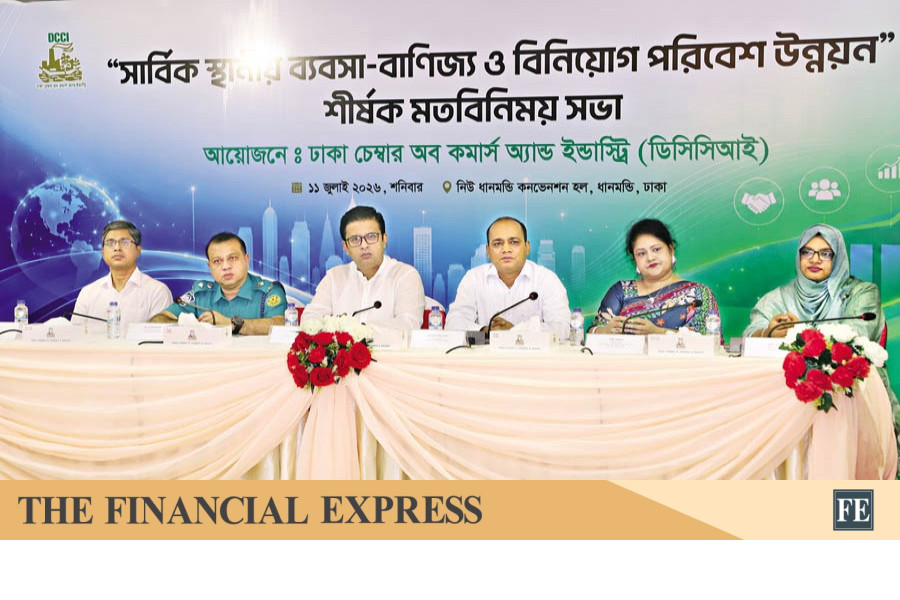
DCCI holds a view-exchange meeting titled ‘Improving Overall Local Business, Trade and Investment Environment’ in Dhaka on Saturday. DCCI President Taskeen Ahmed was present. — FE Photo

Business leaders have urged the government to reduce the cost of doing business, simplify regulatory procedures and improve law and order, warning that persistent global trade uncertainties and domestic challenges are weighing on investment and economic growth.

The demands were raised by entrepreneurs from small and medium-sized enterprises (SMEs) in the Dhanmondi-Mohammadpur area during an exchange of views organised by the Dhaka Chamber of Commerce and Industry (DCCI) on Saturday.

The meeting, titled "Improving the Overall Local Business, Trade and Investment Environment", brought together representatives from the Bangladesh Bank, the National Board of Revenue (NBR), the Dhaka Metropolitan Police (DMP), the Dhaka South City Corporation (DSCC) and the business community.

Entrepreneurs identified reducing the cost of doing business, automating and simplifying procedures for obtaining trade licences and other government services, improving access to finance, easing the process of opening letters of credit (LCs), and strengthening law and order as key priorities for creating a more business-friendly environment.

In his opening remarks, DCCI President Taskeen Ahmed said administrative complexities, ambiguities in tax and VAT regulations and law and order concerns continued to hamper business activities despite the private sector's significant contribution to the economy.

He said shortages of electricity and energy had increased transport costs, while the requirement for shopping malls and retail outlets to close by 7:00 pm had significantly reduced sales and business turnover.

Taskeen welcomed several measures announced in the national budget, including treating tax deducted at source as advance tax, lowering source tax on imports of industrial raw materials, allocating Tk 50.00 billion for the CMSME sector and introducing what he described as a stable five-year tax framework.

However, he expressed concern over the government's ambitious revenue collection target and growing reliance on bank borrowing to finance the budget deficit, arguing that these were limiting credit available to the private sector and discouraging investment.

Chief Revenue Officer of Dhaka South City Corporation Jonayed Kabir Sohag said the city corporation had adopted a zero-tolerance policy against harassment in providing trade licences and other civic services, which he said would reduce both the time and cost involved for businesses.

He also announced that, following a proposal from DCCI, the DSCC was planning to organise a Trade Licence Renewal Week at the chamber to make the renewal process easier for entrepreneurs.

Deputy Commissioner (Crime) of Dhaka Metropolitan Police Md. Tareq Zubair said police maintained a zero-tolerance approach towards extortion and that operations against extortionists were continuing.

He added that following the successful introduction of AI-based traffic management on several roads in the capital, police were considering a "Smart Policing, Smart City" initiative to expand AI-driven traffic management across Dhaka.

Additional Commissioner of the Customs, Excise and VAT Commissionerate, Dhaka (West), Nirjhar Ahmed said global supply chain disruptions and capacity constraints among domestic businesses had slowed trade, investment and commercial activities.

She said the newly introduced provision allowing businesses to submit VAT returns every three months would improve working capital management and ease business operations. She also stressed the need for greater adoption of advanced technologies to improve competitiveness.

NBR Second Secretary (Tax Policy) Nusrat Farzana said revenue mobilisation and tax incentives were equally important, adding that the revenue authority was working to maintain a balance between the two.

She said the Finance Act 2026 contained several initiatives aimed at simplifying business operations and noted that tax exemption facilities for the renewable energy generation sector had been extended until 2035 to encourage investment.​
 

BRAC Bank, OneTrueValue partner to expand green financing for SMEs

1784168973392.webp


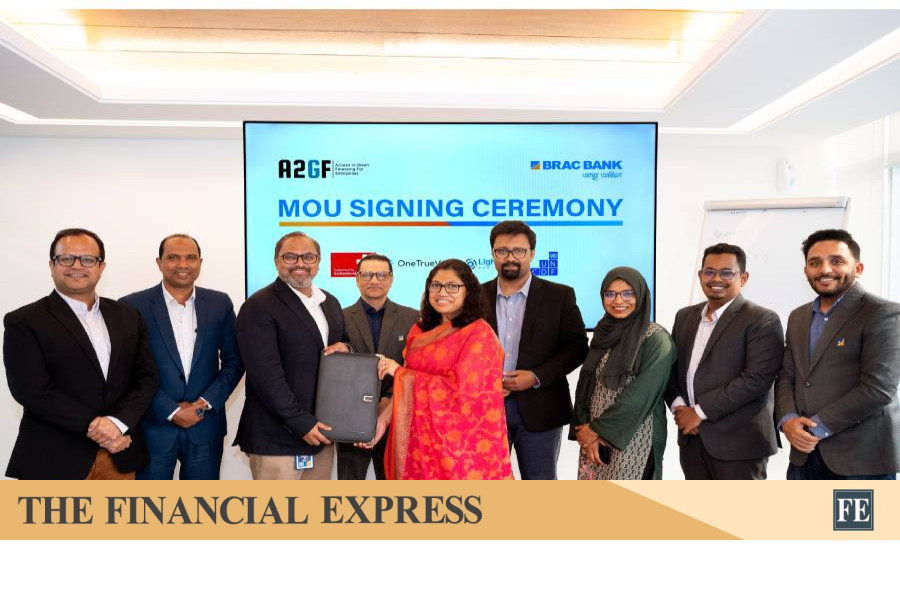
BRAC Bank has partnered with OneTrueValue (OTV) to expand access to green financing for small and medium enterprises (SMEs), reinforcing its commitment to sustainable business growth and Bangladesh’s transition to a low-carbon economy.

The partnership comes under the Access to Green Financing (A2GF) for Enterprises – Scale & Innovation programme, supported by the Embassy of Switzerland in Bangladesh, according to a press release.

Through the partnership, BRAC Bank will strengthen its green financing capabilities while expanding SMEs’ access to finance for renewable energy, energy-efficient technologies, waste management and circular economy initiatives.

The collaboration will also enhance the bank’s capacity to assess green investments through specialised assessment tools and technical expertise.

The initiative is expected to help SMEs improve resource efficiency, reduce environmental impact, strengthen business resilience and contribute to sustainable economic growth.

The agreement was signed by Syed Abdul Momen, Additional Managing Director and Head of SME Banking of BRAC Bank, and Sharawwat Islam, CFA, Managing Director of Truvalu Bangladesh, representing OTV.

Speaking on the occasion, Syed Abdul Momen said, “Green financing is already receiving extensive focus, particularly in our SME portfolio, and this partnership will help us expand that footprint further. As Bangladesh’s leading SME bank, we believe sustainability is becoming a key driver of business competitiveness. By making green finance more accessible, we aim to empower entrepreneurs to adopt sustainable technologies, strengthen their businesses and create lasting economic and environmental value.”

Sharawwat Islam, CFA, said, “SMEs in Bangladesh are increasingly willing to invest in green technologies, yet many continue to face challenges in accessing finance and demonstrating measurable environmental impact. Through this partnership, we aim to bridge those gaps by connecting businesses with finance while strengthening the systems that measure and verify their sustainability outcomes.”

As Bangladesh’s largest SME bank, BRAC Bank continues to advance sustainable finance through innovative solutions that help entrepreneurs grow responsibly while contributing to the country’s long-term economic and environmental aspirations.

OTV is an investment management and advisory firm accelerating green growth across emerging markets by mobilising private capital for climate solutions.

As a joint venture between One to Watch and Truvalu, OTV combines more than two decades of investment and business development experience across five countries, supporting businesses that generate financial returns alongside measurable environmental and social impact.​
 

The new era of MSME growth
Mohammad Mamdudur Rashid, Managing director & CEO, United Commercial Bank PLC (UCB)

1785282767962.webp

Mohammad Mamdudur Rashid.

Micro, Small and Medium Enterprises (MSME) have firmly established themselves as the driving force behind Bangladesh’s economic narrative. Generating a massive chunk of employment nationwide, these resilient businesses keep manufacturing, services, agriculture, exports, and local markets humming. Yet, for this sector to achieve truly sustainable growth, the demand for friction-free financing, tech-driven banking, and entrepreneur-friendly financial ecosystems is at an all-time high. History

Stepping directly into this gap is United Commercial Bank PLC (UCB). By consistently rolling out initiatives to make the SME sector more dynamic, UCB’s SME and Agricultural Banking Division now supports over 20,000 entrepreneurs. With a robust loan portfolio of approximately Tk 7,259 crore, the bank is actively funding business expansions across the country. Remarkably, nearly 83 per cent of this portfolio is self-funded—a testament to UCB’s stellar deposit management and sustainable financial strength.

At a time when stable deposits are considered the holy grail of banking, UCB’s financial position stands strong on a foundation of long-term customer trust. Over the past 18.5 months, the bank’s total deposits surged to Tk 72,300 crore.

What makes this milestone unique is that nearly 70 per cent of these deposits stem from retail and SME customers. From small-scale rural entrepreneurs to everyday individual savers, millions across Bangladesh have chosen UCB as their go-to financial partner. This diversified deposit base does more than prove UCB’s market presence; it anchors its institutional credibility and financial stability in grassroots acceptance.

Moving past traditional, slow-moving loan disbursements, UCB is undergoing a massive digital overhaul to make banking swift and transparent. The bank is systematically automating its entire lending lifecycle from initial application to approval and eventual disbursement.

By leveraging digital lead generation, platform-based lending, and data-driven analytics, UCB ensures that entrepreneurs can access funds with minimal turnaround time and zero unnecessary complexity.

UCB’s impact on the rural economy is equally profound. In the current fiscal year, the bank surpassed its agricultural loan disbursement target by over 100 per cent. UCB is intentionally channeling funds to agri-entrepreneurs, smallholders, and agro-based industries, while pioneering green agriculture, climate-resilient farming, and modern agro-ventures.

The global economic slowdown and a sluggish domestic export market have posed severe headwinds for businesses recently. Yet, UCB’s SME trade segment has managed to buck the trend.

In a striking contrast, UCB’s SME export business recorded an impressive 39 per cent growth this year, even as the country’s overall national export growth dipped to a negative 3 per cent (-3pc). On the import side, the bank maintained a remarkably stable foothold compared to national trends. Through dedicated Trade Helpdesks, specialized branch services, and alliances with trade bodies, UCB is giving local SMEs the financial firepower to compete globally.

UCB recognizes that providing money is only half the battle; nurturing entrepreneurial capability is just as crucial. To bridge the skill gap, the bank regularly hosts Relationship Manager (RM) training, entrepreneur development programs, and field-level exchange meets with local chambers of commerce.

Looking forward, the bank is executing a major digital shift in the SME sector to tackle future hurdles. UCB has already partnered with cutting-edge tech entities like ‘Sokrio Technologies’ to streamline its platform-based lending.

As part of its 2026 roadmap, UCB has taken the initiative to launch a digital supply chain alongside implementing the ‘Bangla QR Code’ system for SME deposit mobilization, which will make transactions faster and much simpler.

While technology drives efficiency, UCB is careful not to lose the human connection. The bank is blending its digital push with grassroots relational strategies, such as direct, casual ‘Cha Chakra’ with local business communities and highly active social media engagement.

As Bangladesh marches forward, the SME sector remains indispensable. By seamlessly weaving together advanced technology, strategic partnerships, and authentic human connection, UCB is not just offering financial transactions, it is cultivating a sustainable, long-term partnership that promises a brighter future for the nation’s entrepreneurs.

UCB SME Banking at a Glance

Today, UCB’s SME and Agricultural Banking Division serves more than 20,000 entrepreneurs across Bangladesh with a loan portfolio of approximately Tk 7,259 crore. Notably, around 83 per cent of this portfolio is funded through the Bank’s own deposits, reflecting UCB’s strong liquidity position and sustainable financing capability.

Customer confidence continues to strengthen the Bank. Over the past 18½ months, UCB’s total deposits have grown to Tk 72,300 crore, with nearly 70 per cent contributed by Retail and SME customers—demonstrating broad-based public trust.

1785282835577.webp


UCB has also delivered strong performance in SME trade finance. Despite challenging global conditions and a slowdown in Bangladesh’s overall export performance, UCB’s SME export business recorded nearly 39 per cent growth during the current year, significantly outperforming the country’s overall export growth of negative 3 per cent over the same period.]​
 

Govt aims to raise SMEs’ contribution to economy to 60pc
Staff Correspondent 09 August, 2026, 01:15

1786242086183.webp


The government is working to raise the contribution of micro, cottage, small and medium enterprises to Bangladesh’s economy to more than 60 per cent, industry minister Khandaker Abdul Muktadir said on Saturday.

Expanding such enterprises would increase people’s participation in economic activities, create employment and help reduce income inequality, he said.

The minister made the remarks while speaking as chief guest at a meeting with industrialists and a cheque-distribution programme for entrepreneurs at the conference room of the BanSCIC district office in Bogura.

He said micro, cottage, small and medium enterprises currently account for around 36 per cent of GDP through business activities.

‘If this share exceeds 60 per cent, the economic lifeblood will become more vibrant and the benefits of economic growth will reach more people,’ he added.

The government’s goal for the coming days is to expand the number of entrepreneurs in micro, small, medium and cottage industries, he added.

He also stressed the need to develop skilled workers for the light engineering and leather industries, saying the government had taken an initiative to establish a training centre to improve design and technical skills in the two sectors.

An international-standard organisation could be appointed to operate the centre, with the government exploring cooperation with institutions from Italy, Germany or other European countries.

Regarding Bangladesh’s industrial structure, the minister said labour-intensive industries were particularly important for an economy like Bangladesh.

Although high-tech and capital-intensive industries could generate greater investment and profits, they generally created fewer jobs, while most industries in Bangladesh were labour-intensive and required relatively less capital, he said.

‘Low-capital businesses cannot be operated at interest rates of 13–14 per cent. Considering this reality, the government is taking various measures to reduce the cost of funds,’ Muktadir said.

The government was also working to improve energy supplies for industries, he said, adding that resolving problems inherited from the past would take time and require realistic planning and effective implementation.

The minister urged entrepreneurs to come forward with projects that were less dependent on energy and assured them of government logistical support for implementing such projects.

BSCIC chairman Benzir Ahmed delivered the welcome address at the programme.

Meanwhile, at another event of the assumption of office by the newly elected board of directors of the Bogura Chamber of Commerce and Industry on the same day, he said the government is planning to establish a new industrial park on around 400 acres of land in Bogura to meet the growing demand for industrial space among small and medium-sized enterprises.

The government aims to begin preliminary development work on the proposed park during the coming winter season, he said.

Muktadir said Bogura had strong potential to emerge as an important industrial and economic hub, particularly in the light engineering sector, and the government has been working to realise it, he added.

The existing BSCIC industrial estate in Bogura had already reached full capacity, while demand for new industrial plots among SME entrepreneurs was increasing, the minister said.

‘Considering this demand, we have planned to establish a new BSCIC industrial park on around 400 acres of land. We would try to move ahead quickly and begin the initial work during the coming winter season,’ he said.

The government was also working to improve access to energy and electricity, simplify gas connections and create opportunities for industrial entrepreneurs to obtain financing at lower costs, Muktadir added.

He added that the government would place equal emphasis on developing skilled human resources and strengthening the capacity of entrepreneurs.

Road transport and bridges minister Sheikh Robiul Alam inaugurated the programme, while state minister for local government, rural development and cooperatives Mir Shahe Alam attended it as a special guest. Members of parliament from Bogura were present.

Earlier, Muktadir visited the proposed industrial park site at Fapora union in Bogura Sadar upazila.​
 

CMSMEs face existential threat amid constraints

Energy crisis, shrinking bank credit hit hard small businesses

Muhammad Ayub Ali 14 August, 2026, 00:20

1786664868954.webp


The country’s cottage, micro, small and medium enterprises are facing an existential threat as working-capital shortages, limited access to bank loans, persistent gas and electricity shortages and mounting financial distress squeeze the businesses amid a broader economic slowdown, industry insiders said.

Experts stressed that credit support alone would not be enough to safeguard CMSMEs at this critical stage, calling instead for a comprehensive approach that combines adequate energy supply, technology-based knowledge support, and sector-specific demand generation.

The struggles of two award-winning entrepreneurs illustrate how quickly fortune can turn for small businesses caught in credit and energy shortages.

Md Lutfur Rahman received the SME Prize in 2016 in the category of Producer and Exporter of Jute Products in recognition of his contribution to the jute industry. In the same year, he secured several export orders from foreign buyers, but struggled to fulfil them ‘amid unfair competition and interference from local middlemen’.

A shortage of working capital compounded his difficulties, preventing him from procuring raw materials and completing production on schedule, which in turn affected his ability to deliver goods within agreed deadlines.

In 2017, Lutfur approached several banks for loans, but his applications were rejected because he could not provide the collateral the banks required.

With working capital still scarce and institutional financing out of reach, he was eventually forced to shut his factory in 2020 — a facility that had employed more than 20 workers. He now works as a middleman in the jute trading business, without a manufacturing facility of his own.

Nazrul Islam, owner of RAJA Metal Industries and a recipient of the SME Prize in 2022, is now grappling with severe financial distress amid persistent inflation, the energy crisis and an acute working-capital shortage.

His factory, which employs around 80 workers, has not paid salaries for the past three months. Attendance has deteriorated sharply as a result — at least 10 workers stopped reporting for duty last month over the prolonged non-payment of wages.

Dhaka Chamber of Commerce and Industry president Taskeen Ahmed said on Tuesday that the CMSME sector was in a state of emergency, with its share of total bank credit eroding from 19.11 per cent in 2023 to 18.40 per cent in 2024, before hitting a critical low of 15.87 per cent in March 2025.

Weak private-sector credit growth of 4.47 per cent, combined with high interest rates of 11.92 per cent, has contributed to a sharp rise in CMSME non-performing loans, which now stand at 26.04 per cent, he said, adding that rising costs and energy shortages continue to pile further pressure on small businesses.

Restoring business confidence, Ahmed said, would require cutting bureaucratic barriers, easing access to CMSME loans, protecting funds earmarked for small firms, and reducing import duties on raw materials.

The DCCI also called for banking-sector reform and a reliable supply of gas and electricity to SME clusters, warning that the government’s Tk 60,000-crore stimulus package would fail without urgent intervention.

Khondaker Golam Moazzem, research director at the Centre for Policy Dialogue, said that the economy was grappling with high inflation, energy shortages, liquidity constraints and difficult global market conditions.

While large industries were also affected, he said, adding that CMSMEs face a far greater threat to their survival.

‘The government should secure low-cost international funds through the finance ministry to provide affordable financing for CMSMEs amid persistent economic challenges,’ he said.

The National SME Policy targets CMSME lending at a minimum of 27 per cent of total lending by 2029, with an interim target of 25.50 per cent for this year to support employment.

Actual lending, however, has continued to decline rather than rise.

Since its establishment, the SME Foundation has disbursed Tk 1,250 crore in loans, while the Bangladesh Small and Cottage Industries Corporation has disbursed Tk 341.57 crore over the past five years — a figure experts describe as grossly inadequate given the scale of demand.

Mustafa K Mujeri, a distinguished economist and executive director of the Institute for Inclusive Finance and Development, said that providing loans alone was not enough.

Businesses also needed lower production costs, easier access to raw materials, and reliable energy support, he said, adding that technology-based, sector-specific support packages were needed to foster new entrepreneurs, strengthen existing businesses, and create jobs.

According to the Bangladesh Bureau of Statistics’ 2024 Economic Survey, nearly 99 per cent of the country’s approximately 1.17 crore industrial establishments fall under the CMSME category.

The sector contributes around 30 per cent of Bangladesh’s economy and provides more than 30 million jobs, accounting for 85 per cent of total industrial employment — underscoring what economists say is at stake if the current crisis is left unaddressed.​
 

What the import policy order still owes CMSME

Md Rakibul Hasan 03 October, 2026, 00:00


1790987158053.webp


THE Import Policy Order, 2026-2029, governs how goods move in and out of Bangladesh. The ministry of commerce issues it under the Imports and Exports (Control) Act, 1950. It sets out who can import what, on what conditions, for the next three years. Most industry runs on its general rules: import registration, letters of credit and permission from the Office of the Chief Controller of Imports and Exports where the order requires it. Within that general structure, the order also provides a few enhanced facilities for specific categories of enterprise.

The largest of these sits in Article 16. It places Invest Bangladesh Authority, Export Processing Zones and free trade zones entirely outside the order’s general rules. These enterprises follow separate banking and customs procedures, set directly by Bangladesh Bank and the National Board of Revenue. A pass-book system tracks each unit’s import and export accounts, and a separate in-pass and out-pass system lets machinery leave for repair and return without repeating customs formalities. Domestic sales into these zones count as exports, settled in convertible currency. A second facility, under Article 25, gives fully export-oriented garment, textile and hosiery, leather, shipbuilding and furniture manufacturers a comparable back-to-back letter of credit arrangement. Bangladesh Garment Manufacturers and Exporters Association or Bangladesh Knitwear Manufacturers and Exporters Association set the approved quantities through utilisation declarations.

The two facilities are built around large-scale, export-oriented industry. Under Bangladesh Export Processing Zones Authority’s own framework, an export processing zone sits behind a customs boundary and admits only fully export-oriented tenants, which is part of what lets Article 16 switch off the general rules for an entire zone at once. Article 25’s facility is written around five sectors that export in volume. Neither was designed to account for a different kind of industry, because large exporters were the enterprises these facilities were built for.

Cottage, Micro, Small, and Medium Enterprise has no equivalent. Cottage, micro, small and medium enterprises registered under the Bangladesh Small and Cottage Industries Corporation (BSCIC), operating out of its 84 industrial estates, draw only on the order’s general facilitation for recognised industries. That baseline was never built to carry the weight CMSME now represents. The government has said it wants the sector’s contribution to exceed 60 per cent of the economy, up from around 36 per cent today. Bangladesh Small and Cottage Industries Corporation’s estates, spread across the country, are the largest organised concentration of the entrepreneurs that target depends on. An import policy built around two enhanced facilities, neither reachable by CMSME units in these estates, leaves them carrying the government’s own growth target on the same procedural footing as everyone else.

Bangladesh Small and Cottage Industries Corporation’s estates already do for CMSME what Invest Bangladesh Authority and EPZs do for large export industry. They concentrate these enterprises, organise them, and give them a single administrative home. Not every estate is mixed-use either. The BSCIC Hosiery Industrial Estate in Fatullah, Narayanganj, holds many hosiery and knitwear export units and little else. The BSCIC Leather Industrial Estate in Savar was purpose-built for tanneries. Both sit inside sectors, hosiery and leather, that Article 25 already names as eligible. A general BSCIC estate is different. It holds a smaller number of large exporters, Square Pharmaceuticals in Pabna among them, alongside a much larger number of cottage and small units producing mostly for the domestic market. That mix argues for a calibrated version of Article 16’s facility. Single-sector estates like Narayanganj and Savar make the case more directly. They are structured for export the way an EPZ is, yet the enterprises inside them still import and export on the general track.

Every enterprise on a BSCIC estate already goes through BSCIC’s own industry registration through One Stop Service. That gives regulators a ready mechanism for identifying which estate tenants would qualify. The facility could attach to enterprises that meet a defined export or foreign-exchange-earning threshold, or simply to CMSME units in the estates importing raw material and machinery. Enterprises trading purely in the domestic market would continue on the general track they use today.

The administrative groundwork exists on the other side too. Bangladesh Bank and the National Board of Revenue already run Article 16’s separate procedures for Invest Bangladesh Authority and EPZ. Extending a scaled version of the same procedures to BSCIC estates would build on a system already in operation, rather than create one from nothing. This is not a case for treating BSCIC as equal in scope or mandate to Invest Bangladesh Authority. It is a case for recognising that the facility Article 16 built to reduce import friction around large-scale, export-oriented industry is needed just as much inside the estates carrying the country’s CMSME base. The next Import Policy Order is the natural place to extend it there, sized to how those estates actually work.

Md Rakibul Hasan is a credit officer at Bangladesh Small and Cottage Industries Corporation.​
 

Govt to spend Tk 300cr to boost SMEs in 70 municipalities

Staff Correspondent . Dhaka

The government plans to spend nearly Tk 300 crore to improve the business and investment climate in 70 municipalities, with an aim to expand local enterprises and create jobs beyond major urban centres.

The initiative would support small and medium-sized enterprises, simplify municipal services and strengthen local revenue collection, according to a proposal submitted by the Local Government Division to the Planning Commission.

Women, young people and marginalised communities would receive priority in employment and economic participation under the project, titled ‘PRABRIDDHI: Local Economic Development in Selected Municipalities’.

Planning officials said the project had been listed for consideration by the Executive Committee of the National Economic Council.

The government would provide Tk 254.99 crore, about 85 per cent of the total cost, while Swiss grant assistance would cover Tk 45 crore.

The Local Government Division would implement the project across all eight divisions by March 2030, with implementation scheduled to begin this October.

The proposal seeks Tk 196.91 crore, nearly two-thirds of the total project cost, in grants to implement a local economic development framework.

The framework would bring municipal authorities, businesses and other stakeholders together to identify economic opportunities and address barriers to enterprise development.

Support would include assistance for small enterprises and entrepreneurs, alongside efforts to mobilise investment through local economic development funds and public-private partnerships.

The project would allocate Tk 30.45 crore for municipal digitalisation, including one-stop service centres and electronic payment systems to improve service delivery and revenue collection.

Another Tk 28 crore would be allocated for grants under an NGO component, while consultancy services would cost Tk 19.82 crore and domestic training Tk 2.95 crore.

The project would expand an approach tested in seven municipalities, where the previous phase reportedly increased business incomes and municipal revenue.

According to that project summary, about 38,000 entrepreneurs and 50,000 service users benefited directly, while entrepreneurs’ incomes increased by approximately Tk 12 crore.

The document also reported about 49,111 additional workdays and Tk 8 crore in additional municipal revenue.

During appraisal, the project evaluation committee called for the selection of relatively disadvantaged municipalities, taking into account regional disparities, poverty, weaknesses in revenue collection and gaps in digital services.

The implementing division said the selection process also considered economic potential, employment opportunities, population, demand for services and climate risks.

The committee questioned whether the ‘Bangla LED Model’ developed under the earlier project could be applied across municipalities with different institutional capacities.

The Local Government Division said the model would be adapted to local capacities and economic opportunities through technical assistance and phased implementation.​
 

Leasing the sun for SMEs
How NBFIs can help small businesses finance rooftop solar


1794354240011.webp


For decades, businesses in Bangladesh have depended heavily on conventional energy sources, including grid electricity and imported fuels, to keep their operations running. In recent years, fluctuations in fuel prices and disruptions in electricity supply have made this dependence increasingly difficult to sustain. Geopolitical tensions and volatility in global energy markets have further exposed the risks of relying on a limited range of energy sources.

These challenges are particularly difficult for small and medium-sized enterprises (SMEs), which often operate on thin margins and have limited capacity to absorb higher energy costs or prolonged power outages. While larger businesses may invest in captive power generation and other backup systems, smaller enterprises often lack the capital and technical capacity to make similar investments.

Businesses in many countries are responding by diversifying their energy sources through rooftop solar, battery systems and other renewable energy technologies. These investments can help reduce exposure to energy price fluctuations while lowering carbon emissions.

Bangladesh has considerable potential to follow the same approach. Abundant sunlight creates opportunities for rooftop solar, while agricultural residues and organic waste can support suitable bioenergy applications.

For manufacturers, food-processing businesses, workshops and cold-storage operators, these technologies could help maintain production while cutting dependence on grid electricity and diesel. A study by Change Initiative estimates that decentralised rooftop solar could lower SME operating costs by 30 to 50 per cent under appropriate conditions, although actual savings would depend on installation costs, financing terms and electricity use.

The main barrier is the upfront investment. Solar panels, inverters, batteries and installation can be expensive for businesses that need to preserve cash for daily operations. Limited collateral and access to affordable finance can make these investments difficult even when the long-term business case is sound.

This is an economic concern as well as an energy issue. According to media reports, SMEs account for approximately 27 to 30 per cent of Bangladesh's GDP and play an important role in employment and entrepreneurship. When these businesses struggle to maintain production, the effects can extend across their supply chains, affecting suppliers, customers and workers.

Non-bank financial institutions (NBFIs) can help address this financing gap, particularly through leasing and equipment finance. Leasing is an established strength of the sector and can help businesses acquire rooftop solar systems, energy-efficient machinery and electric vehicles without bearing the full purchase cost upfront. Repayment structures suited to SME cash flows could make these investments more manageable and allow businesses to spread costs over time.

Bangladesh has used this model at scale before. Media reports show that between 2003 and 2019, IDCOL, a state-owned non-bank financial institution, financed the installation of about 4.1 million solar home systems through 56 partner organisations, with the cost spread over instalments that rural households could manage. A similar approach, adapted for commercial rooftops and machinery, could bring solar within reach of many more small businesses.

IDLC Finance's green finance portfolio covers renewable energy, energy and resource efficiency, alternative energy and other environmentally beneficial investments. Expanding access to such financing will require products designed around the needs of smaller businesses, alongside technical support to assess installation, performance and maintenance requirements.

Green finance must also be credible. Bangladesh Bank has progressively strengthened its sustainable finance framework, including through its Sustainable Finance Policy for banks and financial institutions in 2020. Financial institutions need to incorporate relevant environmental and climate risks into credit appraisal, while tracking how their green portfolios are allocated and what outcomes they support. The objective should be to support viable investments with demonstrable environmental benefits, rather than simply finance equipment labelled as green.

Government policy can help create the conditions for this transition. The Renewable Energy Policy 2025 sets targets for renewable sources to meet 20 per cent of the country's electricity demand by 2030 and 30 per cent by 2040. The National Rooftop Solar Programme, approved in 2025, aims to develop about 3,000 megawatts of solar capacity, including through installations on government buildings, educational institutions and healthcare facilities. Net metering rules, in place since 2018, let businesses export surplus electricity to the grid against their bills.

Bangladesh Bank has also made cheaper refinance available. In May 2026, it set aside Tk 1,000 crore from its Green Transformation Fund to refinance bank loans for green machinery and solar installations by rural and local industries, with lending rates capped at 5 per cent.

These initiatives provide a foundation for expanding renewable energy, but the transition must also reach smaller businesses. Appropriate financing, risk-sharing mechanisms and technical support can help translate national targets into investments across the productive economy.

For SMEs, the shift to renewable energy is as much a way to manage operating costs and reduce vulnerability to energy disruptions as it is an environmental choice. NBFIs can help make that shift possible through leasing and other forms of equipment finance, provided lending decisions account for risk and green investments are measured against meaningful outcomes.

Syed Javed Noor is the Additional Managing Director and Head of Business at IDLC Finance PLC.​
 
Back
Top