[🇧🇩] Cottage Industry/SME in Bangladesh

[🇧🇩] Cottage Industry/SME in Bangladesh
60
4K
More threads by Saif

G Bangladesh Defense

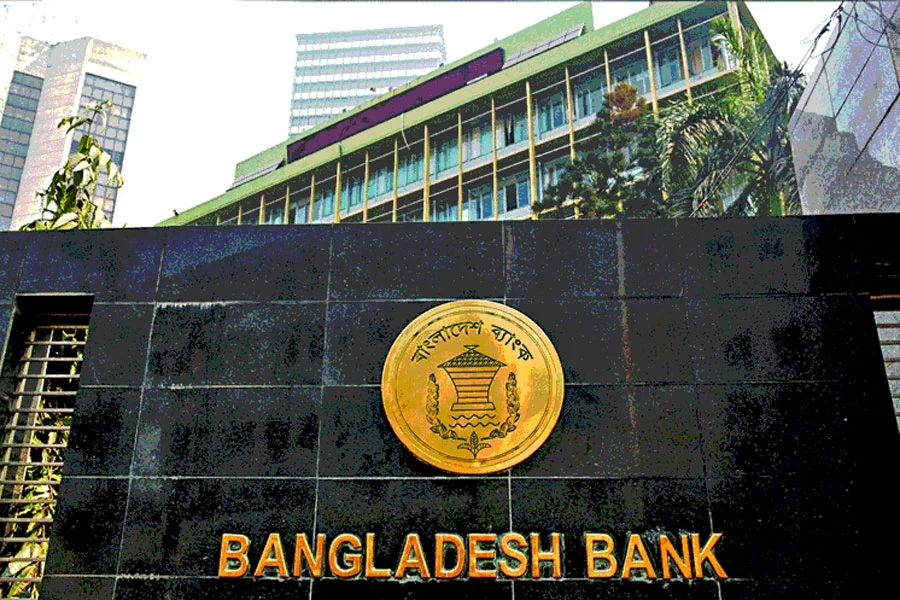
Bangladesh Bank eases refinancing terms for state-owned, specialised banks to boost CMSME loans

bdnews24.com

Published :
May 25, 2026 00:23
Updated :
May 25, 2026 00:23
1779680498712.webp


Bangladesh Bank (BB) has relaxed the participation criteria for state-owned commercial and specialised banks under its refinancing facilities, a move aimed at accelerating the flow of credit to the Cottage, Micro, Small, and Medium Enterprise (CMSME) sector.

The SME and Special Programmes Department of the central bank issued a circular to this effect today (Sunday).

According to the circular, the decision was taken to enhance the contribution of the CMSME sector to national economic growth and to expand employment opportunities at the grassroots level.

Under the new directive, state-owned commercial and specialized banks
can now enlist as participating financial institutions to access the
central bank's CMSME refinancing funds.

To facilitate this, the central bank has exempted these state banks from two mandatory conditions that previously restricted their eligibility.

The relaxed conditions include the obligation to maintain the non-performing loan (NPL) or classified investment ratio within a maximum cap of 20 per cent, mandatory adherence to Bangladesh Bank’s prescribed Capital Adequacy Ratio (CAR), Cash Reserve Ratio (CRR), and Statutory Liquidity Ratio (SLR).

By waiving these stringent capital and asset-quality thresholds, the central bank aims to utilise the vast rural and semi-urban network of state-run banks to channel low-cost funds directly to small and marginalised entrepreneurs across the country, BB officials said.​
 

BRAC Bank signs two deals with Bangladesh Bank to expand MSME financing

FE ONLINE DESK

Published :
Jun 01, 2026 21:02
Updated :
Jun 01, 2026 21:02

1780359244112.webp


BRAC Bank has signed two agreements with Bangladesh Bank to enhance access to affordable financing for cottage, micro, small, and medium enterprises (CMSMEs), reinforcing its commitment to entrepreneurship development and financial inclusion, according to a press release.

The agreements will enable BRAC Bank to extend financing to entrepreneurs in various clusters nationwide and to provide low cost financing support to MSMEs under Bangladesh Bank’s Financial Sector Fund for the Development of MSMEs (FSFDMSME).

Under the Cluster Finance Refinance Scheme, which has a fund size of BDT 3,000 crore, BRAC Bank will provide easy term loans and working capital support to entrepreneurs engaged in various industrial clusters across the country. Eligible businesses will be able to access financing at concessional interest rates starting from 7%, supporting business expansion, productivity enhancement, and employment generation.

The second agreement allows BRAC Bank to participate in the BDT 1,500 crore Financial Sector Fund for the Development of MSMEs (FSFDMSME). Through this scheme, MSMEs in the manufacturing and service sectors will be able to obtain financing at a 7% interest rate. The facility offers loans of up to BDT 1 crore for micro enterprises and up to BDT 5 crore for small and medium enterprises.

Tareq Refat Ullah Khan exchanged the agreement documents with Nawshad Mustafa, Director, SME & Special Programmes Department, Bangladesh Bank, at a ceremony at Bangladesh Bank on May 18, 2026 in presence of Nurun Nahar, Deputy Governor, Bangladesh Bank.

Husne Ara Shikha, Executive Director, Bangladesh Bank; and Mahbubur Rahman, Head of Cottage, Micro & Small Business (Unit 2), Head of Liability and Cash Management, SME Banking, BRAC Bank; were present.

As the country’s leading SME-focused bank, BRAC Bank with refinancing support from Bangladesh Bank continues to play a pioneering role in widening access to finance for grassroots entrepreneurs, supporting business growth, employment creation, and sustainable economic development across Bangladesh.​
 

NCC Bank eyes digital push, higher SME growth

Says Managing Director and CEO M Shamsul Arefin

Ahsan Habib

1780795206691.webp


NCC Bank PLC is targeting diversification, digital transformation and stronger risk management to drive its next phase of growth, said Managing Director and CEO M Shamsul Arefin.

In an interview with The Daily Star on the bank’s 33rd anniversary, he outlined a roadmap centred on expanding SME and retail lending, accelerating digital banking services, strengthening asset quality, embracing artificial intelligence and increasing support for sustainable financing.

The bank began its journey as an investment company in 1985 and operated through 16 branches until 1992. It became a full-fledged private commercial bank in 1993 with a paid-up capital of Tk 39 crore. Today, that figure stands at Tk 1,154 crore. Arefin said the lender’s transformation from a merchant bank into a commercial bank, coupled with its strategic move into larger corporate clients and trade finance, has been instrumental in shaping its growth trajectory.

GROWTH PRIORITIES

“In its early years, the bank focused primarily on SME financing and mid-sized corporate clients, which helped build a loyal customer base and establish a strong customer-centric culture. However, over the last seven to eight years, NCC Bank has strategically repositioned itself by venturing into large-scale corporate clients, export-oriented industries, trade finance, and a broader range of business segments,” he said.

While maintaining its presence in corporate and export-oriented sectors, NCC Bank plans to place greater emphasis on SMEs, retail banking and agriculture to achieve more balanced growth and deepen financial inclusion, he said.

The lender also plans to expand its Islamic banking footprint as demand for shariah-compliant financial services continues to rise.

“The long-term goal is a modern, resilient, customer-focused bank built on strong governance, financial discipline, and sustainable growth,” he said.

DIGITAL TRANSFORMATION

Digitalisation remains central to the bank’s strategy.

“Going forward, NCC Bank will keep investing in digital infrastructure, cybersecurity, data analytics, automation, and customer-facing tech -- enhancing mobile banking, QR payments, virtual services, digital lending, and fintech integrations,” he said.

Artificial intelligence is expected to play a growing role in the bank’s operations.

“As part of its digital roadmap, the bank is exploring gradual integration of AI into areas like customer behaviour analysis, fraud detection, chatbots, predictive analytics, and credit risk monitoring,” he said.

“AI will also strengthen early warning systems and portfolio analysis.”

Meanwhile, the bank is also increasing its focus on green financing, with greater attention to renewable energy projects, energy-efficient industries and environmentally sustainable investments, he said.

STRENGTHENING ASSET QUALITY

Reflecting on the previous year, Arefin said broader economic pressures had affected asset quality across the banking industry.

“In 2024, NCC Bank faced asset quality pressure like the broader industry, with its NPL ratio rising to 7.32 per cent. This was driven mainly by external factors like inflation, energy crisis, forex volatility, liquidity stress, and slower business cash flows,” he said.

“By 2025, however, the bank significantly reduced its NPL to 4.12 percent through stronger recovery drives, improved monitoring, tighter credit underwriting, and better portfolio supervision.”

“The goal is not just to lower the NPL ratio but to build a healthier, more sustainable, and diversified loan portfolio over the medium to long term,” he said.

The lender’s performance remained resilient despite a challenging banking environment. Deposits rose by nearly 17 percent, advances increased by around 10 percent and operating profit grew by almost 18 percent in 2025. Net profit climbed to Tk 476 crore from Tk 437 crore a year earlier.

“Overall, NCC Bank’s 2024-2025 performance underscores strong governance, a customer-centric model, portfolio diversification, and disciplined risk management,” he said.

To keep bad loans under control, the lender is pursuing stricter credit appraisal, enhanced early warning systems, expanded recovery teams and greater use of technology and analytics.

NAVIGATING ECONOMIC HEADWINDS

He noted that many businesses remain cautious amid high inflation, rising interest rates, foreign-exchange volatility, elevated import costs and liquidity pressures.

“Many businesses remain cautious due to some ongoing pressures: high inflation, energy crisis, rising interest rates, forex volatility, import costs, liquidity stress, slower demand, and lower cash flow,” he said. “As a result, business houses are prioritising liquidity and balance sheet stability over expansion.”

Demand has shifted from long-term investment loans towards working-capital and trade-finance facilities, although export-oriented sectors continue to show relatively stable borrowing demand.

On governance, Arefin said the board maintains strategic oversight while management independently handles day-to-day operations.

“The board provides strategic oversight, while management independently handles day-to-day operations within approved risk and compliance frameworks. No undue pressure is exerted on lending or operational decisions -- all credit proposals undergo a rigorous evaluation and multi-level approval process,” he said.

Asked what differentiates NCC Bank from its peers, Arefin highlighted its governance standards, risk management and customer-focused culture.

“NCC Bank stands out for its stability, disciplined banking, customer-centric culture, and over three decades of credibility,” he said.

“It maintains strong governance, compliance, and prudent risk management -- even during sector challenges -- prioritising transparency and accountability over short-term gains.”​
 

SMEs, creative ventures to get spl focus
Staff Correspondent 10 June, 2026, 00:32

1781073157100.webp


Small and medium entrepreneurs, start-ups, women entrepreneurs, creative economic activities and overseas job seekers are likely to receive special focus in the 2026–27 financial year national budget to be announced tomorrow.

The allocations for SMEs and start-ups would be raised, while creative economic activities would receive allocations in the FY27 national budget, finance ministry officials said.

A fund worth Tk 2,000 crore has been planned for the SME sector, while about Tk 300 crore is likely to be set aside for people involved in the creative economy in FY27, the officials said.

Finance minister Amir Khosru Mahmud Chowdhury on Tuesday told the Jatiya Sangsad that the government would propose an allocation of Tk 400 crore in the FY27 national budget to support start-up financing, women’s entrepreneurship development and the promotion of young entrepreneurs.

He said that the revised budget for the FY 2025–26 had allocated Tk 200 crore to the start-up fund.

The minister said that special directives would be issued to the relevant banks and agencies to ensure that young people and small-scale entrepreneurs had easier access to loans and technical training.

The main aims of fund allocation for SMEs and new budgetary provisions are to support start-ups and create employment opportunities, especially for educated youths, the finance ministry officials added.

The country is facing a high unemployment rate of 4.6 per cent.

Besides, about 85.89 per cent of entrepreneurs, mostly SMEs, identified the shortage of capital as the main problem in running economic activities, according to the Economic Census 2024 by the Bangladesh Bureau of Statistics.

SMEs account for 25–30 per cent of the country’s gross domestic product and generate employment, but the sector has remained largely out of access to bank loans.

Finance ministry officials said that the planned allocation for the creative economy aimed to integrate promising handicraft products such as shitalpati and clay work into the mainstream economy and promote indigenous products in global value chains.

Other areas, including performing arts such as theatre, music, drama, dance, painting and sculpture, are likely to receive fund allocations, along with media and entertainment sectors such as film, television, radio broadcasting and content creation under the creative economy, they said.

Besides, the first budget of the BNP-led government’s current tenure will give priority to card programmes, including family cards, farmer cards and health cards, under the social safety net programme.

Amir Khosru, who will announce the budget at the Jatiya Sangsad, told reporters at the secretariat in the capital on Tuesday that the forthcoming budget had been prepared to accommodate all citizens, irrespective of income level, despite limited funds.

The allocations could have been higher for necessary sectors had the government not faced fund limitations, the finance minister added.

An allocation of Tk 12,373 crore will be set aside to provide Tk 2,500 monthly to 41 lakh family card holders in FY27, said finance ministry officials.

They also said that farmer cards would be given to 42 lakh beneficiaries with a financial allocation of Tk 1,062 crore in FY27. Farmer card holders will also receive Tk 2,500, but once in a year.

The government is likely to allocate Tk 69,309 crore for the health sector in the new national budget compared with Tk 34,719 crore in the outgoing budget.

Part of the increased fund in the health sector will be utilised to run an experimental health card programme in some 14 districts.

Besides, allocation will be provided to facilitate 21 lakh expatriate cards to generate 1o lakh employment opportunities in the overseas job market.

An allocation of Tk 7,000 crore will also be announced in the budget to incentivise remittance inflows from expatriate Bangladeshis, who sent over $33.63 billion between July 2025 and June 7, 2026, marking an impressive 18.45 per cent growth over the previous financial year.​
 

Bangladesh's cottage industries need more than nostalgia

Saiduzzaman Pulak and Sabbir Rahman Khan

Long before Bangladesh became known for garments and remittances, it was known for making things. Not in factories. Not in industrial parks. But in homes, courtyards, village lanes, and small market towns. This was the cottage economy. It fed families, boosted local trade, and carried Bengal's reputation far beyond its rivers. The story is older than we often assume. The Roman historian Pliny wrote that textiles from this region reached the Mediterranean world as early as 73 AD. This suggests that Bengal's handmade economy was connected to global trade long before modern supply chains became the hallmark of global commerce.

Muslin became the most recognised face of this economy. It travelled through royal courts, merchant houses, and long-distance trade routes. Even after the Mughal rulers renamed Dhaka Jahangirnagar, the older name persisted because trade followed what buyers knew and trusted. Economic identity, in that sense, proved stronger than official naming. What we now call heritage was once a working system of production. Muslin was not random household work scattered across villages. It maintained an ecosystem. Specialised centres known as karkhana operated under supervision, with defined roles for spinners, weavers, washers, bleachers, supervisors, and merchants. It was not a modern factory, but it had process, discipline, and quality control.

1781761474305.webp

The fabric of Muslin is so fine that a six-yard sari could be passed through a ring. Photo: Rashed Shumon

Historical records from 1747 show the level of demand. The imperial household in Delhi purchased Muslin worth Rs 1,00,000; the Nawab's household in Murshidabad purchased Rs 3,00,000; the house of Jagatseth purchased Rs 1,50,000; and Turani merchants purchased another Rs 1,00,000. These figures point to a sizeable and organised market that supported not only weavers, but also cotton growers, yarn makers, washermen, dyers, bleachers, boatmen, merchants, and agents.

By the late 18th century, the textile trade had become one of the main pillars of Bengal's commercial economy. In 1787, Collector Mathew Day estimated business transactions in the region at around one crore rupees, with textiles alone accounting for 60 to 70 lakhs. The figure speaks volumes about the role of cottage production in Bengal's economic life. The challenge came when this sector was pushed into unequal competition with industrial power. The decline of cottage industries across the Indian subcontinent is often linked to the Industrial Revolution, but it cannot be attributed solely to mechanisation. Unequal trade rules, tariff protection for British manufacturers, and the growing control of imperial markets over local production systems also influenced this decline.

After 1830, Bengal's muslin production fell sharply as British industrial centres such as Glasgow and Paisley began producing imitation muslin at much lower prices. The cheaper fabric entered the market at a scale local producers could not match, while tariff barriers made Bengal muslin less competitive. The skill remained, but the market drifted away from it. The impact was felt across the wider rural economy. By 1820, major cotton centres such as Sonargaon, Dhamrai, Narainpur, Chandpur, and Bajitpur began to close. People involved in growing, spinning, dyeing, bleaching, and weaving lost their jobs, and many were forced back into agriculture, often with weaker bargaining power and lower incomes.
A similar pressure is visible today, although the source of competition has changed. It now comes less from colonial mills and more from mass production, branded consumer goods, and modern distribution networks. Fast-moving consumer goods (FMCG) have crept into every facet of daily life. Their advantage does not come from better craftsmanship. It comes from wider distribution, standardised packaging, aggressive pricing, and constant visibility.

Cottage industries do not need to be protected from the future. They need protection from a market that recognises their design but not their labour, their heritage but not their costs, their beauty but not their bargaining power.
A packaged product has a brand name, a wrapper, a fixed price, a distributor, a marketing budget, and shelf space in the nearest shop. A handmade product often depends on local demand, seasonal sales, intermediaries, and the goodwill of buyers who still recognise its value. For consumers under pressure from high prices, packaged products often feel safer. They are available, familiar, and predictable. The handmade product may be better, but it carries uncertainty. This is where Bangladesh's cottage economy has drifted off course. Cottage products carry skill, labour, memory, and local identity. FMCG carries price, reach, and certainty. In a market driven by convenience, the latter often gets the upper hand.

In Tangail, a weaver once said his loom did not rest during the wedding season. Orders came in bundles. People looked for colour, pattern, and pride. Today, buyers ask for "something like Tangail" at half the price. Sometimes they are shown machine-made copies labelled "handloom style". The weaver is not competing with another weaver. He is competing with a system that can borrow the look of his craft without carrying the labour that goes into it. In Lakshmipur, a pottery family faces a similar reality. Earthen jars and cooking pots once sold steadily in local markets. Now, plastic drums and aluminium cookware dominate shelves. Pottery still has demand, but often during festivals or for selective uses. For much of the year, the kiln remains cold. The potter's son wants to leave, not because he dislikes the craft, but because the craft does not promise a stable income.

These stories repeat across Bangladesh. Jamdani artisans in Narayanganj struggle against cheap replicas. Shital pati makers in Sylhet face weak market access. Bamboo and cane workers depend on fairs and intermediaries. In Bagerhat, talpakha making still supports seasonal income for families; a February 2025 report noted that during the February-to-mid-June production season, a palm-fan artisan family can produce 25,000 to 30,000 fans and earn Tk 200,000 to Tk 250,000. But even that income remains vulnerable when plastic and electric alternatives crowd the market.

The issue is not that Bangladeshis no longer value craft. The deeper issue is that the market increasingly rewards capital, compliance, packaging, and distribution more than skill, patience, and originality. This unfair market system is not limited to the cottage industry. Across Bangladesh's economy, three broad groups seem to operate side by side. A small group invests in process, skill, and long-term value. A larger group survives on short-term margins. Then there are smaller producers and new entrepreneurs trying to do quality work but struggling with capital, access, and protection. Cottage producers sit closest to this third group. They have skill, but little capital. They have products, but weak distribution. They have heritage, but not enough bargaining power.

The numbers speak volumes. Bangladesh has around 830,000 cottage industry units, employing more than 29 million people and producing goods worth roughly Tk 395 billion a year, with value addition of about Tk 315 billion. Nearly 97 per cent of these units reportedly operate year-round, indicating both resilience and dependence. Yet, production growth in the cottage sector fell to 6.7 per cent in FY24. This is not an outright decline, but it is a worrying sign. This concern comes at a critical time. Bangladesh is scheduled to graduate from the Least Developed Country category on 24 November 2026. The SME Policy 2019 set a target to raise the SME sector's contribution to GDP from 25 per cent to 32 per cent by 2024, while the government is now aiming for a 35 per cent SME share by 2030. These targets will lose their sheen if the smallest producers remain outside finance, markets, and public buying channels.

1781761562738.webp

The handmade product may be better, but it carries uncertainty. Photo: Star/File

The macroeconomic situation makes the matter more urgent. Point-to-point inflation reached 9.04 per cent in April 2026, up from 8.71 per cent in March, according to BBS data. The World Bank has projected Bangladesh's FY26 growth to slow to 3.9 per cent and has called for urgent reforms to restore macroeconomic stability, sustain growth, and create jobs. The IMF has also identified low fiscal revenues, weaknesses in the banking sector, and stubbornly high inflation as major challenges.

For cottage producers, these are not distant policy concerns. Inflation raises the cost of yarn, bamboo, clay, fuel, transport, and food. Weak purchasing power reduces demand for handmade goods. Credit remains difficult. The pressure comes from both sides. Informality makes the problem worse. When producers are not registered, they struggle to access formal loans. Without accounts, they cannot easily enter institutional supply chains. Without packaging, certification, or standardisation, modern retail remains distant. Without bargaining power, intermediaries decide the terms.

The problem is not taxation itself. The problem is when compliance is designed for firms that already have accountants, office addresses, bank records, and paperwork. A home-based artisan does not operate like a medium-sized supplier. If the same rules are applied without support, formalisation becomes a wall rather than a bridge. Many small producers remain stuck in a quagmire of woes: too informal for policy support, too small for bank finance, and too invisible for large buyers. Bangladesh does have policy instruments. The Bangladesh Small and Cottage Industries Corporation Act, 2023, the SME Policy 2019, and the Geographical Indication of Goods Act, 2013, all provide entry points. But policy, by itself, does not guarantee buyers. A weaver needs orders. A potter needs buyers. A bamboo artisan needs a price that covers both labour and material. If policy does not reduce raw material risk, open buying channels, protect identity, or improve bargaining power, it remains distant from the workshop.

Mandatory jute packaging shows what aligned regulation can do. By requiring certain commodities to be packed in jute bags, the policy created demand and helped sustain the value chain. It is not a perfect model, but it offers a clear lesson: when regulation shapes demand, traditional industries can survive more firmly.

Public procurement could provide another lever. Under the Public Procurement Rules 2008, the state is one of the largest buyers in the economy. It purchases furniture, uniforms, bags, curtains, office supplies, and household items that cottage producers can make. In practice, many cannot enter the system. Tender documents are complex, compliance requirements favour established suppliers, and contracts often go to those already able to meet formal conditions.

Procurement is not only an administrative exercise. It can influence who gets access to stable demand. When the state buys only from large vendors, it tells the economy that scale matters more than inclusion. If smaller lots, simplified documentation, and reserved categories were designed with care, cottage producers could get a leg up without being forced to behave like large firms. The question of copying also warrants attention. Mass production no longer only replaces handmade goods. It borrows their look. A machine-made "handloom style" fabric carries the memory of a craft without the weaver. A plastic fan shaped like a talpakha carries the form without the artisan. Traditional cultural expressions are often copied or altered without permission, credit, or payment, and artisans rarely benefit when larger manufacturers reproduce their designs.

Legal tools such as GI, trademarks, and collective branding can help, but awareness remains low. Many small producers do not know how to protect their designs, product names, or community identity. Laws exist, but unless artisans can use them, the initiative lacks teeth. The need of the hour is not to place cottage industries in a museum. Bangladesh does not need to reverse modernisation. Factories will expand. FMCG will grow. Convenience will continue to shape consumption. The task is to build a fairer market where small producers are not punished for being small.

1781761603967.webp

Women make toys at a factory of Hathay Bunano, one of the four Bangladeshi entities recognised by the World Fair Trade Organisation. Photo: Hathay Bunano

Cottage industries do not need to be protected from the future. They need protection from a market that recognises their design but not their labour, their heritage but not their costs, their beauty but not their bargaining power. If these industries fade, Bangladesh will lose more than products. It will lose skills that have stood the test of time. A loom can be replaced. A kiln can be rebuilt. But skill carried through hands, memory, and repetition is harder to restore once broken. When rural livelihoods weaken, migration pressure rises. Cities absorb the strain. Informality grows.

Bangladesh's LDC graduation will not only test large exporters. It will test whether the economy can broaden its base. If CMSMEs are expected to carry a larger share of GDP, cottage producers cannot be treated as decorative leftovers of the past. They must be seen as part of the country's economic architecture. The question, then, is not whether cottage industries belong to the past. It is whether Bangladesh is willing to build a future in which small producers are not forced to survive on memory alone.

Saiduzzaman Pulak and Sabbir Rahman Khan work as development practitioners at Swisscontact.​
 

Latest Posts

Back