[🇧🇩] Cottage Industry/SME in Bangladesh

[🇧🇩] Cottage Industry/SME in Bangladesh
54
4K
More threads by Saif

G Bangladesh Defense

SME and start-up revolution: Can FBCCI become the new engine of growth?
Sakif Shamim

Published :
Mar 08, 2026 13:49
Updated :
Mar 08, 2026 13:49

1773017053123.webp


Bangladesh is now standing at a very important economic turning point. The country is preparing to graduate from the least developed country (LDC) category in 2026, and the vision of becoming a developed nation by 2041 is no longer just a political slogan; it is now a real economic goal. However, an important question remains – where will the next engine of economic growth come from? Large industries and export-oriented sectors are certainly important, but sustainable and inclusive growth usually depends on small and medium enterprises (SMEs) and emerging start-up businesses. In this context, the key question is how the country’s top business organisation, FBCCI, can lead an SME and start-up revolution in Bangladesh.

According to the latest Economic Census of the Bangladesh Bureau of Statistics (BBS) conducted in 2013, there are more than 7.8 million economic establishments in the country, and about 99 per cent of them are small and medium enterprises. Later studies and analyses by both government and private organisations show that the SME sector creates more than 80 per cent of total employment in Bangladesh and contributes around 25–30 per cent to the national GDP. Reports from the World Bank and the Asian Development Bank also identify SMEs as one of the main drivers of employment generation and inclusive economic growth in the country.

At the same time, the start-up ecosystem in Bangladesh has grown significantly over the last decade. Data from LightCastle Partners and the Bangladesh Association of Software and Information Services (BASIS) shows that Bangladeshi start-ups attracted around 400 million US dollars in foreign and local investment in 2021 – the highest in the country’s history. Although global investment slowed down in 2022 and 2023, start-up activities in sectors such as fintech, e-commerce, logistics, and health technology have continued to expand.

In reality, SMEs and start-ups are two stages of the same growth cycle. Start-ups are the starting point of innovation, while SMEs expand production and create jobs. However, several challenges still exist. Studies and policy reports from the Bangladesh Bank show that access to financing remains one of the biggest barriers for entrepreneurs. High interest rates, collateral-based lending systems, and long approval processes often discourage many promising entrepreneurs. According to an analysis by the International Finance Corporation (IFC), there is a significant financing gap in Bangladesh’s SME sector, and many entrepreneurs remain outside the formal financial system.

In this situation, the role of FBCCI should not remain limited to being only a representative body of businesses. It can also become a strong policy think tank that supports economic decision-making. In many South Asian countries, leading business chambers actively help governments through research, data analysis, and policy recommendations. In Bangladesh, FBCCI regularly provides pre-budget proposals, but more structured and data-driven work is still needed, especially for strengthening the SME and start-up ecosystem.

First, it is important to create a national SME and start-up data observatory. Such a platform could collect and analyse information about sector performance, financing flows, employment trends, and regional inequalities. Second, FBCCI can play a strong role in promoting alternative financing systems such as venture debt, cluster funds, crowdfunding, and equity investment. The Bangladesh Securities and Exchange Commission (BSEC) has already introduced the SME Board in the capital market to make it easier for small and medium companies to raise funds. However, coordinated support from business chambers can make this initiative much more effective.

Third, skill development and technology transformation are extremely important for the future of SMEs and start-ups. According to the World Economic Forum, in the era of the Fourth Industrial Revolution, it is almost impossible to compete without strong digital skills. Bangladesh’s success in ICT exports and the freelancing sector shows that investment in human capital can bring quick results. FBCCI can help by launching regional skill development programmes, mentorship initiatives, and technology support systems through its member organisations.

Fourth, SMEs and start-ups must also be connected to export diversification. At present, the ready-made garments sector contributes more than 80 per cent of Bangladesh’s total exports, according to the Export Promotion Bureau (EPB). In the long run, such heavy dependence on a single sector can be risky. Therefore, sectors like light engineering, agro-processing, IT services, pharmaceuticals, and the creative economy should receive stronger policy support so that small and medium entrepreneurs can enter international markets and expand their businesses.

Finally, no economic revolution can succeed without good governance and transparency. SME policies, tax systems, and business registration procedures should become simpler and more digital. Bangladesh has previously faced challenges in the World Bank’s “Doing Business” rankings, which clearly shows that improving the overall business environment is still an important priority.

The SME and start-up revolution is not a temporary slogan; it is a long-term structural transformation. If FBCCI goes beyond its traditional representative role and takes leadership in research, policy advocacy, data analysis, and skill development, it can truly become the new engine of economic growth for Bangladesh. Large industries may drive the economy forward, but small and medium enterprises give it life and energy.

The next chapter of Bangladesh’s economic journey will be written by entrepreneurs – people who start small but dream big. To turn those dreams into reality, the country needs strong policies, supportive institutions, and effective leadership. In that sense, FBCCI now has a historic opportunity to transform itself from a traditional organisation into a powerful institutional force for national development.

The new engine of growth may already be forming quietly – in small factories, shared working spaces, or on the laptop of a young entrepreneur. The real question is simple – are we ready to provide the right fuel for that engine?

- Sakif Shamim, a Fellow of Life Management Institute, is the Managing Director of Labaid Cancer Hospital and Super Speciality Centre and Deputy Managing Director of Labaid Group​
 

Solar energy and SMEs

Wasi Ahmed
Published :
Apr 01, 2026 00:31
Updated :
Apr 01, 2026 00:31

1775002590131.webp


A recent study report on the impact of solar-based power on Bangladesh's small and medium enterprises (SMEs) has captured significant attention, not only for its environmental implications but also for its strong economic cause. Prepared by the Change Initiative, the report suggests that SMEs in Bangladesh could reduce operational costs by 30-50 per cent through decentralised rooftop solar adoption, while simultaneously strengthening their long-term competitiveness in export markets by complying with increasingly stringent environmental standards. These findings were presented at a press conference in the capital, alongside detailed factory-level assessments of energy consumption and carbon emissions across selected SME clusters.

SMEs are the backbone of Bangladesh's industrial economy. They represent over 90 per cent of industrial units, employ around 85 per cent of the industrial workforce, and contribute approximately 25-30 per cent to the national GDP. Despite their central role, SMEs remain highly vulnerable due to their dependence on a fossil fuel-dominated energy system, where nearly 95 per cent of electricity is generated from non-renewable sources. This dependence exposes businesses to fluctuating global fuel prices, supply disruptions and increasing regulatory pressures tied to carbon emissions. In such a context, solar power offers not just an alternative energy source, but a strategic pathway towards resilience and sustainability.

One of the most compelling advantages of solar power for SMEs is cost stability. Traditional electricity costs are subject to frequent changes driven by global energy markets, currency fluctuations, and domestic supply constraints. In contrast, rooftop solar systems provide a predictable and often significantly lower cost of electricity once installed. For SMEs operating on tight margins, this predictability can improve financial planning, reduce risk and free up capital for reinvestment in production, technology upgrades, or workforce development. Over time, the savings generated from solar adoption can substantially enhance profitability and competitiveness.

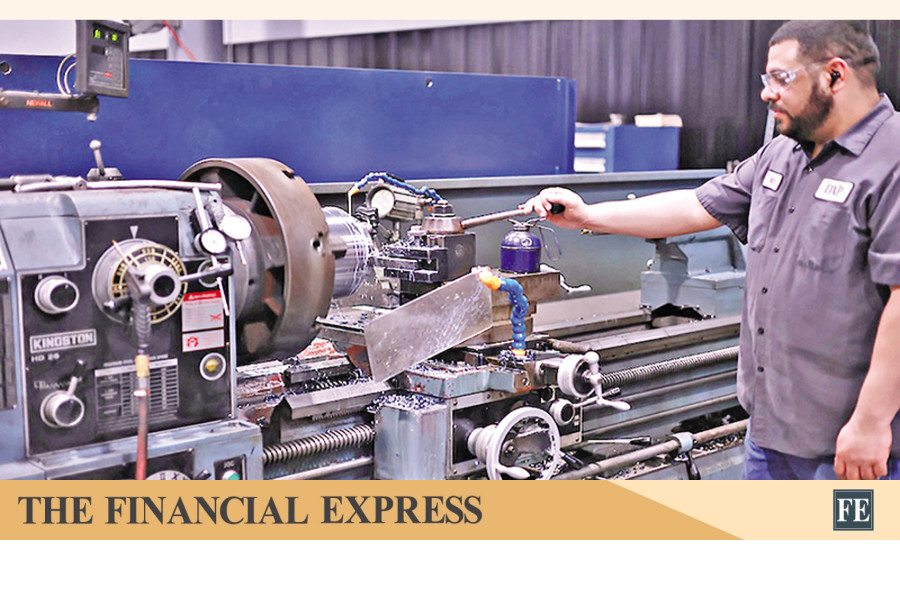
The study focuses on four key sectors within BSCIC industrial estates -- tannery, plastic manufacturing, plastic packaging and light engineering -- which together account for an estimated 46.99 million tonnes of CO2 equivalent emissions annually. Importantly, these sectors also present significant opportunities for emissions reduction through energy efficiency improvements and solar integration. For instance, plastic manufacturing shows the highest potential, with a possible 33-49 per cent reduction in emissions, followed by tannery and light engineering sectors with 19-33 per cent and 19-31 per cent reduction potential respectively. Even the packaging sector, with relatively lower margins, could achieve a 15-28 per cent reduction.

Beyond cost savings and emissions reduction, solar power adoption can directly influence SMEs' access to international markets. Global buyers, especially in Europe and North America, are increasingly prioritising suppliers that meet environmental, social, and governance (ESG) standards. For export-oriented SMEs, integrating solar energy into their operations can serve as a powerful signal of sustainability compliance, potentially unlocking new business opportunities and strengthening relationships with environmentally conscious clients. In some cases, failure to meet such standards may result in lost contracts or reduced market access, making the transition to clean energy not just beneficial but necessary.

The report highlights the transformative potential of solar deployment in BISCIC estates. By allocating just 10 per cent of BSCIC estate space to solar installations, Bangladesh could develop approximately 57 MW of solar capacity, generating nearly 83,000 MWh of electricity annually and reducing emissions by over 51,000 tonnes of CO2 equivalent each year. This demonstrates that even modest spatial investments can yield substantial energy and environmental returns. Moreover, estate-level solar systems can enable shared infrastructure models, reducing individual investment burdens for SMEs and fostering collective efficiency.

Another critical benefit lies in energy independence. Many SMEs currently rely heavily on grid electricity and, in some cases, costly diesel generators to manage power outages. Solar systems, particularly when paired with battery storage, can provide a reliable backup power source, ensuring uninterrupted operations. This is especially valuable in sectors where production downtime can lead to significant financial losses or damage to materials. By generating their own electricity, SMEs can reduce dependence on external energy suppliers and enhance operational continuity.

However, despite these clear advantages, the adoption of solar power among SMEs faces several barriers, including high upfront costs, limited access to financing and a lack of technical knowledge. The report underscores the importance of supportive policy measures to address these challenges. Tax incentives, subsidies, and innovative financing mechanisms -- such as green loans, carbon pricing frameworks, and philanthropic grants -- can play a crucial role in lowering entry barriers. Additionally, capacity-building initiatives and technical support can help SMEs better understand and implement solar solutions effectively.

Ultimately, the study presents an urgent case for rethinking how SMEs approach energy consumption. With an estimated 14 million tonnes of carbon emissions at stake and a potential 50 per cent reduction in operational costs within reach, the shift towards solar energy represents both an environmental imperative and an economic opportunity. As the lead researcher of the study noted, factory rooftops across the country remain largely underutilised, representing untapped potential for clean energy generation.

Solar power no doubt offers a multifaceted solution for SMEs in Bangladesh -- reducing costs, enhancing competitiveness, improving energy security and contributing to climate goals. With the right combination of policy support, financial innovation and industry awareness, SMEs can transition from being passive energy consumers to active participants in a more sustainable and resilient energy future.​
 

SME Foundation to provide loans worth Tk 125cr
Staff Correspondent 01 April, 2026, 02:29

1775006865606.webp


SME Foundation, with the support from the Japan International Cooperation Agency, will provide loans worth Tk 125 crore at an interest rate of 9 per cent to cottage, micro, small and medium entrepreneurs in Bangladesh’s agro-based industries and food processing sector through banks and financial institutions.Human rights reports

To expand its credit wholesaling activities, the foundation signed an agreement with Bangladesh Infrastructure Finance Fund Limited at BIFFL head office in the capital on Tuesday, said a press release.

SME Foundation managing director Anwar Hossain Chowdhury and BIFFL chief executive officer SM Anisuzzaman signed the agreement.

Anwar said that through the agreement, financing would be ensured on easy terms for small and medium entrepreneurs in agro-based industries and food processing through funds from BIFFL’s Food Value Chain Improvement Project.

The project, implemented with financial and technical assistance from JICA, primarily aims to improve food value chain, enhance food security and build capacity of entrepreneurs.

Through this initiative, CMSMEs will be brought under financing coverage, with special priority given to women entrepreneurs.

The financing will cover a wide range of sub-sectors, including processing of fruits, vegetables and spices, rice and pulses processing, edible oil production, seed processing, as well as organic fertiliser and bio-pesticide production.

It will also include wholesale, logistics and retail segments.

In addition, the project will support capital investments, including machinery and equipment, factory infrastructure development, warehouse construction and other necessary supporting infrastructure.

The initiative will also provide technical knowledge, advisory services, and training programmes — particularly to improve food safety standards, such as ISO, HACCP and halal certification.

SME Foundation deputy managing director Md Nazim Hasan Sattar, general managers Mohammad Jahangir Hossain and Md Abdur Salam Sardar, among others, attended the event.

Officials hoped that the initiative would strengthen the country’s food value chain, reduce import dependency, increase export potential and generate employment in rural areas.​
 

Tk 3.0 billion credit wholesaling scheme launched to boost SME sector, says Commerce Minister

UNB
Published :
Apr 12, 2026 22:02
Updated :
Apr 12, 2026 22:02

1776039124834.webp


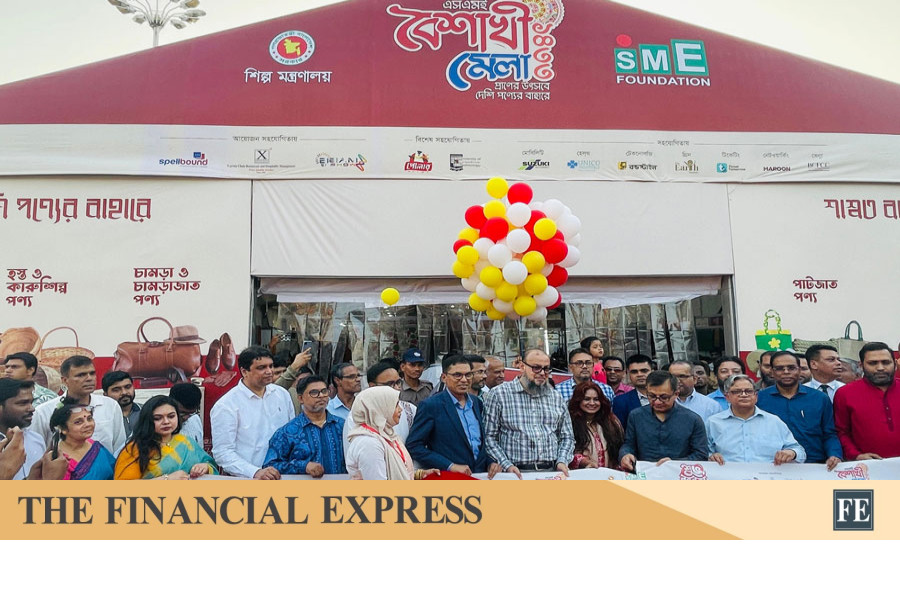
Commerce and Industry Minister Khandakar Abdul Muktadir on Sunday said the government has taken a Tk 300 crore (Tk 3 billion) credit wholesaling programme to support the SME sector, which is being channelled to entrepreneurs through around 15 banks and four financial institutions.

“SMEs and MSMEs are the lifeblood of the country’s economy. A large part of Bangladesh’s economy remains informal, where the SME sector plays a crucial role,” he said while inaugurating the seven-day SME Baishakhi Fair 1433 at the Bangladesh-China Friendship Conference Centre in Agargaon.

The minister said the allocation under the credit wholesaling programme will be gradually increased to Tk 2,000 crore in the future.

He noted that strengthening the SME sector would help generate employment, diversify production and bring more people into economic activities, adding that the government will continue to play a supportive role for entrepreneurs.

Muktadir also thanked the SME Foundation and other stakeholders for organising the fair and extended greetings on the occasion of the Bangla New Year.

The SME Foundation has organised the fair on the premises of the Bangladesh-China Friendship Conference Centre, featuring more than 150 stalls showcasing products from entrepreneurs across the country.

Chairperson of the SME Foundation and Industries Secretary Md Obaidur Rahman presided over the inaugural programme, while Board Member Shamim Ahmed attended as special guest. Managing Director Anwar Hossain Chowdhury delivered the welcome address.

Organisers said the fair aims to celebrate Bangla heritage and culture while offering a vibrant and safe environment for people to enjoy the New Year festivities with family and friends.

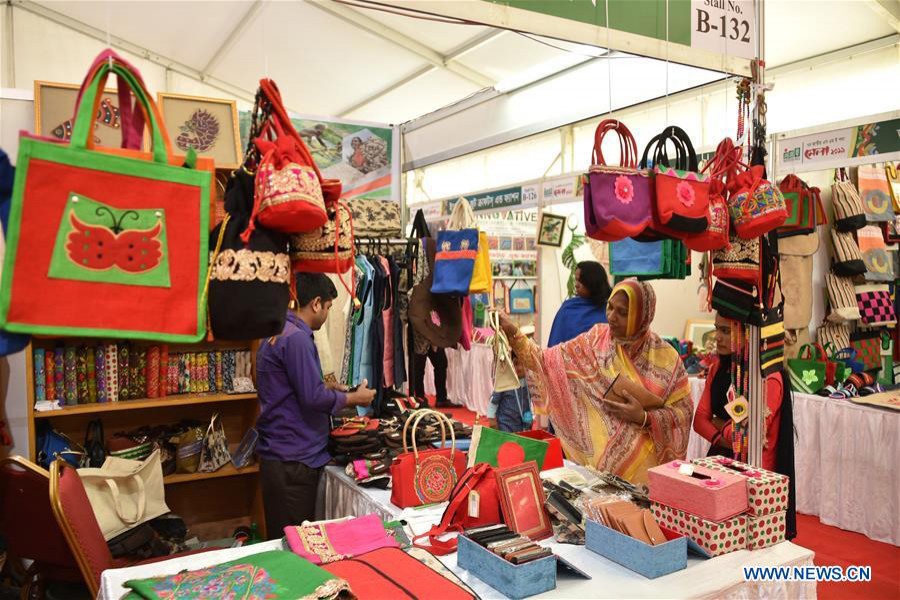
Entrepreneurs are displaying and selling a wide range of products, including handicrafts, jute goods, apparel and fashion items, agro-processed products, heritage items, homemade foods and street foods, artificial jewellery, leather goods, and lifestyle products.

The fair will remain open to visitors every day from morning till night until April 18.​
 

Govt to develop digital platform to support SMEs: NBR chairman

FE ONLINE REPORT

Published :
Apr 28, 2026 19:29
Updated :
Apr 28, 2026 19:29

1777419565346.webp


The National Board of Revenue (NBR) is working to develop a digital platform to help small and medium enterprises (SMEs) maintain online balance sheets instead of relying on traditional talikhata, said NBR Chairman Abdur Rahman Khan.

Under the proposed system, businesses will input their data and the platform will automatically generate balance sheets, he said while addressing a pre-budget discussion at the NBR headquarters in the capital on Tuesday.

He also urged the SME Foundation to share its database of SMEs, noting that such information is crucial as the sector is eligible for tax waivers of up to Tk 5 million. In the absence of such a database, the foundation may take the initiative to develop one, he added.

In a written proposal, SME Foundation General Manager Mohammad Jahangir Hossain recommended introducing a unified Preferential Tax Regime (PTR) for micro, small and medium enterprises (MSMEs) in the upcoming fiscal year 2026–27 to boost growth and simplify compliance.

Highlighting the sector’s importance, the foundation said Bangladesh has around 1.17 crore economic units employing about 3.06 crore people, according to the Economic Census 2024. Of these, 99.92 percent belong to the CMSME sector, which accounts for 77.87 percent of total employment and contributes roughly 30.4 percent to GDP.

Despite this, the sector faces compliance challenges due to the absence of a unified tax framework, with incentives scattered across various laws and statutory regulatory orders (SROs).

To address this, the foundation proposed enacting a separate law or issuing an SRO to establish a dedicated PTR. The framework includes a 10-year tax holiday for new SMEs and a simplified VAT system replacing monthly returns with annual filings based on turnover.

It also suggested green tax incentives for environmentally friendly practices and a five-year bonded warehouse facility to support export-oriented enterprises in importing raw materials.

The foundation placed 113 recommendations covering VAT, income tax, customs and excise duties. These include allowing SMEs with annual turnover up to Tk 5 crore to file VAT returns semi-annually, and introducing a specific tax model for firms with turnover between Tk 1 crore and Tk 5 crore.

On income tax, it proposed raising the tax-exempt turnover limit to Tk 1.5 crore for general MSMEs and Tk 1 crore for women entrepreneurs, alongside reducing advance income tax on raw material imports from 5 percent to 1 percent.

It also called for higher tariffs on imported finished goods such as plastic toys, furniture and light engineering products to protect local industries, along with VAT exemptions for plastic waste recycling and higher duties on imported frozen pangas fillets.

Meanwhile, the Bangladesh Economic Association (BEA) submitted a set of proposals urging a shift in budget strategy to address emerging stagflationary pressures.

BEA representatives warned that the economy is showing signs of stagflation, with GDP growth projected at around 3.5 percent and inflation hovering between 9 and 10 percent.

Led by Mahbub Ullah, convener of its interim committee, the association stressed the need to prioritise inflation control, revenue mobilisation and debt sustainability to stabilise the economy.

The BEA also expressed concern over the stagnant tax-to-GDP ratio, currently around 8 percent, and proposed a National Financial Identity System integrating national ID, TIN, banking and mobile financial services data to improve compliance.

Other recommendations include expanding taxation to the digital economy, introducing a cross-border digital services tax, and establishing a digitised land registry linked to national identification systems.

To ease compliance, it suggested a unified tax documentation framework with pre-filled returns generated through automated data integration.

On fiscal management, the BEA called for reforms in the Annual Development Programme to prioritise high-impact projects and reduce reliance on debt, noting that interest payments account for 14–16 percent of the national budget.

It also recommended an inflation-linked expenditure ceiling and cuts in non-essential spending to ease fiscal pressure and improve efficiency.

Among other organisations, Economic Research Group (ERC), Business Initiative Leading Development (BUILD), Anti-Tobacco Media Alliance (ATMA), Center for Policy Dialogue (CPD), Policy Research Institute (PRI), Bangladesh Society for the Change and Advocacy Nexus (B-SCAN) and Bureau of Economic Research (BER) representatives also took part in that discussion.​
 

Tapping into vast potential of handicraft export

Atiqul Kabir Tuhin

Published :
May 07, 2026 00:54
Updated :
May 07, 2026 00:54

1778111077642.webp


Underprivileged rural women of Jhenaidah have set an admirable example of self-reliance. Instead of taking micro-credit at the risk of defaulting, they are making impressively designed handicrafts with an eye to foreign market. According to a recent report by a vernacular daily, a total of 800 women of three upazilas of the district are crafting baskets, trays, mats and showpieces with water hyacinth, rice straw and date leaf. As far as can be ascertained from the photograph in the report, the products are not only useful but also ornate and visually appealing.

Working from home, they can earn around Taka 3,000 per month. And their products are finding market in as many as 82 countries including the US and Canada. The initiative, led by BD Creation in Jhenaidah, demonstrates how proper training, design innovation and market linkage can transform trashes into treasure.

If handicrafts made of such waste materials gain popularity in the markets abroad, it is a boon not only for the 800 poor women but for the whole country. Handicraft represents a country as much as its art and literature. Bangladesh, in this regard, possesses a rich and diverse tradition. The sustained interest of foreign buyers, evident in international exhibitions and export fairs, attests to the global appeal of rural artisans' craftsmanship.

Among the most iconic of these is Nakshi Kantha, the intricately embroidered quilt that has long been woven into the cultural fabric of Bangladesh. Characterised by elaborate motifs, vibrant colours and meticulous needlework, each piece is both a utilitarian object and a work of art. Traditionally crafted by rural women, kantha embroidery has served as a means of self-expression as well as self-reliance. Through patience and skill, ordinary pieces of cloth are transformed into extraordinary works of art. The sheer sight of Nakshi Kantha is a kaleidoscopic feast for the eyes, for which it has been winning the hearts and minds of the people at home and abroad generation after generation.

Equally noteworthy is Shital Pati, a finely woven mat made from natural fibres, widely used as a seating mat, bedspread or prayer mat. Recognised by UNESCO as an element of the Intangible Cultural Heritage of Humanity, the craft of Shital Pati weaving embodies both aesthetic appeal and ecological sensibility.

Bangladesh also boasts a wide range of handloom textile products including Jamdani, Tangail, Rajshahi Silk, Monipuri and so on. The handloom products including saris, shawls, bedcovers, scarves, bags etc are acclaimed and coveted for their quality and aesthetic beauty. Jute products also deserve special mention. As an eco-friendly and versatile material, jute enjoys a vibrant market in both raw and finished forms. Then there are eye-catching earthenware, stoneware and porcelain which potters skillfully produce. The products range from an assortment of pots, cups, flower vases and decorative objects. They come in all sizes and an assortment of variations, in exquisite styles, offering an artistic and brilliant way to furnish the home and office and bring what nature has to offer inside.

For decades, cheap environment-threatening polythene and plastic products usurped the space of many traditional handicrafts. However, with growing global awareness about environmental sustainability, there is now a renewed demand for eco-friendly products, particularly in Europe and North America. This shift presents a significant opportunity for Bangladesh to diversify its export basket by tapping into the untapped potentials of this sector.

According to estimates, the global handicrafts market is currently valued at US$ 1,107 billion and is projected to reach US$ 2.3 trillion, growing 10.15 per cent annually. Despite its long-standing tradition of craftsmanship and a rich heritage of handmade products, Bangladesh's share in this vast global market is negligible. This limited presence reflects persistent challenges such as inadequate product diversification, lack of branding and marketing, limited access to international markets, and insufficient policy support - factors that continue to constrain the sector from realising its full export potential.

It is therefore imperative to scale up such initiatives by bringing a larger number of public and private actors into the fold, while simultaneously exploring new and emerging markets for Bangladeshi handicrafts. As the government is keen to reopen state-owned factories in the textile and jute sectors through public-private partnerships, some of these facilities could be repurposed or adapted for the large-scale production and processing of traditional handicrafts. The establishment of dedicated design centres and training facilities is also important to enhance product innovation, quality control and skill development. Such measures would not only generate employment but also help standardise quality and ensure a consistent supply for export markets. Ultimately, the sector's full potential can be realised through coordinated efforts between the government and the private sector, supported by research, design development and favourable policies.

At the same time, just as certain organisations are supporting the entrepreneurial efforts of underprivileged women at the grassroots level, Bangladesh's missions abroad must assume a more proactive role in promoting these products. This can be achieved through greater participation in international trade fairs, exhibitions and cultural expos, as well as by facilitating access to global e-commerce platforms. Strategic branding, market intelligence and diplomatic support can significantly enhance the visibility and competitiveness of Bangladeshi handicrafts in the global marketplace.

The handicraft sector thus offers Bangladesh a strategic opportunity to promote export diversification, generate rural employment and advance sustainable development. As demonstrated by the women of Jhenaidah, craftsmanship is more than a symbol of self-help. It opens pathways for rural women to be part not only of national but global economy.​
 

ERF president stresses different policy for SMEs to widen tax net

FE ONLINE DESK

Published :
May 07, 2026 20:30
Updated :
May 07, 2026 20:30

1778196483161.webp


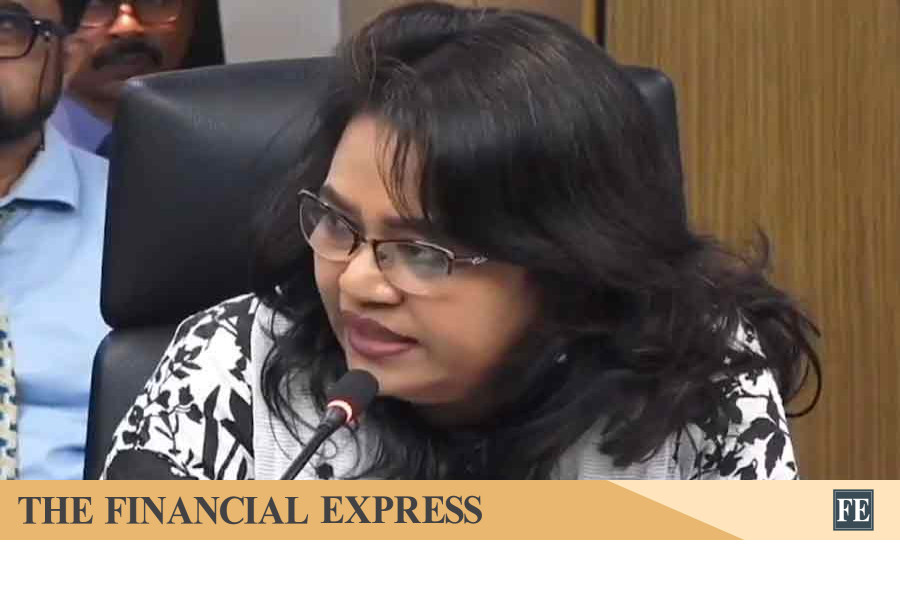
Economic Reporters’ Forum (ERF) President Doulot Akter Mala has said the government should think about a different fiscal policy for small and medium industries (SMEs) so that they can come under the tax net with a tolerable tax rate.

“If we impose an unaffordable tax rate for any section, they would look for ways to evade tax, or they would go against it,” the ERF president said at a pre-budget roundtable titled ‘Transparency and Reform: Redefining the National Tax Architecture’, held at the CA Bhaban in the city on Thursday.

The event was jointly organised by the Institute of Chartered Accountants of Bangladesh (ICAB) and The Financial Express. Dr. Rashed Al Mahmud Titumir, Prime Minister's Adviser on the Ministries of Finance and Planning, was present at the event as the chief guest.

Highlighting the necessity of motivating people to pay taxes, Doulot Akter Mala, also the special correspondent of The Financial Express, said tax collection would not be possible through imposing punitive measures.

The policymakers should think about an appropriate mechanism to collect taxes smoothly, she said.

“Regarding the role of media, the ERF president said economic reporters convey the pain of taxpayers to policymakers as well as inform the people about the issue of national interests. Media personnel will continue its role in this regard,” she added.

She urged the policymakers to find out the reasons behind the lack of inspiring or encouraging outcomes from digitisation and the unification of the tax system.

“The government should think about why a holistic approach wasn’t taken instead of partial digitisation. Is there any loopholes in policymaking or insiders’ influence?” the journalist asked.

She also pointed out that economic journalists face absence of availability and authenticity of data.

“Lack of authentic data provokes misinformation and people’s trust in it,” she said.

Talking about tax culture, she said, “We don’t hesitate to pay thousands of Taka as restaurant bills. But if the government imposes Tk 1,000 tax, we don’t want to pay it. Rather, we try to justify what I get from the government in exchange of the tax. The culture to consider tax laws as like all other laws has not developed so far.”

Explaining the reason behind the existing tax culture, she said people may have questions about the proper utilisation of their hard-earned money. They may remain worried about whether my money is going abroad or not. “As journalists, we work to develop the tax culture,” she added.​
 

Latest Posts

Back
Top Bottom