After years-long legal battles, all 110 cases against Nobel laureate Prof Muhammad Yunus and his organisation Grameen Telecom over alleged labour law violations were dropped by union workers and employees on May 23, 2022, following a settlement regarding payment claims.
www.thedailystar.net
‘They didn’t even let me drop off the milk for my child’
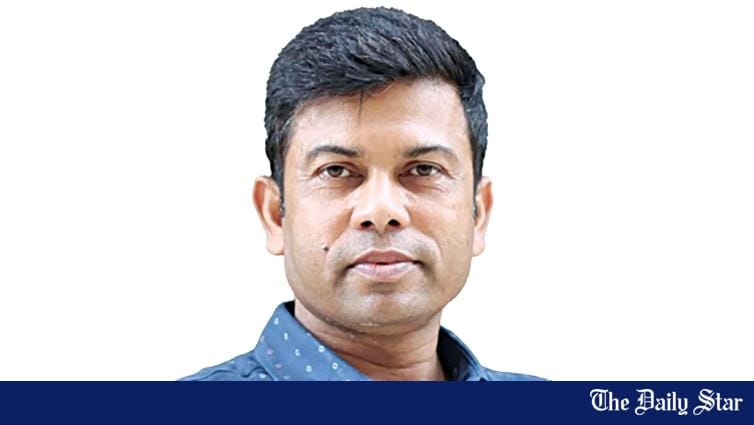
Firoz Mahmud Hasan
Labour leader
Detention: Jun 30, 2022 to Jul 6, 2022
After years-long legal battles, all 110 cases against Nobel laureate Prof Muhammad Yunus and his organisation Grameen Telecom over alleged labour law violations were dropped by union workers and employees on May 23, 2022, following a settlement regarding payment claims.
Around a month later, on June 30, Grameen Telecom Workers' Union General Secretary Firoz Mahmud Hasan, 44, was picked up by plainclothes men.
"I couldn't tell day from night. I didn't even hear the call to prayer. I could only tell it was morning when they brought breakfast on a melamine plate."— Firoz Mahmud Hasan.
He was then taken to the infamous "Aynaghar", a secret detention facility, where he was subjected to torture in an attempt to force him to make a statement against Prof Yunus and Grameen Telecom authorities.
This is the story of his abduction, his experience in "Aynaghar", and his eventual release.
HOW HE WAS PICKED UP
It was around 10:30pm on June 30, 2022. Firoz, along with his wife and children, had just sat down for dinner when they realised they were out of milk for their one-and-a-half-year-old child. So, Firoz left his dinner and went to buy some at a shop close to his home in Mirpur's ECB Chottor.
On his way home, 10-15 masked men stopped him and asked for his identity. They took his mobile phones and forced him to go with them.
They didn't even let him drop off the milk for his child. He was quickly blindfolded and taken away on a microbus.
"I couldn't tell day from night. I didn't even hear the call to prayer. I could only tell it was morning when they brought me breakfast."— Firoz Mahmud Hasan.
Hours later, Firoz found himself in a detention centre, which he was unaware at the time was the infamous "Aynaghar."
There, he was tortured, both physically and mentally, and threatened with the same treatment for his family if he did not comply with their request.
His captors wanted Firoz to record a statement claiming that union leaders accepted money from Grameen Telecom officials to convince workers to drop their cases.
When Firoz revealed his harrowing experience at the "Aynaghar" to The Daily Star on Monday, he said he could not open up until now for fear of reprisals and only found his voice after the Hasina-led government fell on August 5.
'HOUSE OF MIRRORS'
After Firoz was brought to his cell at the "Aynaghar", his blindfolds were removed.
His cell was very narrow. It was 3 feet wide and 6-7 feet long. Concrete walls surrounded him on three sides, and a locked iron gate led to a corridor.
"The cell was empty except for a light bulb, a fan, a water bottle, and a blanket."
Firoz said no light, sound, or air from outside reached his cell.
"The bulb was always on, and there were fans outside my cell, which were very loud. Whenever I needed to use the toilet, I had to raise my hand, and a guard would arrive. I assume they monitored me 24 hours through CCTV."
The only time he didn't have a blindfold on was when he went to the toilet and when he was inside his cell.
"I couldn't tell day from night. I didn't even hear the azaan (call to prayer). I could only tell it was morning when they brought me breakfast."
THE TORTURE
Firoz was subjected to intense interrogation and physical and mental torture.
"They beat me badly with sticks from my waist down and tortured me with electric shocks, strapping me to a steel chair and tying my hands."
They threatened that if he didn't comply with their request, his family members would be picked up and tortured as well.
"I kept thinking I would be killed any day or never see my family again."
HANDOVER TO COPS
After seven days of torture, Firoz was handed over to the DMP's Detective Branch (DB) in the early hours of July 6.
There, he came across his colleague Kamruzzaman, the union president, who had also remained in detention during the same period as Firoz and underwent similar experiences.
The two were then shown arrested in a case filed over allegations of fraud and embezzlement by another union leader and subsequently placed on remand for seven days.
During the 7-day interrogation, Firoz and Kamruzzaman were forced to memorise a script, intended to serve as their confessional statement.
"A copy of the text was submitted to the court, which recorded it as my confessional statement."
Every time his lawyer requested bail in court, the court rejected it.
He was finally granted bail in April 2023 after spending nine months in jail. Even then, he continued to feel a lingering sense of insecurity and anxiety.
The National Human Rights Commission (NHRC) has demanded full disclosure of information about secret detention cells called “Aynaghar,” including their current status, the identities of its administrators, and those responsible for establishing them
www.thedailystar.net
NHRC demands full disclosure about 'Aynaghar'
The National Human Rights Commission (NHRC) has demanded full disclosure of information about secret detention cells called "Aynaghar," including their current status, the identities of its administrators, and those responsible for establishing them.
In a press release, the NHRC today said that The Daily Star's August 21 report titled "Inside the Aynaghar," along with similar reports from various media outlets, has drawn its attention.
The NHRC expressed serious concerns and has taken suo motu (self-initiated) action, calling for comprehensive information about the Aynaghar.
These secret detention cells, infamously known as "Aynaghar," (house of mirrors), where victims of enforced disappearance were held for days, months and even years in inhuman conditions during Sheikh Hasina's 16-year regime. These facilities are notorious for their complete isolation, with detainees unable to see any light from the outside world.
The NHRC requested the senior secretary of the Ministry of Home Affairs to provide comprehensive details regarding the current status of the Aynaghar, its administrators, the identities and numbers of those detained, the legal grounds for their detention, and those responsible for establishing the cells, according to the press release.
The deadline for submitting the report has been set for September 25.
Grameen Telecom Workers' Union General Secretary Firoz Mahmud Hasan - Aynaghar secret prisons victim
"In a democratic state, the physical and mental torture inflicted over years in the prohibited 'Aynaghar' is seen by the Commission as a severe violation of both constitutional and legal norms, as well as human rights. The damage caused to detainees due to indefinite detention is irreparable, and they are entitled to compensation," the NHRC said.
Given this context, it is necessary to investigate the location of the Aynaghar, identify those who managed it, determine how many people were detained there in total, their identities, the legal basis for their detention, and who was behind the establishment of these secret cells, it added.
The suo motu notice states that the Commission can only request reports from the government concerning allegations of disappearances or abductions by law enforcement agencies, whether initiated suo motu or based on complaints.
Due to the limitations of Section 18 of the National Human Rights Commission Act, 2009, the Commission cannot conduct its own investigations and must rely on government reports, which can sometimes take years to receive, it said.
The Commission believes that this legal limitation leaves it in a helpless position and requires urgent reform.
Commission on enforced disappearances must provide answer, justice
www.thedailystar.net
A silver lining for the victims of enforced disappearance
Commission on enforced disappearances must provide answer, justice
VISUAL: STAR
We welcome the interim government's decision to establish a commission to investigate all the cases of enforced disappearance in Bangladesh. The government also seems on track to sign the International Convention for the Protection of All Persons from Enforced Disappearance, making the country answerable to international forums. These moves mark a clear departure from the Awami League government's policy of denial, misrepresentation, and inaction on this issue.
Through these efforts, the country can finally expect some clarity on something the very existence of which was repeatedly denied by the previous regime. The families of those who were disappeared, mostly critics and political rivals of the Awami League, can finally hope to get justice and closure. According to rights organisation Odhikar, at least 708 people were victims of enforced disappearance between 2009 and 2024. Although many have since returned, at least 158 are still believed missing, according to Mayer Dak, a platform for the families of victims of enforced disappearance. Meanwhile, those who returned did not, until recently, speak up about their experience in fear of further retribution.
After the fall of Sheikh Hasina, several victims were released from the secret internment facilities, including what is popularly known as Aynaghar. This gave many hope that their loved ones might still be alive in one of the other 23 facilities apparently run by the Directorate General of Forces Intelligence (DGFI). The challenge now is to ensure transparency and accountability in the investigative process without the interference of political and security entities that stand accused of committing the crime. The decision to appoint a person with the rank of a High Court judge as the head of the commission—and members with prior experience of working on prevention of enforced disappearances—is a step in the right direction, but they must be empowered enough to do their job right. The chief adviser's recent meeting with Mayer Dak has raised hopes of establishing justice for the victims.
As the legal framework of the commission is being drafted, we would also urge the government to create provisions to prevent future governments from exploiting security agencies to commit such heinous crimes—not just enforced disappearances, but also extrajudicial killings and custodial torture—for political purposes. For that, it is not enough to just bring to justice those involved in these gross violations of human rights. It must pursue reforms to insulate security agencies from the corrupt influences of politics and politicians, and end the culture of impunity for their crimes.
The government yesterday formed a five-member inquiry commission to identify and find the people who were forcibly disappeared by various intelligence and law enforcement agencies between January 1, 2010, and August 5, 2024.
www.thedailystar.net
Enforced disappearance: Govt sets up inquiry commission
It has to submit report in 45 days
The government yesterday formed a five-member inquiry commission to identify and find the people who were forcibly disappeared by various intelligence and law enforcement agencies between January 1, 2010, and August 5, 2024.
The formation of the commission comes three weeks after the toppling of the previous government, which had persistently denied reports of enforced disappearance and maintained that the victims went into hiding willingly to embarrass the authorities.
Bangladesh currently has no laws criminalising enforced disappearance nor has it ratified the United Nations International Convention for the Protection of All Persons from Enforced Disappearance.
The country has now tasked retired High Court judge Justice Moyeenul Islam Chowdhury to lead the new commission that will investigate the circumstances under which people were forcibly disappeared by any law enforcement or intelligence agency.
These agencies include Bangladesh Police, the Rapid Action Battalion, Border Guard Bangladesh, the Criminal Investigation Department, the Special Branch, the Ansar Battalion, National Security Intelligence, military forces, and the Directorate General of Forces Intelligence (DGFI).
The commission will provide descriptions of the incidents of enforced disappearance to the authorities concerned and make recommendations, according to a gazette notification of the Cabinet Division.
Relatives will be informed if the commission discovers someone forcibly disappeared, said the notification signed by Cabinet Secretary Md Mahbub Hossain.
It will also gather information from the investigation already carried out by any agency or organisation on the incidents of enforced disappearances.
The other four members of the commission are Justice Md Farid Ahmed Shibli, another former judge of the High Court, rights activists Nur Khan and Sazzad Hossain, and Nabila Idris, a teacher at BRAC University.
They will submit the report to the government after completing their investigation within 45 working days in line with the Commissions of Inquiry Act, 1956, under which the commission has been formed.
Sanjida Islam Tulee, coordinator of Mayer Daak, a platform for the families of victims of enforced disappearance, said, "The investigation process must be transparent and the report must not seek to hide any of its findings. A system must be set up for victims to submit evidence."
The AL's narrative regarding reports of enforced disappearances unravelled after the horrifying stories of people, who were confined to secret detention centres, became public following the dramatic fall of Hasina's government.
The victims of enforced disappearance began to speak out after their release from the secret facilities known as "Aynaghar". These victims come from different age groups and political and social backgrounds, but their narratives of the thick-walled, iron-door prison cells are strikingly similar. These facilities are notorious for their complete isolation, with detainees unable to see any light from the outside world.
Many of these were run by the DGFI. The agency's heads are reportable directly to the prime minister and the prime minister's security adviser.
At a meeting with the DGFI on August 6, a six-member team, including rights activists and a UN representative, demanded access to the detention facility. The team was allowed to visit the DGFI headquarters in Dhaka on August 7.
After coming out of the facility, rights activist Shireen Huq told families of some victims that the DGFI said there were no detainees in their Dhaka facility. The agency also said that they would form a joint commission to arrange visits for rights activists to 23 other facilities across the country to see if the victims of enforced disappearance were there.
Now demands are being made from the families of the victims, rights activists and different other quarters to put an end to such torture in confinement to Aynaghar-style facilities.
According to rights organisation Odhikar, at least 708 people were victims of enforced disappearance between 2009 and June 2024.
The US in December 2021 imposed sanctions on Rab and seven of its top officers over serious rights abuses. It said the Rab and other Bangladeshi law enforcement agencies were responsible for more than 600 enforced disappearances since 2009 and nearly 600 extrajudicial killings since 2018.
If there is one thing that differentiates the arbitrary detention of HM Rana from the other victims of enforced disappearance, it is that he knows exactly where he was inside the Dhaka Cantonment.
www.thedailystar.net
Int’l day of the victims of enforced disappearances: Victim pinpoints DGFI detention centre
If there is one thing that differentiates the arbitrary detention of HM Rana from the other victims of enforced disappearance, it is that he knows exactly where he was inside the Dhaka Cantonment.
Almost every victim of enforced disappearance who came back alive said they were blindfolded the entire time while they were being transported and until they were taken inside their cells, or interrogation rooms.
They were similarly blindfolded when they were taken out of the centre and dropped off in random places.
HM Rana, a musician with Closeup-1 fame, was not picked up in the same manner as others. Other victims usually say they were picked up by men in plainclothes who showed up in unregistered microbuses with tinted windows in the middle of the night.
Since Rana's uncle was also in the military, he was escorted to the centre by a military officer on February 14 this year.
It was the day of his wedding reception.
"I was taken to a two-storey building with a chocolate-brown gate to the left of the CSD TESS restaurant next to the post office," said Rana, adding that the compound had a garden in front of it.
"Many old cars were parked in front of the building."
Rana gave The Daily Star a photo of the building.
"When I entered, I was taken through a metal detector arch similar to the ones seen at airports. There was a reception and behind the desk was a plaque reading 'Directorate General of Forces Intelligence'. A logbook at the reception had pages full of names with blue or red check marks. I saw that my name was written along with my reporting time -- Rana, 8:00am," he said.
He was led to a room that had sofas. "A man in a suit came in, followed by another. The men had sidearms and badges with DGFI written on them," said Rana.
And thus began the interrogation, which lasted 48 hours.
"At one point, they brought in various tools of torture and laid them out on a table in front of us. There were pliers and a bunch of rods with metal attachments running through their lengths. A man brought in a device with an extension cord that could be used to give electric shocks," he said.
As the questioning went on, the men brought the torture devices towards Rana and threatened him. "They brought the shock device towards my head and zapped my hair. A man with pliers threatened to pull my tongue out," he said.
At one point, they brought in a video camera and asked Rana to strip. As Rana was about to take off his clothes, a lady officer came in, and he was stopped.
"You know what to do when a body part has cancer right? You cut it off. You have come to the place, where we cut out the cancer of society," Rana quoted one of the men saying.
"I had heard about the fabled 'Aynaghar' and was fully convinced that this was one of those places," said Rana. "Late at night when I was alone with just two guards, I asked them if more people were in the facility. They said there were."
Before Rana was detained, he said he was getting dozens of calls every day from people claiming to be DGFI officers. "It was strange. They kept asking me to come in and said that if I didn't, they would have to come and get me, and that it would not go down well," he said.
Rana was let go on February 15, a day after his planned wedding reception.
"We never got a chance to have a big wedding, so on our anniversary – February 14 – we had arranged a reception. I had gotten my wife the red bridal dress of her dreams. I was taken into the DGFI at 8:00am in the morning, and the entire time, my family thought I would be coming back to attend the reception, but I never showed up. Guests arrived and left puzzled," he said.
He said he still does not know why he was picked up.
Earlier this month, a delegation of rights activists, led by Mayer Daak, a platform of the families of the victims of enforced disappearance, went to the DGFI headquarters seeking information about the victims.
The delegation was told that the DGFI has 23 facilities. To date, nobody has been given information about where the facilities are or if any detainees are held there.
The Daily Star was unable to contact the DGFI to get their comments.
Victims frequently allege that the DGFI had confined them to the cells, but statistics provided by Odhikar show that they are often not the force in the forefront.
Odhikar logged cases of 709 people who had been victims of enforced disappearance between 2009 and June 2024. Out of those, 206 people were picked up by Rab, 240 people were picked by the Detective Branch of police, and 104 by the police.
Only in 9 cases it was alleged that the DGFI was involved in picking up the victims, while in the cases of 129 others, the abductors could not be identified.
The rest were allegedly taken by the police's Criminal Investigation Department, Ansar, and Industrial Police.
The government on Thursday signed the Instrument of Accession to the International Convention for the Protection of All Persons from Enforced Disappearance.
www.newagebd.net
Bangladesh signs int’l instrument against enforced disappearance
Mustafizur Rahman and Prattayee Chakma 29 August, 2024, 12:54
Bangladesh interim government’s chief adviser Professor Muhammad Yunus. | PID photo
The government on Thursday signed the Instrument of Accession to the International Convention for the Protection of All Persons from Enforced Disappearance.
Chief adviser Professor Muhammad Yunus signed the instrument at the weekly meeting of the council of advisers at state guest house Jamuna, also his residence.
The accession came on the eve of UN-declared International Day of the Victims of Enforced Disappearances, to be observed today, under the convention adopted by the United Nations on December 20, 2006.
‘It is a historic occasion,’ said a release from the Chief Adviser’s Office quoting him as saying in his instant reaction at the meeting.
The development came days after the interim government formed a commission to investigate every allegation of enforced disappearance against security forces during Sheikh Hasina’s 15-year authoritarian rule.
‘It is a milestone development for us, especially for rights activists, to be a signatory to the International Convention for the Protection of All Persons from Enforced Disappearance,’ interim government adviser and also spokesperson Syeda Rizwana Hasan told a press conference after the meeting.
She said that at least 700 victims of enforced disappearance still remained missing.
‘Firstly, victims of enforced disappearances will get protection and secondly, it will give a message to all that state agencies cannot be used against dissenting voices to cling to power anymore,’ she said, responding to a question.
Welcoming Bangladesh on being a signatory to the UN convention, United Nations Special Rapporteur on freedom of expression and opinion Irene Khan in a tweet said that it was an important step towards accountability and elimination of enforced disappearance and commitment to uphold human rights.
Local rights organisation Ain O Salish Kendra in a press release said that by signing the international convention and forming an investigation commission, the interim government took a significant step towards overcoming the culture of impunity of agencies and environment of fear created through enforced disappearances and abductions.
On August 27, the interim government constituted a five-member commission of inquiry to investigate and identify the causes of enforced disappearances by the members of law enforcement agencies during the tenure of the Awami League government.
The commission has been asked to submit its report to the government within 45 working days and is tasked with identifying the individuals subjected to enforced disappearances by law enforcement agencies — such as Bangladesh Police, Rapid Action Battalion, Border Guard Bangladesh, Criminal Investigation Department, Special Branch, Detective Branch, Ansar Battalion, National Security Intelligence, Directorate General of Forces Intelligence, and Bangladesh Coast Guard— between January 1, 2010 and August 5, 2024, the day when Sheikh Hasina resigned as prime minister and fled to India amid a student-led mass uprising.
Addressing an event on enforced disappearance in the city on Thursday, Sanjida Islam Tulee, cofounder of the Mayer Daak, a platform for families of the voctims of enforced disappearance, said that most of the victims of enforced disappearance and extrajudicial killing were with different political ideologies.
‘Most of the victims, who came back after secret detention, were scared to speak about their hellish experiences due to fear of the harassment again,’ she said, adding that the family members were also kept under all out surveillance in such cases.
Tulee, whose brother Shajedul Islam Sumon, a Bangladesh Nationalist Party activist, was still missing since his disappearance in 2013, demanded immediate return of the victims and trial of the perpetrators.
Most recently, three people were released from a secret detention cell, also known as Aynaghor after the August 5 mass uprising.
Former army brigadier general Abdullahil Aman Azmi, the second son of late Jamaat-e-Islami leader Ghulam Azam, and Mir Ahmad Bin Quasem, the youngest son of executed Jamaat-e-Islami leader Mir Quasem Ali, were released on August 6.
The next day on August 7, Mikel Chakma, a leader of the Chittagong Hill Tracts-based political party the United People’s Democratic Front, was freed after five years.
Mikel Chakma was picked up by a group on the way to Dhaka from Kanchpur in Narayanganj on April 9, 2019.
He shared that he was asked about his activism for the rights of the ethnic minority people.
‘They interrogated me frequently during the early days of my detention. At many points, I thought they would kill me,’ he said.
Mikel, who lost his father in 2020 during the time of his disappearance, demanded that the people involved in his and other people’s secret detention to must be brought to justice.
‘Our daughter was two years old and I was 4-month pregnant with my son at the time of Parvez’s disappearance,’ said Farzana Akhter, wife of Parvez, who was picked up by some men from Shahbagh.
Araf Hossain, 10, never seen his father Parvez Hossain as he was picked up by some people on December 2 in 2013 and never came back ever since.
She said that Parvez and five friends were chatting in the area when four, including him were picked up that day.
Farzana shared her struggle for the past 11 years as Parvez did not leave any money with the family.
She demanded return of his husband immediately and answers if he was killed.
Relatives of many such missing people have been waiting like Farzana for the return of their loved ones.
ASK senior coordinator Abu Ahmed Faijul Kabir told New Age that they did not have accurate data with them as many victims were scared of talking in front of media.
The international and local rights groups have long been demanding independent investigations into the ‘unabated enforced disappearances’ in Bangladesh, highlighting the lack of access to justice for victims during the Awami League regime.
They argued that incidents of enforced disappearances had become widespread since the Awami League took power in 2009.
The UN Working Group on Enforced or Involuntary Disappearances on several occasions urged the Bangladesh government to provide information and respond to general allegations sent after its 125th session in September 2021.
In a written statement to the WGEID’s 128th session in September 2022, the Asian Human Rights Commission reported at least 623 cases of disappearances in Bangladesh between January 2009 and June 2022.
According to data collected by local rights body Odhikar, between January 2009 and June 2024, 709 people were subjected to enforced disappearance. Among them, 471 were surfaced alive and/or produced in court. Meanwhile, 83 victims were found dead, with some of them allegedly caught in ‘crossfire’ with security forces.
A joint statement by the Anti-Death Penalty Asia Network, the Asian Federation Against Involuntary Disappearances, the Asian Forum for Human Rights and Development, Capital Punishment Justice Project, the International Coalition Against Enforced Disappearances, the International Federation for Human Rights, Maayer Daak, Odhikar, Robert F Kennedy Human Rights, and the World Organisation Against Torture in commemoration of the International Day of the Victims of Enforced Disappearances in 2024 said that under the deposed Sheikh Hasina administration, Bangladeshi law enforcement agencies and security forces systematically committed enforced disappearance.
Enforced disappearance was used to suppress political opposition, silence dissent, and create a climate of fear in the country. In the past decade, families of the victims of enforced disappearance were systematically denied legal redress, it alleged.
Victims of enforced disappearances mostly include academics, journalists, dissenting voices, and political activists belonging to the opposition.

 Bangladesh Defense