Monetary policy decisions under political constraints
A macroeconomic exploration
Sayera Younus
Published :
Feb 07, 2026 22:44
Updated :
Feb 07, 2026 22:44
Bangladesh Bank is scheduled to announce its monetary policy stance for the second half of FY26 on Monday (February 9, 2026), amid persistent inflationary pressures and weakening momentum in the real sector. Advisers to the interim government have been pressing for a reduction in the policy rate, contending that the central bank's rate has had limited effectiveness in curbing inflation. They argue that maintaining a high rate constrains investment and hamper economic growth, and therefore advocate for a downward adjustment. The key question, however, is whether the central bank will prioritise growth by cutting rates or maintain its current stance to safeguard price stability. A detailed assessment of the macroeconomic conditions suggests that the monetary policy decision will hinge on the delicate balance between inflation control and growth support, as the two objectives remain closely intertwined and closely related with domestic and global macroeconomic scenario.
MACROECONOMIC SCENARIO: Bangladesh's macroeconomic environment is characterised by the coexistence of high inflation and slowing growth, producing a challenging stagflation like setting for monetary policy. At the same time, gross domestic product (GDP) growth has slowed sharply falling to 2.58 per cent in Q1 FY26, while private sector credit growth remains weak at around 6 per cent, indicating persistent demand softness and constrained lending conditions. The exchange rate at BDT 122.34/USD reflects relative stability but remains vulnerable to rising import pressures and uneven external flows. Compounding these challenges, the financial system continues to be burdened by very high NPLs (35.73 per cent), which weaken monetary transmission and keep banks risk averse. Export performance remains moderate, and the slowing growth trajectory underscores the structural tensions between inflation control and growth support. Together, these factors suggest that while inflation is easing, the overall macro financial landscape remains fragile and requires a cautious, data driven approach to policy easing.
In fact, Bangladesh's inflation remains high, hovering around 8-8.5 per cent in late 2025, driven mainly by food price pressures, rising utility costs, and imported inflation from global commodity markets. Non-food inflation (housing, communication, services) has also surged, reflecting both supply-side shocks and domestic demand recovery. Food inflation rose to 7.7 per cent in December 2025, up from 7.36 per cent in November. Staple items like rice, edible oil, and vegetables have seen persistent price hikes due to supply chain disruptions and import dependence. Seasonal factors and global commodity volatility amplify food price swings.
The Bangladesh Bank raised its policy rate multiple times in 2024 and 2025 to combat inflation above 8 per cent. While this helped moderate demand, imported inflation from global oil and food prices limited its effectiveness. Raising the policy rate is a powerful tool to reduce inflation by curbing demand and stabilising expectations, but in Bangladesh's case, imported inflation and supply-side shocks mean monetary policy alone cannot fully control price pressures.
Bangladesh Bank's 10 per cent policy rate is necessary but insufficient. Inflation in 2024-25 remained above 8 per cent because supply-side shocks (food, energy, currency depreciation) outweighed demand-side tightening. Without fiscal discipline and structural reforms, monetary policy risks slowing growth without fully controlling inflation. Bangladesh needs a coordinated anti-inflation strategy monetary tightening to curb demand, fiscal restraint to avoid overheating, and structural reforms to tackle supply shocks. Only this integrated approach can sustainably bring inflation down to the 6-7 per cent range.
Inflation, although gradually moderating to 8.49 per cent point to point and 8.77 per cent on a 12 month average basis, remains well above the comfort range, limiting the central bank's ability to ease policy without risking renewed price pressures.
Below is a brief assessment covering real sector, monetary sector, external sector, fiscal trends, and financial stability (based on macroeconomic indicators as of 01 February 2026)
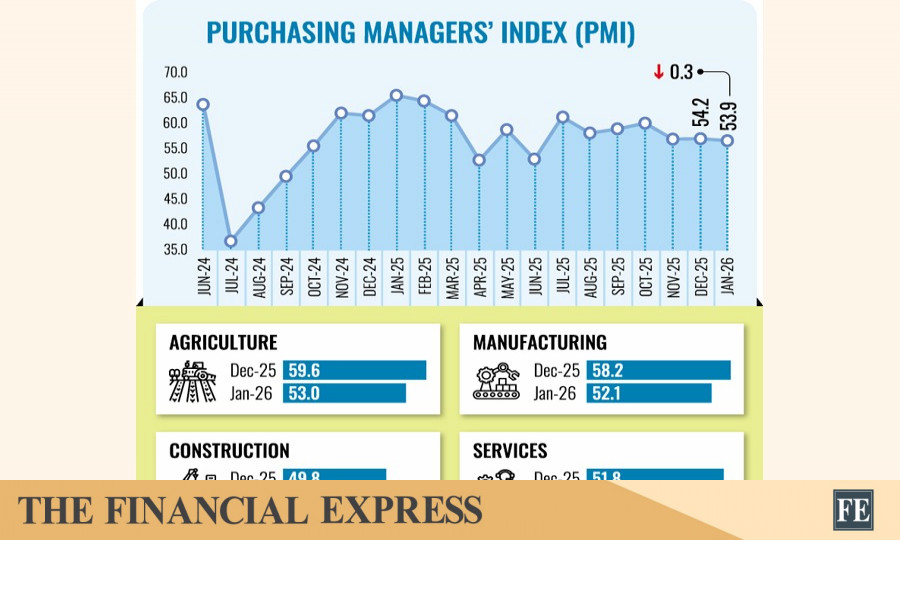
Real sector: sluggish growth, improving industry. GDP growth has slowed from 4.22 per cent (FY24) to 3.97 per cent (FY25), and the provisional Q1 FY26 estimate of 2.58 per cent signals continuing demand-side weakness. Manufacturing IIP shows a modest rebound: 8.43 per cent growth in November 2025 after contraction last year, suggesting early signs of industrial recovery.
Monetary sector: tight conditions, slow credit growth. Reserve Money (RM) grew 9.22 per cent, above its target, partly due to FX intervention and liquidity injections. Broad Money (M2) grew 9.55 per cent, consistent with moderate monetary expansion. Net Foreign Assets (NFA) increased sharply by 29.28 per cent, driven by selective rebuilding of reserves and improved remittance inflows. Private sector credit growth remained weak at 6.10 per cent, well below the target (10 per cent), indicating tight financial conditions and cautious investment sentiment. Call money rate remains high: 9.9 per cent, reflecting continued liquidity stress implying that the monetary stance remains tight; funding costs are high; private credit recovery remains fragile.
External sector: mixed signals. Exports grew modestly by 7.72 per cent (FY25) but slowed in FY26 (0.62 per cent for July-Nov). Imports increased by 6.08 per cent in July-Nov FY26, indicating some revival of domestic demand.
Remittances & balance of payments. Remittances continue strong: 17.07 per cent growth, a crucial support for external stability. Current account moved back into deficit of US$ 0.70 billion (July-Nov FY26). Overall balance improved to US$ 0.77 billion, reflecting financial inflows.
Foreign exchange reserves & exchange rate. Reserves stand at US$ 28.68 billion (as per BPM6), an improvement from FY25 but still below FY24 levels. The interbank taka depreciated slightly to US$ 122.34 from $118 in FY24. External sector stability is improving but remains vulnerable, with reserves recovering slowly and BoP gains relying on remittances rather than exports.
Fiscal sector: revenue improving, savings tools reviving. NBR revenue increased by 14.19 per cent in Jul-Dec FY26, a strong recovery. Government expenditure remains modest but steady. National Savings Certificates recorded positive net sales (Tk 24.61 billion) after a negative FY25, indicating renewed household reliance on safer savings instruments. Fiscal pressure is easing due to stronger revenue, but higher savings certificate sales may raise future interest liabilities.
Financial stability: alarming NPL surge.: Gross NPL ratio jumped from 12.56 per cent (FY24) to 35.73 per cent (Sept 2025). Net NPL surged to 26.40 per cent, reflecting weakening asset quality and inadequate provisioning. This is the most severe risk area. Banking sector vulnerabilities could constrain credit growth, raise interest rates, and impede recovery.
Capital market: mild improvement. DSE index shows slight upward movement compared to FY25. Market capitalisation stable around Tk 6626 billion. Equity markets remain shallow but show signs of gradual stabilisation.
Overall assessment. The macroeconomic environment shows a mix of stabilization and persistent vulnerabilities: (1) Inflation decelerating but still high; (2) Industrial production recovering; (3) Reserves improving modestly; (4) Revenue collection strong; (5) GDP growth subdued; (6) Private credit growth weak; (7) Banking sector NPL levels dangerously high; and (8) Exports losing momentum.
The economy appears to be in a slow stability phase, but banking sector risks and external vulnerabilities remain the biggest concerns.
HOW BANGLADESH BANK IMPLEMENT MONETARY POLICY: Monetary policy implementation refers to how the central bank uses its tools to achieve macroeconomic objectives such as price stability, exchange rate stability, financial stability, and supporting growth. The Bangladesh Bank's shift (since July 2023) toward an interest rate targeting framework makes these tools especially important. Here is a breakdown of key monetary policy tools, how they are implemented, and how they relate to the latest indicators.
Bangladesh Bank implements monetary policy through a combination of interest rate tools, liquidity operations, money supply management, and exchange rate intervention. Policy rates-Repo (10 per cent), SDF (8.50 per cent), and SLF (11.50 per cent) form the core of its framework, guiding overall market interest rates and anchoring inflation expectations. By keeping the repo rate high (raised from 8.5 per cent to 10 per cent), BB aims to contain elevated inflation (8.77 per cent 12 month average; 8.49 per cent point to point) and slow credit growth, which has already fallen to 6.10 per cent. Liquidity is actively managed through repo auctions, reverse repo/SDF operations, OMOs, and SLF borrowing. These operations address stresses in the money market, where reserve money growth has exceeded target (9.22 per cent), SLR excess liquidity is high (Tk 3212.55 billion), but CRR excess reserves remain low. Together, these measures stabilise interbank transactions, maintain payment system integrity, and prevent excess volatility in call money rates (currently 9.9 per cent). BB also manages monetary aggregates M2 grew 9.55 per cent, NFA surged 29.28 per cent, and NDA increased 6.75 per cent to ensure broad financial stability.
Complementing its domestic tools, Bangladesh Bank deploys exchange rate management and credit regulation instruments to reinforce macroeconomic stability. It buys and sells USD to stabilize the taka, coordinates with banks under L/C pressure, and intervenes depending on balance of payments conditions. These actions have stabilised the exchange rate around Tk 122.34 per USD and helped rebuild reserves to US$ 28.68 billion. On the credit side, BB regulates lending across public and private sectors, enforces sectoral guidelines, and applies risk based supervision critical in the context of very high NPLs (35.73 per cent). A tight monetary stance, stricter loan classification, and targeted incentives (such as strong agricultural disbursement at 41.26 per cent of the target) aim to curb risky lending while supporting priority sectors. Since 2023, the interest rate corridor system SDF as floor, repo as policy rate, SLF as ceiling has improved policy transmission and ensured predictable short term rate movements. Finally, BB's forward guidance measures, including quarterly policy statements and weekly indicators, help shape market expectations during periods of high inflation, exchange rate pressure, and financial sector stress.
Model based forecast of inflation shows that inflation continued to decline fall below 8 per cent in April-May 2026. Although inflation has fallen from last year's peak, both the 12 month average (8.77 per cent) and point to point rate (8.49 per cent) remain well above the tolerance threshold, making premature easing risky. A rate cut before inflation clearly moves toward the mid 7 per cent range, which could destabilise expectations and trigger renewed price pressures, especially given the slow disinflation trend. At the same time, weak private credit growth (6.10 per cent), soft GDP performance (3.97 per cent in FY25 and 2.58 per cent in Q1 FY26), and subdued domestic demand justify the expectation of moderate easing once inflation demonstrates durable improvement.
However, several upside risks could derail this easing path, foremost among them the possibility of persistent or re accelerating inflation. External cost pressures such as rising global fuel and food prices combined with domestic supply disruptions or faster broad money growth (already 9.55 per cent), could push inflation back above the 8-9 per cent range. Under such conditions, Bangladesh Bank would need to delay rate cuts and might even consider a mild tightening of 25 bps to defend price stability. External vulnerabilities also pose significant risks: while the taka is currently stable at 122.34 per USD and reserves have risen to US$28.68 billion, rising imports, weak export momentum, or a slowdown in remittance growth could trigger depreciation. If the exchange rate weakens, the Bank will be compelled to maintain the repo at 10 per cent throughout the forecast period or implement modest hikes to contain imported inflation.
Domestic financial sector fragilities further limit the scope for monetary easing. The extraordinarily high gross NPL ratio (35.73 per cent) indicates systemic stress that weakens monetary transmission meaning that even if policy rates are cut, banks may remain too risk averse to expand lending. This reduces the effectiveness of easing and may force the central bank to rely more on liquidity operations rather than policy rate changes. In addition, growth could weaken more severely than anticipated, as recent industrial improvements (8.43 per cent IIP growth in Nov 2025) may prove temporary, and high interest rates could suppress investment further. If credit conditions tighten due to NPL driven rationing, the economy may decelerate faster, prompting calls for earlier or deeper rate cuts. Thus, the policy outlook is shaped by a delicate balance: elevated inflation and financial sector fragility argue for caution, while persistent growth weakness pressures the Bank toward eventual but carefully calibrated easing.
Finally, growth risks continue to influence the monetary policy outlook, particularly if economic activity weakens further. A sharper than expected slowdown could compel Bangladesh Bank (BB) to ease earlier than currently projected, possibly shifting the first rate cut to late FY26 instead of FY27 Q1. Under such conditions, rate reductions may also be deeper, exceeding 50 basis points. These downside growth risks tilt the overall policy stance toward a more dovish bias, increasing the likelihood of earlier or more aggressive monetary accommodation.
Fiscal dynamics pose another significant risk to the forecast. While government borrowing declined in FY25, several indicators such as positive net National Savings Certificate (NSC) sales of Tk 24.61 billion in the first half of FY26 suggest potential pressures ahead. High NSC returns can attract household savings away from banks, tightening liquidity and pushing market rates upward. If fiscal slippage intensifies or domestic borrowing rises, banks may face higher liquidity needs, which would elevate deposit and lending rates and undermine the effectiveness of any planned monetary easing.
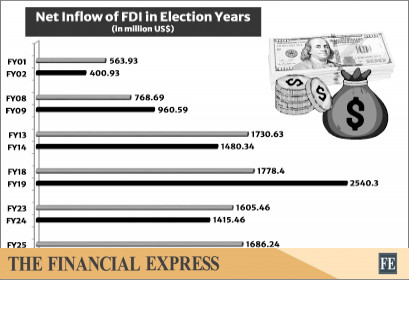
Global economic conditions also add considerable uncertainty. A resurgence of global inflation, higher oil prices, or renewed tightening by major central banks like the Federal Reserve or the European Central Bank could transmit adverse effects to Bangladesh. These shocks would raise import costs, put pressure on foreign exchange reserves, and potentially trigger capital outflows, especially given currently subdued foreign direct investment FDI inflows of only US$ 0.65 billion during July-November of FY26. In such a scenario, BB may be forced to delay easing and, if external pressure intensifies, might even consider tightening to stabilise the exchange rate.
Liquidity constraints and transmission challenges present a final layer of risk. Current indicators such as the call money rate hovering around 9.90 per cent and low excess CRR reserves of only Tk71.61 billion signal an already tight liquidity environment. Further tightening could act as de facto monetary restraint, even without changes to the policy rate. To manage these conditions, BB may need to rely more on open-market operations rather than rate cuts, resulting in a shallower easing cycle. Consequently, policy accommodation in FY27 could be limited to only 25 basis points, delaying the expected normalization path.
Given these intersecting pressures, the baseline expectation is for a "hold then ease" trajectory. Over the next two policy cycles, the central bank is likely to keep the repo rate unchanged at 10.00 per cent to prevent inflation from re accelerating or destabilizing the exchange rate, which has stayed broadly steady at roughly 122.34 BDT/USD. If disinflation progresses steadily toward the mid 7 per cent range and external stability persist, a cautious easing phase may emerge in the second half of the forecast horizon. In such a scenario, repo could be trimmed by 25-50 bps, with symmetric downward adjustments to SLF and SDF to maintain corridor integrity and support a delicate recovery in credit demand.
Alternative scenarios hinge on how inflation, FX conditions, and growth evolve. A hawkish adjustment becomes plausible if inflation stalls above current levels, imported inflation rises through currency depreciation, or external balances deteriorate as imports outpace export and remittance growth. Should these pressures materialize, modest tightening raising the repo to 10.25-10.50 per cent may be warranted, though structural banking vulnerabilities make aggressive hikes unlikely. Conversely, a dovish path would be triggered if growth weakens beyond current projections, private credit slows further, or NPL driven financial fragility threatens lending capacity, provided that inflation continues a firm downward trend.
Across all scenarios, the central bank's guiding principle is to safeguard price stability without undermining financial stability or the early signs of recovery. High NPLs and sluggish credit growth inherently limit both the potency and desirability of sharp policy moves. As a result, future rate decisions will rely heavily on incoming inflation data, exchange rate behaviour, and the evolution of banking sector risks. The most probable outcome remains a steady policy stance in the short term, followed by calibrated easing later conditional on sustained disinflation and continued external stability.
Dr Sayera Younus is Senior Researcher, Centre for Policy Dialogue (CPD).


 Bangladesh Defense