Home Watch Videos Wars Login

[🇧🇩] DGFI and Ayna Ghor

[🇧🇩] DGFI and Ayna Ghor
56
2K
More threads by Saif

G Bangladesh Defense

There will be no 'Aynaghar' or 'Bhater Hotel' in DB office
Says additional commissioner of DB

1728174134765.webp

Photo: Collected

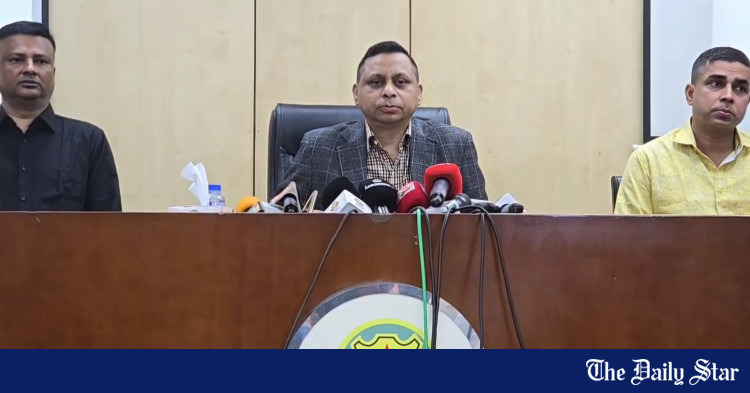
Rezaul Karim Mallik, additional commissioner of DMP's Detective Branch of police, today said there will no longer be any "Aynaghar" (house of mirrors) or "Bhater Hotel" (eatery) in the DB office.

Speaking at a "Meet the Press" event at the DMP Media Center, Rezaul, in his first formal address since assuming the role, vowed to reform DB's image.

He said that the "disgraced chapter" of DB would end, and the office would become "a place of justice and accountability."

The DB office will not serve as a hangout spot for celebrities and authorities will not tolerate any "Bhater Hotel" there, he added.

Emphasising the need of accountability, the additional commissioner said, "I, too, am not above accountability. As long as I hold the position of the DB chief, I will uphold justice, integrity, and professionalism in carrying out my duties."

About the upcoming Durga Puja celebration, Rezaul said DB officers, in plainclothes, are currently working to ensure the security of temples and puja mandaps.​
 
Analyze

Analyze Post

Add your ideas here:
Highlight Cite Respond
  • Like (+1)
Reactions: Bilal9

Aynaghar should be a site of remembrance

1728436049604.webp

File illustration: BIPLOB CHAKROBORTY

Completing a tour at the ESMA Museum and Site of Memory, located on the grounds of what was once the officers' quarters of the Navy School of Mechanics (ESMA), in the city of Buenos Aires, Argentina, takes around 90 minutes. The museum, which was a former clandestine centre of detention, torture, and extermination, features 17 rooms hosting traditional and contemporary museographic exhibits centred around survivor testimonies, historical documents from the National Commission on the Disappearance of People, the Trial of the Military Junta, declassified state documents, among other archives.

During the military dictatorship in Argentina from 1976 to 1983, the officers' quarters at ESMA became a key site for suppressing the opposition as part of a national strategy. Thousands of people, both armed and peaceful, were abducted in Buenos Aires, brought to ESMA, and subjected to interrogation, torture, and often death. Some 5,000 of the approximately 30,000 people who disappeared at the hands of the military junta during those years passed through ESMA, making it the largest torture centre of that era.

After the crimes committed on the site became known, and after years of uncertainty about its future, the recovery process to transform the ESMA premises into a Space for Memory and for the Promotion and Defense of Human Rights began in 2004. On May 19, 2015, after years of debates and consensus reaching, the ESMA Museum and Site of Memory was inaugurated. In September 2023, UNESCO recognised it as a World Heritage Site, a site of "outstanding universal value" that belongs to the common heritage of humanity.

According to UNESCO, the building has been protected as judicial evidence since 1998 owing to the crimes against humanity committed there during its operations as a clandestine detention and extermination centre. From then on, any kind of modification was prohibited. In the present day, all efforts to conserve and restore the building are guided by scientific studies, aimed at preserving it both as a piece of legal evidence and as a valuable historical record. That's why all kinds of markings and inscriptions, denoting the stay of the detained-disappeared at the place, are preserved. These include different types of inscriptions on the walls, as well as on both the iron and wooden structures in the building. There are markings that were made with unidentified sharp objects, and others with ink or graphite: names, phone numbers, initials, inscriptions of party affiliations, dates, drawings.

That is why it is very important to preserve the secret detention centres in Bangladesh, popularly known as "Aynaghar," used for enforced disappearances during the Hasina regime due to its huge historical, heritage, and judicial value as evidence in carrying out crimes against humanity. In Argentina, evidence dating back more than 40 years remains intact, but in Bangladesh, within two months of the fall of the Hasina regime, many kinds of evidence of enforced disappearances have been destroyed.

The Commission of Inquiry on Enforced Disappearances, which was formed to investigate cases of enforced disappearances during the past Awami League government, has found evidence of destroyed materials at the secret detention centre run by the Directorate General of Forces Intelligence (DGFI). Messages, names, phone numbers, and addresses written on the walls of the detention centre by the victims were erased by painting over the walls. Not only that, Law Enforcement Agencies (LEA) want to destroy the secret prisons to protect their image on an international level. Furthermore, according to a report by the daily Samakal, work is underway to demolish the cells inside the DGFI-run detention centre and change the interior of the one-story building.

But keeping Bangladesh's secret detention centres intact, like Argentina's, is important for both legal and historical reasons. Allowing the demolition or alteration of Aynaghar in the name of protecting the international image of LEAs would on the one hand destroy important evidence for the trial and on the other hand create an opportunity to deny historical truth in the future.

According to the Asian Human Rights Commission (AHRC), at least 623 people were victims of enforced disappearance in the country from 2009 to 2022. Of those, 84 bodies were recovered, 383 were either returned alive or shown arrested later. Still missing are 153 people, and there is no information about three others.

Within two days of Hasina's government being overthrown in a mass uprising, several of the missing persons have returned from the secret detention centres, but many are still missing; many others do not know what happened to their relatives. The aforementioned commission had received nearly 400 complaints of forced disappearances within two weeks of starting their work. There are also many questions about who were involved in the disappearance. Even in the cases where people have returned alive, it is not clear who detained them and where.

The LEAs that were involved in enforced disappearances during the Hasina regime are still the same with no fundamental changes. The LEAs have not acknowledged the responsibility, nor revealed who were involved in the enforced disappearances. Rather, they seem to be actively destroying the evidence of enforced disappearances.

Not only as legal evidence, but to ensure that the forced disappearances do not happen again in the future, it is important to keep the history of Aynaghar alive and intact. As the then Argentine president Alberto Fernández explained, "Collective memory is what keeps people from repeating their histories and allows them to move forward towards a better future."

That's why, not only Argentina, but many other countries around the world which had suffered from enforced disappearance or state terrorism, have taken various steps to preserve the memories. For example, Villa Grimaldi, an old villa on the edge of Chile's capital city of Santiago, which was used as a major torture centre from 1974-78 during the rule of General Pinochet, has been converted as a sitios de memoria or memory sites in 1995, to remember those who had suffered and died under the military's rule. About 5,000 prisoners passed through Villa Grimaldi, and it is known that 240 of them were killed or disappeared.

Answers to many questions related to disappearances in Bangladesh are still unknown, including who were involved in the enforced disappearance of how many people, what happened to the persons who are still missing, who were the masterminds of the enforced disappearance, what were the command structures and motivations, etc. In order to know the answers to these questions, bring the perpetrators under justice, and prevent the recurrence of enforced disappearances in future, it is utmost important to preserve all types of evidence related to enforced disappearance. I hope the interim government will take appropriate steps in this regard before it is too late.

Kallol Mustafa is an engineer and writer who focuses on power, energy, environment and development economics.​
 
Analyze

Analyze Post

Add your ideas here:
Highlight Cite Respond
  • Sad (0)
Reactions: Bilal9
ডিজিএফআইয়ের নতুন মহাপরিচালকের পরিচয়।

 
Analyze

Analyze Post

Add your ideas here:
Highlight Cite Respond
  • Love (+3)
Reactions: Bilal9

NYT report on ‘Aynaghar’ details torture of captives

The New York Times on Thursday ran a report on the incidents of enforced disappearance that took place during the rule of recently ousted former prime minister Sheikh Hasina.

Titled "Alone in the Dark: The Nightmare of Bangladesh's Secret Underground Prison", Mujib Mashal and Shayeza Walid's piece for the NYT touches upon the stories of Mir Ahmad Quasem Arman, Abdullahil Amaan Azmi, Maroof Zaman, and Mikel Changma, who were all unlawfully detained and kept in captive facilities known as "Aynaghar", or House of Mirrors, by Hasina's security forces.

Mir Ahmad, son of former Jamaat-e-Islami leader Mir Quasem Ali, who was executed in 2016 for crimes against humanity committed during Bangladesh's Liberation War in 1971, told NYT about the political circumstances in which he became a victim of enforced disappearance, when he was "under no criminal accusation himself".

The report delved into the situation surrounding his release as well, being "dropped off in a barren field at the edge of Dhaka" following the events of August 5.

Notably, the report described Mir Quasen Ali as an "Islamic activist and business magnate", and quoted his son Mir Ahmad, saying, "I am not proud of his [Mir Quasem] role in '71."

Mir Ahmad added that as his father's lawyer, he believes his father "had not deserved a day in jail, much less hanging".

Abdullahil Amaan Azmi, a former army general, described the conditions of his captivity. He recounted how "in the beginning, he would try to catch a bit of sunlight through two small ventilation openings. But once they found out through the CCTV camera, they closed those off".

The NYT reported that the internment centre focused on prolonging the lives of its captives in a state that was "barely worth living". There were regular and thorough medical checkups, haircuts, and physical torture only occurred during interrogations in the early days.

The report also corroborated the sketches made by three former detainees who made identical drawings of Aynaghar. It described the design featuring long corridors with six rooms facing in opposite directions, with toilets at either end, one for standing and another for squatting. The cells featured large exhaust fans to drown out whatever the guards would say, as well as serving as a tool for psychological torture.

The NYT report also featured the account of Maroof Zaman, a former diplomat, who was in prison for 467 days. He described the physical assault he faced, being hooded and punched repeatedly in the face. He was questioned over his social media and blog posts, where he had been critical of Hasina's treatment of India.

Similarly, Mikel Changma, the indigenous rights activist who was abducted in 2019 and released following August 5, described his time at Aynaghar.

He was told during interrogation, when he kept asking why he was there, that this was "political retaliation", for when Hasina went to the Chittagong Hill Tracts to hold a party rally, and Mikel Changma's party activists blocked the road, reports NYT.

The report goes into details about the psychological difficulty of being kept in an underground prison faced by the survivors the NYT interviewed. Amaan Azmi recounted praying for a dignified death: "Please don't let cats and dogs eat my body, please have them send my body to my family, my loved ones."

Family members of the victims of enforced disappearance, as well as survivors, went to the army headquarters on August 5 to finally unearth the mystery of this injustice, according to NYT. They were told to give the army 24 hours, with the assurance that "if anyone is left, we will ensure they will be released as early as possible".

The report ends with a description of a meeting between Chief Adviser Prof Muhammad Yunus and the mother and sister of Sajedul Islam Sumon, who had disappeared in 2013.

"We are done waiting, what we want is something concrete," Sanjida Islam Tulee, Sumon's sister, told Yunus, according to NYT.

In response, Yunus reportedly told them that their protest is what brought this new government into power, and that it served as inspiration for the student protests. He reassured them the interim government would pursue justice for them.​
 
Analyze

Analyze Post

Add your ideas here:
Highlight Cite Respond
  • Sad (0)
Reactions: Bilal9

‘Aynaghar’: Commission working to find out those involved

1730162724970.webp

Photo: BSS

Chief Adviser's Deputy Press Secretary Mohammad Abul Kalam Azad Majumder yesterday said the relevant commission is looking into who were specifically involved in torturing people, keeping them confined to "Aynaghars" or secret prisons.

"There are many involved in torturing people. The commission will look into who are specifically involved," he told reporters, adding that no specific force is identified or no specific individual is made responsible.

The interim government made it clear that whoever is involved will be brought to justice, Azad said while responding to a question at a media briefing at the Foreign Service Academy in the capital.

"The government has this commitment," he added.

Chief Adviser's Press Secretary Shafiqul Alam said a panel (commission) is working to know how many Aynaghars were there in the country and once the commission submits its report, the overall scenario will come to light.

"You will get a complete picture once the commission submits its report," he said.

In August last week, the government formed a five-member inquiry commission to identify and find the people who were forcibly disappeared by various intelligence and law enforcement agencies between January 1, 2010 and August 5, 2024.​
 
Analyze

Analyze Post

Add your ideas here:
Highlight Cite Respond
  • Sad (0)
Reactions: Bilal9

Rab DG acknowledges existence of Aynaghar

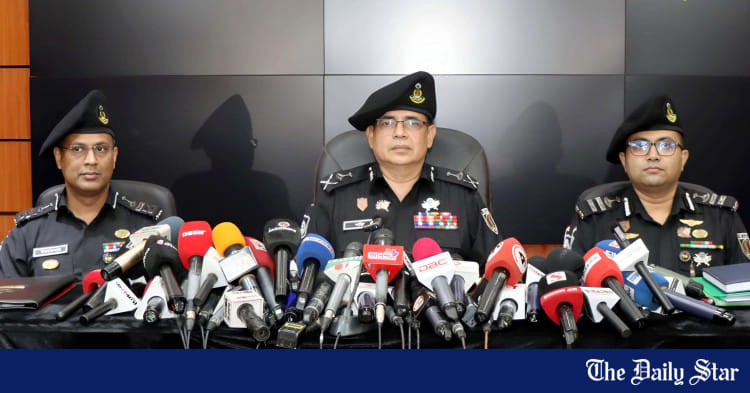
Director General of Rapid Action Battalion (Rab) AKM Shahidur Rahman today apologised to those who have filed criminal cases against Rab personnel over various offences committed during the July-August mass uprising.

During a view-exchange meeting with journalists at Rab's media center today, Shahidur assured that Rab is committed to exonerating any wrongdoings only through a fair and transparent investigation and proper trial process.

He said, "The issue of Aynaghar (a secret detention centre) in Rab was there and it still remains. The commission [inquiry commission on enforced disappearances] instructed us to keep it as it is and not to make any changes in it. we keep it accordingly,"

"The commission is investigating the allegations of the enforced disappearance, killings and Aynaghar. We are cooperating them. We hope that legal steps will be taken after the investigation," the Rab DG said.

Earlier on October 7, at a meeting with leaders of the Bangladesh Crime Reporters' Association at his office, the DG said he does not know of any secret detention centres called Aynaghar in Rab, adding that the force will extend full support to the newly formed commission of inquiry on enforced disappearances.

Today, the DG acknowledged the gravity of the issues over misconduct by Rab members, emphasising on the organisation's firm stance on internal discipline.

He revealed that a significant number of officers and personnel have faced disciplinary actions for breaches of conduct. Till date, 58 officers and 4,235 members have been charged with disciplinary violations in accordance with Rab's regulations.

The chief further addressed recent high-profile arrests of Rab members, including 16 officers from various battalions, who are currently facing charges related to extortion, kidnapping, and robbery.

He assured all that investigations into these cases, particularly the ongoing probe into allegations over missing persons and Aynaghor, are actively progressing. "We are working tirelessly to uncover the truth of the allegations," he added.

As part of efforts to reform and modernise Rab, he also announced forthcoming changes to the force's uniform, aimed at improving its public image and operational efficiency.

Additionally, he revealed that Rab is preparing to implement new ordinances designed to enhance the effectiveness of operations, improve administrative processes, and ensure faster service delivery to the people.​
 
Analyze

Analyze Post

Add your ideas here:
Highlight Cite Respond
  • Sad (0)
Reactions: Bilal9
সুষ্ট তদন্ত ও বিচারের মাধ্যমে আমরা দায়মুক্তি হতে চাইঃ র‌্যাব মহাপরিচালক

 
Analyze

Analyze Post

Add your ideas here:
Highlight Cite Respond
  • Like (+1)
Reactions: Bilal9
Existence of Ayna Ghor was found during investigation.

 
Analyze

Analyze Post

Add your ideas here:
Highlight Cite Respond

Posts you haven't read yet..

Members Online

Latest Posts

Back
 
G
O
 
H
O
M
E