[🇧🇩] Energy Security of Bangladesh

Quick Reply ✓ Posted!
[🇧🇩] Energy Security of Bangladesh
834
36K
More threads by Saif

G Bangladesh Defense

Winning the sea, but losing the energy race
1789772436239.webp


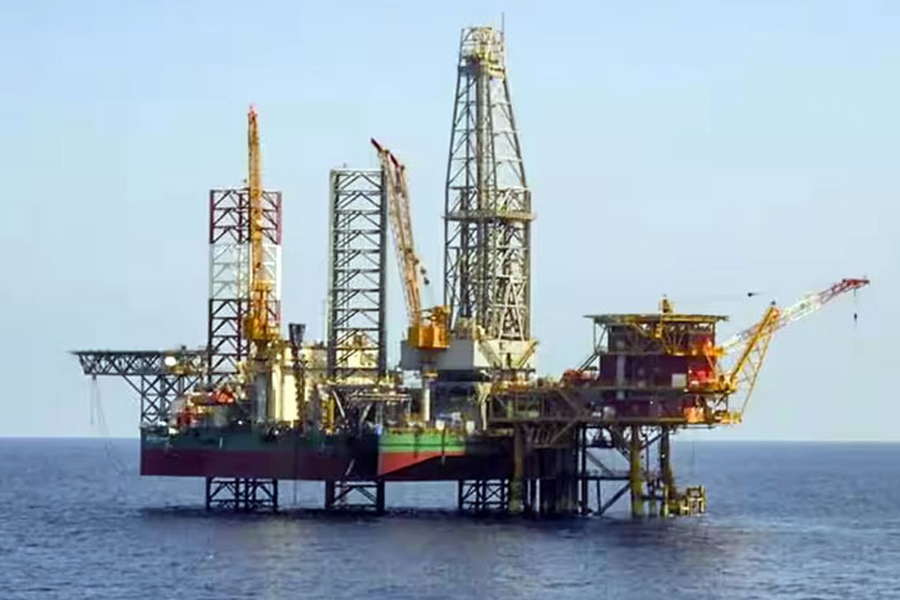
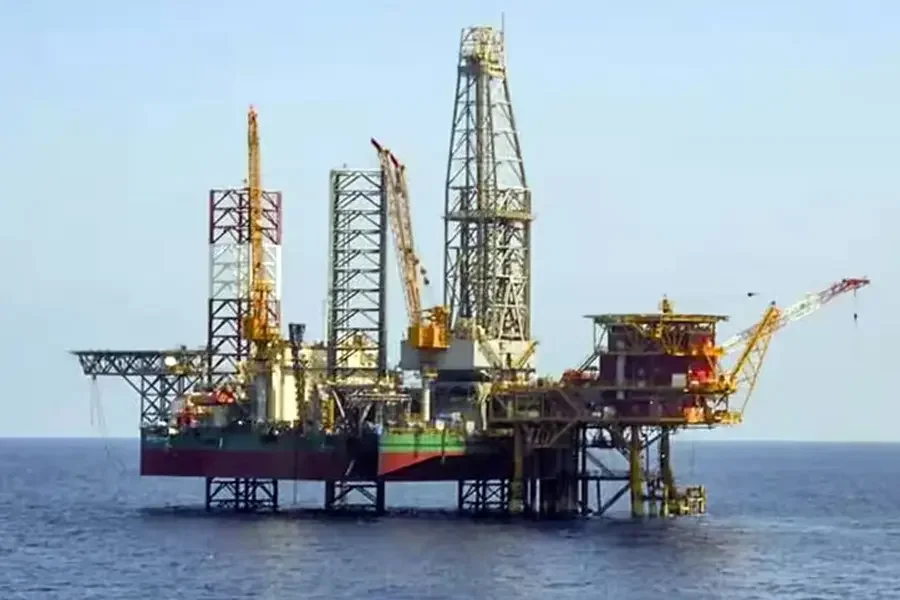
Bangladesh is facing its worst gas shortage in a decade, with households, factories and power plants all struggling with inadequate supply. Domestic output has fallen to around 1,620 million cubic feet a day from a peak of nearly 2,800 million, leaving the country short by roughly 1,300 to 1,500 million cubic feet every single day. Imported liquefied natural gas has helped cover some of that gap, but rising prices and the ongoing war in the Middle East have made it much more expensive and harder to secure. Each time the gas shortage reaches this level of severity, offshore exploration in the Bay of Bengal naturally becomes subject of renewed public discussion. The catch is that this idea relies on a resource potential that is still largely unproven, since nobody knows for certain if the sea actually holds enough gas to make extraction worth the cost. On top of that, even if a promising discovery is made, developing an offshore field and getting that gas into the national system would still take years.

The irony is that the physical space to conduct this exploration is already secured and waiting. The country won a massive maritime zone of over 118,000 square kilometres after settling boundary disputes with India and Myanmar more than a decade ago. It has been 12 years since that historic legal victory, yet successive governments have treated the exploration of this vast underwater territory as a secondary concern. Instead of launching serious drilling campaigns, leaders have allowed the area to remain largely untouched while neighbouring nations actively extract energy resources from their adjacent waters. Myanmar, sharing the exact same maritime neighbourhood, has continued extracting gas from fields close to the boundary line throughout this period, drawing on geology that very likely extends into waters now legally belonging to Bangladesh. Meanwhile that same geological formation yields nothing on this side of the line.

The state gas corporation Petrobangla carries a large share of the blame for how little that maritime advantage has been used. Political appointees have occupied the top positions of the organisation for years instead of true professionals, which severely weakened the expertise and technical continuity needed to negotiate confidently with foreign companies. Bapex, the exploration arm that should have been pushing the process forward, has also struggled to turn its technical recommendations into a consistent exploration programme.

This lack of strategic continuity became particularly costly when ConocoPhillips identified a deep-water prospect that state experts estimated could contain around five trillion cubic feet of gas. Such a massive discovery would have been a complete game changer for the national energy grid. However, the extreme depth and distance made the extraction process incredibly expensive. The American company requested a revised pricing formula to make the project financially viable, suggesting a slight increase in the gas price. The government responded with a flat refusal and rigidly stuck to the old pricing structure rather than negotiating towards a middle ground. ConocoPhillips eventually walked away. Looking back, this decision stands as a massive failure of foresight. The issue was not simply whether the higher price sought by the company was acceptable. It was whether a way could have been found to keep negotiations alive over a resource that, developed on time, could have reduced import dependence and spared the country the present cry of shortage.

The instinct for rigid decision-making also showed up in the bidding rounds that followed. The offshore bidding round in 2024 ended in complete failure despite initial interest from several major international players including ExxonMobil. Eventually, the process had to be cancelled. A government committee later identified unfavourable pricing terms among the reasons for the poor response.

The current administration is now attempting to restart the effort with a new tender for 26 offshore blocks, split between 15 deep sea and 11 shallow water areas. Learning from that earlier embarrassment, the government has adjusted the production sharing contract terms to offer better financial incentives. Turkish Petroleum and China National Offshore Oil Corporation have already purchased tender documents, while several other firms have collected information packages. Buying paperwork and submitting a firm bid by the end of November remain two very different steps yet the early signs of interest offer a small measure of hope.

While adjusting the terms to attract foreign companies makes logical sense, the state must ensure the fundamental purpose of domestic exploration is not compromised in the process. If the actual cost of extracting gas from the deep sea ends up matching or exceeding the price of imported liquefied natural gas, the citizens will still end up paying high prices. The production sharing contracts therefore need to strike a balance between giving investors enough incentive and ensuring that Bangladesh receives a reasonable return. This necessary caution does not mean offshore exploration should be abandoned. On the contrary, finding new domestic sources of gas is one of the few realistic ways to reduce dependence on volatile international markets over the longer term. The real trouble is the timeline. Even if the current bidding process is a complete success, Petrobangla estimates that it could take roughly eight years to bring the gas to the national grid. Such a long delay creates a massive disconnect between immediate survival and long-term planning. The country is essentially looking for a distant lifeboat while the current ship has started taking on water.

At the same time, the existing engines of domestic energy are actively failing. This reveals severe operational inefficiencies within the national oil and gas corporation and its dedicated exploration arm. Notably, these two organisations are rarely seen as serious exploration companies, despite being the country's own institutions for exactly that purpose. The same underperformance runs through the education system where universities across the country produce graduates from relevant engineering and geology departments every year, yet their academic knowledge rarely translates into homegrown exploration initiatives. The complete absence of independent drilling campaigns led by the state shows that the educational pipeline is not feeding into practical execution. Offshore exploration may offer a significant new source of gas in the future, but building stronger domestic capacity is necessary to reduce the dependence that has brought the country to its present predicament.​
 

Why Bangladesh’s energy crisis keeps coming back

Khairul Hassan Jahin

Why does Bangladesh remain trapped in recurring gas and electricity shortages despite decades of investment in the energy sector? Economist and energy activist Anu Muhammad speaks to The Daily Star about the policy choices behind the crisis, the country’s growing dependence on imported energy, and why he believes domestic gas, stronger national institutions and renewable energy offer a different path.
 

Rooftop solar policy may fall short of expectations
Sabbir Ahmad 19 September, 2026, 00:00

1789774201373.webp


NURUL Amin worked for 31 years in the private sector and invested most of his savings on a six-storey building at Mirpur. When he applied for an electric connection in January, the clerk gave a condition tat he had not planned for: his roof size triggered a mandatory requirement to install solar panels before the meter could be energised. This requirement is a formal mandate. A revised Power Division circular issued in December 2025 makes net-metered rooftop solar compulsory for any building with at least 1,000 square feet of usable roof space applying for a connection, legally binding the owner to a 20 operational commitment.

Then Nurul Amin came across the government’s rooftop solar incentive policy. On paper, there seemed to be a silver lining. He could earn an attractive tariff of Tk 10.50 for every unit of surplus electricity his battery-backed system fed into the national grid. However, his optimism quickly faded on reading the fine print.

Under the new framework, this guaranteed revenue is only locked in until February 28, 2030. For a solar setup he is forced to install and keep running for two decades, his immediate question: what happens afterward? The question exposes the central weakness of Bangladesh’s new rooftop solar incentive, a timing mismatch between a long-lived mandated asset and a revenue guarantee lasting less than three years.

The Power Division’s notification, effective from September 1, is an important step. For eligible systems commissioned by February 28, 2027, surplus electricity supplied to the grid will receive that incentive. The government has benchmarked the generation cost of battery-backed rooftop solar at Tk 8.00 and added a 20 per cent profit margin and an 11.25 per cent premium to calculate the incentive price.


The next day, the data presented in the parliament estimated a purchase rate of Tk 10.15, relying instead on a Tk 6 to Tk 7 cost structure with a 40 per cent margin and a 5 per cent premium. Although both frameworks add up mathematically, they introduce conflicting financial baselines. Because a long-term energy asset demands a predictable 20-year lifecycle, lenders require absolute legislative clarity on which economic framework will ultimately govern the investment.

This creates a strange investment proposition — a system expected to operate for twenty years receives a guaranteed incentive for less than three. Because the ending of the proposed incentive is a fixed date, February 2030, rather than a duration from the project’s commissioning date, early 2027 investors face a compressed recovery window. A system energised this October earns the incentive for roughly forty-one months, whereas one commissioned on the final permitted day in February 2027 receives it for only 36. The offer shrinks with every month of due diligence, rewarding whoever moves fastest rather than whoever builds best. The policy’s central bankability problem is not the level of the tariff but this calendar-based expiry of the revenue support, leaving investors without any clarity on the long-term tariff framework after 2030.

That uncertainty matters because Bangladesh is simultaneously pushing rooftop solar through its broader national programme. The opportunity is substantial. Infrastructure Development Company Ltd estimates more than 3,600MWp of rooftop potential, requiring about Tk 16,295 crore of investment. The textile and garment sector alone accounts for about 2,815MWp. Against that potential, the installed base remains thin. A Centre for Policy Dialogue study counted 4,551 net-metered rooftop installations totalling 213.3MW. The country also has a cautionary precedent in its own off-grid programme, where nearly half of the sixty lakh solar home systems once installed are now reported to be non-functional.

For these investors, Tk 10.50 is not necessarily the main problem. The problem is whether the revenue can be predicted over the life of the asset. For a commercial or industrial consumer, the economics will therefore depend heavily on how much solar electricity is consumed behind the meter and how much is exported. The incentive needs to encourage both, particularly on the large industrial roofs where Bangladesh has the greatest potential. Recent policy discussions have already identified financing cost as a major barrier. The question here is narrower: even if affordable finance is made available, will a lender have a sufficiently predictable revenue stream against which to borrow?

Then there is the issue of payment security. The policy tasks state distribution companies tracking exports and transferring earnings to bank or mobile wallets. Yet, it does not set out payment guarantees, escrow protections, or late-payment interest mechanisms. The structural problem is that the same distribution company measures the export and releases the payment. It is both the buyer and the party that determines what it owes, and a prosumer who disputes the reading needs an independent route for resolution. While demanding these safeguards might seem excessive for a household solar setup, it becomes important if Bangladesh wants to inspire a decentralised army of rooftop producers rather than relying on a handful of large-scale projects.

Power grid risk is another unmitigated threat. When a local grid goes down or a utility feeder fails to accept power, the rooftop system stops exporting. When these restrictions stem from utility constraints rather than system failures, the individual investor should not have to absorb the financial hit. The policy must establish transparent curtailment rules and clear compensation for ‘deemed generation’.

Similarly, the battery-backed structure of the new incentive package needs more rigorous economic grounding. Batteries increase upfront capital expenditure and require replacement over a twenty-year project life. Yet, the policy reduces this complex lifecycle question to a single generation-cost benchmark of Tk 8. While that may be useful as a policy assumption, it does not fully capture replacement and life-cycle costs, especially without a mechanism to monetise the storage services these batteries can provide to the grid.

More importantly, a flat export tariff can mis-price the value of storage. Solar power is harvested under the midday sun, but Bangladesh’s power system breaks under evening peak loads. On August 11, the national demand peaked at 18,043MW at 9:00pm against the supply of 15,036MW, leaving a deficit of about 3,000MW at precisely the hour when rooftop solar is no longer generating. A battery that shifts clean energy into those critical hours provides a premium service to the grid, one that a blunt, uniform tariff fails to incentivise or reward.

Of course, funding avenues do exist. Bangladesh Bank’s green refinancing facilities support eligible projects at concessionary rates of up to 5 per cent for three to ten years, while Infrastructure Development Company Ltd offers targeted rooftop-solar financing. Yet, the mismatch extends far beyond loan tenure. Existing financing windows and dense documentation requirements remain extremely difficult for smaller or residential borrowers to navigate. Furthermore, a recent study by the Centr5e for Policy Dialogue on industrial rooftop solar underscores the fragility of these economics, demonstrating that investment readiness completely evaporates once commercial borrowing costs cross the 10.5 per cent threshold.

Eventually, energy financing cannot exist in a vacuum; it must match the project’s revenue profile. No bank will willingly issue a 10-year loan for a solar setup whose guaranteed returns expire in less than three. The central bank should, therefore, consider a dedicated, low-cost rooftop-solar credit package with longer tenors and credit guarantees across commercial lenders, creating a streamlined one-stop facility for citizens. But the financing product will only solve part of the problem unless the underlying revenue guarantee is also long enough to support it.

This does not mean the government must promise subsidies forever. A simple, two-pronged reform would suffice. First, the incentive from a fixed calendar date should be decoupled for, instead, a guarantee the tariff for a fixed 10–12 years from the actual commissioning date. Second, the post-2030 rules should be defined today by setting a predictable tariff floor tied to bulk electricity rates. A predictable lower rate is far more useful to a lender than an attractive rate that suddenly disappears.

True policy modernisation also requires enforceable utility payment deadlines, independent arbitration for meter disputes, and clear compensation for grid-enforced curtailment. If Bangladesh wishes to transition from heavy fuel reliance to decentralised solar security, it must stop treating battery storage as a passive commodity and start pricing it as the vital grid-stabilising service it truly is.

Bangladesh does not lack roofs; it lacks a sound investment framework that makes those roofs financially dependable. The new incentive package is a welcome beginning, but it must not devolve into another short-lived programme measured merely by the number of systems rushed online before a hard deadline. The real test of this policy is whether a building owner, a factory manager, and a banker can look at the same framework and confidently calculate what that rooftop solar system will be worth a decade from now.

People like Nurul Amin do not ask the state to subsidise their electricity forever. They simply ask for a baseline regulatory clarity. If the government forces them to buy into a 20-year asset, it owes them an answer to what happens when the clock runs out in February 2030.

Dr Sabbir Ahmad is a technology executive and chief executive officer of Silicon Array Ltd, with experience in digital connectivity, infrastructure and energy.​
 

LNG reliance deepens energy crisis, yet Bangladesh doubles down
Shahriar Azam . Dhaka 20 September, 2026, 05:53

1789862366242.webp


Bangladesh is living through an energy crisis largely of its own making, born of a decade-long push to meet its energy needs through heavy reliance on imported fossil fuels.

Billions have been spent on liquified natural gas since its import began in 2018 but the gas crisis is far from over. Households have never seen a shortage reach this far with literally no supply for weeks now.

Yet, nearly every fix now on the table, from emergency spot-market cargoes to new floating LNG terminals, offers ways that started the problem in the first place.

Bangladesh first turned to imported LNG to plug a widening gap between demand and dwindling output from domestic fields, brushing aside warnings that tying the national grid to a volatile global market would eventually expose the country to shocks well beyond its control.

Those warnings have since played out in full. The closure of the Strait of Hormuz amid the latest Middle East conflict choked off a critical import corridor, triggering fuel queues that stretched for kilometres at filling stations, leaving families to go without cooking gas and forcing industrial production lines to scale back.

Yet the response drawn up by the government remains, in essence, a repeat of the old playbook: more LNG purchases, more regasification terminals – this time at prices markedly higher than those Bangladesh paid during the tenure of the Awami League government, which was deposed from power in 2024 by a student-led mass uprising amid a deepening economic crisis.

‘Additional floating LNG terminals cannot provide a sustainable solution,’ said energy expert Badrul Imam, who has argued for years that Bangladesh must prioritise exploring and developing its own gas reserves rather than deepening its reliance on imports.

The scale of that reliance is stark. Domestic gas production, including output from state-run Petrobangla and international oil companies, has fallen to around 1,600 million cubic feet per day, down from roughly 2,700 mmcfd in 2016 – a decline of more than 40% even as demand has climbed.

Bangladesh currently has two floating storage and regasification units in Maheshkhali. The latest emergency began with the disruption at one of them on July 21, but officials and analysts say the vulnerability runs far deeper.

Scrambling to secure cargoes on a volatile spot market, the Cabinet Committee on Government Purchase on September 2 approved deals with BP Singapore Pte Ltd at $28.03 per million British thermal units and Aramco Trading Singapore at $27.54 per MMBtu – well above the $20-$21.50 range of earlier tenders that had gone unapproved.

Officials estimate that every $1 rise in the price of LNG per unit adds roughly Tk 41.33 crore to the government’s bill, or at least Tk 165 crore per cargo.

The annual LNG subsidy for 2026-27 has been burned in just the first two months of the fiscal year.

Rather than reverse course, the government has doubled down.

On July 29 it signed a 13-year supply agreement with US-based Gunvor USA LLC for 117 LNG cargoes, locking in long-term volumes but not, analysts caution, insulating the country from price swings or from the geopolitical risk that has already disrupted supply once.

A third FSRU has been approved for Moheshkhali’sKutubdia, with three more floating terminals planned by 2029 at Payra, Mongla and Hiron Point – an expansion that, critics say, entrenches the very dependency that caused the crisis rather than resolving it.

State minister for power, energy and mineral resources Aninda Islam Amit on September 7 said in the parliament, the government was planning to sign contracts for at least two new FSRUs this year with a possibility of a third in the Mongla region. Recruitment of a transaction adviser for the 1000 mmcfdMatarbari land-based LNG terminal was in process.

Amit said domestic gas production is depleting at a rate of 150 mmcfd per year.

The government is committed to supply around 2,800 mmcfd of gas from imported LNG through new infrastructures by 2030, while domestic gas production will be increased to 2320 mmcfd through digging 150 wells by this timeframe, the state minister told parliament.

However, as a welcome move to fast tract clean energy transition, the cabinet on September 7 approved a proposal to exempt the import of machinery and parts required for setting up renewable solar plants from various taxes and duties for six months.

‘The energy sector is falling back into a vicious cycle of capacity payments,’ said FarseemMannanMohammedy, an energy expert, adding that such charges pile up regardless of whether the underlying facility – a power plant, an FSRU, a coal plant or a solar project – is even generating power.

He also pointed to a persistent lack of transparency in how these agreements are struck.

The Power Development Board paid out more than Tk 44,000 crore in capacity payments in the fiscal year through June 2025, a figure projected to top Tk 48,000 crore this year; the FSRUs alone cost an estimated $454,000 a day in such charges.

For the proposed third FSRU in Maheshkhali’sKutubjom, China National Energy Engineering & Construction Co will charge $3,42,000 per day as station charge.

Installed generation capacity stands at 29,158 megawatts across 137 plants, yet fuel shortages mean less than half of that can be used, indicating unplanned development.

Renewable energy remains a fraction of the mix: 1,446 megawatts on-grid and 378 megawatts off-grid, according to the Sustainable and Renewable Energy Development Authority, far short of the 20% by 2030 target set out in the ruling party’s manifesto.

On the ground, the toll is mounting. More than 900 textile mills have shut down or scaled back operations, officials and industry groups say, while steel, paper and other manufacturers are running well below capacity, threatening exports and jobs.

Low gas pressure has disrupted household cooking across the country, pushing families toward costlier alternatives as LPG prices climb, while long queues at CNG refuelling stations have become a fixture of daily life for autorickshaw and ride-share drivers.

Government ministers have conceded there is no quick fix. Zahed Ur Rahman, the prime minister’s adviser on information and broadcasting, recently said resolving the shortage fully could take at least two years – a timeline echoed separately by the power, energy and mineral resources minister and the finance minister.

For now, Bangladesh remains caught between an old strategy that helped create the crisis and a new one that largely extends it.

Breaking that cycle, analysts say, will require sustained investment in domestic exploration, tighter fiscal discipline over costly import contracts, and a genuine push toward energy sources the country does not have to import at all.​
 

Fuel shock to ripple across economy

Experts say goods, services to get more expensive after Tk 20-a-litre rise; govt insists it had no choice

Md Asaduz Zaman , Sukanta Halder , and Shamima Rita

1790057340494.webp

A filling station employee dispenses octane to a car after the Tk 20 per litre price hike for all four major petroleum products came into effect yesterday. The pump has posted notices displaying the new rates to avoid confusion among customers. The photo was taken in the capital’s Paribagh area. PHOTO: PRABIR DAS

The government’s latest fuel price hike is set to ripple across the economy, threatening to rekindle inflation just as it had begun to ease, experts say.

Higher transport fares, freight charges, irrigation expenses and production costs are now expected to push up the prices of goods and services, adding to the burden on households and businesses already grappling with elevated expenses.

The Tk 20-a-litre increase, which took effect yesterday, pushed diesel, petrol, octane and kerosene to their highest-ever retail prices. This marks the third fuel price hike since the BNP government assumed office in mid-February.

Diesel, the country’s most widely used fuel and the backbone of transport, agriculture and industry, now costs Tk 135 per litre, up from Tk 115. Before the US-Israeli war on Iran began, diesel was selling for Tk 100 a litre.

The government has defended the decision, saying it had become unavoidable amid surging import costs, a growing subsidy burden and rising risks of cross-border fuel smuggling.

Speaking at a press conference at the Secretariat yesterday, Anindya Islam Amit, state minister for power, energy and mineral resources, said maintaining the previous prices was no longer financially sustainable.

According to the minister, diesel would now cost about Tk 205 per litre had Bangladesh fully implemented its automatic fuel-pricing mechanism, under which domestic fuel prices are adjusted in line with international market rates. Even after the increase, the government is still subsidising diesel by about Tk 70 per litre, down from roughly Tk 90 previously.

“There was no alternative before us. Otherwise, the government would neither want nor choose to take such an unpopular decision,” he said.

The move comes amid volatility in the global energy market, with Brent crude remaining above the $100-a-barrel mark for much of the past two weeks.

Economists say the decision may reduce pressure on the government’s fuel subsidy bill but argue that the relief is largely fiscal rather than economic, as the burden is effectively being transferred to commuters, farmers, businesses and households.

They warn that the increase could drive up food prices, raise operating costs for firms already struggling with high borrowing costs and further weaken a job market that has struggled to recover for years.

The impact on transport has been immediate.

Bus operators on the Dhaka-Khulna route and other southern routes have already decided to raise fares by Tk 50 per passenger, according to transport owners.

Some operators imposed even steeper hikes. Islam Paribahan has raised fares by as much as Tk 100, said Md Hamid, one of its counter managers, taking the Dhaka-Thakurgaon fare to Tk 700. On some long-distance routes, passengers reported paying up to Tk 200 more.

The speed with which fares rose has heightened concerns that higher fuel costs will quickly spread through the broader economy via increased transport and freight expenses.

The Bangladesh Inland Container Depots Association (BICDA), for instance, has raised six service charges related to handling import, export and empty containers by 9.85 percent.

“The decision was taken to adjust the additional fuel cost,” said Md Ruhul Amin Sikder, BICDA secretary-general, following a meeting of association members yesterday morning.

The fuel price hike comes at a particularly sensitive time for the economy.

The government has recently announced a revised pay scale for public sector employees, but millions of workers in the private and informal sectors are unlikely to receive comparable wage adjustments. Real incomes are already under pressure. The wage rate index slowed to 8.05 percent in August from 8.22 percent in July, remaining below the inflation rate.

Nazneen Ahmed, executive director of the Centre for Policy Dialogue (CPD), said higher fuel prices would have economy-wide consequences, affecting everything from agricultural production and transportation to industrial operations.

“Think about how much the cost of operating a bus will increase from one end of the city to the other and the impact that will have on fares.”

Evidence of that was already visible on Dhaka roads yesterday.

Passengers said Meghla Transport buses operating between Gulistan and Kalabagan via Shahbagh, as well as Rajanigandha buses on the Chittagong Road-Mohammadpur route, were charging an additional Tk 5. Ride-sharing drivers were also demanding higher fares.

Some commuters also reported fewer buses on the roads.

Moni Begum, who works at BIRDEM Hospital, was waiting in Shahbagh for a bus to Jatrabari. She said she usually caught one soon after office hours, but few were running. “It was the same when I came to work in the morning.”

CPD chief Nazneen Ahmed argued that a more gradual adjustment could have achieved the government’s objective without generating such a sharp economic shock. “Inflation had slowed over the past two months, but this will create a new kind of pressure.”

Nazneen also believes diesel and kerosene prices should have been left unchanged because they have a disproportionate impact on lower-income households, public transportation and industries.

The timing of the fuel adjustment alongside the implementation of the new pay scale, she warned, could fan the flames of inflation.

“…because two things are happening simultaneously, inflationary expectations will increase and push prices higher.”

Deen Islam, an economics professor at Dhaka University, said the impact would extend well beyond transport costs. “The cost of getting loans and marketing will raise the prices of goods and services in one go.”

He suspects that Bangladesh may not have been adequately prepared for rapidly changing geopolitical realities and that the timing of such a policy intervention therefore required careful consideration.

In his view, policymakers face a difficult trade-off between maintaining subsidies and safeguarding fiscal stability. While higher prices create immediate economic pain, sustained subsidies merely defer the adjustment while adding longer-term fiscal risks.

“There is no optimal policy here,” Deen said.

Bangladesh is not alone in confronting this dilemma.

Several import-dependent economies in the region have faced similar pressures. Pakistan, which relies heavily on oil imports from Saudi Arabia and the United Arab Emirates through the Strait of Hormuz, raised diesel prices by about 20 percent in March.

The Energy and Mineral Resources Division maintains that fuel prices in neighbouring and several other Asian countries remain significantly higher than those in Bangladesh.

Anu Muhammad, former professor of economics at Jahangirnagar University, argued that the government could have cut the taxes and fees it collects on fuel rather than, in his words, “putting the burden on the entire economy”.

Tight revenue collection may explain why the authorities were “choosing the easy means”, he said. “Judging by the government’s approach, it seems to be trying to become unpopular very quickly.”

Beyond the policy debate, the effects are already being felt by consumers and workers.

Shaheen Al Mamun, a grocer in Dhaka’s West Kafrul area, said customers’ purchasing power had been declining steadily over the past two to three years. “Now, with fuel prices rising by such a large amount all at once, people’s suffering will only increase.”

Abdul Mannan, who has been pulling a rickshaw in Dhaka for 16 years, said he was uncertain whether he would be able to continue sending money home every week if essential goods became more expensive.

Saidul Islam, a rice farmer in Habiganj, estimated that the fuel hike would add around Tk 200 per katha to his cultivation costs. Expenses related to operating power tillers are expected to increase, while labour costs are likely to follow.

Mohammad Lutfor Rahman, an economics professor at Jahangirnagar University, said production costs are about to rise across almost all sectors.

Rising agricultural costs would affect food prices and disproportionately hurt daily-wage earners and private-sector workers whose incomes are unlikely to keep pace, he said.

“We may move towards stagflation, which means high inflation, declining purchasing power, rising inequality, and an increase in joblessness,” he said. With the job market stagnant and industrialisation unlikely to pick up, “the situation ahead may be challenging for Bangladesh”.

Business leaders said they were not surprised by the direction of the move but questioned its scale and timing.

“We knew the government would eventually raise prices, but the timing and magnitude of the increase are concerning,” said Taskeen Ahmed, president of the Dhaka Chamber of Commerce and Industry.

He said businesses were already struggling with a prolonged energy crisis and that the fresh fuel price hike would place additional strain on production, logistics and household spending.

Taskeen urged all stakeholders to use fuel more efficiently and adopt austerity measures.​
 

PKDefense Forums: Country-by-Country Military Discussions

Log In Register Forums
Latest
Back