[🇧🇩] Energy Security of Bangladesh

Quick Reply ✓ Posted!
[🇧🇩] Energy Security of Bangladesh
834
36K
More threads by Saif

G Bangladesh Defense

Higher fuel prices to push up costs of production

Business leaders say

Jagaran Chakma
1790058040933.webp

Star Online Graphics

The latest fuel price hike will raise production, transport and energy costs across Bangladesh, putting further pressure on businesses, exporters and consumers already facing high inflation and weak demand, business leaders said.

The government yesterday raised the prices of diesel, octane, petrol and kerosene by Tk 20 a litre. The government cited sharply higher international fuel prices and freight costs amid the ongoing Middle East conflict.

The increase comes as businesses are already dealing with high interest rates, rising logistics costs, energy shortages and weak demand.

“The fuel price hike will push those costs up further and hurt our export competitiveness,” said Shams Mahmud, managing director of Shasha Denims Ltd.

For export-oriented industries, higher fuel prices will add to production costs, particularly for factories that rely on diesel generators during power or gas shortages.

“Energy security has still not been resolved. We are having to use diesel generators, which adds another layer of cost,” Shams said.

He said the impact would also be felt in agriculture, where diesel is widely used for irrigation and transportation, eventually pushing up food production and transport costs.

Anwar-ul Alam Chowdhury Parvez, president of the Bangladesh Chamber of Industries, said the increase would raise costs across agriculture, manufacturing and transport.

“Farmers’ costs will rise, which will increase food production costs. Industries will also face higher operating costs, while their capacity to produce and employ people will come under further pressure,” he said.

The higher fuel prices are also expected to add to inflationary pressure as the cost of transporting raw materials, imported goods, agricultural products and export shipments rises.

Parvez said the government should have consulted businesses before announcing such a sharp increase and should have raised prices gradually.

Taskeen Ahmed, president of the Dhaka Chamber of Commerce and Industry, said the private sector was frustrated by the sudden increase.

“We knew the government would eventually raise prices, but the timing and magnitude of the increase are concerning,” he said.

The knitwear sector is particularly exposed because factories often rely on generators during load-shedding. Mohammad Hatem, president of the Bangladesh Knitwear Manufacturers and Exporters Association, said the increase would raise both factory and transportation costs.

Factories would face higher costs for transporting fabrics, accessories, imported inputs and export shipments, he said.

“Industries are already going through a difficult period and facing various kinds of crises. At this point, it is not possible for the industry to absorb this additional burden,” Mohammad said.

Shams said higher transport and living costs would also reduce consumers’ disposable income and weaken domestic demand.

“When people have less disposable income, they spend less. That means buying and selling in the market will decline, and the internal economy will also take a hit,” he said.

He also warned that continued energy shortages could create industrial safety risks and raise concerns among international buyers about Bangladesh’s compliance standards.

Shams said the fuel price increase may also be influenced by the government’s efforts to reduce energy subsidies under its IMF programme.

The challenge, he said, is to implement such reforms without further undermining business competitiveness, consumer purchasing power and economic activity.​
 

Fuel price hike: Who will bear the burden

Selim Raihan


1790134455697.webp

Selim Raihan File photo

The recent increase in fuel oil prices will not remain confined to filling stations. Its impact will gradually spread across almost all sectors of the economy. Inflation has been high for several years. The purchasing power of common people is under pressure, while private investment remains weak. It is in precisely such a situation that fuel oil prices have been increased. Therefore, the concern is not merely the higher price of fuel; rather, the bigger question is how much pressure its indirect effects will put on the overall price level through the transport, food, agriculture, industry and services sectors. More importantly, there appears to be no clear government strategy to deal with this new inflationary pressure.

Diesel is the most important fuel in Bangladesh’s economy. It is used at various stages of transport, agriculture, industry and power generation. Therefore, when diesel prices rise, the cost of transporting goods increases first. The cost of operating buses and trucks rises, so does the cost of irrigation, as well as the cost of running generators and various types of machinery. Businesses generally do not bear all of these additional costs themselves. Over time, a large portion of them is passed on to consumers through higher product prices.


The risk is even greater in the case of food inflation. Transport, irrigation and supply costs are involved at almost every stage, from agricultural production to marketing. As a result, when fuel prices rise, pressure is created on several sources of costs at the same time. If traders, transport owners and workers believe that prices may rise further in the future, the problem could become more complicated. They then start adjusting product prices and wages in advance. This increases the risk of inflation becoming prolonged, making it more difficult to control later.

Its social impact is equally important. Relatively wealthy families may directly use more fuel, but low-income families often face greater losses indirectly. This is because a large share of their income is spent on food, transport and essential goods. A slight increase in bus fares, a rise in the prices of rice or vegetables, or higher cooking costs can create significant pressure on their monthly budgets. Low-income working people in cities, farming families dependent on diesel-powered irrigation systems and workers in the informal sector are at the greatest risk. It is seen that the incomes of the vast majority of these people do not increase at the same rate as inflation. As a result, the fuel price hike ultimately reduces the real income of these groups of people.

It is also true that if oil prices rise significantly in the international market, the government cannot continue providing subsidies indefinitely or completely shield consumers from this pressure. Large subsidies put pressure on the government’s financial situation. The liabilities of Bangladesh Petroleum Corporation increase, while the scope for spending on important sectors such as health, education, social protection and infrastructure may decrease. Therefore, price adjustment may be necessary.

But the issue should not be reduced to only two alternatives—either providing subsidies or raising prices. The inefficiencies within the energy sector also need to be discussed with equal importance. The sector faces institutional weaknesses, inefficiencies in procurement and distribution systems, limited transparency, and pressure from various types of taxes and duties on fuel. Yet when prices are increased, these issues receive comparatively less discussion. If retail prices are regularly increased without efforts to reduce the sector’s own costs and inefficiencies, the burden of those inefficiencies is effectively passed on to consumers.

The issue of taxes on fuel oil also needs to be reconsidered. If international prices rise while the country continues to maintain a high tax burden, consumers face a double pressure. The government certainly needs revenue. The question is how rational the current tax structure on fuel is when the country has been experiencing high inflation for several consecutive years. This is particularly important for products such as diesel, whose prices are linked to the costs of almost all types of goods and services. In this situation, tax policy cannot be considered solely from the perspective of revenue collection; its overall economic impact must also be taken into account.

The timing of this price increase is also not favourable for the economy. On the one hand, borrowing costs are high and business financing is difficult; on the other hand, domestic demand is also weak. In such a situation, higher fuel and transport costs will create new pressure on businesses’ profits. Large businesses may be able to cope to some extent, but small and medium-sized enterprises have less capacity to do so. Many businesses may postpone investment, reduce production or delay plans to create new jobs. Export-oriented businesses are also not free from its impact. If fuel oil prices rise, transport and production costs within the country will increase, which could put pressure on their competitiveness.

Therefore, the policy response should not be limited to raising prices. First, a transparent and credible method of fuel pricing is needed. The goal is to distinguish temporary price increases in the international market from permanent cost pressures within the country. Second, the structure of taxes and duties on fuel needs to be reviewed. Third, there needs to be an open review of where inefficiencies exist in the operations, procurement methods and distribution system of Bangladesh Petroleum Corporation.

At the same time, the nature of support also needs to change. Instead of keeping fuel cheap indiscriminately for everyone, targeted support for low-income families, agriculture and essential public transport could be relatively more effective. This would reduce pressure on government expenditure while also providing some protection to the most vulnerable groups.

Ultimately, fuel price adjustment is not merely a matter of calculation; it is also a question of distribution. It may be necessary to reduce some of the government’s financial pressure, but it is equally important to consider who bears the cost of reducing that pressure. Without institutional reforms, a review of the tax structure and measures to protect vulnerable groups, simply pursuing price increases may make the government’s calculations somewhat easier. But the cost may have to be paid in many ways, such as higher inflation, reduced purchasing power, greater inequality and, above all, weaker economic growth.

*Selim Raihan is a professor at the Department of Economics at the University of Dhaka and Executive Director of the research organisation South Asian Network on Economic Modeling (SANEM).​
 

Bangladesh’s real choice is diversification
Simon Mohsin 24 September, 2026, 00:00


1790224207766.webp


A US sanction against a Russian bank. A veto at the UN Security Council over Iran. A tanker rerouted away from the Strait of Hormuz. These sound like stories about Washington, Moscow, Tehran or Beijing, distant disputes with little bearing on daily life in Dhaka. Yet within days, the same chain of events shows up as higher fuel prices at the pump, LNG shortages that idle factories, costlier electricity, delayed shipments and mounting pressure on the country’s foreign-exchange reserves. The gap between geopolitical headline and household reality has never been shorter and Bangladesh needs to start treating it that way.

What looks like a sanctions story is, for Bangladesh, actually an energy story! The new US measures against Russia’s VTB Bank over its alleged role in helping Iran evade sanctions show that financial institutions connected to sanctioned economies can themselves become targets, not just the sanctioned states. More consequential still is new US legislation authorising tariffs of up to 100 per cent on major purchasers of Russian oil and gas. Bangladesh is not a major purchaser of Russian energy and is not the direct target of either measure. But that is precisely the point: energy, banking, shipping and trade are now so interconnected that a country can be affected by a crisis it had no part in creating.

The first transmission mechanism is oil. Russia remains one of the world’s largest energy producers, and Middle Eastern suppliers remain central to Asian energy security. When sanctions restrict Russian barrels or instability threatens Gulf shipping lanes, the result is less certainty in the market, and less certainty translates quickly into higher risk premiums and higher prices. For Bangladesh, what matters is not simply the headline price of a barrel of crude on international markets. It is the total cost of actually getting that barrel, physically and financially, into Bangladeshi ports, refineries and power plants.

The second, and arguably more dangerous, transmission mechanism is LNG. As domestic gas production has declined, Bangladesh has grown steadily more dependent on imported liquefied natural gas to keep its power plants and factories running. That dependence means an international LNG shock does not stay international for long; it becomes a domestic industrial shock within weeks. Asian LNG prices climbed towards $30 per million British thermal units amid recent Gulf disruptions, and Bangladesh has already experienced gas shortages tied to terminal shutdowns compounding the wider crisis. LNG availability, spot prices, long-term contracts, terminal capacity, shipping schedules and foreign-exchange reserves are not five separate problems. They are one problem wearing five different faces.

The Strait of Hormuz sharpens this point further. Roughly a fifth of Bangladesh’s imported fuel passes through that single waterway, sourced largely from Saudi Arabia and the UAE. A willing supplier is not the same thing as a secure delivery. Even if Riyadh and Abu Dhabi remain entirely happy to sell to Bangladesh, disruption along the route can delay cargoes and inflate freight and insurance costs regardless of supplier goodwill. This is worth stating plainly, because Bangladeshi energy planning has tended to focus on the former and neglect the latter: supplier diversification is not the same thing as route diversification, and a strategy that achieves only the first has solved only half the problem.

India offers a useful case study here, not as a political model to imitate, but as a preview of the dilemma facing any large energy importer. Russian crude has come to account for more than 40 per cent of India’s oil supply, offering real economic advantages. But the new US legislation now forces New Delhi to weigh those advantages against potential tariff exposure, while replacing that volume of oil suddenly would raise costs even where alternatives technically exist. India’s response, publicly defending its energy-security interests while carefully assessing the new US measures rather than reacting reflexively, illustrates a broader principle: energy procurement decisions must now be evaluated on both price and geopolitical risk simultaneously.

Bangladesh’s circumstances, however, are not India’s. Dhaka lacks India’s refining capacity, its domestic market size and its purchasing leverage. Copying India’s playbook would be a mistake. What Bangladesh needs instead is resilience calibrated to its own scale, diversified suppliers, diversified shipping routes, adequate strategic reserves, more flexible contracts, a broader LNG supplier base and a larger share of domestically generated renewable power.

The stakes become concrete once energy security is translated into industrial terms. A garment factory does not care whether a gas shortage originated in a sanctions dispute in Washington or a shipping disruption near Hormuz. It cares whether the electricity stays on, whether gas pressure is sufficient and whether diesel remains affordable enough to keep production running. With garments generating more than four-fifths of Bangladesh’s export earnings and employing roughly four million workers, an energy crisis at home is, in practice, an export crisis waiting to happen. Recent factory surveys showing widespread stoppages and cancelled orders amid energy shortages are an early warning, not an isolated event.

A second, quieter transmission channel is foreign exchange. Bangladesh pays for imported fuel almost entirely in dollars. When global prices rise, the effect cascades — a larger import bill increases dollar demand, which pressures already-strained reserves, which in turn makes it harder to finance the next round of energy imports. Energy policy and exchange-rate management, in other words, cannot be planned as separate exercises. They are the same exercise viewed from different ministries.

This is where strategic reserves matter more than they are usually given credit for. The right question is not simply how much fuel Bangladesh consumes in a year. It is how many days Bangladesh could keep functioning if a major supply route were suddenly disrupted. A country with substantial reserves buys itself time to negotiate during a crisis. A country without them is forced to buy at spot prices precisely when spot prices are at their worst. Bangladesh’s recent moves to expand fuel stockpiles towards a 90-day reserve target are a step in the right direction, but reserves should be understood as a macroeconomic shock absorber, not merely an emergency stockpile.

Renewable energy deserves a place in this argument too, not primarily as climate policy, but as geopolitical insurance. Every unit of domestic solar or wind power that displaces imported fuel is a unit of international price volatility, shipping risk and foreign-exchange exposure that Bangladesh no longer has to carry. That reframing matters, because it makes the case for renewables to finance ministries and energy planners, not only to environmental advocates.

All of this points towards a more sophisticated procurement philosophy: risk-adjusted energy cost. The cheapest contract on paper is not necessarily the cheapest energy strategy in practice. A slightly costlier but reliable supply, accounting for route security, insurance, supplier concentration, sanctions exposure and contract flexibility, can be far less expensive than a nominally cheap cargo that simply fails to arrive during a crisis.

From this, five priorities follow: diversify suppliers, diversify shipping routes and storage, expand strategic reserves, grow domestic renewable and industrial self-generation capacity, and build a standing national energy-risk monitoring mechanism linking the energy, finance, commerce and foreign ministries with Bangladesh Bank, ports and major exporters. That last point deserves emphasis, because a single geopolitical event — a sanctions announcement, a shipping disruption or a regional conflict — can simultaneously touch every one of these institutions, yet Bangladesh currently has no mechanism that treats them as one interconnected problem rather than several unrelated ones.

The world is entering an era in which geopolitical conflicts increasingly travel along chains — energy, into finance, into shipping, into manufacturing, into trade. Bangladesh cannot control the decisions made in Washington, Moscow, Tehran, Beijing or New Delhi. What it can control is how much of the resulting shock it must absorb.

Bangladesh cannot prevent the next geopolitical energy shock. But it can decide how much of that shock it is willing to import.

Simon Mohsin is a political and international affairs analyst and a research fellow at Bangladesh Neeti Gobeshona Kendra.​
 

Attachments

  • 1790224135514.webp
    1790224135514.webp
    100.7 KB · Views: 13

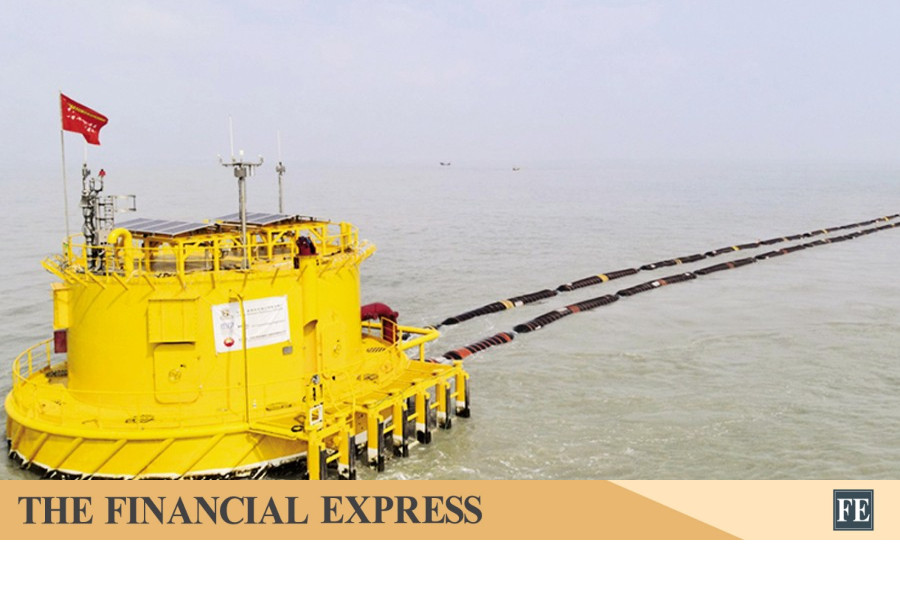
SPM to be operated by Indonesian company


1790316359215.webp


CHATTOGRAM: Bangladesh Petroleum Corporation (BPC) is going to appoint operations and maintenance (O&M) contractor for the operation of the Single Point Mooring (SPM) with double pipeline after getting approval from the cabinet committee.

BPC will appoint PT Pertamina Trans Kontinental of Indonesia as the O&M contractor for the SPM at a cost of Tk 19.46 billion.

The government has approved the appointment at the 46th meeting of the Cabinet Committee on Government Purchase chaired by Finance Minister Amir Khosru Mahmud Chowdhury on Wednesday. The proposal was placed by the Energy and Mineral Resources Division, while BPC will implement the contract.

The BPC has constituted a separate company for maintenance and operation of petroleum pipelines. It has already built four pipeline projects, including SPM with double pipeline from Moheshkhali to Eastern Refinery Limited (ERL), India-Bangladesh Friendship Pipeline, Chattogram-Dhaka Pipeline, Pitalganj-Kurmitola Pipeline.

Talking to The Financial Express, Managing Director of ERL Sharif Hasant said, "The SPM project had already been completed last year. We have already started the procedures for operating the project." It may be mentioned that the SPM project was undertaken by the BPC to transport imported raw petroleum to state-owned ERL at Patenga in Chattogram in order to reduce the transportation cost of petroleum fuel and also ensure prompt direct unloading from the deep sea vessels.

The SPM project was taken up in 2012 and after completing the official process, the government awarded the contract of the project to the Chinese company China Petroleum Pipeline Bureau (CPP). The BPC signed a contract with the CPP on December 7, 2016 to implement the 'SPM with Double Pipeline'.​
 

PKDefense Forums: Country-by-Country Military Discussions

Log In Register Forums
Latest
Back