Bangladesh Defense

Saif
Senior Member
- Joined
- Jan 24, 2024
- Messages
- 22,283
- Likes
- 9,869
- Nation

- Axis Group

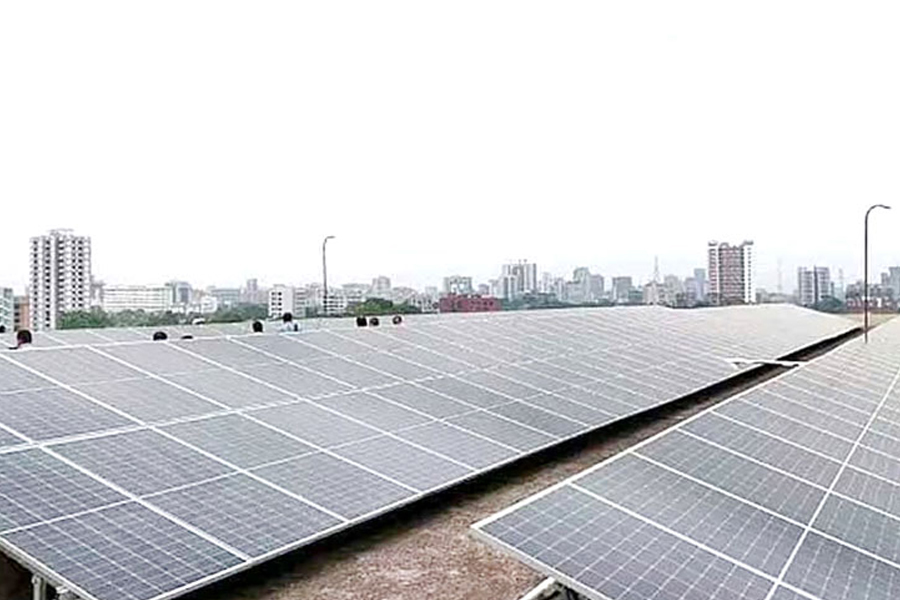
Private investment in rooftop solar
The energy crisis is no longer merely a matter of households struggling with shortages of gas and electricity; it is a threat to the country’s economic future. It is because energy security has a direct bearing on industrialisation, investment, employment generation and export competitiveness
Private investment in rooftop solar
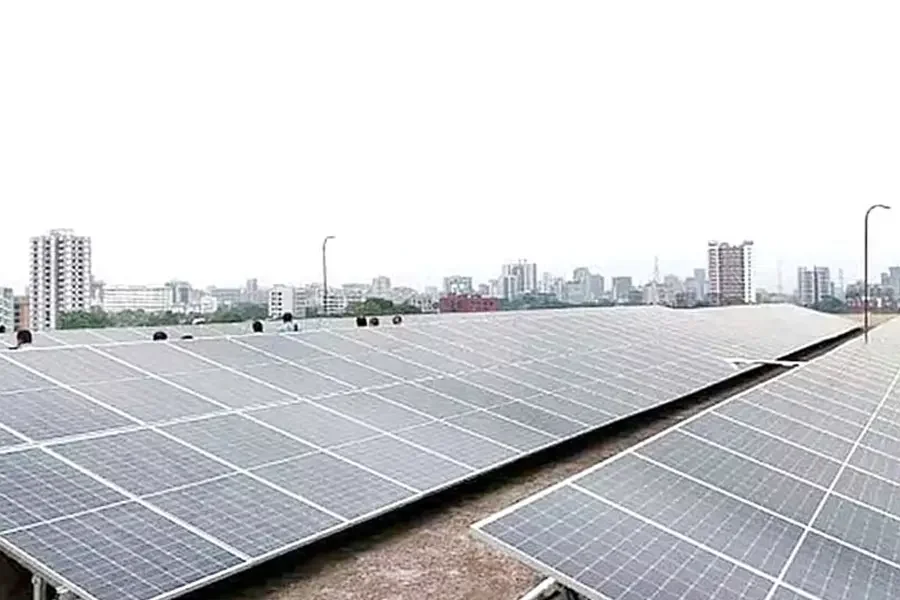
The energy crisis is no longer merely a matter of households struggling with shortages of gas and electricity; it is a threat to the country’s economic future. It is because energy security has a direct bearing on industrialisation, investment, employment generation and export competitiveness. Acute shortages of gas and electricity have recently crippled production in hundreds of factories. Energy experts therefore opine that the government and the private sector have to work in tandem to find a sustainable and long-term solution to the energy crisis.
According to the Bangladesh Power Development Board (PDB), the country’s grid-connected power generation capacity stood at 28,919 megawatts (MW) as of June 2026, while total capacity, including captive and off-grid generation, was 32,332 MW. However, actual generation is far below the installed capacity due to shortages of primary fuels including gas, coal and furnace oil. Reports suggest that overall electricity generation during this summer has been hovering around 13,000–14,000 MW against demand of roughly 16,000–17,000 MW. This 4000 MW shortfall triggered widespread loadshedding across the country in August. The gap between installed capacity and actual generation lays bare the fact that the challenge in the power sector is not merely to increase generation capacity. Rather, the priority should be to ensure the availability of primary fuel and address technical and transmission constraints so that existing power plants can operate close to their available capacity.
Recent PDB data also underscore another major weakness in the country’s energy sector: its heavy dependence on fossil fuels. Of the country’s total installed power generation capacity, around 44 per cent is gas-based, around 24 per cent is coal-based and around 23 per cent is furnace-oil-based. By contrast, solar power accounts for only about 1.94 per cent and wind power a mere 0.22 per cent. And the result is that power generation is frequently hampered by dwindling supplies from local gas fields, as well as disruptions in LNG imports caused by global price volatility, supply chain disruptions or technical glitches.
Moreover, when the prices of LNG, coal and oil rise in the international market, they not only increase the cost of power generation but also put pressure on the country’s foreign-currency reserves. Meanwhile, inadequate gas supply, low gas pressure, load-shedding and rising energy prices ultimately increase the cost of production. This is all the more concerning for export-oriented sectors, as higher production costs can erode their global price competitiveness.
Against this backdrop, diversifying the country’s energy mix, particularly by expanding renewable sources such as solar power, is not only a choice but an imperative. Neighbouring countries have already demonstrated the potential of solar energy to reduce dependence on conventional fuels. Pakistan, for instance, has rapidly expanded solar generation, with installed solar capacity reportedly exceeding 6,000 MW and meeting a substantial share of its electricity needs. The country estimates that greater reliance on solar power could save billions of dollars annually by reducing fuel imports. India, too, has significantly expanded its renewable-energy capacity, with renewable sources now contributing tens of thousands of megawatts to its power system. Bangladesh, by comparison, has less than 1,600 MW of solar generation capacity. For years, the scarcity of land has been cited as a major obstacle to large-scale solar expansion. However, a study by the Sustainable and Renewable Energy Development Authority (SREDA) estimates that rooftop spaces on industrial, commercial and residential buildings in urban areas alone could support 7,000–8,000 MW of electricity generation. Energy experts therefore see rooftop systems as a faster and cost-effective way to boost renewable energy capacity without requiring large tracts of land for utility-scale renewable projects.
Encouragingly, the government has set a target of meeting 20 per cent, or 5,000 MW, of total electricity demand from renewable sources by 2030, with the share rising to 30 per cent by 2040. Of late, the government has also announced a host of measures to revitalise the renewable energy sector. These include reducing the import duty on solar equipment to 1 per cent from 17 per cent, installing rooftop solar systems on government buildings, and providing incentives for rooftop solar installations in the private sector. The government has also approved the Net Metering Guideline 2025. Under the programme, consumers generating surplus electricity will be able sell it directly to the government at Tk10.50 per kilowatt.
However, financing is crucial. Installing rooftop solar systems initially requires substantial investment. The government can either subsidise solar panels and battery storage systems or direct banks and financial institutions to offer low-interest loans for such installations. At the same time, the tax policy for solar panels, inverters, battery storage and related technologies should be designed in a way that makes them more affordable.
Another important factor is policy continuity. Rooftop solar system installations require considerable upfront investment, and businesses will commit this fund only when they have confidence that the policy environment will remain supportive over the lifespan of a solar system. Policies related to net metering and surplus power sales must be transparent and predictable over the long term. Frequent policy changes or uncertainty over these arrangements could discourage private investment. A stable policy framework, therefore, is essential to encourage large factories and commercial establishments to invest in rooftop solar. If such establishments can meet even 25 per cent of their electricity needs from solar power, the combined effect could make a significant contribution to reducing pressure on the national grid and lowering dependence on conventional energy sources. A strong public-private partnership can transform the private sector from a passive energy consumer into an active energy producer, helping the government build a more reliable, resilient and sustainable energy system in the long term.