[🇧🇩] Energy Security of Bangladesh

Quick Reply ✓ Posted!
[🇧🇩] Energy Security of Bangladesh
834
36K
More threads by Saif

G Bangladesh Defense

130MW solar plants at Matarbari, Payra power sites planned

Jahidul Islam . Dhaka

1792107787118.webp

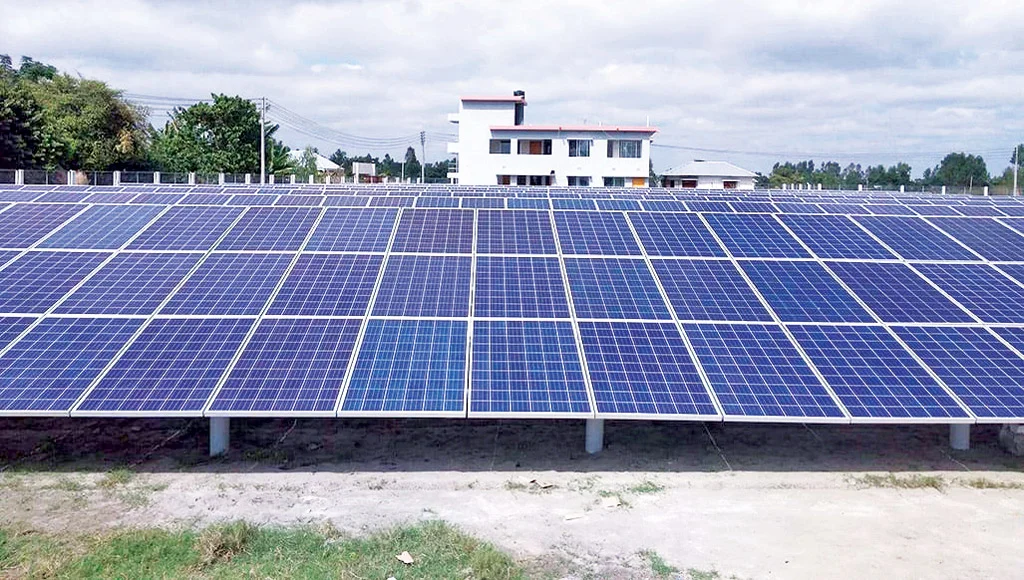
Representational image.


The Power Division has sent two proposals to the Planning Commission to build solar power plants at the Matarbari and Payra coal power sites with a combined capacity of 130 megawatts at an estimated cost of Tk 1,558.88 crore.

Coal Power Generation Company Bangladesh Limited plans to build a 70MW solar plant in the ash pond area of the Matarbari coal-fired power station, with a proposed Tk 532.39 crore loan from the European Investment Bank.

On the other hand, North-West Power Generation Company Limited has proposed a 60MW solar plant on 170 acres of underused land within the Payra thermal power plant complex in Patuakhali.

Under the proposed financing arrangements, the government would provide Tk 154.69 crore and the implementing agencies Tk 88.32 crore, while the remaining Tk 1,315.87 crore would come in overseas borrowing.

Sources said a meeting with prime minister Tarique Rahman in the chair on August 13 decided to establish a 70MW solar plant in Matarbari’s ash pond area alongside wind power facilities with a capacity of at least 60MW.

The Economic Relations Division is seeking EIB financing for the Matarbari solar project, while a lender for the Payra project is yet to be identified.

The proposed solar plants would use lands already held by the companies to increase renewable electricity generation and reduce dependence on fossil fuels, according to the project documents.

The Matarbari project in Cox’s Bazar would cost Tk 604.98 crore while the Payra project would cost Tk 953.90 crore, both to be completed by December 2028.

The Power Division forwarded the Matarbari proposal to the Planning Commission with a recommendation to initiate the appraisal process.

For the Payra solar plant, the commission’s Industry and Energy Division gave its consent to including in the 2026–27 annual development programme’s list of unapproved new projects.

At Matarbari, the selected site lies within the 1,200MW coal power complex and was originally reserved for ash disposal, but CPGCBL said it was selling the ash produced by the station.

The proposal cites an existing protective embankment, security infrastructure, and nearby transmission facilities as advantages that would reduce additional infrastructure requirements.

The Payra plant would use land previously acquired for the 1,320MW coal power station in Kalapara, avoiding fresh acquisition.

The Matarbari plant would have 70 MW of alternating-current capacity and 90.81 megawatt-peak of the solar panel capacity.

The plant is projected to supply an average of 119.29 million units of electricity annually to the national grid.

Its proposed cost amounts to Tk 8.64 crore per megawatt of capacity, compared with Tk 15.90 crore per megawatt of Payra’s stated capacity.

The battery storage has been excluded from the Matarbari solar power proposal to avoid delaying implementation, according to minutes of a project scrutiny meeting held on September 21.

The meeting was told that the feasibility study had already been completed and reviewed by EIB consultants, and incorporating storage into a fresh proposal would take additional time.

CPGCBL said it would take necessary steps regarding storage later in line with the Power Division’s instructions.

The scrutiny committee also recommended advancing procurement for the engineering contractor and supervising consultant alongside the approval process, while withholding the notification of award.​
 

Getting green transition off the drawing board


1792194723796.webp


Bangladesh's reliance on fossil fuels, particularly imported liquefied natural gas (LNG), has made its energy security vulnerable to developments beyond its borders. The successive shocks to the global energy market have exposed this weakness. But strangely enough, successive governments have been more interested in building fossil fuel-based power plants and arranging costly fuel imports than developing the country's renewable energy potential. Consequently, solar and other clean sources have remained largely a side issue, to be discussed in international climate forums rather than as part of the nation's mainstream economic and industrial development strategy. The government has set a target of generating 20 per cent of electricity from renewable sources by 2030 and 30 per cent by 2040. These are, undoubtedly, welcome goals. But given the poor record of achieving earlier renewable energy targets, the question is how these promises are going to be translated into actual generation capacity. Having a policy on paper is one thing, implementing it is quite another.

Against this backdrop, the concerns expressed by economists, entrepreneurs and experts at a recent dialogue organised by a local policy think tank deserve serious consideration. The speakers pointed to high installation costs, shortage of affordable finance, policy gaps and institutional weaknesses as major hurdles to the country's green transition. Notably, installing just one megawatt of rooftop solar power may cost between Tk60 million and Tk80 million. Few small and medium enterprises can afford such an investment without long-term credit. Add to that high import duties and complicated tax procedures affecting clean technology. Meanwhile, the various ministries and agencies concerned have yet to coordinate at policy and operational levels on way to achieving the targets. The problem is further compounded by inadequate grid infrastructure, limitations of net metering and the difficulties of finding suitable land for solar projects. Evidently, setting targets alone cannot remove these impediments.

Financing, however, remains the most formidable challenge. The existing power procurement arrangement is not sufficiently reassuring for private and international developers seeking bank loans or long-term institutional investment from overseas for renewable projects. Investors need certainty that the electricity they produce would be purchased and their bills paid on time. Though the government has reportedly restored payment guarantees for renewable projects, the issue is whether contracts and the purchaser's finances inspire lenders' confidence. At the same time, domestic banks with their short lending horizons and costly funds are hardly equipped to support investments with long payback periods. The Bangladesh Bank's green refinancing facilities, important as they are, cannot by themselves bridge the financing gap. Nor have green bonds, carbon markets or similar financing mechanisms developed sufficiently to draw large private investment. Moreover, repeated policy changes and delays in approvals increase risks and costs. So, the government has to create a predictable investment environment rather than expecting foreign capital to come simply because renewable energy is desirable. But green transition is not simply about electricity generation. For Bangladesh's export industries, especially garment and leather exporters, failure to adopt cleaner production processes may mean losing their competitive edge. Stricter sustainability requirements make energy efficiency, waste management and cleaner technologies commercially necessary. In this connection, the absence of a formal 'Just Transition' policy and a green skills framework is a concern.

Workers in conventional industries, whose livelihoods may otherwise be jeopardized, would need retraining while young people entering the job market should be prepared for emerging green occupations. In fact, green growth cannot be achieved by the power ministry working alone. What is required is a coordinated national strategy involving sectors including energy, industries, finance, trade and education, with clear sector-wise targets, realistic financing arrangements and measurable implementation schedules. Finally, political resolve and institutional accountability are the imperatives for advancing green transition to its ultimate goal.​
 

Govt seeks innovative ideas for sustainable energy


1792195167386.webp


The Power Division under the Ministry of Power, Energy and Mineral Resources has launched a competition to promote innovative ideas for energy conservation and increased renewable energy generation.

University students and professionals in the power and energy sector can participate in the competition, titled "Exploring Sustainable Energy Innovation," and submit their ideas by October 25, reports BSS.

The competition has been organised by the Power Division with support from the Sustainable and Renewable Energy Development Authority (SREDA), while the programme is being implemented by the German Agency for International Cooperation (GIZ).

The initiative seeks practical and implementable solutions to help achieve the targets of generating 10,450 megawatts of electricity from renewable sources and saving 15 percent of energy by 2030.

The competition has two categories. Under Group A, teams of two students from any department of a public or private university can participate. Group B is open to individual professionals working in the power and energy sector.

Participants can submit ideas on solar power, smart solar irrigation, off-grid systems, electricity grid modernisation, energy storage, wind power, domestic manufacturing of solar panels and inverters, agrivoltaics and floating solar power.

Other eligible areas include energy-efficient technologies, clean cooking solutions, digital energy-monitoring tools, electric vehicles and charging infrastructure, energy-efficient buildings and cooling systems, demand-side management, infrastructure modernisation, behavioural change and policy proposals.

Applicants must submit a concept note of no more than 1,000 words explaining their ideas, along with a three-minute video demonstrating their feasibility and potential impact.

Interested participants can register and submit their proposals through the website: Sustainable Energy Idea Contest 2026.

SREDA Chairman Mozaffar Ahmed said the competition aimed to generate practical ideas for expanding renewable energy and achieving national energy targets.

He said young people were developing innovative ideas and conducting research using artificial intelligence and other technologies. The initiative seeks to harness their research-based solutions to strengthen the country's energy security, he added.

Ahmed expressed hope that showcasing and implementing young people's innovative ideas would contribute to the development of the energy sector and help achieve long-term energy security.
​
 

Govt approves draft ordinance to accelerate rooftop solar installation

Targets 3,000-4,000MW solar capacity before next summer to reduce reliance on imported fossil fuels

Star Online Report

1792368047993.webp


The government is preparing a special ordinance to facilitate rooftop solar power installation, targeting 3,000-4,000 megawatts of capacity before next summer to reduce dependence on imported fossil fuels.

The cabinet today approved the draft of the Special Solar Power Installation Ordinance, 2026, to address regulatory gaps in projects financed and operated by private investors.

Existing laws lack specific provisions on key issues, including long-term electricity pricing, rooftop rental payments, and maintenance responsibilities under two investment models, according to a cabinet division statement.

Under the operational expenditure (OPEX) model, private investors bear the installation costs and provide electricity to the building owner. Under the capital expenditure (CAPEX) model, the building owner or another entity funds the installation and owns the system.

The Public Procurement Act, 2006, the Invest Bangladesh Act, 2026, and the Electricity Act, 2018, do not specifically cover solar installation and service arrangements under the CAPEX model. The OPEX model also lacks clear rules on electricity pricing over a 15-year period, rooftop rent paid in electricity and maintenance obligations, the statement said.

The cabinet approved the draft at a meeting chaired by Prime Minister Tarique Rahman at the secretariat.

After the meeting, Cabinet Secretary Nasimul Gani said the recent war had exposed Bangladesh's vulnerability in the energy sector, making solar power more important than ever.

Solar systems can be installed on government and private buildings, as well as unused land, he said. The ordinance is expected to be issued today.

According to the cabinet division, the Power Division has formulated the National Renewable Energy Development Strategy 2026-2030 to reduce reliance on imported fossil fuels, cut electricity subsidies, strengthen energy security and achieve the Sustainable Development Goals.

Under the plan, investors will finance solar installations on buildings owned by government, semi-government and autonomous bodies, local government institutions and state-owned companies. Institutions with their own revenue streams will also be able to install rooftop solar systems using their own funds, the statement added.​
 

Energy crisis, economic stress to take two years to ease

Says finance minister

Star Business Report


1792454705825.webp

Amir Khosru. File photo

Finance Minister Amir Khosru Mahmud Chowdhury expects the energy crisis and broader economic pressures facing Bangladesh to stabilise within two years, with a full economic recovery taking up to five years.

“It makes no sense to give people false hope by saying that we will solve all the problems tomorrow or the day after. We need at least two years,” Khosru said at a meeting of the Foreign Investors’ Chamber of Commerce and Industry (FICCI) in Dhaka yesterday.

“Under the government’s plan, the entire economy, including the energy sector, will be stabilised within the first two years. The economy will gain momentum in the third year and make a full recovery in the fourth and fifth years.”

Speaking at the meeting, titled “Sustainable Power and Energy: Driving Investment in Bangladesh”, Khosru said it would be wrong to offer people unrealistic expectations of a faster recovery.

He urged the private sector to prepare for stronger economic activity in the fourth and fifth years.

Khosru blamed the current economic strain on the previous Awami League government and the ongoing conflict in the Middle East.

“Within just a week of our taking office, a war broke out in the Middle East, leading to the energy crisis. Compounding this are the debts from the previous government and other liabilities we have inherited,” he said.

The finance minister said successive governments had not explored domestic gas resources for 15 years, making this a priority for the current government. Bangladesh Petroleum Exploration and Production Company Limited (Bapex) has been approved to drill 50 new wells, while production-sharing contracts (PSCs) are being finalised, he said.

Exploration will cover both onshore and offshore areas. The government has also set a target of generating at least 10 gigawatts of solar power and granted tax exemptions on solar power infrastructure, he added.

“We are planning to bring three to four new FSRUs [floating storage and regasification units] into operation to address the gas crisis, with South Korean, Chinese and American private investors involved.”

Outlining plans for new energy infrastructure, the finance minister said, “Alongside Matarbari, a new site with a 20-metre draft has been identified near Khulna. A modern terminal will be built there to allow oil and LNG to be unloaded directly from large vessels, creating an energy hub.”

Khosru said the government has managed the global energy crisis reasonably well, although there is room for improvement. The country has incurred $7 billion in out-of-pocket expenditure because of global pressures, he said.

He added that the government is addressing the challenges, although future pressures remain uncertain.

Logistics are also improving as the government opens ports to private-sector participation, which Khosru said will reduce costs and make doing business easier.

The government is also receiving a positive response to discussions on establishing an equity fund in Hong Kong specifically for Bangladesh, he said. The capital will go towards the energy sector, bank recapitalisation and state-owned enterprises (SOEs).

FICCI President Rupali Haque Chowdhury said disruptions in global energy markets have exposed Bangladesh’s vulnerability to imported fuels, raising industrial costs and disrupting production.

She stressed that energy security must go beyond managing supply to ensure reliability and affordability. She called for more domestic gas exploration, diversified liquefied natural gas (LNG) sourcing, modernised grid infrastructure, greater energy efficiency and faster investment in renewables.

She also stressed the need for regional energy cooperation and greater private-sector participation to build a resilient energy system, support export diversification and create jobs.

In the keynote address, Shafiqul Alam, lead analyst for Bangladesh Energy (South Asia) at the Institute for Energy Economics and Financial Analysis (IEEFA), said that domestic gas reserves could be depleted by 2036 without major new discoveries.

He said declining reserves and volatile global fuel prices are putting increasing pressure on power generation costs and industrial competitiveness.

Shafiqul proposed expanding rooftop solar, promoting solar-powered irrigation, improving industrial energy efficiency and pursuing regional hydropower cooperation to reduce dependence on imports. He also called for stable policies, green financing and public-private partnerships to attract sustained investment.

During a panel discussion, speakers highlighted the need for investment-friendly policies and a diversified energy mix to ensure reliable and affordable energy.

Shu Xiong, managing director of Chevron Bangladesh, said attracting foreign investment requires global competitiveness, predictable contracts, respect for contractual commitments and a sense of urgency backed by long-term planning.

Md Fazlul Hoque, administrator of the Federation of Bangladesh Chambers of Commerce and Industry (FBCCI), outlined short and long-term measures to ease the ongoing energy crisis.

He said reopening coal-fired and furnace oil-fired power plants running below capacity could provide immediate relief. Securing coal and furnace oil supplies takes an estimated two to three weeks, but restoring the plants to full capacity could be a game-changer, he added.

Prof M Tamim, vice-chancellor of Independent University, Bangladesh, called for a pragmatic balance in the energy mix and urgent foreign direct investment in gas exploration to strengthen energy security.​
 

PKDefense Forums: Country-by-Country Military Discussions

Log In Register Forums
Latest
Back