[🇧🇩] Energy Security of Bangladesh

Quick Reply ✓ Posted!
[🇧🇩] Energy Security of Bangladesh
834
36K
More threads by Saif

G Bangladesh Defense

Sustainable energy idea contest launched


1791676495964.webp


Sfuron, a national sustainable energy idea contest that invites university students and energy-sector professionals to pitch ideas for a sustainable energy future, has been launched this week.

Winners will receive prizes and present their ideas to development partners and investors.

The contest invites university students and energy-sector professionals to put forward practical ideas for a sustainable energy future. It is anchored in the National Renewable Energy Development Strategy Paper (RESP) 2026–2030, which sets a 10,450 MW renewable energy target by 2030 and aims to save 15% energy across households, industry and the commercial sector over the same period, against a 2026 baseline.

Organised by the Power Division of the Ministry of Power, Energy and Mineral Resources in cooperation with the Sustainable and Renewable Energy Development Authority (SREDA), the contest is implemented by GIZ in Bangladesh, on behalf of German Development Cooperation and the European Union.

Submissions are invited under two categories.

The Renewable Energy track looks for ideas that can help the country reach its 10,450 MW electricity target, from rooftop solar, grid modernisation and storage, increasing production of local solar panels and inverters, wind energy and land-efficient options such as agrivoltaics and floating solar.

The Energy Efficiency track calls for ideas that help cut energy use, including campus and community interventions, clean cooking, digital monitoring tools, efficient retrofits, behaviour change and policy proposals.

Students must enter as teams of two from any public or private university and any discipline. Professionals working in the power and energy sector can enter as individuals.

Every participant will be verified at application, and entries found to be unverified or fraudulent may be disqualified at any stage.

Participants register on the contest website and upload a written concept note along with a short pitch video of up to three minutes. The strongest ideas will be shortlisted to pitch live before a jury of experts.

Submissions are open from 8 to 25 October 2026, and winners will be recognised at an award ceremony.

Winners in each group will receive trophies, certificates and prizes to support their academic or professional journey, along with the chance to present their ideas to development partners, investors and financing institutions.

Anyone with an idea worth sharing can register and submit at Sustainable Energy Idea Contest 2026.​
 

Bangladesh, Algeria Discuss Potential MoUs on LNG, LPG


1791761480476.webp


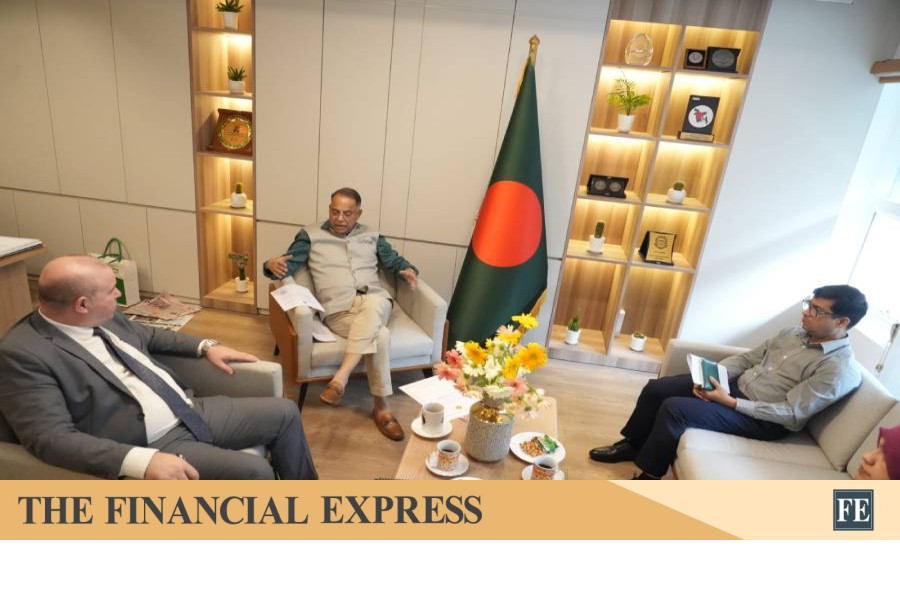
Bangladesh and Algeria have discussed potential cooperation in liquefied natural gas (LNG) and liquefied petroleum gas (LPG), as the two countries seek to expand bilateral ties in the energy sector.

The issue was discussed at a meeting between Bangladesh’s Minister for Power, Energy and Mineral Resources, Iqbal Hassan Mahmood, and Algeria’s Ambassador to Bangladesh, Dr Abdelouahab Saïdani, at the minister’s office in Dhaka on Sunday afternoon.

The discussions focused on potential memorandums of understanding (MoUs) on LNG and LPG cooperation, as well as preparations for the minister’s upcoming visit to Algeria.

The meeting also reaffirmed the two countries’ shared commitment to strengthening their longstanding bilateral relations, advancing mutual interests and expanding cooperation in the energy sector.

Secretary of the Energy and Mineral Resources Division (EMRD), Md. Ziaul Huq, was also present at the meeting.​
 

LPG users at traders’ mercy

Regulator fails to act: experts

Shahriar Azam . Dhaka


1791866478197.webp


Amid households’ continued struggle to secure liquefied petroleum gas despite paying prices far above government-fixed rates, sector experts and insiders have accused traders of holding consumers hostage during an acute energy crunch.

The crisis might deepen further. Because, LPG distributors on Monday announced a two-day nationwide strike on October 15 and 16, halting retail sales across Bangladesh to push for an increase in their commission from Tk 50 to Tk 150 per cylinder.

They have also demanded an end to alleged harassment by law enforcement agencies and measures to bring idle cylinders back into circulation, warning of tougher agitation if their demands are ignored.

M Shamsul Alam, energy adviser to the Consumers Association of Bangladesh, described the sector as an oligopoly run by a handful of private companies.

The vulnerability of the regulator, Bangladesh Energy Regulatory Commission, created this bottleneck, he said, warning that the regulatory framework has collapsed and the government retains virtually no grip on the retail market.

The BERC has failed to enforce its benchmark price, set without public hearings in breach of existing rules, since it began fixing prices five years ago.

At present, a standard 12kg LPG cylinder sells for up to Tk 2,400, against the regulated ceiling of Tk 1,837 for October.

Compounding the burden, some distributors have raised empty cylinder prices by about 50 percent over the past several months. This sharp run-up in cylinder costs illustrates how private suppliers wield arbitrary control over the retail supply chain.

Empty canisters from active suppliers are fetching steep premiums because other market key players – Bashundhara and Beximco – have struggled to import gas following the fall of the Sheikh Hasina administration in August 2024, when those same firms held dominant sway over the trade.

At Dipto Enterprise in Dhaka’s Panthapath, proprietor Ujjal Hossain said he was stocking only BM-branded 12kg cylinders at Tk 2,000. With BM supplying steady volumes into a dry market, the cost of its empty canister jumped from Tk 1,400 to Tk 2,200.

Conversely, empty canisters from stalled suppliers have seen their value drop. Used Bashundhara containers are selling for as low as Tk 800. For households forced to abandon an unavailable brand, obtaining a filled container from another distributor requires buying a new metal bottle, pushing total switching costs up to Tk 4,200.

Bashundhara LP Gas, which commanded a 15.5 percent share of total imports in FY2023, saw its intake drop to 5.19 percent in FY2024 and further down to 3.68 percent in FY2025. Md Redwanur Rahman, sales and marketing head at Bashundhara LP Gas, did not answer phone calls seeking comment on the decline.

Beximco LPG has experienced similar supply contractions due to restrictions in opening import letters of credit.

Following Hasina government’s fall, these groups ran into banking roadblocks and complications in opening LCs to secure shipments.

Because private operators use incompatible cylinder fittings and decline to refill rival containers, the collapse of these dominant brands has left consumers trapped.

National Board of Revenue statistics indicate that LPG imports have held steady – 158,000 tonnes arrived in August, 156,000 tonnes in September, and 39,000 tonnes during the first 11 days of October.

Annual imports have also expanded consistently, rising from 1.223 million tonnes in 2023 to 1.442 million tonnes in 2024 and 1.447 million tonnes in 2025.

More than 98 percent of Bangladesh’s LPG requirements are met through imports run by private companies.

After the government froze new residential piped gas links in 2015 to preserve declining domestic natural gas reserves, rapid urbanisation drove millions of households into the cylinder market.

Today, domestic kitchens account for roughly 80 percent of national LPG consumption, with commercial, transport, and industrial sectors taking up the remaining share.

The LPG market disruption is particularly severe across district centres.

In Rajshahi, local distributor association officials confirmed that dispatches from Bashundhara and Beximco – which together control nearly 60 percent of the regional market – have dried up entirely.

Momotaj Begum, a resident in Rajshahi, said the ban on exchanging empty cylinders across brands has heavily increased monthly family expenses, forcing many households to buy rival canisters at exorbitant rates or shift to electric induction cookers.

In Bogura, LPG Traders Cooperative Association president Aslam Khan on Monday said Bashundhara supplies have remained halted for nearly a year, while deliveries from Delta and Orion stopped in late September.

Ahsanul Jabbar, secretary general of the LPG Operators Association of Bangladesh, cited steady import figures from the NBR to argue that primary suppliers were providing adequate quantities of LPG.

He accused downstream distributors of withholding stock to create artificial shortages and increase their profit margins.

However, dealers and retailers dispute that claim, countering that overheads, freight rates, and wages have escalated to the point where the Tk 50 statutory commission is no longer viable.

BERC chairman Jalal Ahmed dismissed requests to raise dealer commissions without statutory public hearings, adding that the commission formed an inspection team on Sunday to investigate the supply chain.

Shafiqul Alam, energy analyst at the Institute for Energy Economics and Financial Analysis (IEEFA), said that industrial manufacturing units had increasingly turned to LPG over the past four to five years to bypass domestic natural gas shortfalls.

‘While national demand is rising by about 12 percent annually, imports have not grown fast enough to bridge the gap,’ he said.

With state authorities unable to police official prices, consumers remain caught between a fractured distribution network and corporate commercial tactics, bearing the cost of an essential utility left entirely to an unregulated market.​
 

Petrobangla extends offshore oil, gas bidding deadline to March 31, 2027


1791933310750.webp


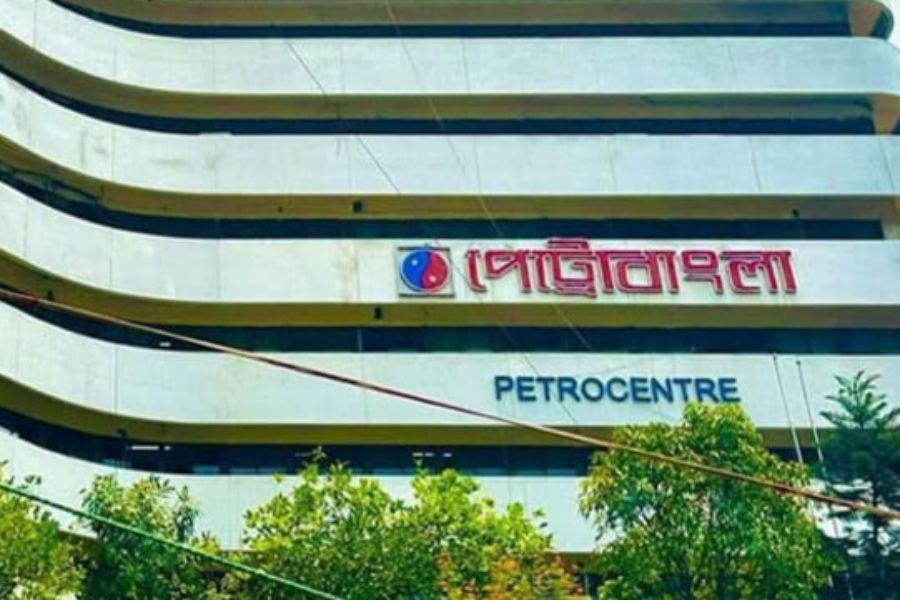
Bangladesh Oil, Gas and Mineral Corporation (Petrobangla) on Tuesday extended the deadline for submitting bids under the offshore oil and gas exploration and development tender by four months, pushing the final date from November 30 this year to March 31, 2027.

According to Petrobangla, the deadline was extended following recent discussions with and requests from several renowned international oil companies (IOCs).

Authorities hope that making data packages more accessible alongside this extended timeline will encourage greater participation from global energy firms in the current bidding round.

On May 24, Petrobangla officially invited international tenders for oil and gas exploration across 15 deep-sea blocks and 11 shallow-sea blocks.

The tender document is priced at $7,000, with options for bidders to submit proposals for specific individual blocks or the entire offshore region, said Petrobangla Director Engineer Md Shoyeb.

So far, three major entities, including Turkish Petroleum Corporation (TPAO) and China National Offshore Oil Corporation (CNOOC), have purchased the tender documents.

A previous bidding round initiated in March 2024 attracted interest from seven prominent international companies, including US-based ExxonMobil, with two firms purchasing data packages from Petrobangla.

However, due to political transitions and various other constraints, those companies ultimately refrained from submitting bids, leading to the cancellation of the 2024 round.

Following an evaluation by an inquiry committee formed by the last interim government, several key revisions were introduced to the Model Production Sharing Contract (PSC).

These include reductions in pipeline transport costs from the deep sea to the mainland, lowering the WPPF (Workers' Profit Participation Fund) share from 5 percent to 1.5 percent, and raising ceiling gas prices tied to Brent crude – setting the price up to $11 per thousand cubic feet for deep-sea blocks and $10.50 for shallow-water blocks, compared to fixed rates of $7.25 and $5.60 under the 2019 PSC.

Energy sector analysts point out that despite Bangladesh securing more than 118,813 square kilometres of maritime territory following favourable international verdicts against Myanmar in 2012 and India in 2014, exploration efforts in the Bay of Bengal have long remained sluggish.

With domestic gas production declining from a peak of nearly 2,800 million cubic feet per day (MMCFD) down to around 1,620 MMCFD against a daily demand estimated at 4,000 MMCFD and an authorised system load exceeding 5,356 MMCFD, the country continues to face a persistent supply deficit of roughly 1,400 MMCFD.

Officials expect that the revised terms and extended deadline will help revitalise foreign investment and alleviate the growing energy crunch impacting national industrial growth.​
 

PKDefense Forums: Country-by-Country Military Discussions

Log In Register Forums
Latest
Back