New Tweets

[🇧🇩] Energy Security of Bangladesh

G Bangladesh Defense
[🇧🇩] Energy Security of Bangladesh
574
20K
More threads by Saif


It’s time to form an energy audit commission
Syed Mansur Hashim
Published :
Aug 16, 2024 22:01
Updated :
Aug 16, 2024 22:01


1723855858960.webp


Despite having built up an over-capacity of power generation in the energy sector), the past government did little to ensure a cheap and reliable supply chain of primary energy, over which it would have total control. That is the irony of the $460 billion dollar economy in Bangladesh. Opinions differ about actual demand for power in the country, but it is around 16,000 MW (megawatts). Despite this, power plants were built and commissioned and today, the grid connected power generation capacity stands at slightly above 27,000 MW. Over the course of the last one year or so, the past government has had to take expensive high-interest, short-term loans from international lending institutions simply to defray payments for energy purchases. A ridiculous situation and one that threatened macro-economic stability in the mid to long term!

According to an article published in Energy & Power magazine: "The highest-ever generation was 16,477MW on 30 April 2024. In the peak hours on that day, the deficit was 1,000MW. The unit cost of generation in FY 2022-23 was Tk 12.13. The average power tariff was Tk 7.04 per unit" On top of that, the erstwhile government had decided that subsidy on power sector would be removed in phases within the next two years. It is the bulk and retail consumer who would bear the burden of subsidy withdrawal. While consumers could curtail energy consumption by reducing usage, energy-efficiency transformation of industry cannot happen overnight and there is also a cost factor involved.

The arrogance with which the ministry of power & energy and policymakers had ramrodded the entire process was sad to see. The explanation, if any, was that utility companies were running into billions of Taka worth of losses and these had to be covered with ever-increasing rise of tariff. During the golden days of economic development, subsidies on power increased by leaps and bounds in the name of "capacity payment". According to a study by the Centre for Policy Dialogue (CPD), over the last seven years, capacity charge jumped from Tk50 billion to Tk320 billion.

One would have thought that with so much financial outlay, generation cost would be managed. The Bangladesh Power Development Board (BPDB) "forecasted that the generation cost would be reduced to Tk10.50/unit." Why so? Because one major element in all these calculation was not shared publicly. Yes, the power generation capacity (on paper) increased dramatically over the last 14 years, but as experience had shown that little thought had gone into awarding of contracts. There was no audit to calculate whether contracted power companies were actually delivering stated power outputs as per contract. The only thing that mattered was awarding of contracts with zero oversight and this is what has landed the nation in the mess it is in today!

As pointed out by a member of the Bangladesh Energy Society, the capacity charge clause necessitated the unnecessary payment on huge reserve margins that shot up the generation costs. This is supported by the fact that the former state minister of energy had informed the last parliament that the government had to pay beyond Tk 1,000 billion as capacity charge for the past 13 years. Perhaps it was a pipedream that policymakers believed in that international markets for three primary energy sources: liquid fuel, coal and LNG would remain stable for eons to come. It simply goes to show that greed overtook common sense and the economy had become dependent on an energy plan that could be undermined at any time.

Every nation strives for energy self-dependence, regardless of the source of energy. In the case of Bangladesh, it was fortunate to have gas and coal reserves - but these are finite resources, regardless of the reserve size. Yet, we have witnessed the obtuseness of policymakers in making energy plans that was focused on making the country import-dependent while disregarding the very basics of energy-efficiency, curbing wastage and unbridled corruption that would overwhelm the state of finances within a short period of time.

The current government has landed on this mess and it must tackle the severe energy crisis. Much has already been written on the formation of a banking commission to deal with the runaway corruption in the financial sector. It is time to form a proper energy audit commission comprising renowned energy experts of the country and people who understand the energy affair. The task of this commission would be to sift through the evidence of how and where subsidies went, who got what under "capacity charge" and precisely, what is the actual power generation capacity of the various power plants commissioned. Only with such data in hand, can a proper energy policy be formulated and the road to recovery may begin. Recovery will be both painful and time-consuming but this can no longer wait.​
 
Analyze

Analyze Post

Add your ideas here:
Highlight Cite Respond
  • Love (+3)
Reactions: Bilal9

Scrap, amend key energy laws, demand energy experts
Emran Hossain 18 August, 2024, 00:23

1723940227959.webp


The reform that Bangladesh now seeks to establish the rule of law following the ouster of Sheikh Hasina ending her autocratic rule should begin with scrapping and changing the key energy laws, energy experts said.

In the last 14 years, they said, until Hasina’s fall on August 5, the Awami League government made almost all power and energy deals behind the scene under the protection of an indemnity law named ‘Quick enhancement of electricity and energy supply act, 2010’.

The law handed unprecedented power to the minister for power and energy, which was Hasina herself, enabling her to award power and energy deals without any tender while ensuring that her decisions could not be challenged in any court of law.

The law came to be known as the indemnity law which was enacted in 2010 for two years. Its tenure was later extended four times, giving it a lifetime of 16 years until 2026, ignoring widespread demands from energy and legal experts for throwing it out.

The law oversaw unabated fossil fuel expansion at exorbitant prices further facilitating corruption and inefficiency, channeling a huge amount of public money into private pockets by creating a power system suffering from 50 per cent overcapacity.

‘The cancellation of the indemnity law should be the first step in the reform of the state,’ said Hasan Mehedi, member secretary, Bangladesh Working Group on Ecology and Development.

The call for reform emerged with the uprising that toppled the Hasina regime.

The ‘Quick enhancement of electricity and energy supply act, 2010’ was passed on October 12 in 2010 for two years as an emergency measure to tackle an acute energy crisis after the past Awami League government had assumed power in 2009.

In 2012, the law was given two years’ extension, followed by four year’s extension awarded in 2014, three years extension in 2018 and five years extension in 2021.

The law allows awarding any companies without tender any power and energy projects, including the import of natural gas, coal, liquefied natural gas and petroleum products, as well as the extraction of mineral resources. The law also covers electricity generation, transmission and distribution projects.

In the section 9, the law states that the legality of any activity or measure or order taken or given under it cannot be challenged in any court of law.

No legal action can be taken against any employees and officials who have operated under the law or its subordinate rules or any general or special orders given under it, states section 10 of the law, considering all actions done under it performed in good faith.​

After taking permission from the minister, the subsection 2 of the section 6 states, a special committee can contact and negotiate with a limited number of parties or a single party to process any procurement or investment proposals in the power and energy sector.

The special committee comprising top officials of the energy ministry and the state-owned power end energy entities.

Under the law, the government indiscriminately approved projects, increasing the installed power generation capacity to over 28,000MW in June this year from less than 5,000MW in 2009.

Energy experts frequently said that the rapid expansion of the power generation capacity was unnecessary and harmful and based on flawed growth projection.

The power projects offered riskless investment, guaranteeing huge profits, with capacity charge entitlement, which is a provision to pay investors regardless of power produced by their power plants.

‘The law should not have existed in the first place. It violates standard practices of public procurement around the world,’ said energy expert Ijaz Hossain.

He said that the government has a tough choice to make about holding the past Awami League government accountable for projects implemented under the indemnity law as it implies dealing with international power purchase agreements.

‘The move might bear financial consequences for some parties might choose to go to international courts,’ he said.

The mass uprising, however, has offered an opportunity as well exposing the past government’s acts against the interest of the state and people, giving the interim government the opportunity to renegotiate terms and conditions in existing power and energy deals, said Ijaz.

The past government under the law set up 151 power plants, including dozens of furnace oil, diesel, coal and gas-fired power plants, and two floating, storage and re-gasification units. Drilling of a dozen of onshore gas-wells by local and international oil companies were also conducted under the law. Oil-carrying pipelines were also installed, among other initiatives.

Not a single power and energy agreement was ever made public. The Awami League government also kept all environmental impact assessment a secret.

An analysis of the power projects passed by the Awami League showed that only one power project went through bidding since 2010. The bid, however, carried no significance for its winner was paid higher price through negotiation anyway.

Another result of having such a law is evident in the establishment of the Bosila 108MW power plant, owned by CLC power company, a sister concern of Maisha Group, owned by former Awami League lawmaker Aslamul Haque, who died in 2021. The furnace oil-based Bosila power plant began commercial operation on February 22, 2017, years after it was supposed to be operational. The power plant was set up encroaching river for which it was never made accountable. And the power plant was out of operation for the last four years but its permission was never cancelled.

Consumers Association of Bangladesh energy adviser Shamsul Alam said that the new government should suspend the indemnity law and amend the Bangladesh Energy Regulatory Commission act to ensure people’s right to public hearing before energy price hikes.

The past Awami League government turned the regulatory commission a lame duck in 2022 since when electricity and gas prices were frequently increased under executive orders.

Shamsul Alam demanded that the commission should work to reduce inefficiency and corruption to ensure uninterrupted energy supply without increasing prices.

‘The interim government should first announce that energy prices will not be increased during its tenure and then ensure it through reforms or providing subsidy,’ he said.
 
Analyze

Analyze Post

Add your ideas here:
Highlight Cite Respond
  • Love (+3)
Reactions: Bilal9

Power sector’s indemnity act suspended

1724023132198.webp

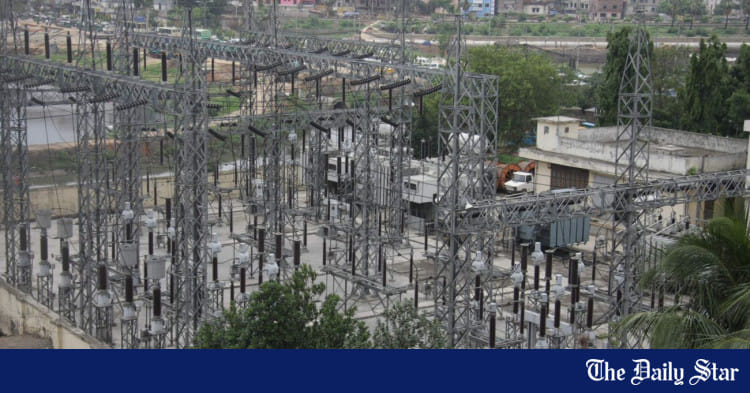
The government believes the country's power coverage would be 100 percent by 2021. Star/File

All the activities under the much-criticised Quick Enhancement of Electricity and Energy Supply Act 2010, commonly known as the Indemnity Act, in the power and energy sector will remain suspended, said the newly-appointed energy adviser to the interim government.

Initiated in 2010 when the power sector was struggling to meet the country's demand, the act stipulates there is no need to float any tender to award any power plant construction activities.

Procurement under this act does not need to go through the standard Public Procurement Rules that are followed by other ministries.

Though the process was meant to be for a short time, the Awami League government never abolished it. In 2021, it was extended for another five years.

Thanks to this act, hefty amounts were paid as capacity charges to the power plants.

All previous activities under this act will be reviewed by the interim government, said M Fouzul Kabir Khan, the adviser to the ministry of power, energy and mineral resources, at a media briefing in the secretariat yesterday.

"It will be decided by the advisory council whether the act will be abolished or not. But from now on, the pending works under this act will remain suspended," Khan added.

Different media outlets published articles about the anomalies of the sector, especially under this act, which may raise questions among people, said a press release from the ministry.

Under this circumstance, all the negotiations, projects and purchase activities will remain temporarily closed.

However, the contracts that were done under this act will continue.

The interim government will not take any decision regarding hiking the power or energy tariffs by bypassing the Bangladesh Energy Regulatory Commission (BERC).

Last year, the Awami League government amended the BERC Act and incorporated a clause to set the energy prices by themselves without any public hearing.

They have increased the power price several times since this clause was rolled out.​
 
Analyze

Analyze Post

Add your ideas here:
Highlight Cite Respond
  • Like (+1)
Reactions: Bilal9

CPD suggests 3 steps to fix energy sector

1724024071278.webp


The Centre for Policy Dialogue yesterday proposed a three-step pathway for energy transition under the interim government that would holistically reform Bangladesh's energy sector.

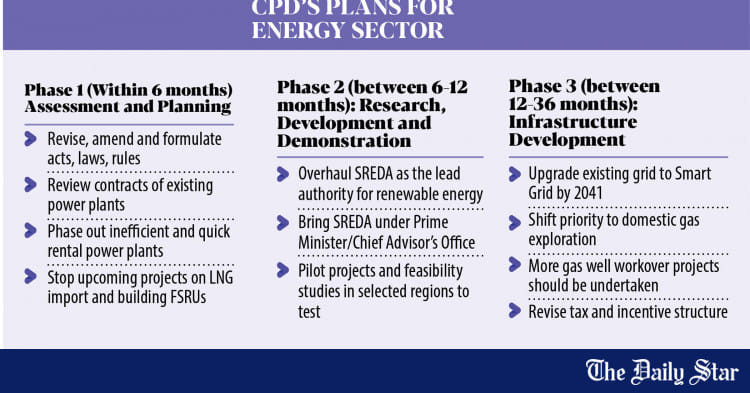
The think-tank proposed an initial 100-day plan where the interim government would announce key priorities, followed by significant reforms over the next six months.

The reforms would include abolishing certain acts, implementing new policies such as energy audits, renewable energy laboratory and centralising databases on pricing and investment.

The CPD identified four critical acts and policies that need to be revised immediately to ensure competition, efficiency, transparency and accountability in the power and energy sector.

These are the Quick Enhancement of Electricity and Energy Supply Act, the Bangladesh Energy Regulatory Commission Act, the Renewable Energy Policy and the Integrated Energy and Power Master Plan (IEPMP).

"These acts and policies were initiated to benefit vested interest groups in the sector," said Khondaker Golam Moazzem, research director of CPD, while presenting the keynote paper at a media briefing titled "Power and Energy Sector Reform Agenda for the Interim Government".

Under the Quick Enhancement Act, the government awarded public works to conglomerates without issuing any tender notices.

"No public procurement rules were followed under this act. The faulty procurement and bidding process of the major power projects such as the Adani deal, Payra and Rampal power plants cost us an additional Tk 35,000 crore."

Moazzem also called for an international audit of all companies under the ministry of power, energy, and mineral resources to uncover anomalies and corruption from the past government.

"There was no transparency in the information available in this sector. Companies provided different information to different authorities, and all details were kept top secret during the Awami League-led government. All deal documents should be made public."

The data on power generation cost, power purchase tariff, efficiency level, plant factor, fuel cost, capacity payment, date of contract expiration, and oil and LNG import costs must be updated regularly on the respective websites.

CPD emphasised the need for all government activities to be conducted under the Public Procurement Act 2006 and Public Procurement Rules 2008.

They urged the government to review all procurement and bidding processes of power plants, phase out inefficient and quick rental power plants and prioritise the identification and assessment of renewable energy resources.

Additionally, CPD recommended forming a probe body to identify anomalies in pre-paid meters and restructuring the power, energy and mineral resources ministry to empower the Sustainable and Renewable Energy Development Authority (SREDA) as the sole authority for implementing upcoming energy transition issues.

In the final phase, spanning 12 to 36 months, CPD suggested the government prioritise investment in advanced grid technologies, modernise grid infrastructure and shift focus from LNG imports to domestic gas exploration.

"The past government has made Bangladesh Energy Regulatory Commission a toothless authority," Moazzem said.

The laws were amended to adjust gas and electricity prices without holding a public hearing multiple times a year.

Without the process, there are two types of problems: it creates a non-transparent market and frequent tariff changes discourage investors.

In the IEPMP, the government had projected faulty energy and power demand, the keynote paper said.

Besides, the policy paper incorporated hydrogen and ammonia co-firing with carbon capture and storage systems, which is a 'false solution' of energy transition.

CPD demanded the review of the market-based pricing formula saying the formula has anomalies. "We need to get rid of subsidy-based power and energy but under a transparent process."​
 
Analyze

Analyze Post

Add your ideas here:
Highlight Cite Respond
  • Like (+1)
Reactions: Bilal9

CPD calls for phasing out inefficient power plants

1724024989967.webp


The Centre for Policy Dialogue yesterday urged the interim government to phase out all inefficient power plants as early as possible.

During a media briefing, titled "Power and Energy Sector Reform Agenda for the Interim Government", at its office, the CPD outlined a comprehensive operational reform strategy for the power sector.

The think-tank asked the government to revise power purchase contracts and incorporate the "no electricity no pay" clause to lessen the burden of capacity payments.

"The government paid a total of around Tk 105,000 crore in the last 14 years as capacity payments to power plant owners up to August 2023," said Khondaker Golam Moazzem, research director at the CPD.

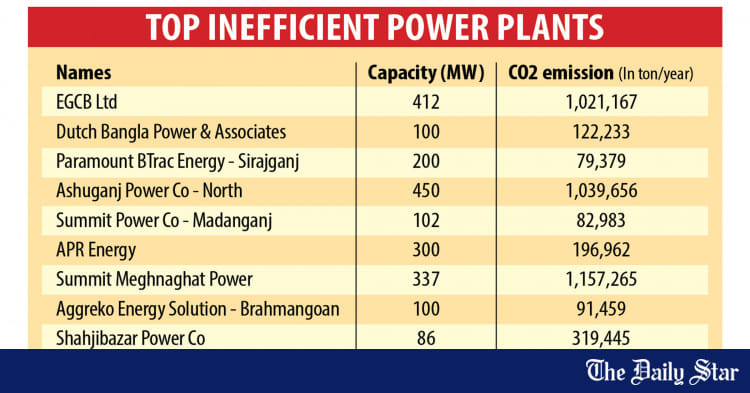
He provided a list of 28 inefficient power plants -- which have a total capacity of 3,655 MW -- based on net electricity generation, generation cost and carbon dioxide emissions, which can be phased out after their contracts end by 2030.

Most of them are quick rental power plants that the previous government promised to phase out. But it failed to do so.

All 16 quick rental power plants were supposed to be phased out by 2023, but as many as 13 are still operational. Of them, two have been getting capacity payment facilities and 11 are operating under the 'no electricity no pay' provision, Moazzem said.

According to the CPD, there is an over-generation capacity of 41 percent at present, significantly higher than the maximum required reserve margin of 30 percent.

"There is a scope to reduce the capacity of 6,677MW without having any major adverse effect on the electricity supply in the country," Moazzem said, adding the previous government did not maintain the retirement schedule of power plants.

Despite providing high subsidies and upward tariff revision, the Bangladesh Power Development Board has still been unable to come out of losses.

He added that no further power tariff revision should be made in the name of subsidy adjustments.

"The previous government had drawn up a plan to increase the price of electricity four times a year for the next three years to withdraw all subsidies in the power sector. They raised the price in February, but through such an adjustment, the burden is fully passed to the consumers -- households, agriculture, industry, businesses, services and other economic activities."

The CPD termed the automated fuel pricing formula, launched in March this year, as unclear. "The price calculation mechanism of petroleum is unclear and there are a few hidden charges without any proper justification."

As the procurement process was non-competitive and confidential, fairness could not be ensured regarding issues such as the determination of power purchase rate and capacity payment. It also led to extensions of contracts with inefficient power plants, it said.

So, the CPD asked the government to review the procurement and bidding process of the power plants.​
 

Analyze Post

Add your ideas here:
Highlight Cite Respond
  • Love (+3)
Reactions: Bilal9

Energy reforms are long overdue
CPD’s three-step proposal deserves consideration

1724196386356.webp

VISUAL: STAR

The Awami League government's questionable policies in the power and energy sector badly affected the economy over the last 15 years, prompting experts to frequently call for reforms but to no avail. Now that the interim government has taken charge, we hope to see the initiation of some much-needed actions in that regard. The three-step proposal given by the Centre for Policy Dialogue (CPD) shows where the focus should be. It has put forth a 100-day plan highlighting the key priorities, followed by significant reforms stretching over the next six months.

In particular, four acts and policies highlighted by the CPD need immediate revisions since those were made primarily to benefit vested interest groups. For instance, through the enactment of the Quick Enhancement of Electricity and Energy Supply Act, also known as the Indemnity Act, the erstwhile government awarded public works to conglomerates without issuing any tender notices, while no public procurement rules were followed either. This act should be repealed immediately. The other acts that need revisions are the Bangladesh Energy Regulatory Commission (BERC) Act, the Renewable Energy Policy, and the Integrated Energy and Power Master Plan (IEPMP).

The need for the BERC to operate independently cannot be stressed enough. The amendment to the relevant act, done in 2022 to empower the government to set power and energy tariffs on its own under "special circumstances," without holding any public hearing, was a shady decision that frequently shot up energy prices. This needs to change. In addition, the IEPMP needs to be revised because the government allegedly projected faulty energy and power demand in it. Moreover, the suggestion to link the Sustainable and Renewable Energy Development Authority with the chief adviser's office also deserves consideration, as it will hopefully speed up phasing out of the fossil fuel-based power plants.

Phasing out the inefficient power plants should be another goal for the interim government. According to the CPD, the Awami League government paid a total of around Tk 105,000 crore as capacity payments to power plant owners in the 14 years up to August 2023, which is outrageous. So much money was squandered while citizens were either deprived of power or forced to pay exorbitantly for it. Revising the power purchase contracts and incorporating a "no electricity, no pay" clause will lessen the burden of capacity payments.

These are just a few key areas that need immediate attention from the interim government. There are many other short- and long-term suggestions given by the CPD which are quite well-thought-out, and can, if properly implemented, ensure competition, efficiency, transparency and accountability in the power and energy sector.​
 
Analyze

Analyze Post

Add your ideas here:
Highlight Cite Respond
  • Like (+1)
Reactions: Bilal9

Indian ONGC likely to abandon hydrocarbon exploration in Bay
M Azizur Rahman
Published :
Aug 22, 2024 00:20
Updated :
Aug 22, 2024 00:20

1724286436615.webp


Indian oil and gas exploration company ONGC Videsh Ltd (OVL) is set to abandon its hydrocarbon exploration efforts in two Bangladeshi offshore gas blocks after a decade of operations.

OVL -- the sole international contractor assigned to delineate hydrocarbons in Bangladesh's offshore blocks -- has neither sought to extend its contract tenure nor initiated new well drilling projects before the contract expiration in February 2025, according to a senior Petrobangla official.

Instead, it requested to relocate its two shallow sea blocks to more promising areas in the Bay of Bengal and increase gas prices, the official told The Financial Express on Wednesday.

"It is a clear indication that the Indian firm is not interested in continuing exploration in Bangladesh," said a senior official of the Energy and Mineral Resources Division under the Ministry of Power, Energy, and Mineral Resources.

State-run Petrobangla has never increased tariffs after signing production-sharing contracts (PSCs) or allowed block relocation.

OVL is currently the only international oil company (IOC) with rights to explore two untapped shallow offshore blocks in the Bay of Bengal.

But it has halted its well-drilling activities for the past two years, violating contractual obligations, said the Energy and Mineral Resources Division official.

"After a failed exploration attempt at Kanchan under the SS-04 block in Moheshkhali Island a few years ago, the Indian company did not proceed with its exploration works," said a senior Petrobangla official.

It could not find any commercially viable hydrocarbon resources at Kanchan after drilling a well, he said.

Under the PSC with OVL, the oil and gas exploration company has contractual obligations to drill two more wells: 'Titly' in block SS-04 and 'Moitree' in block SS-09. But OVL management has yet to engage a contractor for the well drilling.

With only a few months remaining in its PSC tenure, the Indian firm is unlikely to complete drilling within the given time, said sources.

They added that the firm has a budget of US$65 million for drilling the wells.

Delays and failures

OVL signed two PSCs with Petrobangla in February 2014, securing rights to explore shallow sea blocks SS-04 and SS-09. These contracts were initially set to expire in February 2019.

Petrobangla extended the PSC tenure twice to boost offshore exploration -- first until February 2023 and then to February 2025. Both extensions were granted at OVL's request following failed exploration attempts.

At Kanchan gas well, OVL drilled beyond its targeted depth of around 4,228 metres in search of a commercially viable gas deposit. But all its efforts found only huge deposits of clay and shell-stone sequence and no sandstone, meaning there is no gas reserve there.


The Kanchan well was up for the first offshore drilling in the country's maritime territory in the last seven years.

Obligations and progress

OVL is the operator of blocks SS-04 and SS-09, having a participating stake of 45 per cent. Block SS-04 covers an area of 7,269 square kilometres, while block SS-09 stretches over an area of 7,026 square kilometres. The water depth of both the blocks ranges between 20 metres and 200 metres.

As per the PSC, the firm is committed to conducting 2,700 line-kilometre 2D seismic-data acquisition and processing as well as drilling one exploratory well in block SS-04.

Also, it has to do the same for another 2,700 line-km 2D seismic- data acquisition and processing as well as drill two exploratory wells in block SS-09.

The OVL owners will be allowed to operate and sell oil and gas for 20 years from an oil field and 25 years from a gas field under the deals. The company has already completed around 3,100 line-km 2D seismic surveys for both blocks.

Currently, the country has no producing offshore gas wells, as its entire natural gas output comes from onshore fields and the import of liquefied natural gas (LNG).​
 
Analyze

Analyze Post

Add your ideas here:
Highlight Cite Respond
  • Like (+1)
Reactions: Bilal9

Power sector deserves priority attention
Mushfiqur Rahman
Published :
Aug 19, 2024 22:07
Updated :
Aug 20, 2024 20:59

1724286667503.webp


The interim government headed by Dr Muhammad Yunus has been reviewing the activities of various ministries along with other important issues related to law and order situation and macroeconomic management of the country. Secretaries of the ministries of the government are now busy preparing position papers on the priority issues of their respective ministries requiring policy decisions of the government.

Power and Energy Divisions of the Ministry of Power, Energy and Mineral Resources are now in a difficult situation due to shortage of both greenback and local currency. The payment of pending bills against the import of liquid fuel and LNG, purchase of power from neighbouring countries and capacity charges of the private power plants remains a major pressing issue for the government.

As reported by the Bangladesh Power Development Board (BPDB), there are grid connected installed power plants having a cumulative 28,089 MW power generation capacity. Among them 62 plants with 11,246 MW (40 per cent) capacity are installed in the public sector (BPDB, EGCB, APSCL, NWPGCCL, RPCL, B-R Power Gen and CPGCBL). Two power plants that are joint venture initiatives (BCPCL and BJFCL) have been installed with a cumulative capacity of 2,468 MW (9 per cent of total generation capacity). Private sector has installed 87 power plants with a capacity of 11,718 MW (42 per cent of installed generation capacity). In addition, 2,656 MWs electricity are being imported from India under contracts with BPDB (9 per cent). It was reported that installation of 27 more power plants with a total capacity of 9,277 MW is nearing completion. Clearly, the country does not have any problem with power generation, rather the question that is troubling every mind is how to rationally utilise the installed capacity.

Generally, the average daily demand for power is around 14,000 MW during the peak hours. On April 30, 2024, there was the record high generation and consumption of 16,477 MW power in Bangladesh (during the peak hours). It is clear that a huge reserve margin of installed power generation capacity has been created during the recent years, but there were little efforts to analyse why the unutilised power generation capacity remained idle and how far the country would be able to pay the capacity charges to the private power plants.

Also, some power plants installed under various loan agreements in the public sector need funds for loan and interest payments. A few of those plants remain idle or operate well below their capacity due to non-supply of primary fuels.

Experts in the relevant sector believe that installation of 25 per cent maximum reserve margin would have been sufficient for ensuring stable power supply system in the country. The wasteful resource allocation and flawed planning have pushed Bangladesh Power Development Board (BPDB) into serious financial crisis. Former State Minister for Power, Energy and Mineral Resources Mr Nasrul Hamid had informed the now- dissolved parliament a few months back that the government had to pay Tk. 1.0 trillion in capacity charges over the past 13 years. Energy sector analysts believe that the huge capacity charge obligations of BPDB have contributed to higher power generation costs. Repeated power tariff increase could not help BPDB become financially solvent. BPDB has now nearly US$ 5 billion worth outstanding payment obligations. The immediate past government while approving the national budget for the financial year 2024-2025 allocated Taka 400 billion as subsidy for the power sector. Clearly, the subsidy allocation is not enough for the BPDB to meet its soaring budget deficit.

Sector experts, independent research organisations and policy analysts have been offering suggestions to focus on various issues related to power and energy sectors. It is important to analyse why the over capacity of power generation (more than 40 per cent) have been created and who are accruing benefit from it. It is also important to see whether the installed power generation capacity related data are authentic and if the basis of capacity charge payments are based on authentic reports on plant-wise real generation capacity and their idling hours.

It may be mentioned that data tuning and use of inaccurate and obsolete data by the government departments have been causing problems for the decision makers not only for economic management but also for making development plans for various sectors. Economists and researchers have been raising concerns about the quality of official data. Dr Salehuddin Ahmed, the Finance and Planning Adviser of the interim government, in a meeting held on August 13, 2024 assured that 'accurate up-to date data on economic and social indicators will be released'. He further added that 'discrepancies in economic indicators will no longer occur'.

An unbiased power and energy sector review, rationalisation of power plants installation initiatives and reserve margin justification is urgently needed. The government may consider re-negotiating tariff under existing power purchase agreements (for those plants who have failed to meet their implementation deadlines) and penalising the contractors for their non-performance.

Besides, it is very much important to conduct necessary scrutiny of the costs involved in the implementation of large-scale power projects in public sector within the scope of government to government agreements in the past. Media have been revealing financial irregularities in the implementation of 'mega projects' and the lack of transparency. For instance, media report revealed that implementation of four large coal fired power plants in the country involved a cost of about Tk. 1.25 trillion. Of that amount, allegedly, Tk.617 billion was either wasted or misappropriated. Only professional assessments may find out the actual cost of large power plant projects that were implemented bypassing the competitive bidding processes.

Mushfiqur Rahman is a mining engineer. He writes on energy and environment issues.​
 
Analyze

Analyze Post

Add your ideas here:
Highlight Cite Respond
  • Love (+3)
Reactions: Bilal9

Latest Posts

Back
PKDefense - Recommended Toggle