New Tweets

[🇧🇩] Energy Security of Bangladesh

G Bangladesh Defense
[🇧🇩] Energy Security of Bangladesh
574
20K
More threads by Saif


Bangladesh's Summit reviewing cross-border power deals after India rule change

1724371401180.webp


Bangladesh's Summit Group plans to renegotiate preliminary deals to import renewable power from India after a recent rule change by New Delhi allowed generators that exclusively export their electricity to sell locally, the utility's chairman said.

India amended its power export rules less than a week after former prime minister Sheikh Hasina fled Bangladesh early this month amid deadly protests, enabling Adani Power to connect its Godda coal-fired plant -- the only generating station under contract to export all its output -- to India's domestic grid.

"After the policy change, my partners in India might be more willing to sell in India. Our company will be investing in transmission in Bangladesh and we will have to assume more risks," Summit Group Chairman Aziz Khan told Reuters.

The conglomerate, which operates over a dozen fossil fuel-based power generation plants, signed preliminary deals with Indian partners including Tata Power Renewable Energy Ltd last year to construct and source supply from 1,000 megawatts (MW) of renewable projects.

A spokesman for Tata Power declined to comment on Summit's plans.

Green power imports are crucial for slashing emissions in Bangladesh, which gets nearly 99% of its electricity from fossil fuels. Land scarcity in the densely-populated country of over 170 million has constrained higher solar additions.

Summit Power International, the Singapore-based holding company for Summit Group's power generation assets, is exploring options including delaying investments until there is more policy clarity, and renegotiating financial terms to account for higher risks, Khan said.

"Such quick changes in policies are always a matter of concern as they have long-term implications," Khan said, referring to India's rule change.

Summit's plans to import clean electricity via India from 700 megawatts of hydro power plants it planned to build in Bhutan and Nepal as a part of $3 billion in regional clean power investments also face uncertainty due to a new government in Bangladesh, Khan said.

No final decisions on the cross-border investments have been taken yet, Khan said, adding that the company would continue to invest within Bangladesh.

Khan said the new Bangladesh government's decision to suspend a law allowing awards of power supply contracts without tenders also contributed to his decision to review projects.​
 
Analyze

Analyze Post

Add your ideas here:
Highlight Cite Respond
  • Love (+3)
Reactions: Bilal9

Govt seeks budgetary support from ADB for energy imports
FE ONLINE DESK
Published :
Aug 22, 2024 21:06
Updated :
Aug 22, 2024 21:06

1724458407479.webp


The interim government has sought budgetary support from the Asian Development Bank to pay outstanding dues to foreign energy companies and make more imports of power and energy.

The request was made by Power, Energy and Mineral Resources Adviser Muhammad Fouzul Kabir Khan when a delegation of the multilateral donor agency, led by its country director Edimon Ginting, met him at the ministry’s conference room on Thursday, reports UNB.

Welcoming the ADB delegation, he informed them that he had made several decisions very quickly soon after taking charge.

He said the interim government will make decisions based on facts rather than just relying on statistics.

He also informed the delegation that from now on, to ensure transparency, he has also given instructions to the ministry officials to go through the tender process to make any kind of procurement.

“The provisions of Public Procurement Act, 2006 and Public Procurement Rules, 2008 shall be used in all procurement processes”, he told the delegation.

He also noted he has suspended the ongoing operations under the Speedy Power and Energy Supply (Special) Act, 2010, and suspended the concerned provision of the Bangladesh Energy Regulatory Commission (Amendment) Act, 2023 that allows the government to raise power and gas tariff by executive order.

Fouzul Kabir, who is also adviser of the Ministry of Road Transport and Bridges and the Ministry of Railway, said that the current government has undertaken plans to increase the use of renewable energy.

Congratulating the adviser on his new role, the ADB Country Director in Bangladesh said that they are the biggest partner of the government in the power and energy sector.

He expressed interest in working wholeheartedly with the present government. They will seriously consider the current government's request for budgetary assistance in the power and energy sector.

Senior Secretary of Road Transport and Highways Division Md. Ehsanul Haque, Senior Secretary of the Power Division Md. Habibur Rahman, Senior Secretary of Bridges Division Md. Manjur Hossain, Railway Ministry Secretary Mr. Abdul Baki, and Energy and Mineral Resources Division Secretary Md. Nurul Alam were present on the occasion.​
 
Analyze

Analyze Post

Add your ideas here:
Highlight Cite Respond

Tackling energy problems will be tricky
Syed Mansur Hashim
Published :
Aug 23, 2024 21:42
Updated :
Aug 23, 2024 21:42

1724458751322.webp


The energy advisor has stated on the first day of joining office that the Speedy Supply of Power and Energy (Special Provision) has been put on hold with the promise of not raising tariffs on energy prices and alongside bringing past contracts under review. This is a welcome move but the fact remains that the country is presently burdened with a US$5.0 billion energy-debt and it is the task of the interim government to navigate the country out of this situation.

As stated, umpteen number of times by energy experts in the country, the open flouting of rules that the Act allowed in terms of public procurement had become the norm and it created the perfect opportunity for a total lack of oversight in procurement of energy supplies and power contracts. The full scope of the graft that had occurred over the course of more than a decade will remain a work in progress but that is a separate subject of discussion.

While arguments have been made both in last parliament and in the public sphere that there is nothing wrong with 'capacity payment', one cannot overlook the public disclosure made by the former minister for energy and power that the state had paid Tk 1.06 trillion as capacity payment to the private energy sector. The crux of the problem lies elsewhere i.e. correct demand forecasting. For years, policymakers went on building one power plant after another in what is now totally obvious - over and above the power needs of the economy! As capacity payment or charge takes into account return on investment, interest payments on loans (both domestic and foreign), capacity payment as a whole went on rising and today, by an average estimate the energy sector is burdened with around 10,000 MW (megawatts) of excess power generation capacity.

Again, as energy planners wilfully chose to divert energy sourcing from national to international at the expense of sustained exploration of own natural resources and concentrating on an import-driven fuel supply, external shocks like a war in Europe pushed the production cost of energy through the roof. None of this helps the present government though because it is now burdened with multi-billion-dollar debt in foreign currency because these energy supplies have to be paid in foreign exchange.

The question is what will the government do about these unnecessary power plants, particularly those that were commissioned after 2017? Since, there is no need for a lot of these plants, what will the decision about keeping them operational? Whatever may be the contractual obligation under the said Act, can the country afford to keep paying capacity charge? The answer obviously is a resounding NO! This is evidenced by events over the last one year when the previous government had resorted to taking short-term hard interest loans from foreign institutions simply to defray the payments to foreign suppliers of liquefied natural gas (LNG) and to meet import of fossil fuels. The situation today has taken years in the making and by putting a cap on energy prices for now will not make the problem go away.

Many years ago, Pakistan had followed the same path to prove power for its economy. It had landed in the same mess as Bangladesh. A skewed energy policy that was overly dependent on independent power plants which increasingly became the dominant suppliers of energy! That country too had reached a situation where it couldn't afford to pay off the producers of power or the suppliers of energy and indeed the country was going bankrupt and this was avoided by a generous bailout from the Kingdom of Saudi Arabia.

Bangladesh presently isn't on the verge of bankruptcy but it is in serious economic trouble. As pointed out by numerous energy experts in the country, there has to be a shift in policy to take energy exploration seriously. The country is now energy-starved. Entire sections of industry are now facing ruin because natural gas production in the country has been waning for some years now. With state-owned exploration companies effectively sidelined as policymakers had moved towards procuring energy supplies from the international market, natural gas can no longer be supplied to either industry or power generating plants. For more than a decade, we have become less energy-independent and that is where the focus must now return. The energy advisor is tasked with the unenviable job of rejuvenating the exploration of on-shore and off-shore natural gas. While it may be politically expedient for some in government to forgo the issue of coal extraction, can Bangladesh be choosy? Pragmatism demands that Bangladesh must explore all its domestic natural resources if it wishes to preserve the economy and move forward.​
 
Analyze

Analyze Post

Add your ideas here:
Highlight Cite Respond

Navigating energy efficiency for Bangladesh’s energy security

1724714193602.webp

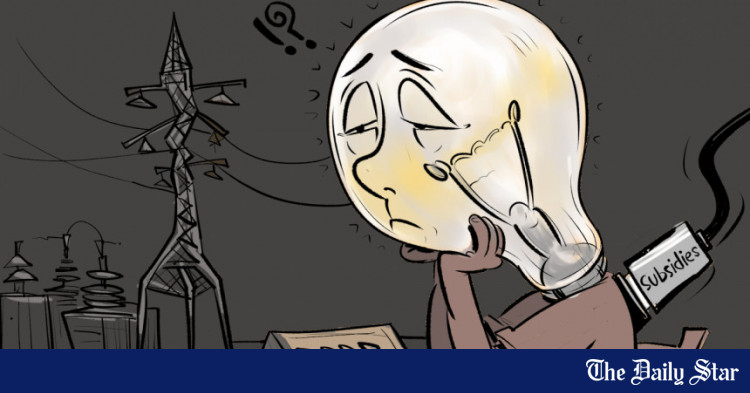
The government’s efforts in the last one and a half decades contributed to economic growth; however, the road ahead is still bumpy. VISUAL: BIPLOB CHAKRABORTY

According to the International Energy Agency, a fundamental tenet of energy security is having a steady supply of energy at reasonable prices. Between 2009 and 2024, Bangladesh primarily focused on scaling up power infrastructure, while efforts to develop energy resources fell short. The country's exposure to the volatile international fossil fuel market increased during this time, leading to challenges in maintaining a steady energy and power supply. Soaring tariffs amid inflationary pressure in the last two years made energy less affordable to the low and lower-middle-income groups.

The government's efforts in the last one and a half decades contributed to economic growth; however, the road ahead is still bumpy, with fuel imports likely to spiral, which in turn might worsen the country's energy security.

At this time, it would be prudent to change the highly import dependent energy model. With different energy-consuming sectors providing significant energy efficiency (EE) opportunities, Bangladesh's approach to accelerating energy security should include EE at its core. Going forward, enforcing EE policy instruments and creating a favourable ecosystem for them to thrive in will be all-important to promote EE.

Bangladesh's energy efficiency and conservation master plan up to 2030 shows viable EE and conservation potential of 21% and 28.8% in the industry and household sectors respectively. However, a 10% efficiency gain on grid electricity consumption could lessen the country's power demand between 1,500 megawatts (MW) and 1,700MW (based on day and evening peak power demands during April to July 2024). Demand management could offer a multitude of benefits, such as delay or lessen the investment in new and large fossil-fuel-based power plants, and minimise fossil fuel import bills on the back of reduced demand for power.

Usually, Bangladesh has competing priorities in the power sector. It feels the burgeoning pressure to consistently invest in incremental power generation capacity and to improve transmission and distribution (T&D) systems. As EE provides relief by delaying the immediate demand for capital-intensive and large fossil-fuel-based power plants, the country can use freed-up resources to bring down T&D losses. This investment appears timely, given that the country registered T&D losses of around 10.3% in fiscal year (FY) 2022-23 against the global average of less than 8%. IEEFA's analysis concludes that a 1% improvement in T&D losses will reduce the country's energy generation needs by 884 gigawatt-hours (based on FY2022-23 data). This will help avoid oil import bills worth Tk 12.38 billion ($106.3 million) per annum (assuming the average fuel cost of producing electricity from oil-fired plants is Tk14/kilowatt-hour).

Moreover, industries and households display a notable gas-saving opportunity. IEEFA's study substantiated that EE in industrial captive power generation can reduce liquefied natural gas (LNG) import bills of $460 million per annum. EE in industrial processes demonstrates additional gas-saving potential. Likewise, due to billing systems for gas burners in most households not accounting for consumption quantity, people often exhibit wasteful gas consumption behaviours. If such behaviours are rectified through raising awareness, it could contain spiraling gas consumption and result in substantial national resource savings.

While EE can optimise energy consumption and accelerate energy security, Bangladesh needs to focus on policy enforcement to achieve the desired results.

The energy audit regulations (EAR), issued in 2018 and revised in 2024, specify guidelines for performing energy audits and the certification of energy auditors and managers. Furthermore, the Sustainable and Renewable Energy Development Authority (SREDA) declared 189 enterprises as large energy consumers (designated consumers) that are mandated to carry out energy audits and submit periodic reports.

A logical progression should ensure that designated consumers carry out energy audits and submit reports to the SREDA periodically. However, this step will only generate data on the EE potential of audited consumers and can at best motivate some consumers to implement a few energy-saving measures. Instead, setting up annual or periodic energy-saving targets for designated consumers will guide them towards EE for compliance purposes. SREDA should crosscheck the annual EE results of designated consumers and prescribe corrective measures to underperforming consumers.

The government could consider increasing energy savings targets of the designated consumers and enlarge their base. Verification and proper enforcement of EAR will encourage industries to establish a systematic energy management practice to achieve the highest level of efficiency.

On the other hand, the Bangladesh government issued the EE labelling regulations in 2023, laying the foundation for assessing the minimum energy performance standards (MEPS) of different appliances. Energy efficiency labels should be introduced, based on MEPS, to help consumers make informed decisions while purchasing lights, fans, air conditioners and other appliances.

Once labels for appliances are available, the Bangladesh Standards and Testing Institution should regularly monitor the market to phase out appliances that do not meet the MEPS.

Energy-efficient refrigerators and air conditioners with inverters are already costlier than their counterparts without inverters. As the FY2024-25 national budget has imposed higher minimum import duties on imported compressors that have inverters, consumers will find energy-efficient refrigerators and air-conditioners more expensive. The government should revisit the duty imposed on imported compressors with inverters and develop an ecosystem to encourage the use of efficient appliances. Once the country achieves adequate manufacturing capacity to meet local demand, the government could reimpose such duties.

If the country builds on its strong EE potential, it can reduce imported energy dependence and utilise monetary savings to upscale clean energy and enhance energy security. Furthermore, higher energy prices make the investment in EE expedient.

Shafiqul Alam is Lead Analyst, Bangladesh Energy, at the Institute for Energy Economics and Financial Analysis (IEEFA)​
 
Analyze

Analyze Post

Add your ideas here:
Highlight Cite Respond

Govt must do away with burden of power overcapacity
28 August, 2024, 00:00

THE rental and quick rental power plants that have reared the ugly head since 2009 riding an indemnity law that the now deposed Awami League enacted to plunder the power and energy sector have now run to a constraining pass, warranting an immediate government action. While the law — the Quick Enhancement of Electricity and Energy Supply Act 2010 the tenure of which has been extended in phases until 2026 — has all along safeguarded actors and their action in the sector by keeping them above the customary law, what happened under the protection of the law has had two major implications of creating a situation to increase power bills and giving more subsidy in the sector. Rental power plants have also become expensive because of the use of expensive diesel and furnace oil and the capacity charge entitlements laid out in the power purchase agreements by way of which the government pays the plants for the installed power capacity that the plants do not produce. Heavy fuel oils were four times more expensive than gas and 37 per cent more expensive than coal in producing a unit of electricity in 2023. The average power generation cost in oil-fired plants was about Tk 23 a unit against the average power system cost of Tk 11.5 a unit. Some oil-fired plants even spent Tk 40 on producing a unit of electricity.

The Awami League government — which extended the lifetime of the rental power plants three times their recommended efficient operating life and paid them about Tk 330 billion in 2009–2023 — has paid in all the power producers Tk 1,000 billion since 2009 in capacity charge for the power not produced, thus, transferring public money into private hands without being questioned. Rental and quick rental power plants have also been blamed for mounting losses of the Power Development Board which in 2023 stood at Tk 435.39 billion. The action in the power sector that could not be questioned, however, increased the installed generation capacity from 5GW in 2009 to more than 28GW as of June, but more than a half of the capacity could not be used and was not required. The authoritarian government of the Awami League did not heed what experts have said all these years. In the changed political context after August 5, when the Awami League government was overthrown, it has, therefore, become imperative for the interim government to assess the power and energy situation and establish the generation capacity that the country would need to meet all its needs, which should include the standard level of power overcapacity, and then do away with the remaining overcapacity that the government has so far paid for. The government should do away with rental power plants and the burden of power overcapacity associated with such plants.

Whilst the government must take early steps to do away with the burden of power overcapacity after a thorough assessment of the reality on the ground, including the needs and the capacity that should logically be there, it must also repeal the indemnity law and hold to account all the actors and their action that have pushed the power and energy sector to such a pass.​
 
Analyze

Analyze Post

Add your ideas here:
Highlight Cite Respond

Govt's executive authority to raise power and gas prices cancelled through ordinance
Published :
Aug 27, 2024 23:25
Updated :
Aug 27, 2024 23:25

1724803662704.webp


The government issued a gazette notification cancelling its executive authority to raise power and gas prices without public hearing by the Bangladesh Energy Regulatory Commission (BERC).

The gazette, issued by Ministry of Law, Justice and Parliamentary Affairs, dated on August 27, 2024, said that through this amendment the section 34Ka of the BERC Act 2003 will be abolished.

Officials of the Power and Energy Ministry said that this Section 34Ka was introduced by the previous Awami League government giving the government an authority to set the prices of power and gas through executive power without a public hearing.

The new amendment came in line with the Advisor of the Ministry Power, Energy and Mineral Resources of the interim government Dr Muhammad Fouzul Kabir Khan’s recent statement that the government will not raise gas and power prices without public hearing, UNB reports.

After this latest amendment, if any entity of the government wants to raise the price of power or gas, it has to submit a proposal to the BERC and then after examination BERC will hold a public hearing and then announce its decision on the issue within 90 days.​
 
Analyze

Analyze Post

Add your ideas here:
Highlight Cite Respond

Corruption and irregularities permeate power and energy sector, says adviser
FE ONLINE REPORT
Published :
Aug 28, 2024 21:35
Updated :
Aug 28, 2024 21:35

1724890728361.webp


Adviser for Power and Energy, and Road Transport and Bridges Muhammad Fouzul Kabir Khan has condemned widespread corruption and irregularities in the power and energy sector.

Speaking to the media after a meeting with senior officials at Petrobangla's headquarters in the city on Wednesday, Khan expressed grave concerns about the pervasive nature of corruption.

“Wherever I look, I see evidence of irregularities and corruption,” Khan said.

The adviser warned the officials to rid themselves of corrupt practices and emphasised that stern actions would be taken against those involved in such activities.

Mr Khan said from now on the secretaries of the power division and the energy and mineral resources division will be no longer chairman of state-run power and energy companies, unless an unavoidable situation arises, to avoid contradictories.

The interim government will also form an independent committee, headed by a retired justice, to review the projects and agreements inked under the Quick Enhancement of Electricity and Energy Supply (Special Provision) Act 2010 (Amended 2021), he said.

The government has already suspended special laws used by the previous government to accelerate deals and projects in the power and energy sectors bypassing competitive biddings, annulled the law cutting government authority to regulate natural gas and power tariffs avoiding stakeholders’ opinion, the adviser continued.

As per Mr Khan, the suspension of the special law has put several multi-billion dollar power and energy deals and projects that were in the pipeline at risk, including proposed fossil fuel and renewable energy-based power plants, liquefied natural gas (LNG) import terminals, long-term LNG deals, and petroleum product import contracts, and spot LNG purchase modalities.

The adviser stressed that the public demands LNG and petroleum products be imported at more rational and reduced costs.

Regarding the resumption of operation of Summit LNG Terminal, Mr Khan said that a specific timeframe has been sought from the contractor to ensure the coming back online of the FSRU.

Summit has informed that the FSRU will come online within September 7-10, he said.

The LNG terminal has been shut since May 30 after it was hit by a floating pontoon during the cyclone Remal mayhem.

The country’s overall natural gas supply will increase after resumption of LNG re-gasification in Summit’s FSRU, the adviser expressed hope.​
 
Analyze

Analyze Post

Add your ideas here:
Highlight Cite Respond
‘বাদ হবে মিটারের অযৌক্তিক চার্জ’

 
Analyze

Analyze Post

Add your ideas here:
Highlight Cite Respond

Latest Posts

Back
PKDefense - Recommended Toggle