Home Watch Videos Wars Movies Login

[🇧🇩] Energy Security of Bangladesh

[🇧🇩] Energy Security of Bangladesh
523
17K
More threads by Saif

G Bangladesh Defense

Energy key to economic efficiency, says CA’s Press Secretary
FE Online Desk
Published :
Feb 26, 2025 18:26
Updated :
Feb 26, 2025 18:26

1740616809796.webp


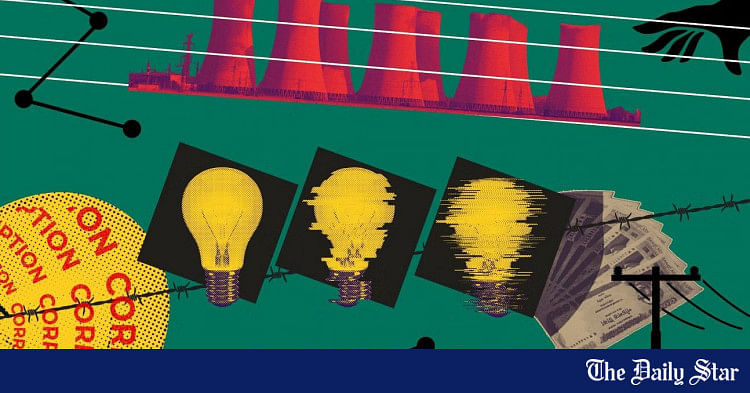
CA’s Press Secretary Shafiqul Alam said on Wednesday energy is the key to economic efficiency and no economy can function optimally without fixing the sector.

Speaking at the ‘Development Journalist Forum of Bangladesh (DJFB) Talk’ at the NEC Conference Room in Sher-e-Bangla Nagar, he criticised the previous Awami League government for mishandling the energy sector, which he claimed led to large-scale corruption and mismanagement, UNB reports.

“The entire system, like the capacity charge, was an arrangement for organized looting,” Alam alleged.

Citing findings from the White Paper, the Press Secretary stated that around $234 billion was laundered abroad during the previous regime. “Had this money remained in the country, it could have been reinvested to create jobs and boost economic growth,” he said.

Shafiqul Alam highlighted the current government’s focus on restoring macroeconomic stability. “We are seeing positive results as inflation has been declining for two consecutive months. We expect it to fall to around 7 percent by June, bringing much-needed relief to the people.”

He said that commodity prices are coming down and a stable inflation rate is helping maintain a steady exchange rate, positively impacting the development budget.

Blaming the previous government for destabilising the economy, he criticised the 9 per cent cap on both deposit and lending rates, and described the banking sector’s condition under the former regime as “daylight robbery while everyone was asleep.”

Despite these challenges, Alam expressed optimism about the interim government’s reforms, including improvements in the labor sector, enhanced efficiency at Chattogram Port and efforts to attract more foreign investment.

“We are working to restore discipline in the energy sector, pursuing policies like ‘no electricity, no payment’ and increasing the focus on solar power and regional energy cooperation through the Bangladesh-India-Bhutan-Nepal (BIBN) SA Electricity Grid,” he explained.

The government is also prioritising faster gas exploration, digitalising administrative processes to curb corruption, and attracting more foreign direct investment (FDI).

Alam stressed the importance of FDI in tackling unemployment and said the current administration had addressed issues that previously hindered foreign companies from repatriating profits. “These initiatives send the right signal to foreign investors that Bangladesh is committed to efficiency and tackling corruption,” he said.

He expressed confidence that Bangladesh would become a top performer in the global economy with ongoing reforms in the labor sector, improved port efficiency and enhanced energy management.

On law and order, Alam said the government had already taken nine measures to improve the situation and expected significant progress soon.

He also assured that the central bank had been working to restore discipline in the banking sector and protect depositors in troubled banks.

Addressing agriculture, Alam said the interim government was taking farmer-friendly initiatives to ensure food self-sufficiency.​
 
Analyze

Analyze Post

Add your ideas here:
Highlight Cite Respond
  • Like (+1)
Reactions: Bilal9

Bangladesh's energy transition comes to halt
Emran Hossain 01 March, 2025, 00:02

1740789484374.webp


RE tender gets poor response

Bangladesh’s energy transition came to an abrupt stop with the country’s interim government struggling to find investors in renewable energy projects.

After assuming power following the fall of the Awami League regime amid a mass uprising in July-August, the interim government cancelled all 31 renewable energy projects in the pipeline with a combined capacity of over 2,600MW.

Just a step behind signing the power purchase agreement, the cancelled renewable energy projects had been awarded without tender, under the protection of an indemnity law.

But new tenders, floated in three phases since December 2024, sparked debate over the eligibility criteria, which energy experts found to be facilitating AL-era power investors, big companies and foreign investors.

The response to the tenders, however, has been very poor so far, prompting authorities to extend deadlines.

Only four renewable energy projects are currently under construction, scheduled to come online this year, with a capacity of about 100MW.

‘That’s probably all about new renewable energy projects to be implemented through next year,’ said Shafiqul Alam, lead energy analyst, Bangladesh, the International Institute for Energy Economics and Financial Analysis.

‘Investors are apparently unwilling to invest in Bangladesh now,’ he said.

Cancellation of the previous renewable energy projects, some of which involved foreign investors such as Marubeni Corporation, Total Gas, and Engreen Limited, caused trust issues, highlighting uncertainties in doing business in Bangladesh, energy experts said.

The foreign investors had spent millions, some of them $200 million, and over half a decade of their time in advancing their projects that were eventually cancelled.

The foreign investors scrapped agreements with banks, a prerequisite for signing PPA following the receipt of the letter of intent from the government to get the investment.

‘New renewable energy projects would not be bankable,’ said a former employee of one of the foreign investors, confirming the shutdown of their Bangladesh office.

Government guarantee is what made previous projects bankable, he said, adding that no such guarantee is achievable in the current process.

‘Getting assurance from the financially strained Bangladesh Power Development Board does not sound exciting,’ he said.

Floated on December 5, 2024, the first tender invited proposals for setting up 12 solar power plants with capacity between 10MW and 45MW in nine locations.

The deadline for the first tender was extended once due to poor response, prompting authorities to relax its eligibility criteria. The next deadline is March 5.

Initially, applicants, who could be individual firm or joint venture or consortium or association, would have to have experience in successfully implementing two ground-mounted grid-tied solar projects, each with a minimum capacity of 20MW.

One of the solar projects would have to be implemented outside the tenderer’s country, showed the tender document.

BD Rahmatullah, a former director general of the Power Cell, described the condition as discouraging to local investors while opening the market to big foreign companies.

‘Local renewable energy enthusiasts are desperately looking to find foreign partners, often in vain,’ he said.

During the past 15 years of the AL regime, 12 countries got involved in 75 renewable energy projects, including those that rolled into operation, with a combined capacity of 5,489.6MW.

China topped the list becoming engaged in building 22 power plants with a capacity of 1,601MW.

Bangladesh was involved in building 1,258MW, followed by Singapore co-financing solar power projects with a capacity of 728MW, the United Arab Emirates co-financing 470MW, Japan 400MW, India 250MW and Germany, the Netherlands, the United Kingdom, and Korea co-financing 100MW or a bit more each.

Countries like Norway, France, and the United States also invested in solar power projects with capacities of only 50MW each.

The second tender invited proposals for building 10 solar power plants with 50MW capacity each in seven locations. The tender will expire on March 10.

Proposals for constructing 19 power plants with capacities ranging between 70MW and 100MW in 13 specific locations were floated on January 27 with a deadline of March 31.

‘All tender deadlines are likely to be extended, by up to three weeks,’ said Golam Mortuza, the BPDB official in charge of taking care of the tenders.

He said that the eligibility criteria would be relaxed to make the bidding even more competitive.

Despite making announcements about providing land and a transmission network to facilitate future renewable energy projects, the interim government has come up with no such measures in the ongoing bidding.

The locations specified in the tenders refer to sub-stations from where the BPDB will receive electricity supply from the solar power plants to be built, the PDB official said.

There are at least seven potential AL-era investors who have land near the locations mentioned in the last tender. PDB officials said that these AL-linked investors were likely to get the solar projects.

Bangladesh’s current installed power generation capacity is 27,884.7MW. Of the capacity, renewable energy accounts for only over 993MW.

Except for a wind and a hydroelectric plant, there are 14 solar power plants currently in operation, 11 of them owned by private companies known as AL favourites. The biggest solar power plant is of 200MW.

‘The ongoing bidding is likely to favour AL favourites in many ways,’ said Bangladesh Working Group on Ecology and Development member secretary Hasan Mehedi.

‘Bangladesh’s energy transition has never been so uncertain,’ he said.​
 
Analyze

Analyze Post

Add your ideas here:
Highlight Cite Respond
  • Sad (0)
Reactions: Bilal9

Energy division seeks Tk 22.25b for dev projects
Fund sought for dev projects in FY26, Finance Division scrutinising proposal
FE REPORT
Published :
Mar 01, 2025 00:40
Updated :
Mar 01, 2025 00:40

1740793160201.webp


The energy division has requested the government to earmark Tk 22.25 billion in the next fiscal year for drilling wells to enhance gas and oil production, conducting seismic surveys, and exploring mineral resources, officials have said.

Energy and Mineral Resources Division Secretary Mohammad Saiful Islam in a recent letter to Finance Secretary Dr Md Khairuzzaman Mozumder made the plea.

Finance Division officials say they are now scrutinising the proposal based on the necessity of the projects.

A senior official of the division told The Financial Express, "The government is now facing a severe shortage of development funds. Allocating additional funds in the next fiscal year will be very tough."

In the fiscal year 2025-26, the energy division secretary sought an allocation of Tk 3.0 billion to install ERL unit-2, Tk 2.0 billion to construct the Bhola-Barishal-Khulna gas pipeline, Tk 1.0 billion to dig wells in five areas of Bhola district, and Tk 2.0 billion to conduct 3D seismic surveys in Charfesson, Monpura, and Hatia upazilas.

He also sought Tk 1.0 billion for capacity enhancement of well digging and seismic survey of Bangladesh Petroleum Exploration and Production Company Limited (BAPEX), Tk 6.0 billion to procure a new rig, Tk 1.0 billion to increase the capacity of Geological Survey of Bangladesh and implement seven more projects, Tk 500 million for capacity building and setting up new lab for the Department of Explosives, and Tk 500 million for enhancement of training capacity and constructing building for Bangladesh Petroleum Institute.

According to officials of the division, four projects got approval of the Executive Committee of the National Economic Council (ECNEC) in the fiscal year 2024-25.

Under one of those, the energy division will require Tk 100 million to make procurements and set up a gas processing plant with a capacity of 60 million standard cubic feet per day (MMSCFD).

Another approved project for 2D seismic surveys to explore blocks 7 and 9 will require Tk 200 million.

Moreover, the drilling of Rashidpur-11 well will require Tk 500 million, while some Tk 1.20 billion will be needed to dig Dupitila-1 and Kailashtila-9.

Finance Division officials say two more projects are awaiting ECNEC approval in the current fiscal year. One of those involves conducting 3D seismic surveys in Habiganj, Bakhrabad, and Meghna fields and will require Tk 750 million, while Tk 2.50 billion will be needed to dig two wells in Titas and Bakhrabad fields.​
 
Analyze

Analyze Post

Add your ideas here:
Highlight Cite Respond
  • Like (+1)
Reactions: Bilal9

Maximising energy efficiency is key to our industrial growth

1740873067547.webp

Although energy efficiency has many advantages, several obstacles hinder its widespread use in the industrial sector of Bangladesh. FILE VISUAL: ALIZA RAHMAN

The need to tackle climate change necessitates an increase in energy efficiency. Global energy intensity has been declining annually since 2015, with significant implications for businesses, governments, consumers, and the environment. Energy security, climate change, and economic stability are more pressing than ever, and both developed and developing countries must take action to address these issues amid rising concerns over energy price volatility and the worldwide focus on reducing carbon dioxide (CO2) emissions.

In developing countries, where energy consumption and the search for clean energy sources continue to grow, energy efficiency is becoming an increasingly important tool for both financial stability and energy security. Furthermore, in developing countries like Bangladesh, energy efficiency has emerged as a crucial component, owing to its commercial and industrial competitiveness and energy security advantages. In addition, the environmental benefits, such as lowering CO2 emissions, make it increasingly valuable.

In FY23, over 10.35 percent of Bangladesh's GDP was derived from its ready-made garment (RMG) industry. This sector employs millions of people and is the main driver of economic growth. Also, in terms of satisfying the increasing demand for environmental, social, and governance (ESG) standards for international clients, energy efficiency is essential for Bangladesh's industries. For example, Bangladeshi garment manufacturers need to meet foreign consumers' requirements to reduce greenhouse gas (GHG) emissions.

However, the pattern of energy use in Bangladesh indicates a significant reliance on non-renewable resources. Recent data shows that the industrial sector alone is responsible for a large amount of the overall energy consumption, with textiles, clothing, and chemicals being the main contributors. Collectively, the garment (15.4 percent), textile (12.4 percent), and chemical fertiliser (12.2 percent) sub-sectors account for over 40 percent of the total energy consumption of the industrial sector.

Given this high level of consumption, energy-saving strategies could significantly lower costs and improve these businesses' competitiveness globally. Limiting energy use in the industrial sector lowers operational costs, boosts economic efficiency, and frees up capital for growth and innovation. Reducing CO2 emissions and other pollutants also encourages environmental responsibility and helps the country meet its environmental commitments under international agreements. By lowering dependency on foreign fuels and increasing energy efficiency, national energy security and stability can be improved. Effective energy use also boosts Bangladeshi products' competitiveness in the global market, where sustainability is increasingly important for cooperation and trade.

Although energy efficiency has many advantages, several obstacles hinder its widespread use in the industrial sector of Bangladesh. Many industrial operators are unaware of the financial and environmental advantages of energy efficiency, and there is a lack of qualified workers to handle and deploy these technologies. Another major obstacle is the high upfront cost of energy-efficient technologies and the absence of financial incentives. Furthermore, energy performance requirements and incentive gaps persist, while enforcement of some laws to foster energy efficiency remains weak. Another barrier is the challenge for businesses to shift to modern energy-efficient systems without major investment and technical know-how, as many still cling to outdated equipment and manufacturing practices.

One of the key obstacles industries face is the high upfront costs associated with implementing energy-efficient technology. The swift development of energy-efficient technologies creates a knowledge gap since some industries do not have the expertise needed for successful deployment.

Existing infrastructures and legacy systems in industries may not readily integrate with newer, more energy-efficient technologies. Moreover, industries may be reluctant to comply with new laws or mandated guidelines meant to increase energy efficiency. In addition, a lack of knowledge about the advantages and opportunities accessible to organisations is a widespread obstacle to energy efficiency. A major gap still exists in the application of standardised frameworks for energy efficiency.

Governments worldwide understand the critical significance of energy-efficient technologies in combating climate change and decreasing industrial energy usage. Tax incentive schemes can encourage businesses to invest in energy-efficient equipment. Grants can fund projects that improve energy efficiency, encourage renewable energy integration, and develop novel technology with environmental benefits. Providing funding channels, incentives, and support systems helps reduce the initial investment burden. Mandatory energy efficiency targets encourage businesses to invest in technological upgrades, operational improvements, and environmentally friendly practices. International collaborations enable the exchange of knowledge and experiences, allowing countries to learn from one another's successes and failures in boosting energy efficiency.

Moreover, collaborative projects bring together experts from several countries, encouraging innovation and the development of cutting edge technology that improves energy efficiency and promotes waste reduction to help develop a more sustainable and environmentally conscious industrial landscape. Governments should foster a conducive environment for joint ventures, research collaborations, and knowledge-sharing. Also, increasing investment in research and development can address new technical problems and gaps, encourage innovation in energy-efficient technology, enhance existing solutions, and develop new techniques.

As Bangladesh aims to become a higher-middle-income country and be increasingly integrated into the global economy, maintaining growth and competitiveness will depend heavily on efficient energy use. To remove obstacles and realise the full potential of energy efficiency, government regulations, business dedication, and international assistance must come together. It's time to take action. For industries, the economy, and future generations, the risks are high, but so are the rewards.

Afia Mubasshira Tiasha is senior research associate at the South Asian Network on Economic Modeling (SANEM).​
 
Analyze

Analyze Post

Add your ideas here:
Highlight Cite Respond
  • Like (+1)
Reactions: Bilal9

Bangladesh can attract big investments in renewables
Experts tell CA

1740958528551.webp

Photo: CA's press wing

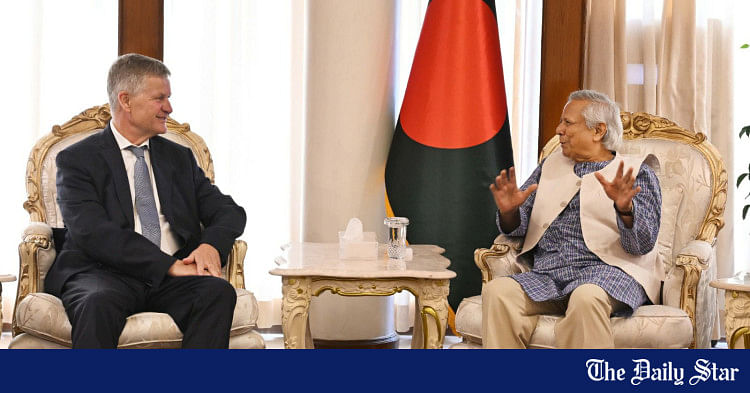
A delegation of development and renewable energy experts, led by a former Norwegian minister, called on Professor Muhammad Yunus, chief adviser to the interim government in Bangladesh, at a state guest house in Dhaka yesterday.

The team expressed their keen interest in investing in small-scale solar plants, the carbon market, and agroforestry in the country, as Bangladesh focuses more on moving away from fossil fuels in the coming years.

Professor Yunus welcomed the move, saying the interim government was now ready to attract foreign direct investment in these rapidly evolving sectors.

"All these are very serious issues for us. Bangladesh wants big investments in renewable energy and the carbon market," the chief adviser said.

Professor Yunus said Dhaka had already initiated talks to import hydroelectricity from Nepal and Bhutan, and his government was eager to explore opportunities to set up a South Asian grid to bring the power to Bangladesh via a narrow corridor in India.

"This (hydroelectricity in Nepal) is a treasure waiting to be explored.

But delivery is a problem," the chief adviser said.

The Norwegian minister for development and environment, Erik Solheim, also a former UN under-secretary-general, said Bangladesh lacks enough unused space for the construction of large-scale solar plants like those in China and other Asian countries.

However, he said the country could be a perfect place to set up small-scale solar plants.

Professor Yunus said his government has put special emphasis on solar plants and has already invited Chinese investors to relocate solar panel manufacturing plants to Bangladesh.

Representatives of several Chinese solar manufacturing firms have since visited Bangladesh to explore opportunities to set up factories here, with a view to using them to export much of their products to Western nations.

Kavin Kumar Kandasamy, chief executive officer of ProClime, a carbon trade and climate investment firm, said Bangladesh could easily earn tens of millions of dollars through carbon trading, as South Asian nations like Sri Lanka have done.

Professor Yunus said Bangladesh was very interested in exploring the carbon market, as it would help the country earn millions while also supporting efforts to protect the Sundarbans, the world's largest mangrove forest.

During the talks, the chief adviser and the Solheim-led delegation also discussed the Rohingya crisis and recent developments in the western Myanmar state of Rakhine, where a rebel group now controls most of the territory.​
 
Analyze

Analyze Post

Add your ideas here:
Highlight Cite Respond

Coal power generation up as temp rises
Staff Correspondent 03 March, 2025, 23:33

1741048427553.webp


Adani 2nd unit back after 4 months

Bangladesh has substantially increased coal-fired power generation over the last several days as temperature starts rising with the arrival of warmest time of the year—three-month-long pre-monsoon season.

The Godda-based coal-fired 1,347MW power plant in India, owned by the Adani Power, resumed operation on Saturday at its second unit which was closed for four months due to the non-payment of bills.

The 1,200MW coal-based Matarbari power plant is also available with its full capacity to generate power for the first time since December.

‘The coal-based Rampal power plant is also set to start operation in a day or two,’ said Zahurul Islam, member of the Bangladesh Power Development Board and responsible for its power generation.

The 1,320MW Rampal power plant remained out of operation since February 14 due to fuel shortage triggered by a dollar crisis.

Sources in the PDB said that coal supplies reached Rampal from the Payra power plant in Patuakhali district.

‘We are trying to generate as much as it is possible from coal to keep generation cost low,’ said Zahurul.

The daily peak electricity demand surged by more than 2,000MW over the last several days with the peak power generation already exceeding 13,500MW.

At the moment, gas-fueled plants are generating 4,500–5,000MW of electricity, followed by coal-fired plants producing 3,500–4,000MW, and liquid fuel-based ones producing 2,000–2,500MW, depending on the demand at the peak hour.

Bangladesh’s current power generation capacity is 27,790MW with natural gas accounting for almost 12,000MW, furnace oil 6,500MW, and coal 5,683MW.

The overall outstanding bill incurred by 121 power plants stood at Tk 38,373 crore until January 7, 2025. Over 60 per cent of the unpaid bills was owed to fuel suppliers.

The BPDB owes more than Tk 5,235 crore of the bills to coal-fired power plants, over Tk 5,942.86 crore to furnace oil-based power plants, and Tk 12,023 crore to gas-based power plants.

The outstanding fuel bill to the Adani power was Tk 2,825 crore, the highest amount among all coal-based power plants.

At the end of the last fiscal, per unit electricity generation cost using gas was Tk 6.31, while the generation cost from local coal-based plants was Tk 12.74. Diesel-based power generation was the costliest at Tk 47.12 per unit, followed by Tk 25.70 for furnace oil-based power generation. The generation cost at the Adani power plant was Tk 14.87. Imported power cost Tk 8.40 per unit, followed by hydro electricity generation at Tk 2.32, and solar at Tk 16.60.

On Monday, country’s highest maximum day temperature of 34C was recorded in Rajshahi. The maximum day temperature in Dhaka was recorded 32.6C.

The Bangladesh Meteorological Department warned that the temperature could top 40C this month, which also coincided with the Muslim’s fasting month of Ramadan.

It remains to see how long the government can keep its coal plants operational.

The Matarbari coal-fired power plant has one lakh tonnes of coal in store which will enable the plant to keep running for just 10 days. Another 20 days’ worth of coal is on the way, the plant authority said.​
 
Analyze

Analyze Post

Add your ideas here:
Highlight Cite Respond
  • Like (+1)
Reactions: Bilal9

Disinclination to renewable energy deplorable
04 March, 2025, 00:00

THE transition to renewable energy in Bangladesh has been suffering due to an unfavourable investment environment. The Bangladesh Power Development Board has recently extended its deadline for the submission of proposals to tender calls for solar power plants because no investor has submitted any proposal. The BPDB floated three tenders for solar power plants with the capacity to produce 10-100 MW in phases starting from December 2024 but received no response from the investors so far. The BPDB officials are now planning to relax the eligibility criterion to encourage investors to take on the government’s renewable energy projects. Energy experts, however, do not think that flexible eligibility criteria are enough; there are other structural concerns. They believe that the interim government’s decision to cancel the projects, which were just a step away from signing the power purchase agreement, eroded investors’ trust. In August 2024, all 31 renewable energy projects worth over 2,600 MW were cancelled as they were unsolicited. It is true that a purchase agreement based on an unsolicited proposal carries risks of corruption, but the hasty decision to cancel the agreement also negatively influences the investment climate.

Energy experts and investors initially described that the tenders were designed to favour past Awami-era investors, big companies and foreign investors with their discriminatory eligibility criteria. However, the amendment to the eligibility criterion for the tender applicant made under the interim government is not friendly towards local investors. There are other policy concerns that discourage local and foreign investors from taking on renewable energy projects in Bangladesh. The main factor that the interested investors mention is the exorbitant import duty on imported items for renewable infrastructure. Import duty on solar panels was increased to 26 per cent from 11 per cent in the financial year 2021–22. Local renewable investors struggle to mobilise capital as banks and non-bank financial institutions are reluctant to lend to the renewable sector. The major renewable capital source has been the government-owned Infrastructure Development Company Limited, but it lends at a high rate and operates mostly with profit-seeking interest.

The interim government has repeatedly announced their commitment to environmentally friendly energy policy, but the country’s energy policy is still heavily dependent on fossil fuels. Two main power plants, the Rampal Power Plant and Roopoor Nuclear Power Plant taken under the deposed Awami Legaue regime and faced public opposition for environmental risks, has not been reviewed. The government must strategically and financially incentivise small renewable projects. In doing so, it must review existing financing schemes and its loan provisions for the renewable sector. Import duties must also be reviewed for steady growth of the sectors and to encourage investors.​
 
Analyze

Analyze Post

Add your ideas here:
Highlight Cite Respond
  • Like (+1)
Reactions: Bilal9

Bangladesh's energy security and sustainability
A bubble waiting to burst
Zaved Akhtar
Published :
Mar 05, 2025 22:44
Updated :
Mar 05, 2025 22:44

1741228348850.webp


The government has been in a dilemma regarding the energy security of the country. At one hand it has a large amount pending dues in the middle eastern markets for energy which we had secured earlier while we are struggling to pay local Independent Power Providers and local gas supplier, i.e., Chevron. Today our energy tenders are not being responded as this require a sovereign guarantee or we need to pay significant risk premium for anyone to touch it with a pole. At the same time, we have the warm season impending summer coming back when local demands will peak while we struggle to supply the gas guzzling manufacturing industries. Such catch-22 situation (a dilemma or difficult circumstance from which there is no escape because of mutually conflicting or dependent conditions) which makes it very difficult for the power regulators to manage. This is leading to regulators contemplating unprecedentedgas price hikes.

The new gas pricing proposed by Petrobangla aims to reflect the actual cost of imported LNG with price proposal set at Tk 75.72 per cubic meter, an increase of over 150 per cent (current rate of Tk 30.75 per cubic meter). The intent is to reduce the significant fiscal burden on the Government estimated to be Tk 160b in FY 2025. However, the new price will not be effective for all connections in the same manner. For new connections, the companies would have to pay the full proposed price while for existing connections, companies would continue to pay the current rate up to their sanctioned load and any usage beyond this limit would be charged at the new rate of Tk 75.72 per cubic meter. For companies receiving primary approval, old prices up to 50 per cent of their demand will be charged while the remaining will be charged at the proposed rate of Tk 75.72 per cubic meter.

Implication Of the New Proposed Pricing: While one may have significant empathyabout the predicament,I believe one would have truly little sympathy. The way we have managed energy security and sustainability has been very amateurish. We have neither leveraged any forecasting tools, nor have we used any means of hedging or lookingat energy financing. These gross misdeeds of the past are now leading to a grave predicament for current regulators, people, and businesses. Should we progress with the energy price escalation we are likely to face the following headwinds: (1) Increased production costs for energy-intensive industries, such as textiles, construction, heavy industries, and manufacturing, leading to increased prices for end products, potentially reducing competitiveness in both domestic and international markets. With loss of preferential duty benefits from LDC graduation, exports are likely to face further setbacks due to higher costs. (2) Deter new investments (new investors to pay at new price, much higher price than existing ones) as well as existing industries likely to delay expansion plans. (3) Increase the risk of operations closure, particularly in the textile sector due to higher operational cost.

Challenges for Bangladesh Energy Security& Sustainability: The situation dire and merits us to step back and reflect on why we landed where we landed, and how does the decisions we take today have implications on tomorrow. Let us first start with the challenges that we are standing on:

Aging Infrastructure. A sizable portion of Bangladesh’s power generation infrastructure is outdated, leading to frequent breakdowns and inefficiencies. Many power plants operate below their capacity due to maintenance issues and technological obsolescence.

High System Losses. Bangladesh experiences high transmission and distribution (T&D) losses, often exceeding 10-15 per cent. These losses are due to technical issues like poor grid infrastructure and non-technical issues such as theft and inefficient billing systems.

Over-reliance on Natural Gas. Around 60-70 per cent of Bangladesh’s electricity is generated from natural gas. This over-reliance makes the power sector vulnerable to supply shortages and price volatility. Additionally, domestic gas reserves are depleting, leading to increased reliance on imported liquefied natural gas (LNG), which is more expensive and is exposed to currency fluctuations.

Underutilisation of Renewable Energy. Despite having significant potential for renewable energy (solar, wind, and hydropower), Bangladesh has been slow to adopt these technologies. Renewable energy accounts for a small fraction of the total energy mix, missing opportunities for sustainable and cost-effective power generation.

Inefficient Power Plants. Many of the power plants, especially the older ones, have low thermal efficiency. Combined-cycle plants, which are more efficient, are not as prevalent as they could be.

Fuel Diversification Issues. While there has been some diversification into coal and oil-based power generation, these sources come with their own set of challenges, including environmental concerns and higher operational costs.

Regulatory and Bureaucratic Hurdles. The power sector in Bangladesh faces regulatory and bureaucratic inefficiencies, which can delay project approvals, increase costs, and reduce overall sector efficiency.
Comparative Costs of Power Generation in Bangladesh: We also need to contextualize the cost of power generation as this will have significant impact to the affordability for consumers and sustainability of businesses. Below is the comparison:

Natural Gas. Historically, natural gas has been the cheapest source of power generation in Bangladesh, with costs ranging from $0.03 to $0.05 per kWh. However, as domestic reserves dwindle and reliance on imported LNG increases, these costs are rising.

Coal. Coal-based power generation costs are higher than natural gas but are still competitive, ranging from $0.05 to $0.08 per kWh. The Payra Power Plant, one of the largest coal-based plants, has been a significant addition to the grid. Unfortunately, this is not a green energy solution.

Heavy Fuel Oil (HFO). Power generation from HFO is more expensive, with costs ranging from $0.10 to $0.15 per kWh. This method is used as a stop-gap measure during peak demand or gas shortages.

Renewable Energy. The cost of solar power has been decreasing globally and is now competitive with traditional sources. In Bangladesh, the cost of solar power is around $0.07 to $0.10 per kWh. Wind and hydropower costs can vary but fall within a similar range. Our endeavor should be to maximise this as much as possible.

Imported LNG. With the shift towards imported LNG, the cost of power generation has increased. LNG-based power generation costs can range from $0.08 to $0.12 per kWh, depending on global LNG prices and given the currency volatility reliance on LNG can be detrimental for us.

Diesel. Diesel-based power generation is the most expensive, often exceeding $0.20 per kWh. It is typically used only in emergencies or in remote areas where other sources are not available.

Comparative Costs and Mix of Power across Similar Economies: Bangladesh’s power generation costs are heavily influenced by its reliance on natural gas and imported LNG, which are becoming more expensive. The country also faces prohibitive costs for oil-based generation during shortages.Pakistan’s power generation costs are comparable to Bangladesh’s, but it benefits from a larger share of hydropower, which is cheaper. However, Pakistan also faces challenges with reliance on imported fuels (coal and LNG), which increase costs.

Kenya has a significantly different energy mix, with a strong focus on renewable energy (geothermal, hydro, and wind). This has led to lower average power generation costs compared to Bangladesh. Kenya’s reliance on renewables has also made its energy sector more sustainable and less vulnerable to fuel price fluctuations.Vietnam has a more diversified energy mix, with significant contributions from coal and hydropower. The country has also made strides in renewable energy, particularly solar and wind, which are cost competitive. Vietnam’s power generation costs are lower than Bangladesh’s, especially due to its abundant hydropower resources.

Key Observations: Bangladesh’s power generation sector faces several inefficiencies, including aging infrastructure, high system losses, over-reliance on natural gas, and underutilisation of renewable energy. The comparative costs of power generation vary significantly across various sources, with natural gas being the cheapest but increasingly expensive due to reliance on imports. Coal and renewable energy offer competitive alternatives, while oil-based generation remains costly. Addressing these inefficiencies and diversifying the energy mix could lead to a more sustainable and cost-effective power sector in Bangladesh.

Dependence on Fossil Fuels. Bangladesh and Pakistan share similar challenges due to their reliance on natural gas and imported fuels (LNG, coal), which increases costs. In contrast, Vietnam and Kenya have diversified their energy mix, reducing dependence on expensive imported fuels.

Renewable Energy Potential. Kenya and Vietnam have capitalized on their renewable energy potential (hydropower, geothermal, and solar), leading to lower generation costs. Bangladesh has significant solar potential but has been slow to adopt it at scale.

Hydropower Advantage. Countries like Vietnam and Pakistan benefit from cheaper hydropower, which Bangladesh lacks due to its geographical constraints.

System Inefficiencies: Bangladesh faces higher transmission and distribution losses compared to Vietnam and Kenya, which further increases the effective cost of power.

Recommendations for Bangladesh: Cost-Reflective Transparent Pricing Formula. Implement a transparent pricing formula that reflects the actual cost of energy production, including generation, transmission, and distribution costs. The price should be regularly reviewed and adjusted based on changes in input costs.

Invest in Renewables. Accelerate the adoption of solar and wind energy to reduce reliance on expensive imported fuels.Our investors have a target of becoming net zero, but our energy strategy does not facilitate this. We need to focus on what the customers, in this case the investors need.

Improve Grid Efficiency. Reduce transmission and distribution losses through infrastructure upgrades and better management.

Mandatory Energy Audits. Implement mandatory energy audits for industries to identify inefficiencies and recommend improvements.

Diversify Energy Mix. Explore alternative energy sources like hydropower (where feasible) and biomass to stabilize costs.

Regional Cooperation. Learn from countries like Vietnam and Kenya, which have successfully integrated renewables into their energy mix.

Create Sovereign Energy Bonds. Raise capital for energy-related projects, particularly those focused on renewable energy and sustainability. We can get our payment rescheduled against a sovereign bond. We could also create Clean Renewable Energy Bonds (CREBs), that are specifically issued to fund renewable energy projects. Many energy bonds offer tax credits or deductions to investors, which can reduce the overall cost of the investment and make it more appealing. We could also opt for Green Bonds to finance projects with positive environmental impacts, such as renewable energy, energy efficiency, conservation efforts, or forfunding projects that reduce carbon emissions and promote sustainable energy sources.

Privatise Power Supply. We could privatise power generation and supply. It would bring in significant improvement in efficiency as often private organisation will have a profit incentive to cut costs and operate more efficiently. This can lead to better management practices and reduced wastage. It will also attract private investment, which can be used to upgrade infrastructure and expand capacity. This is particularly important for developing countries that may lack the funds for such investments. Private companies may be more likely to invest in innovative technologies and innovative solutions to improve service delivery and reduce costs. Private companies are typically less subject to political pressures, which can lead to more stable and consistent management. Privatisation can lead to increased competition in the market, which can drive down prices and improve service quality for consumers.

Today power and energy sector needs disruptive leadership. We need a transformational leadership moment today to build the foundation for tomorrow’s energy security. By using the old playbook we will not land anywhere different, and hence I hope some of these perspectives helps in creating newer moats for energy security and sustainability. Today’s bold decision will build the competitive advantage for the country for tomorrow.

Zaved Akhtar is President, Foreign Investors’ Chamber of Commerce and Industry; and Chairman and Managing Director, Unilever Bangladesh.​
 
Analyze

Analyze Post

Add your ideas here:
Highlight Cite Respond
  • Like (+1)
Reactions: Bilal9

Members Online

Latest Posts

Back
 
G
O
 
H
O
M
E