New Tweets

[🇧🇩] Energy Security of Bangladesh

G Bangladesh Defense
[🇧🇩] Energy Security of Bangladesh
574
20K
More threads by Saif


Govt urges foreign investors to explore maritime area
Staff Correspondent | Published: 00:21, Mar 12,2024

1710197161210.webp


Bangladesh on Monday urged foreign investors to explore the country’s maritime area through the bidding opened the day before, offering what it said was one of the most lucrative deals in the world.

The bidding, which will close on September 9, has already generated widespread interest among global oil companies, including prominent ones, the power and energy ministry high-ups revealed in a press conference on Monday, without disclosing their names.

Energy experts agreed with the government about the Production Sharing Contract of 2023, on which the bidding is modelled, being too profitable for private investors but differed from the view that suggested it would benefit Bangladesh with all its concessions and tax holidays.

‘It offers one of the most lucrative prices in the world,’ energy secretary Nurul Alam said at the press conference hosted by the national gas and oil company Petrobangla.

‘We don’t want to reveal names but would like to share that some companies have already reached out to us,’ he said.

Petrobangla chairman Zanendra Nath Sarker opened the press conference, announcing that the PSC spared investors payments such as royalty payments, signature bonuses, and any kinds of import duties or taxes.

The investors will need to pay a minimum bank guarantee and can transfer shares, he said, adding that investors can bid for one or more blocks alone or with other companies.

For ensuring a faster return on investment, the PSC offers 75 per cent cost recovery, he said.

A total of 24 offshore blocks are open for bidding, including nine shallow blocks. The shallow blocks are 3m to 200m deep while the deep sea blocks are 201m to 2000m deep.

The price will be linked to oil, meaning that the earlier provision of any cap on the price is no longer there.

Petrobangla officials said that this was a really attractive package, citing the example of Myanmar and Thailand, where companies needed to pay 10 per cent and 20 per cent royalty, respectively.

‘We invite the biggest companies in the world who have experience in maritime exploration to participate in the bidding,’ said power and energy state minister Nasrul Hamid.

Nasrul claimed that the bidding took a while to occur due to disruptions like the Covid-19 pandemic since the last bidding in 2016.

Nasrul thanked stakeholders for their hard work to finally make the bidding happen, including UK-based Wood Mackenzie, a multinational research and consultancy group, whose recommendations shaped the 2023 model PSC.

Bangladesh has so far held seven biddings since 1974 for gas and oil exploration, with the highest number of foreign companies entering production sharing contracts in 1974.

Bangladesh has drilled 97 wells over the past century, finding gas in 29 wells. Bangladesh’s current production capacity is about 2100mmcfd against a demand of about 5000mmcfd.

After a prolonged period of inactivity over exploration, the government passed the 2023 PSC in the election year, months before it assumed power for the fourth straight term.

Despite Bangladesh reportedly sitting on a huge gas reserve being the world’s largest delta, the government spent more money on gas imports rather than investing in the exploration or building the capacity of Bangladesh Petroleum Exploration and Production Company Limited.

‘The bidding is the culmination of a long journey taken by a syndicate of powerful people at home and abroad to get complete control over the natural resource,’ said Anu Muhammad, former member secretary of the National Committee to Protect Oil, Gas, Mineral Resources, Power and Port.

Considering tax holidays and other concessions, on top of the new pricing formula linked to the Brent oil price, the actual price of gas would be higher than the international market rate, he said.

This too lucrative contract, he said, might lead to excessive exploitation of natural resources, eventually leading to a situation where it would have to be exported.

American oil giant ExxonMobil has expressed its interest in exploration in Bangladesh in the election year. Other US multinationals, such as Chevron and ConocoPhillips, are also potential contenders in the bidding.

The power and energy state minister and the power, energy and mineral resources affairs adviser to the prime minister, Tawfiq-e-Elahi Chowdhury, did not answer the question asked about the geopolitical risks involved in inviting foreign companies to the Bay of Bengal.

An enormous gas exploration potential opened up between 2012 and 2014 after Bangladesh won over 20,000sq km in the Bay of Bengal following the settlement of maritime disputes with India and Myanmar.

Immediately after losing its maritime dispute with Bangladesh, Myanmar awarded 20 offshore blocks, mostly in the Rakhine basin off the Arakan coast, south of Teknaf, to international oil companies by 2014.

Of 26 open offshore blocks, Bangladesh has PSC for two shallow sea blocks — blocks SS-04 and SS-09, which ONGC Videsh Ltd and Oil India Ltd are jointly exploring.

The South Korean Posco International exited from block DS-12 in 2020 seeking a gas price hike.

Before exiting, Posco carried out a two-dimensional, or 2D, seismic survey over about 3,580-kilometres area, double the area it committed for the survey, detecting half a dozen potential gas spots.

ConocoPhillips got out of the PSC signed under the 2008 bidding after completing a survey of 5,750-km area in the deep sea blocks DS-10 and DS-11.

US oil giant Chevron has three onshore blocks — 12, 13 and 14 — while Singapore’s KrisEnergy has been producing onshore block 9.​
 
Analyze

Analyze Post

Add your ideas here:
Highlight Cite Respond
  • Like (+1)
Reactions: Bilal9

Japan chooses Bangladesh, others to get rid of surplus LNG: report
Staff Correspondent | Published: 23:52, Mar 12,2024


1710285426384.webp


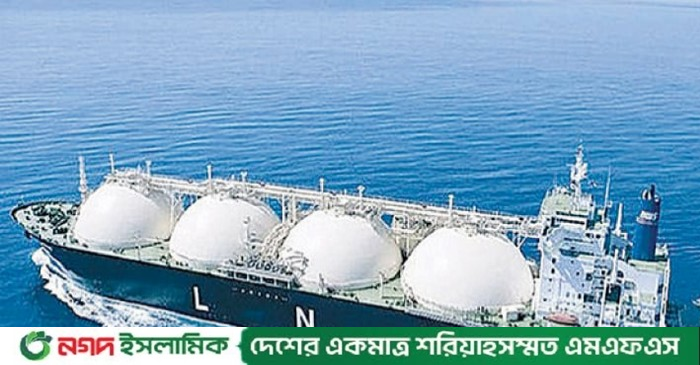
Japan’s largest liquefied natural gas buyers have surplus problems, prompting them to expand business to South and Southeast Asian countries, including Bangladesh, according to a report released by the United States-based Institute for Energy Economics and Financial Analysis.

The report also revealed that demand for LNG in Japan was falling for several reasons, but Japan’s LNG buyers still increased their purchases aimed at becoming a major LNG player.


The Japan International Cooperation Agency formulated Bangladesh’s latest Integrated Energy and Power Master Plan, describing gas as the friendliest fossil fuel and one of the most viable options to pursue to achieve an ambitious power generation goal.

Energy experts in Bangladesh have already harshly criticized the Bangladeshi master plan, describing it as an extension of Japan’s business plan, partly because of its overwhelming reliance on gas and partly because it included technologies—hydrogen fuel and ammonia co-firing—that Japan was developing.

‘As domestic demand falls faster than LNG purchase commitments, Japanese utilities will face an important choice,’ said Christopher Doleman, an IEEFA LNG specialist and a co-author of the report.

‘Either they can resell flexible cargoes abroad or exercise contractual volume flexibilities and cancellation rights, which may incur additional costs,’ he said.

The report finds that Japan’s largest utilities—including JERA, Tokyo Gas, Osaka Gas, and Kansai Electric—are likely to face an over-contracted position of roughly 11 million tonnes per annum (mtpa) for the remainder of the decade.

Japan’s Ministry of Economy, Trade, and Industry has set a target for companies to transact 100 mtpa of LNG by 2030. This is well above the 79 mtpa that buyers have currently contracted, but in line with recent transaction volumes, according to the report released on Monday.

Meanwhile, Japan’s Asia Zero Emission Community initiative aims to replicate its energy mix across Asia.

These policies, as well as the corporate strategies of major utilities, suggest that Japanese companies will continue to play a major role in LNG transactions, despite declining domestic demand.

JERA executives have expressed a desire to turn the company into a major global LNG portfolio player, while Tokyo Gas has said that the ultimate target is to form a Southeast Asian LNG value chain.

Based on figures from the Japan Oil, Gas, and Metals National Corporation (JOGMEC), LNG sales by Japanese companies to third countries surged from 14.97 million tonnes (mt) in FY2018 to over 38 mt in FY2021. Although domestic sales have declined, the total volume of LNG transacted by Japanese companies increased over the same timeframe.

‘Today, the volume of LNG sold abroad is nearly 50 per cent of the volume consumed domestically,’ read a line from the IEEFA report.

The IEEFA report listed reasons that led to the decline in LNG demand in Japan: resumption of nuclear power plants, increased renewable capacity, and no rise in power consumption because of demographic reasons.

Japan’s four largest utilities account for almost three-quarters of Japan’s historical LNG contracting activity.

JERA, including the contracts inherited from its parent companies, Tokyo Electric and Chubu Electric, is responsible for 40 per cent.


JERA has invested in LNG-based power plants coming online this year in Bangladesh.


JERA acquired a 19 per cent interest in Summit Power International Limited, which is an LNG importer in Bangladesh, in 2019.

The report said that JERA in 2023 revealed plans to develop LNG regasification, storage, and supply with Summit Power.

Kansai Electric, on the other hand, provides training for the operation and maintenance of thermal power plants jointly with JICA, the report said.

Japan’s Ministry of Economy, Trade, and Industry established in 2020 the New International Resource Strategy for Enhancing LNG Security focused on increasing LNG business in South and Southeast Asia.

Japan took its strategy to expand its LNG business overseas after it first over-contracted LNG in 2017, the report said.

‘That year, the government announced a $10 billion funding package to develop Asia’s LNG market, which was partly designed to position Japanese companies to capitalize on LNG trading opportunities.

In September 2019, the government of Japan announced another $10 billion funding package for the development of LNG infrastructure globally,’ the report said.

Overall, Japan’s LNG demand has fallen by 22 million tonnes since 2014, the report said.

Besides Bangladesh, Japan’s LNG buyers have investments in Indonesia, the Philippines, Singapore, Taiwan, Thailand, and Vietnam in a wide range of areas, from power generation to gas supply to building the necessary infrastructure.​
 
Analyze

Analyze Post

Add your ideas here:
Highlight Cite Respond
  • Like (+1)
Reactions: Bilal9

The case for renewable energy & Bangladesh​

HASNAT ABDUL HYE
Published :​
Feb 19, 2024 21:28
Updated :​
Feb 20, 2024 21:21

1710286384830.webp

Technicians inspect floating solar panels installed on reservoirs in Chapainawabganj—Xinhua Photo

The case for renewable energy is twofold: (1) to reduce chronic dependence on fossil fuels thereby cut down on import requirements; and (2) to diminish carbon emission that is contributing to climate change and threatening lives and livelihoods of millions of people around the world besides destroying ecology that supports planetary stability.


As countries have developed industrially, their need for fossil fuels have increased exponentially. This has resulted in a supply- demand mismatch, pushing up the prices for fossil fuels. For developing countries this is placing a heavy burden on their budgetary resource. Increasing demand and use, on the other hand, is depleting the reserves of fossil fuels in the world. The other, the more serious, problem is the growing incidence of carbon emission that has morphed into an existential threat for mankind and all living organisms. Beginning from the Earth Summit in Rio in 1992 that, among others, set up United Nations Convention Framework on Climate Change, there has been an annual summit on climate change to monitor and take policy decisions on reducing the use of fossil fuels that contribute to greenhouse gases, including carbon emissions. Both for abiding by with the global decision to cut down in carbon emission and to reduce dependence on non-renewable energy, Bangladesh has adopted renewable energy promotion as an important policy objective.

In the Master Plan on Energy in 2020 it was envisaged that 10 per cent of total power generation will come from renewable sources. But though power generation capacity from fossil fuels has been achieved as per the goal, the same from renewable sources have fallen short of the target. Till today power generation from renewable sources has not reached 4 per cent of the total. The government has set the goal of generating 60 thousand mega watts of power by 2041 out of which 40 per cent is expected to come from renewable sources. At present the total power generation of the country is 28.134 mega watts based on captive and renewable sources. As pointed out earlier, 10 per cent of total generation was expected from renewable sources which amount to little more than 2800 mega watts. But according to the Sustainable and Renewable Energy Development Authority (SREDA) the actual contribution from this source was only 1194 mega watts which amounts to little more than 4 per cent.

According to SREDA, as of August 2023 the total capacity of power generation from renewable source stood at 1194 mega watts. Out of this, solar energy contributed 960.8 mega watts, hydro power 230 megawatts, wind power 2.9 mega watts, bio gas 0.69. mega watts and bio mass 0.4 mega watts. It has been pointed out by energy analysts that power generation from renewable sources has not picked up due to lack of adequate publicity, absence of official guidelines and meagre incentives given to private sector. Energy experts are of the opinion that about 3000 mega watts power can be generated from solar and wind energy in the country, thereby reducing the pressure on fossil fuel-based power generation.

From the experience gained so far and considering the feasibility it has been concluded that a good part of the potential for increasing power generation from solar and wind power remains untapped. The private sector is interested to invest in this sector in a big way but the tax structure acts as a disincentive. If the import of solar panel is allowed tax free or at a nominal rate this will encourage many entrepreneurs to invest. This can either be achieved through public private partnership (PPP) or through the private sector.

The technology of solar and wind power is simple enough to be used by Bangladeshi technicians and workers. If they are sent to China or Chinese experts are invited to Bangladesh technology transfer can take place within a short period. On the demand side, customers can easily be made interested in the use of solar power because of the low cost per unit of power that saves Tk 4 per kilowatt. A particular target for absorption of solar power is the housing sector where the design of the building can build in installation of solar panels on roofs and solid walls. For big factories it can be made obligatory to install solar panels to produce part of the electricity they need. It is encouraging that the business model of roof- top solar power has proved both feasible and viable. Operators, investors and commercial banks have all shown Interest in the solar rooftop business model.

Compared to solar energy, wind and hydropower is still at a fledgling stage. Only coastal areas of the country appear to be fertile grounds for exploitation of the potentials. But though limited in scope, these sources have one advantage over solar energy and that is their all weather availability. Since in renewable energy, a mix is being considered even sectors with low potential should be used.

Most important is acquisition of technical know-how at grassroots level so that repair and maintenance facilities are available at local level. This may be a potent attraction for creating demand. It has been found by solar energy providers like IDCOL that in agriculture production farmers are showing interest in using solar power instead of diesel to run their irrigation pumps because of the decentralised service system. Where garment factories are found in a cluster and it is feasible to service installed solar panels by the operator , factory owners are coming forward to use solar energy without much persuasion.

The most important source of renewable energy that is also environment-friendly is, of course, nuclear power. Leaving aside the risk of melt-down, power generated in nuclear plan is cheaper than that produced by fossil fuels. The Rooppur Power Plant, when ready for operation will make significant contribution to power generation in Bangladesh. If the second nuclear plant on the drawing board materialises, the energy sector in Bangladesh will be in a position to export power from the national grid.

Hung up on the use of fossil fuel for power generation for long, it is understandable that gaining momentum takes time. But it is gratifying that a beginning has been made and Bangladesh is poised to wean itself away from total dependence on fossil fuel-based power generation.​
 
Analyze

Analyze Post

Add your ideas here:
Highlight Cite Respond
  • Like (+1)
Reactions: Bilal9
I wish the best for Bangladesh.

Perhaps hydroelectric, tidal, and wind energy will be good for Bangladesh.
 
Analyze

Analyze Post

Add your ideas here:
Highlight Cite Respond
  • Love (+3)
Reactions: Bilal9 and Saif
I wish the best for Bangladesh.

Perhaps hydroelectric, tidal, and wind energy will be good for Bangladesh.
Hydroelectricity is not an option for Bangladesh because most of our land is used to grow rice and other agricultural commodities. However, Bangladesh is working on using wind and solar energy to meet her energy demand.
 
Analyze

Analyze Post

Add your ideas here:
Highlight Cite Respond
Hydroelectricity is not an option for Bangladesh because most of our land is used to grow rice and other agricultural commodities. However, Bangladesh is working on using wind and solar energy to meet her energy demand.
How about Tidal energy? Bangladesh has a large shoreline with the Bengal Sea.
1710347271992.webp


1710347285755.webp
 
Analyze

Analyze Post

Add your ideas here:
Highlight Cite Respond
  • Like (+1)
Reactions: Bilal9

Gas crisis till April at least​

Summit’s floating storage to take another month to finish maintenance work

1710367565727.webp

Photo: Summit Group

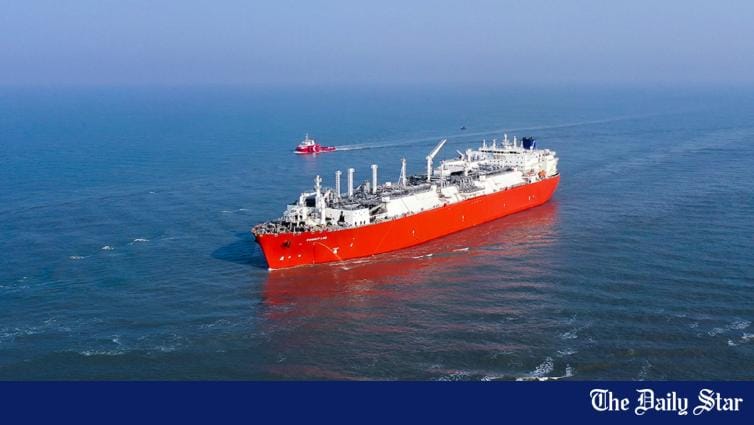
Gas scarcity is likely to continue till April despite the government's repeated assurance of scaling up gas supply during Ramadan and the irrigation season as one of the two Floating Storage and Regasification Units (FSRU) will take longer to complete maintenance works.

The Summit-operated FSRU, which re-gasifies the imported liquefied natural gas and supplies to the national grid, was supposed to resume operation after maintenance in the first week of March.​

But Nasrul Hamid, the state minister for power, energy and mineral resources, yesterday said that FSRU is unlikely to resume operation before March 30.

"We import 30 percent of our gas supply. Due to the lack of the FSRU, we have a shortfall of 10 percent of gas. Besides, our local gas production is also in decline," he told journalists after a meeting with the government officials of different companies related to the gas and fuel supply.

In a Facebook post yesterday, Ayesha Aziz Khan, the managing director and chief executive officer of Summit Power International, wrote: "We are pleased to see the dry-docking procedure of Summit's first FSRU at the Seatrium Benoi Yard, Singapore."

This FSRU, with a storage capacity of 136,000 cubic metres and a regasification capacity of 500 mmcfd, is being overhauled and restored to a brand new condition.

It will reach Moheshkhali by April, the post added.

Two FSRUs had been supplying around 850 million cubic feet of gas a day (Mmmcfd) until October last year when the Excelerate-operated FSRU went into maintenance and the supply dropped to 500mmcfd.

In mid-January, both the FSRUs were disconnected from the grid due to technical glitches. Consumers in Dhaka, Chattogram, Narayanganj and Gazipur faced a week of gas supply disruptions and many industries did not get gas. Households also faced acute crises over the week.

Later on January 20, the Excelerate FSRU resumed operation but the gas supply didn't increase proportionately as the Summit-run FSRU started going into maintenance.

Yesterday, the total gas supply was around 2,600 mmcfd against the demand of over 3,800mmcfd. Three out of six fertiliser factories were shut due to gas shortages.

City dwellers in different areas are unable to cook Sehri at midnight and have been experiencing gas shortages before Iftar too.

"Gas crisis has become a part of life," said Sadekon Nahar Dilruba, a resident of Khilgaon.

During the daytime, gas pressure is very low, she said, adding that the pressure increased after 1:00am on the first and second days of Ramadan and again dried out before 4:00am.

"I struggle a lot to cook Sehri and Iftar, but I have to pay a gas bill of Tk 1,080 for two stoves every month," she added.

Asked about the solution for people like Sadekon, Hamid said: "There is an option for household consumers and I will request those who have a gas shortage in their areas to use LPG (bottled liquefied petroleum gas) as an alternate solution."

At the meeting, two decisions were taken to keep the gas and power supply situation at a bearable level: the CNG refuelling stations will be kept closed for six hours (4:00pm to 10pm) a day and the schedule of irrigation pumps will be from 12am to 6:00am every day.

However, centring on Eid-ul-Fitr, from April 7 to 18, the gas stations will remain open 24 hours.

About the electricity supply, Hamid said if the fuel supply stays uninterrupted, the electricity supply will be uninterrupted during Ramadan.

"The power cuts will only happen for a short time," he said.

Yesterday, the load-shedding was over 500 megawatts across the country at around 3.00pm. The production was around 11,400MW against the demand of 11,900MW.

The power sector was getting 880mmcfd of gas against the demand of over 1,900mmcfd.​
 
Analyze

Analyze Post

Add your ideas here:
Highlight Cite Respond
  • Like (+1)
Reactions: Bilal9

Single-Point Mooring pumps 40,000 tonnes of crude oil from Maheshkhali to Eastern Refinery
BSS
Published :
Mar 15, 2024 21:40
Updated :
Mar 15, 2024 21:47

1710544167175.webp


With the government's sincere efforts, Single-Point Mooring (SPM), a deep-sea floating oil pipe, successfully pumped 40,000 metric tonnes of crude oil from Maheshkhali Pumping Station to Eastern Refinery Limited (ERL) safely and smoothly on Friday.

According to a release issued by Deputy Information Officer of Power, Energy, and Mineral Resources Ministry Mir Aslam Uddin, the long-cherished SPM project was commissioned through the transportation of crude oil from Moheshkhali to ERL.

“Bangladesh Petroleum Corporation (BPC) initiated the SPM project to carry fuel through pipelines from mother vessels quickly, which would also save Tk 8.0 billion per annum,” State Minister for Power Energy and Mineral Resources Nasrul Hamid told reporters earlier.

He said once the project was implemented, it would reduce oil pilferage and time for fuel oil supply across the country.

“The Awami League government, led by Prime Minister Sheikh Hasina, has instructed the SPM to unload imported crude oil from deep seas in a more efficient and time-saving manner. The SPM will also ensure energy security in the country,” the state minister added.​
 
Analyze

Analyze Post

Add your ideas here:
Highlight Cite Respond
  • Like (+1)
Reactions: Bilal9

Latest Posts

Back
PKDefense - Recommended Toggle