Donate ☕
201 Military Defense Forums
[🇧🇩] - Energy Security of Bangladesh | Page 96 | PKDefense
Home Post Alerts Inbox Watch Videos

[🇧🇩] Energy Security of Bangladesh

Reply (Scroll)
Press space to scroll through posts
G Bangladesh Defense
[🇧🇩] Energy Security of Bangladesh
504
16K
More threads by Saif


Correlation between energy crunch and industrial production

Published :
Dec 01, 2025 23:54
Updated :
Dec 02, 2025 01:32

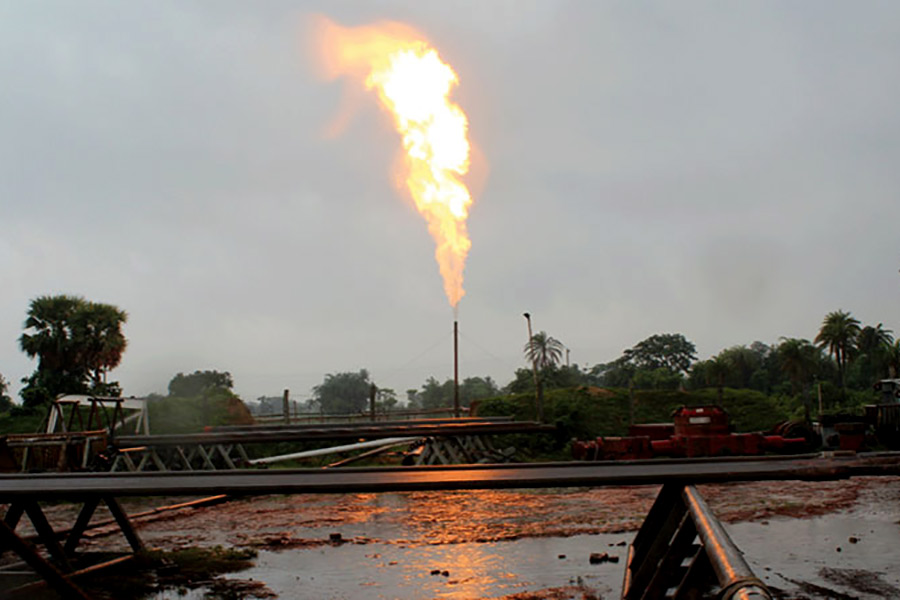
1764637826983.webp


Energy consumption has historically been a vital indicator of robust economic activities and improved living standards. But when this input turns irregular and insufficient, driving up its costs to an outrageous level, the manufacturing sector can hardly be sustainable. Bangladesh, according to seasoned business leaders and expert economists, is right now in such a crisis. Industries built a few decades ago were told by political leaders leading the country that the country was floating on natural gas, a comparatively cheap source of energy. But now the projection is that by 2030, the country will exhaust its gas reserves completely. At a parley titled, "Bangladesh Industrial Energy Efficiency Policy: A Draft for Sustainable Progress" participated by business leaders and economists, speakers made it amply clear that outrageous pricing of gas has compelled some industries to slash production and a few others turned completely non-viable. Production in the country's major sectors including textiles, steel and fertilisers has declined by 30-50 per cent.

This is depressing news. Gas price hiked, as claimed by the DCCI president, by 178 per cent in January 2023 has recently been subjected to yet another price escalation by 33 per cent. Intriguingly, small, cottage and some other industries in the SME sector saw the highest ever increase in gas price, with the prices surging to Tk 30 a cubic meter from Tk 10.78. Naturally, production in several industrial units has either stagnated or was forced to suspend. Once moribund, the textile industry here got a new lease of life on account of the flourishing readymade garment (RMG) industry. In fact, it turned out to be a backward linkage industry to the latter. There are several manufacturing units, other than textile, that need natural gas for operation and started thriving, courtesy of the RMG. Now if the vital input, gas that is, is in short supply, there is a negative chain reaction in the industrial sector.

The withdrawal of subsidy has made gas costly. But now the country's overwhelming dependence on imported liquefied natural gas is also a vulnerable factor for industrial slump. At a time when the international fossil fuels' market is down by 15 per cent, the domestic prices in Bangladesh have no reflection of this price fall. Crude oil spot price drops by 15 per cent globally and the projection is that gas price too could fall by 15 per cent over the next five years. This is likely to go in Bangladesh's favour but the problem here is that prices here hardly match the global level, particularly when the market value is down.

The Bretton Woods institutions' recipe for subsidy withdrawal in underdeveloped countries is not always suitable. Bangladesh has to swallow the bitter pills because it had hardly any better option when it was desperately running short of funds. The country's industrial base is not large enough and therefore cannot defy the recipes suggested by the International Monetary Fund (IMF) and the World Bank (WB). Where the country grossly failed is the exploration of natural gas---either onshore or offshore. It should have developed the Bangladesh Petroleum Exploration and Production Company Ltd (BAPEX) as a highly efficient entity to explore at least its onshore gas reserves, if not the offshore ones. The energy crunch now threatening to deal a grievous blow to its industries could be avoided.​
 
Analyze

Analyze Post

Add your ideas here:
Highlight Cite Fact Check Respond
newagebd.net/post/country/284292/gas-mining-by-local-cos-falls-quickly

Gas mining by local cos falls quickly
Decline sharp over past 16 months, experts for more timely investments

Shakhawat Hossain 06 December, 2025, 00:21

1764984342554.webp


The overall natural gas production by companies under the Bangladesh Oil, Gas and Mineral Corporation — or, Petrobangla — has fallen around 15 per cent over the past five years, with more than 8 per cent in the past 16 months alone because of lack of timely investment.

Experts said that the fall had accelerated because of lacklustre drilling efforts and investment in most part of the past one and half decades to find new wells by the local companies under the Petrobangla.

Gas exploration from a well takes several years after the discovery, according to experts.

Abortive attempts to attract international oil companies to drilling the potential off-shore blocks in the Bay of Bengal have also been attributed to discouragement in production of gas from the local sources.

On December 3, 2025, Petrobangla subsidiaries — the BAPEX, the Bangladesh Gas Fields Company Limited, and the Sylhet Gas Fields Limited — generated 708 million cubic feet gas per day.

The amount was 776.6 mmcfd on August, 8, 2024, when the current interim government assumed power, three days after the Awami League regime was ousted in a mass uprising on August 5, 2024, said Petrobangla officials.

On August 8, 2020, the local companies generated 833.4 mmcfd, they further said.

Since 2010, the local companies have received some Tk 8,000 crore for exploratory activities, said Petrobangla officials.

Of the amount, Tk 6,832 crore was allocated between 2020 and 2023 when the gas exploratory work on 50 wells was undertaken, they said.

But the exploratory work was inadequate as it was mostly linked to the maintenance of old wells, said Ijaz Hossain, a former dean of engineering at the Bangladesh University of Engineering and Technology.

Only 5 new wells were among the lot, he said.

The production of gas by international oil companies has, meanwhile, remained static over the past five years at around 1,100mmcfd on average.

The sharp decline in the production of domestic companies has been met up by the Petrobangla through the import of liquefied natural gas that has become the second biggest source of gas ahead of local companies.

The current Petrobangla collection stands at 2644.7mmcfd — local companies 708 mmcfd, IOCs 1045.1 mmcfd and LNG 891mmcfd — against the demand for around 4,000mmcfd hampering the production of power, fertiliser, and private manufacturing industries.

The gas exploration by the domestic companies has not been pursued with the seriousness it deserved, said Badrul Imam, an honorary professor of geology at Dhaka University,

Referring to the misuse of the gas development fund for importing LNG in 2023, experts highlighted the flawed policy of suppressing gas production by the local companies.

Experts said that the lack of seriousness had also been visible with the current government.

On December 1, the executive committee of the National Economic Council in a meeting approved a project titled ‘Drilling of Three Exploration Wells (Srikail Deep-1, Mobarakpur Deep-1 and Fenchuganj South-1)’ at a cost of Tk 1,136.25 crore, which is expected to be implemented by December 2027.

This is part of the Petrobangla plan to drill around 100 wells between 2025 and 2028 by contractors to be selected through open tenders.

On September 17, the ECNEC approved a project linked to the procurement of a high-capacity drilling rig for the BAPEX under a gas exploration project worth Tk 577 crore.

Petrobangla officials said that around half a dozen projects linked to increasing gas production had already been approved under the current interim government with more in the pipeline.

Refereeing to a calculation in the past November by the Petrobangla, BAPEX information and communication technology and planning head Mohammad Moinul Hossain said that 143mmcfd gas would be added to the national gas grid by the domestic companies at the completion of expletory works on 11 wells.

Badrul Imam said that more funding was needed for increasing gas production by local companies.

He said that energy policymakers were more focused on imports.

Available data show that the country spent an estimated Tk 40,752 crore on the LNG imports in the 2024-25 financial year, pushing up the overall tally to around Tk 2,00,000 crore since the financial year 2018-19.

Shamsul Alam, energy adviser of the Consumers Association of Bangladesh, said that the interim government had failed to bring about major changes to the energy sector structure built by the Awami League government.

On November 18, the advisory council committee on government purchase approved a proposal to import 49th cargo of LNG from the spot market in the current calendar year.

The country imported 30 cargoes of LNG in 2024.​
 
Analyze

Analyze Post

Add your ideas here:
Highlight Cite Fact Check Respond

Energy efficiency is Bangladesh's invisible power plant
Mohammad Iftekharul Islam

Published :
Dec 06, 2025 22:09
Updated :
Dec 06, 2025 22:09

1765069469651.webp

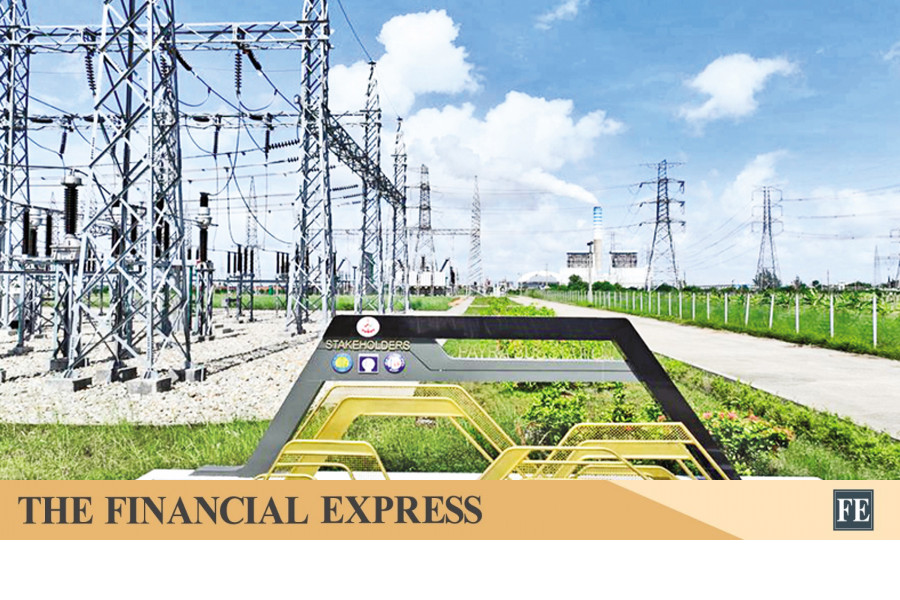
A view of Payra Power Plant in Patuakhali, Bangladesh —Xinhua Photo

Every unit of energy saved carries more value than one produced, because imported fuel travels long distances, accumulates technical losses and costs the country twice over. A kilowatt hour conserved at the source prevents the need for two kilowatt-hours of costly generation later. The International Energy Agency calls efficiency the first fuel for good reason. Bangladesh is learning this truth as electricity tariffs rise repeatedly, global LNG prices fluctuate sharply and load shedding continues despite record installed capacity. The fastest, cheapest and cleanest power station is the one that never needs to be built.

BANGLADESH'S ENERGY PARADOX: Although the Bangladesh government has extended electricity access to almost every household and built numerous power plants, blackouts still happen. Generators are forced to burn costly diesel and factories shift work hours to catch up with power cuts. Despite having surplus capacity and fuel reserves reportedly above planning norms, many plants sit idle from shortages or repair delays, leaving homes and businesses in the dark. This imbalance costs a great deal. The government pays large sums to keep idle plants on standby, covers subsidies to hold prices down and spends heavily on fuel imports that rise and fall with global markets.

The Integrated Energy and Power Master Plan (IEPMP 2023) is the latest major national document for energy policy. It shows that the country is becoming increasingly dependent on liquid natural gas (LNG), whilst peak demand is expected to rise several times more by 2041-2050. Without a concrete plan, LNG and coal imports will keep rising, exposing the economy to exchange and price volatilities. Bangladesh has been able to add megawatts of capacity, but not enough efficiency, grid performance, or demand-side management to use that capacity well.

VALUE OF EFFICIENCY AND THE PRICE OF NEGLECT: Efficiency reduces emissions and strengthens energy security faster than any other option, and in Bangladesh its benefits multiply. Beyond economics, efficiency directly cuts carbon emissions and local air pollution, reducing the need for new coal or LNG plants that would lock in decades of emissions. Each avoided megawatt-hour is also a step towards Bangladesh's climate commitments under the Paris Agreement.

Each unit saved means less imported fuel, less grid strain, and fewer subsidies. An IEEFA analysis finds that a 1 per cent reduction in transmission and distribution losses alone would save 884 GWh without building anything new. Studies by development partners show that the country could reduce a large share of its energy demand by 2030 with proven steps. Savings in primary energy up to 14.3 per cent can be achieved through appliance standards, building codes, industrial upgrades and loss reductions.

By replacing old motors and boilers with efficient models, factories can recover wasted heat and improve power quality. Homes and offices can lower demand through implementation of appliance standards and building codes. The ADB's Industrial Energy Efficiency Finance Programme shows that such retrofitting can achieve 15-40 per cent savings in factories from textiles to cement, with simple payback periods of 2-4 years.

Because most of these actions pay for themselves within a few years, they are vital for competitiveness at a time when exporters already face rising costs and shrinking margins. One of the most feasible ways to stay competitive is to use less energy for each unit of output. Countries such as India and Vietnam treat efficiency as part of production itself, not as an afterthought, and that has made their industries stronger. Yet the opposite is equally true: ignoring efficiency increases fiscal stress, worsens emissions and weakens competitiveness.

The fiscal impact is clear: subsidies remain high as the government pays large sums to keep idle plants on standby. The environmental cost is just as heavy. Inefficient plants and grids burn more fossil fuel for the same output, worsening urban air quality and greenhouse gas emissions.

The effect extends to businesses too. Small and medium firms lose output during load shedding, whilst large exporters warn that unreliable power delays deliveries and raises costs. When companies hold back on importing new machinery because the energy outlook looks risky, they stay stuck with old equipment. That essentially means burning more fuel than necessary.

The waste carries a wider cost as well. Money spent to cover inefficiency cannot go into roads, skills, or new clean energy that could reduce import dependence over time. Efficiency is not separate from the clean energy transition. It is the entry point that makes the transition affordable.

WHAT OTHERS DID RIGHT (AND WHAT WE CAN ADAPT): Bangladesh does not need to start from zero. India introduced the Perform, Achieve and Trade scheme, which set clear targets for large energy users and allowed companies that beat their goals to trade savings with those that fell short. The first rounds delivered 8.67 million tonnes of verified savings at a relatively low cost. The Vietnamese government required large energy consumers to carry out mandatory energy audits every three years and supported pilot contracts with energy service companies. It also launched a national programme with measurable goals for energy savings by 2030.

Singapore focused on buildings. It strengthened codes for new buildings and then required the largest existing buildings to carry out mandatory improvements. Finance and certification were tied together through the Green Building Masterplan, which gave credibility and support to investors and owners. Germany experimented with competitive tendering, funding the cheapest verified kilowatt-hour saved rather than the most glamorous new power plants or energy related projects. All of these approaches are founded on three core principles: efficiency must be measured, it must be made attractive to investors, and it must be enforced to ensure lasting results.

A ROADMAP AND RESULTS FOR BANGLADESH: Progress so far has been held back less by technology than by institutions. Efficiency responsibilities sit across several ministries with weak coordination and enforcement, whilst utilities lack incentives to cut losses when subsidies cover shortfalls. Access to affordable finance for small and medium firms remains limited, slowing upgrades that would pay for themselves.

For Bangladesh to treat efficiency as the first fuel, as the IEA mentioned, efficiency must stand as a headline policy. IEPMP treats it as one action amongst many, but Bangladesh needs explicit targets for savings across industry, commerce, households and utilities. Annual reductions for large designated consumers, minimum standards for appliances, and clear loss reduction goals for distribution companies should form the core. Baselines and dashboards must make progress visible.

Energy audits should become routine, with large consumers publishing verified results and utilities filing loss audits with corrective plans. Licensing and access to concessional finance should depend on compliance. Finance must flow easily for efficiency. Financial institutions like Infrastructure Development Company Limited (IDCOL) and local banks can expand green credit lines that mix concessional capital with technical support. Risk guarantees and standard contracts can help Energy Service Companies (ESCOs), whilst tax credits or accelerated depreciation can reward firms that install certified high-efficiency equipment.

Competitive tenders can reward projects that deliver verified energy savings at the lowest cost, allowing the government to buy the cheapest kilowatt-hours saved rather than build new generation. A local version of Germany's STEP Up! scheme could invite bids for verified kilowatt hours saved, funding the lowest-cost projects first. Grid modernisation and demand management must move together. Advanced metering, feeder upgrades and data platforms can cut technical losses, whilst time-of-use tariffs and rooftop solar linked with storage can shape demand.

Export competitiveness also depends on efficiency. The RMG sector's green certification shows how lower energy intensity and clean energy adoption can help firms keep orders. Finally, pricing must reflect cost, but fairness requires protection. Cash transfers for vulnerable households and low-cost loans for retrofits can make the transition just.

If Bangladesh treats efficiency as a core energy source, it is possible to quickly achieve three results. Load shedding falls without new plants when demand drops through end-use savings and lower network losses.

Foreign exchange outflows also shrink. Efficiency in gas-fired captive power and better use of waste heat could cut LNG imports by 50.18 billion cubic feet and save about 460 million dollars a year. Those savings help the external balance.

Public spending falls as well. Using existing plants more effectively reduces the need for subsidies and lowers payments to idle capacity. In FY2022-23 alone, capacity charges were about $2.2 billion, and estimates for FY2023-24 placed the figure near $2.7 billion. Over 14 years, total capacity charges exceeded $8.5 billion. Cutting losses and shifting demand would also reduce the subsidy burden by roughly $1.2 billion per year under an IEEFA reform package.

Bangladesh faces a choice. It can continue to rely on costly and unstable fuel imports whilst paying for power plants that sit idle. Or it can make the system smarter and fairer by treating energy efficiency as the country's invisible power plant. That requires clear national targets, strong enforcement, easy access to finance and tariffs that reward saving energy. Results must be measured and published so progress is visible and the benefits are recognised. Each kilowatt hour not consumed is a success. Each garment made with less energy strengthens competitiveness. Each utility that cuts losses reduces the need for subsidies. Each household that saves power sees lower bills and a better quality of life.

The fastest relief for bills, blackouts and the balance of payments is already in our hands. It is time to switch on the power we do not have to build.

The writer is an economics graduate working as a Research Associate in South Asian Network on Economic Modelling (SANEM).​
 
Analyze

Analyze Post

Add your ideas here:
Highlight Cite Fact Check Respond

Gas exploration still not on priority agenda

A DECLINE in gas production by 15 per cent in five years, with more than 8 per cent having happened in the past 16 months, is worrying. Experts say that the decline has accelerated because of lacklustre drilling efforts and an absence of investment for about a decade and a half even as the authorities struggle to supply gas to industries and households. Many industries, mainly export-oriented textile, ceramic, knitting and apparel, are also reported to be in a difficult situation so much so that production in most factories has almost halved because of the continued gas shortage in recent times. All this suggests that the government has hardly given any attention to issues of gas exploration by local companies. What is further worrying is that the government is more keen on meeting the shortage through import, as the Awami League government, which fell amidst a mass uprising in August 2024. Gas production on December 3 stood at 708 million cubic feet a day, while the production on August 8, 2024, when the interim government assumed office three days after the fall of the Awami League government, was 776.6mmcfd. Gas production on August 8, 2020, however, stood at 833.4mmcfd.

The management of gas production is neither a short-run nor even a medium-run affair. Gas extraction from a well takes several years after discovery. Experts and the media have for long talked about strengthening Bangladesh Petroleum Exploration and Production Company Limited, or Bapex, to drill wells for hydrocarbon exploration. The domestic wells that meet the demand now were discovered in the 1960s–1990s. The government had plans to drill 108 wells in 2016–2021, but the plans remained on paper. After the gas crisis surfaced in 2022, the government had plans to increase domestic gas production by digging 46 wells by 2025, but the plans have never taken off. Local companies have received Tk 80 billion for exploration since 2010, and Tk 68.32 billion of the amount was allocated in 2020–2023 for exploration in 50 wells. But the exploratory work was inadequate and was mostly related to the maintenance of old wells. The work, overall, included only five new wells. With production by international oil companies having been static, on an average, at 1,100mmcfd for five years, the government leaned towards liquefied natural gas imports from the spot market. Data show that the authorities spent an estimated Tk 407.52 billion on liquefied natural gas imports in the 2025 financial year, pushing up the overall amount to about Tk 2,000 billion since the 2019 financial year.

The government may tie some loose ends to improve supply in the short run, but it should take long-run measures, with increased efficiency and further investment, for a lasting solution to gas production problems.​
 
Analyze

Analyze Post

Add your ideas here:
Highlight Cite Fact Check Respond

Pledges for increased use of renewable energy and Bangladesh reality

Mushfiqur Rahman
Published :
Dec 10, 2025 23:07
Updated :
Dec 10, 2025 23:07

1765415786659.webp


This year's COP30 failed to reach a consensus on finalising roadmaps and timeframe to phase out fossil fuel. However, UN member countries have been submitting their own Nationally Determined Contributions (NDC) targets for reducing Greenhouse Gas (GHG) emission. Bangladesh has submitted its NDC reports and voluntarily offered to reduce GHG emission and increase renewable energy use. As per the NDC targets Bangladesh pledged to increase its share for electricity generation from renewable sources and reduce its reliance on fossil fuel use. The Renewable Energy Policy, 2025, Bangladesh targets to meet 20 per cent electricity demand within 2030 and 30 per cent within 2040 from renewable energy sources. As per International Renewable Energy Agency report (2024), India meets 24 per cent electric energy demands from renewable energy sources, Pakistan 17.16 per cent, Sri Lanka 39.7 per cent respectively. Published reports suggest that India has installed (as on March 2025) a total renewable energy generation capacity to 220.10 GW. Despite the rise of renewable energy share in India, rise of clean source-based energy utilisation remains slow due to its lower capacity utilisation, restrictions in the electricity grid and the constraints for battery storage facilities. India's baseload electricity demand is largely met by coal fired power (up to 75 per cent of the country's energy mix). China, on the other hand, is expected to reach 1,200 gigawatts (GW) target by 2025 and has pledged to attain 1,000 GW of solar power by 2026. Fossil fuel-based electricity generation now contributes less than 50 per cent of China's total installed power generation capacity. Published reports further suggest that 'in the next and every subsequent five-year plan, China made strategic investments in all aspects of renewable technologies, from solar and wind capacity, green hydrogen, and geothermal projects to reach and investment in battery storage and its supply chains'.

Bangladesh is far behind the South Asian neighbours in terms of commercial use of renewable energy. However, before the COP30 a disappointing picture in terms of NDC report submissions from the UN member countries was reported. The analysis of submitted 64 NDC reports (from the respective member countries from within 295 UN member countries) suggests that if the targets in the reports are attained, global emission might decline only 17 per cent by 2035 (compared to 2019 level). But the major GHG emitting countries have not submitted updated NDC reports. The United States have withdrawn from COP process and did not send its official representatives to COP30 UN Climate Conference in Brazil. The previous COP conferences (global climate change summits) had set net-zero targets and roadmaps for maintaining atmospheric temperature levels at 1.5 degree celsius. From that said roadmap, it is clear that a 60 per cent reduction of GHG emission within 2025 will be necessary to achieve net-zero targets. However, NDC targets will remain valid at the centre of global climate crisis. Surely, there is no alternative to securing sufficient investments for keeping the global atmospheric temperature level within 1.5°c alive.

Sustainable and Renewable Energy Development Authority (SREDA) of Bangladesh suggests only 5.38 per cent (or 1689.71 MW) renewable energy share for electricity generation mix has been installed in Bangladesh. Among the renewable energy sources, solar energy's share remains dominant (on-grid 1019.45 MW and off-grid 377.17 MW). Installed capacity of on-grid hydro electric generation capacity is 230 MW and wind Energy (on-grid) 62MW only. On the other hand, coal accounts for 22.97 per cent (7,179 MW); natural gas (including imported LNG) 39.45 per cent (12,384 MW); furnace oil 18.75 per cent (5,885 MW); high sulfur diesel 0.92 per cent (290 MW); imported electricity (1,160 MW) and captive power generation 8.92 per cent (2800 MW).

Bangladesh has limited scope to diversify electricity generation from various clean and renewable sources. Solar energy has been the major contributor in renewable energy-based electricity generation. On the other hand, utility scale electricity generation in a sustainable way demands significant land (one megawatt electricity generation demands approximately three acres of land with the present technology). Some experts argue that the land constraints may be offset by allocating one per cent of agriculture land for solar power generation in Bangladesh. They further argue that one per cent of the country's land allocated for solar power generation may help generate approximately 50,000 MW electric power. The shortfall of agriculture (due to allocation of land for solar power generation facilities development) may be substituted by imports. Bangladesh fails to reduce a considerable amount of loss and damage of crops due to lack of poor conservation and adequate storage facilities. Also, Bangladesh has been losing annually approximately one per cent of agricultural land because of unplanned urbanisation and various development activities. Careful monitoring and advance management of land and agricultural crop conservation may improve better use of land in the country. At the same time, expansion of solar and renewable energy generation may contribute to improved environment and climate change induced crisis in the country.

Government's initiative to generate additional 2,000-3,000 MW solar power using rooftop spaces of the government buildings, educational institutes and hospitals (the interim government has taken initiatives to generate 1,454 MW electricity using roof top spaces within February 2026) have been progressing slow due to lack of investors' confidence. A recent survey report carried out by the non-government think-tank CPD informed that the relevant agencies of the government invited tender for installation of 55 solar power plants in the country. But the response was very poor (response received only for 22 sites for installation of solar power plants) as the potential investors were hesitant due to unresolved risks, rigid price offer, weaker incentives. President of the Independent Power Producer's Association, David Hasnat was critical about the rate of power purchases offer for the tendered sites putting forward his own arguments. He suggested to consult with the investors prior to declaring government policies for renewable energy development in the country.

Mushfiqur Rahman is a mining engineer. He writes on energy and environment issues.​
 
Analyze

Analyze Post

Add your ideas here:
Highlight Cite Fact Check Respond

Members Online

No members online now.
⤵︎

Latest Posts

Latest Posts