New Tweets

[๐Ÿ‡ง๐Ÿ‡ฉ] Energy Security of Bangladesh

G Bangladesh Defense
[๐Ÿ‡ง๐Ÿ‡ฉ] Energy Security of Bangladesh
533
18K
More threads by Saif


Govt keeps fuel prices unchanged for August

FE ONLINE REPORT
Published :
Jul 31, 2025 20:29
Updated :
Jul 31, 2025 20:29

1754006964776.webp


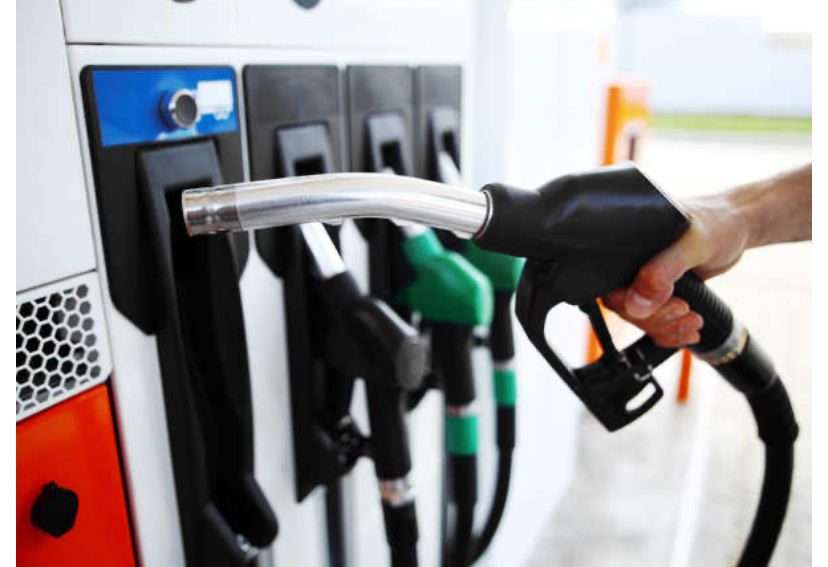
The government has kept unchanged the prices of diesel, kerosene, petrol and octane at Tk 102 per litre, Tk 114 per litre, Tk 118 per litre and Tk 122 per litre respectively for the month of August under the automatic fuel pricing formula.

Petroleum prices have been kept unchanged to those similar to July level to ensure the supply of such items at reasonable prices, an order of the Energy and Mineral Resources Division (EMRD) under the Ministry of Power, Energy and Mineral Resources (MPEMR) stated on Thursday.

The EMRD also published a gazette on the petroleum prices for August.

The automatic fuel pricing formula was first introduced by the government on March 07, 2024.

The government usually applies Platts's oil product assessments or benchmarks for fixing refined oil products and for crude oil, it looks at S&P Global Platts's Dated Brent benchmark while buying petroleum products from the international market.

Sources said the new oil pricing formula is aimed at ensuring no loss, no profit for state-run Bangladesh Petroleum Corporation (BPC).

The BPC in February last year prepared a guideline on automatic oil pricing under which the prices of all petroleum products will be fixed.

Under the guideline, all types of costs, including international market price, import tax, advance income tax and value added tax, or VAT, operational expense, administrative and maintenance costs, BPC's margin, and distributor's margins would be added before fixing the prices of petroleum products.

Prices of octane and petrol are considered as luxury fuel, under the guideline, and hence their prices should always be kept higher than diesel, it narrated.

The price difference between octane and diesel should be at least Tk 10 per litre in the domestic market, it spelled out.

Bangladesh usually imports around 300,000 tonne of octane annually to meet domestic demand, while the demand of petrol is made through production from the country's lone crude oil refinery - Eastern Refinery Ltd (ERL), and from condensate fractionation plants.

Since its independence in 1971, Bangladesh has been fixing domestic petroleum product prices through executive orders by the government.

The BPC would attain profit from petroleum product trading in most of the years and provide dividends to the government after clearing all debts and liabilities, including taxes and VATs.

The ministry of finance would provide a subsidy when the BPC incurred a loss in petroleum product trading or when oil prices in the international market were high and volatile.

Bangladesh introduced the automatic oil pricing formula for the first time in line with a recommendation from the global lender -- International Monetary Fund (IMF).

It was among several conditions for reduction of subsidies as set by the IMF for a US$4.7 billion loan.​
 
Analyze

Analyze Post

Add your ideas here:
Highlight Cite Respond

Dhaka-Ctg fuel pipeline to open in Aug: BPC
Bangladesh Sangbad Sangstha . Dhaka 31 July, 2025, 23:15

1754011638307.webp


The first ever petroleum pipeline from southeastern port city of Chattogram to capital Dhaka is set to be operational from mid-August, Bangladesh Petroleum Corporation (BPC) officials said in Dhaka on Thursday.

The BPC officials said they were preparing to make operational the 250-kilometre long oil pipeline expectedly from August 16 as its construction works were completed with the help of army sappers at a cost of about Tk 3,700 crore.

They said state-run corporation will be in charge of operation and maintenance of the pipeline.

โ€˜The pipeline will save a huge amount of money minimizing pilferage and system loss,โ€™ adviser of power, energy and mineral resources ministry Muhammad Fouzul Kabir Khan said.

He said the transportation of oil in petroleum tankers used to cause the system loss twice โ€“ during loading and unloading process.

BPC officials supplemented the adviser saying the pipeline would also minimize scopes for pollutions.

The officials said a 16-inch diametre pipe was installed 241 kilometres from Patenga to Godnail in Narayanganj while a depot was installed at Fatullah, 8.29 kilometres off Godnile through a separate pipeline of 10-inch diameter.

A BPC official said the underground pipeline made its way beneath 22 rivers and cannels while nine pumping stations were built in the entire system.

A previous such pipeline called Bangladesh-India Maitree Pipeline was built from India to Bangladesh to import diesel.

BPC officials said they were now also building another pipeline to unload crude oil from the sea.

According to BPC officials oil tankers used to take at least 24 hours to transport petroleum from the port city of the river port won of Narayanganj while the pipeline would transport the oil just in four hours.

Currently, BPC spends Tk 326 crore every year on transporting oil from Chattogram to Dhaka by oil tanker. But if the pipeline is operational, the cost will be Tk 90 crore only and save at least Tk 226 crore annually.

The pipeline will prevent pilferage and steal of oil, the information said.

Authorities sometimes experienced problems to transport of fuel oil due to inclement weather resulting in supply interruptions while the pipeline will solve the problem.

The project was implemented by the 24th Engineer Construction Brigade of the Bangladesh Army installing the computerized Supervisory Control and Data Acquisition or SCADA system to monitor and control the transportation processes.

Bangladesh requires at least 6.5 million tonnes of petroleum annually, of which one million is imported from India through the pipeline and the volume is transported by oil tankers from Chattogram.

The trial operation of the pipeline was held on June 24.

The supplied fuel through pipeline will be pumped from the main tanks of BPCโ€™s fuel marketing subsidiaries Padma Oil Company, Meghna Petroleum and Jamuna Oil Company at Patenga Depot in Chattogram to the tanks of the same companies at Godnail Depot.​
 
Analyze

Analyze Post

Add your ideas here:
Highlight Cite Respond

Retailers flout LPG price cap, charge Tk 150-200 more despite BERC order

Published :
Aug 01, 2025 18:56
Updated :
Aug 01, 2025 19:06

1754091637310.webp


Even though the Bangladesh Energy Regulatory Commission (BERC) had set the price of a 12- kg LPG (liquefied petroleum gas) cylinder at Tk 1,364 for the month of July, many consumers in the capital were being forced to pay between Tk 1,500 and Tk 1,600 โ€” well above the official rate.

The price discrepancy has sparked frustration among households and small businesses, who say they are being burdened with unjustified additional costs amid already mounting living expenses, reports UNB.

A resident of Uttara said, โ€œI went to three different shops in my area, and no one was selling the cylinder for less than Tk 1,500. If the government fixes a price, why is it not being enforced? We, the common people, are suffering.โ€

โ€œWe are the worst sufferers,โ€ said Kokhon, a restaurant owner, adding, โ€œWe use a lot of gas cylinders, but the prices are extremely high. Retailers always charge more than the price set by BERC โ€” they donโ€™t care about the official rate. Itโ€™s all controlled by a syndicate,โ€ he added.

Akhi Afrin, a housewife from Uttaraโ€™s Diabari, expressed similar frustration.

โ€œThis is not a luxury item. LPG is a basic necessity for cooking. If prices go up like this, how will we manage our household budget?โ€ she said.

Surprisingly, many consumers remain unaware of the government-fixed LPG price.

When asked, several gave similar responses, UNB observed.

Questioned about the inflated rates, Raju Ahmed, Assistant Director (Tariff-2) at BERC, said the market is currently under surveillance by the Directorate of National Consumersโ€™ Right Protection, in coordination with the respective Deputy Commissionersโ€™ (DC) offices.

In response to why prices remain inflated despite ongoing monitoring, Raju Ahmed told UNB, โ€œIt should not be the case, but if such irregularities are occurring, I will bring the matter to the attention of higher authorities.โ€

He urged consumers to lodge formal complaints with the Directorate, attaching valid receipts as evidence, so that appropriate action can be taken.

Retailers, however, claim they are not deliberately ignoring the government-set rate. Instead, they point to problems in the supply chain and alleged price irregularities at the wholesale level.

โ€œWeโ€™re buying cylinders at higher rates from distributors โ€” sometimes over Tk 1,450 per cylinder,โ€ said Jahidul Islam, an LPG retailer in Uttara.

โ€œIf we sell at BERCโ€™s price, weโ€™ll incur losses. We are being forced to charge higher just to stay in business,โ€ he said.

Another seller, requesting anonymity, said distributors themselves are not adhering to BERC prices.

โ€œThere is no proper monitoring, and small sellers like us are being blamed unfairly,โ€ he added.

He also mentioned that popular brands such as Beximco and Bashundhara are sold at higher rates due to their high demand.

Experts argue that the core issue lies in weak enforcement of BERCโ€™s pricing directives.

โ€œBERC may fix the prices, but without proper monitoring and a transparent distribution chain, consumers will never benefit,โ€ said an energy expert and consumer rights advocate.

โ€œThere needs to be strict action against those who are overcharging, including wholesalers,โ€ he said.

Consumers are now calling on the government to intervene and ensure LPG is sold at the regulated price. Many have urged BERC and the Ministry of Energy and Mineral Resources to conduct market inspections and hold both distributors and retailers accountable.

Until then, the gap between official pricing and real-world costs continues to weigh heavily on the average household.​
 
Analyze

Analyze Post

Add your ideas here:
Highlight Cite Respond

Resolving gas crunch issues

FE
Published :
Aug 03, 2025 00:03
Updated :
Aug 03, 2025 00:03

1754177680979.webp


Natural gas has been the lifeblood of Bangladesh's energy security since the '60s of the last century when a global energy giant, Shell Oil, first hit upon five major gas fields in this part of the world. Since then, the country has been considered a gas-rich nation. Later, in 1997, Chevron discovered the Bibiyana gas field in Habiganj. According to Petrobangla, the state-owned oil, gas and mineral exploration and distribution company, Bangladesh has 22 onshore gas blocks, of which 11 have never been explored. In addition, it has also 26 offshore gas blocks in the Bay of Bengal, divided into 11 shallow-sea blocks and 15 deep-sea blocks, which may be contracted out to international gas and oil exploration companies. But so far, response from the foreign companies has been rather lukewarm as was demonstrated by their lack of response to the international tender the government floated to this effect in March last year. The apparent reason for such disinterest was centred, reportedly, around unattractive gas price offer, lack of dependable survey data on potential gas reserves on the seabed, absence of necessary infrastructure (rigs, pipelines, etc.), and so on.

Against this backdrop, according to reports, country's gas production capacity from the existing wells has been declining fast and has come down to 1800 million cubic feet per day (mmcfd). At the current rate of consumption, the remaining gas reserve of less than 9 trillion cubit feet (Tcf) will be exhausted by 2030, experts hold. Since 2018, Bangladesh has also been buying Liquified Natural Gas (LNG) from overseas, mostly from Middle Eastern countries like Qatar and Oman as well from international spot markets to meet the demand and supply gap. This cannot be a feasible option for the country's energy security indefinitely. Meanwhile, at a recent discussion on energy security, it was revealed that the subsidy the government has been providing for LNG purchase surged to Tk 89 billion in FY 25. This amounts to a year-on-year increase by more than 48 per cent. According to an estimate, since the procurement of LNG from international markets started in 2018, the country has so far spent over Tk.367 billion.

Under any circumstances, the government should refocus on exploring gas at home. Exploration work for the idle onshore blocks can well be taken up on this score. In this connection, the interim government is learnt to have been prioritizing domestic gas production through drilling and workover of existing gas wells. To this end, it is reported to be working on drilling 100 wells and workover of 31 wells. And through all these efforts at exploration works and drilling, the government hopes to add 985 mmcfd to the national grid, while from workover wells between 400 and 500 mmcfd could be obtained. All these projections are based on drilling and workover of the onshore gas fields. Reworking of already explored gas fields has its limitations, too.

So, one wonders, why the government is not focusing its attention on the offshore gas blocks which may resolve the issue of nation's energy security. No doubt, exploration work and building the infrastructure for the offshore blocks are very capital-and-technology-intensive options. Those are hardly affordable for the government at present. International oil and gas giants can do the job. The point is to engage them in the actual work of exploration and development. Given the urgency, the government should reach deals with them based on the best incentives it can offer.​
 
Analyze

Analyze Post

Add your ideas here:
Highlight Cite Respond

Old gas cylinder
How to avoid the disaster lurking in the corner


M Azizur Rahman
Published :
Aug 10, 2025 20:06
Updated :
Aug 10, 2025 20:06

1754872961225.webp


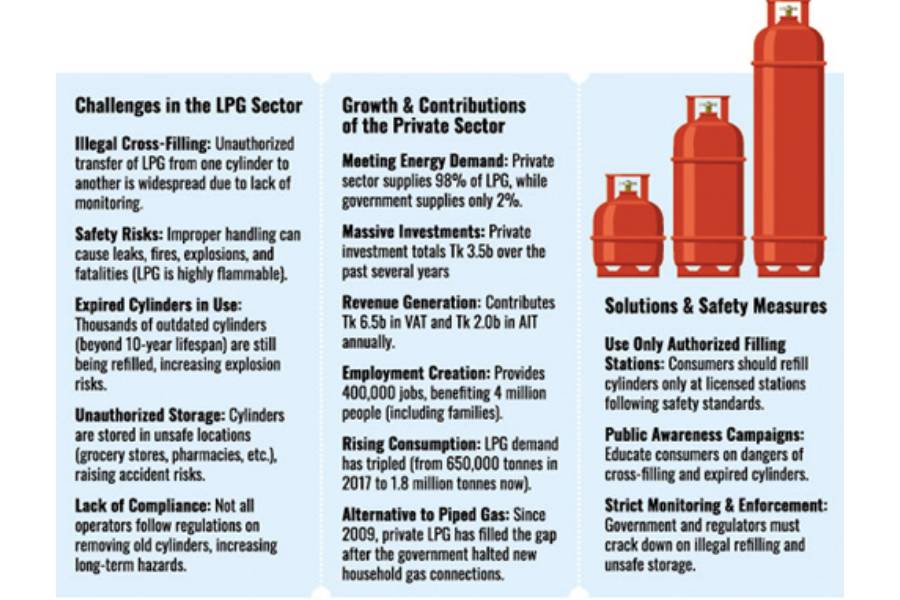
The growing liquefied petroleum gas (LPG) sector in Bangladesh is facing numerous challenges, especially the illegal cross-filling due to lack of monitoring and awareness.

Cross-filling, which means transfer of LPG from one cylinder to another, is being done by many unauthorised individuals or unregulated businesses across the country. It may lead to a disaster anytime risking the lives of consumers and public, it has been alleged.

Improper handling and inadequate equipment can lead to leaks, fires, explosions, and even loss of life as LPG is highly flammable.

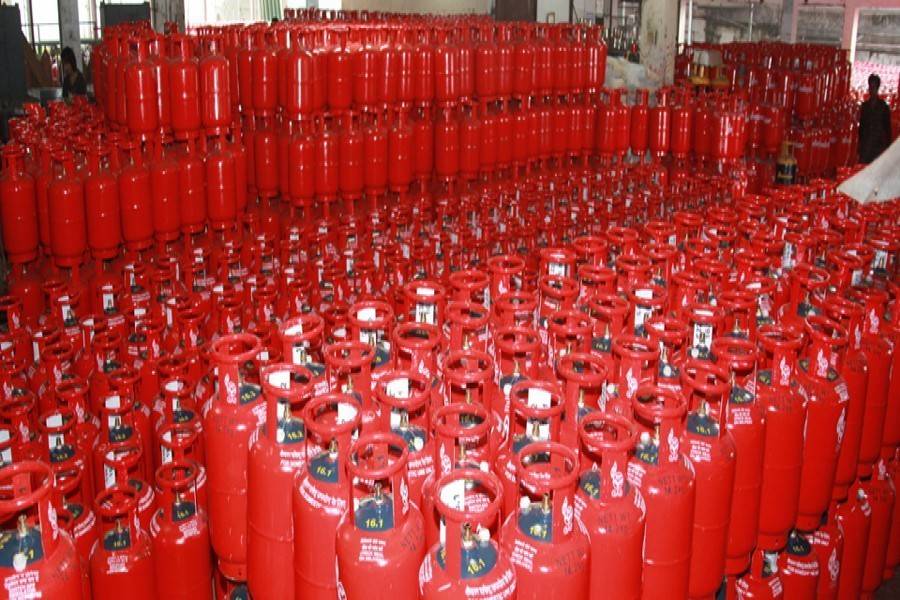
Thousands of such LPG gas cylinders are being used across the country although their tempers are expired.

But these cylinders are being repeatedly refilled and sent to customersโ€™ homes, increasing the number of gas explosions and casualties in the country.

The chances of major accidents in the future remain high as the trend of removal of old and hazardous gas cylinders from the market is very low.

Cylinders are being stored in various locations without proper authorization. They are stocked in grocery stores, pharmacies, and other shops, posing serious risks. This situation has led to growing concerns among consumers, as unexpected and deadly gas explosions continue to occur. Experts warn that if this issue is not addressed immediately, more accidents are likely to happen in the future.

However, experts believe that after 10 years, cylinders become increasingly dangerous.

Although some companies remove hazardous cylinders after 10 years, but this has never been maintained by all operators.

To ensure safe use of LPG cylinders and check its cross-filling, the consumers should only refill their LPG cylinders at authorised and licensed filling stations, which usually maintain safety standards.

Public awareness campaigns are also necessary to educate consumers about the dangers associated with LPG cylinder cross-filling.

It is important for individuals to understand the risks involved and to prioritise their safety by choosing legal and regulated sources for LPG cylinder refills.

Bangladeshโ€™s dependence on liquefied petroleum gas (LPG) to meet mounting energy demand in households, automotives, commercial entities and industries is growing consistently due to relentless efforts by the private sector.

The private sector itself is developing necessary infrastructure and ensuring a smooth supply chain to take this clean fuel to the doorsteps of end-users investing billions of taka.

The private sector currently imports over 98 per cent of LPG needed to meet the domestic demand at their own costs, while only around 2.0 per cent is arranged by the state-owned LP Gas Ltd, a wholly-owned subsidiary of Bangladesh Petroleum Corporation (BPC).

The proactive role of the private sector in meeting the countryโ€™s growing energy demand by supplying LPG provides the much-needed relief for the government as a significant portion of energy demand is being met by the private sector without any subsidy.

The LPG sector is a capital-intensive one and the private sector has invested around Tk 3.5 billion over the past several years to meet the growing demand for LPG by different sections of consumers, according to the LPG Operators Association of Bangladesh (LOAB).

Moreover, they provide around Tk 6.50 billion in value added tax (VAT) and Tk 2.0 billion in advance income tax (AIT) annually to the government exchequerโ€”National Board of Revenue (NBR).

Privately-owned LPG operators have so far provided around 400,000 jobs and some 4.0 million people including their families are directly benefitted.

Driven by large investments in the private sector, LPG consumption in Bangladesh has almost trebled over the years.

Bangladesh currently consumes around 1.80 million tonnes of LPG annually, against around 650,000 tonnes of LPG during 2017.

The LPG market in Bangladesh started growing significantly after a government decision to suspend piped gas connections to household consumers in 2009.

Despite the ban on household gas connections for a long time, the government did not have to face any significant resentment from the consumers as the privately-owned LPG operators have come up to meet the household demand for cooking fuel.

LPG consumption in automotives, restaurants and other commercial entities increased afterwards to cope with the countryโ€™s mounting energy demand and dwindling natural gas reserves and production.

To accelerate further the consumption of LPG, ensuring its safe use is of utmost necessity.​
 
Analyze

Analyze Post

Add your ideas here:
Highlight Cite Respond

Solar energy sees financing crunch
BD renewable ambitions face crosswinds


SAJIBUR RAHMAN
Published :
Aug 10, 2025 20:04
Updated :
Aug 10, 2025 20:04

1754873124397.webp


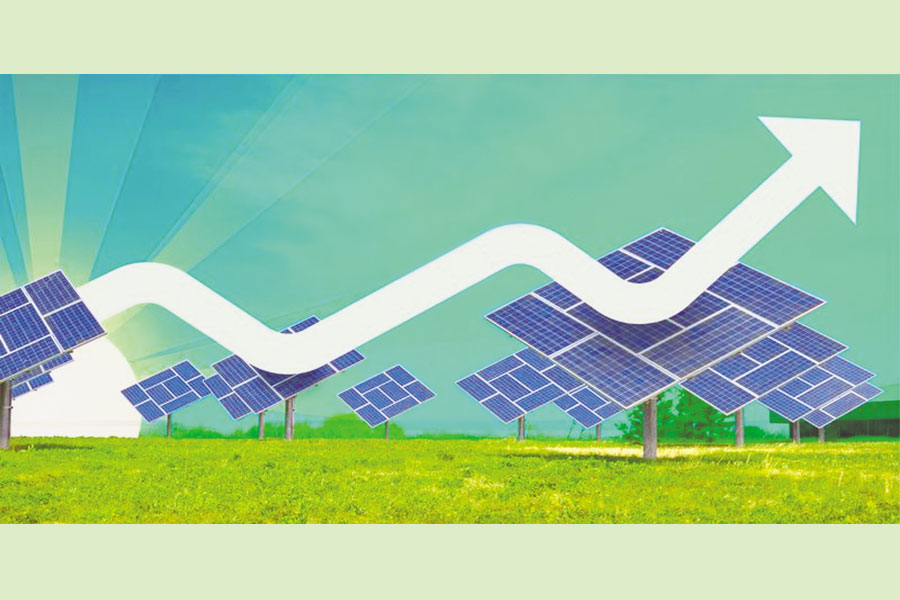
As of July, 2025, Bangladesh's installed solar energy capacity reached 1,307.15 megawatts (MW), up from 949.65 MW in June 2023-a 38 per cent increase in just over two years. While this surge underlines the growing momentum in the country's transition to clean energy, significant financial, technical, and policy challenges threaten to slow the pace of expansion.

Despite robust growth in solar panel installations-ranging from utility-scale solar parks and mini-grids to rooftop and irrigation systems-the financing ecosystem for renewable energy remains underdeveloped. High capital investment requirements, complex regulatory procedures, and inadequate technological expertise are among the major barriers deterring banks and private investors from scaling up their involvement in large renewable projects in the areas like solar, wind, hydro, and biomass power.

After more than 16 years, the government approved a new version of the Renewable Energy Policy in June 2025, enhancing its ambition to harness 20 per cent and 30 per cent renewable energy by 2030 and 2040, respectively, creating optimism among stakeholders, Shafiqul Alam, Lead Energy Analyst for Bangladesh, Institute for Energy Economics and Financial Analysis (IEEFA), told the FE.

However, Bangladesh's renewable energy sector is crawling ahead when most countries are rapidly expanding use of solar, wind and other renewable energy sources. Despite the falling trend of renewable energy costs, Bangladesh had its own set of problems, he said.

The suspension of utility-scale projects and tepid interest of investors in the latest round of tenders for utility-scale projects meant that the country had a barren project pipeline apart from a few under-construction projects, Shafiqul said.

The suspension of utility-scale projects affected investors' confidence. Further, the absence of the 'implementation agreement' was unlikely to attract sufficient bidders. It pointed to a barren period of private-sector-led new utility-scale projects in the next one or two years, he stated.

A recent IEEFA report estimates that Bangladesh will require between US$933 million and US$980 million annually until 2030 to meet the government's renewable energy goal of sourcing 20 per cent of electricity from renewables by that year. This figure will rise to range between US$1.37 billion and US$1.46 billion per year from 2031 to 2040 to meet the 30 per cent target. Given these requirements, public finance alone is unlikely to suffice, necessitating substantial private-sector participation.

Yet policy inconsistency remains a significant hurdle. The suspension of 31 utility-scale projects that were approved through a non-competitive process under the previous government has shaken investor confidence. The abrupt transition to competitive bidding, without a clear roadmap or revenue assurance mechanism, has increased project risks and introduced contractual uncertainty.

According to stakeholders, another critical challenge is access to affordable finance. High interest rates, short loan tenors, and stringent lending norms for green projects make it difficult for developers to secure long-term capital. The central bank's green fund could be more effective, if it moves toward a pre-finance model to streamline disbursement and minimize bureaucratic delays.

Local financing barriers are compounded by external headwinds. The country's low sovereign credit rating-downgraded to B2 by Moody's in late 2024-further discourages foreign investment by raising the cost of international borrowing. Moreover, a weak bond market and limited access to currency hedging instruments constrain long-term funding options for renewable ventures.

Technology also plays a defining role in shaping the solar energy landscape. Over the past 15 years, low-cost Chinese solar components have dominated Bangladesh's market, driven by their affordability and global supply chain strength. According to Infrastructure Development Company Ltd (IDCOL), Chinese manufacturers now command over 60 per cent of the solar home system (SHS) market in Bangladesh, followed by Canada (20 per cent), Germany (15 per cent), and India (5 per cent).

Chinese firms like Longi Solar, JA Solar, Huawei, and Sungrow Power Supply have supplied critical components-PV panels, inverters, and cables-to nearly all of the country's ten operational solar parks. Local stakeholders note that the price per watt of Chinese panels is 30-35 per cent lower than European counterparts, making them the preferred choice for both public and private developers.

Notable examples include Teesta Solar Ltd, which launched the country's largest solar plant (200 MW) in Gaibandha, using panels from Longi and inverters from Sungrow. Energon Renewables, Intraco Solar, and Joules Power have also relied heavily on Chinese tech to build their respective utility-scale projects.

The 200-megawatt (MW) plant, spanning 650 acres on the banks of Teesta River in Gaibandha's Sundarganj upazila, was officially inaugurated on August 2, 2023. It began commercial operation in January 2023.

Mr Alam also said the much-discussed land crisis could be addressed with proper resource mapping and earmarking available land for utility-scale solar projects. Special economic zones could also accommodate a significant amount of new renewable energy capacity.

"The rooftop solar segment with significant potential is still underexplored. While the new rooftop solar programme launched with the target of achieving 3,000MW by December 2025 is a welcome move and could provide the much-needed boost to it. Proper monitoring, quality control and the presence of sufficient resources (both financial and human resources) will be central to its success", he said.

This is the time for project implementation as rapidly as possible while ensuring quality to achieve the renewable energy targets for the country's energy security. However, contrary to any belief that only targets would drive renewable energy growth, a conducive ecosystem was essential in the country, he added.​
 
Analyze

Analyze Post

Add your ideas here:
Highlight Cite Respond

Bangladesh to be 2nd-largest LNG importer in South Asia by 2035: IEA
Bangladeshโ€™s faster regasification expansion and declining domestic gas fields to drive higher imports

1763001899909.webp

Representational photo: Collected

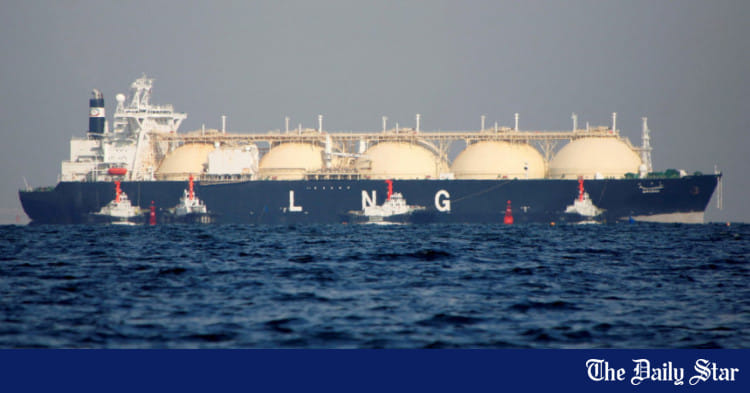
Bangladesh's liquefied natural gas (LNG) imports are likely to outpace Pakistan's by 2035, making it the second-largest importer in South Asia after India, according to a projection by the International Energy Agency (IEA).

Pakistan and Bangladesh together would import around 75 billion cubic metres (bcm) of LNG in 2035, up roughly 60 percent from 2024 levels, projected the intergovernmental organisation, which provides policy recommendations, analysis, and data.

"In the Stated Policies Scenario, LNG imports in other developing Asiaโ€”primarily Pakistan and Bangladeshโ€”increase from 45 bcm in 2024 to 80 bcm in 2035," the IEA said in its latest World Energy Outlook 2025, published yesterday.

The Stated Policies Scenario reflects reading of country-specific energy, climate and related industrial policies that have been adopted or put forward, even if not yet codified in law.

Though the report did not specifically state the share of each country, the outlook data and infrastructural trends showed that Bangladesh would import around 42-44 bcm of LNG in 2035, while Pakistan would import around 33-36 bcm.

In 2024, Pakistan still imported slightly more LNG than Bangladesh. But by the early 2030s, the IEA projections suggest Bangladesh will pull ahead, driven by faster depletion of local gas and larger regasification capacity.

In India, LNG imports have been growing in recent years, driven by opportunistic buyers and strong potential growth in demand, especially in industry, as per the report.

In 2035, India would import 50 bcm of LNG, up from 35 bcm at present, it added.

Both Bangladesh and Pakistan are already dependent on LNG for power generation and industrial feedstock.

However, Bangladesh's expansion of regasification capacity and faster gas-field depletion are expected to lift its import needs beyond Pakistan's over the next decade, the projection suggested.

In Bangladesh, most onshore gas fields are in decline, while new exploration has lagged, driving a steady rise in LNG dependence for electricity generation, fertiliser production, and industries.

The country operates two floating storage and regasification units (FSRUs) and is expected to expand by two more floating and one land-based terminal.

In contrast, Pakistan has been facing financing constraints that have delayed terminal expansion and reduced LNG purchases in recent years.

In countries with mature domestic gas production, such as Thailand, Indonesia, Malaysia, Pakistan, and Bangladesh, LNG is a logical replacement for declining domestic gas, the outlook said.

The report said Asia will remain the key driver of global LNG demand growth amid slowing domestic gas production, accounting for more than 75 percent of total imports by 2035.

"These include Southeast Asia, where LNG imports rise from 35 bcm today to 135 bcm in 2035," it said.

"Lower-priced LNG flows to other parts of the world where affordability is a key consideration, notably India and other parts of South and Southeast Asia," it said, adding that the price would be 40 percent lower than today by that time.

The weighted average gas import prices in emerging markets and developing countries in Asia would be around $7.5 per million British thermal units (MMBtu) in the 2030โ€“2035 period.

For importers like Bangladesh, this glut offers an opportunity to secure long-term supplies at more competitive prices, though the agency warns that excessive dependence on imported gas could expose developing economies to volatility in global markets.

"Even at prices near to the short-run marginal cost of supply, LNG remains a premium fuel in a number of markets in Asia," it said.

"Abundant supply may offer these countries significant optionality for security-of-supply reasons and may help them manage periods of system stress," it said.

"โ€ฆbut the economics of LNG make it difficult to penetrate these markets as a baseload fuel in the long run," it warned.
 
Analyze

Analyze Post

Add your ideas here:
Highlight Cite Respond
newagebd.net/post/power-energy/282653/energy-security-hinges-on-policy-consistency-experts

Energy security hinges on policy consistency: experts
19 November, 2025, 22:45

The countryโ€™s energy security hinged on policy consistency to attract domestic and foreign investments under a transparent regulation, experts said at a seminar on Wednesday in the capital.

The discussants, comprising policymakers, business leaders and energy experts, also said that the long-term predictable policy could only ensure the much-needed investment in the sector as well as the uninterrupted power to hungry industries.

The seminar titled โ€˜Enabling Bangladeshโ€™s Growth and Prosperity: Developing a Sustainable Power Sector Investment Climateโ€™ was organised by Policy Exchange Bangladesh and the Economic Reporters Forum with support from EMA Power, an investment platform focused on power projects in emerging markets.

Cautioning that without long-term reforms and greater private sector engagement, the speakers said the country could face a major power crisis in the next decade.

Bangladesh Energy Regulatory Commission chairman Jalal Ahmed, speaking as chief guest in the event, highlighted challenges, including over capacity, falling gas supply, lack of diversified fuel solutions and bureaucratic delays in project clearance, plaguing the sector.

Identifying sustainability of power sector depended on renewable energy and referring examples of Pakistan and India on booting renewable energy sources, Jalal Ahmed said that about 4,000 factories could generate huge power through rooftop solar initiatives.

He urged inclusion of industrial renewable energy in long-term planning to meet the countryโ€™s growing energy demand.

M Tamim, vice-chancellor of the Independent University Bangladesh, Park Young-sik, South Korean ambassador in Dhaka, Abdul Awal Mintoo, vice-chairman of Bangladesh Nationalist Party, Mahdi Amin, an adviser to the Acting chairman of Bangladesh Nationalist Party, and Mobarak Hossain, member of Shura Council of the Bangladesh Jamaat-e-Islami, participated in the discussion as guests of honour.

M Tamim described the high cost of energy in the country as a major limitation for industrial competitiveness.

He warned that the country might face energy shortages until 2029 and stressed the need for a long-term policy approach to ensure supply stability.

BNP vice-chairman Abdul Awal Mintoo noted that political stability was inseparable from economic progress.

He put emphasis on restoring investorsโ€™ confidence to overcome the economic challenges compounded by the lack of energy security.

The country has attained the capacity of generating around 28,000 to 29,000 Megawatts power every day, but half of it remained unutilised due to a weak grid, costly fuel and idle plants.

Despite billions of dollars invested, energy security remains one of the largest concerns, said Mahdi Amin.

Highlighting the past experiences of some mega projects suffered from a culture of impunity, he said that the future policy must be transparent and sustainable.

Predictable policies, transparent regulation and long-term investment confidence were termed by the Jamaat Shura Council member as pre-conditions to strengthen the energy sector.

He emphasized capital investment, energy storage, regional power trade and modernization of institutional frameworks for depoliticising the power sector and enhancing efficiency of it.

Earlier in the day, two panel discussions were held, where Imran Karim, chairman of Confidence Power Rangpur Limited, Kamran T Rahman, president of the Metropolitan Chamber and Commerce Industries, Mahmud Hasan Khan Babu, president of Bangladesh Garment Manufacturers and Exporters Asssociation, Shamsul Alam, energy adviser of Consumer Association of Bangladesh, participated, among others.

Stakeholders expressed optimism that continued reforms and coordinated action among government, private sector and development partners could unlock Bangladeshโ€™s significant economic potential and secure a sustainable, prosperous future.

Vice-chairman of AK Khan Group and Business Initiative Leading Development chairman Abul Kashem Khan and ERF president Doulot Akter Mala gave introductory remarks.

Abu Chowdhury, director of EMA Power Investment Limited and chairman of EPV Thakurgaon Limited, made a power-point presentation.​
 
Analyze

Analyze Post

Add your ideas here:
Highlight Cite Respond

Members Online

No members online now.

Latest Posts

Back
PKDefense - Recommended Toggle