[🇧🇩] Energy Security of Bangladesh

[🇧🇩] Energy Security of Bangladesh
619
21K
More threads by Saif

G Bangladesh Defense

Bangladesh has adequate fuel stocks for May, now focusing on June supply: state minister

bdnews24.com
Published :
Apr 17, 2026 15:32
Updated :
Apr 17, 2026 19:48
1776471207585.webp


State Minister for Power, Energy and Mineral Resources Aninda Islam Amit says Bangladesh now holds the largest stock of refined fuel in its history, while assuring that demand in April and May can be fully met despite disruption to crude oil imports due to the conflict in the Middle East.

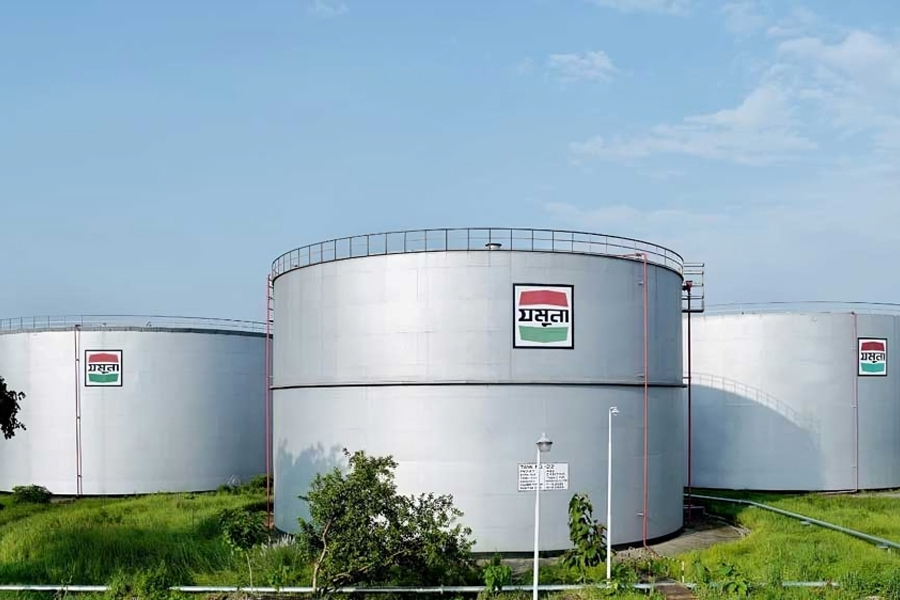
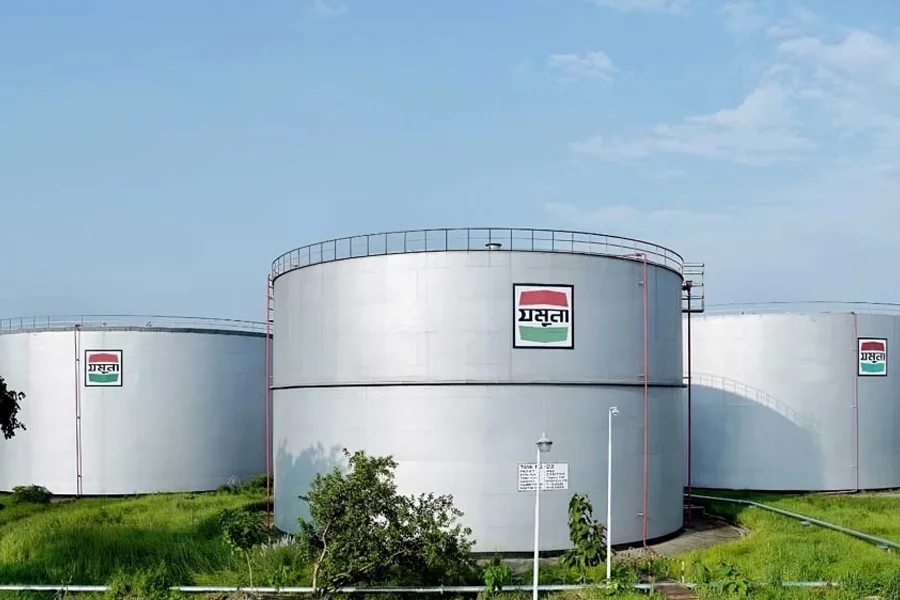
Speaking while visiting the Easter Refinery Limited (ERL) in Chattogram’s Patenga on Friday, Amit said the government had already secured supplies to meet fuel demand over the next two months and was now working to prepare for June.

“I can say with full responsibility and with pride that something that has never happened in Bangladesh’s history has happened now -- we currently have the highest stock of refined fuel in the country’s history,” he said at the country's only state-owned oil refining facility.

Referring to international concern over fuel supplies, he said Bangladesh also had jet fuel reserves equivalent to six weeks of demand.

“Our fuel demand for April and May has already been secured and is in a confirmed supply line. Taking that into account, I can say the Bangladesh government has the full capacity to meet demand in April and May,” he said.

“Now that we have been able to ensure that, we are working mainly to meet the needs of June.”

The state minister said ERL refines around 1.5 million tonnes of crude oil a year on average, with most of its crude coming from Saudi Arabia and the United Arab Emirates.

He said the scheduled crude shipments for January and February had arrived as planned, but import schedules for March and April were disrupted after the Middle East crisis began on Feb 28.

The government has also been trying to secure both refined fuel and crude oil from alternative sources, according to him.

He said one cargo had already been purchased, though the supplier failed to deliver it on time, and added that two more crude cargoes were now on standby.

“We expect one cargo ship to arrive in the latter half of this month."

He acknowledged that ERL’s production capacity had been affected for the time being, but said the government had increased imports of refined fuel to ensure supply was not disrupted even if the refinery could not run at full capacity.

Amit also said the current pause had created an opportunity to carry out long-overdue maintenance work at two units of the refinery.

As the ERL operates throughout the year, regular maintenance has become difficult, according to him.

“We are finishing the maintenance work during this period so that when crude oil arrives at the end of this month, we can run the Eastern Refinery at full capacity.”​
 

Bangladesh gets 60-day US waiver to import Russian fuel oil
Staff Correspondent 17 April, 2026, 20:39

1776475472231.webp

Cars and motorcycles wait in long queues at a refuelling station in front of prime minister’s office at Tejgaon in Dhaka amid fuel crisis. | New Age photo

The United States has granted a 60-day waiver for Bangladesh to import refined fuel oil from Russia, now facing US sanctions.

The sanctions waiver that came into effect on April 11 will remain in force until June 11 against a request made from Dhaka in March, officials confirmed.

The development came after a series of negotiations between Dhaka and Washington amid shortage in gasoline supplies and spiralling energy prices in Bangladesh against the backdrop of the ongoing conflict across the Gulf states since February 28 with US and Israel’s joint attacks on Iran and retaliatory strikes from Tehran.

The foreign ministry recently informed the Energy Division about the US sanctions waiver for Bangladesh to facilitate the procurement of 10 lakh tonnes of diesel from Russia as proposed by the Energy Division officials confirmed.

Bangladesh has already taken austerity measures to tackle the energy crisis as it heavily depends on fuel imports from traditional sources in Arab Gulf states while the movement of oil tankers through the Strait of Hornuz, a major waterway for energy supply to Aisa and Europe, has remained restricted following the outbreak of the Gulf war.

Bangladesh sought the sanctions waiver from the US, citing its challenges in the procurement of petroleums from traditional sources in the Gulf countries and rising prices of crude oil, according to the officials in Dhaka.

Meanwhile, lack of crude oil has forced the country’s lone oil refinery to suspend operations almost fully while the queues of vehicles at filling stations in Dhaka and elsewhere across the country are getting longer by the day.

The production at two major units of the Eastern Refinery Limited, Bangladesh’s only state-owned oil refinery, has been

halted due to a shortage of crude oil, according to officials.

The third unit is, however, running partially, producing an insignificant amount of petrol and octane, sokesperson for the Energy and Mineral Resources Division Monir Hossain Chowdhury confirmed.

The crisis stemmed from a lack of crude oil supply, worsened by disruptions linked to the Middle East conflict.

A crude oil shipment remains stuck in Saudi Arabia, leading to a depletion of existing stock since the beginning of the current month.

The Eastern Refinery usually processes around 4,500 tonnes of crude oil daily, producing about 13 types of fuel, including octane, petrol, diesel and furnace oil.

However, the output has already been reduced to around 3,500 tonnes per day over the past month due to the crude oil shortage.

Officials said that crude imports had remained suspended for nearly two months amid instability caused by the US-Israel war on Iran.

The next shipment is expected to arrive in the first week of May.

The refinery has a crude storage capacity of around 1,50,000 tonnes and can store up to 2,50,000 tonnes of refined fuel.​
 

Govt raises fuel prices by up to Tk 20 per litre

FE Online Desk
Published :
Apr 18, 2026 22:58
Updated :
Apr 18, 2026 22:58

1776560623974.webp


The government has set new retail prices for all types of fuel in Bangladesh, citing the continued impact of rising global oil prices.

According to the new pricing, diesel will cost Tk 115 per litre, octane Tk 140, petrol Tk 135, and kerosene Tk 130 per litre.

The revised rates will come into effect from 12 am on Saturday.

Under the new adjustment, the price of diesel has increased from Tk 100 to Tk 115 per litre, marking a rise of Tk 15.

Kerosene has gone up from Tk 112 to Tk 130 per litre, meaning consumers will have to pay Tk 18 more per litre.

Octane prices have increased from Tk 120 to Tk 140 per litre, reflecting the highest hike of Tk 20 per litre.

Meanwhile, petrol has risen from Tk 116 to Tk 135 per litre, which is an increase of Tk 19 per litre.​
 

Solar-powered factories weather energy disruption

Ahsan Habib

1776563396526.webp


As many factories scramble for diesel to keep generators running during load-shedding, production lines at Ha-Meem Group hum on without interruption.

1776563424931.webp


The difference is overhead. Over the past few years, Ha-Meem, one of the country’s largest garment exporters, has turned its rooftops into power plants, installing 12 megawatts of solar capacity at a cost of Tk 54 crore.

The investment was steep, but it is currently paying off.

“… now we are getting a good advantage. For example, during load-shedding, it works as a backup,” said AK Azad, managing director of Ha-Meem Group.

Ha-Meem’s solar system does more than keep sewing machines running. When output exceeds demand, surplus electricity flows back to the national grid under a net metering arrangement, trimming the company’s electricity bill.

Azad said that without solar power, the group would have faced serious difficulties. Frequent load-shedding and a worsening fuel shortage, caused by the US-Israel war on Iran, have pushed up costs across the production sector.

The situation has become so acute that the Bangladesh Garment Manufacturers and Exporters Association (BGMEA) recently urged the government to prioritise diesel supplies for factories through nearby filling stations.


Exporters say production capacity in major industrial hubs has already fallen by 25 percent to 30 percent as energy shortages continue to bite.

The country’s largest industrial rooftop solar system was installed at the Korean Export Processing Zone (KEPZ) in Chattogram in 2020.

This plant, operated by Youngone Corporation, currently generates 44 megawatts of solar power. It meets peak demand for factories inside the zone and sells surplus electricity to the Bangladesh Power Development Board (BPDB) through net metering.

“We are not facing problems due to diesel shortages caused by war or due to load-shedding,” said Md Shahjahan, managing director of KEPZ.

He said many factories in the zone operate little at night, leaving excess power to sell. “In that sense, renewable energy is giving us a good dividend.”

He added that greater reliance on renewable energy would shield industrial units from power cuts and diesel shortages. It could also help secure more export orders in markets such as the United States and Europe, where buyers increasingly favour greener supply chains.

Amid the energy shortage, however, not all factories enjoy full coverage of solar power.

Syed M Tanvir, managing director of Pacific Jeans Ltd, which has production units in Chattogram, said solar panels meet about 20 percent of his factory’s daytime demand.

During load-shedding, he still depends on diesel generators to run operations. Even so, solar power keeps fuel use lower than at factories without any renewable options, giving him a relative edge.

Tanvir estimates there are around 2,000 megawatts of standby generator capacity across factories in various sectors, all running on diesel. If those generators operate for four to five hours a day, fuel consumption soars.

Typically, factories require one to two megawatts for backup. Rooftop solar systems could meet much of that demand, he said. “Besides, it would reduce reliance on diesel and ease pressure on foreign currency reserves.”

HIGH COSTS HOLD BACK EXPANSION

Bangladesh remains well behind its neighbours in clean energy adoption. Non-fossil fuel sources accounted for 51 percent of India’s electricity generation in the 2025-26 financial year.

Cambodia derives 62 percent of its power from renewable sources, largely hydropower, giving its textile sector a comparatively low carbon footprint. Pakistan’s clean energy share stands at around 46 percent as of September 2025.

By contrast, renewables account for only about 3 percent of Bangladesh’s total energy mix.

Entrepreneurs say the main obstacle is cost. Renewable energy requires heavy initial investment, and import duties on equipment are steep.

In Bangladesh, industry-grade lithium batteries face a 58 percent duty. Manufacturers say that a temporary reduction, even for two to three years during the ongoing energy crisis, would encourage factories to replace diesel generators.

Their argument is that such a move would support industry and help the government save foreign currency by cutting fuel imports.

KEPZ Managing Director Shahjahan said the government could play a decisive role. With policy support, solar adoption would accelerate, lowering energy import dependence and strengthening energy security.

TRANSFORMATION NEEDS POLICY PUSH

Khondaker Golam Moazzem, research director of the Centre for Policy Dialogue (CPD), said it is good news that the companies that pioneered and invested in solar energy are getting their dividend back.

He said this would encourage others to pursue green transformation.

He also urged the government to provide immediate fiscal support so that factories are encouraged to invest more in solar.

According to Moazzem, policy backing should focus on improving merchant power plants. The government could explore regional markets for renewable energy, which would protect industry from disruptions in diesel, furnace oil and other fossil fuels.

Muzaffar Ahmed, chairman of the Sustainable and Renewable Energy Development Authority (Sreda), said many production units are struggling with fossil fuel-based energy, creating an opportunity to expand renewables.

He said Sreda would make its best efforts, although issues such as import duties fall under the National Board of Revenue (NBR).

Mahmud Hasan Khan, president of the BGMEA, said he has avoided the worst of the current energy crisis by using solar power.

Khan welcomed the government’s plan to expand solar generation but said it must be matched by genuine policy commitment.

Although a policy allows renewable energy generation through merchant power plants, the wheeling charges levied by the BPDB are too high, he said.

The BGMEA president said renewable energy must be commercially viable for producers. Without that, the transition will fail to gather pace.​
 

Latest Posts

Back