Bangladesh Defense
Saif
Senior Member
- Jan 24, 2024
- 21,494
- 9,744
- Nation

- Residence
- Axis Group

The Financial Express | First Financial Daily of Bangladesh
Get latest stock share market news, financial news, economy news, politics news, breaking news, Bangladesh economy news at The Financial Express.
The folly of India's push-in policy
SYED MUHAMMED SHOWAIB
Published :
Jun 26, 2026 01:03
Updated :
Jun 26, 2026 01:03
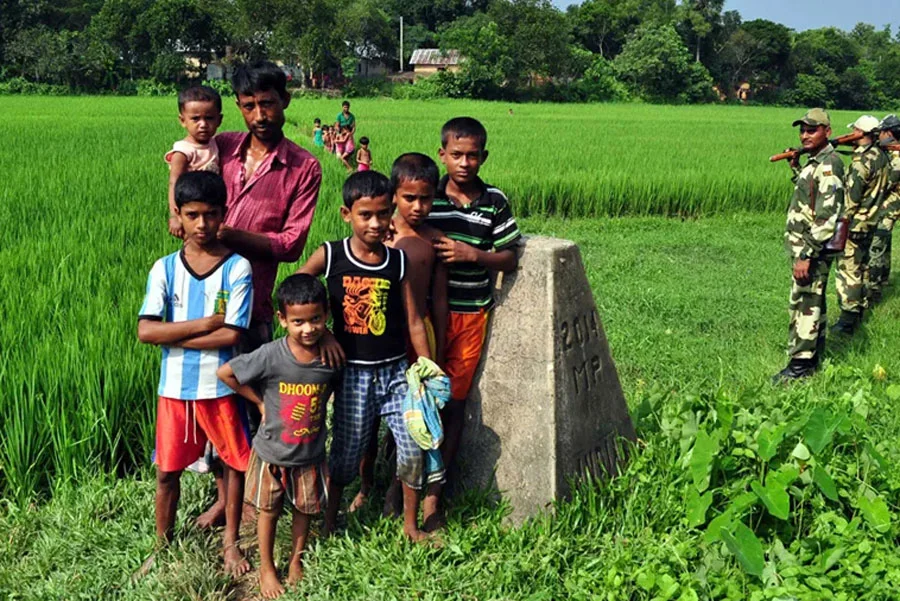
Photo: Al Jazeera
A quarter of a century ago, the film 'No Man's Land' told the tale of soldiers trapped between opposing armies during the Yugoslav war. Stranded in a narrow strip of land, they found that every attempt to move carried the certainty of danger and the constant shadow of death. It was a classic case of ordinary people becoming pawns of geography and politics, abandoned in a place where neither side cared enough to claim them. One would naturally expect such horrors to remain confined to the realm of fiction rather than spill into everyday life. Yet reality often is more unsettling than imagination. Along the Bangladesh-India border, scenes even more disturbing are unfolding everyday as men, women and children find themselves caught in a cruel limbo that puts cinematic tragedy to shame.
Today, stretches of the 4096-kilometre frontier separating Bangladesh and India have become the scene of a standoff where innocent people are herded like cattle toward the edge by one side only to be stopped from crossing by the other. It is a humanitarian failure that should embarrass any state claiming to uphold human dignity. Reports and photographs emerging from border regions repeatedly show exhausted families, terrified children and frail elderly people left at the mercy of heat, rain and uncertainty that seems to have no end.
What actually becomes of those people stranded in these desolate stretches of land? The ordeal of one stranded person, Sumi Akter, makes it clear enough. Along with her five-month-old and four-year-old daughters, she was shoved towards the Roumari frontier in Kurigram by the Indian side. In a plea quoted by the media, she begged for her children' lives even if her own could not be saved. For days, she and her family survived on mere scraps of food and water tossed by sympathetic locals. As hunger tightened its grip, her breast milk dried up entirely, leaving her infant without any source of nourishment. She said that if they were left there for two more days, her babies would surely die. Trapped under the constant watch of armed personnel and curious onlookers from both countries, she lamented that she could not even answer nature's call in private. It is said that unearned suffering of innocent children is an unbearable injustice that would unsettle anyone with a shred of conscience. But did they move the policymakers in Delhi who gave the green light for these deportations? It is a relief that Sumi was ultimately allowed into Bangladesh after media coverage drew attention to her plight, but she is a rare exception. Countless families like hers continue to be hounded across India and dumped into the border's buffer zone. Their situation continues without any clear path forward.
Nowadays, Indian authorities routinely label people as Bangladeshi infiltrators even when they are, in fact, Indian Muslim citizens. A significant number of them come from families that have lived in India for generations and know no other homeland. Under the current style of governance in India where citizenship records and voter lists have become tools to win elections, such outcomes were perhaps only a matter of time. Barely two months ago, a controversial revision of the voter list in West Bengal led to the removal of nine million names, a move that disproportionately targeted Muslim Bengalees. Back in 2019, a similarly flawed and discriminatory verification exercise in Assam left nearly two million people excluded from the National Register of Citizens and facing uncertainty about their legal status. Since then, thousands of Bangla speaking residents have been thrown into detention centres or illegally forced into Bangladesh despite claiming Indian citizenship.
None of this is meant to deny the right every sovereign state holds to regulate migration and decide who may legally reside within its territory. No serious observer disputes that principle. If undocumented migrants are identified, governments are entitled to investigate their status and, where appropriate, arrange repatriation. The real question has never been whether India can act against illegal immigration. The real question is how it goes about doing so. International practice has long laid down clear cut procedures for verification, legal review and coordinated return through proper diplomatic channels. And nowhere in these procedures is there room for forcibly dumping people into a neighbouring country without due process. Both Human Rights Watch and Amnesty International have expressed grave concern at India's actions. They urged that regardless of their nationality and legal status, affected people are not to be subject to arbitrary arrest and detention, and demanded that states refrain from mass expulsion of people from their territory.
The practice of pushing people across the border by the BSF is not entirely new. The last time the BNP was in power in Bangladesh, push-in incidents occurred frequently. However, these large-scale push-ins disappeared from view during the 15 years the India-friendly Awami League government was in power. Only after its collapse did the push-ins make a comeback. India may be unhappy with the political transition in Bangladesh, but why are Indian Muslims being made to pay the price? It is obviously not their fault that the Awami League fell. Why exactly, then, should their citizenship become a matter of dispute depending on who happens to govern Bangladesh?
Push-ins by India also display an unwarranted hostility that will do little to improve relations between the two countries. Bangladesh is not merely another neighbour. It is one of India's most important regional partners. Economic cooperation, connectivity projects, trade and security coordination all depend upon a foundation of goodwill. Policies that generate anger among ordinary Bangladeshis erode that foundation. They create the impression that Bangladesh is viewed not as a partner but as dumping ground for unwanted populations. If New Delhi remains unwilling to address border grievances and rebuild trust, it certainly risks pushing its neighbour away toward other regional powers in search of strategic and economic opportunities. That is unlikely to serve India's long-term interests.
SYED MUHAMMED SHOWAIB
Published :
Jun 26, 2026 01:03
Updated :
Jun 26, 2026 01:03
Photo: Al Jazeera
A quarter of a century ago, the film 'No Man's Land' told the tale of soldiers trapped between opposing armies during the Yugoslav war. Stranded in a narrow strip of land, they found that every attempt to move carried the certainty of danger and the constant shadow of death. It was a classic case of ordinary people becoming pawns of geography and politics, abandoned in a place where neither side cared enough to claim them. One would naturally expect such horrors to remain confined to the realm of fiction rather than spill into everyday life. Yet reality often is more unsettling than imagination. Along the Bangladesh-India border, scenes even more disturbing are unfolding everyday as men, women and children find themselves caught in a cruel limbo that puts cinematic tragedy to shame.
Today, stretches of the 4096-kilometre frontier separating Bangladesh and India have become the scene of a standoff where innocent people are herded like cattle toward the edge by one side only to be stopped from crossing by the other. It is a humanitarian failure that should embarrass any state claiming to uphold human dignity. Reports and photographs emerging from border regions repeatedly show exhausted families, terrified children and frail elderly people left at the mercy of heat, rain and uncertainty that seems to have no end.
What actually becomes of those people stranded in these desolate stretches of land? The ordeal of one stranded person, Sumi Akter, makes it clear enough. Along with her five-month-old and four-year-old daughters, she was shoved towards the Roumari frontier in Kurigram by the Indian side. In a plea quoted by the media, she begged for her children' lives even if her own could not be saved. For days, she and her family survived on mere scraps of food and water tossed by sympathetic locals. As hunger tightened its grip, her breast milk dried up entirely, leaving her infant without any source of nourishment. She said that if they were left there for two more days, her babies would surely die. Trapped under the constant watch of armed personnel and curious onlookers from both countries, she lamented that she could not even answer nature's call in private. It is said that unearned suffering of innocent children is an unbearable injustice that would unsettle anyone with a shred of conscience. But did they move the policymakers in Delhi who gave the green light for these deportations? It is a relief that Sumi was ultimately allowed into Bangladesh after media coverage drew attention to her plight, but she is a rare exception. Countless families like hers continue to be hounded across India and dumped into the border's buffer zone. Their situation continues without any clear path forward.
Nowadays, Indian authorities routinely label people as Bangladeshi infiltrators even when they are, in fact, Indian Muslim citizens. A significant number of them come from families that have lived in India for generations and know no other homeland. Under the current style of governance in India where citizenship records and voter lists have become tools to win elections, such outcomes were perhaps only a matter of time. Barely two months ago, a controversial revision of the voter list in West Bengal led to the removal of nine million names, a move that disproportionately targeted Muslim Bengalees. Back in 2019, a similarly flawed and discriminatory verification exercise in Assam left nearly two million people excluded from the National Register of Citizens and facing uncertainty about their legal status. Since then, thousands of Bangla speaking residents have been thrown into detention centres or illegally forced into Bangladesh despite claiming Indian citizenship.
None of this is meant to deny the right every sovereign state holds to regulate migration and decide who may legally reside within its territory. No serious observer disputes that principle. If undocumented migrants are identified, governments are entitled to investigate their status and, where appropriate, arrange repatriation. The real question has never been whether India can act against illegal immigration. The real question is how it goes about doing so. International practice has long laid down clear cut procedures for verification, legal review and coordinated return through proper diplomatic channels. And nowhere in these procedures is there room for forcibly dumping people into a neighbouring country without due process. Both Human Rights Watch and Amnesty International have expressed grave concern at India's actions. They urged that regardless of their nationality and legal status, affected people are not to be subject to arbitrary arrest and detention, and demanded that states refrain from mass expulsion of people from their territory.
The practice of pushing people across the border by the BSF is not entirely new. The last time the BNP was in power in Bangladesh, push-in incidents occurred frequently. However, these large-scale push-ins disappeared from view during the 15 years the India-friendly Awami League government was in power. Only after its collapse did the push-ins make a comeback. India may be unhappy with the political transition in Bangladesh, but why are Indian Muslims being made to pay the price? It is obviously not their fault that the Awami League fell. Why exactly, then, should their citizenship become a matter of dispute depending on who happens to govern Bangladesh?
Push-ins by India also display an unwarranted hostility that will do little to improve relations between the two countries. Bangladesh is not merely another neighbour. It is one of India's most important regional partners. Economic cooperation, connectivity projects, trade and security coordination all depend upon a foundation of goodwill. Policies that generate anger among ordinary Bangladeshis erode that foundation. They create the impression that Bangladesh is viewed not as a partner but as dumping ground for unwanted populations. If New Delhi remains unwilling to address border grievances and rebuild trust, it certainly risks pushing its neighbour away toward other regional powers in search of strategic and economic opportunities. That is unlikely to serve India's long-term interests.