[🇧🇩] Energy Security of Bangladesh

[🇧🇩] Energy Security of Bangladesh
815
34K
More threads by Saif

G Bangladesh Defense

Govt approves draft ordinance to accelerate rooftop solar installation

Targets 3,000-4,000MW solar capacity before next summer to reduce reliance on imported fossil fuels

Star Online Report

1792368047993.webp


The government is preparing a special ordinance to facilitate rooftop solar power installation, targeting 3,000-4,000 megawatts of capacity before next summer to reduce dependence on imported fossil fuels.

The cabinet today approved the draft of the Special Solar Power Installation Ordinance, 2026, to address regulatory gaps in projects financed and operated by private investors.

Existing laws lack specific provisions on key issues, including long-term electricity pricing, rooftop rental payments, and maintenance responsibilities under two investment models, according to a cabinet division statement.

Under the operational expenditure (OPEX) model, private investors bear the installation costs and provide electricity to the building owner. Under the capital expenditure (CAPEX) model, the building owner or another entity funds the installation and owns the system.

The Public Procurement Act, 2006, the Invest Bangladesh Act, 2026, and the Electricity Act, 2018, do not specifically cover solar installation and service arrangements under the CAPEX model. The OPEX model also lacks clear rules on electricity pricing over a 15-year period, rooftop rent paid in electricity and maintenance obligations, the statement said.

The cabinet approved the draft at a meeting chaired by Prime Minister Tarique Rahman at the secretariat.

After the meeting, Cabinet Secretary Nasimul Gani said the recent war had exposed Bangladesh's vulnerability in the energy sector, making solar power more important than ever.

Solar systems can be installed on government and private buildings, as well as unused land, he said. The ordinance is expected to be issued today.

According to the cabinet division, the Power Division has formulated the National Renewable Energy Development Strategy 2026-2030 to reduce reliance on imported fossil fuels, cut electricity subsidies, strengthen energy security and achieve the Sustainable Development Goals.

Under the plan, investors will finance solar installations on buildings owned by government, semi-government and autonomous bodies, local government institutions and state-owned companies. Institutions with their own revenue streams will also be able to install rooftop solar systems using their own funds, the statement added.​
 

Energy crisis, economic stress to take two years to ease

Says finance minister

Star Business Report


1792454705825.webp

Amir Khosru. File photo

Finance Minister Amir Khosru Mahmud Chowdhury expects the energy crisis and broader economic pressures facing Bangladesh to stabilise within two years, with a full economic recovery taking up to five years.

“It makes no sense to give people false hope by saying that we will solve all the problems tomorrow or the day after. We need at least two years,” Khosru said at a meeting of the Foreign Investors’ Chamber of Commerce and Industry (FICCI) in Dhaka yesterday.

“Under the government’s plan, the entire economy, including the energy sector, will be stabilised within the first two years. The economy will gain momentum in the third year and make a full recovery in the fourth and fifth years.”

Speaking at the meeting, titled “Sustainable Power and Energy: Driving Investment in Bangladesh”, Khosru said it would be wrong to offer people unrealistic expectations of a faster recovery.

He urged the private sector to prepare for stronger economic activity in the fourth and fifth years.

Khosru blamed the current economic strain on the previous Awami League government and the ongoing conflict in the Middle East.

“Within just a week of our taking office, a war broke out in the Middle East, leading to the energy crisis. Compounding this are the debts from the previous government and other liabilities we have inherited,” he said.

The finance minister said successive governments had not explored domestic gas resources for 15 years, making this a priority for the current government. Bangladesh Petroleum Exploration and Production Company Limited (Bapex) has been approved to drill 50 new wells, while production-sharing contracts (PSCs) are being finalised, he said.

Exploration will cover both onshore and offshore areas. The government has also set a target of generating at least 10 gigawatts of solar power and granted tax exemptions on solar power infrastructure, he added.

“We are planning to bring three to four new FSRUs [floating storage and regasification units] into operation to address the gas crisis, with South Korean, Chinese and American private investors involved.”

Outlining plans for new energy infrastructure, the finance minister said, “Alongside Matarbari, a new site with a 20-metre draft has been identified near Khulna. A modern terminal will be built there to allow oil and LNG to be unloaded directly from large vessels, creating an energy hub.”

Khosru said the government has managed the global energy crisis reasonably well, although there is room for improvement. The country has incurred $7 billion in out-of-pocket expenditure because of global pressures, he said.

He added that the government is addressing the challenges, although future pressures remain uncertain.

Logistics are also improving as the government opens ports to private-sector participation, which Khosru said will reduce costs and make doing business easier.

The government is also receiving a positive response to discussions on establishing an equity fund in Hong Kong specifically for Bangladesh, he said. The capital will go towards the energy sector, bank recapitalisation and state-owned enterprises (SOEs).

FICCI President Rupali Haque Chowdhury said disruptions in global energy markets have exposed Bangladesh’s vulnerability to imported fuels, raising industrial costs and disrupting production.

She stressed that energy security must go beyond managing supply to ensure reliability and affordability. She called for more domestic gas exploration, diversified liquefied natural gas (LNG) sourcing, modernised grid infrastructure, greater energy efficiency and faster investment in renewables.

She also stressed the need for regional energy cooperation and greater private-sector participation to build a resilient energy system, support export diversification and create jobs.

In the keynote address, Shafiqul Alam, lead analyst for Bangladesh Energy (South Asia) at the Institute for Energy Economics and Financial Analysis (IEEFA), said that domestic gas reserves could be depleted by 2036 without major new discoveries.

He said declining reserves and volatile global fuel prices are putting increasing pressure on power generation costs and industrial competitiveness.

Shafiqul proposed expanding rooftop solar, promoting solar-powered irrigation, improving industrial energy efficiency and pursuing regional hydropower cooperation to reduce dependence on imports. He also called for stable policies, green financing and public-private partnerships to attract sustained investment.

During a panel discussion, speakers highlighted the need for investment-friendly policies and a diversified energy mix to ensure reliable and affordable energy.

Shu Xiong, managing director of Chevron Bangladesh, said attracting foreign investment requires global competitiveness, predictable contracts, respect for contractual commitments and a sense of urgency backed by long-term planning.

Md Fazlul Hoque, administrator of the Federation of Bangladesh Chambers of Commerce and Industry (FBCCI), outlined short and long-term measures to ease the ongoing energy crisis.

He said reopening coal-fired and furnace oil-fired power plants running below capacity could provide immediate relief. Securing coal and furnace oil supplies takes an estimated two to three weeks, but restoring the plants to full capacity could be a game-changer, he added.

Prof M Tamim, vice-chancellor of Independent University, Bangladesh, called for a pragmatic balance in the energy mix and urgent foreign direct investment in gas exploration to strengthen energy security.​
 

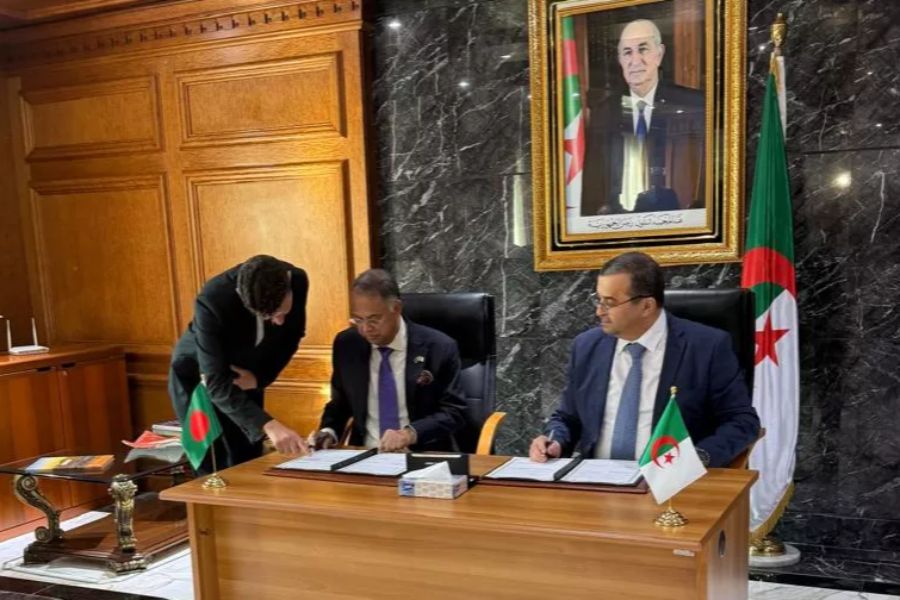
Bangladesh, Algeria sign MoU on cooperation in hydrocarbons


1792537619630.webp


Bangladesh and Algeria on Tuesday signed a Memorandum of Understanding on cooperation in the field of hydrocarbon to ensure Bangladesh’s energy security.

Power, Energy and Mineral Resources Minister Iqbal Hassan Mahmood signed the MoU on behalf of Bangladesh while Minister for Hydrocarbon Mohamed Arkab signed it on behalf of Algeria, officials said.

They also discussed different aspects of energy cooperation, particularly the import of LNG, LPG, and other petroleum products from Algeria to Bangladesh under the G2G mechanism, reports UNB.

They shared views on developing LNG and LPG infrastructures and exploration of oil, gas, and coal in Bangladesh.

The Energy Minister also requested the Algerian Minister to organise training programmes for Bangladeshi Engineers, technicians to learn best practices, and technical knowhow of energy sector of Algeria.

Expressing satisfaction over signing of the MOUs on energy cooperation, the Minister of Bangladesh commented that this engagement opened a new horizon for Bangladesh in the field of energy security, and to import LNG, LPG and other petroleum products from alternate African sources under G2G mechanism.

Najmul Huda, Bangladesh Ambassador to Algeria, Minister for Mine and Mining Industries Mourad Hanafi and Minister for Energy and Renewable Energy Mourad Adjal called on the Energy Minister Iqbal Hassan Mahmood separately to discuss various bilateral issues of common concern.

They focused various ways on strengthening collaboration in trade, investment, energy, fertilizer, and knowledge sharing for mutual benefit of Bangladesh and Algeria.

Mohamed Arkab received Iqbal Hassan Mahmood at VIP Presidential Lounge at the Houri Boumediene International Airport on Monday.​
 

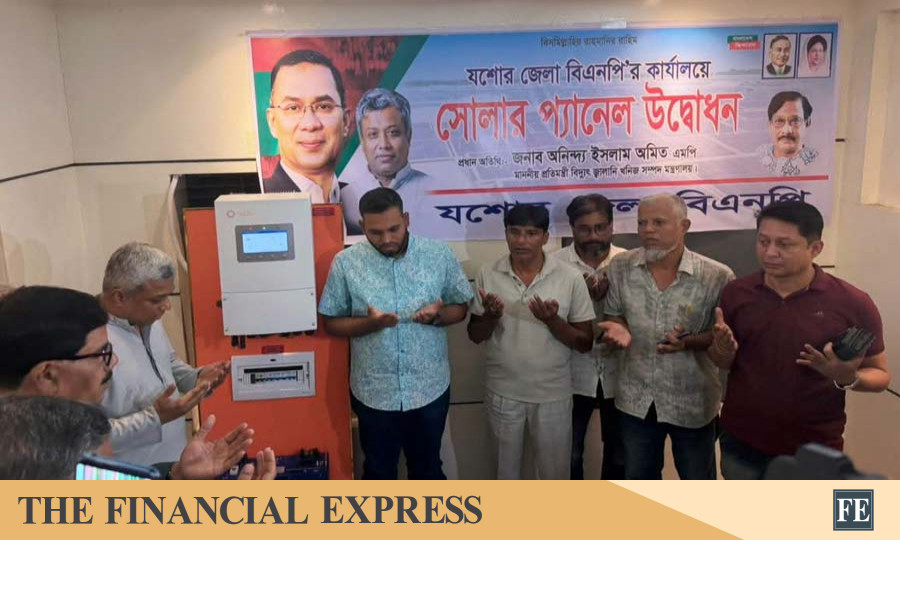
3,000–4,000 MW solar power possible before next summer: State minister


1792626735034.webp


State Minister for Power, Energy and Mineral Resources Aninda Islam Amit on Wednesday expressed hope that Bangladesh will be able to generate 3,000-4,000 megawatts of solar power before next summer, citing growing public interest in solar energy.

He made the remarks while speaking to journalists after inaugurating a solar power system at the Jashore district BNP office, according to a PID handout.

Amit said a 6-kilowatt solar panel system was installed at the party office in line with the Prime Minister’s policy on solar power generation.

The system was installed with the office’s own funds, and arrangements have been made to supply surplus electricity to the national grid after meeting its own needs.

The state minister said the installation cost was expected to be recovered within three to three-and-a-half years.

He also expressed hope that the initiative will encourage other political parties to install solar panels at their respective offices.

Amit said the government is providing policy support following growing public interest in solar power, creating opportunities for small entrepreneurs and generating new employment.

He added that irrigation pumps will gradually be converted to solar power, which will ease pressure on diesel and electricity supplies and reduce farmers’ production costs.

Local leaders BNP and its associate bodies were present at the programme.​
 

Govt plans Tk 592cr project for two Titas wells

BSS

1792801278241.webp

Photo: Collected

The government plans to drill two new wells at the Titas Gas Field at a cost of Tk 592 crore to increase domestic gas production by around 30 million cubic feet per day (mmcfd).

The project, titled “Drilling of Two Appraisal-cum-Development Wells (Titas-32 and Titas-33) at Titas Gas Field”, will be placed before the Executive Committee of the National Economic Council (ECNEC) for approval at a meeting scheduled for October 25, an official familiar with the process told BSS yesterday.

ECNEC Chairman and Prime Minister Tarique Rahman will preside over the meeting at the Bangladesh Secretariat.

Bangladesh Gas Fields Company Limited (BGFCL), a subsidiary of Petrobangla, will implement the project under the Energy and Mineral Resources Division of the Ministry of Power, Energy and Mineral Resources from October 2026 to September 2029, a Petrobangla official said.

Of the estimated cost, Tk 414.40 crore will come from government funds and Tk 177.60 crore from BGFCL’s own funds, the official added.

Petrobangla Chairman Abdul Mannan told BSS that the two wells are expected to produce around 30 mmcfd of gas, along with condensate.

The new wells will add to the supply of the national gas grid and produce around 18 barrels of condensate, helping reduce dependence on imported liquefied natural gas (LNG), he said. The government is working to drill more wells to meet its domestic gas production targets.

Mannan said the government aims to drill 150 wells by 2031 and another 150 between 2031 and 2035 to boost domestic gas production further.

According to the project proposal, the two wells could produce around 100.74 billion cubic feet of gas and 60,444 barrels of condensate over 10 years.

At BGFCL’s existing wellhead prices, the estimated value of this output is Tk 339.07 crore, including Tk 285.26 crore from gas and Tk 53.81 crore from condensate. At consumer-level gas prices, the gas output alone would be worth an estimated Tk 6,523.97 crore over the same period.

BGFCL currently supplies around 480 to 485 million cubic feet of gas a day to the national grid from five of its six operational gas fields. The Titas Gas Field, its largest, produces around 330 million cubic feet a day from 23 of its 28 drilled wells.

The project follows a review of three-dimensional seismic survey data collected at the Titas and Bakhrabad gas fields between 2010 and 2012. BGFCL hired BGP Inc, part of China National Petroleum Corporation, to review the data. The consultant recommended drilling 16 infill wells and seven deep wells.

The government has prioritised Titas-32 and Titas-33 under its plan to drill 150 onshore gas wells to increase domestic production.

The project will involve hiring a foreign contractor to drill the wells, appointing local and foreign consultants, installing gas-gathering pipelines and carrying out related work.

The Infrastructure Investment Facilitation Company conducted the feasibility study in 2026. The Planning Commission said the project would help increase domestic gas production, support industrial development and save foreign currency by reducing LNG imports.

The proposal was revised after a Project Evaluation Committee meeting on June 18, 2026, recommended cutting costs. The estimated cost was reduced by Tk 40 crore, from the initial Tk 632 crore to Tk 592 crore.​
 

Six shipments of LNG being purchased from Singapore and Qatar

Special Correspondent

1792972469804.webp

Liquefied natural gas (LNG) cargo File photo

The cabinet committee on government purchase has approved a proposal to purchase five cargoes of liquefied natural gas (LNG) from Singapore-based BP Singapore Pte. Ltd. and one cargo from Qatar Energy Trading LLC.

The prices set for the purchase of the six LNG cargoes are lower than the international market’s Japan-Korea Marker (JKM) index.

The proposal was approved at a meeting of the cabinet committee on government purchase held yesterday, Saturday. The Ministry of Finance announced the decision in a press release today, Sunday.

According to the press release, LNG will be purchased from BP Singapore at a price of $0.17 per million British thermal units (MMBtu) below the JKM index.

Meanwhile, a proposal to purchase an additional LNG cargo from Qatar Energy Trading LLC under a long-term contract has been approved. In this case, the price has been set at $0.10 per MMBtu below the JKM index.

Separately, at the 33rd meeting of the Cabinet Committee on Economic Affairs, the Energy and Mineral Resources Division presented a proposal to purchase LNG from JERA Global Markets Pte. Ltd. through the direct procurement method.

Under Section 68 of the Public Procurement Act, 2006, and Rule 99(2) of the Public Procurement Rules, 2025, the proposal called for direct negotiations with the company and the signing of a short-term LNG sale and purchase agreement (SPA) and a term sheet.

According to the press release, it was decided that the proposal would be presented at the next meeting after vetting by the Legislative and Parliamentary Affairs Division.​
 

Invest Bangladesh advances 15 solar projects through PPPs


1793061677713.webp


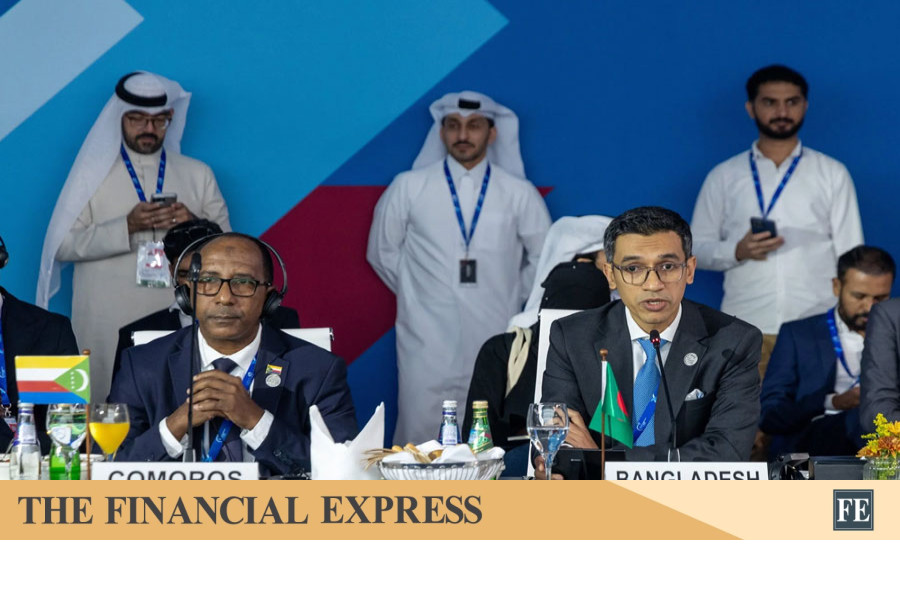
Invest Bangladesh is advancing 15 industrial-scale solar power projects through public-private partnerships (PPPs), aiming to attract private investment in renewable energy and support the country's growing demand for clean electricity.

The projects, planned on under-utilised government land, are in the pipeline for advancement through PPPs in the coming months, Invest Bangladesh Chairman Ashik Chowdhury said at the World Investment Forum 2026 in Doha, according to a press release.

Speaking at a ministerial panel on turning energy-transition priorities into investable projects on the opening day of the forum, Chowdhury highlighted how the merger that formed Invest Bangladesh brought together investor identification, site preparation, policy coordination and PPP structuring to accelerate renewable energy development.

He also responded to questions about the Sonagazi solar PPP project, which aims to utilise underused government land, and discussed its potential to serve as a replicable model for similar projects elsewhere in the country.

The initiative comes as Bangladesh seeks to expand renewable energy generation and mobilise private capital to meet rising electricity demand while diversifying its energy mix.

Invest Bangladesh showcased the country's solar investment opportunities alongside other infrastructure and manufacturing projects at a Centre Stage session titled “Invest in Bangladesh: The Billion-Dollar Opportunity Hiding in Plain Sight” at the forum.

The session, attended by around 100 participants, including institutional investors, global financiers and representatives of investment promotion agencies, highlighted opportunities for project developers, operators, investors and financing partners.

Nahian Rahman Rochi, Member of Invest Bangladesh and head of its Investment Development Division, presented Bangladesh's investment prospects, citing its young workforce, competitive operating costs and large domestic market.

The presentation also covered LNG infrastructure, the proposed Chattogram Free Trade Zone, port facilities, the Matarbari green dockyard and investment opportunities in electronics, advanced textiles and medical devices.

Rochi said investors expressed interest in participating in the projects presented, while regional partners showed interest in exploring collaboration in economic zones, ports and dry docks.

At a separate investment ministerial roundtable, Chowdhury called for greater recognition of the development impact of investments in emerging economies.

He also proposed that the United Nations Conference on Trade and Development (UNCTAD) showcase successful investments and explore risk-sharing mechanisms based on investment guarantees and export credit models to help mobilise investment.

The World Investment Forum 2026, organised by UNCTAD and hosted by the State of Qatar, is being held from October 25 to 27 in Doha.​
 

Little interest in offshore gas exploration, new initiative taken

Mohiuddin


1793064328471.webp

Offshore oil and gas exploration File Photo

There has been little response to Bangladesh’s latest bidding round for offshore oil and gas exploration in the Bay of Bengal. No company participated in the bidding round that closed during the interim government’s tenure. The current government wants to avoid a repeat of that outcome.

The Energy Division is therefore making efforts to attract foreign investment in offshore exploration, holding direct meetings with various companies to gather their views. The deadline for submitting bids has already been extended by four months.

Sources at the Energy and Mineral Resources Division said separate meetings were held in London with 10 multinational companies on 29 and 30 September and 1 October. Discussions focused on the ongoing bidding round and the production sharing contract (PSC). The companies expressed satisfaction with the new PSC. They want to assess investment risks and the prospects of finding gas before deciding whether to participate in the bidding.

Two senior officials of the Energy Division told Prothom Alo that a delegation led by the state minister for power, energy and mineral resources attended the meetings in London. Meetings were also held with six companies in Singapore.

The government has given serious consideration to the views of multinational companies. It has therefore decided to make all available data on the Bay of Bengal’s hydrocarbon potential accessible to them. This will allow companies to examine the information and make informed investment decisions.

Amid the conflict in the Middle East, companies are exercising greater caution over investments. The bidding deadline has been extended for this reason as well.

Two senior Petrobangla officials said companies had conducted surveys as part of offshore exploration and submitted the resulting data. Six separate sets of survey data are available. Each set was priced at USD 1 million in the 2024 bidding round, while the price in the current round was USD 568,000.

Four sets of data have now been made available free of charge. The price of each of the remaining sets has been reduced to USD 5,000. Officials hope the move will encourage multinational companies to take an interest in the bidding. The companies will be able to analyse the data before deciding whether to invest.

Bangladesh has been facing an increasingly severe energy crisis for several years as domestic gas production continues to decline. Nearly a decade and a half after settling its maritime boundary disputes, the country has yet to discover a commercially viable offshore gas field.

The maritime boundary disputes with Myanmar and India were settled in 2012 and 2014, respectively. However, the previous Awami League government did not invite competitive bids for offshore exploration for more than a decade.

A bidding round was launched in March 2024, but that government fell in August of the same year. The interim government subsequently extended the deadline for bid submissions by three months. Although seven companies purchased bidding documents, none submitted a bid.

After taking office, the current government prioritised oil and gas exploration in the country. In May, it invited bids for exploration in 26 offshore blocks, including 15 in deep water and 11 in shallow water.

The original deadline for submitting bids was set for 30 November, with the bidding period running from 1 June. The deadline has now been extended to 31 March 2027.

According to Petrobangla, three companies had purchased bidding documents as of 25 October. Turkey’s Turkish Petroleum Overseas Company purchased documents on 23 July, while China’s CNOOC International did so on 17 August. Another Chinese company, Sinopec, purchased the documents last month.

None of these companies has previously participated in oil and gas exploration in the Bay of Bengal.

Sources at the Energy Division and Petrobangla said the companies consulted in London were among the world's leading oil and gas firms.

On 29 September, meetings were held with Murphy Oil of the United States, Petrobras of Brazil, Kuwait Foreign Petroleum Exploration Company (KUFPEC) of Kuwait, Geo Exploration of Australia, Union Energy Group of Singapore and Valeura Energy of Canada.

On 30 September, discussions took place with Italy’s Eni, US-based ExxonMobil and the United Kingdom’s BP. The final meeting, on 1 October, was with another leading company, the UK-based Shell.

Senior executives from these companies recommended making offshore survey data publicly available. They also requested more time to analyse the information.

Six Asian companies consulted in Singapore expressed similar views. Meetings are also expected to be held with several leading US companies in Houston early next year.

Anindya Islam Amit, state minister for power, energy and mineral resources, told Prothom Alo that the government had held direct discussions with multinational companies and sought their opinions. Discussions had also taken place with energy ministers from several countries, whose governments invest jointly with multinational companies.

“The deadline has been extended in response to market demand. The data has been made accessible and more readily available in line with the companies’ requests,” he said.

He expressed hope that the changes would generate a stronger response to the bidding round.

Bangladesh’s first offshore bidding round in 1974

Sources at the Energy Division and Petrobangla said the then Mujib government enacted a law on maritime boundaries in 1973. A bidding round for offshore oil and gas exploration was also launched that year.

Production sharing contracts were subsequently signed with six foreign companies. One of them, Union Oil Company, later renamed Unocal, reported a gas discovery in Kutubdia.

However, after the government led by Khondaker Mostaq came to power, all the foreign companies left Bangladesh.

Another bidding round was held in 1988, but no company participated.

Under the PSC-1994 framework, the government signed an agreement with British company Cairn Energy. The company discovered the Sangu gas field and began production in 1998. Gas production continued there until 2013, when operations were suspended because no commercially recoverable reserves remained.

In 2007, Australia’s Santos acquired shares from Cairn and took over operations at the field.

Under PSC-2008, US company ConocoPhillips signed an agreement and began deepwater exploration in 2010. The company left in 2015 after its demand for a higher gas price was not met.

Under PSC-2012, Australia’s Santos entered two shallow-water blocks in 2014, while India’s ONGC took up operations in two other blocks.

Santos announced its withdrawal from the region in 2020. South Korean company POSCO Daewoo entered under a special PSC in 2017 but also left after demanding a higher gas price.

ONGC was the latest company to withdraw, leaving last year. It drilled one offshore well but found no gas.

A draft PSC was finalised in 2019, but no bidding round was launched because foreign companies showed little interest.

Industry insiders said the Mujib government had a provision prohibiting foreign companies from appointing local agents. However, no such requirement was imposed in subsequent bidding rounds. At different times, influential local individuals acted as representatives of foreign companies.

Maqbul Elahi Chowdhury, a former member responsible for gas at the Bangladesh Energy Regulatory Commission (BERC), told Prothom Alo that 46 foreign companies had participated during Bangabandhu Sheikh Mujibur Rahman’s tenure. All relevant data had been made available free of charge at the time.

Seventeen companies also participated in 1994, he said.

“Bureaucratic complications have increased since then. Work that should take three days does not get done in three months. This discourages companies from participating,” he said.

Companies assessing investment risks

An analysis of the production sharing contracts shows that under PSC-2019, the price of gas was set at USD 7.25 per thousand cubic feet for deepwater blocks and USD 5.50 for shallow-water blocks.

PSC-2023 abandoned fixed prices and linked the price of gas in both deepwater and shallow-water blocks to 10 per cent of the price of Brent crude oil.

Under PSC-2026, the rates have been increased to 11 per cent for deepwater blocks and 10.5 per cent for shallow-water blocks.

As international oil prices rise or fall, gas prices will change proportionately. If crude oil reaches USD 100 per barrel, the price of gas from deepwater blocks would be USD 11 per thousand cubic feet.

However, the new contract will set upper and lower limits for the Brent-linked price over each five-year period to prevent gas prices from rising or falling excessively.

Under the agreement, the contractor will be responsible for building pipelines to transport offshore gas. The contractor will receive a tariff that takes into account gas reserves, supply and transportation costs.

This provision was absent from the previous PSC.

The formula for sharing profits between multinational contractors and Petrobangla has also been revised. If a contractor wishes to continue operations despite unsuccessful exploration, its share of profits could increase by one to two percentage points.

The interim government had previously introduced another incentive for foreign oil and gas exploration companies by amending labour laws. The companies’ contribution to the workers’ welfare fund was reduced from 5 per cent of profits to 1.5 per cent. Officials believe this could also encourage investment.

Several existing incentives have been retained. Imported goods will remain exempt from taxes and customs duties, while Petrobangla will pay income tax on behalf of contractors.

If Petrobangla does not purchase the gas, contractors will be allowed to sell it to third parties within Bangladesh. They will also be permitted to export gas if there is insufficient domestic demand.

Either party will be able to refer disputes to international arbitration.

In shallow-water blocks, the state-owned Bangladesh Petroleum Exploration and Production Company (BAPEX) will retain a 10 per cent participating interest.

Two officials who attended the meetings said the government had held direct discussions with several Asian companies following the London meetings. None of the companies had raised objections to the PSC. This is the best PSC so far in our history.

Every possible incentive has been offered. The price is almost equivalent to that of liquefied natural gas (LNG), one of the officials said.

The officials also believe that the presence of an elected government has helped build investor confidence.

However, companies will benefit from these incentives only if they discover gas. If exploration fails, they stand to lose their entire investment.

Multinational companies therefore tend to take more time when considering offshore investments.

Officials warned that another failed bidding round would have serious consequences for Bangladesh’s gas sector. The government is making every effort to increase participation by extending the deadline.

They said bidding rounds should be held regularly every year. Even if a company does not participate in one round, it may consider joining the next. Long gaps between bidding rounds, as in the past, should be avoided.

Energy expert M Tamim told Prothom Alo that much would depend on the international situation. Interest is high now because gas prices are elevated. But multinational companies will also consider future market conditions and examine the investment proposals available in other countries. They will assess the potential returns against the risks before making a final decision.

He added that it was difficult to predict how many companies would ultimately participate in the bidding round.​
 
Back
Top