New Tweets

[🇧🇩] Everything about the interim government and its actions

G Bangladesh Defense
[🇧🇩] Everything about the interim government and its actions
214
8K
More threads by Saif


Interim govt committed to restoring state power to people: Prof Yunus

UNB
Published :
Aug 04, 2025 17:51
Updated :
Aug 04, 2025 17:51

1754350808792.webp


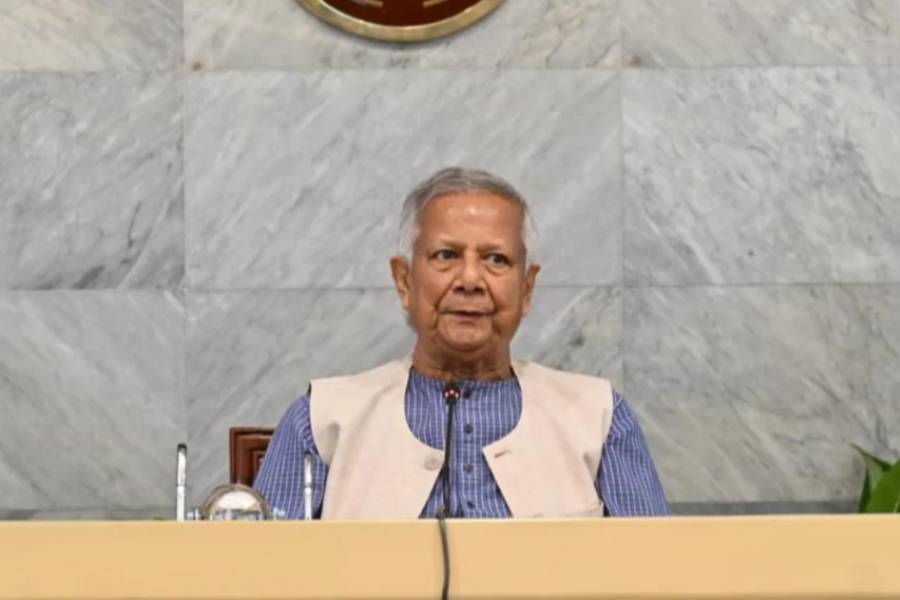
Chief Adviser Professor Muhammad Yunus on Monday said the interim government is committed to restoring the state power to people through a peaceful, fair and transparent election, as part of a sustainable political solution.

In a message on the occasion of the July Uprising Day, he also said, “To accelerate our democratic journey, dialogue continues with political parties and stakeholders on necessary reforms, including the political and electoral systems.”

The Chief Adviser called upon all to stand united beyond all divisions to confront and defeat all threats to the nation. “Together, we will build a Bangladesh where tyranny will never rise again.”

He said July rekindled the nation’s hope, a hope for a just, equal and corruption-free Bangladesh.

Prof Yunus said the sacrifice of thousands has gifted the country’s people this rare opportunity for national reform, and it must be protected at any cost.

He also warned that the fallen autocrats and their self-serving allies remain active, conspiring to derail the country’s progress.

“Today marks an unforgettable chapter in the history of Bangladesh. It was on this very day, one year ago, that the July Uprising reached its triumph, liberating our beloved nation from the grip of long-standing fascist rule,” the Chief Adviser said.

He extended his heartfelt congratulations to the people of Bangladesh whose united struggle brought about this historic achievement.

“On this solemn day, I remember with deep reverence the brave youth, workers, labourers and professionals who sacrificed their lives while confronting the fascist forces. My profound respect goes to every martyr of the uprising,” Prof Yunus said.

He also remembered with deep gratitude all the July warriors who were injured, permanently disabled and even lost their eyesight. “The nation shall forever honour their sacrifices.”

Stating that the July Uprising was a collective eruption against sixteen years of oppressive authoritarian misrule, the Chief Adviser said, “At its core, it was a fight to establish a new system free from discrimination, corruption and tyranny. The goal was to restore democracy and return the country to the hands of its people.”

Since assuming responsibility, he said the interim government has undertaken extensive reform efforts across all sectors of the state to fulfill these aspirations.

“The trials related to the July killings are progressing swiftly. Measures have been initiated to preserve the memory of the July martyrs and rehabilitate the injured July fighters,” the Chief adviser added.​
 
Analyze

Analyze Post

Add your ideas here:
Highlight Cite Respond

Interim government: How can it meet its commitment?
Syed Hasibuddin Hussain
Published: 04 Aug 2025, 08: 34

1754355692289.webp

Chief advisor of the interim government Professor Muhammad Yunus

Awami League loyalists who have fled and are in hiding, continue to claim that the Yunus government is unelected and illegal, and that they do not even have the authority to declare the date for the forthcoming election.

On the other hand, some intellectuals and many from the more impassioned ranks of the movement, argue that since a revolution has taken place and the current government is the outcome of a collective popular will, it is not only legitimate but is in fact duty-bound to discard the old system entirely and rebuild the country with a new constitution.

Our experience, however, suggests that this government itself does not believe it has the authority to start from scratch or to make any bold decisions. Foreign agencies and investors have sensed this weakness and are refraining from entering into any agreements until an elected government is in place.

Meanwhile, they too understand that an interim government lacks the clear-cut legitimacy to sign binding deals. Even when this government receives proposals from reform commissions it has formed itself, it makes no effort to implement them. Instead, it shelves them for the next government. That indicates it does not consider itself authorised to carry out reforms either.

When Hasina fled, the public was relieved when army chief Wakar-Uz-Zaman stepped in to take control of the situation, because a power vacuum at the heart of the state threatens national stability. Later, when Prof Yunus assumed charge under the stewardship of President Shahabuddin Chuppu, people felt reassured to see a legitimate civilian government in power.

The problem remains that even if a constituent assembly is elected, that alone may not be enough to prevent the return of autocracy, because the elected representatives in that assembly may choose not to prioritise that.

The legitimacy of this interim government stemmed from the continuity of the existing constitution. Yet, although that continuity was preserved, the Yunus government’s authority ultimately derived from the uprising itself. And since the uprising was not merely about changing power but about ensuring that autocracy could never return, the Yunus government’s legitimacy lay in its mandate to prevent the restoration of dictatorship.

The question is: what are the limits of this interim government's legitimate authority? Since the interim government was formed within the continuity of the existing constitution, it does not have the authority to amend that constitution. And because it has no legislature or parliament, it also lacks the power to make laws. However, as the executive head of the state, the interim government does have the authority to issue decrees.

The question is, can they use decrees to carry out the necessary reforms to ensure that autocracy does not return? The answer is, no. Without constitutional and legal reforms, they cannot prevent the return of authoritarianism.

To change laws, a parliament is required. Since this government does not have an elected parliament, it can attempt to organise parliamentary elections and, through that elected body, enact the necessary legislation. But changing laws alone will not be enough to prevent a return to dictatorship. Fundamental constitutional reform is required to restore a balance of power.

It is under the current constitution that members of parliament take their oath, and therefore, they do not have the mandate to alter the constitution fundamentally. Their power extends only to amendments. Fundamental reforms to the constitution can only be made by an especially empowered body of elected representatives, what is known as a constituent assembly.

Since it is not drafting an entirely new constitution, we may also refer to this body as a constitutional reform assembly. The purpose of electing a constituent assembly is either to draft a new constitution or to carry out fundamental reforms of the existing one.

That means if the interim government merely holds an election to transfer power, it does not fulfill its full mandate. But if it holds an election for a constituent assembly to reform the constitution, then it sets the path toward fulfilling its responsibility.

However, the problem remains that even if a constituent assembly is elected, that alone may not be enough to prevent the return of autocracy, because the elected representatives in that assembly may choose not to prioritise that goal.

The solution to this problem can be found in the history of our own region. After the fall of Ayub Khan, the need to resolve the constitutional imbalance between West and East Pakistan became urgent. That’s why, when Yahya Khan announced the 1970 election, he issued the Legal Framework Order (LFO), under which the election was intended to form a constituent assembly. The objectives of that constituent assembly were clearly outlined in the LFO.

That means the way for this interim government to fulfill its promise is to formulate a new Legal Framework Order and hold elections for a constituent assembly. Fortunately, the July Charter being drafted by the Consensus Commission reflects a consensus among all political parties.

This charter could serve as today’s Legal Framework Order. A constituent assembly formed on the basis of this charter would be obligated to implement all the reforms outlined in the July Charter. And if that happens, the interim government’s pledge would be fulfilled and it would be able to step down with dignity by transferring power to an elected government under the newly reformed constitution.

* Syed Hasibuddin Hossain is an activist of the Rasthra Sangskar Anodolan​
 
Analyze

Analyze Post

Add your ideas here:
Highlight Cite Respond

Interview: Asif Nazrul
Conscious effort is made not to take sides with any party
Law Adviser Asif Nazrul during an interview with Prothom Alo

1754529240747.png

Professor Asif Nazrul is the law adviser to the interim government. In an interview with Prothom Alo, he speaks on a range of issues, including the government’s successes and failures over the past year, justice for the July killings, indiscriminate cases and arrests, mob violence, allegations of political bias, social inequality, the Pay Commission for public servants, elections, and the ban on Awami League activities. The interview was taken by Rajib Ahmed on 1 August at the official residence of the Law Adviser. Today we present the second part of the interview.

Prothom Alo: The government will complete one year at the helm on 8 August. Is there any possibility of reshuffling based on performance? You would perhaps agree that some advisers have done well, while others have not quite measured up.

Asif Nazrul
We face a lot of criticism, often quite harsh. But when I look at everyone individually, many among us are doing a very good job. Our economic adviser, Salehuddin Ahmed bhai, energy adviser, Fouzul Kabir bhai, and trade adviser, Sheikh Bashiruddin bhai are all doing well. Our religious affairs adviser AFM Khalid Hossain bhai has done an excellent job with Hajj management. I could name others too.

As for failures, it would not be appropriate for me to name names, that is for you to judge.

But we all have a sense, from Sir’s (Professor Yunus’) body language and his way of working, how much he values each of our contributions.

Prothom Alo: Let me ask a follow-up question. During the previous government’s tenure, we saw that no matter how much criticism there was, Sheikh Hasina never replaced anyone. She didn’t take heed of any criticism. Will this government follow the same path?

Asif Nazrul
No, but then some of the criticism is extremely harsh. If someone is to be removed on the basis of that kind of criticism, then criticism could start against everyone.

Prothom Alo : But isn’t there also reasonable, valid criticism?

Asif Nazrul
In such cases, things have to be considered in totality. For instance, something may seem like reasonable criticism, but if Sir (Professor Yunus) is not convinced, based on intelligence reports or other information, then taking action might discourage the concerned persons.
Some of us may have shortcomings, or be accused of inexperience. But have you heard of any allegations of corruption? There may be some campaigns against one or two individuals, but those aren’t based on proven facts. Do you hear accusations that we don’t show up to work? That we engage in nepotism? You don’t.

Prothom Alo: We've heard that some advisers show up at the office after 2 PM. We're only talking about one or two individuals, no one is saying the entire advisory council should go.

Asif Nazrul
I'm not quite aware of that.

Prothom Alo : When it comes to decision-making and discussions in the advisory council, is there ever a concern that outsiders might get to know what's being discussed?

Asif Nazrul
I don’t think so. There is no gap between the army and the government. It is for the election commission to decide if during the election more responsibility needs to be given to the army.

Prothom Alo : Given concerns about law and order and possible disruptions to the election, do you believe you will be able to deliver a free and fair election?

Asif Nazrul
Absolutely, we will.

Prothom Alo : Some say that without a more active role by the army, it won’t be possible to hold a fair election. There's also talk of a distance between the military and the government.

Asif Nazrul
There is absolutely no distance, rest assured. These are simply far-fetched speculations. In fact, some external forces have unfairly tried to blame the army in certain situations. Speaking as someone who was on the ground during the mass uprising, I can say that although the army is a branch of the government, it played a supportive role in the uprising as a whole. Sadly, some segments of society do not respect that. Yes, it’s possible that, in isolated cases, some individuals within the army may have engaged in reprehensive acts, but overall, their role was highly commendable. What I’m saying is, there is no gap between the army and the government. It is for the election commission to decide if during the election more responsibility needs to be given to the army.

Prothom Alo: Does the government have any partiality towards the new party, National Citizen Party (NCP)? Many say two government advisers are affiliated with them.

Asif Nazrul
At the decisive moment of the mass uprising, it was undoubtedly led by students, no one can deny that. When our government was formed, I remember hearing criticism about why there were so few student advisers. So when some friends of those student advisers formed a party, it may have seemed in some instances that the government was giving NCP special privileges. But in reality, that is not so.

Because of their leading role in the uprising, NCP is highly vulnerable. That is why they’ve been given extra security in places like Gopalganj and a few other areas. BNP and Jamaat are long-established, well-organised parties. NCP is not. If something happens to them, if they’re attacked anywhere, will the public forgive us?

Prothom Alo : From the way NCP leaders speak, they hardly seem vulnerable.

Asif Nazrul
In my view, a newly formed party can have many supporters, but they still don’t have many organisers or much experience. There’s another reason they need protection: NCP leaders are likely to be the first targets of the fallen Awami League.

We have intelligence reports indicating that Awami League instigated several protests against the government, including unrest involving Ansar personnel. There is credible evidence supporting this.

Prothom Alo: What would you say in response to the claim that you are distant from BNP but close to the religion-based parties? BNP secretary general Mirza Fakhrul Islam Alamgir has expressed concern about the rise of right-wing forces.

Asif Nazrul
During the 15 years of Awami League rule, the religion-based parties were subjected to severe injustice and repression.

Prothom Alo : BNP too has been a victim of injustice and repression.

Asif Nazrul
Among centrist parties, it’s BNP. But in terms of numbers, the religion-based parties are greater. They have endured extreme persecution, arrests, disappearances, and they played a significant role during the July uprising. Naturally, we have to engage with them.

Prothom Alo : Engagement is expected. But the question is, are you closer to them than to the BNP?

Asif Nazrul
Some say we’re close to NCP, others say to the religious parties. After the London meeting between Professor Yunus and BNP’s acting chairman Tarique Rahman, some even claimed that the government is close to BNP. But when it comes to decision-making, we consciously and deliberately avoid taking the side of any party.

Prothom Alo : In some rallies, there were threats made to behead members of civil society. Yet no action was taken. Why?

Asif Nazrul
I think the police, who were supposed to take action, thought this was just political rhetoric. Taking action might provoke extremism further, and it might not be good for the safety of those involved. From what I’ve seen, the people who were threatened haven’t really reduced their public engagement. When running the state, you sometimes have to consider whether taking action might escalate things further.

Prothom Alo: Awami League's activities are now banned. Many people support the ban remaining in effect until the trials are over. But some are asking whether an executive order preventing Awami League from contesting the elections might raise questions abroad.

Asif Nazrul Those who want to raise questions will raise them anyway. But just look, there is no remorse within Awami League. On the contrary, their leader and other senior figures are claiming we committed the massacre and are openly declaring that if they return to power, they will take revenge and hang us.

Can you run a country while allowing political activities by a party that talks like this and tries to create chaos whenever it gets the chance? Can you bring them to justice under such conditions? It would create a completely unmanageable situation, plunging the country into violence and bloodshed. That would open the door for other destructive forces in Bangladesh to interfere. This concern is very real and, I believe, entirely justified.

Prothom Alo : Some people are saying that instead of banning the Awami League through executive orders, it would be more effective to let the people reject them themselves.

Asif Nazrul
That’s true, being rejected by the people carries even more impact. But we genuinely fear that if Awami League remains active, not just in elections but in politics more broadly, it will become impossible to hold elections or even govern the country. We have intelligence reports indicating that Awami League instigated several protests against the government, including unrest involving Ansar personnel. There is credible evidence supporting this.

Prothom Alo: The government sent mangoes to India, and dispatched physicians after the Indian fighter jet crash. We're seeing fewer anti-India statements from the advisers these days. How are relations with India?

Asif Nazrul
We do not want to be India’s enemy, but we don’t want to be its servant either. We want a relationship based on mutual respect and equality.

To be continued.................
 
Analyze

Analyze Post

Add your ideas here:
Highlight Cite Respond
Prothom Alo : The government has reportedly written to India about carrying out the Teesta project with Chinese funding. Was this discussed in the Advisory Council?

Asif Nazrul
Sometimes such issues are discussed in the Advisory Council, sometimes in the “kitchen cabinet” of a few advisers, and sometimes Sir (Professor Yunus) calls us individually to consult. No such major decision is made by any adviser alone.

Prothom Alo : Do you or your government ever feel pressured or influenced by Facebook users or YouTubers? You yourself once said that if such pressure is ignored, smear campaigns begin.

Asif Nazrul
Social media pressure exists everywhere in the world to some extent. These days, people can write whatever they want. There's no enforcement of the Digital Security Act, no fear of arrest or threats. But I personally do not make decisions based on Facebook or YouTube. It's possible that one or two individuals might be troubled by a specific campaign online and may try to act, or avoid acting, accordingly. But that’s not how decisions should be made.

Prothom Alo: The UN Human Rights Office is opening a mission in Dhaka. Yet, under your ministry, the National Human Rights Commission has been without a chairman for eight months.

Asif Nazrul
That’s a fair criticism. The current Human Rights Commission is almost toothless, you could say. There are serious problems in the law itself. With so many other reforms underway, we haven’t yet been able to reform the Commission. A major overhaul of the law is necessary before appointing anyone. There’s no point appointing someone just to fill a seat. But we will act on this very soon.

Prothom Alo : Some say what Bangladesh really needs is reconciliation. You’ve spoken about a Reconciliation Commission. You and the Chief Justice recently visited South Africa. There, justice was served, and people asked each other for forgiveness. Will we move toward reconciliation or remain trapped in endless division and conflict?

Asif Nazrul
In South Africa, the white population was genuinely remorseful. That remorse led them to seek reconciliation. But do you see any remorse among our perpetrators? How can you reconcile with those who show no regret?

Prothom Alo: Those you refer to will come under the purview of justice. But beyond them, there are countless Awami League leaders, workers, and supporters.

Asif Nazrul
Action is not being taken against the entire population. Reconciliation involves several concepts. One is truth-seeking, which we are doing. Second, memorialisation, for that, we are establishing the July Museum. Third, reparation. That is being provided. And fourth, justice. Reconciliation comes after these four processes. The justice process has begun. If, after that, the environment for reconciliation emerges, if not under this government, then perhaps under the next, such possibilities can be considered.

Prothom Alo: Without reconciliation, are we doomed to remain trapped in a cycle of division and revenge?
Asif Nazrul
Reconciliation is a truly valuable concept in any context. We needed reconciliation right after the Liberation War. We needed it after the pro-democracy movement of the 1990s. But reconciliation requires a favourable environment. How can you build goodwill with those who harmed you if they show no remorse?

Prothom Alo : We need a Nelson Mandela. Who besides Professor Yunus could be that leader?

Asif Nazrul
Opposite Mandela, there was also a leader like De Klerk. Look at the role De Klerk played. Mandela didn’t bring about reconciliation and the end of apartheid alone.

We’ve been studying reconciliation efforts in South Africa, Sri Lanka, and other countries. A formal initiative may later come from the Chief Justice. Let the discussion continue among the people.

Prothom Alo : Thank you.

Asif Nazrul
Thank you too.​
 
Analyze

Analyze Post

Add your ideas here:
Highlight Cite Respond

Govt ready to hand over power to elected representatives: CA

Published :
Aug 12, 2025 21:03
Updated :
Aug 12, 2025 21:03

1755043480758.webp


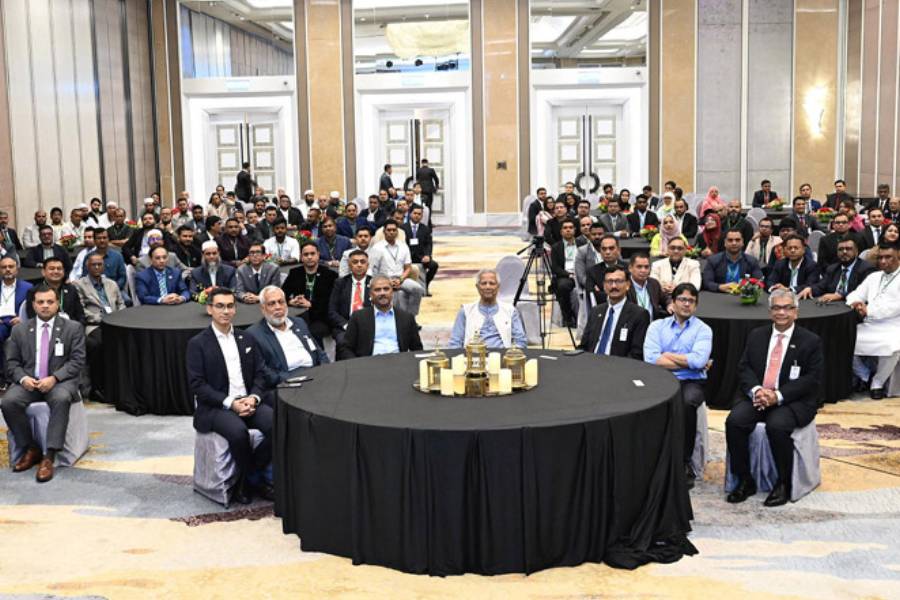
Chief Adviser Professor Muhammad Yunus on Tuesday said the government is now ready to hand over power to the elected representatives, as it has already announced the election timeframe.

“We are now ready to hand over power to the elected representatives. I have already announced the election time,” he said while exchanging views with Bangladeshi expatriates in Kuala Lumpur, Malaysia.

The Chief Adviser said the government is working to ensure the voting rights of expatriates in this election, reports BSS.

“I hope this time you will have a new experience. You will all be voters and will be able to vote. We have discussed this issue with the Election Commission. They are taking preparations,” he added.

Prof Yunus expressed gratitude to the Bangladeshi expatriates in Malaysia for their important contribution to the economy of Bangladesh.

“You are making a huge contribution to the economy. We have to recognise your contribution. We have to ensure the voting rights of expatriates in the next election.”

Foreign Affairs Adviser Md Touhid Hossain and Expatriates’ Welfare and Overseas Employment Adviser Professor Asif Nazrul were also present at the meeting.

The Chief Adviser said since assuming office, the government tried to discuss with the expatriates and listen to their words.

“You have many complaints, some of which are fair. We are continuously trying to resolve these problems. We are trying to reduce the complications,” he said.

He also said the government has taken very quick measures to resolve the passport-related complications and the ‘Nagorik Seba Bangladesh’ initiative is being taken to provide all government services to the expatriates.

In addition, work is underway to create a special app for expatriates so that all Bangladeshi expatriates living in different countries of the world can stay connected on one platform, the Chief Adviser said.

Referring to the role of expatriates in Bangladesh’s economic recovery from the devastating situation, he said the situation in the country has now returned to a comfortable state. “You have made a big contribution to the recovery of the economy.”

Several problems of Bangladeshi expatriates in Malaysia were discussed in the meeting.

Among those, discussions have been held with Malaysian authorities on increasing manpower at the embassy, granting Graduate Plus visas to Bangladeshi students, regularising those who have become irregular, and cooperation in the trade and industry sectors, said Expatriate Welfare Adviser Asif Nazrul.

Representatives from different professions, classes, organisations, and businesses participated in the meeting.​
 
Analyze

Analyze Post

Add your ideas here:
Highlight Cite Respond

One year of interim govt
Govt diplomacy plagued by indecision and lack of coordination

Raheed Ejaz Dhaka
Published: 14 Aug 2025, 08: 09

1755137989694.png


Logo of the Ministry of Foreign Affairs

The foreign ministry has been largely sidelined in its diplomatic efforts to maintain a balanced relationship with major foreign actors over the past year since the student-people's mass uprising on 5 August 2024 after which Bangladesh stood at a critical juncture.

In this unprecedented situation, attempts to bring balance to international relations became visible. Maintaining balanced diplomacy is always a challenge — and over the past year, that challenge has only intensified.

Under the leadership of Professor Muhammad Yunus, the interim government assumed office on 8 August last year. Less than a month later, Lutfey Siddiqi was appointed as the Chief Adviser’s Special Envoy for international affairs.

In November, Khalilur Rahman was named High Representative for Rohingya issues and other priority matters. By April of this year, he was appointed national security adviser.

These overlapping appointments in handling the country's international affairs have naturally raised questions. Over the past year, there has been ongoing debate — both at home and abroad — over who is actually shaping the foreign policy of the interim government. On critical issues, such as the proposed establishment of a UN human rights mission in Dhaka, other advisers — not the foreign adviser — have played leading roles.

Bangladesh’s relationship with neighbouring India has not always been smooth, and there have been periods of tension under various governments. However, over the past 15 years, ties had grown exceptionally close. In contrast, following the 5 August uprising, Dhaka–Delhi relations have reached a new low — unprecedented since independence. For nearly four months, India has been pushing people across the border into Bangladesh on an almost daily basis — an act considered without precedent.

Bangladesh has repeatedly emphasised its desire for a “positive relationship” with India — one based on mutual respect and shared interests, in light of changing realities and public sentiment.

In September last year, during the UN General Assembly, foreign adviser Md Touhid Hossain met with Indian external affairs minister S Jaishankar.
During that meeting, he proposed the need for talks at the official level, specifically suggesting a meeting between the two foreign secretaries.

That meeting was held in Dhaka in December. Later, in April, chief adviser Professor Muhammad Yunus met Indian prime minister Narendra Modi on the sidelines of the BIMSTEC Summit.

Amid this strain relations, China has taken significant initiatives over the past year to strengthen ties with Bangladesh. In light of the upcoming 50th anniversary of diplomatic relations between the two countries, China has ramped up engagement with the Bangladeshi government, political parties, and civil society — more than at any previous time.

Despite these efforts, tensions have not eased. India has made it clear that the relationship will not return to normal until an elected government is in place in Bangladesh.

Amid this strain relations, China has taken significant initiatives over the past year to strengthen ties with Bangladesh. In light of the upcoming 50th anniversary of diplomatic relations between the two countries, China has ramped up engagement with the Bangladeshi government, political parties, and civil society — more than at any previous time.

In March, chief adviser Professor Muhammad Yunus made his first bilateral visit to China. Earlier, in January, foreign adviser Touhid Hossain also made his first official visit to Beijing.

Notably, there was a strategic connection between the high-level meeting in Beijing between president Xi Jinping and Professor Muhammad Yunus and the Yunus-Modi meeting in Bangkok.

In March, China had invited Professor Yunus to the Boao Forum for Asia, an international development-focused conference. The Bangladeshi government made it clear that the chief adviser would only attend if a formal bilateral meeting with president Xi was scheduled.

China eventually agreed to this condition, leading to the high-level Yunus-Xi meeting in March. Following that, in April, India responded by arranging a meeting between Professor Yunus and prime minister Narendra Modi.

This growing tension with India, paired with increasing closeness to China, has posed a significant challenge to the interim government's attempt to maintain a balanced foreign policy over the past year. Similar challenges have also emerged in managing relations with the United States.

Continuing its efforts to deepen ties with Bangladesh, China invited Bangladesh to a trilateral meeting in May. This 'informal' meeting, held at the foreign secretary level, took place in Kunming. However, the foreign ministry initially expressed reluctance to attend, as the meeting was convened suddenly and lacked a clear objective or agenda. In response, the Chinese ambassador in Dhaka engaged with high-level government officials to secure Bangladesh’s participation.

On 19 June, after attending the Kunming meeting, Bangladesh realised that China and Pakistan had already been preparing for this trilateral initiative. Even without Bangladesh's consent, Pakistan and China announced the formation of a Joint Working Group during the trilateral meeting.

Following the meeting, the foreign adviser clarified that Bangladesh did not agree to the formation of any working group and reiterated that Bangladesh is not joining any alliance. Nevertheless, since then, China has continued to pressure Bangladesh to take an active role in the trilateral initiative.

As a follow-up, China is now pushing to hold the first Joint Working Group meeting in Islamabad. Pakistan has also recently invited Bangladesh to attend the meeting, scheduled for September.

Bangladesh's sudden decision to join the Kunming meeting—without involving the Foreign Ministry—did not align with geopolitical considerations or the country’s broader policy of diplomatic balance. There are doubts about the long-term viability of a trilateral cooperation initiative focused solely on Bangladesh and Pakistan within South Asia.

Meanwhile, the United States has, since late last year—particularly in the run-up to the US presidential election—been expressing concern about Bangladesh’s increasing closeness with China.

Since the political transition on 5 August last year, the interim government’s cooperation with the United States has grown deeper than at any previous time. Within this context, Washington has made it clear from the outset that it wants Bangladesh to keep its defense and security cooperation with China limited. This message has been delivered directly to the highest levels of the Bangladeshi government.

As in many other parts of the world, China's growing presence and influence in Bangladesh and the surrounding region has caused discomfort for the United States. This became evident in the tough negotiations over tariffs. Ultimately, the US agreed to a tariff rate that brought temporary relief for Bangladesh. However, balancing its expanding cooperation with the US while maintaining relations with China will remain a long-term challenge for Bangladesh's foreign policy.

The foreign ministry’s input was overlooked regarding Bangladesh’s participation in China’s trilateral initiative, and a similar pattern of exclusion was repeated during the counter-tariff negotiations. While the foreign ministry had limited involvement until April, from the second half of June onward, it was excluded entirely from discussions with the United States on tariff issues.

Yet, in April—immediately after president Donald Trump announced the counter-tariff decision—the foreign ministry had clearly stated that to retain access to the US market, the government should not merely make promises but must directly communicate, with private sector involvement, what Bangladesh would import from the US.

Despite holding talks, the government struggled with indecision. Initially, the private sector was also left out of the process. Eventually, in the final round of discussions, business leaders were brought in, leading to announcements of various purchases and contracts, which helped resolve the situation.

Around the same time in April, a separate controversy erupted over the issue of a humanitarian corridor in Myanmar’s Rakhine state. In response to journalists' questions at the end of April, foreign adviser Touhid Hossain said, "I can tell you this much — in principle, we are supportive, as it would be a humanitarian passage. However, we have conditions. If those are met, we will certainly cooperate under UN supervision."

These contradictory statements from two senior policy figures within a span of two weeks sparked debate in political and civil circles. Particularly on such a sensitive matter as a “humanitarian corridor,” questions were raised: why were decisions being made without national-level discussion, in whose interest, and for what purpose? Ultimately, the matter did not progress further.

In stark contrast, national security adviser Khalilur Rahman made a completely different statement during a seminar at the Bangladesh University of Professionals (BUP).

He said, "We have not held any discussions on a humanitarian corridor. Nor have we made any agreements on this or any related matter with relevant parties."

These contradictory statements from two senior policy figures within a span of two weeks sparked debate in political and civil circles. Particularly on such a sensitive matter as a “humanitarian corridor,” questions were raised: why were decisions being made without national-level discussion, in whose interest, and for what purpose? Ultimately, the matter did not progress further. One wing of the government had reportedly held preliminary talks with the United Nations and the Arakan Army, although the government officially denied any such discussions.

Overall, over the past year, the interim government's diplomacy appears to have been trapped in a cycle of indecision and lack of coordination. Right after assuming power, the appointment of multiple individuals to manage international relations revealed the government’s ambiguity and lack of clarity. As time went on, the Foreign Ministry’s role was increasingly marginalised in handling multidimensional, challenging, and high-stakes international issues. Whether the diminishing role of the foreign ministry in a country’s diplomacy is desirable or not — time will tell.​
 
Analyze

Analyze Post

Add your ideas here:
Highlight Cite Respond

Govt has no objection to Tarique’s return, says CA press secretary

UNB
Published :
Nov 29, 2025 18:04
Updated :
Nov 29, 2025 18:04

1764465435569.webp


The interim government on Saturday said there is no restriction or objection regarding BNP Acting Chairperson Tarique Rahman’s return to the country.

Chief Adviser's Press Secretary Shafiqul Alam made it clear when he was asked whether there is any restriction or objection from the government regarding Tarique's return to Bangladesh.

He said Chief Adviser Prof Muhammad Yunus has already expressed deep concern about the physical condition of BNP Chairperson Begum Khaleda Zia and has sought doa for her from the people of the country.

Earlier, at the weekly meeting of Council of Advisers, prayers and doa were offered for the speedy recovery of former Prime Minister and BNP Chairperson Begum Khaleda Zia.

Religious Adviser AFM Khalid Hossain conducted the munajat.​
 
Analyze

Analyze Post

Add your ideas here:
Highlight Cite Respond

Interim govt legitimate: SC
M Moneruzzaman 04 December, 2025, 11:23

1764899798680.webp

File photo

The Appellate Division on Thursday upheld a High Court decision that had rejected a writ petition challenging the president’s reference and the Supreme Court’s advisory opinion on forming the interim government on August 8, 2024, three days after the fall of the Awami League regime on August 5, 2024 amid a mass uprising.

A seven-member bench of the apex court led by chief justice Syed Refaat Ahmed rejected a petition filed by a lawyer seeking permission to appeal against the High Court order, saying that the Appellate Division found no legal flaw in the High Court order.

The other judges on the bench were Justice Md Ashfaqul Islam, Justice Zubayer Rahman Chowdhury, Justice Md Rezaul Haque, Justice SM Emdadul Hoque, Justice AKM Asaduzzaman and Justice Farah Mahbub.

The chief justice, while delivering the unanimous decision, said that the detailed observations would be included in the full verdict to be released later.

Attorney general Md Asaduzzaman and interveners Ruhul Quddus Kazal, Mohammad Shishir Manir and Sharif Bhuiyan said that the Appellate Division’s decision removed any question about the legality of the government and its actions.

On January 13, the High Court had dismissed lawyer Mohsen Rashid’s writ petition as ‘misconceived and vexatious,’ saying that the president lawfully sought an advisory opinion in an extraordinary national situation.

It ruled that the advisory opinion was constitutionally valid and could not be questioned through a writ petition.

The attorney general, during his submission before the Appellate Division, argued that Mohsen’s claim of fraud and coercion in the president’s reference involved disputed facts requiring a full trial and could not be dealt with in writ jurisdiction.

Appearing in person before the apex court, Mohsen argued that the president’s reference was tainted by fraud and that the same ‘systemic infirmity’ might affect the president’s use of ordinance-making powers.

He claimed that the law ministry, not the president, initiated the request for the advisory opinion, and alleged forgery of the signatures of the then chief justice and senior-most judge.

He asked the court to examine the original documents after granting his leave to appeal petition on the public importance issue.

Asaduzzaman responded that Mohsen failed to show any breach of the Appellate Division Rules and that his allegations were entirely misconceived.

He added that the Supreme Court cannot order the promulgation of laws or constitutional instruments through judicial review, as Mohsen prayed for an order to promulgate a provisional order for declaring the present government a revolutionary government based on the spirit of the July uprising.

Additional attorney general Aneek R Haque argued that the president acted during an unprecedented constitutional vacuum after August 5, 2024 events and formed the interim government based on the Supreme Court’s opinion and the popular mandate expressed during the July mass uprising.

Intervener lawyer Sharif Bhuiyan argued that the administration had already been functioning and could not now be declared unconstitutional.

He also said the petition raised no constitutional issue requiring interpretation.

Intervener Kazal submitted that no constitutional vacuum existed after Sheikh Hasina fled the country, as the president remained head of the executive.

He said the president consulted political leaders, security chiefs, civil society and coordinators of the mass uprising before dissolving parliament on August 6, 2024 and appointing Muhammad Yunus as chief adviser on August 8, 2024 after receiving opinions from the Supreme Court and the attorney general.

Another intervener Shishir Manir argued that the interim government emerged from the people’s constituent power during the July uprising, similar to transitions recognised by courts in the Philippines, Grenada and Lesotho.

He said the interim government was mandated to carry out reforms, hold trials for the

July–August 2024 atrocities and conduct national elections.​
 
Analyze

Analyze Post

Add your ideas here:
Highlight Cite Respond

Latest Posts

Back
PKDefense - Recommended Toggle