Donate ☕
201 Military Defense Forums
[🇧🇩] - Forming Election Commission/Conducting Elections | Page 5 | PKDefense
Home Login Forums Wars Watch Videos
Serious discussion on defense, geopolitics, and global security.

[🇧🇩] Forming Election Commission/Conducting Elections

Reply (Scroll)
Press space to scroll through posts
G Bangladesh Defense
[🇧🇩] Forming Election Commission/Conducting Elections
273
5K
More threads by Saif

Justice Zubayer Rahman Chowdhury to head EC search committee

1730248882689.png


Clockwise from left: Justice Zubayer Rahman Chowdhury, Justice AKM Asaduzzaman, Prof CR Abrar, Prof Zinnatunnesa Tahmida Begum, Prof Mobasser Monem and Md Nurul Islam.

The government has formed a six-member search committee, chaired by Appellate Division Justice Zubayer Rahman Chowdhury, to select eligible candidates for a new Election Commission (EC).

The committee will recommend two candidates for each position, including the chief election commissioner and other election commissioners.

According to government sources, the committee will include Justice AKM Asaduzzaman from the High Court Division, nominated by the chief justice, and two distinguished citizens appointed by the president.

These individuals are former PSC Chairman Professor Zinnatunnesa Tahmida Begum and retired Dhaka University professor CR Abrar. Additionally, under the law, Comptroller and Auditor General of Bangladesh Md Nurul Islam and the Chairman of the Public Service Commission (PSC), Mobassher Monem, will serve as ex-officio members.

Speaking on the matter at the secretariat earlier today, Law Adviser Asif Nazrul stated that the process for the upcoming 13th National Parliamentary Election has begun. He mentioned that a search committee is being formed to constitute the Election Commission. An official notification will soon be issued after being signed by Chief Adviser Prof Muhammad Yunus.

The law adviser noted that there are numerous questions about the voter list, describing previous elections as fraudulent. This time, the voter list will be updated to ensure transparency.

The Awami League government was ousted on August 5 following a student-led uprising, and on the following day, President Mohammed Sahabuddin dissolved the 12th Parliament. On August 8, an interim government led by Yunus was established.

On September 5, the Election Commission, led by Kazi Habibul Awal, resigned before the end of its term. This commission had been sworn in on February 27, 2022.

The law for the appointment of the chief election commissioner and other election commissioners specifies that a six-member search committee will be formed by the president to establish the Election Commission.

This committee is to include an Appellate Division judge nominated by the chief justice (who will serve as committee chair), a High Court Division judge nominated by the chief justice, the comptroller and auditor general, the chairman of the Public Service Commission (PSC), and two distinguished citizens appointed by the president, one of whom must be a woman.

According to the law, the search committee must provide its recommendations to the president within 15 working days.​
 
Analyze

Analyze Post

Add your ideas here:
Highlight Cite Fact Check Respond

Acceptable polls after reforms: CEC
Staff Correspondent 24 November, 2024, 16:46

1732495672362.webp

Chief election commissioner AMM Nasir Uddin. | UNB Photo

Newly sworn-in chief election commissioner AMM Nasir Uddin on Sunday vowed to organise a free, fair, impartial and acceptable election soon after completing some reforms.

The pledge came in response to questions from journalists following the oath taking ceremony of the chief election commissioner and four election commissioners at the Judges’ Lounge of the Supreme Court on the day.

‘I see this responsibility as a great opportunity in my life. The people of the country are disenfranchised. They fought hard for a free and fair election. Many movements have taken place over the years and many have given blood. I am committed to giving them a free, fair and acceptable election and I will do my best to do so,’ he said.

‘I am confident that I can do it. I have a very strong team in the Election Commission. We will give this nation a beautiful election with the cooperation from the country’s people and political parties,’ he said.

In answer to the question whether the election would be held before the reforms, he said, ‘Reform is an ongoing process, but if we want to hold elections, some necessary reforms will be needed.’

‘If we want to hold elections, we have to include the young generation, who are looking forward to vote year after year, in our voter list. Some reforms are also necessary, which are hopeful to carry out very soon as a reform commission is already working,’ he added.

Stating that the election would be organised with participation from the political parties, he said, ‘You [people and political parties] rest assured. Our intentions are fair and we want the political parties which have been fighting for 15–16 years to get back the right to vote with us. We will cooperate in implementing their demand. We are committed to the nation.’

When asked how long it would take to carry out reforms and organise elections, he said, ‘We cannot say anything now with the timing. First I have to understand the responsibilities.’

Earlier, newly-appointed CEC Nasir Uddin and four election commissioners Md Anwarul Islam Sarker, Abdur Rahmanel Masud, Begum Tahmida Ahmad, and former brigadier general Abul Fazal Md Sanaullah took oath at the Supreme Court.

Chief Justice Syed Refaat Ahmed administered the oath of office to the chief election commissioner and election commissioners, while Supreme Court registrar general Aziz Ahmed Bhuiyan conducted the function.

Judges of the Appellate Division, members of the Election Commission Search Committee, officials of the Election Commission and employees of the Supreme Court Registrar General office, among others, were present.

On November 21, president Mohammed Shahabuddin appointed former secretary Nasir Uddin as the new CEC and four others as election commissioners.

The Cabinet Division issued separate gazette notifications to this end on that day.

The new Election Commission has been constituted on the basis of the recommendations of the six-member search committee.

Earlier on September 5, then chief election commissioner Kazi Habibul Awal and all four election commissioners, Ahsan Habib Khan, Rashida Sultana, Md Alamgir and Anisur Rahman, resigned.

Their resignation came a month after Sheikh Hasina resigned as prime minister and fled to India on August 5 amid an unprecedented student-people uprising, ending the 15-year Awami League regime.

On August 6, the president dissolved the 12th parliament which was formed through the January 7 one-sided election conducted by the Awal-led election commission.

Before the resignation, Awal at a press briefing said that they were resigning from their posts due to the country’s changed scenario.

He said that holding an election was a very difficult task, and all the blames or responsibilities for an unacceptable election had always been heaped upon solely on the Election Commission.

The Awal commission organised the 12th parliamentary polls amid a large-scale boycott by opposition parties and voters. Drawing harsh criticisms, the polls were called a ‘dummy election’ as Awami League’s officially announced candidates contested against own party people who stood as independent candidates in most constituencies.​
 
Analyze

Analyze Post

Add your ideas here:
Highlight Cite Fact Check Respond
  • Like (+1)
Reactions: Bilal9

Everyone has agreed on caretaker government system, says Badiul
bdnews24.com
Published :
Nov 24, 2024 22:40
Updated :
Nov 24, 2024 22:40

1732497142378.webp

All agreed on caretaker govt system: Badiul

The Electoral Reform Commission chief Badiul Alam Majumdar has hinted at reviving the caretaker government system, which was abolished a decade ago.

After a meeting with representatives from civil society on Sunday, he said: “What is clear from this discussion is that everyone has agreed on the caretaker government system. The Election Commission must be made independent, strengthened, and particularly given financial autonomy.”

Badiul added, “The Election Commission must become another government under the government – in this way, they will become stronger.”

In 1996, the BNP government, under pressure from opposition movements led by the Awami League, passed the 13th constitutional amendment in parliament, establishing the caretaker government system.

Later, when the Awami League returned to power, the hearing of the 13th Amendment case began in the Appellate Division on Mar 1, 2010. In the hearing, the top eight lawyers also presented arguments as amici curiae, in addition to the appellant and the state party.

They expressed support for maintaining the caretaker government system. Even the then attorney general Mahbubey Alam voiced his support for it.

On May 10, 2011, a full bench of seven judges in the Appellate Division, based on a majority opinion, annulled the 13th Amendment to the Constitution. At the time, the chief justice was ABM Khairul Haque.

Before the full verdict was published, the 15th Amendment to the Constitution was passed in the parliament on Jun 30, 2011, and the president approved it on Jul 3.

This amendment abolished the caretaker government system and granted constitutional recognition to Bangabandhu Sheikh Mujibur Rahman as the Father of the Nation.

After the fall of the Awami League government, Badiul, along with four others, filed a writ petition in August seeking the repeal of the 15th Amendment.

In the same month, Badiul and the other petitioners also filed a review petition with the Appellate Division, seeking a reconsideration of the verdict that had annulled the 13th Amendment. Later, BNP Secretary General Mirza Fakhrul Islam Alamgir also submitted a similar petition.

On Oct 3, the interim government formed an eight-strong reform commission, headed by Badiul, the general secretary of Shushasoner Jonno Nagorik, or SHUJAN, with the aim of reforming the existing electoral system. The commission is expected to submit its recommendations within 90 days.

“The past election commissions, which conducted disgraceful or rigged elections, broke their oath and violated the Constitution. Everyone has called for holding them accountable,” Badiul said at the Election Commission building on Sunday.

He added, “The people who attended [on Sunday] are highly experienced researchers. We had an open discussion with them.”

Badiul said, “All those who came from civil society have advocated for the reintroduction of the ‘no’ vote provision. They have called for the establishment of democracy within political parties. Without democracy within political parties, democracy cannot be achieved in the country.”

“There was also a discussion on the presidential election. The idea of strengthening the position of the president was also raised,” he concluded.​
 
Analyze

Analyze Post

Add your ideas here:
Highlight Cite Fact Check Respond
  • Like (+1)
Reactions: Bilal9

Citizens’ Committee rejects new Election Commission
FE Online Desk
Published :
Nov 24, 2024 23:11
Updated :
Nov 24, 2024 23:11

1732497635408.webp


The National Citizens’ Committee on Friday rejected the newly formed Election Commission, terming its formation as 'akin to the betrayal with the spirit of the mass uprising'.

The formation of this commission is 'akin to the betrayal with the spirit of the mass uprising' because it was done under a law enacted during the ousted Awami League government, the committee said at a press conference at its Rupayan Trade Centre office in Dhaka.

It added that the interim government had constituted the new Election Commission by yielding to the pressure from political parties.

Earlier Friday, the newly appointed Chief Election Commissioner AMM Nasir Uddin, a retired secretary, and four commissioners took oath.

President Mohammed Shahabuddin had appointed them a day earlier, acting on recommendations from the Search Committee.​
 
Analyze

Analyze Post

Add your ideas here:
Highlight Cite Fact Check Respond
  • Like (+1)
Reactions: Bilal9

Election would be held once reform works become visible: Mahfuj Alam
UNB
Published :
Nov 28, 2024 21:23
Updated :
Nov 28, 2024 21:23

1732843385014.webp


The interim government’s adviser, Mahfuj Alam, said on Thursday the much-desired national election would be held once the reform works become visible.

He made remarks while responding to a question at a media briefing at the Foreign Service Academy in the evening.

Environment, Forest and Climate Change Adviser Syeda Rizwana Hasan, who was present at the briefing, said, the election is the ultimate goal and the government wants the election after necessary reforms as soon as possible.

Chief Adviser’s Press Secretary Shafiqul Alam was also present.

Rizwana Hasan said there has been no discussion at the meeting of the Council of Advisers regarding banning any organisation as they differentiate the responsibility of an organisation and an individual.​
 
Analyze

Analyze Post

Add your ideas here:
Highlight Cite Fact Check Respond
  • Like (+1)
Reactions: Bilal9

How election can be a tool of accountability

1732926223240.webp

FILE VISUAL: ALIZA RAHMAN

The purpose of a "free" and "fair" election is to ensure accountability of those participating in it. In the past, parties in Bangladesh won elections with around one-third of the votes cast, while a third of the constituencies were won with around 30 percent of the votes cast. The problem lies in putting the emphasis on the election, not its purpose. Hence, the electoral system must be reformed carefully.

Among the three commonly used methods of determining the outcomes of legislative elections—plurality, majority, and proportional representation—the third one seems to be most effective. A study of elections in Muslim-majority countries reveal that the re-democratisation in Indonesia has been peaceful and uninterrupted since 1997 because of the proportional representation system in its parliament; the parties must cooperate to get any bill passed, becoming a "check" on one another.

In a proportional representation voting system, votes are cast for the parties, either in an open or a closed list system. The voters can give preference to a particular candidate in the former system, but not in the latter. An individual or a party must get a minimum threshold of votes to enter the legislature (e.g. one percent for individuals, two to seven percent for a single party, 5-10 percent for a coalition of two registered parties, 15 percent for a coalition of three parties and above, etc).

Proportional representation has many benefits. With seats in the chamber and in the committees proportional to the votes, as evident in other countries, each party must cooperate for the future. Most importantly, because of the list system, especially when closed, only the best from all parties are likely to be elected. Furthermore, the best female candidates listed by all parties will have an equal chance to win (because the campaigns would be collective, not personal).

This system may also create women's equal access to the parliament. The laws in other countries require listing of women in the party list (even at the top at a defined percentage). Women's winning chances are doubly protected in a closed list system.

It may also prevent "one-person" parties from claiming to be "people's" parties or issuing threats against every government policy. In 2001, 77 percent of the total candidates got their deposit money forfeited for not getting the minimum 12.5 percent of votes. In fact, 27 political parties received fewer than 1,000 votes each. The minimum threshold requirement to enter the parliament in the proportional system would force the parties to join hands to prepare the list prioritising the candidates most likely to secure the maximum number of votes. It may also prevent over-representation and the loss of the voice of the unheard. It would also infuse voter enthusiasm because every vote would count, reducing the risk of polarisation or marginalisation and increasing cooperation, respect and a sense of national responsibility. It is also likely to curb the vote-rigging tendency because a few polling stations will not influence the outcome of one candidate.

A simple calculation shows that with the total numbers of votes polled, in a proportional system, the Awami League and BNP would have won 143 and 146 parliamentary seats (including the reserve seats) in 2001, and 182 and 123 seats (including the reserve seats) in 2008, respectively.

However, a reformed electoral system may bring the desired political effects only with an accountable, independent, and honest Election Commission that is adequately funded and staffed to regulate the political parties and election candidacy. A survey of dozens of constitutions shows that many countries, because of having political will and experience, have provisions that the constitution of a political party must have a time limit for executive positions (including the party presidency), and restrictions on directly inheriting party presidency (or senior executive positions). Moreover, a political party or group should not be able to participate in an election if it has been disrespectful to the country and its constitution, or has to leave the government under political compulsion (before completing its tenure in office).

Eligibility of election candidacy includes, among others, loyalty to and residency in the country, high moral standing, financial credibility, distance from criminal activity, and so on. Disqualification for election candidacy includes, among others, involvement in financial crime or in acts and ideas against the interest of the country, among others.

The reformed electoral system should focus on making the election beneficial to the voters, not the party, and the election candidacy laws should promote inclusion of the best persons in every party candidate list. Rule of law begins with laws, not arbitrary rules, and would save the government from making arbitrary decisions regarding the elections.

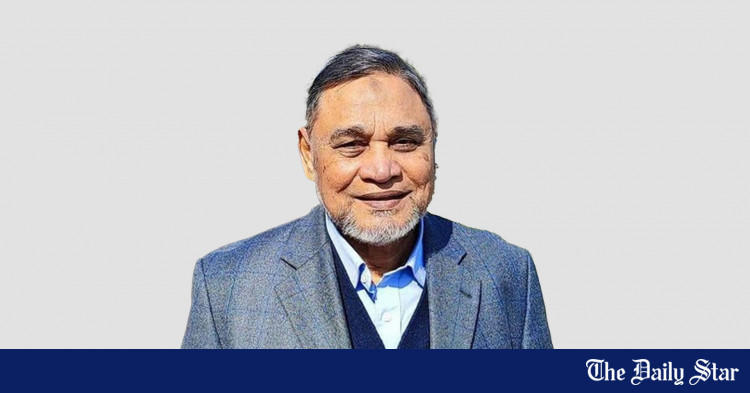
Dr Samiul Hasan is an academic with interests in human security issues in Muslim-majority countries.​
 
Analyze

Analyze Post

Add your ideas here:
Highlight Cite Fact Check Respond
  • Like (+1)
Reactions: Bilal9

Members Online

⤵︎

Latest Posts

Latest Posts