Bangladesh Defense
Saif
Senior Member
- Joined
- Jan 24, 2024
- Messages
- 21,840
- Likes
- 9,806
- Nation

- Residence
- Axis Group

A 10-step proposal for election road map 2025
The proposed road map outlines a structured approach to achieving a credible electoral process and underscores the urgency of collaborative action.
A 10-step proposal for election road map 2025

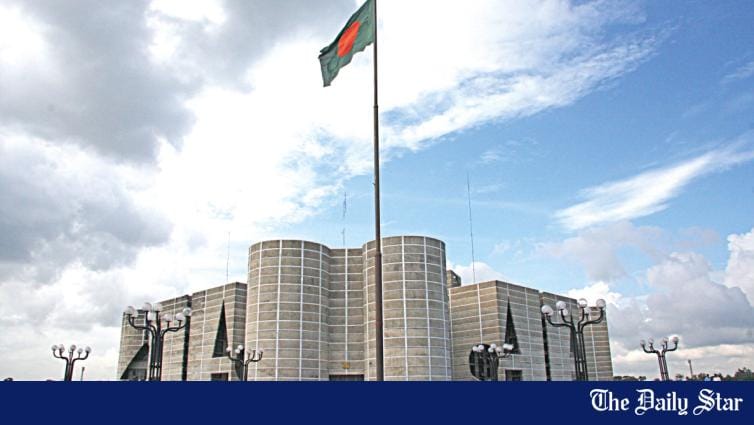
The National Parliament Building of Bangladesh. Photo: STAR
Bangladesh stands at a crossroads, navigating a tumultuous journey marked by political uncertainty, precarious law and order situation, and economic disruption and downturn. The events of the past year, from the July uprising that ousted the Awami League government to the appointment of an interim administration led by Nobel Laureate Prof Muhammad Yunus, have rekindled hopes of a freer, fairer and more democratic future. Yet, as we step into 2025, it is evident that the challenges of political instability, economic stagnation, and governance inefficiencies have not been fully addressed, casting a shadow over the nation's prospects. The looming uncertainty and resulting anxiety do not bode well for a country on a tricky path to transition from an autocratic regime to hopefully a democratically elected government that will govern well and fulfil people's legitimate socioeconomic and other aspirations.
Despite the interim government's assurances of electoral reforms and democratic progress, ambiguity persists regarding the timeline for the next parliamentary election. While the chief adviser's announcement of potential election dates in late 2025 or first half of 2026 offers some clarity, conflicting demands from major political parties like the Bangladesh Nationalist Party (BNP) and divergent visions within the administration have sown seeds of discord. The lack of consensus on the electoral road map risks further polarising the political landscape, undermining the very stability the interim government was tasked to foster.
The reform commission tasked with delivering systemic changes in governance and economic management represents a critical opportunity to recalibrate the nation's trajectory. However, its progress has been slow, and the extension of its tenure until January 15 highlights the complexity of the task. Meanwhile, inflationary pressures, high interest rates, and stagnating private investment continue to erode the purchasing power of citizens and discourage economic growth. The business community remains apprehensive, with political instability and law-and-order concerns threatening both trade and investment.
The stakes are high, and the need for leadership is paramount. A transparent and inclusive electoral process is essential to mitigate tensions and pave the way for democratic renewal. Without this, the country risks prolonged instability that could jeopardise both political stability and economic progress. It is not clear to this author why providing a road map has become such a big issue for the interim government, whose main task is to hold a free, fair, credible and participatory election while initiating reforms that, among others, would ensure that we never go back to the dark ages of repressive rule that was unleashed in 2009-2024. Common sense says that they are not mutually exclusive and can be achieved in tandem if the political parties are willing to walk the talk on reform. Unfortunately, their poor history of reform and often misrule make people legitimately apprehensive of their true intent.
As a concerned, conscientious citizen compelled by a sense of responsibility, this author proposes a suggestive electoral road map that hopefully can serve as a good starting point for both the interim government and political parties to come together and provide the general public clarity on where we are heading as a nation in 2025 and beyond. In providing the road map, I have mostly relied on the analysis of historical data from previous credible elections held in 1991, 1996, 2001 and 2008. With the reform commission's tenure extended until January 15, the road map and suggestions will hopefully aid the government in navigating this crucial phase. For the sake of simplicity, the road map is laid out in the diagram, which is then used to walk through the steps in detail.
The proposed 10-step election road map
After the submission of reports by all the reform commissions by January 15, 2025 (except the judiciary reform commission), the proposed road map commences with 10 clearly identified phases between January 15 and October 10, 2025, to complete the journey from initiation of reform measures to transition to democracy.
1. Jan 15-23: Reform commission reports
In this phase, political parties will review the reports and recommendations submitted by the reform commissions. To ensure ownership of the reform process by the political parties, they will send representatives to participate in the consultation process with the commissions. Representation criteria are suggested based on electoral performance in the past credible elections (1991, 1996, 2001 and 2008) and the number of members of parliament (MPs) elected by each party. It is proposed that parties with the largest representation in any of these four parliaments should be invited to send three representatives for consultation with each reform commission, while other smaller parties will send one representative per commission. Since student representatives are already in the reform commissions, their representation has been ensured through existing arrangements, and it is up to the interim government as to what kind of role they would play in this process. Similarly, whether the Awami League and Jatiya Party will be invited is a matter of decision by the interim government.
These recommendations are meant to provide a flexible framework, open to adaptation, to ensure that all stakeholders are effectively represented in the reform process. It is equally important that some criteria be used, as otherwise inviting too many political parties—particularly those with hardly any track record of proven popular support—will make discussion and negotiation between the reform commission and political parties unnecessarily complex and even infructuous.
2. Jan 26-30: Consultation process
Political parties will engage in consultations with the reform commissions to discuss the proposed reform measures. This collaborative approach aims to build national consensus on necessary reforms, ensuring that all stakeholders have a voice in the process. Unless the political parties genuinely subscribe to the reform measures and are willing to make them effective through passing in parliament, all work of these commissions will just be another bundle of paperwork with no practical relevance for the people.
3. Feb 2-6: Reform measures finalisation
During this phase, political parties and the government will finalise the agreed-upon reforms. As an intent of goodwill, the political parties will sign the agreed reforms, which they commit themselves to implementing, if and when they are in power after the elections.
4. Feb 10: Reform process formalisation
The government will complete formalities related to reform proposals, including issuing official gazette notifications that should formalise the agreed-upon changes, setting the stage for implementation.
5. Feb 11 onwards: Reform process initiation
The government will initiate the implementation of institutional and administrative reforms. Due legal processes will be undertaken by the next parliament, ensuring continuity of the reforms that were agreed upon in the February 10 official declaration.
6. Feb 15-Aug 30: Election Commission
For the Election Commission (EC), the following steps are crucial for ensuring a transparent and inclusive electoral process.
* Voter list update: The EC will create an accurate voter list by verifying data through biometric IDs and adding newly eligible voters. It will also remove duplicates and deceased individuals to prevent fraud. Drawing lessons from 2008, when a complete voter list overhaul led to the registration of more than eight crore voters, the modernised systems in place today are expected to make this process more streamlined and less time-consuming.
* Resource mobilisation: The EC will allocate essential resources and polling logistics, with a focus on ensuring accessibility, particularly in underserved areas, to effectively accommodate participation of all voters.
* Field-level appointment: Trained field officials will be appointed to manage voter registration and oversee polling logistics and administration.
* Consultation with political parties: The EC will engage with political parties to build consensus on key election-related matters, fostering trust and collaboration.
* Announcement of election schedule: After completing preparations, the EC will announce the election schedule, allowing political parties to undertake campaigns and inform voters of their political manifesto.
7. Apr 1: Armed forces
The armed forces are to return to barracks but remain available as a strike force, with selective deployment, if necessary, particularly during elections. The prolonged presence of armed forces in public life goes against the spirit of both their service code of conduct and the democratic values of a country heading towards a credible election.
8. Oct 1: Parliamentary election
The parliamentary election will be conducted to establish a representative government. Marking a long-overdue step in addressing the Bangladeshi people's right to a fair and democratic electoral process. Between now and then, there are almost 10 months, which is three times more than the average life of the caretaker government that was mandated under the constitution for holding elections until it was revoked by the Awami League.
9. Oct 3-9: Declaration of results
Within this time frame, election results will be tabulated and officially announced through gazette notifications by the EC.
10. Oct 10: Convening of 13th parliament
The newly elected parliament will convene, signifying the restoration of democratic governance and the beginning of a new legislative term focused on implementing the agreed-upon reforms.
The road ahead
An elected government is indispensable for safeguarding Bangladesh's democratic identity, ensuring accountable leadership, and meeting people's socioeconomic aspirations. It is vital to restore stability, addressing critical national challenges, and rebuilding public confidence. The proposed road map outlines a structured approach to achieving a credible electoral process and underscores the urgency of collaborative action to secure a sustainable democratic future.
Delay and deferral without a legitimate reason cannot bode well for the country. Nor would it be wise for the political parties not to finally rise to the occasion and irrevocably commit themselves to the much-needed reforms, without which the supreme sacrifice made by students and people in July-August risks going in vain. We lost one such opportunity in 1991 and can't repeat the same mistake in 2025.
Prof Syed Munir Khasru is chairman of the Institute for Policy, Advocacy, and Governance (IPAG), an international think tank.
The National Parliament Building of Bangladesh. Photo: STAR
Bangladesh stands at a crossroads, navigating a tumultuous journey marked by political uncertainty, precarious law and order situation, and economic disruption and downturn. The events of the past year, from the July uprising that ousted the Awami League government to the appointment of an interim administration led by Nobel Laureate Prof Muhammad Yunus, have rekindled hopes of a freer, fairer and more democratic future. Yet, as we step into 2025, it is evident that the challenges of political instability, economic stagnation, and governance inefficiencies have not been fully addressed, casting a shadow over the nation's prospects. The looming uncertainty and resulting anxiety do not bode well for a country on a tricky path to transition from an autocratic regime to hopefully a democratically elected government that will govern well and fulfil people's legitimate socioeconomic and other aspirations.
Despite the interim government's assurances of electoral reforms and democratic progress, ambiguity persists regarding the timeline for the next parliamentary election. While the chief adviser's announcement of potential election dates in late 2025 or first half of 2026 offers some clarity, conflicting demands from major political parties like the Bangladesh Nationalist Party (BNP) and divergent visions within the administration have sown seeds of discord. The lack of consensus on the electoral road map risks further polarising the political landscape, undermining the very stability the interim government was tasked to foster.
The reform commission tasked with delivering systemic changes in governance and economic management represents a critical opportunity to recalibrate the nation's trajectory. However, its progress has been slow, and the extension of its tenure until January 15 highlights the complexity of the task. Meanwhile, inflationary pressures, high interest rates, and stagnating private investment continue to erode the purchasing power of citizens and discourage economic growth. The business community remains apprehensive, with political instability and law-and-order concerns threatening both trade and investment.
The stakes are high, and the need for leadership is paramount. A transparent and inclusive electoral process is essential to mitigate tensions and pave the way for democratic renewal. Without this, the country risks prolonged instability that could jeopardise both political stability and economic progress. It is not clear to this author why providing a road map has become such a big issue for the interim government, whose main task is to hold a free, fair, credible and participatory election while initiating reforms that, among others, would ensure that we never go back to the dark ages of repressive rule that was unleashed in 2009-2024. Common sense says that they are not mutually exclusive and can be achieved in tandem if the political parties are willing to walk the talk on reform. Unfortunately, their poor history of reform and often misrule make people legitimately apprehensive of their true intent.
As a concerned, conscientious citizen compelled by a sense of responsibility, this author proposes a suggestive electoral road map that hopefully can serve as a good starting point for both the interim government and political parties to come together and provide the general public clarity on where we are heading as a nation in 2025 and beyond. In providing the road map, I have mostly relied on the analysis of historical data from previous credible elections held in 1991, 1996, 2001 and 2008. With the reform commission's tenure extended until January 15, the road map and suggestions will hopefully aid the government in navigating this crucial phase. For the sake of simplicity, the road map is laid out in the diagram, which is then used to walk through the steps in detail.
The proposed 10-step election road map
After the submission of reports by all the reform commissions by January 15, 2025 (except the judiciary reform commission), the proposed road map commences with 10 clearly identified phases between January 15 and October 10, 2025, to complete the journey from initiation of reform measures to transition to democracy.
1. Jan 15-23: Reform commission reports
In this phase, political parties will review the reports and recommendations submitted by the reform commissions. To ensure ownership of the reform process by the political parties, they will send representatives to participate in the consultation process with the commissions. Representation criteria are suggested based on electoral performance in the past credible elections (1991, 1996, 2001 and 2008) and the number of members of parliament (MPs) elected by each party. It is proposed that parties with the largest representation in any of these four parliaments should be invited to send three representatives for consultation with each reform commission, while other smaller parties will send one representative per commission. Since student representatives are already in the reform commissions, their representation has been ensured through existing arrangements, and it is up to the interim government as to what kind of role they would play in this process. Similarly, whether the Awami League and Jatiya Party will be invited is a matter of decision by the interim government.
These recommendations are meant to provide a flexible framework, open to adaptation, to ensure that all stakeholders are effectively represented in the reform process. It is equally important that some criteria be used, as otherwise inviting too many political parties—particularly those with hardly any track record of proven popular support—will make discussion and negotiation between the reform commission and political parties unnecessarily complex and even infructuous.
2. Jan 26-30: Consultation process
Political parties will engage in consultations with the reform commissions to discuss the proposed reform measures. This collaborative approach aims to build national consensus on necessary reforms, ensuring that all stakeholders have a voice in the process. Unless the political parties genuinely subscribe to the reform measures and are willing to make them effective through passing in parliament, all work of these commissions will just be another bundle of paperwork with no practical relevance for the people.
3. Feb 2-6: Reform measures finalisation
During this phase, political parties and the government will finalise the agreed-upon reforms. As an intent of goodwill, the political parties will sign the agreed reforms, which they commit themselves to implementing, if and when they are in power after the elections.
4. Feb 10: Reform process formalisation
The government will complete formalities related to reform proposals, including issuing official gazette notifications that should formalise the agreed-upon changes, setting the stage for implementation.
5. Feb 11 onwards: Reform process initiation
The government will initiate the implementation of institutional and administrative reforms. Due legal processes will be undertaken by the next parliament, ensuring continuity of the reforms that were agreed upon in the February 10 official declaration.
6. Feb 15-Aug 30: Election Commission
For the Election Commission (EC), the following steps are crucial for ensuring a transparent and inclusive electoral process.
* Voter list update: The EC will create an accurate voter list by verifying data through biometric IDs and adding newly eligible voters. It will also remove duplicates and deceased individuals to prevent fraud. Drawing lessons from 2008, when a complete voter list overhaul led to the registration of more than eight crore voters, the modernised systems in place today are expected to make this process more streamlined and less time-consuming.
* Resource mobilisation: The EC will allocate essential resources and polling logistics, with a focus on ensuring accessibility, particularly in underserved areas, to effectively accommodate participation of all voters.
* Field-level appointment: Trained field officials will be appointed to manage voter registration and oversee polling logistics and administration.
* Consultation with political parties: The EC will engage with political parties to build consensus on key election-related matters, fostering trust and collaboration.
* Announcement of election schedule: After completing preparations, the EC will announce the election schedule, allowing political parties to undertake campaigns and inform voters of their political manifesto.
7. Apr 1: Armed forces
The armed forces are to return to barracks but remain available as a strike force, with selective deployment, if necessary, particularly during elections. The prolonged presence of armed forces in public life goes against the spirit of both their service code of conduct and the democratic values of a country heading towards a credible election.
8. Oct 1: Parliamentary election
The parliamentary election will be conducted to establish a representative government. Marking a long-overdue step in addressing the Bangladeshi people's right to a fair and democratic electoral process. Between now and then, there are almost 10 months, which is three times more than the average life of the caretaker government that was mandated under the constitution for holding elections until it was revoked by the Awami League.
9. Oct 3-9: Declaration of results
Within this time frame, election results will be tabulated and officially announced through gazette notifications by the EC.
10. Oct 10: Convening of 13th parliament
The newly elected parliament will convene, signifying the restoration of democratic governance and the beginning of a new legislative term focused on implementing the agreed-upon reforms.
The road ahead
An elected government is indispensable for safeguarding Bangladesh's democratic identity, ensuring accountable leadership, and meeting people's socioeconomic aspirations. It is vital to restore stability, addressing critical national challenges, and rebuilding public confidence. The proposed road map outlines a structured approach to achieving a credible electoral process and underscores the urgency of collaborative action to secure a sustainable democratic future.
Delay and deferral without a legitimate reason cannot bode well for the country. Nor would it be wise for the political parties not to finally rise to the occasion and irrevocably commit themselves to the much-needed reforms, without which the supreme sacrifice made by students and people in July-August risks going in vain. We lost one such opportunity in 1991 and can't repeat the same mistake in 2025.
Prof Syed Munir Khasru is chairman of the Institute for Policy, Advocacy, and Governance (IPAG), an international think tank.