Donate ☕
201 Military Defense Forums
[🇧🇩] - Geopolitical Importance of Bangladesh | Page 2 | PKDefense
Home Login Forums Wars Movies Watch Videos
Serious discussion on defense, geopolitics, and global security.

[🇧🇩] Geopolitical Importance of Bangladesh

Reply (Scroll)
Press space to scroll through posts
G Bangladesh Defense
[🇧🇩] Geopolitical Importance of Bangladesh
24
955
More threads by Saif

Geopolitical importance of Bangladesh
Published : Monday, 4 September, 2023 at 12:00 AM Count : 5568

1726986762957.webp

Alaul Alam

In the last fifty years Bangladesh has made a remarkable success in its every sector. Once branded as a "bottomless basket" is being considered now as a miracle of South Asia due to its emerging economic growth. The country has made a surprising success story over the years for which it is being considered as a global model for development, economic growth, poverty mitigation, and gender equality.

In some decades with its positive economic growth the country is firmly graduating from the least developed countries, which is predicted to be one of the 25 largest economies in the world by 2035. The country has earned geopolitical significance due to its rising prominence in the global economy.

Ashore of the Bay of Bengal the country has become very prominent in the world politics. Geopolitics of the country refers to interstate politics which depends on its territory. Geographically, situated in South Asia the country has become a rising star in the global geopolitical arena sharing both land and maritime borders with India and Myanmar.

Bangladesh has been made geographically important in the Bay of Bengal which has direct influence over landlocked - Assam, Meghalaya, Tripura, Mizoram, Manipur, Nagaland, and Arunachal Pradesh- Nepal, Bhutan. Being located in Indian mainland the country's strategic importance is very crucial.

Again, it is obvious that the Bay of Bengal has been a fertile ground for geopolitics over the centuries. Apart from Bangladesh, Srilanka, India, Myanmar, Thailand, Malaysia and Sumatra of Indonesia share their shores in the Bay of Bengal which have direct influence on the sea area of Bengal.

It is evident that major powerful countries prioritize the dominance over sea to dominate the world. However, the geopolitics surrounding the Bay of Bengal occurs not only for commercial but also for security purposes of a major power. Bangladesh situated in geographically favorable position has been a center of interests for USA, China, Nepal, Bhutan and Australia while some are interested to use seaports of the country to accelerate their trade and the others think it important in the South Asian as well as in global geopolitics.

India, an economically emerging state spans three sides of border with Bangladesh is always keen to observe strategies, policies and overallinternal politics of Bangladesh. The geographical position of Bangladesh has connected it with a natural link between South Asia and Southeast Asia. So, the participation of the country in case of strengthening regional cooperation is crucial in the two giant trade blocs in Asia-- the Association of the Southeast Asian Nations (ASEAN) and the South Asian Association of Regional Cooperation (SAARC). Besides, being a geopolitical ally to India Bangladesh has the potential to facilitate greater integration between Northeast India and Central India.

It is obvious that the diplomatic ties between Bangladesh and India is historical. Over the years these two neighboring countries have been on good term. Commonalities originating in Bangladesh- India relationship are tradition, culture, language, and shared principles such as secularism, democracy, etc. Since the Awami League coming to power in 2009, bilateral relations have peaked between the two countries. However, some issues between two countries are yet to be settled, such as water disputes, border killings, religious tension, and maritime border disputes. Border killing and illegal migration sometimes creates strain in Bangladesh and India relationship.

It is no denial that the Sino-Indian rivalry often puts Bangladesh in an advantaged position as the country maintains a balanced diplomatic act between India and China. During the Covid-19 pandemic we saw high level talks of the leaders of the two countries-Bangladesh and India and India helped its allies sending Covid vaccines. Bangladesh was fortunate to have vaccines from India as a top priority.

In the second wave of the Covid-19 when the Indian government stopped the supply of vaccines, immediately China agreed to deliver vaccine doses to Bangladesh. So, in most cases Bangladesh is benefitted as a country who maintains diplomatic balance with India and China. However, one thing is very obvious for Bangladesh to read the situation carefully to understand the intention of both these countries while utilizing an opportunity.

Over the last some years Bangladesh is facing Rohingya refugee crisis causing a major diplomatic hurdle and tension. From a humanitarian ground Bangladesh government took shelter more than a million displaced Rohingyas from neighboring Myanmar. Since the inception of the crisis, despite taking efforts made by the Bangladesh government several times Rohingya repatriation is yet to be settled due to the lack of willingness of the Myanmar government.

Certainly, the repatriation process is delayed as the international humanitarian agencies are not found proactive enough to settle down this crisis. It is observed that some western countries are extending humanitarian hands through delivering relief funds for the Rohingyas but it must be very urgent to resolve the crisis as it has become a burden for Bangladesh, causing hindrance in socio-economic progress.

Political analysts opine that Bangladesh being a member country of the Commonwealthmaintains a historical relationship with the UK who can be one of the major influentialsto settle down this crisis. The country with the solid political support from the UK may find the scope to present the Rohingya issue to the international arena. However, decisive diplomatic action is a crying need to accelerate the repatriation process.

In strengthening regional cooperation since her birth, Bangladesh has been following middle-route approach in the global foreign policy. During the regime of the father of the nation Bangabandhu Sheikh Mujibur Rahman middle route was adopted in the foreign policy of Bangladesh. In his speech Bangabandhu said, 'We are a small country, we want friendship to all and malice towards none. He adopted middle routes between the Western and Eastern blocs.

Over the years the country sees success in establishing good relationship with different countries and major powers by adopting a policy of peace and non-alignment. However, it is evident that South Asia and the Indian Ocean region is increasingly becoming a significant site of major power competition which leads Bangladesh to continuously adopt this middle-ground approach to be prominent geopolitically.

Things become challenging to adopt middle-route approach in case of receiving the invitation of the US to incorporate Bangladesh into the Indo-Pacific Strategy as it may arise a displeasing situation of China towards Bangladesh. In the global geopolitics the relation between the US and China raises rivalry. So, Bangladesh with a neutral foreign policy may see a challenging task to maintain a good relationship with both Washington and Beijing at the same time. Geopolitically, Bangladesh faces an awkward position with Russia's invasion to Ukraine as the country wants peaceful settlement of all disputes between two countries but it remains neutral and abstains itself from condemning Russia.

To this end, Bangladesh is becoming prominent gradually in the global political realm which not only opens up opportunities but also emerges challenges. It is imperative to analyze the present geostrategic reality and cope with the challenges that lie ahead while utilizing new opportunities.

The writer teaches at Prime University and a research scholar at the IBS​
 
Analyze

Analyze Post

Add your ideas here:
Highlight Cite Fact Check Respond

Bangladesh emerges important in geopolitics
Ali Riaz &
Saimum Parvez
Updated: 20 Mar 2021, 11: 36

1726988080197.webp


Fifty years ago when Bangladesh emerged as an independent state, it may not have caught the world’s attention, but today as it reaches its golden jubilee, the country’s development, democracy and geopolitical significance is undeniably a matter of discussion in some way or the other. Within a short period of its independence, Bangladesh was seen as a ‘basket case’, a lab for experiments in development. In the few decades following its independence, Bangladesh became to be known for its natural disasters, military coups, political violence, corruption and such negativities. It is not that all these issues have been resolved and removed, but today Bangladesh has gained geopolitical relevance in the international arena.

Bangladesh’s geographical proximity to the global power China and the regional power India, and the rivalry between these two countries in South Asia and the rest of the region, had added a new dimension to discussions on Bangladesh. This had given Bangladesh importance in recent times to the US and other global powers. Bangladesh’s economic and social advancement over the past few decades, despite changes in power and political unrest, has also caught the attention of the international community.

It was since the George W Bush's government that the US has viewed Bangladesh through Indian eyes. One of the major reasons behind this is that the US wants to contain the influence of superpower China by ensuring Indian dominance in the region.

However, as Bangladesh turns 50, its importance and achievements have been considerably eclipsed by its diminishing democracy, the questionable victory of the incumbents in two staged elections, the curbing of people’s voting rights, the lack of freedom of speech and an authoritarian system of government. The people have an unwavering aspiration for democracy and it was this aspiration that led to the founding of Bangladesh, with the aim of establishing an equitable humanitarian society. But this aspiration has remained a pipe dream over the past five decades. Instead of creating and consolidating democratic institutions, the long-standing military and civilian authoritarian governments as well as the bitter enmity between the two major political parties, have posed as an obstacle to Bangladesh’s sustainable development.

It is not only the two major political parties who have used religion to assuage their legitimacy crisis in politics and to extend their stay in power, but others have done the same. And global influences have had an impact on Bangladesh too, bringing about various social changes. It is natural to celebrate the successes on the auspicious occasion of independence day, but that is not enough to seek out the way forward as a state. It is necessary to determine where Bangladesh stands today.

Where does Bangladesh stand in geopolitics

There was a time when Bangladesh was seen a small poverty-stricken country surrounded by India, wedged between India and Myanmar. This identity was prominent immediately after independence, but it underwent a makeover after the changes in foreign policy in the mid-seventies and as well as the big transformation in global politics in the nineties. But it is not that Bangladesh consciously developed its own importance. And over the last decade, further changes have taken place due to China's rising power, US' waning global influence, India's deliberate efforts to exert its dominance in South Asia with US blessings, and Bangladesh's foreign policy moulded by its domestic politics.

While economic and security ties between Washington and Dhaka are fairly stable at the moment, there had been considerable ups and downs in these relations post-independence. Relations between the two countries were far from cordial as the Cold War had prompted the US to adopt a stand against Bangladesh's independence struggle. Relations did not improve as Bangladesh had close ties with the Soviet bloc immediately after independence. Relations between the two countries improved during the government of Ziaur Rahman and these improved ties remained intact even during the subsequent military and civil governments.

After the 1/11 attack, US interest in Bangladesh grew as Bangladesh was seen as Muslim-majority country. Placing stress on security issues and in consideration of the Bush administration's so-called 'War against Terror', defence cooperation was added to the trade cooperation between the two countries. Basically it was since the George W Bush's government that the US has viewed Bangladesh through Indian eyes. One of the major reasons behind this is that the US wants to contain the influence of superpower China by ensuring Indian dominance in the region.

China is not only Bangladesh's largest arms supplier, but it is now Bangladesh largest trade partner as well. As China rises as a global superpower, it has stepped up its investment in various development projects in Bangladesh too. In 2016, an MoU was signed between Bangladesh and China, with China committing 24 billion dollars in credit. This is the largest credit commitment made to Bangladesh in its history, though the disbursement has been frugal so far.

Bangladesh has been playing a balancing game with India and China. But this is a dangerous and difficult game because a slip in balance will mean enmity with one of the two. That is why the success of Bangladesh foreign policy depends how deftly Bangladesh can carry out its balancing act
A few months before this agreement with China, Bangladesh had signed a 2 billion dollar development project credit agreement with India. But more important than the justification of this agreement were the political relations between India and those at the helm in Bangladesh. And that is why India managed to extract all sorts of strategic and economic facilities from Bangladesh, despite not meeting Bangladesh's due demands and not addressing the trade imbalance. India's effort to exert its influence in Bangladesh's domestic politics is more than apparent. For around a decade now India has been aiding the authoritarian government of Awami League to remain in power. India's stance in this regard is clear from its unstinting support provided by its diplomatic and state officials to Awami League in the 2014 and 2018 elections. A large section of the people in Bangladesh is displeased with India's continued unquestioning support to Awami League. But it is undeniable that Bangladesh is directly within India's sphere of influence.

Meanwhile, the present government in Bangladesh may politically be India's ally, but its doors are not closed to China. And that is not simply for economic reasons. There are other reasons for Bangladesh's authoritarian government to build up ties with China. In recent times, the countries of the West, particularly the US, have been criticising Bangladesh for human rights violations and shrinking democratic spaces. And after the recent Al Jazeera documentary on certain allegations of corruption in Bangladesh, the UN has called for a probe into the corruption. If relations with the western countries take a downward turn due to the issues pertaining to human rights and the crisis in democracy, the government wants to keep China in hand as an alternative.

On the other hand, Pakistan is China's ally in the region. If it befriends Bangladesh, China will have allies on either side of India and will be able to spread its influence in the Indian Ocean. This is prompting China to strengthen ties with Bangladesh.

So far Bangladesh has been playing a balancing game with India and China. But this is a dangerous and difficult game because a slip in balance will mean enmity with one of the two. That is why the success of Bangladesh's foreign policy depends on how deftly Bangladesh can carry out its balancing act.

Due to its proximity with China, if Bangladesh's foreign policy is independent and in keeping with the times, it can become a significantly important state. By utilising the Bay of Bengal astutely, Bangladesh can become a hub of the Indo-Pacific economic corridor and play a role in connections stretching from Central Asia to Southeast Asia and China. But Bangladesh must come forward in this regard. Its foreign policy must not be moulded by domestic politics or by ambitions to stay in power. Long-term national interests must be given priority.

It is still not clear whether the US government of Joe Biden will change its India-centric policy as regards Bangladesh. But simply increasing dependence on India to contain China in the region, will not have a positive impact on US credibility in Bangladesh. Instead, Bangladesh and US should proceed ahead on the basis of their own interests and understanding.

Ali Riaz is a distinguished professor at the Illinois State University in the US, a nonresident senior fellow of the Atlantic Council and the president of the American Institute of Bangladesh Studies.

Saimum Parvez is a teacher at North South University's department of political science and sociology. He recently earned his doctorate degree from the University of Sydney. He carries out research on terrorism, digital media and Bangladesh politics.​
 
Analyze

Analyze Post

Add your ideas here:
Highlight Cite Fact Check Respond

Significance of Bangladesh in South Asia’s geopolitical game

India must remain adaptable and maintain its role as a key partner in Bangladesh’s development. The new government’s policies will be critical in shaping the future of Bangladesh's international relations and its position within South Asian geopolitics.
By Colonel Pankaj Narayan (Retd)
Published Sep 17, 2024 | 10:59 AM ⚊ Updated Sep 17, 2024 | 10:59 AM

1726989999832.webp


The recent ouster of Sheikh Hasina, Bangladesh's former prime minister who had ruled since January 2009, marks a significant shift. Pictured, Sheikh Hasina with Indian Prime Minister Narendra Modi in New York in September 2020. (PMO)

For India, Bangladesh is not just a neighbour but a crucial ally in its Act East Policy, aimed at strengthening ties with Southeast Asia.

The strategic importance of Bangladesh is underscored by its location near the Siliguri Corridor — a narrow, 60 km long, and 20-22 km wide strip that connects India’s northeastern states to the rest of the country.

This corridor is vital for India as it is a key chokepoint, often called the “chicken neck.” The development of transport links, such as the Kolkata-Tongi-Akhaura and Agartala routes, which traverse Bangladesh, play a critical role in securing this corridor.

A stable and cooperative Bangladesh is essential for maintaining these vital connections.

Possible impact on Indian exports


Moreover, insurgent groups in Northeast India often find refuge in neighboring countries, including Bangladesh. Effective management of these insurgencies is dependent on maintaining strong diplomatic ties with Bangladesh.

The recent surge in Rohingya migrants, escaping from Myanmar, poses challenges for both Bangladesh and India. A stable Bangladeshi government is crucial in controlling migration flows and ensuring regional stability.

Economically, Bangladesh is an important market for Indian goods. Any instability within Bangladesh could negatively impact demand for Indian exports. Growing anti-India sentiments among younger generations in Bangladesh could jeopardize bilateral relations.

Hence, it is in India’s interest to foster a stable and cooperative Bangladesh.

China’s calculated maneuvering

China’s growing ambitions in South Asian geopolitics have shifted the regional balance, particularly concerning Bangladesh’s strategic position in the Bay of Bengal.

The Bay of Bengal is a critical zone for China due to its strategic proximity to the Strait of Malacca, a major shipping route vital for global trade. The strait, linking the Andaman Sea to the Java Sea, is pivotal for Chinese trade, with about 25 percent of global trade passing through it.

China’s concern over potential Indian control over this route has led it to seek alternative pathways, making Bangladesh a significant player in its strategy.

China’s failure to secure a route through Pakistan’s Belt and Road Initiative has intensified its interest in Bangladesh. By establishing strong ties with Bangladesh, China can potentially use Bangladeshi ports and routes as alternatives, if the Strait of Malacca is obstructed.

Moreover, China’s strategy to encircle India involves exerting influence over Bangladesh, which could be used to disrupt the crucial Siliguri Corridor, thus impacting India’s northeastern states.

The USA’s strategic engagement

For the USA, Bangladesh represents a critical component in the broader geopolitical landscape of South Asia. The shifting balance of power between India and China makes Bangladesh a strategic player. Additionally, Bangladesh is a significant supplier of garments to the USA,
making it an important economic partner.

The USA has a vested interest in stabilizing Myanmar and addressing the Rohingya crisis, an issue Bangladesh is deeply involved in. The USA’s support could be crucial for Bangladesh in managing this humanitarian challenge and reducing its dependency on China.

With the experiences of Sri Lanka and Pakistan in mind, Bangladesh is cautious about taking loans and participating in Chinese initiatives. It sees India as a more reliable partner, particularly in areas such as electricity, trade, and water management through the Joint Rivers Commission.

Looking ahead

The recent ouster of Sheikh Hasina, Bangladesh’s former prime minister who had ruled since January 2009, marks a significant shift. The escalation began with student protests and has been linked to influences from the USA, China, and Pakistan. As Bangladesh transitions to a
new government, its foreign policy, and regional alignment will be under scrutiny.

In this evolving scenario, India must remain adaptable and maintain its role as a key partner in Bangladesh’s development. The new government’s policies will be critical in shaping the future of Bangladesh’s international relations and its position within South Asian geopolitics.

As such, maintaining a balanced approach with India, China, and the USA will be essential for Bangladesh to navigate its complex geopolitical landscape effectively.​
 
Analyze

Analyze Post

Add your ideas here:
Highlight Cite Fact Check Respond
China-Bangladesh Relations: Analysis in Light of GeoPolitical and Geo-Economic Perspective
 

Attachments

Analyze

Analyze Post

Add your ideas here:
Highlight Cite Fact Check Respond

Geopolitical Insights
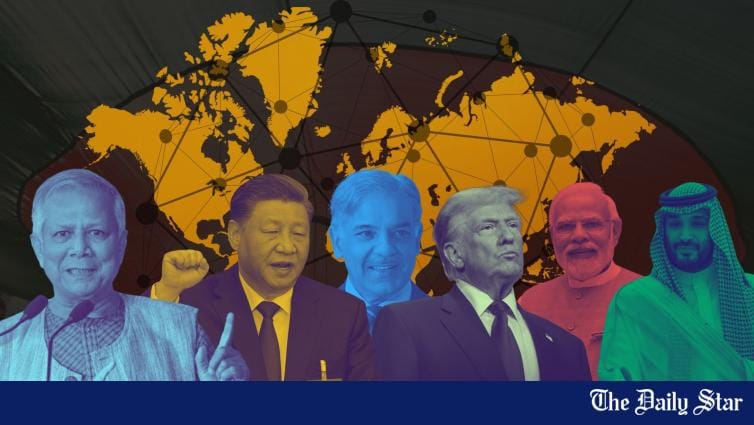
India, US both need a stable Bangladesh


1727311270294.webp

VISUAL: FATIMA JAHAN ENA

Before returning to Bangladesh and assuming the mantle of leading the interim government, Nobel Laureate Prof Muhammad Yunus, in an interview with India's NDTV, stated that if Bangladesh becomes unstable, it will affect West Bengal, Myanmar, and the entire northeast India.

Now, West Bengal is bogged down in protests over a horrific case of rape and murder, with Chief Minister Mamata Banerjee declaring that she is "ready to resign." The state of Manipur is on red alert as recent drone and rocket attacks have triggered a fresh wave of ethnic violence. Meanwhile, "Myanmar is plumbing the depths of the human rights abyss," according to James Rodehaver, United Nations human rights chief of the Myanmar team. If the situation in the Bay of Bengal does not seem like a powder keg ready to explode, one must be truly blind.

However, the recent visit of a US delegation to Bangladesh offers some hope that the world is concerned with the evolving situation in the region. By the time this column is published, a bilateral meeting will have taken place between Chief Adviser Prof Yunus and US President Joe Biden on the sidelines of the UN General Assembly. On September 15, the inter-agency US delegation that met with the chief adviser included Brent Neiman, assistant secretary for the Department of Treasury; Donald Lu, assistant secretary of state for the Bureau of South and Central Asian Affairs; Änjali Kaur, USAID deputy assistant administrator for Asia; and Brendan Lynch, assistant US trade representative.

During the visit, USAID signed a development agreement worth over $200 million with the interim government to support Bangladesh in advancing development, strengthening governance, expanding trade, and creating greater opportunities for the Bangladeshi people to build a brighter and more prosperous future. From 2021 to 2026, USAID has committed nearly $1 billion in support.

Sources in the finance ministry indicate that the Asian Development Bank (ADB) may provide $900 million in budgetary support to Bangladesh by March 2025. Earlier this month, the interim government also requested $1 billion from the World Bank for the energy and power sector, along with another $1 billion for banking sector reforms. This is part of a broader effort to secure $8 billion from multilateral lenders and development partners to replenish the country's foreign exchange reserves and stabilise the economy.

One of Prof Yunus's key strengths is his appeal in the West, which is likely a significant factor in the potential inflow of foreign currency to support the interim government. These developments are critical at a time when Bangladesh is experiencing significant internal unrest. There are speculations that many forces, both within and outside the country, are actively working to discredit the government in any way possible, whether through inciting violence by exploiting religious sentiments, dividing the population with bad-faith identity politics, or organising misinformation campaigns to obscure the truth and paint the nation in the worst possible light.

The Yunus-Biden bilateral meeting, as well as the recent visit by the US delegation underscore the country's commitment to supporting Bangladesh's development and political stability under the interim government. By signing a development agreement through USAID and subsequently holding a bilateral meeting, the US has made it clear that it recognises the strategic importance of Bangladesh. Washington's backing, however, isn't just economic; it's also a strategic signal to regional powers that the situation in Bangladesh is of global concern. This development aligns with US interests in South Asia, particularly regarding regional stability, which is a cornerstone of its broader Indo-Pacific strategy.

Regardless of the nature of international involvement, the ultimate responsibility for the stability of a nation lies with its own people. While geostrategic partners like the US and India can offer financial support and diplomatic engagement, it is up to the people of Bangladesh to ensure that their nation remains stable.

India, as Bangladesh's closest neighbour, also has a vital role to play in ensuring that its own security interests align with Bangladesh's stability. Prime Minister Narendra Modi's government must ensure that extremist voices within India do not agitate the situation across the border. For instance, recent remarks by Indian Defence Minister Rajnath Singh and the militaristic language and posturing by other political actors do not bode well for diplomatic de-escalation and mutual cooperation. Indian policymakers should exercise caution so that domestic issues are not exploited to create friction between the two countries.

More importantly, India must adopt a balanced approach, combining diplomatic engagement with Bangladesh and ensuring that no internal forces within India undermine efforts for stability. Given the ethnic and religious diversity in India's northeast region and Bangladesh's proximity, any instability in Bangladesh will most definitely spill over, affecting not only West Bengal but also states like Assam and Tripura. It's in India's own security interest to support the interim government in Dhaka, providing assistance where possible to counter both external and internal threats.

Regardless of the nature of international involvement, the ultimate responsibility for the stability of a nation lies with its own people. While geostrategic partners like the US and India can offer financial support and diplomatic engagement, it is up to the people of Bangladesh to ensure that their nation remains stable. Some questions have already been raised about the competence of the interim government and its lack of urgency. This is not a good sign. It will need to navigate each new political challenge promptly and carefully, ensuring that democratic institutions remain functional and that extremist groups are not able to exploit any governance vacuums. It should also pave the way for an election that is free, fair and inclusive, which in itself is a daunting task.

In these unstable times, civil society and the media, in particular, will need to step up their activities drastically, countering the ongoing waves of misinformation campaigns and holding the reality on the ground for all of the world to see. The youth, intellectuals, business communities and political parties have a significant part to play in ensuring that polarisation does not destabilise the country further. This is a critical moment for Bangladesh; the future rests in the hands of the Bangladeshi people. The people who came out on the streets and gave their lives to dethrone an autocrat must now step up again and resist divisive forces. This is the only way to remake Bangladesh into a more prosperous and peaceful nation.

Zillur Rahman is executive director at the Centre for Governance Studies (CGS) and a television talk show host.​
 
Analyze

Analyze Post

Add your ideas here:
Highlight Cite Fact Check Respond

Bangladesh’s strategic crossroads in 2025 and beyond

1736668972911.webp

VISUAL: MONOROM POLOK

Amid global geopolitical shifts, there is a fascinating parallel between modern developments and ancient end-time prophecies. Islamic eschatology—which foresees an alliance between the Muslim world and the Roman Empire (current Christian world or its subset) against a common adversary—offers a thought-provoking lens through which we can look at the shifting alliances between East and West today. Whether this ally or adversary is symbolised by Orthodox Russia or the Catholic/Protestant West (EU/US), the essence of these historical and eschatological narratives alludes to a deep, enduring alliance between Muslims and Eastern/Western powers. As power dynamics in the global arena continue to evolve, Bangladesh stands at a crucial juncture in the emerging contest between the US/EU-led West and the Russia/China-led East, as both vie for closer ties with the Islamic world. In this new geopolitical order, Bangladesh, with its rising economic clout, strategic location, and cultural connections, is uniquely positioned to play an important role both as a leader in the Muslim-majority world and as a mediator between East and West.

This potential harks back to the transformation seen in the US-Japan relationship following World War II. Once bitter enemies—marked by Japan's attack on Pearl Harbor and the US's atomic bombings of Hiroshima and Nagasaki—the two nations forged one of the strongest alliances of the 20th century. This remarkable reconciliation was driven by mutual recognition of shared interests and pragmatic cooperation, particularly in the areas of economic growth and security. The US-Japan alliance thus emerged as a cornerstone of stability in the Indo-Pacific. Similarly, Bangladesh, despite its historical tensions with Pakistan and regional challenges, has the opportunity to transcend past conflicts and build new alliances that emphasise mutual benefits, particularly in trade, security, and energy. Just as the US and Japan rose from the ashes of war to become strong allies, Bangladesh, along with its promising neighbours, could forge partnerships that not only promote regional stability but also enhance the country's global standing.

To that end, Bangladesh's policy in 2025 and beyond must be one of strategic pragmatism, recalibrating alliances to safeguard its interests and promote long-term prosperity. It should engage in a multi-faceted approach, strengthening its relationships with regional neighbours like Nepal, Bhutan, Pakistan, Afghanistan, Sri Lanka, and the Maldives. These countries, often overlooked in traditional discussions on South Asia's geopolitical landscape, hold immense potential for mutually beneficial partnerships that can enhance Bangladesh's regional influence.

For example, Nepal and Bhutan offer untapped opportunities in the energy sector. With Bhutan's vast hydropower resources and Nepal's potential for renewable energy, Bangladesh can diversify its energy sources through collaborative initiatives that provide sustainable solutions for all parties. Already, Bangladesh's role in providing educational opportunities to Nepali students, particularly in medicine, has quietly fostered deeper ties, with these graduates addressing healthcare shortages in Nepal and serving as cultural and professional bridges between the two countries, thereby strengthening Bangladesh's soft power and bilateral relations.

Similarly, Bangladesh's relationship with Pakistan, despite historical tensions stemming from the 1971 war, holds significant promise for future cooperation. While these two nations have long been relatively estranged, focusing on shared interests such as trade, infrastructure development, and climate resilience could serve as the foundation for a renewed relationship. Pakistan's nuclear expertise, for instance, could help Bangladesh expand its energy portfolio through civilian nuclear cooperation, enhancing energy security within the framework of international regulations much like the collaborations seen between historically adversarial states like India and the US in their landmark 2008 nuclear deal.

Bangladesh has a unique opportunity to strengthen diplomatic ties with smaller neighbours like Sri Lanka and the Maldives by offering expertise in areas such as disaster management and climate change adaptation. Leveraging its experiences in managing the Rohingya crisis and the Delta Plan, Bangladesh can solidify its role as a regional strategic leader.

At the same time, Bangladesh's relationship with India, its largest and most influential neighbour, remains pivotal in shaping its regional strategy. Although this relationship has faced challenges following the fall of Awami League in August, the two countries share common security concerns and economic interests that necessitate collaboration. Longstanding issues over water sharing, border disputes, and trade imbalances should be addressed through sustained diplomatic engagement. As I have noted in a recent column, India cannot afford to undermine Bangladesh. Fostering a balanced partnership is vital not only for our bilateral well-being but also for broader regional stability in South Asia.

Moreover, Bangladesh has a unique opportunity to strengthen diplomatic ties with smaller neighbours like Sri Lanka and the Maldives by offering expertise in areas such as disaster management and climate change adaptation. Leveraging its experiences in managing the Rohingya crisis and the Delta Plan, Bangladesh can solidify its role as a regional strategic leader.

On the global stage, Bangladesh must maintain and even expand its relationships with powers such as the US, EU, Russia, and China while avoiding over-reliance on any single power or market. The US and EU remain vital trade partners, especially for Bangladesh's garment industry, with the EU's GSP facility playing a crucial role in its growth. However, as global competition for influence intensifies, Bangladesh must diversify its diplomatic and economic ties, engaging with both Western and Eastern blocs while preserving its autonomy and flexibility. While China's investments through the BRI initiative are significant, Bangladesh must learn from the experiences of other countries burdened by Chinese debt and avoid excessive dependence. A balanced approach to these relationships will enable Bangladesh to navigate its way through an increasingly complex geopolitical environment, and maximise its economic potential while safeguarding its sovereignty.

Beyond global partnerships, Bangladesh's role as a mediator between other regional powers could become one of its most significant geopolitical assets. Positioned as a neutral party, Bangladesh can facilitate dialogue between Saudi Arabia and Iran, two rivals whose tensions have long destabilised the Middle East. As a moderate and the third-largest Muslim country in the world, Bangladesh can leverage its diplomatic relationships with both nations to foster greater unity in the Muslim world, thus positing itself as a unifying force. Through active participation in organisations like the OIC and the D-8, Bangladesh can also advocate for greater economic cooperation, climate resilience, and solidarity on issues such as Palestine, enhancing its influence within the Islamic world and beyond.

This realignment would elevate Bangladesh's standing in global discussions on justice, peace, and sustainable development. As both the West and East seek closer ties with the Islamic world, Bangladesh, with its growing influence and strategic importance, stands at the crossroads of this emerging shift. By positioning itself as a diplomatic bridge between the Islamic world and both Western and Eastern blocs, it can catalyse cooperation and assert its influence in shaping the evolving global order.

Dr Iftekhar Ul Karim is assistant professor at BRAC Business School, BRAC University.​
 
Analyze

Analyze Post

Add your ideas here:
Highlight Cite Fact Check Respond

Members Online

⤵︎

Latest Posts

Latest Posts