Bangladesh Defense
Saif
Senior Member
- Joined
- Jan 24, 2024
- Messages
- 20,706
- Likes
- 9,684
- Nation

- Residence
- Axis Group


India, US both need a stable Bangladesh
However, regardless of the nature of international involvement, the ultimate responsibility for a stable Bangladesh lies with its own people.
Geopolitical Insights
India, US both need a stable Bangladesh

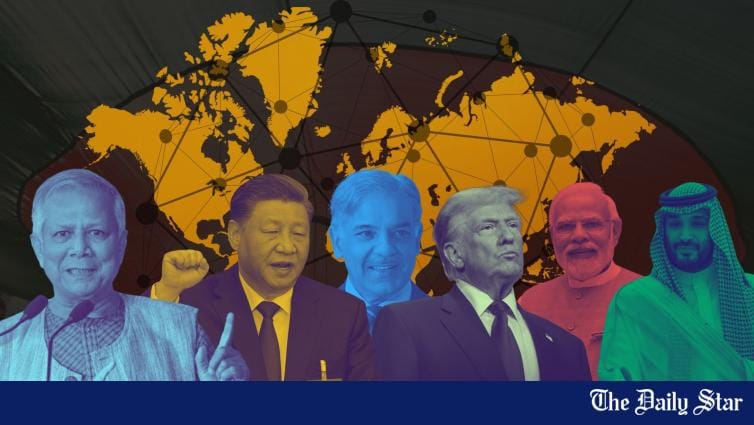
VISUAL: FATIMA JAHAN ENA
Before returning to Bangladesh and assuming the mantle of leading the interim government, Nobel Laureate Prof Muhammad Yunus, in an interview with India's NDTV, stated that if Bangladesh becomes unstable, it will affect West Bengal, Myanmar, and the entire northeast India.
Now, West Bengal is bogged down in protests over a horrific case of rape and murder, with Chief Minister Mamata Banerjee declaring that she is "ready to resign." The state of Manipur is on red alert as recent drone and rocket attacks have triggered a fresh wave of ethnic violence. Meanwhile, "Myanmar is plumbing the depths of the human rights abyss," according to James Rodehaver, United Nations human rights chief of the Myanmar team. If the situation in the Bay of Bengal does not seem like a powder keg ready to explode, one must be truly blind.
However, the recent visit of a US delegation to Bangladesh offers some hope that the world is concerned with the evolving situation in the region. By the time this column is published, a bilateral meeting will have taken place between Chief Adviser Prof Yunus and US President Joe Biden on the sidelines of the UN General Assembly. On September 15, the inter-agency US delegation that met with the chief adviser included Brent Neiman, assistant secretary for the Department of Treasury; Donald Lu, assistant secretary of state for the Bureau of South and Central Asian Affairs; Änjali Kaur, USAID deputy assistant administrator for Asia; and Brendan Lynch, assistant US trade representative.
During the visit, USAID signed a development agreement worth over $200 million with the interim government to support Bangladesh in advancing development, strengthening governance, expanding trade, and creating greater opportunities for the Bangladeshi people to build a brighter and more prosperous future. From 2021 to 2026, USAID has committed nearly $1 billion in support.
Sources in the finance ministry indicate that the Asian Development Bank (ADB) may provide $900 million in budgetary support to Bangladesh by March 2025. Earlier this month, the interim government also requested $1 billion from the World Bank for the energy and power sector, along with another $1 billion for banking sector reforms. This is part of a broader effort to secure $8 billion from multilateral lenders and development partners to replenish the country's foreign exchange reserves and stabilise the economy.
One of Prof Yunus's key strengths is his appeal in the West, which is likely a significant factor in the potential inflow of foreign currency to support the interim government. These developments are critical at a time when Bangladesh is experiencing significant internal unrest. There are speculations that many forces, both within and outside the country, are actively working to discredit the government in any way possible, whether through inciting violence by exploiting religious sentiments, dividing the population with bad-faith identity politics, or organising misinformation campaigns to obscure the truth and paint the nation in the worst possible light.
The Yunus-Biden bilateral meeting, as well as the recent visit by the US delegation underscore the country's commitment to supporting Bangladesh's development and political stability under the interim government. By signing a development agreement through USAID and subsequently holding a bilateral meeting, the US has made it clear that it recognises the strategic importance of Bangladesh. Washington's backing, however, isn't just economic; it's also a strategic signal to regional powers that the situation in Bangladesh is of global concern. This development aligns with US interests in South Asia, particularly regarding regional stability, which is a cornerstone of its broader Indo-Pacific strategy.
Regardless of the nature of international involvement, the ultimate responsibility for the stability of a nation lies with its own people. While geostrategic partners like the US and India can offer financial support and diplomatic engagement, it is up to the people of Bangladesh to ensure that their nation remains stable.
India, as Bangladesh's closest neighbour, also has a vital role to play in ensuring that its own security interests align with Bangladesh's stability. Prime Minister Narendra Modi's government must ensure that extremist voices within India do not agitate the situation across the border. For instance, recent remarks by Indian Defence Minister Rajnath Singh and the militaristic language and posturing by other political actors do not bode well for diplomatic de-escalation and mutual cooperation. Indian policymakers should exercise caution so that domestic issues are not exploited to create friction between the two countries.
More importantly, India must adopt a balanced approach, combining diplomatic engagement with Bangladesh and ensuring that no internal forces within India undermine efforts for stability. Given the ethnic and religious diversity in India's northeast region and Bangladesh's proximity, any instability in Bangladesh will most definitely spill over, affecting not only West Bengal but also states like Assam and Tripura. It's in India's own security interest to support the interim government in Dhaka, providing assistance where possible to counter both external and internal threats.
Regardless of the nature of international involvement, the ultimate responsibility for the stability of a nation lies with its own people. While geostrategic partners like the US and India can offer financial support and diplomatic engagement, it is up to the people of Bangladesh to ensure that their nation remains stable. Some questions have already been raised about the competence of the interim government and its lack of urgency. This is not a good sign. It will need to navigate each new political challenge promptly and carefully, ensuring that democratic institutions remain functional and that extremist groups are not able to exploit any governance vacuums. It should also pave the way for an election that is free, fair and inclusive, which in itself is a daunting task.
In these unstable times, civil society and the media, in particular, will need to step up their activities drastically, countering the ongoing waves of misinformation campaigns and holding the reality on the ground for all of the world to see. The youth, intellectuals, business communities and political parties have a significant part to play in ensuring that polarisation does not destabilise the country further. This is a critical moment for Bangladesh; the future rests in the hands of the Bangladeshi people. The people who came out on the streets and gave their lives to dethrone an autocrat must now step up again and resist divisive forces. This is the only way to remake Bangladesh into a more prosperous and peaceful nation.
Zillur Rahman is executive director at the Centre for Governance Studies (CGS) and a television talk show host.
India, US both need a stable Bangladesh
VISUAL: FATIMA JAHAN ENA
Before returning to Bangladesh and assuming the mantle of leading the interim government, Nobel Laureate Prof Muhammad Yunus, in an interview with India's NDTV, stated that if Bangladesh becomes unstable, it will affect West Bengal, Myanmar, and the entire northeast India.
Now, West Bengal is bogged down in protests over a horrific case of rape and murder, with Chief Minister Mamata Banerjee declaring that she is "ready to resign." The state of Manipur is on red alert as recent drone and rocket attacks have triggered a fresh wave of ethnic violence. Meanwhile, "Myanmar is plumbing the depths of the human rights abyss," according to James Rodehaver, United Nations human rights chief of the Myanmar team. If the situation in the Bay of Bengal does not seem like a powder keg ready to explode, one must be truly blind.
However, the recent visit of a US delegation to Bangladesh offers some hope that the world is concerned with the evolving situation in the region. By the time this column is published, a bilateral meeting will have taken place between Chief Adviser Prof Yunus and US President Joe Biden on the sidelines of the UN General Assembly. On September 15, the inter-agency US delegation that met with the chief adviser included Brent Neiman, assistant secretary for the Department of Treasury; Donald Lu, assistant secretary of state for the Bureau of South and Central Asian Affairs; Änjali Kaur, USAID deputy assistant administrator for Asia; and Brendan Lynch, assistant US trade representative.
During the visit, USAID signed a development agreement worth over $200 million with the interim government to support Bangladesh in advancing development, strengthening governance, expanding trade, and creating greater opportunities for the Bangladeshi people to build a brighter and more prosperous future. From 2021 to 2026, USAID has committed nearly $1 billion in support.
Sources in the finance ministry indicate that the Asian Development Bank (ADB) may provide $900 million in budgetary support to Bangladesh by March 2025. Earlier this month, the interim government also requested $1 billion from the World Bank for the energy and power sector, along with another $1 billion for banking sector reforms. This is part of a broader effort to secure $8 billion from multilateral lenders and development partners to replenish the country's foreign exchange reserves and stabilise the economy.
One of Prof Yunus's key strengths is his appeal in the West, which is likely a significant factor in the potential inflow of foreign currency to support the interim government. These developments are critical at a time when Bangladesh is experiencing significant internal unrest. There are speculations that many forces, both within and outside the country, are actively working to discredit the government in any way possible, whether through inciting violence by exploiting religious sentiments, dividing the population with bad-faith identity politics, or organising misinformation campaigns to obscure the truth and paint the nation in the worst possible light.
The Yunus-Biden bilateral meeting, as well as the recent visit by the US delegation underscore the country's commitment to supporting Bangladesh's development and political stability under the interim government. By signing a development agreement through USAID and subsequently holding a bilateral meeting, the US has made it clear that it recognises the strategic importance of Bangladesh. Washington's backing, however, isn't just economic; it's also a strategic signal to regional powers that the situation in Bangladesh is of global concern. This development aligns with US interests in South Asia, particularly regarding regional stability, which is a cornerstone of its broader Indo-Pacific strategy.
Regardless of the nature of international involvement, the ultimate responsibility for the stability of a nation lies with its own people. While geostrategic partners like the US and India can offer financial support and diplomatic engagement, it is up to the people of Bangladesh to ensure that their nation remains stable.
India, as Bangladesh's closest neighbour, also has a vital role to play in ensuring that its own security interests align with Bangladesh's stability. Prime Minister Narendra Modi's government must ensure that extremist voices within India do not agitate the situation across the border. For instance, recent remarks by Indian Defence Minister Rajnath Singh and the militaristic language and posturing by other political actors do not bode well for diplomatic de-escalation and mutual cooperation. Indian policymakers should exercise caution so that domestic issues are not exploited to create friction between the two countries.
More importantly, India must adopt a balanced approach, combining diplomatic engagement with Bangladesh and ensuring that no internal forces within India undermine efforts for stability. Given the ethnic and religious diversity in India's northeast region and Bangladesh's proximity, any instability in Bangladesh will most definitely spill over, affecting not only West Bengal but also states like Assam and Tripura. It's in India's own security interest to support the interim government in Dhaka, providing assistance where possible to counter both external and internal threats.
Regardless of the nature of international involvement, the ultimate responsibility for the stability of a nation lies with its own people. While geostrategic partners like the US and India can offer financial support and diplomatic engagement, it is up to the people of Bangladesh to ensure that their nation remains stable. Some questions have already been raised about the competence of the interim government and its lack of urgency. This is not a good sign. It will need to navigate each new political challenge promptly and carefully, ensuring that democratic institutions remain functional and that extremist groups are not able to exploit any governance vacuums. It should also pave the way for an election that is free, fair and inclusive, which in itself is a daunting task.
In these unstable times, civil society and the media, in particular, will need to step up their activities drastically, countering the ongoing waves of misinformation campaigns and holding the reality on the ground for all of the world to see. The youth, intellectuals, business communities and political parties have a significant part to play in ensuring that polarisation does not destabilise the country further. This is a critical moment for Bangladesh; the future rests in the hands of the Bangladeshi people. The people who came out on the streets and gave their lives to dethrone an autocrat must now step up again and resist divisive forces. This is the only way to remake Bangladesh into a more prosperous and peaceful nation.
Zillur Rahman is executive director at the Centre for Governance Studies (CGS) and a television talk show host.