New Tweets

[🇧🇩] Independence Day of Bangladesh

G Bangladesh Defense
[🇧🇩] Independence Day of Bangladesh
17
646
More threads by Saif


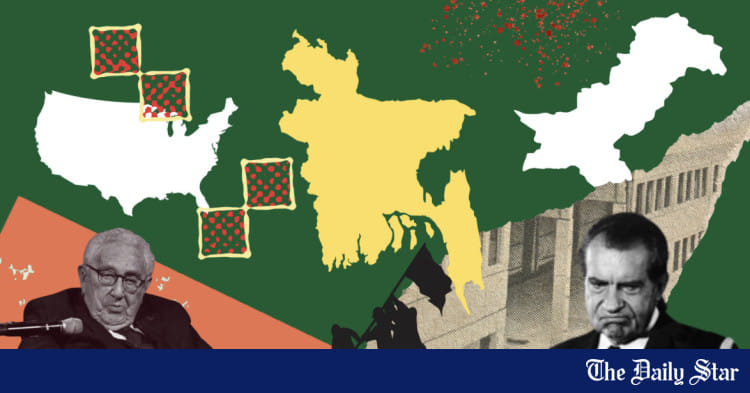
Henry Kissinger’s role in 1971

1742970428908.webp

Visual: Aliza Rahman

Henry Kissinger, one of the most influential yet controversial political figures of the 20th century, passed away in 2023, leaving behind a legacy that continues to spark heated debates. Lauded by some as a master of diplomacy and realpolitik, he remains, in the eyes of others, a war criminal who should have been held accountable for his actions. In The Trial of Henry Kissinger, Christopher Hitchens meticulously builds a case against Kissinger, arguing that his policies and decisions—from his role in extending the Vietnam War to his backing of right-wing coups, complicity in genocide, and orchestration of covert operations—led to mass suffering across the globe. The Bangladesh chapter of the book is particularly damning, exposing the cold indifference and realpolitik calculations that led to one of the most horrifying atrocities of the 20th century.

In December 1970, the people of East Pakistan (now Bangladesh) overwhelmingly voted for self-rule under the leadership of Sheikh Mujibur Rahman and the Awami League. However, instead of honouring the democratic mandate, the Pakistani military, led by General Yahya Khan, launched Operation Searchlight on March 25, 1971. What followed was an unrelenting campaign of mass killings, systematic sexual violence, and forced displacement. Conservative estimates place the death toll at 300,000, though many argue the real number was closer to three million.

As reports of massacres spread, one of the earliest and most powerful condemnations came from Archer Kent Blood, the US Consul General in Dhaka. Blood and his team sent a series of telegrams to Washington detailing the atrocities being committed by the Pakistani military. In the telegrams, they pleaded the US to take a stand against the Pakistani government. The message read:

"Our government has failed to denounce the suppression of democracy. Our government has failed to denounce atrocities…Our government has evidenced what many will consider moral bankruptcy..."

This was signed by dozens of diplomats, making it the strongest internal protest ever recorded within the US State Department. Yet, Nixon and Kissinger dismissed it outright. Kissinger, obsessed with using Pakistan as a backchannel to China, saw Yahya Khan as an indispensable ally. Instead of acting against genocide, Kissinger chose silence and complicity. In fact, the US government, under Kissinger's guidance, actively supported the Pakistani military by supplying them with weapons.

Kissinger also made a callous remark in a private conversation, referring to Bangladesh as a "basket case," illustrating his dismissive attitude toward the country's plight and people. Between March and December 1971, the Pakistani military conducted some of the most gruesome acts of ethnic and political cleansing of the 20th century. Bangalee intellectuals were specifically targeted and executed, Hindu minorities were slaughtered, and millions of women were subjected to rape as a weapon of war. While the world condemned the atrocities, Nixon and Kissinger continued to stand by Pakistan.

His secret conversations with Nixon reveal racist and derogatory remarks about Bangalees and Indians, showing his complete disregard for human lives. Even when the then US Ambassador Kenneth Keating urged the administration to publicly condemn Pakistan's brutality, Nixon said to Kissinger that Keating had been "taken over by the Indians." Kissinger, for his part, at the height of the genocide in late April sent Yahya a message praising him for "delicacy and tact."

As the crisis deepened, India, overwhelmed by millions of Bangalee refugees, prepared to intervene militarily. On December 3, 1971, India officially entered the war to assist the Mukti Bahini. In response, Kissinger orchestrated a dangerous and reckless move. He deployed the aircraft carrier USS Enterprise into the Bay of Bengal. This was meant to intimidate India and deter its intervention, but it failed.

Mukti Bahini with help from India swiftly defeated Pakistan, leading to the creation of an independent Bangladesh on December 16, 1971. But Kissinger's hostility toward Bangladesh did not end there.

When Mujib sought international recognition and aid for the war-ravaged country, the US remained distant. Kissinger saw Mujib's government as an embarrassment, resenting the exposure of US complicity in genocide. In November 1974, Kissinger made a brief eight-hour visit to Dhaka, where he refused to acknowledge the role of the US in Pakistan's actions.

Hitchens' book meticulously builds a case against Kissinger, arguing that his actions in Bangladesh, Chile, Vietnam, and East Timor amount to war crimes. Kissinger's secret involvement in overthrowing democratically elected leaders, his orchestration of military coups, and his support for genocidal regimes paint the picture of a man who viewed human lives as collateral damage in his grand strategy. As Bangladesh continues to push for global recognition of the 1971 genocide, the question remains: will history hold Kissinger accountable, or will his crimes fade into the shadows of realpolitik?

Kollol Kibria is an advocate, human rights activist, and political analyst.​
 
Analyze

Analyze Post

Add your ideas here:
Highlight Cite Respond

Operation searchlight: The massacre at Ctg cantonment
Pakistan army killed hundreds of soldiers, cadets on Mar 25 night

1742971044396.webp

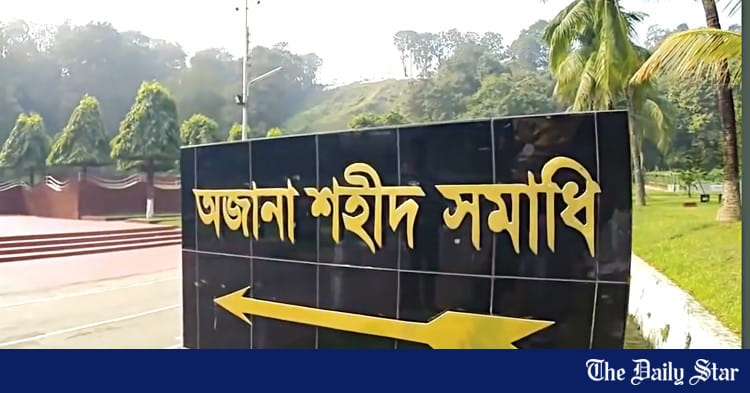
Tomb of the soldiers martyred in the East Bengal Regimental Center massacre at Chattogram cantonment. Photo: Collected

On March 24, 1971, the day before the Pakistani army unleashed the infamous "Operation Searchlight," its top brass flew to Chattogram Cantonment from Dhaka.

By then, a quiet but growing spirit of rebellion was taking shape among the Bangalee soldiers stationed at the East Bengal Regimental Centre (EBRC), an infantry training facility in the port city.

The delegation included high-ranking figures such as Chief of Army Staff Gen Hamid Khan, Maj Gen Khadim Hussain Raja, Maj Gen Mitha Khan, and Brig Ansari. These officials convened secret meetings, deliberately excluding EBRC Commandant Brig Mahmudur Rahman Majumdar, the senior-most Bangalee officer there at the time, according to Bangladesher Swadhinota Juddho: Dolil Potro (Volume 9).

Earlier, Brig Majumdar had defied direct orders to unload weapons shipped from West Pakistan to Chattogram Port in late February, signalling his resistance.

The tension escalated further when the West Pakistan military leaders took Brig Majumdar back to Dhaka, pretending they needed to discuss some urgent matters with him there.

The very next night, the unthinkable tragedy unfolded.

The Pakistan army had picked the EBRC as one of the primary targets for its brutal massacre codenamed "Operation Searchlight".

On the night of March 25, 1971, the Pakistani military killed more than 1,000 Bangalee officers, soldiers, and cadets at the EBRC, writes Maj (retd) Rafiq-ul Islam, Bir Uttam, in his book "Lokkho Praner Binimoye".

In the official EBRC records, 550-600 Bangalee officers, soldiers, and cadets are listed as martyrs of that massacre.

Bangladesher Swadhinota Juddho: Dolil Potro (Volume 9), Ameen Ahmed Chowdhury's "1971 Ebong Amar Samorik Jibon", Subid Ali Bhuiyan's "Muktijuddhe Noy Mash" are some of the books that documented this carnage.

According to these books, the EBRC had over 1,500 Bangalee soldiers under training in March 1971.

Besides, the 20th Baloch Regiment, which had arrived from West Pakistan in early January 1971, was stationed there.

Lt Col Mujibur Rahman Chowdhury was the chief instructor at the EBRC.

Soon after the sunset on March 25, Pakistan forces began disarming the Bangalee soldiers.

"At 7:00pm, all of our soldiers' rifles were taken away and stored in the armoury," Subid Ali Bhuiyan, writes in his book.

Maj Mir Shawkat Ali from the 8th East Bengal Regiment was the last person to speak to anyone from the EBRC via telephone around 11:00pm -- it was Chief Instructor Lt Col Mujibur Rahman Chowdhury.

Farewell ceremony of the 4th East Bengal Regiment in Lahore, West Pakistan, June 1970. Lt Col Mujibur Rahman Chowdhury, battalion commanding officer (back right). He was the first martyred Bangalee officer in 1971. Lt Gen Khwaja Wasiuddin, the colonel commandant of the East Bengal Regiment (back middle). courtesy: Col (Retd) Mahmud Ur Rahman Choudhury
Soon after the phone call, Lt Col MR Chowdhury ordered Captain Enamul Haque to break open the armoury and distribute weapons to the Bangalee soldiers. However, before they could do so, the Baloch Regiment soldiers stormed the premises.

Captain Enamul Haque described this moment in his writings on Bangladesher Swadhinota Juddho: Dolil Potro (Volume 9).

"Suddenly, the Bangalee guard commander from that particular quarter came running and informed me that the 20th Baloch soldiers were getting off their vehicles, fully armed…Within moments, they launched an attack on the guards, and gunfire erupted from all directions."

"At 11:30pm, six truckloads of Baloch soldiers slaughtered the Bangalee troops at the armoury and surrounded the recruit barracks, where most soldiers were asleep and unarmed, leaving them no chance to resist. The Baloch troops ruthlessly gunned down every soldier in their sight," Maj (retd) Rafiq-ul Islam writes in his book "Lokkho Praner Binimoye".

Captain Enamul was captured and held in a room filled with wounded soldiers.

"I saw Bangalee soldiers in agony, some crying out for water, others writhing in pain. The Pakistani soldiers pressed their boots on the throats of the dying to hasten the process," Enamul describes his experience on Bangladesher Swadhinota Juddho: Dolil Potro (Volume 9).

In the early hours of March 26, the Baloch soldiers fired shells from tanks onto the barracks. The wounded soldiers' screams filled the cantonment. Many were executed inside the EBRC school, where Pakistani troops opened fire at point-blank range.

Captain Enamul wrote, "At 7:00am on March 26, I saw a truck being filled with the bodies of those who had been mercilessly killed overnight. More than a hundred bodies were taken away in front of my eyes."

RESISTANCE THAT NEVER CAME

Colonel Oli Ahmed, Bir Bikram, who was the quartermaster of the 8th East Bengal Regiment, later revealed that he had tried to contact Lieutenant Colonel MR Chowdhury throughout the night but failed. The next morning, he learned that MR Chowdhury had been murdered.

Asked why the 8th East Bengal Regiment did not intervene, he said, "We had limited arms and ammunition. Many of our soldiers were on leave because we were supposed to be deployed in Pakistan. The 20th Baloch Regiment was fully armed. If we had intervened, it would have been suicidal. The only chance of survival for EBRC soldiers was to escape into the hills."

The attack began with the killing of EBRC's Chief Instructor Lt Col MR Chowdhury.

His son, Colonel (retd) Mahmud Ur Rahman Chowdhury, told The Daily Star, "When my father was entering EBRC from the officers' mess, a platoon of the Baloch Regiment shot and bayoneted him to death.

"In early January 1971, MR Chowdhury, along with Brig Mahmudur Rahman Majumdar, Maj Ziaur Rahman (later president), Captain Rafiq-ul Islam, and Captain Oli Ahmed, had begun planning an armed rebellion in Chattogram. Sheikh Mujibur Rahman was aware of these plans, but since the Awami League was still pursuing a political solution, the uprising never materialised."

"If Bangabandhu supported an armed rebellion from the start, this massacre might not have happened. The war would still have taken place, but we could have avoided such massive loss of life."

IN SEARCH OF WITNESSES

Most of the Bangalee soldiers were martyred in the EBRC, but miraculously, very few survived.

The Daily Star collected names of the gallantry-awarded freedom fighters who were either serving or undergoing training at the EBRC on the night of March 25, 1971. However, none of them are now alive.

Dr Mohammad Kamal Uddin, a resident of Khondakia village (3km away from the cantonment) in Hathazari, said, "On the night of March 25, we woke up to the sound of intense gunfire. At dawn, we saw a few injured and terrified men near the Boro Dighir Paar. Their clothes were torn, and some were bleeding. They told us their weapons had been taken away earlier that evening, and they had barely escaped by crossing the hills."

At Chittagong Medical College, Dr Mainul Ahasan treated many injured soldiers on March 26.

"Most of the wounded brought in on March 26 were Bangalee soldiers from the cantonment. Many died on the way due to excessive bleeding," he told The Daily Star.​
 
Analyze

Analyze Post

Add your ideas here:
Highlight Cite Respond

Independence Day being observed with elaborate programmes
BSS
Dhaka
Published: 26 Mar 2025, 09: 11

1742971529398.webp

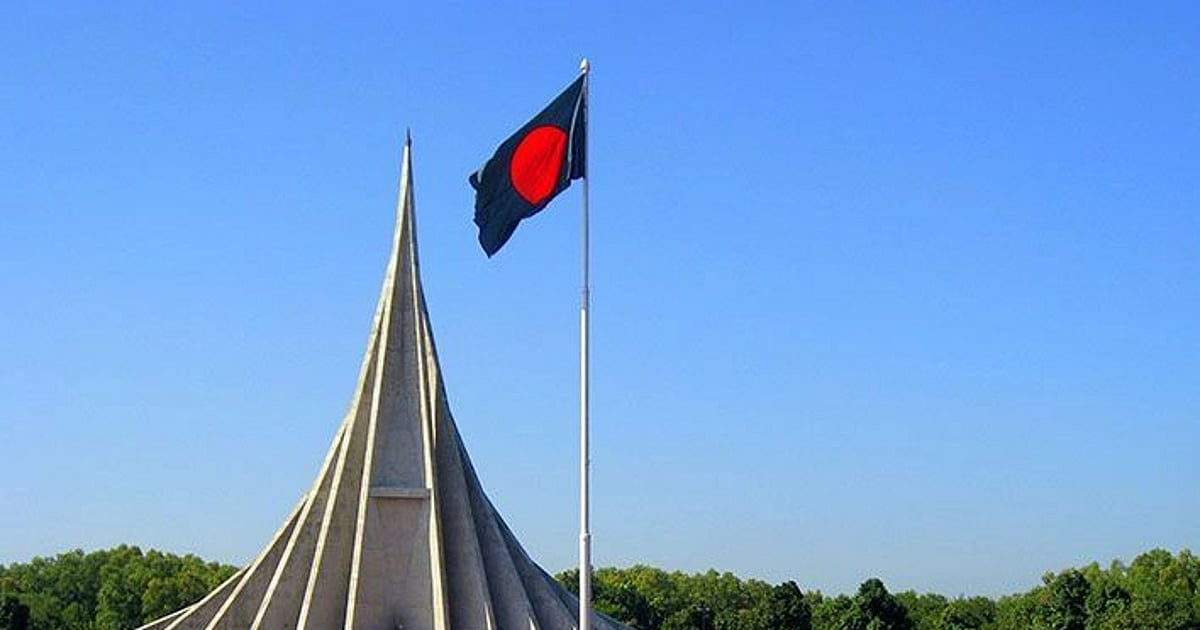
National Memorial in Savar File photo

The country is observing Independence and National Day Wednesday amid huge enthusiasm. Various programmes have been taken at the national level to observe the day with due respect and solemnity.

The day commenced with a 31-gun salute at dawn across the country, including the capital.

Interim Government Chief Adviser (CA) Professor Muhammad Yunus laid a wreath at the National Memorial in Savar early morning as a mark of profound respect for the martyrs.

Led by Liberation War Affairs Adviser Farooq-e-Azam, people from all walks of life, including families of Bir Shreshthas, war wounded freedom fighters, members of the diplomatic corps, leaders of different political parties, social, cultural and professional bodies also placed wreathes at the National Memorial in the morning of the day to show their respect to the martyred freedom fighters.

Additionally, wreaths were also placed at the different district and upazila-level martyrs’ memorials.

The national flag has been hoisted atop all government, semi-government, autonomous and private buildings in all the divisions, districts and upazilas across the country at dawn. Singing of the national anthem, and student assemblies and parades at divisional, district, and upazila levels will also be held on the occasion.

To mark the day, important buildings and establishments have been illuminated with colourful lights. Main streets and road islands in the capital and other cities across the country have been decorated with national flags and other colourful flags and festoons.

The day is a public holiday.

Chief Adviser Professor Muhammad Yunus issued a message on the occasion.

In his message, the Chief Adviser said the interim government is fully committed to further developing and strengthening the country and delivering the full benefits of independence to the people.

“We are working to establish good governance and justice to ensure people-oriented and sustainable development, and ensure transparency and accountability through necessary reforms in all spheres of the state,” he said.

Muhammad Yunus also extended his sincere greetings and congratulations to all Bangladeshis living in the country and abroad.

He said achieving independence was the final stage of a long struggle to protect our dignity and existence and to gain “our rights”.

The War of Independence, through which Bangladesh emerged as an independent nation in the world, officially began on this day, he added.

He said, “I remember with reverence the valiant martyrs who sacrificed their lives in the War of Independence, whose supreme sacrifices brought us our desired freedom.”

The Chief Adviser said for the past 16 years, the people of the country have not been able to enjoy the benefits of this freedom. “The dictatorship oppressed the people and took away their freedom and all their basic rights. The successful uprising of student-workers and the masses has liberated the people of the country from the tyranny of dictatorship.”

Professor Muhammad Yunus said, “On this auspicious occasion of Independence Day and National Day, let us take the oath to work for the development, peace and prosperity of the country, keeping in mind the spirit of the great Liberation War.”

Different national dailies have published special supplements, articles and periodicals highlighting the significance of the day while electronic media broadcast month-long special programmes based on the Liberation War.

Different social and cultural organisations, including Bangladesh Shilpakala Academy, Bangla Academy, National Museum, Liberation War Museum, and Bangladesh Shishu Academy, will organise Liberation War-based discussions, cultural events and drawing, essay writings and sports competitions for children and display Liberation War-related documentaries and film shows.

Various types of games, including football, T20 crickets and Kabadi, will be organised at district and upazila levels.

Besides, a reception will be hosted for valiant freedom fighters and family members of martyred at metropolitan city, district and upazila levels.

To mark the day, Bangladesh Postal Department will release commemorative postage stamps. Special prayers will be offered at different mosques and other worship places seeking eternal peace of the souls of martyrs of the Liberation War and peace, progress and prosperity of the country.

Improved diets will be served in hospitals, prisons cells, orphanages, old-age homes, vagabond organisations, children’s daycare centers and other similar institutions across the country.

On the day, all children’s parks and museums will be kept open for all without tickets across the country.

Bangladesh Navy is going to open its ships at different places across the country for the visitors marking the day.

Seven ships including BNS Chithra would be displayed at Dhaka Sadarghat, BNS Atandra at Pagla Naval Jetty in Narayanganj, BNS Samuddra Obhijan at Naval Berth-2, New Mooring in Chattogram, BNS Oparejyo at BIWTA Launch Terminal in Khulna, BNS Dholeshwari at Digraj Naval Berth of Mongla, BNS Padma at Marine workshop Jetty in Barishal and BNS Shaheed Farid in BIWTA Ghat at Chandpur respectively.

People can visit the ships from 12:00 pm to 4:00 pm on that day, said an ISPR press release.

Similar programmes will be taken at district and upazila levels as well as Bangladesh missions abroad highlighting the significance of the day.​
 
Analyze

Analyze Post

Add your ideas here:
Highlight Cite Respond

Committed to advancing partnership with Bangladesh for peace, prosperity: Modi tells Dr Yunus
UNB
Published :
Mar 26, 2025 12:45
Updated :
Mar 26, 2025 12:45

1742971983916.webp


President of India Droupadi Murmu and Prime Minister Narendra Modi have extended felicitations on the occasion of the National Day of Bangladesh with India reiterating its commitment to advancing partnership for peace, stability and prosperity.

"We remain committed to advancing this partnership, driven by our common aspirations for peace, stability, and prosperity and based on mutual sensitivity to each other's interests and concerns," Modi said in a message to Chief Adviser Prof Muhammad Yunus.

Modi extended his felicitations to Dr Yunus and the people of Bangladesh on the occasion of the National Day of Bangladesh.

"This day stands as a testament to our shared history and sacrifices, that have laid the foundation of our bilateral partnership," said the Indian Prime Minister.

He said the spirit of the Liberation War of Bangladesh continues to remain a guiding light for the relationship, which has flourished across multiple domains, bringing tangible benefits to our people.

President Droupadi Murmu, in her message to Bangladesh President Mohammed Shahabuddin, said, "On behalf of the Government, the people of India and on my own behalf, I extend warm greetings and felicitations to you and to the friendly people of Bangladesh on the occasion of your National Day."

She said Bangladesh-India relations are multi-faceted with our cooperation encompassing diverse areas such as trade, multimodal connectivity, development partnership, power and energy, education, capacity building, cultural cooperation and people-to people exchanges.

The Indian President said Bangladesh is at the focus of India's "Neighborhood First" and "Act East" policies.

"Our SAGAR doctrine and the Indo-Pacific Vision. India reiterates its support for a democratic, stable, inclusive, peaceful and progressive Bangladesh," she said.​
 
Analyze

Analyze Post

Add your ideas here:
Highlight Cite Respond

US greets Bangladesh on Independence Day
FE ONLINE DESK
Published :
Mar 26, 2025 12:38
Updated :
Mar 26, 2025 12:38

1742972099764.webp


The United States has congratulated Bangladesh on its Independence Day Saying Washington supports Bangladesh in its journey toward a bright and democratic future.

“As Bangladesh marks this special occasion, I extend my warm regards to its people and reaffirm the United States, commitment to working together to make both our nations safer, stronger, and more prosperous,” said US Secretary of State Marco Rubio in a statement.

On behalf of the United States of America, Rubio congratulated the people of Bangladesh as they celebrate their Independence Day on March 26, reports BSS.

He said that this celebration comes at a pivotal point in Bangladesh’s history, as the Interim Government prepares the nation for elections that will allow the people of Bangladesh to choose the path forward for their nation.

“We look forward to continuing our partnership promoting economic development and regional security in the Indo-Pacific,” said the Secretary of State.​
 
Analyze

Analyze Post

Add your ideas here:
Highlight Cite Respond

Independence Day

The foreign couple who fought for Bangladesh


1743032754912.png

Exhibition being held honouring contributions of Paul and Ellen Connett to the country’s struggle for liberation

In the summer of 1971, as the people of Bangladesh waged a desperate fight for freedom, two foreign voices -- one British, one American -- rose in defiance against the brutal atrocities unfolding thousands of miles from their own homelands.

Paul and Ellen Connett, a young couple, refused to stay silent. They did more than express outrage; they took action.

Paul, a British national, and Ellen, an American, became key figures in the international movement against the genocide in Bangladesh.

As the Pakistani military cracked down on the people of the then-East Pakistan, the Connetts mobilised global attention, spearheading protests, raising funds, and even risking their own safety to bring aid to war-affected civilians.

Their story was revisited at an exhibition titled "Humanity Is One", organised at Gulshan Society Lake Park in the capital, marking Bangladesh's 54th Independence Day.

In one of the most striking moments of their activism, on August 1, 1971, the Connetts helped gather 25,000 people at Trafalgar Square in London for a massive demonstration against the genocide in Bangladesh.

Organised in collaboration with UK-based East Pakistani activists and rights groups, the protest became a defining moment in international solidarity -- one that stood alongside the legendary "Concert for Bangladesh" in New York.

But for the Connetts, protesting was not enough. They wanted to do more. They acquired a World War II-era ambulance, packed it with medical supplies, and embarked on a daring journey across multiple countries, determined to bring aid to the war-ravaged people of Bangladesh. When they finally reached the country, they used the ambulance to provide crucial medical support to civilians affected by the war.

Their actions came at a cost. Ellen Connett was arrested while attempting to enter Bangladesh. She was imprisoned, but her spirit remained unshaken. Just days before victory, she was released, a testament to her relentless determination to stand with the people of Bangladesh.

While imprisoned, she discovered that she was pregnant. On returning to the UK, she gave birth to her son, naming him Peter William Mujib Connett.

The couple also received "Friends of Liberation War Honour" from the government.

At the exhibition yesterday, Mofidul Hoque, founder trustee of the Liberation War Museum, described how Action Bangladesh and Operation Omega -- platforms co-founded by the Connetts -- raised funds and procured ambulances for Bangladeshis during the war.

Abdul Majid Chowdhury, co-founder of Action Bangladesh, recalled the immense risks taken by foreigners who stood with Bangladesh.

"We, as a nation, fought for our freedom -- that was expected. But the way foreigners risked their lives for us was truly extraordinary," he added.

Speaking at the event, James Goldman, acting British deputy high commissioner to Bangladesh, called their story a powerful demonstration of the enduring relationship between Bangladesh and the UK.

He said that the UK was among the first nations to recognise Bangladesh in 1972 and has maintained a strong partnership with the country ever since.

German Ambassador to Bangladesh Achim Troster expressed Germany's said, "We stand by Bangladesh and will remain a reliable and trustworthy partner -- hopefully towards more democracy and a less antagonistic political landscape."

Speaking at the event, Syed Ahsan Habib Rana, secretary general of Gulshan Society, said, "Fifty-four years ago, a nation was born not just through the struggles of its own people but also with the unwavering support of voices from across the world—voices that refused to stay silent."

Moderating the event, Srabanti Datta, cultural secretary of Gulshan Society, said that the exhibition is particularly valuable for younger generations. "It offers a powerful lesson on the significance of global solidarity and humanitarian efforts in a nation's struggle for freedom," she added.

As visitors at the exhibition walked past rare photographs, historical documents, and firsthand accounts of the Connetts' activism, one message stood clear -- humanity knows no borders.​
 
Analyze

Analyze Post

Add your ideas here:
Highlight Cite Respond

Independence Day
New definition of freedom fighters, associates


A new section on the spirit of Liberation War was incorporated into the draft ordinance. It states the ‘spirit of Liberation War’ means “The spirit to ensure equity, human dignity, and social justice of the people of Bangladesh as stated in the Proclamation of Independence by the Mujibnagar government on behalf of the constituent assembly on 10 April 1971.”

Arifur Rahman
Dhaka
Updated: 26 Mar 2025, 16: 16

1743034008446.webp

Photo shows a group of freedom fighters.

People who fought against the occupying Pakistani forces on the battlefield during the 1971 Liberation War will be recognised as ‘valiant freedom fighters’, and the individuals who made a special contribution to and were active in creating global opinions for the Liberation War at home and abroad will be recognised as ‘ associates of freedom fighters’.

The definition of valiant freedom fighters is going to be changed through an ordinance on the amendment to the Jatio Muktijoddha Council (Jamuka) Act.

The draft of the ordinance has already been sent to the cabinet. Previously, the definition of freedom fighters was changed in 2022, recognising the people who fought on the ground, as well as those who made special contributions to the Liberation War as valiant freedom fighters.

Officials at the Liberation War affairs ministry said demands were raised by various quarters to change the definition of freedom fighters after the fall of the Awami League government due to the student-people movement.

After that, they spoke to freedom fighters with gallantry awards, researchers and various organisations. Almost everyone said those who fought the battle on the ground and those who contributed to the war in various ways cannot have similar recognition.

That is why the definition of freedom fighters is being changed, taking opinions from everyone.

Several Liberation War researchers, however, told Prothom Alo that the past Awami League governments changed the definition of freedom fighters for political reasons at various times, and now a new class of associates of freedom fighters is being defined, which is not right. It will not be honourable either. Rather, the matter will deepen the crisis and bitterness in future.

Liberation War affairs researcher Afsan Chowdhury told Prothom Alo that there has been controversy over the definitions of the Liberation War and freedom fighter since the beginning. Sometimes these changes were made for political reasons, sometimes to provide various facilities.

There has been controversy over the definitions of the Liberation War and freedom fighter since the beginning. Sometimes these changes were made for political reasons, sometimes to provide various facilities--Liberation War affairs researcher Afsan Chowdhury.

He further said people from different walks of life took part in the Liberation War, and joined the battle in various ways. However, all governments changed the definition of the Liberation War for political reasons. It is happening now and will happen in future too.

Who are the freedom fighters?

According to the definition of the draft ordinance, all civilian (who at the time was over the minimum age as determined by the government), who took preparation and received trainings at home, and engaged in fighting against Pakistan by participating actively against the junta and occupying Pakistani armed forces and their local collaborators Razakar, Al-Badar, Al-Shamsh, Muslim League, Jamaat-e-Islami, Nizam-e-Islam and collaborators and Peace Committees in the Liberation War from 26 March to 16 December 1971, will be recognised as valiant freedom fighters.

Besides, members of Armed Forces, Mukti Bahini, BLF and other recognised groups, police, East Pakistan Regiment (EPR), Naval Commando, Kilo Force and Anasar will also be recognised as valiant freedom fighters.

The definition states that civilians are in three categories. Firstly, persons who crossed Bangladesh borders, listed themselves at various training camps in India and participated in the Liberation War actively; secondly, all women (Birangona) who were tortured by junta and occupying Pakistani forces and their collaborators; and thirdly, all physicians, nurses, and medical assistants of all field hospitals, who provided treatments to wounded freedom fighters during the Liberation War.

All three categories of people will be recognised as valiant freedom fighters.

Who are the associates of freedom fighters?

The draft ordinance will incorporate a new provision on associates of freedom fighters.

It states that Bangladeshi citizens who inspired the freedom fighters, as well as participated in and cooperated actively to play the role of organiser to intensify the Liberation War and accelerate the independence of Bangladesh, mobilise global public opinion, gain diplomatic support and psychological strength, will be recognised as associates of freedom fighters.

There will be five categories of associates of freedom fighters. Firstly, Bangladeshi professionals who contributed to Liberation War during the wartime while living abroad and Bangladeshi citizens, who played active role in raising global public opinion; secondly, officials or employees or ambassadors under the government of Bangladesh (Mujibnagar government) formed during the Liberation War, and physicians, nurses and other assistants appointed by the Mujibnagar government; thirdly, all members of national assembly (MNAs) or members of provincial assembly (MPAs) who were involved with the government of the People’s Republic of Bangladesh (Mujibnagar government) formed during the Liberation war, and who later became the members of constituent assembly; fourthly, all artistes and technicians of Swadhin Bangla Betar Kendra, and all Bangladeshi journalists who performed duty for Liberation War at home and aboard, and fifthly, Swadhin Bangla football team.

There was no debate after the Liberation War over defining the frontline fighters as freedom fighters. The interim government’s decision seems to be an attempt to return to the actual definition of freedom fighters---Mohammad Sazzadur Rahaman, a PhD researcher at Clark University, in the US. People of five categories have since been recognised as valiant freedom fighters.

Now they will be recognised as associates of freedom fighters once the ordinance of the JAMUKA Amendment Act is issued.

The existing JAMUKA Act mentions Father of the Nation Bangabandhu Sheikh Mujibur Rahman in various places, but the ordinance will leave out all of it. The ordinance will also replace ‘spirit of Liberation War’ with ‘goal’.

The existing act defines the Liberation War as a response to the Declaration of Independence of Father of the Nation Bangabandhu Sheikh Mujibur Rahman.

The new ordinance omits these lines and several other words. Instead, it states, “A war against the junta and occupying Pakistani armed forces and their local collaborators Razakar, Al-Badar, Al-Shams, Muslim League, Jamaat-e-Islami, Nizam-e-Islam and Collaborators and Peace Committees from 26 March to 16 December in 1971 with a desire to establish equity, human dignity, and social justice for the people of Bangladesh as an independent democratic state.”

According to Liberation War affairs sources, the definition and criteria of valiant freedom fighters have been changed 11 times since independence, with the definition alone being changed five times.

With the new ordinance, the definition and criteria of valiant freedom fighters will be changed for the 12th time.

On the other hand, lists of valiant freedom fighters have been revised seven times so far.

The Liberation War affairs ministry maintained a management information system (MIS) database on the lists of all valiant freedom fighters, their allowances and other details.

According to the MIS database, currently, there are about 197,800 valiant freedom fighters in the country, and 196,454 of them receive allowances monthly.

If the new list of associates of freedom fighters is prepared, the number of valiant freedom fighters will normally drop. The ministry, however, could not specify the reduced number.

Liberation War Affairs Adviser Faruk E Azam told Prothom Alo at his office on 23 March, “In fact, those who fought the battle on the ground, only they will be recognised as freedom fighters. Those who participated in the war from various points of view, like some people cooperated diplomatically or some sang for the war, will be the associates of freedom fighters.”

How the previous government decided to recognise political leaders as valiant freedom fighters raised questions to a large extent, but how they are being relegated to the associate category would raise further debate---Mohammad Sazzadur Rahaman, a PhD researcher at Clark University, in the US.

He said the draft ordinance of the JAMUKA Amendment Act was sent to the cabinet, and they gave several observations, now those are being incorporated.

Replying to a query, Adviser Faruk E Azam said those who were in the government of Bangladesh (Mujibnagar government) formed during the Liberation War will be considered as valiant freedom fighters. The draft ordinance first mulled recognising them as the associates of freedom fighters, but it is being amended now.

Spirit of Liberation War

A new section (14) on the spirit of Liberation War was incorporated into the draft ordinance. It states the ‘spirit of Liberation War’ means “The spirit to ensure equity, human dignity, and social justice of the people of Bangladesh as stated in the Proclamation of Independence by the Mujibnagar government on behalf of the constituent assembly on 10 April 1971.”

Speaking to Prothom Alo, Mohammad Sazzadur Rahaman, a PhD researcher at Clark University, in the US, said there was no debate after the Liberation War over defining the frontline fighters as freedom fighters. The interim government’s decision seems to be an attempt to return to the actual definition of freedom fighters.

How the Awami League expanded the extent of the definition of freedom fighters, expatriates also started getting certification of freedom fighters, he stated.

This government wants to check this rush, he remarked.

Sazzadur Rahaman also said that how the previous government decided to recognise political leaders as valiant freedom fighters raised questions to a large extent, but how they are being relegated to the associate category would raise further debate.

Since the Liberation War is said to be the war of the people, it would not be considerate to give state recognition and facilities separately to various kinds of associates, he argued.

* This report appeared in the print and online editions of Prothom Alo and has been rewritten in English by Hasanul Banna​
 
Analyze

Analyze Post

Add your ideas here:
Highlight Cite Respond

1971: Ayub Khan's terse message to Yahya Khan
Syed Badrul Ahsan
Published :
Mar 27, 2025 00:07
Updated :
Mar 27, 2025 00:07

1743035224721.webp


The Bangkok Post on 26 March published a report titled "Pak Near Civil War" with a subhead 'East Declares Independence'

The people of Bangladesh have just gone through yet one more anniversary of Independence Day. When fifty-four years ago, in March 1971, Bangabandhu Sheikh Mujibur Rahman made the declaration of Bangladesh's independence, in the aftermath of the brutality unleashed by the Pakistan army, questions were raised about why the Yahya Khan junta had chosen the path of repression rather than go for a negotiated settlement of the crisis.

There were all the mistakes the military rulers based in Rawalpindi made, one after another in that tumultuous political season. Of course, there was little question that the Bengalis of Pakistan would sooner rather than later opt out of Pakistan. Had 1971 not happened, there would be 1976 or 1981, by which point the two wings of Pakistan could have arrived at a settlement allowing the Bengalis to go their independent way. Things could have gone the way of the Czechs and the Slovaks or the republics of a collapsing Soviet Union in later times or even the course taken by the Congress and the Muslim League in India in 1947.

By opting for military action aimed at the mass murder of Bengalis beginning on March 25 in 1971 and going all the way to December 16 in 1971, Pakistan's ruling circles simply committed one folly after another. It was folly that need not have been there. General Yahya Khan, having presided over a good election in December 1970, should have acted swiftly in calling the new National Assembly into session. He did not do that. Too much time was lost. The assembly ought to have convened in Dhaka by the end of December to enable all members-elect to get down to the business of framing a constitution for Pakistan within a 120-day timetable as stipulated in the Legal Framework Order (LFO) earlier promulgated by the regime.

Mistakes piled up one after another. It did not help that senior military officers, non-Bengalis, were already reassuring their troops in East Pakistan itself that 'these black *&*&*&*&*&*&*&*&' --- the reference was to Bengalis --- would not be allowed to govern Pakistan. To be sure, the military establishment as also an entirety of West Pakistan was shocked at the scale of the Awami League victory, a triumph that would in the natural scheme of things lead to the party taking power in Rawalpindi/Islamabad. When President Yahya Khan visited Dhaka after the election, he met Bangabandhu and prior to leaving the province told newsmen that Sheikh Mujibur Rahman would be taking charge as Pakistan's Prime Minister. The future looked promising for a country long bruised by military rule.

But then Yahya Khan blundered, and that was when he began to be manipulated by Zulfikar Ali Bhutto. The Chairman of the Pakistan People's Party had meanwhile visited Dhaka, held discussions with the Awami League leadership on the Six Points and also explored the probability of an AL-PPP grand coalition at the centre along the lines of West Germany's CDU-SPD coalition formed by Kurt-Georg Kiesinger and Willy Brandt in 1966. The Mujib-Bhutto talks yielded a simple result, failure. The Awami League was not interested. Yet the possibility remained that all constitutional issues would be thrashed out at the session of the National Assembly. A chink of light appeared when Yahya Khan made it known that the assembly would meet in Dhaka on March 3. Nearly three months had gone by since the election. Even so, things appeared to be moving in the right direction.

But then came other mistakes. Bhutto's adventurist politics, manifested through his announcement in mid-February that his party would not attend the National Assembly session in Dhaka, put a spanner in the works. Unhappy that he would be relegated to the role of Leader of the Opposition in the assembly once the Awami League formed the government, he wanted a solution to the issue of the Six Points between the PPP and the majority party. He ignored, rather deliberately, the political ideal of all issues relating to the constitution being hammered out in the assembly. It was obvious that a share in power rather than principles dictated his decision. It was an early blow at Pakistan's state structure.

In bizarre fashion, Yahya Khan agreed with Bhutto. Rather than talking things over with Sheikh Mujibur Rahman or sticking by his declaration that the assembly session would go ahead with or without the PPP --- other West Pakistani politicians such as Khan Abdul Wali Khan and Ghaus Bux Bizenjo and even the PPP's Ahmed Raza Kasuri were ready to go to Dhaka for the assembly session --- the general simply walked back from his earlier announcement regarding March 3. And on March 3, as demands for Bangladesh's independence began to reach a crescendo in Dhaka, came a farcical announcement of a presidential move to convene a round table conference of political leaders, including Bangabandhu, on March 10. The Awami League chief, to no one's surprise, rejected the invitation out of hand.

Yahya Khan arrived in Dhaka on March 15. Between March 16 and 24, talks between the junta and the Awami League took place at President's House. Into the negotiations stepped Bhutto on March 22. The strangest aspect of the talks was that while the Awami League presented its position, through documents and other paperwork, at the talks, the army and the PPP had nothing on offer. They had no alternative proposals that could be mulled over by the majority party. Nothing in the record suggests that the junta or Bhutto's team countered the Awami League position with its own. It was unbelievable that two stakeholders, out of three, were unable or unwilling to conduct the very serious business of shaping a political strategy for Pakistan to free itself of the crisis. It was a broad hint of what was coming. In other words, there was no intention on the part of the West Pakistan ruling circles to arrive at a settlement. The regime was playing for time.

And then there was the final blunder. Without calling a formal end to the talks or without assuring the Awami League that the negotiations would resume at a later date, President Yahya Khan and his entire delegation left Dhaka stealthily on the evening of March 25. Orders for the genocide that would follow in a few hours had already been passed on to General Tikka Khan, who would inform General Khadim Hussain Raja, 'Khadim, it is tonight.'

POSTSCRIPT: in April 1971, Yahya Khan sent his brother to former President Ayub Khan to solicit the latter's views on what the regime should do in the grave situation --- Bangladesh had already taken to the road of guerrilla resistance against the Pakistan army --- arising out of the crisis. Ayub Khan, keenly aware that East Pakistan was as good as lost, had a terse message for his successor: call an end to all military operations in East Pakistan and bring all the soldiers home to West Pakistan. In other words, it would be futile for the army to try preserving Pakistan in what had become a de facto Bangladesh.​
 
Analyze

Analyze Post

Add your ideas here:
Highlight Cite Respond

Members Online

Latest Posts

Back
PKDefense - Recommended Toggle