Home Watch Videos Wars Login

[🇧🇩] Insurgencies in Myanmar. Implications for Bangladesh

[🇧🇩] Insurgencies in Myanmar. Implications for Bangladesh
394
14K
More threads by Saif

G Bangladesh Defense

Man loses leg as landmine explodes on Myanmar side of border

1743291320502.webp


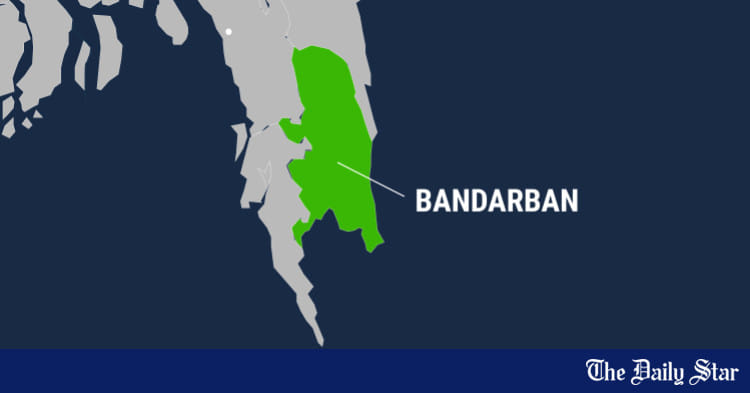
A Bangladeshi man suffered serious injuries in a mine blast in the Myanmar side of the Bangladesh border along Naikhongchhari upazila of Bandarban today.

The injured, Mohammad Salam, 45, is currently receiving treatment at the Naikhongchhari Sadar Hospital, said Md Masrurul Haque, officer-in-charge (OC) of Naikhongchhari Police Station.

His left leg was blown off in the explosion, said the police official.

The injured man had illegally entered Myanmar to collect fire wood when he fell victim to the explosion, the OC added.

Locals said the incident occurred around this noon in Chakdhala border of Naikhongchhari Sadar Union, approximately 200m inside Myanmar, beyond Border Pillar 44 along the border.

Earlier, on the evening of March 26, another youth, Mohammad Babu, lost his left leg in a landmine explosion 300 metres inside Myanmar.​
 
Analyze

Analyze Post

Add your ideas here:
Highlight Cite Fact Check Respond

Ship arrives with 17,000-tonne rice for Rohingyas
The aid will help avert ration cuts in April, says WFP

1743379487681.webp

Photo: Collected

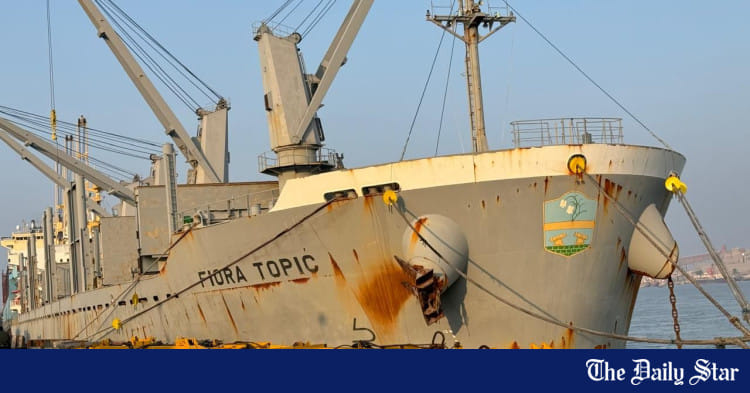
A ship carrying 17,000 tonnes of rice as food aid for Rohingya refugees in Bangladesh berthed at a jetty of Chattogram Port yesterday.

The United Nations World Food Programme (WFP) had received the rice from the United States as food aid and provided it for the Rohingyas.

Officials of WFP Bangladesh were present at the port as the ship, MV Fiora Topic, berthed at Jetty-11 at around 1:30pm, port officials said.

WFP Bangladesh imported the rice on the ship from the US port of Lake Charles, according to the port documents.

The vessel earlier arrived at the outer anchorage of the port on Saturday and berthed at the jetty yesterday after customs and other formalities were completed, said Khairul Alam Suzan, advisor of the ship's local agent Seawave Marine Service.

The ship was carrying around 17,000 tonnes of rice in 50-kg bags.

Unloading and delivery of rice from the ship started later in the afternoon and continued till 11:00pm. After a day of pause for Eid holiday today, the unloading would resume on Tuesday morning, said the agent.

Contacted, WFP Bangladesh spokesperson Kun Li confirmed the matter.

This is part of a contribution of food that WFP received from the US, she said.

"Thanks to timely contributions from donors, WFP is able to avert ration cuts in April. Full rations will be maintained in the coming months -- $12 per person per month for Cox's Bazar and $13 for Bhasan Char," she also said.

These adjustments are not reductions -- these amounts will ensure Rohingya families continue receiving the same quantity of food as before April, while taking into consideration foreign exchange charges and other favourable factors, Kun Li added.

The WFP earlier this month called for urgent funding for its Bangladesh operations, warning that a funding deficit would curb rations for the Rohingyas in the world's largest refugee settlement.

Reuters previously reported that the UN would have to cut food rations to Rohingya refugees in Bangladesh from $12.50 to $6 per month in April after failing to secure funding.​
 
Analyze

Analyze Post

Add your ideas here:
Highlight Cite Fact Check Respond

US provide food assistance for Rohingyas
Prothom Alo English Desk
Dhaka
Published: 02 Apr 2025, 21: 14

1743640786106.webp

The US sent 17,000 metric tons of vital food aid for Rohingya refugees this weekUS Embassy

The United States has sent 17,000 metric tons of vital food aid for Rohingya refugees this week.

This food, produced by American farmers, will be delivered through the World Food Programme as part of the United States’ assistance to more than one million Rohingya in critical need, says a press release issued by the US Embassy in Dhaka.

“The US contribution has remained at consistent levels. In order to ensure sufficient aid is reaching the impacted community, we encourage other donors and international partners to step up and provide additional resources to distribute the burden-sharing,” the US authorities says in the news release.​
 
Analyze

Analyze Post

Add your ideas here:
Highlight Cite Fact Check Respond

Hope at a time of uncertainty
Mixed reactions in Cox’s Bazar camps as Myanmar identifies 180,000 Rohingyas for return

1743907491876.webp


Following reports of Myanmar verifying 1,80,000 Rohingyas for potential repatriation, a wave of mixed feelings has washed over the camps in Cox's Bazar and Bhasan Char.

Although many Rohingyas express a strong desire to return to their homeland safely, they remain apprehensive of Myanmar's ability to guarantee security.

Myanmar authorities on Friday confirmed to Bangladesh that out of a list of 8,00,000 Rohingyas sheltered in Bangladesh, they have identified 1,80,000 Rohingyas eligible for return to Myanmar.

However, this statement comes at a time when the Myanmar junta government has lost control over much of the Rakhine State, from where Rohingyas were displaced.

The rebel group Arakan Army has taken control of over 80 percent of the Rakhine state. So far, the Arakan Army has seized 14 out of 17 townships in the Rakhine state and is continuing its offensive to capture the remaining areas.

Our homes are now under the control of the Arakan Army. So how will they carry out repatriation? That's something we'll have to see — Mohammad Sadiq Rohingya journalist.

Mohammad Zubair, chairman of the Arakan Rohingya Society for Peace and Human Rights, suspects Myanmar of using this repatriation move to mislead the international community and escape arrest warrants issued in Argentina against its top military officials.

An Argentine court in mid-February issued arrest warrants for the head of Myanmar's military junta and former officials, including Nobel Peace Prize winner Aung San Suu Kyi, over alleged genocide and crimes against humanity targeting the Rohingyas.

Zubair wondered where the Rohingyas would be placed if repatriated. "The Myanmar government must clarify this matter because most of Rakhine is currently under the control of the Arakan Army."

He stressed establishing a safe zone in Rakhine and ensuring a final agreement that guarantees their safety and citizenship as mandatory preconditions for their repatriation.

Rohingya journalist Mohammad Sadiq said he is uncertain whether Myanmar is capable of accepting the Rohingya at this moment.

"Our homes are now under the control of the Arakan Army. The junta has been forced to abandon these areas. So how will they carry out repatriation? That's something we'll have to see," he said.

Still, he thanked the Bangladesh government for pushing the repatriation process this far.

"We want to return to our homeland, but only if it is safe to do so."

After the announcement was posted, many Rohingya social media groups lit up with discussion. Although no one is sure when or how repatriation will begin, many expressed hopes at this development.

Mohammad Nur of Kutupalong Refugee Camp said he was delighted to learn that 180,000 Rohingyas have been identified as eligible for return to Myanmar and that more of their people are pending verification.

"I'm very happy to hear this, and I hope for a safe return of my people."

Bangladesh shelters 1.2 million Rohingyas, most of whom fled the military crackdown in Rakhine State in 2017. Not a single Rohingya could be repatriated to Myanmar despite several attempts over the last eight years.

Instead, about 100,000 Rohingyas have fled to Bangladesh since July last year as the conflicts between the Arakan Army and the military junta led to a further displacement of hundreds of thousands of people in the state.

Sources said the relationship between the Rohingya minority community and the Buddhist majority community in Rakhine State remains tense.

In addition to atrocities by the junta, they have frequently faced brutal attacks by local Rakhine groups as well.​
 
Analyze

Analyze Post

Add your ideas here:
Highlight Cite Fact Check Respond

Hope rekindled for Rohigya repatriation
Published :
Apr 07, 2025 01:03
Updated :
Apr 07, 2025 01:03


1743987508368.webp


The Myanmar government's confirmation of 180,000 Rohingya's eligibility for repatriation from Bangladesh offers a glimmer of hope for the long-stalled Rohingya repatriation process which has been mired in global political complexities for the past eight years. Myanmar has also stated that the final verification of another 70,000 refugees is pending further review of photographs and identity details. Additionally, they have pledged to expedite the verification process for the remaining 550,000 names on the original list. This list, comprising 800,000 Rohingya, was submitted by Bangladesh to Myanmar in six batches between 2018 and 2020. However, the actual number of Rohingya refugees living in the overcrowded camps of southeastern Bangladesh, the world's largest refugee settlement, is about 1.2 million. These beleaguered people were forced to flee their homeland in the face of repeated military crackdowns, ethnic cleansing, religious intolerance and the systematic denial of fundamental civic rights, including citizenship. The ethnic people also as Muslim minority living in Rakhine state have periodically been persecuted and extirpated from their ancestral land on which they have become "foreigners". The first wave of the Rohingya arrived in Bangladesh in 1979 and with continuation of the process, the largest exodus happened in 2017, following what the United Nations called a "textbook case of ethnic cleansing" by Myanmar.

Now, after all these years the Myanmar government's confirmation of a certain number of refugees 'eligibility' to return out of 1.2 million may seem somewhat disturbing and disappointing. But this could signal the beginning of the long-awaited repatriation process, provided the Burmese government's commitment is genuine and sincere. The timing of this admission, coinciding with the BIMSTEC summit, raises the possibility that it is merely a face-saving measure at an international conference. As one Rohingya refugee aptly stated in the media, "After all these years, they are confirming only 180,000 names. This feels like nothing more than an eyewash. We want a genuine solution. Myanmar must take all of us back-not just a selected few-and they must ensure we return with full rights, dignity, and citizenship. Without that, this process means nothing to us." This sentiment reflects the deep-seated distrust among the refugees.

Nonetheless, Bangladesh must capitalise on this development by demanding a specific action plan from Myanmar regarding the repatriation process. Given that repatriation must be voluntary, both governments and the international community must prioritise creating an enabling environment. This includes addressing the root causes of the crisis, such as granting citizenship, ensuring the safe and sustainable return of the Rohingya to their homes by fostering a conducive environment, and implementing confidence-building measures. It is crucial to learn from past failures; attempts to initiate repatriation in 2018 and 2019 were unsuccessful due to the refugees' fear of persecution. Now, the situation has become all the more complex because Myanmar military lost control of the 90 per cent territory of the Rakhine state to the rebel Arakan Army. While this remains an internal matter of Myanmar, Bangladesh must engage in dialogue with the Arakan Army to establish a safe corridor for the repatriation of the Rohingya. If necessary, the United Nations should deploy a peacekeeping mission in Rakhine to ensure stability in the region. Simultaneously, a UN-led post-repatriation campaign in the Rohingya's ancestral homeland would encourage those currently sheltered in Bangladesh to return voluntarily. Bangladesh should no longer be expected to bear the burden of a crisis it did not create.​
 
Analyze

Analyze Post

Add your ideas here:
Highlight Cite Fact Check Respond

Members Online

Latest Posts

Back
 
G
O
 
H
O
M
E