Bangladesh Defense
Tensions in Rakhine, Chin have wider implications for Bangladesh
Bangladesh cannot initiate a formal discussion with a non-state party like the Arakan Army. Yet, without any engagement of the Arakan Army, no Rohingya can be repatriated peacefully
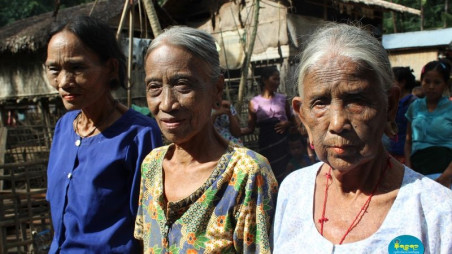
A group of old Chin woman with web spider tattoo on face in village near Mrauk U region in Myanmars Rakhine state. Chin people, also known as the Kukis are a number of Tibeto Burman tribal. Photo: Narinjara
The heat of Myanmar's civil war has already reached the Bangladesh border. However, this war - either the one in central Myanmar or those around the states - did not start today.
Understanding the present war in Myanmar requires an understanding of the history of the country's ethnic clashes. Burma (now Myanmar) emerged as an independent country in 1948, a year also marked by budding resistance from many ethnic groups.
The movement prior to Burma's independence was organised around the establishment of a federal country with regional autonomy of ethnic peoples like the Shan, Karen, Kachin, Rakhine, and others. The former prime minister of British Burma, Aung San (father of Aung San Suu Kyi) was supposed to play the role of the coordinator. Unfortunately, Aung San was assassinated six months before Burma's independence.
As a result, the promise of a federal country was buried by the post-independent rulers led by the superior Bamar ethnic group, sparking armed resistance by the minorities. For the last 75 years, the demand for regional autonomy and resistance to Burmese authorities has flourished in the country, both in non-violent or violent formats.
However, a new element was added to this movement in 2021, when many Bamar people took to the streets protesting the Bamar-dominated Burmese military or the Tatmadaw-led coup that ousted the elected leader Aung San Suu Kyi — also a Bamar. The Suu Kyi-led political party National League carried on with non-violent protests for a year after the coup.
But now the party is leading the armed resistance against the Tatmadaw. This is a new phase in Myanmar's history and also indicates that the whole country is now in a civil war.
As a neighbour of Myanmar, Bangladesh has been facing implications of the war, specifically the ethnic resistance in the Rakhine state, which shares a border with Bangladesh.
We know that the Rakhine state — formerly Arakan — was an independent land, but the British Empire colonised it and later left it under the rule of the superior Bamar. Similar to other regions, the demand for an autonomous Arakan state has also persisted since Myanmar's independence. The United League of Arakan and its armed force, the Arakan Army, tried to push the demand both in non-violent and violent ways.
However, the Arakan Army mustered more strength and sharpened its counterattack against the Burmese military in 2017. The Arakan Army is now trying to shift its headquarters to the Rakhine state so that finance for the guerrilla movement can be generated easily.
Similarly, in the last three years, strong armed resistance by the Chin ethnic group has weakened the presence of the Burmese military in the Chin state, which also shares a small border with Bangladesh.
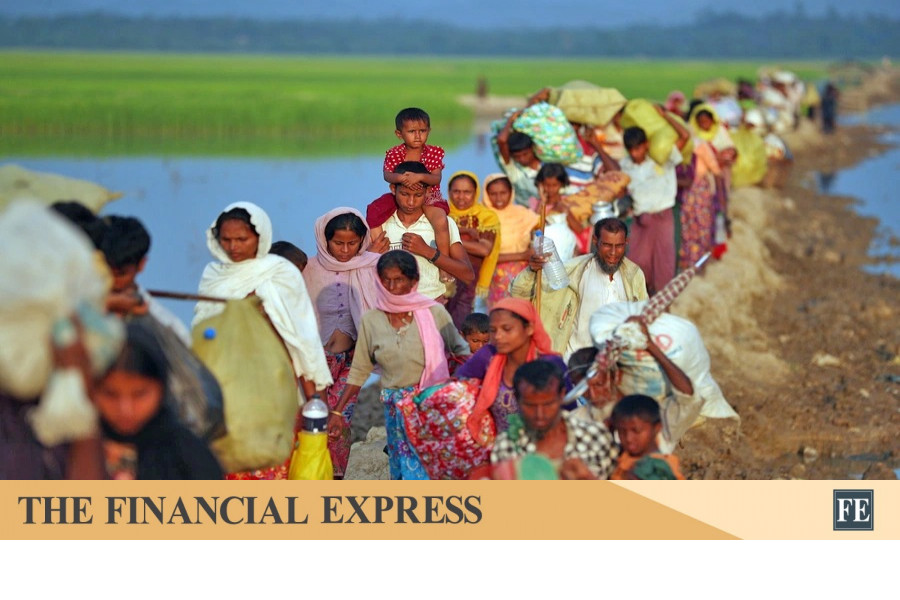
Simultaneously, the security conditions in the Rohingya camps in Bangladesh have deteriorated. At least 90 Rohingyas in the camps were murdered in internal clashes that occurred last year. Their demand for quick repatriation has become louder, amid dwindling global relief for the Rohingya.
So the flourishing of armed resistance in the Rakhine and Chin states, as well as the tension in the Rohingya camps, is very much concerning for Bangladesh.
Bangladesh has been negotiating with Myanmar's central government for the repatriation of one million Rohingya people who fled the Burmese military-led crackdown in 2017. Now, the Arakan Army has emerged as another party to discuss with. Apart from Rohingya repatriation, Bangladesh would need to talk to the Arakan Army regarding the century-old border trade with Myanmar.
I would like to mention that Chin people in Myanmar, Mizos and Kukis in India's Mizoram and Manipur, belong to a common larger Zo ethnicity. There are similar ethnic people in Bangladesh's Bandarban district. So, the tension in Manipur, Chin and Rakhine needs to be discussed with great importance.
The Burmese military, cornered on the ground in the last three months due to strong resistance by the ethnic groups, will certainly intensify airstrikes over the conflict zones. Already, the Chin state has been affected and many people have taken refuge in Mizoram. The possibility of a new influx from Myanmar to Bangladesh is high.
During an interview, Arakan Army commander-in-chief Major General Twan Mrat Naing told us that the Arakan Army is willing to accept the Rohingya diaspora as citizens of Myanmar. But the Buddhist-dominated Arakan Army does not acknowledge the legitimacy of Rohingya ethnicity, which will be a concern in the repatriation process. However, Major General Naing showed interest in discussing the issues with the Bangladesh government.
It needs to be noted that Bangladesh cannot initiate a formal discussion with a non-state party like the Arakan Army. It will certainly annoy Myanmar. The great dilemma for Bangladesh is that without any engagement of the Arakan Army, no Rohingya can be repatriated peacefully.
The author is a researcher of history and author of 'Burma: Jatigoto Shonghater Shaat Doshok.'